Table of contents:
Many people think that a cable for an electric car is something minor that comes with the kit and that you don’t need to worry about. But it’s not that simple. Some charging stations in Ukraine – especially AC-type ones – do not have a built-in cable. So if you arrive without your own, you won’t be able to charge. When choosing a charging cable, it is important to consider not […]
When choosing a charging cable, it’s important to consider not only the type of connector, but also the power, length, and quality of materials. Buying a cable that’s too short or slow can make charging a pain in the neck. And a cheap option can fail at the most unexpected moment – especially in winter. In this guide, we’ll explain when you really need your own cable and how to choose the right one for you.
We remind you that you can purchase home and commercial charging stations in our online storeand also use the public charging stations ECOFACTORcharging points located throughout Ukraine. For convenient access to charging infrastructure, we recommend using our mobile applicationwhich is available on iOS and Android.
When will you need your own cable?
There are charging stations where you just drive up, pull the cable out of the charging station, plug it in, and that’s it. It is convenient. But there are few such points in Ukraine, and they are mostly fast DC chargers. If you only use these, you can do without your own cable.
But as soon as you need to charge at a regular AC station or at home, the cable becomes a must. And it often happens that even at a paid station, it turns out that there is no cable, or someone has hidden it in the trunk and driven away. And then you can’t do without your own.
Public charging points without a cable (sockets)
This is the most common option in Ukraine. Many Type 2 stations have only a socket, and the driver has to plug in his own cable. Such charging stations can be found near residential complexes, shopping malls, business centres, car dealerships, and supermarket car parks. It looks neat, takes up less space, but requires a trained user.
We’ve seen situations where a driver arrives at a charging point and is surprised and disappointed to find an empty socket. Therefore, even if you use apps like PlugShare or Uklon Drive, you shouldn’t rely entirely on photos and labels – it’s better to keep a cable in the trunk at all times. Like a spare wheel, only for current.
Home chargers
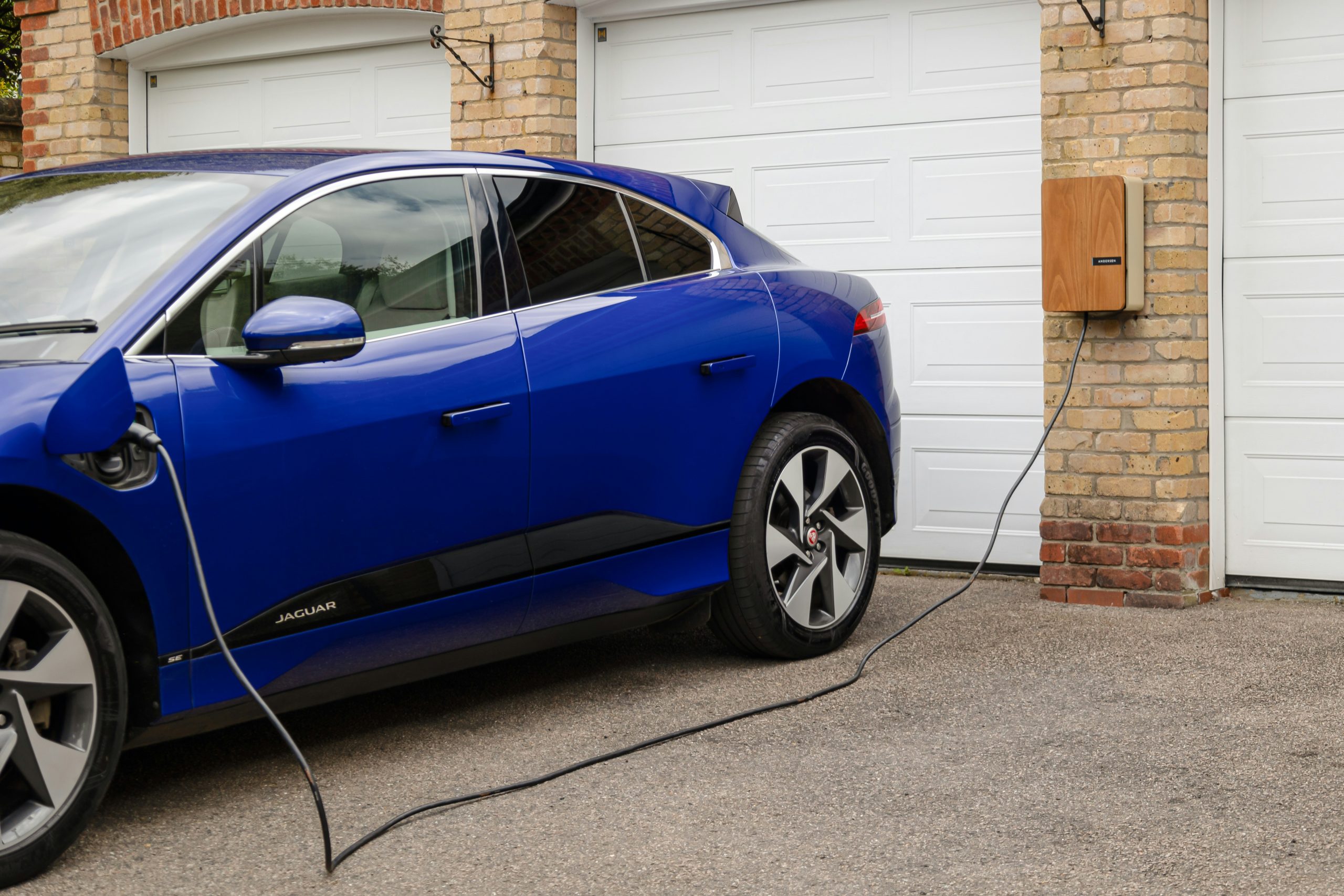
More and more Ukrainians are installing charging stations at home, especially owners of private houses and cottages. But they often choose models without a cable – just a wall socket with a controller. This option is cheaper, more compact and easier to maintain. But, again, you won’t be able to use it without your own cable.
There are also portable chargers that plug into a regular household outlet. They usually come with the car, but not always. If you plan to charge your car at home at least occasionally, make sure you have a suitable cable or adapter. And make sure it is safe, especially if the wiring in your apartment is old.
Charging at work
Many companies in Ukraine, especially those in IT or logistics, install charging points for their employees. It’s a nice bonus, but technically, it’s the same as with public sockets. In most cases, these are AC stations with a type 2 socket without a cable.
You won’t be able to charge your car if you forget the cable at home. Or you might be able to, but you’ll have to borrow one from a colleague who will charge you for it in the form of coffee. To avoid being dependent on others and wasting time, keep the cable in your car, especially if you regularly leave it in the car park near your office for the day.
Other reasons to have your own cable
If you have a car with a Type 1 connector
Ukrainians are increasingly buying electric cars from the US, and this is normal – the choice is wide and the prices are attractive. However, many of these cars have a Type 1 connector, which is not supported by most tethered European chargers.
You simply cannot connect to Type 2 without an adapter. And not all of these adapters are safe – especially under high load. The best option is to have your own Type 1 to Type 2 cable that fits your machine. It’s an investment in peace of mind.
If you want to charge from a household outlet
This is a slow but sometimes useful way. For example, you arrive in a village, there is no charging point nearby, and it’s still 100 km to Kyiv. You pull out a cable with an adapter for 220V, plug it into a socket, and albeit slowly, the charge starts.
You should not use this method on a regular basis, as old wiring or a bad contact can cause overheating. But as an emergency solution, it’s a perfectly workable solution. Just make sure that the cable is of high quality, has protection, and is not a fake from the market.

Do electric vehicles come with a cable?
Nowadays, most new cars (especially those officially sold in Ukraine or Europe) come with one cable, usually Type 2. But it’s worth checking, because the equipment varies.
If you buy a car second-hand or from abroad, be sure to ask about the cable. This is not a trifle. A new one can cost several thousand hryvnias, depending on the type, length, and power.
Some drivers deliberately keep two cables: one at home (for charging via a wall socket) and one in the car. It’s convenient: you don’t have to roll it up, carry it around, or clean it every time. And the cable lasts longer if you don’t alternately throw it into the garage or the trunk.
It is also worth buying a bag or container for storing the cable. This is a small thing that has a significant impact on the service life – especially in rain, snow and muddy weather.
How to choose a charging cable for an electric vehicle
What type of connector should it be?
In Ukraine, most plug-in (cable-free) charging stations are AC chargers with Type 1 or Type 2 connectors. There is no need to buy separate cables for high-speed DC connectors such as CCS or CHAdeMO – such stations already have a cable built in.
The exact type of connector your electric vehicle has depends on its model and the country from which it was imported.
Type 1 connector
Type 1 – це старіший стандарт, який переважно зустрічається в electric vehicleх зі USA. Такі cables зазвичай заряджають на потужності 3–7 kW. За пів години charges you can отримати приблизно 20 км пробігу. Ці роз’єми не мають механізму блокування – тобто cable you can витягнути в будь-який момент.
As Type 1 is not a standard in Europe, it will be difficult to find a charger with a built-in cable of this type. If you have a Type 1 car, you will almost certainly need to have your own cable or adapter to charge in most places.
Type 2 connector
Type 2 – це сучасний європейський стандарт. Такі cables підтримують charging на потужностях from 3 up to 22 kW (деякі – до 43 кВт). За пів години при максимальній потужності you can отримати до 100 км ходу. Connector має механізм фіксації – cable не you can витягнути під час charges, що значно безпечніше.
It is a Type 2 cable that you will need for charging at most home, public and work AC stations with a universal socket.
Are Type 1 and Type 2 connectors compatible?
No. A Type 1 cable is not suitable for charging a car with a Type 2 connector, and vice versa. These systems are not compatible with each other, and connection is possible only through universal sockets or adapters (which, by the way, are not always safe).
If you plan to charge at a power outlet, make sure that the power outlet supports the type you want or that you have the correct cable to connect.
How much power should the cable support?
The cable must comply with the maximum power that your vehicle can charge from a single-phase AC mains supply.
This figure depends on the model. For example, the Nissan Leaf has a maximum of 6.6 kW, and the Jaguar I-Pace has up to 7.4 kW on a single phase. If you buy a cable that supports less power than your car, you will simply lose in charging speed.
Можна взяти cable «із запасом» – він не заряджатиме швидше, але буде сумісним із більш потужними charges. Головне – не брати повільніший, ніж потрібно.
Cheap cables often have limited speeds, which is another reason not to skimp on quality.
What cable length should I choose?
It all depends on where you will be charging. If the charging station is located next to a parking space, 5 metres is enough. But if the socket is on the wall or behind the car, you may need a longer cable.
The universal option is 7.5 metres. This cable is usually suitable for most situations and does not take up much space.
It is better to get a slightly longer cable than to drag it under the wheels or through puddles. It will be a little more inconvenient to store it, but it will save you many times on the road.

Additional tips for choosing a charging cable for your electric vehicle
Choose a 32A cable
When looking for a charging cable, look for models with 32 amps. They allow you to charge faster – up to 7.2 kW on a single-phase network. 16A cables are cheaper, but limit the speed to 3.6 kW, which can be slow even for a small battery.
Якщо вже витратились на electric car – не варто економити на cables, який буде постійним елементом your щоденного користування.
Choose a high-quality and durable cable
Електрокар – це серйозна інвестиція, тому й cable має бути надійний. Не купуйте найдешевше, що знайшли в інтернеті. Такі cables часто жорсткі, ламаються на морозі, тріскаються з часом і мають слабку фіксацію в роз’ємі.
Якісний cable – гнучкий, добре тримається в руках, не ковзає, не перегрівається і працює в дощ, сніг чи спеку. З таким заряджати авто буде приємніше і безпечніше, особливо взимку, коли тонкий і жорсткий cable перетворюється на щось схоже на штахету.
Check whether the cable is recyclable
No cable lasts forever. Even the best ones will wear out, lose flexibility, or simply break down over time. It’s better to buy one that can be recycled right away – it’s not only more environmentally friendly, but also more practical.
Cheap cables are often not certified or made of materials that are difficult or impossible to recycle.
Avoid cables that are too short
Найдешевші cables на ринку – як правило, найкоротші. Але це не завжди плюс. Коли треба підключитись до розетки з незручного боку or charging station встановлена трохи далі – короткий cable не дотягнеться or буде надто натягнутий, що небезпечно й for кабелю, і for роз’ємів.
Оптимальна length – 7.5 метра. Вона allows легко підключитись майже до будь-якої stations, і водночас не створює зайвих проблем зі зберіганням. У деяких випадках conveniently мати й 5-метровий cable for домашнього використання, але for міста or подорожей краще взяти щось у межах 7–10 метрів.

How we at ECOFACTOR help you choose the right charging cable
Ми в ECOFACTOR вже понад 10 років працюємо над тим, щоб заряджання electric vehicle in Ukraine було зручним, зрозумілим і доступним. Our approach – це повне рішення: from розробки charging stations to software, cables, accessories and a mobile app for drivers.
Усе, про що ми розповідаємо в цій articles – реальні питання, з якими до нас звертаються клієнти щодня. Хтось обирає charging station for офісу, комусь потрібно підібрати перехідник for нестандартного роз’єму, а хтось просто шукає надійний cable, який буде працювати і влітку, і в мороз. In our online store different types can be found cables: Type 2 – Type 2, Type 2 – Type 1, mobile chargers, adapters Schuko, промислові варіанти на 32А – усе, що знадобиться в реальному житті.
To make it easier to connect on the go, we also created a mobile app for iOS and Android. It offers an interactive map of charging stationswhich allows швидко find найближчу точку, перевірити її статус, потужність, and навіть запустити charging прямо зі смартфона. Appendix. уже об’єднує понад 215 000 водіїв electric vehiclesв in Ukraine – і ми постійно працюємо над його розвитком.
We don’t just sell обладнання – ми самі його виробляємо in Ukraine. Це стосується як AC, так і DC charging stations, а також mobile solutions до 44 і 420 kW. Our platform ECOFACTOR EFN allows операторам зарядних мереж керувати тарифами, see енергоспоживання, підключати нові точки й аналізувати роботу всієї системи.
І якщо вам потрібна допомога з вибором – ми завжди поруч. В ECOFACTOR you can не просто купити cable or accessories, а отримати повне рішення з підтримкою, монтажем і обслуговуванням. Все, що потрібно – запит, і ми разом знайдемо варіант, який дійсно працює саме у ваших conditions.
Conclusions.
Кабель for заряджання electric vehicle – це не просто дріт. Це інструмент, який or спрощує ваше щоденне користування авто, or навпаки – додає проблем на рівному місці. Знаючи, як і де ви плануєте заряджатись, на яких станціях, у яких умовах, you can обрати той варіант, що дійсно працює. Один cable – не for всіх. Комусь підійде короткий for домашнього використання, хтось возитиме 10-метровий про запас.
Ми в ECOFACTOR знаємо це з досвіду: до вибору кабелю водії підходять по-різному, але мета у всіх одна – заряджатися швидко, безпечно й без зайвих нервів. І якщо ця стаття допомогла вам трохи краще розібратися в темі – значить, ми рухаємось у правильному напрямку.