Table of contents:
Electric cars are no longer a novelty even in small Ukrainian towns. But when it comes to choosing, there are debates: should we take the iconic Tesla, albeit from America, or look towards modern Chinese models? One of the most interesting cases for comparison is Tesla Model 3 Standard Range Plus and BYD Qin Plus EV. At first glance, they are both sedans, approximately the same class, and have a similar price tag. But under the hood and in real life, everything is a little more complicated.
This article is not for brand fans. We’re just going to break everything down, with a focus on the experience of a Ukrainian driver: charging, roads, winter, comfort, maintenance. And we’ll try to answer the question of which of these cars is really better in Ukrainian conditions.
We remind you that you can purchase home and commercial
Concept: what kind of car is this?
Both cars are middle-class electric sedans. But the approach to their development is completely different.
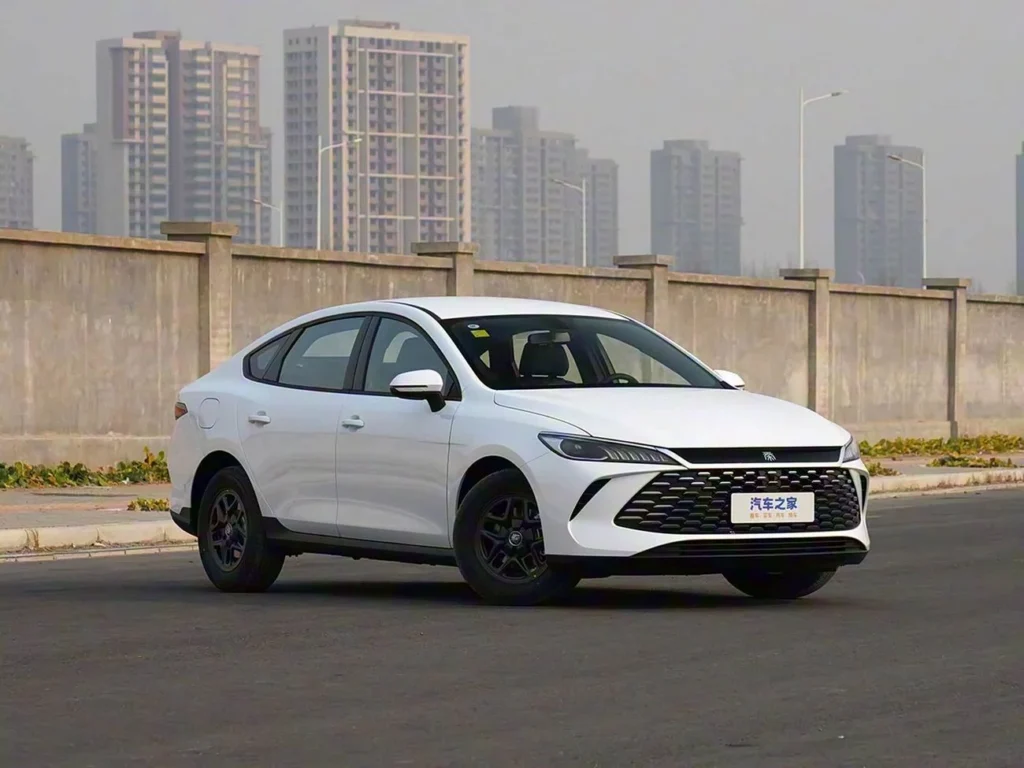
BYD Qin Plus: a practical electric saloon for everyday life
Qin Plus is a product of the Chinese company BYD, which in recent years has become one of the largest manufacturers of electric vehicles in the world. Its concept is simple: not to chase records, but to provide maximum functions, mileage and comfort for reasonable money.
The car comes in several configurations with different battery capacities, levels of equipment and power. This is not a car for racing, but for quiet use – to get to work, pick up the child from school, go away for the weekend. And all this without complicated settings, applications and technical nuances.
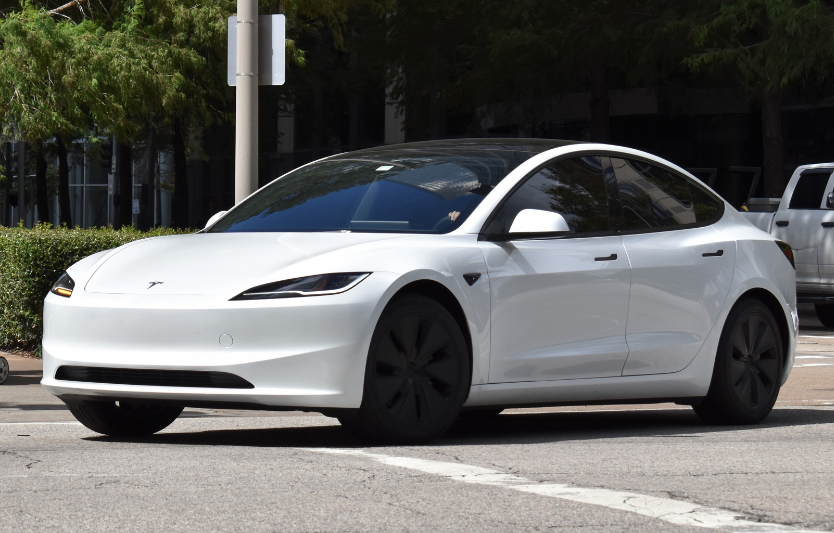
Tesla Model 3: a software-centric approach with an image
The Model 3 is the most popular Tesla. It focuses on minimalism, dynamics and full integration of the car with software. The interface, navigation, and air updates are all part of the concept. It looks more like a smartphone on wheels than a classic car.
In the United States, it is bought as the first electric car for the city, often with short trips and charging at home or at branded Superchargers. In Ukraine, there are few such charging points, and most cars are used and imported from America, which adds to the nuances.
Dimensions, interior and boot: who is more practical?
On paper, the difference in size is minimal, but in reality, it is noticeable.
Dimensions
The difference in numbers may seem insignificant, but in practice it affects everything from the comfort of boarding to how easy it is to drive around a pothole on the roadside or park at the curb. These centimetres become noticeable on the second day of use, especially in the city.
- Qin PlusLength: 4675 mm, wheelbase: 2718 mm. The car looks a little more massive, but not bulky. Its length gives more space for the rear row, and the higher ride height is more comfortable on uneven roads.
- Model 3Length: 4694 mm, height: 1443 mm, wheelbase: 2875 mm. The Tesla has a lower profile and slightly sportier proportions. It looks more compact, but its long wheelbase makes it more stable on the road.
Comfort in the cabin
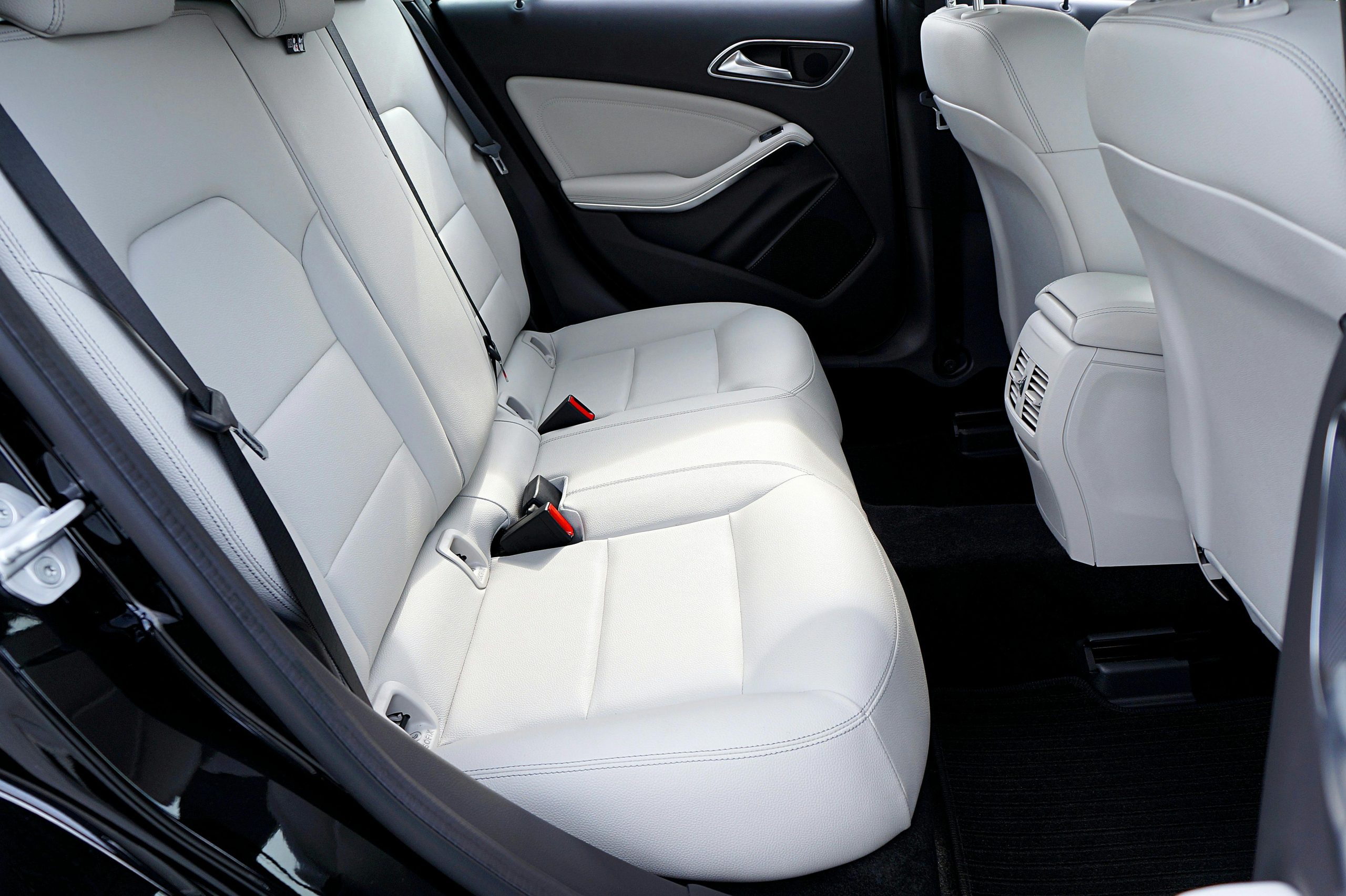
The Qin Plus wins in terms of vertical space, although passengers over 180 cm tall will be uncomfortable in the rear row due to the low roof and limited knee room. The rear row is equipped with factory tinting, there is good noise insulation, and the 500+ trim has multi-colour interior lighting.
The Tesla Model 3 has more room in width, but the roof overhangs more. The second row is cramped in the legs, and the seats are stiffer. But the quality of materials is higher, especially in European versions.
Trunk
For many people, this is not just a storage compartment, but a daily “workplace” – bags from the store, a stroller, tools, boxes of vegetables from the market. Therefore, not only the number of litres is important, but also the ease of loading, the height of the threshold and the simple ability to quickly throw something in without playing a complicated tetris game.
- Qin Plus: the luggage compartment is wide, has a regular rectangular shape, is lined with pile on the sides and has a rubber mat. Under the main level there is a crawl space with space for cables, a repair kit and an emergency stop sign.
- Model 3On the plus side, there is a frunk (front boot) where you can put a charging cable or something small. But the rear boot has a narrow opening and is a bit “blind” deeper in the body.
Real power reserve: summer, winter, Ukraine
You shouldn’t expect perfect performance. We use real conditions: heating in winter, air conditioning in summer, Kyiv traffic jams and a road between cities.
| The Off-road Master model will be launched at a later date and features additional off-road accessories such as a stronger front bumper that extends to the bottom of the vehicle to protect against collisions in the wild. There is also a snorkel and a removable roof rack with a small step on the side. | Battery charged to 100%. | Mileage in summer (city/highway) | Mileage in winter (city/highway) |
| BYD Qin Plus (500) | 57 kWh | 420/360 km | 300/250 km |
| Tesla Model 3 (SR+) | 51 kWh | 410/330 km | 290/250 km |
Both models are well suited for city commuting and medium distances, but the Qin Plus has an advantage in terms of range, especially with moderate driving style.
Charging: at home, at work, on the go
The range is only half the story. It’s when you’re down to 15% and looking for a place to recharge that the real decision is made. And that’s where the practical part begins: what cables are available, whether the car supports fast charging, how many kilometres it will give you in 20 minutes at a gas station stop.
Let’s look at both models in terms of three main scenarios: charging at home, in the city, and on the road on the highway.
Tesla Model 3:
- AC chargingup to 11 kW. This allows you to fully charge your car from the wall station in 5-6 hours.
- DC chargingup to 170 kW, but the most stable speed is in the 100-105 kW range. Charging from 10% to 80% takes 20-25 minutes at Fastned or Supercharger stations.
- Problems in UkraineSome US versions have limitations, such as LTE not working, incorrect CCS support, or conflicts with the payment system. You should check this before purchasing.
BYD Qin Plus:
- AC charginglimited to 6.6 kW. This is less than Tesla’s, but enough for overnight charging at home or at work.
- DC chargingPower consumption: 60-70 kW on average, depending on the equipment and temperature. A typical 30-80% session takes about 35-40 minutes. The peak value is reached quickly, but the charging curve is less stable than Tesla’s.
- Plus BYDsimple and stable operation with all standard Ukrainian chargers. Just plug it in and it works. Type 2, CCS, no additional settings or adapters required.
Result.
Tesla charges faster and has the potential for very dynamic journeys, but only if your version has no restrictions and the entire infrastructure supports CCS without any problems. BYD looks slower, but its advantage is stability, simplicity and full compatibility with typical Ukrainian conditions, where medium-power AC stations prevail.
When choosing a car, you should not only look at the peak charging speed, but also honestly answer yourself: where, how often and with what outlet will you charge?
Charging infrastructure in Ukraine: how we help drivers
When it comes to charging an electric vehicle in real life, it’s not just about the car, but also about the availability of reliable infrastructure. At ECOFACTOR, we create this ecosystem for Ukrainian drivers. And we work on both sides – for those who install charging stations and for those who are looking for a place to recharge their cars every day.
We develop and manufacture charging stations full cycle right in Ukraine. We have mobile charging solutions, AC stations up to 44 kW, DC charging up to 420 kW, and we are constantly expanding the network. We already have more than several thousand charging ports on our platform, and the community of drivers in our mobile app includes more than a thousand people.
For drivers, we offer:
- Mobile application ECOFACTOR for Android and iOSwhere you can find a charging station on the map, activate a session charge and check your history.
- Interactive map of charging stationswhich covers both our stations and partner outlets.
- Online shop different charging accessorieswhere you can buy cables, adapters, and mobile chargers, inverters and other things that will come in handy for every electric car driver.
For business, we offer a full platform turnkey solutions: from charging stations to SaaS solutions for operators and network management. Our system is compatible with all major standards, and our technical support is always available.
We are building this network not for show. We want to make it really convenient to charge electric cars – be it Tesla or BYD – in Ukraine. At home, at work, near a shopping mall, or just on the road when you have 20% left and need to find the nearest available point.
Dynamics, drive, road
It’s like with running shoes: one pair for fast running, the other for walking all day. Both may be comfortable, but they feel completely different. It’s the same with Model 3 and Qin Plus:
- Tesla Model 3 (SR+): acceleration to 100 km/h in 5.6 seconds, rear-wheel drive, low centre of gravity, short steering responses.
- BYD Qin Plus (top version): 0-100 km/h in approx. 9 seconds, front-wheel drive, calm pedal response, softer braking.
At city speeds, the difference is almost imperceptible. Both models manoeuvre confidently in traffic and do not cause discomfort to either the driver or passengers. The Qin Plus is a little better at absorbing manhole covers, tram tracks, and other surprises on Ukrainian roads. Tesla, on the other hand, can be nervous if the road is “tired”.
After 90 km/h, the Tesla’s advantage becomes more apparent. It is more stable, more precise in its steering response, and quicker to respond to pedal presses. The BYD is smoother in its reactions, and this is not a disadvantage – it just has a different character. If you drive without sharp overtaking, everything is fine. But for those who like to drive “at pace”, Tesla will give a greater sense of control.
Suitability for Ukrainian roads
Ukrainian roads are a real test for any car. There’s old asphalt, patches, and tram tracks that turn a trip into an obstacle course. In winter, slippery surfaces, ice, and road chemicals are added to the mix, affecting the grip and cornering behaviour of the car. In such conditions, the car must be not just fast or economical – it must be able to stick to the road and not make the driver nervous at every uneven metre.
Tesla Model 3:
- Low ground clearance (140 mm), can “cling” to bumps.
- Rigid suspension – every pit is felt.
- In winter, the rear-wheel drive can slip on hills.
BYD Qin Plus:
- The ground clearance is slightly higher (125 mm, but with a soft suspension).
- It copes better with potholes and curbs.
- Front-wheel drive gives you more confidence in winter.
In general, the BYD is better suited to our roads, especially for drivers with no experience of rear-wheel drive winter driving.
Security and support systems
When you drive on city streets, highways or slippery yards every day, a safe car is not a “nice bonus” but a basic need. Both models have modern driver assistance systems, but they are implemented in slightly different ways, and this is noticeable after the first trips.
Tesla Model 3:
- Autopilot (basic)
- Staying in the lane
- Adaptive cruise
- Perimeter cameras
BYD Qin Plus (500/600):
- 360° camera
- Control of blind spots
- Adaptive cruise
- Automatic braking
Both models have everything you need for safe driving. But Tesla needs to be configured, while BYD works out of the box.
Conclusion
The BYD Qin Plus is a practical, straightforward electric sedan with a good range, soft suspension and low entry threshold. It is suitable for those who want to switch to electric traction without spending too much on the brand name.
Tesla Model 3 is for those who want more emotions, are ready to deal with American software, are not afraid to repair after an accident and want dynamics even in an electric car.
The choice is not about the logo on the steering wheel. It’s about your route, your roads and how often you charge. This is the real test for any electric vehicle.
Frequently asked questions
u003cstrongu003eIs it possible to drive from Kyiv to Lviv without recharging on BYD Qin Plus?u003c/strongu003e
In the 57 kWh or 71 kWh versions, yes, it is possible, especially in the warmer months. The actual range is approximately 420-480 km at a moderate pace. But in winter, with passengers, luggage and heating, it is better to consider a charging stop somewhere near Rivne.
u003cstrongu003eWhich version of the Tesla Model 3 is better for Ukraine: from the US or China?u003c/strongu003e
It depends on your priorities. The American (NCA) version has slightly better dynamics, but the battery works worse in the cold. The Chinese version with LFP battery reacts more calmly to frequent charging up to 100% and is more stable in winter. For Ukraine, where winter is real, LFP often looks better.
u003cstrongu003eCan I charge these cars at home from a regular outlet?u003c/strongu003e
You can, but it will take a long time. Both BYD and Tesla support charging via a regular 220V outlet, but with very low power. For example, a full BYD charge can take 20+ hours. If possible, it is better to install a wall station (AC 7-11 kW).
u003cstrongu003eWhich of these cars handles better on slippery roads in winter?u003c/strongu003e
The BYD Qin Plus has front-wheel drive and softer handling, which can give you more confidence on slippery asphalt. The Tesla Model 3 with rear-wheel drive sometimes slips when starting or on hills, especially on summer tyres. But with good winter tyres, both variants handle well.
u003cstrongu003eDo these models support ECOFACTOR charging stations?u003c/strongu003e
Yes, both Tesla and BYD are compatible with the ECOFACTOR infrastructure. We use standard Type 2 and CCS connectors that work with most electric cars in Ukraine. You can find the nearest station on our map, charge via the mobile app, and even buy the necessary cables in the online store.
u003cstrongu003eWhich model is best suited as a first electric car?u003c/strongu003e
For the first experience – BYD Qin Plus, especially in the 500 version. Fewer settings, more self-explanatory functions, higher seating position, better adaptation to the city. Tesla is more suitable for those who already have a basic understanding of electric vehicles and are ready to experiment with firmware, OTA updates, and charging analytics.
Related articles
How to charge Tesla Model X in Ukraine: Features and tips
How to charge Tesla Model Y in Ukraine: A guide for owners
Choosing a mobile charging station for Tesla Model S 2015: key factors and recommendations