





How to choose a mobile charging station for your Tesla Model 3 2024
Electric vehicles are becoming increasingly popular in the modern world, and the Tesla Model 3 2024 is one of the leaders in this segment. However, even with a developed infrastructure of charging stations, there are situations where access to stationary chargers is limited or non-existent. In such cases, a mobile charging station becomes an indispensable accessory for electric vehicle owners. We remind you that you can purchase home [...]
Content:
Electric vehicles are becoming increasingly popular in the modern world, and the Tesla Model 3 2024 is one of the leaders in this segment. However, even with a developed infrastructure of charging stations, there are situations where access to stationary chargers is limited or non-existent. In such cases, a mobile charging station becomes an indispensable accessory for electric vehicle owners.
We remind you that you can purchase home and commercial charging stations in our online storeand also use the public charging stations ECOFACTORcharging points located throughout Ukraine. For convenient access to charging infrastructure, we recommend using our mobile applicationwhich is available on iOS and Android.
A mobile charging station allows you to charge your vehicle anywhere with access to an electrical grid, providing flexibility and independence from stationary charging points. This is especially important when travelling, travelling on business or living in areas with insufficiently developed infrastructure for electric vehicles.
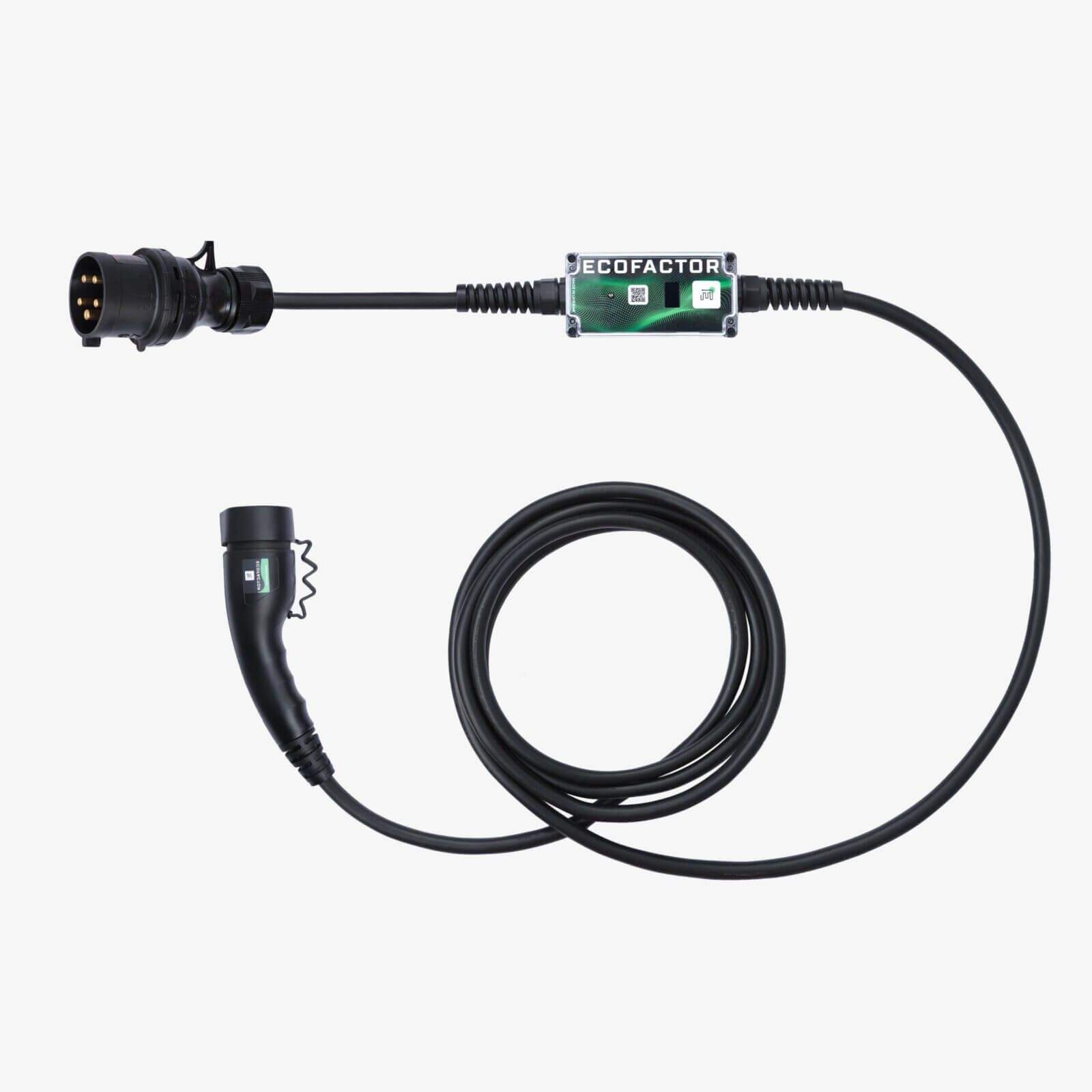
Why you need a mobile charging station and how it works
A mobile charging station is a handy device that allows you to charge your electric vehicle anywhere there is electricity. Its main advantage is its versatility. It doesn't matter if you are at home, on a trip, in the country or in a garage without a stationary charger - it is enough to have an outlet to connect the station and charge your car.
Unlike stationary chargers, which are fixed to the wall and have a permanent location, mobile stations can be easily taken with you. They are connected to a standard household or industrial socket and transfer energy to the vehicle's battery via a cable with a suitable connector.
Inside the station, there is a control unit that monitors the current, controls the temperature and stops charging in case of errors. In many models, you can change the current strength, set a delayed start, or see the charging status on the display. Some chargers have access to a mobile app that allows you to control the process via your phone.
The main thing is simplicity: you plug the cable into a power outlet, insert it into the car's socket, and everything starts working. That's why mobile charging is useful not only as an additional option, but as a complete solution for everyday use.
Technical characteristics: What to look for when choosing
Before you buy a mobile charging station for Tesla Model 3 2024, you need to understand what technical parameters really matter. You shouldn't choose a model based solely on the principle of "the more expensive, the better" or on power alone. It is important to consider where you will charge the car, what kind of sockets you have, and how much power your power grid can handle.
The Tesla Model 3 2024 supports AC charging via a Type 2 (European version) or NACS (American version) connector. Therefore, the charging station must be compatible with the relevant standard. In addition, the current strength, plug type, load regulation, housing protection, and cable length are important.
The main technical parameters that you should pay attention to:
- Charging power: 3.6 kW, 7.2 kW, 11 kW (depending on model and network type)
- Current: from 6 to 32 amps (in some models, manually adjustable)
- Type of car connector: Type 2 or NACS
- Type of network connection: single-phase (220 V) or three-phase (380 V)
- Cable length: usually from 5 to 7.5 metres
- Protection: against short circuits, overheating, power surges
- The degree of tightness: IP54 - IP66 (the higher the better for the outdoors)
- Additional features: display, Wi-Fi, timer, mobile application
Not all of these characteristics are critical in every case. For example, if you only charge your car at home and have a stable network, you can do without a display or app. But for travelling or using it in different places, a station with current control, a cable length reserve, and a high degree of housing protection will be useful.
It is also worth checking whether the station supports work with adapters, whether it has replaceable plugs, and what warranty conditions the manufacturer offers. By choosing a model that suits your needs, you can avoid overpaying for unnecessary features and still get a convenient and safe device for every day.
How to choose the best mobile charging station for Tesla Model 3 2024
There are several key aspects to consider when choosing a mobile charging station for your Tesla Model 3 2024:
- Compatibility: Make sure that the station supports the Type 2 connector and meets the technical requirements of your vehicle.
- Charging power and speed: Choose a station with a capacity that suits your needs and the capabilities of the grid.
- Mobility: Pay attention to the size, weight, and ability to easily transport the station.
- Additional features: The presence of a display, the ability to adjust the current, Wi-Fi connectivity and a mobile app can increase the ease of use.
- Reviews and reputation of the manufacturer: Read user reviews and choose products from well-known brands with a good reputation.
Overview of popular models of mobile charging stations for Tesla Model 3 2024
With the large number of mobile charging stations on the market, it is not always easy to immediately find the right model for your specific application. Some chargers have a simple design without unnecessary features and are more suitable for home use. Others are more powerful, with a display, current control, timers and the ability to connect to a mobile app.
For the Tesla Model 3 2024, it is especially important that the station is compatible with a Type 2 or NACS connector, has stable operation, an appropriate level of protection and a sufficient cable length. This section contains five popular models that have proven themselves among users and cover a variety of scenarios - from everyday use to travelling and backup connectivity.
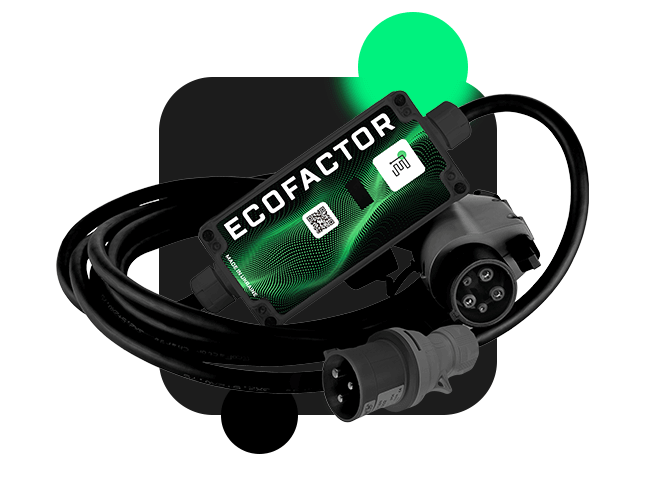
1. ECOFACTOR NACS 32A (7 kW)
ECOFACTOR NACS 32A (7 kW) is designed for owners of American versions of Tesla that have a NACS connector. It allows you to charge your car from a single-phase network with a capacity of up to 7 kW, which is suitable for daily use at home, in a car park or on the road. It works with industrial 5PIN sockets, but can also be connected to other types of sockets via an adapter.
The station has adjustable current (from 6 to 32 A), so it can be adapted to a weaker power supply. It is protected against power surges, overheating, dust and moisture. It is compact, fits easily in the trunk, and has a timer to start charging at night or during reduced tariff hours.
Features:
- Power: 7 kW
- Current: 6-32 A (adjustable)
- Connector to the car: NACS
- Power plug: industrial 5PIN
- Connection: single-phase
- Protection: against overvoltage, dust and moisture
- Timer: yes
Advantages:
- Suitable for all American Teslas
- Works with unstable power supply due to current regulation
- Has a timer and protection
- Compact, easy to transport
Disadvantages:
- Not compatible with European Tesla without an adapter
- Requires an industrial socket or adapter
- Does not support three-phase charging.
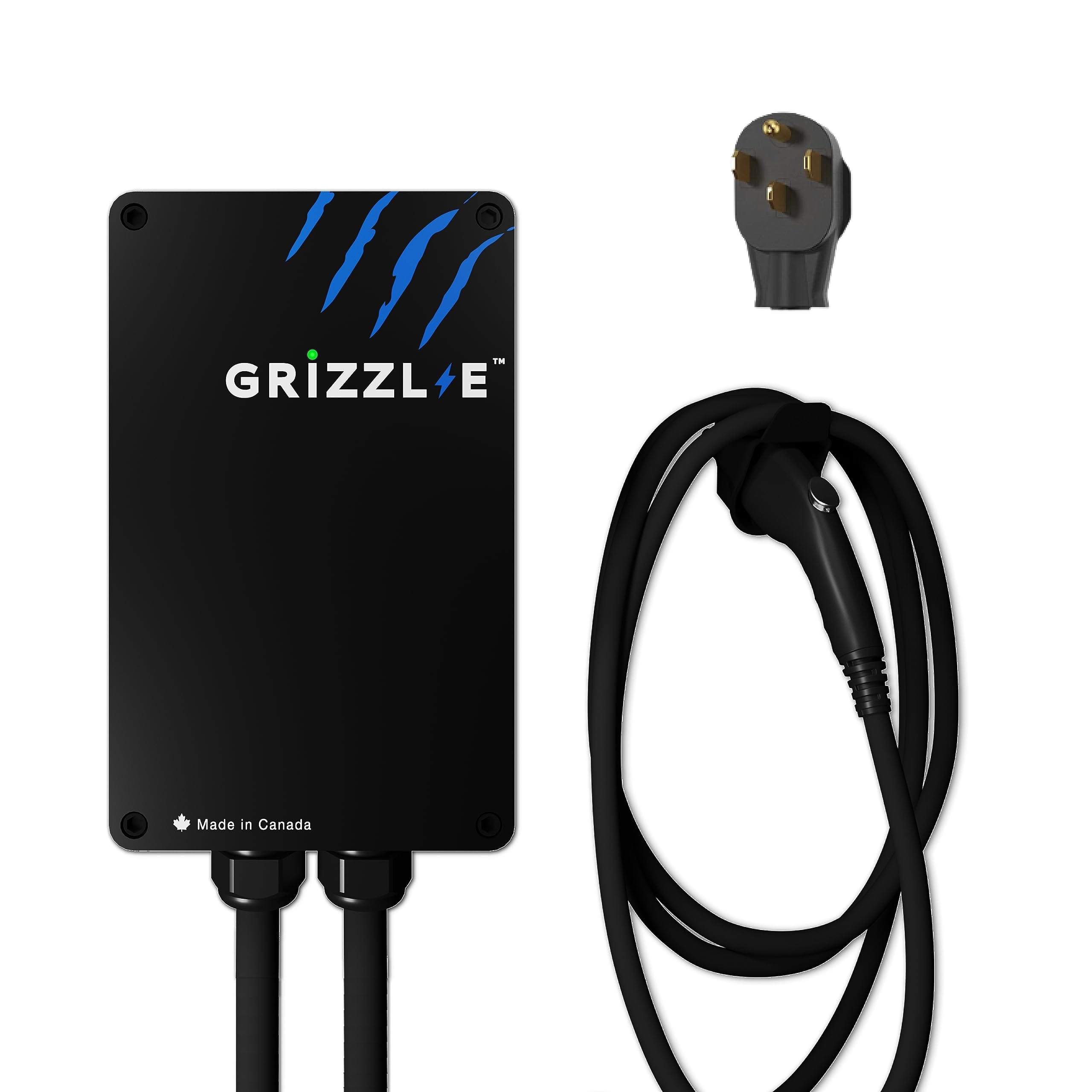
2. Grizzl-E Level 2 Portable Charger
It is one of the most robust and reliable charging stations on the market. The Grizzl-E offers a simple yet effective design with an aluminium casing that is resistant to weather conditions, including rain and snow. This model is designed for long-term use, both at home and when travelling.
The charging station supports AC current up to 40 A and has several levels of power control, which allows it to be used in different power grids. It also has overheating, short circuit and overload protection.
Features:
- Power: up to 10 kW
- Current: up to 40 A (adjustable)
- Connector: Type 2
- Cable: 7.6 м
- Body: aluminium
- Charging levels: 16A, 24A, 32A, 40A
Advantages:
- High resistance to external conditions
- Robust construction
- Suitable for indoor and outdoor use
- Simple mode switching
Disadvantages:
- Heavier than other portable models
- No display or app
- Not suitable for weak power supplies
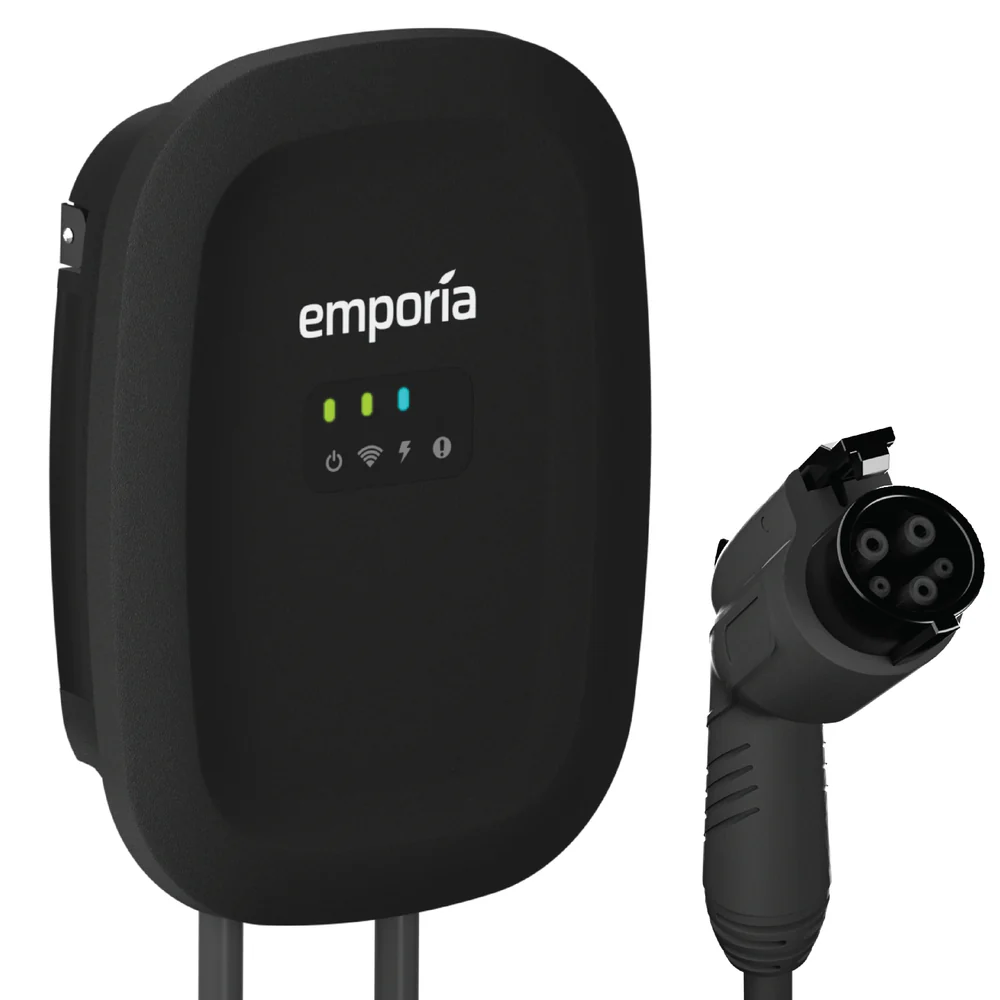
3. Emporia Smart Level 2 EV Charger
Emporia offers a Wi-Fi enabled smart charging station that allows you to control the charging process via a mobile app. It is ideal for those who want to monitor their electricity consumption, set up a charging schedule and see real-time statistics.
The charger has a compact housing that can be easily mounted in a garage or on an external wall. Built-in safety features ensure safe operation and the current output can be adjusted up to 48A.
Features:
- Power: up to 11.5 kW
- Current: up to 48 A
- Voltage: 240 В
- Connections: Wi-Fi
- Mobile application: available
- Cable: 7.3 м
Advantages:
- Ability to monitor consumption
- Flexible charging scheduling
- Easy installation
- High charging speed
Disadvantages:
- Dependence on a stable internet connection
- Not suitable for frequent carrying
- Requires installation
4. Wallbox Pulsar Plus
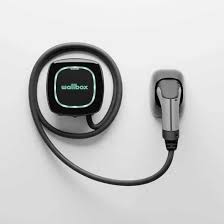
The Wallbox Pulsar Plus is one of the most compact yet feature-rich charging stations available. It has a stylish design, supports Bluetooth and Wi-Fi, and can be connected to home power systems. It is controlled via a proprietary app, where you can adjust the current, delay the start, and track the charging history.
This device supports up to 11 kW (in a three-phase network), but also adapts to weaker power lines. The Wallbox is suitable for both domestic and commercial use.
Features:
- Power: up to 11 kW
- Current: up to 32 A
- Connector: Type 2
- Connectivity: Bluetooth, Wi-Fi
- App: Wallbox App
- Installation: stationary
- Cable length: 5 м.
Advantages:
- Compact size
- Smart control via the app
- Three-phase network support
- Infinitely variable current control
Disadvantages:
- Requires installation
- Not very convenient for constant carrying
- Requires a stable internet connection
5. Lectron V-Box 48A
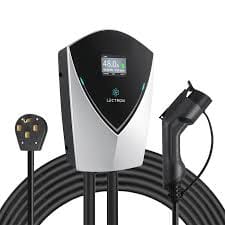
The Lectron V-Box is a powerful home charger that delivers up to 11.5 kW and supports a current of up to 48 A. It has a simple interface with LED indicators, a waterproof housing, and a long cable that allows you to conveniently connect your car in a garage or open area.
It is a solution for those who are not looking for additional features such as an app or display, but simply want a reliable and powerful device for daily charging.
Features:
- Power: up to 11.5 kW
- Current: 48 A
- Voltage: 240 В
- Cable: 7.3 м
- Indication: LED indicators
- Protection: against moisture and overheating
Advantages:
- High power output
- Robust housing
- Easy to operate
- Long cable
Disadvantages:
- No app or display
- Not intended for carrying
- Mounted permanently
How to properly charge the Tesla Model Y 2024
The charging process for the Tesla Model 3 2024 is not complicated, but it has its own peculiarities. Proper charging organisation not only avoids technical problems, but also extends battery life, improves efficiency and reduces energy costs.
Before charging, pay attention to the power supply. If you are using the mobile charging station at home, make sure that the power supply is in good condition and that the socket is not worn out. It is better to avoid old household sockets without a separate automatic charger. If possible, charge from a separate power line or industrial socket with dedicated power. This will ensure stable operation and protect the equipment from overheating.
Before connecting the mobile station, check the cables and connectors. They must be dry, free of mechanical damage and deposits. It is strictly not recommended to use extension cords or uncertified adapters. If the charger has an adjustable current level, it is better to choose the level that corresponds to the capabilities of a particular network.
You don't need to charge your Tesla Model 3 to 100% every day. For normal use, it is sufficient to set the limit at 80-90%. This reduces battery wear in the long term. You should only charge it to full charge before long journeys or when necessary.
Another important consideration is temperature conditions. In winter, charging may be slower due to a cold battery. In such cases, the car will spend part of the energy on heating the battery before charging. To avoid delays, you should leave the car connected in advance or activate the pre-heating mode via the app.
In hot weather, on the contrary, charging may be accompanied by active operation of the cooling system. If the battery is hot after a trip, it is better to let the car cool down a bit before connecting the charger, especially a powerful one (11 kW and above).
Timers should not be forgotten - if your mobile station or car has a charging scheduling function, you should use it to start charging during the hours of the lowest electricity tariff. This will save money without compromising on convenience.
The bottom line is simple: charging the Tesla Model 3 2024 will be as efficient as possible if you follow basic technical recommendations, monitor the network, adapt the charging power to the conditions, and not push the battery to extremes unnecessarily.

ECOFACTOR: Innovative solutions for environmentally friendly and efficient charging of electric vehicles
Company. ECOFACTOR is focused on creating modern technologies for charging electric vehicles that combine energy efficiency and environmental care. The main idea is to make charging faster, reduce the load on the power grid and extend the battery life. The catalogue includes charging stationsThe newly developed products meet the latest safety and stability standards, ensuring convenient use in a variety of conditions.
In addition to the stations themselves, ECOFACTOR also offers cables and adaptersThe company's range of chargers is compatible with most electric vehicles and ensures a reliable connection even in difficult conditions. For Tesla Model 3 owners, solutions are available that allow them not only to charge their cars, but also to control the process, monitor consumption and optimise energy costs.
The company's specialists are constantly improving the hardware and software, introducing new features that make charging more convenient, faster and more economical. Here are some examples of how these innovations work:
- Reduced energy costs: ECOFACTOR solutions optimise consumption, which has a positive impact on monthly charging costs.
- Increase the efficiency of the process: special algorithms reduce energy losses by maximising the use of available power.
- Control via a mobile application: users can fully control the process through mobile application, available for iOS and Android. It allows you to check the charging status, choose the most convenient time, and see analytics.
- Reducing environmental impact: ECOFACTOR charging stations help to reduce CO₂ emissions and support the spread of clean energy in transport infrastructure.
By choosing ECOFACTORBy choosing to use an electric vehicle, you are not only investing in the convenience of using an electric vehicle, but also in a responsible attitude to resources. Their solutions help you save energy, making your daily use of electric transport more profitable.
In addition, the company is constantly working to expand its infrastructure, providing access to maps of charging stationswhere you can find the nearest charging points across the territory. This helps you plan your routes without worrying about where to recharge your car.
What adapters may be needed
The Tesla Model 3 2024, like previous versions, can be charged from different power sources, but sometimes adapters are required. This is especially true when you use a mobile charging station not only at home but also when travelling, in the country or away, where the type of outlet may be different. Having the right adapter allows you to quickly connect to the network and avoid unforeseen situations.
Different adapters are required to connect the charging station to different types of sockets. For example, a standard 220 V household socket (Schuko type) is used almost everywhere, but it has a current limit (up to 16 A). For faster charging, CEE sockets (the so-called "power" or "industrial" sockets) are used - single-phase blue or three-phase red. Not all charging stations have a standard plug for each of these options, so adapters are a must.
Another category of adapters is adapters for different types of connectors on the car or charger itself. For example, if you have a charging station with a Type 2 output and your Tesla has a NACS connector (which is relevant for American models), you will need a corresponding Type 2 → NACS adapter.
Adapters may also be required:
- for connecting the charger with an industrial 5PIN plug to a CEE or household socket
- to connect a J1772 type station (common in the USA) to Tesla via the J1772 → Tesla adapter
- universal adapters that allow charging on several types of power sources
- NACS → Type 2, which is relevant for American models in Europe.
In most cases, the adapters are not supplied with the charging station or come as standard for only one type of connection. Therefore, it's best to have your own set of adapters that match the sockets you actually have access to. You can store them in the trunk with the charger in a separate case, so you're ready for any situation.
Are mobile charging stations safe for Tesla Model S?
Safety is one of the main factors to consider when using any electrical equipment, and a mobile charging station is no exception. The Tesla Model 3 2024 supports intelligent charging control functions, but the entire system also depends on the quality of the connection, power stability and reliability of the charging station itself.
Modern mobile chargers have built-in protection mechanisms that respond to overheating, short circuits, overcurrent, voltage surges and other emergency situations. If any problem is detected, they automatically stop charging. This avoids damage to both the car battery and the network itself.
However, even the highest quality device can be a source of danger if used incorrectly. The main risks arise not from the charging station itself, but from connecting to a worn-out, home-made or overloaded power supply. For example, an old household outlet may not be able to withstand 16 or 32 amps of continuous load, especially if it is connected to a shared line with other power-hungry devices.
To avoid danger:
- Do not use extension cords or power strips;
- Do not connect the charger to outlets with signs of overheating or mechanical defects;
- Do not operate the station in water or in high humidity unless it is adequately protected;
- Make sure that the cables are not kinked or compressed;
- Do not leave the charger unattended in adverse weather conditions, even if it is IP65 protected.
If the station is certified, properly connected and used according to the instructions, the risk is minimised. In this case, safety is not only about the equipment, but also about the user's attentiveness. Remember that even the best equipment will not help if you ignore the basic rules.
Conclusion.
Choosing a mobile charging station for the Tesla Model 3 2024 is a practical solution that directly affects the convenience of everyday use of an electric car. If earlier the issue of charging was limited to finding a stationary station in the city or on the highway, today mobile charging opens up new opportunities: you can charge your car at home, in the countryside, when travelling or anywhere with access to the power grid.
A properly selected charging station saves time, avoids stress due to low charge and does not depend on infrastructure. The main thing is to pay attention to the technical parameters: power, connector type, cable length, protection level, and the ability to adjust the current. It's equally important to consider the conditions in which you plan to use the device - this will determine whether you need additional adapters, or whether Wi-Fi or mobile app support is important.
A mobile charging station is not just a "backup" option, but a flexible and reliable tool that allows you to use your Tesla Model 3 to the fullest, without route restrictions or dependence on external factors. In the long run, it pays off not only financially, but also in terms of convenience and confidence every day.
Frequently asked questions (FAQ)
1. Can I leave the mobile charging station connected at all times, even if the car is not charging?
Yes, most high-quality mobile chargers go into standby mode when charging is complete and do not consume energy. However, it is advisable to switch it off if the car is not connected for a long time, especially outdoors.
2. How much electricity does Tesla Model 3 consume when charging?
On average, consumption is about 15-18 kWh per 100 km. The cost depends on tariffs (for example, UAH 200-250 at UAH 0.9-1/kWh).
3. Can I charge my Tesla in public places with my own mobile station?
Yes, if you have permission to use a power outlet (for example, in a hotel, car park or private home). The main thing is to have a suitable adapter and a tested outlet.
4. What should I do if the charging station stops charging for no apparent reason?
Check the power supply for power surges. Also inspect the cable and connectors. Many stations have a built-in safety system that automatically shuts down in the event of an error. Restart charging after a short pause.
5. Can charging take longer in winter?
Yes. At low temperatures, the battery warms up before active charging begins. This is normal and is part of Tesla's battery management system. In cold weather, charge the car in a warm place or give it more time. Charging time: from 230 V/16 A (~3.7 kW) - 20-24 hours to 100%; from 240 V/32 A (~7.4 kW) - 8-10 hours to 80%.
6. Does it make sense to buy a charging station with a display if you have an app?
This depends on personal preference. The display is useful in the field or without an internet connection. But if you are using the app and have a stable connection, the display is not necessary.


