





How long does the battery last in the Nissan Leaf
When a person is considering buying a Nissan Leaf, one of the first questions is how long the battery lasts. And this is not just curiosity. The battery is the most expensive component of an electric car. And its condition directly affects the mileage, cost, and even the decision to buy or not to buy. Many people compare it to the batteries of petrol cars. But this is a completely different story. It all depends on the [...]
Content:
When people consider buying a Nissan Leaf, one of the first questions they ask is how long the battery lasts. And this is not just curiosity. The battery is the most expensive component of an electric car. And its condition directly affects the mileage, cost, and even the decision to buy or not to buy.
Many people compare it to the batteries of petrol cars. But this is a completely different story. It all depends on the operating conditions, charging and driver habits. Let's take a closer look at the details.
We remind you that you can purchase home and commercial charging stations in our online storeand also use the public charging stations ECOFACTORcharging points located throughout Ukraine. For convenient access to charging infrastructure, we recommend using our mobile applicationwhich is available on iOS and Android.
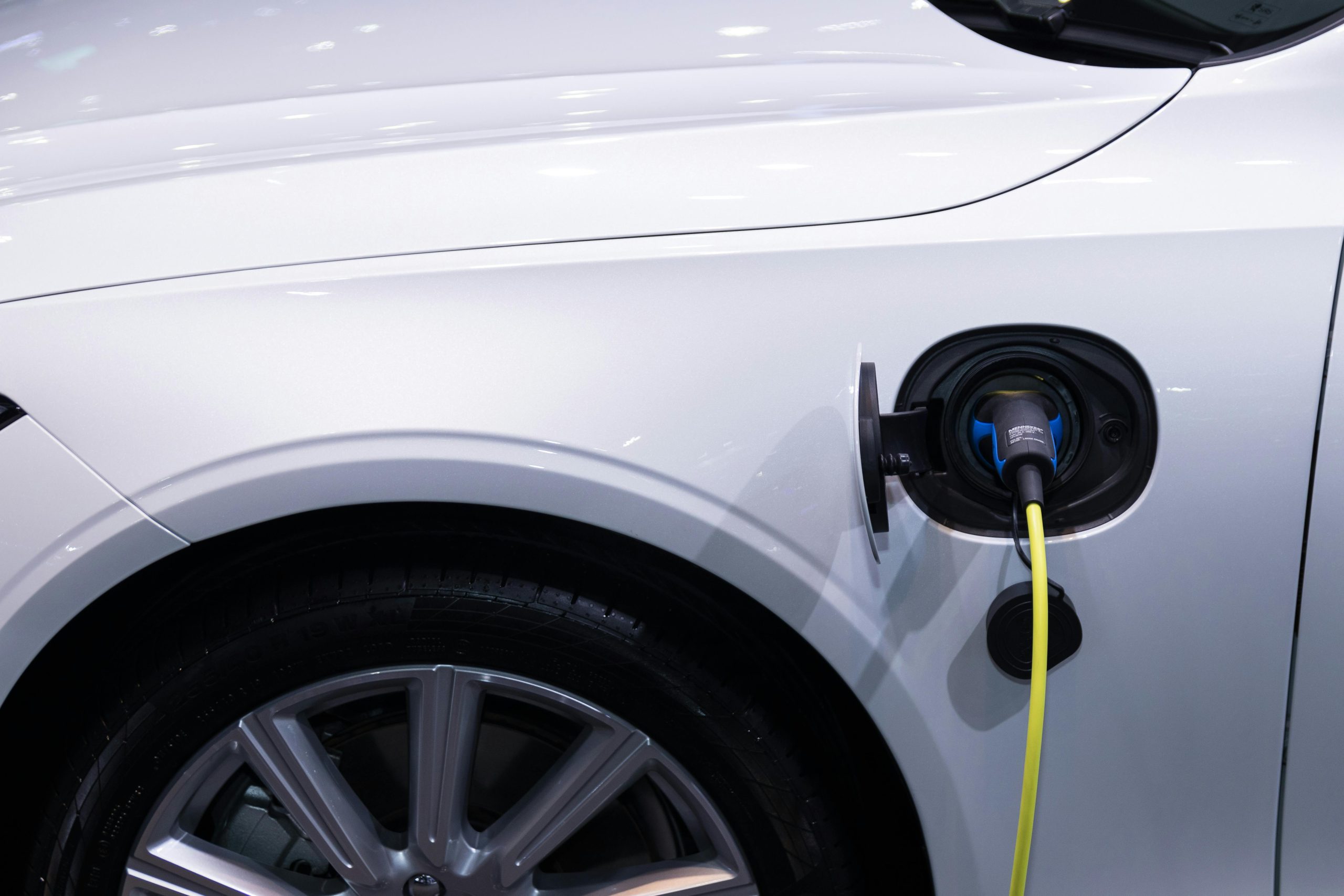
How long does the battery last on average in the Nissan Leaf
In most cases, the Nissan Leaf battery lasts approximately 10 years. But this is not a fixed number. If you drive short distances and charge carefully, the service life can be longer. If, on the contrary, you constantly load the car with long journeys, use fast charging, the battery will wear out faster.
By the way, in many cases, the car itself remains in good working order even after the battery has already been replaced. But this is a matter of expediency: is it worth investing serious money in a used electric car? The warranty terms for the battery are the same, regardless of the model.
How much range does the Nissan Leaf have on a full charge
When it comes to the range of the Nissan Leaf, it all comes down to the size of the battery. Since the launch of this model in 2010, several versions have been launched with different batteries, and each has its own range on a single charge.
Models with 24 kWh battery
These are the very first variants that were produced in the early years. In factory conditions, such a Leaf could travel up to 117 km on a full charge. But it's important to understand that these figures are theoretical. If you drive in the city, especially with the air conditioning on or in traffic jams, the actual range may be lower, somewhere in the range of 100-110 km. And even less in winter.
Model with 30 kWh battery
This model appeared a little later. It has a slightly better range of up to 155 km on a full charge. This option was a logical upgrade for those who needed a little more autonomy but did not want to pay for a more expensive package.
Modification with 40 kWh
The Tsu is a more modern version. It can travel up to 243 km on a single charge. This is closer to the average range of a city electric car. Such cars are better suited for travelling not only around the city, but also on the highway or in long-distance mode.
These are all figures from an "ideal world". In reality, the power reserve always depends on the:
- air temperature (frost or heat significantly reduces efficiency);
- electrical appliances in the cabin (air conditioning, heating, headlights, etc.) are switched on;
- driving style (sudden accelerations "eat up" the charge);
- the load of the car (the more passengers or luggage, the faster the battery discharges).
What happens if you charge only on 20-80%
You may have heard the advice to keep the battery charge between 20% and 80%, not to charge to the maximum and not to bring it to full zero. This is not a myth. This approach actually helps reduce wear and tear and extend battery life.
But there's a caveat: if you don't charge the 100%, the actual mileage between charges will be shorter. Below are the approximate figures for each of the models if you follow the "smart" charging mode:
- 24 kWh: Instead of the potential 135 km, you get approximately 80 km of range. This is enough for your daily commute within the city.
- 30 kWh: the mileage will be about 100 km, which is also quite enough for most city routes.
- 40 kWh: up to 140 km per cycle (80% to 20%).
This is convenient for those who can regularly charge their car at home or at work. If you mainly use public charging points, you'll need to plan your trips a little more carefully.
The bottom line is that charging within the 20-80% is a compromise between "longer battery life" and "shorter range". If your daily commute is short, this mode is quite suitable. If you often travel long distances, you may want to charge it to full sometimes, but not every time.
Whether the battery wears out badly over time
Degradation is the natural aging process of lithium-ion batteries. Just as a phone holds a charge less well over time, so the battery in an electric car gradually loses some of its capacity. The more charging and discharging cycles, the faster this process goes. A cycle does not necessarily mean charging from 0 to 100%. For example, if you charge the car twice from 50% to 100%, this also counts as one full cycle.
When wear and tear becomes visible
In the first two or three years, most owners don't feel any changes at all. The car charges as usual, the mileage does not drop. But from about the fourth or fifth year of use, the changes become more noticeable.
A typical situation is that you used to drive one route and everything was fine, but years later you have to charge more often. This is the result of the loss of capacity.
Based on observations:
- In the 5th-6th year of operation, the loss of capacity can range from 15 to 25%.
- This means that instead of 150 km, you will be able to drive, say, 120 km or even less.
- If Leaf used to give you two days without charging, now you may have to charge it every day.
Not only time, but also conditions have an impact
Battery wear and tear is not just a matter of age. It also depends on many factors:
- How often do you charge your car
- Whether you use fast charging (DC)
- Charge to 100% or discharge to 0%
- Do you have a smooth or aggressive driving style?
- In what climatic conditions does the car operate
That is, two identical Leafs bought in the same year can have very different battery conditions after 6 years if one lives in a city with a mild climate, and the other drives daily on the highways and charges exclusively at fast charging stations.
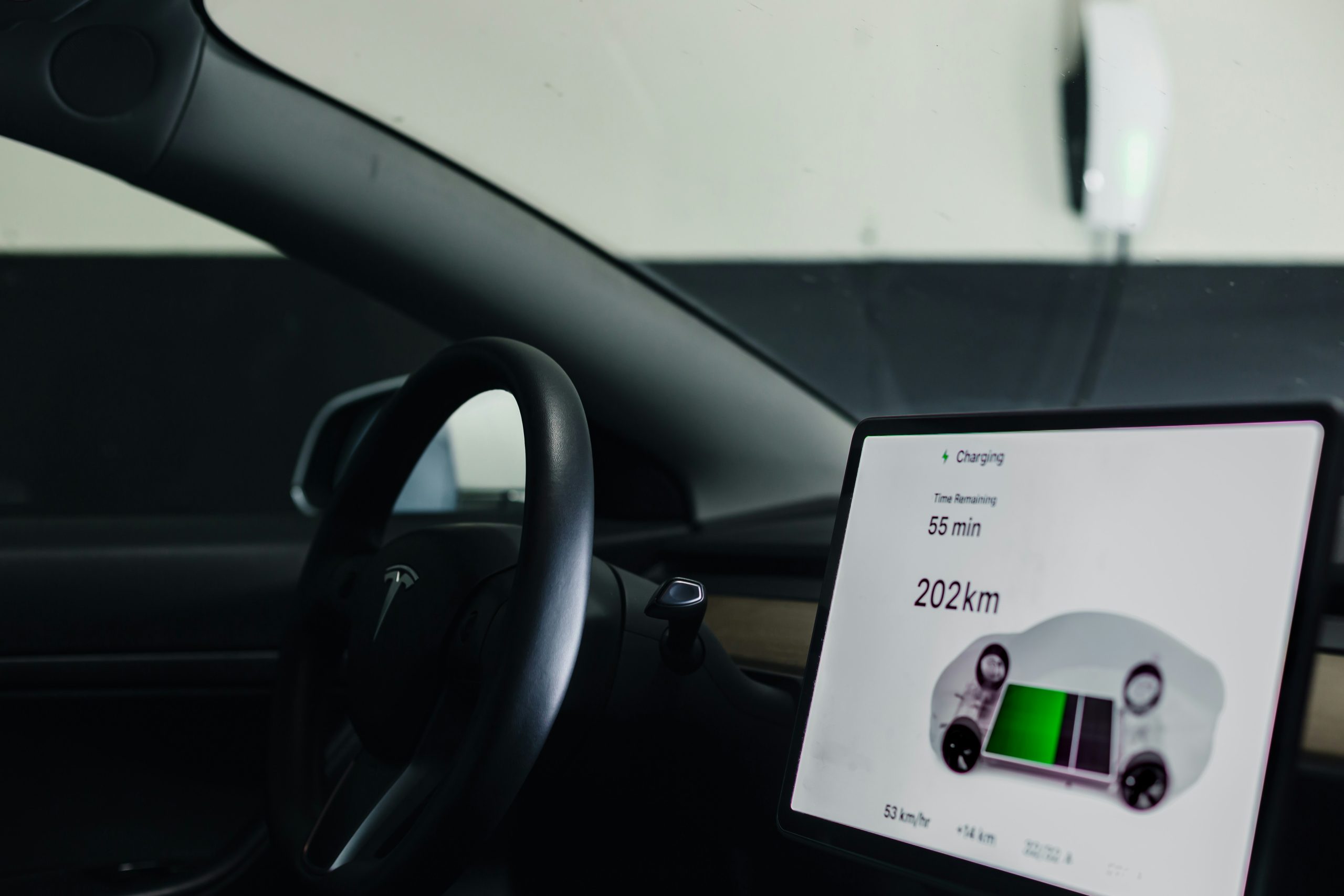
How to understand that the battery has started to "give up"
In the early stages of battery degradation, changes may not be noticeable. However, over time, certain signals appear in the car's behaviour, indicating that the battery is no longer as "fresh" as it used to be.
The most obvious is a decrease in mileage after a full charge. If you used to be able to safely drive a conventional 150 km, and now you can barely get 120 or even less, this is a sign that the battery capacity has already decreased.
Another consideration is charging time. As the battery wears out, it may take longer than usual to charge. This is not always critical, but if you notice that you have to leave your car "on a shoestring" for much longer than a few years ago, it may be due to a loss of efficiency.
Sometimes the vehicle itself sends signals via the on-board system. For example, there may be messages or warnings about the battery status. Also pay attention to the indicators on the dashboard: Leaf has a special scale that shows the remaining capacity in the form of "segments". If there are fewer of these segments than there used to be, this is another direct indication of wear and tear.
All of these signs are not a reason to panic, but they do make it clear that the battery is no longer in the best shape, and you should monitor its condition a little more closely.
How to extend the life of your Leaf battery
Battery life is largely dependent on how you use your device on a daily basis, rather than on its technical parameters. There are a few habits that don't require much effort, but can significantly reduce battery wear and tear. And what's more, these tips are easy to implement even without any special equipment or experience.
You do not need to charge your Leaf to 100% every time.
Of course, it seems logical to use all the available charge to drive as far as possible. But this is not the best approach for a lithium-ion battery. Maintaining the charge closer to the upper limit (especially if the car is left for a long time with a full battery) creates additional stress in the cells, and over time, this accelerates wear and tear. If your daily route does not require a maximum range, it is better to stay somewhere around the 80% level.
Do not discharge the battery to zero.
Just like overcharging, deep discharging is harmful to the battery. If you keep driving until the car asks for a charge, it will quickly affect the overall battery condition. It is better to put the car on charge when there is about 20-30% left - this is the safest range.
Be careful with fast charging.
Yes, they are very convenient, especially when you need to charge your car during a trip or before you leave. But regular use of high-speed DC charging puts a high thermal and electrical load on the battery. This accelerates its aging. If possible, it's better to charge slowly at home or at regular public AC stations.
Do not leave the vehicle in direct sunlight or in extreme cold for long periods of time.
Temperature extremes are a real stress for any battery. In hot weather, the battery can overheat, and in winter, its capacity temporarily decreases and it loses charge faster. If you leave your car for a long time, it is better to put it in the shade or in a garage. If this is not possible, at least connect it to a charger so that the temperature control systems work.
Don't rush to put your car on charge immediately after a trip.
After active use, the battery is usually hot, and charging in this state only makes the situation worse. The ideal thing to do is to let the car rest for at least 30-60 minutes after a trip before connecting it to the power supply. This way, it will have time to cool down, and the charging process will be less aggressive for its resources.
These simple habits don't take much effort, but they can really help extend your battery life - and thus avoid unnecessary costs or inconveniences in the future.

Charging infrastructure from ECOFACTOR
We, ECOFACTOR, are engaged in the development, production and implementation of charging solutions for electric vehicles in Ukraine and abroad. Our activities cover several areas, including the production of charging stations, the construction and maintenance of charging infrastructure networks, the development of charger management software, and mobile applications for drivers. In our ECOFACTOR online store can be purchased cables and adaptersincluding adapters for connecting from single-phase to three-phase sockets, as well as charging stations for home and commercial use.
What we do
We design and manufacture charging stationsthat allow charging electric cars through an app available for iOS and AndroidAC power up to 44 kW and DC stations up to 420 kW, and we also offer mobile charging solutions for different applications. All our devices are developed in Ukraine. We also have an online store where users can find charging accessories, cables, adapters and RFID cards.
In addition to hardware, we provide software products for charging network operators. Our SaaS platform allows you to manage your charging stations - change settings, track energy consumption, set tariffs and add new devices. This system has been in operation for over 10 years and unites more than 3,500 charging ports in 11 countries across Europe and Central Asia. The platform also provides roaming access to more than 500,000 charging stations.
How we work with drivers
For electric car drivers, we have developed a mobile application that allows you to find charging pointsThe app allows drivers to book, pay for charging and monitor the process. Our app community already includes more than 215,000 drivers who use stations connected to our platform on a daily basis.
Why this is important in the context of batteries
From the point of view of the owner of an electric vehicle, including the Nissan Leaf, the availability of an accessible, understandable and stable charging infrastructure directly affects the convenience of using the car and the condition of the battery. At ECOFACTOR, we provide the opportunity to charge electric vehicles in optimal conditions - through conventional AC stations, which put less strain on the battery than high-speed DC charging.
Our solutions also allow you to schedule charging in a comfortable mode - without the frequent use of ultra-fast charging, which can affect the rate of battery wear. This helps extend battery life, reduce maintenance costs and make daily use of your electric vehicle predictable.
Conclusion.
So, the battery in the Nissan Leaf does not last forever, but it is not that demanding either. Under normal use, it is quite capable of lasting about ten years without any serious problems. The most important thing is to watch how and when you charge the car, not to overload it with sharp trips, avoid extreme temperatures and not to abuse fast charging. Then Leaf will continue to drive you for a long time without any hassle.
Even simple daily habits can have a serious impact on the condition of your battery. And if you have a convenient charging infrastructure nearby, as is the case with ECOFACTOR, it's even easier to keep your battery in good condition.
Frequently asked questions
How long does the battery last in a Nissan Leaf?
On average, it lasts about 10 years. However, the period may vary depending on the conditions of use and charging.
When should I start worrying about battery wear?
The first noticeable changes appear in the 4th-5th year of operation. This is usually a decrease in mileage and longer charging times.
Can I charge my Leaf to 100%?
You can, but not every day. Regularly charging to the maximum accelerates battery wear. It is better to limit the level to 80% in daily use.
Is it safe to leave a car with a low charge?
No. Continuous use down to zero has a negative impact on the battery. It is better to charge when there is about 20-30% left.
Which type of charging is less harmful to the battery?
Slow AC charging. They heat the battery less and do not create a peak load like DC charging.
Does battery wear depend on the weather?
Yes. Heat and frost can affect the capacity and discharge rate. It is best to avoid prolonged exposure to extreme temperatures.


