





How to charge a Tesla Model Y in Ukraine: a simple guide for daily use
If you've just driven your first Tesla Model Y or are planning to buy one, you're probably wondering how to charge it. It's a little more complicated than with conventional cars: different types of charging, waiting times, types of cables, and, of course, the price. We have collected all the important points in one place. No complicated terminology, no advertising, just the facts. [...]
Content:
If you've just driven your first Tesla Model Y or are planning to buy one, you're probably wondering how to charge it. It's a little more complicated than with conventional cars: different types of charging, waiting times, types of cables, and, of course, the price.
We have collected all the important points in one place. No complicated terminology, no advertising, just the facts. We'll tell you how to charge Model Y at home and on the road, how much it costs, and what chargers are available in Ukraine.
We remind you that you can purchase home and commercial charging stations in our online storeand also use the public charging stations ECOFACTORcharging points located throughout Ukraine. For convenient access to charging infrastructure, we recommend using our mobile applicationwhich is available on iOS and Android.
Tesla Model Y review
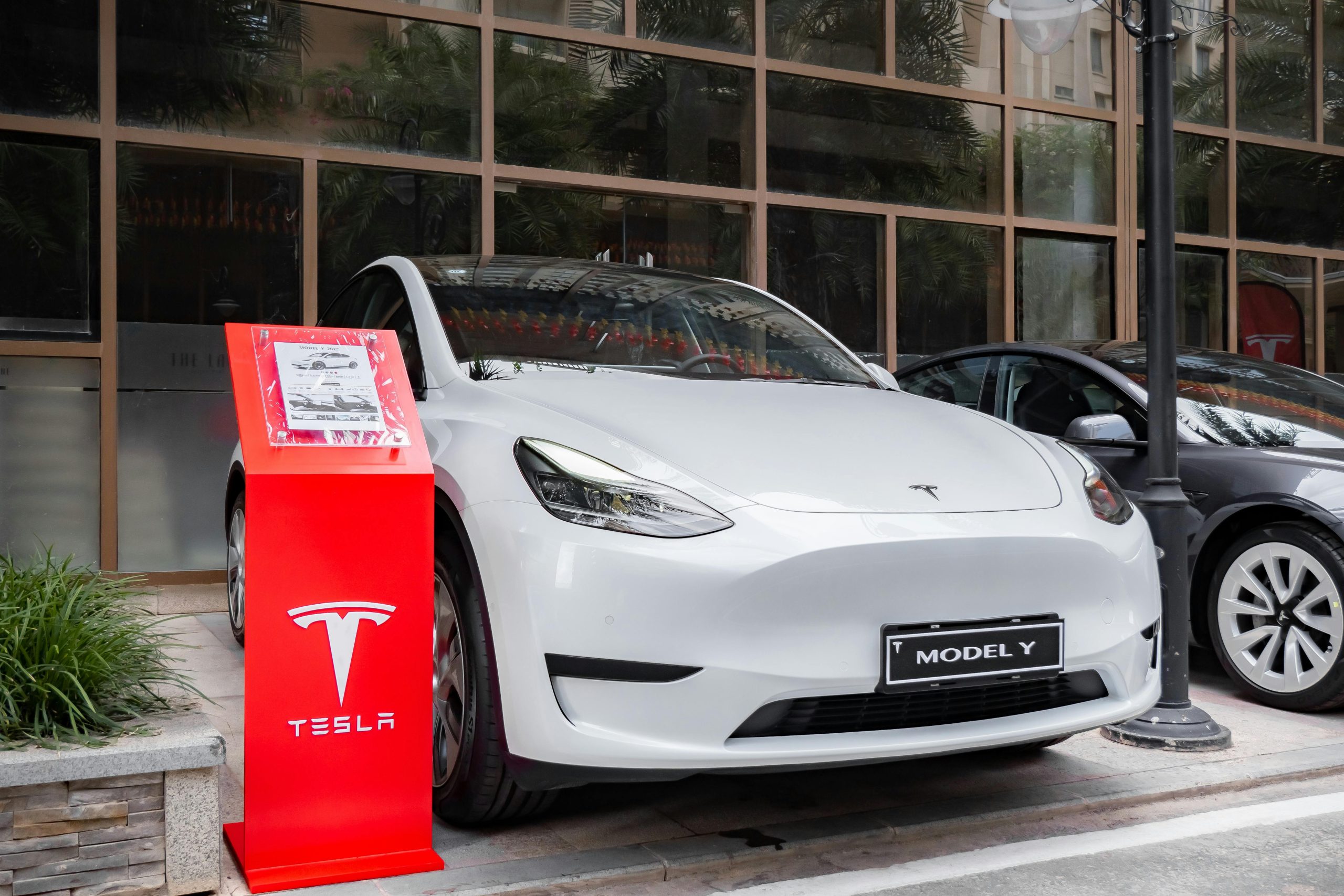
The Tesla Model Y is a mid-sized electric SUV that has become one of the most popular electric cars in the world since its launch. It's a cross between a sedan and a crossover: compact enough for the city, but spacious enough inside to travel comfortably with family or friends.
The model is based on the Tesla Model 3, but has a taller body, more interior space and the option to order an additional third row of seats (although the 7-seater version is rare in Ukraine).
Main technical characteristics
- Power reserve: Depending on the version (Long Range, Performance), the Model Y can travel up to 530 km on a single charge on the WLTP cycle. In real-world conditions, this is typically 400-470 km, depending on driving style, temperature and use of climate control.
- Acceleration: In the Performance version, the Tesla Model Y accelerates from 0 to 100 km/h in less than 5 seconds. This makes it one of the fastest cars in its class, even compared to petrol SUVs.
- Battery: The battery capacity varies between 75-82 kWh, depending on the specific model and year of manufacture. In Ukraine, the most common versions are those with a 77 or 79 kWh battery.
- Type of drive: There are versions with rear-wheel drive (RWD) and all-wheel drive (AWD) versions with two electric motors on the front and rear axles. The latter are the most common among Ukrainian owners.
- Number of seats: The standard equipment has 5 seats. An additional third row is possible, but is practically not available in Ukraine.
- Trunk volume: Due to the design of the electric vehicle, the Model Y has two luggage racks - a rear and a front one (the so-called "franc"). Together, they offer more than 850 litres of space.
This combination of practicality, performance and range has made the Model Y popular in Ukraine - especially among those who frequently travel between cities or want a car for the whole family.
Tesla Model Y charging characteristics
To understand how to charge a Tesla Model Y, you should first understand what connectors are used in this model and what the maximum charging speed is.
Types of connectors
All European versions of the Tesla Model Y, including those that are officially or unofficially entering Ukraine, have two main charging ports:
- Type 2 (Mennekes): This is the standard for AC charging (alternative current). It is used for home, office and some public charging stations. For example, this is the type that fits most wallboxes installed in homes or in car parks near business centres. The charging power is limited to 11 kW, which allows you to fully charge your car in 7-12 hours, depending on the remaining charge and conditions.
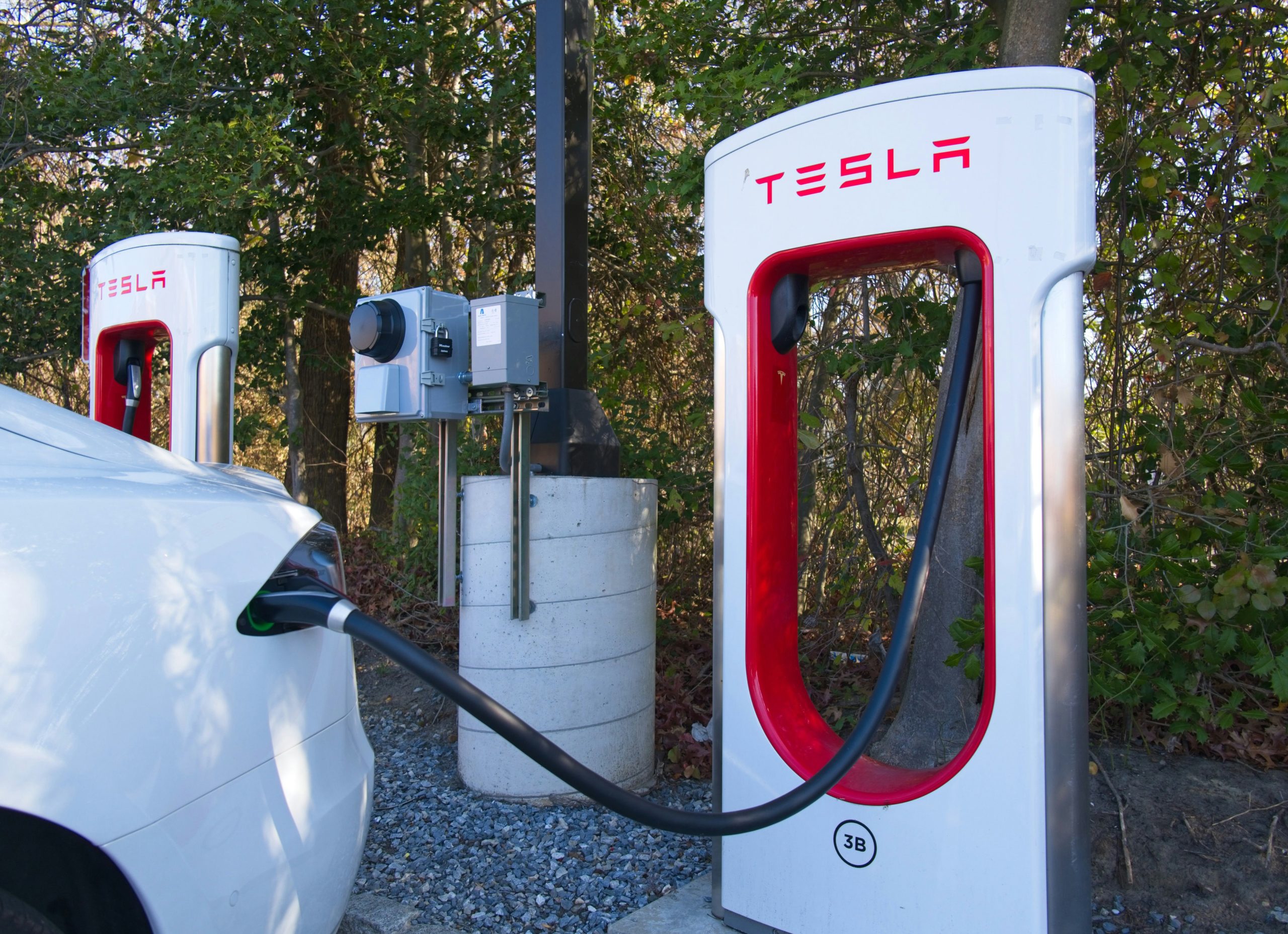
- CCS Combo 2: This type of connector is used for DC charging (direct current) and is the standard for high-speed charging stations in Ukraine. It is supported by Tesla Supercharger (only for Tesla), as well as most Ukrainian public networks - UGV Chargers, TOKA, AutoEnterprise, Ionity, Eleport. The maximum charging speed in the Model Y via CCS can reach up to 210 kW, but in practice it is more likely to be 120-150 kW, depending on the station and battery temperature.
Charging power
Let's take a look at the charging capacity of the Tesla Model Y depending on the type of station:
| Charging type | Maximum power output | Connector | Comment. |
| Standard socket (220 V) | ~2.3 kW | Type 2 | The slowest way, but available to everyone |
| Wallbox at home | 7-11 kW | Type 2 | The best solution for overnight charging |
| AC public stations | up to 22 kW | Type 2 | Often limited to 11 kW due to onboard power supply |
| DC fast charging | 50-150 kW | CCS | The most common way for the city and the highway |
| Tesla Supercharger | up to 250 kW | CCS | High speed, but not available everywhere |
Even if the charging station delivers 22 kW, the Model Y will only be able to accept up to 11 kW of AC charging, because that is the capacity of its on-board charger.
How long does it take to charge a Tesla Model Y
How long it will take to charge a Tesla Model Y is a question that depends on many factors: the type of charging, the power of the station, the ambient temperature, even the battery level at the time of connection. But there are a few average guidelines that will help you navigate.
When charging from a regular power outlet
This is the most affordable but also the slowest option. From a regular home outlet (220 V), where the power is approximately 2.3 kW, it can take 35 to 40 hours to charge a Tesla Model Y from zero to 100%. This is more of an emergency option if there is no access to a normal charging station.
When using a weak AC charger (3.6 kW)
Some office or public chargers have a power output of about 3.6 kW. In this case, it will take about 22 hours to fully charge. This is also a long time, but it's a little better than a regular outlet.
Standard home charging (7 kW)
This is one of the most popular ways to charge at home - via a 7 kW wallbox. A full charge takes approximately 12 hours. That is, you can leave the car overnight and it will be fully charged in the morning.
Charging via a more powerful wallbox (11 kW)
The Model Y supports up to 11 kW AC via Type 2. If you have a suitable wallbox installed in your home, charging will take about 8 hours. This is the best option for overnight charging.
Fast DC charging (50 kW)
You can find 50 kW chargers at most public high-speed stations (e.g. UGV or TOKA). In this mode, it will take approximately 60 minutes to charge from 20% to 80%. This range is best for quick top-ups on the go.
Very fast DC charging (150-210 kW)
The Tesla Model Y supports up to 210 kW DC. If you connect to a powerful station (for example, Tesla Supercharger or Eleport Ultra), it will take only 20-30 minutes to charge from 20% to 80%. It's almost like a quick snack - while you're drinking coffee, the car is ready for the next trip.
How to charge a Tesla Model Y: step-by-step instructions
- Park the car so that the left rear corner is near the charging station.
- Open the charging port. This can be done:
- via the screen in the car
- from the Tesla app
- button on the charging station cable
- Connect the cable. Depending on the type of charging, it will be Type 2 or CCS.
- Make sure that charging has started. An indication will appear on the car screen or in the app.
- When you are finished, disconnect the cable and close the port.
How much does it cost to charge a Tesla Model Y in Ukraine
The cost of charging a Tesla Model Y in Ukraine depends primarily on where you charge your car - at home or at a public charging station.
Charging at home is the cheapest option. As of 2025, the average electricity tariff in Ukraine is approximately UAH 4.32 per kWh. Since the Model Y battery has a capacity of about 75 kWh, a full charge will cost about UAH 324. If you do the maths, you'll spend about 72 kopecks for every kilometre you drive, assuming an average range of 450 km. This is a good deal, especially compared to the cost of petrol or even charging at commercial stations.
But when it comes to public charging stations, things are a little more complicated. Here, the price depends on the service provider. For example, at UGV Chargers, TOKA, or AutoEnterprise stations, the cost per kilowatt ranges from 8 to 20 hryvnias. That is, if you arrive with a 20% charge and want to bring the battery to 80% (approximately 45 kWh), such a "top-up" can cost from 360 to 900 hryvnias.
In any case, home charging is both more convenient and much cheaper. But public stations come in handy when you're on the road or away from home.
Where to charge Tesla Model Y
When it comes to charging an electric vehicle, the main question is not only how to charge, but where to do it on a daily basis or on the road. In Ukraine, there are several main options: at home, at work, and at public charging stations. Each of them has its own characteristics, advantages and disadvantages.
Charging at home
For most Tesla Model Y owners, home charging is the most convenient option. You can leave your car plugged into a charger overnight, and in the morning it's ready to go. It's also the cheapest solution, usually many times cheaper than commercial charging stations. However, to really charge quickly, you need to install a separate device - a wallbox - that will provide 7 or 11 kW of power. Such devices are already being sold and installed in Ukraine, in particular by companies specialising in charging infrastructure.
If the wallbox is not available, you can charge from a regular wall outlet - but this is a temporary solution. Due to the low power output and possible risk of overloading the mains, it is best to use this option only in exceptional cases.
Charging at work
If your employer has installed charging stations in the office car park, this is convenient for several reasons. Firstly, the car is charged when you are busy with business, without the need to look for a free charger in the city. Secondly, some companies cover the cost of electricity or set lower tariffs than public networks. Although such initiatives are not yet very common in Ukraine, large business centres and IT companies are gradually adding this option for employees.
Public charging stations
Most options are available on public networks. There are several large operators in Ukraine, each with its own card, app, and tariffs. For example:
ECOFACTOR: charging infrastructure for electric vehicles in Ukraine
We are ECOFACTOR, a Ukrainian company focused on the development of charging infrastructure for electric vehicles. Our activities include the production of charging stationsThe company has also created software for managing the charging network and a mobile application for drivers available for iOS and Android. We work with both businesses and individual clients - we offer comprehensive solutions for residential complexes, offices, shopping malls, hotels, restaurants and the private sector.
What is included in our infrastructure
We design, manufacture and sell charging stations that meet AC and DC standards. Our product range includes:
- AC stations with a capacity of 7 to 44 kW for slow and medium charging;
- DC stations up to 420 kW for fast charging in the city or on the road;
- mobile chargers for temporary solutions or personal use.
All devices are manufactured in Ukraine, taking into account local technical and climatic conditions.
For operators, we provide a cloud-based charging station network management platform. It allows you to:
- Monitor energy consumption in real time,
- set up flexible tariffs,
- manage access to charging points,
- generate reports and add new stations to the system.
Our platform is used by over 500 charging network operators in 11 countries across Europe and Central Asia.

Mobile application for drivers
In our application, you can find the nearest charging stationsThe app allows drivers to view their status, start charging, pay for sessions and save their usage history. The app is currently used by more than 215,000 drivers who have access to more than 3,500 charging ports in Ukraine and international roaming.
Online shop and accessories
Through our ECOFACTOR online store We sell chargers, adapters, cablesRFID cards, holders and other charging accessories. This is a solution for both private drivers and businesses that want to equip their own car parks.
We have been developing the charging infrastructure since 2013 and implementing technologies to make electric mobility in Ukraine affordable and convenient for both drivers and businesses.
- UGV Chargers, TOKA, AutoEnterpriseThese are leading Ukrainian operators that offer both slow AC and fast DC charging. Their stations can be found all over the country - in cities, on highways, near shopping malls. Access usually requires authorisation via a mobile app. Prices vary, but are on average more expensive than home charging.
- Destination ChargersThese are chargers that hotels, restaurants or fitness clubs install for their guests. They are usually Type 2 (i.e. slow) and are often free or included in the price of the service. For example, if you're staying at a hotel, you can charge your car overnight - at no extra cost.
As a result, Tesla Model Y owners in Ukraine have enough options for charging. If you have a wallbox at home, this is the most convenient. If you often travel between cities or spend a lot of time on the road, you will need mobile applications with a map of public charging points, among which ECOFACTOR, UGV or TOKA already cover many regions.
How to charge more economically: a few tips
Charging an electric vehicle is not only a matter of convenience, but also a daily expense that you can control. The easiest way to save money is to charge at home at night. Electricity tariffs are usually the lowest at night, especially if you use a multi-zone meter. This mode allows you to save twice or even more compared to daytime consumption.
Another practical approach is to avoid using charging stations with maximum power unless it is absolutely necessary. Slower AC charging (7-11 kW) is not only more economical, but also kinder to the battery. Fast charging with high power is more commonly used when travelling, but if you are not in a hurry, it is better to choose less intensive options.
It is also worth keeping an eye out for promotions in the mobile apps of charging station operators. This can be convenient for those who travel frequently or live in cities with a developed charging infrastructure.
In addition to financial considerations, the condition of the battery should be taken into account. It is not recommended to charge the car to 100% every day unless it is necessary. For daily driving, it is better to keep the charge at 80-90%. This helps to extend the battery's service life and reduces its degradation in the long term.
Conclusion.
Charging a Tesla Model Y in Ukraine is a pretty commonplace thing. There are many options: at home, at work, on the highway, or even near your favourite cafe. The cheapest is home night charging via a wallbox. In the city, public networks help, and there are more and more of them. You just need to understand what is more convenient for you, choose the right option, and drive safely without thinking about "where and how to charge".
Also, the better you know your car, the more profitable it is to use it. Charging is not a problem if everything is organised to suit your needs. The Tesla Model Y is a car for everyday life, and it can be charged simply, conveniently and at no extra cost.
Frequently asked questions
How long does it take to fully charge a Tesla Model Y at home?
Depends on the charging power. From a regular outlet - up to 40 hours. Through a 7 kW wallbox - about 12 hours, 11 kW - 8 hours.
Can I charge the Model Y directly from a wall outlet?
Yes, but it's slow and not very convenient. It's more of a temporary solution. It's better to install a wallbox.
How much does it cost to fully charge a car at home?
At a tariff of UAH 2.64 per kWh, a full charge (approximately 75 kWh) will cost about UAH 198.
Can I charge at stations of other operators, not just Tesla Supercharger?
Yes. In Ukraine, there are networks of UGV Chargers, TOKA, ECOFACTOR, AutoEnterprise, Eleport - all of them support the CCS connector that is available in Model Y.
Do I need to charge the 100% battery daily?
No. An 80-90% charge is sufficient for daily commuting. This helps to keep the battery in good condition for longer.
Where can I find a map of charging stations in Ukraine?
The ECOFACTOR, UGV, GO TO-U, TOKA apps show the location, availability and price of charging in real time.


