




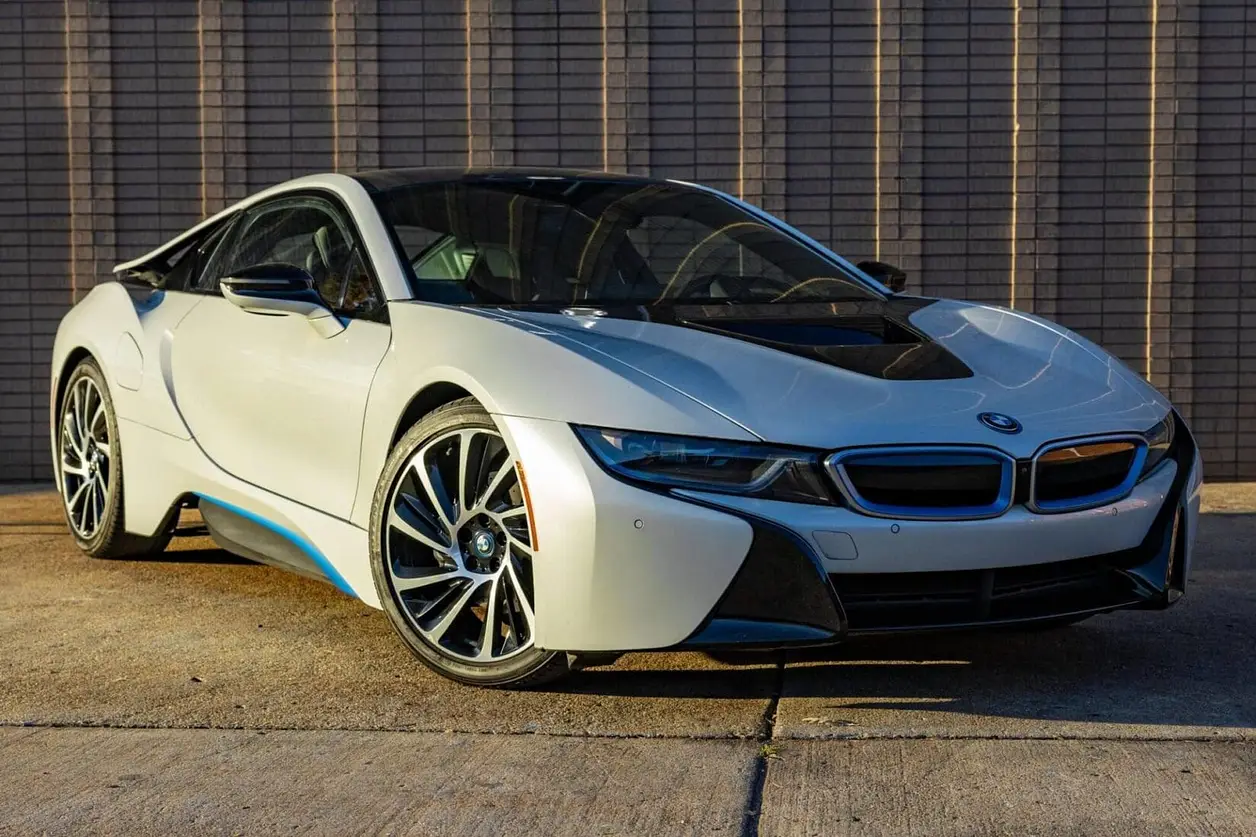
Charging the BMW i8: Time, cost and recommendations
The BMW i8 is an elegant plug-in hybrid that combines the style of a sports car with the eco-friendliness of electric transport. It has become popular with eco-friendly driving enthusiasts, offering a combination of an electric engine for short trips and a petrol engine for longer journeys. However, to get the most out of this vehicle, you need to understand how to charge it properly. In this article, we will look at [...]
Content:
The BMW i8 is an elegant plug-in hybrid that combines the style of a sports car with the eco-friendliness of electric transport. It has become popular with eco-friendly driving enthusiasts, offering a combination of an electric engine for short trips and a petrol engine for longer journeys. However, to get the most out of this vehicle, you need to understand how to charge it properly. In this article, we'll take a look at all the main aspects of charging a BMW i8 in Ukraine: which chargers to use, how long it takes, and how much it costs.
We remind you that you can purchase home and commercial charging stations in our online storeand also use the public charging stations ECOFACTORcharging points located throughout Ukraine. For convenient access to charging infrastructure, we recommend using our mobile applicationwhich is available on iOS and Android.
Which charger is suitable for the BMW i8?
The BMW i8 has a hybrid charging system that combines an electric motor for short journeys with a petrol engine for longer journeys. It is important to choose the right charger to ensure optimal charging speeds.
- Level 1 charger (230 V): This is the standard charging cable that is supplied with the BMW i8 for use in Ukraine. A full charge via this cable takes around 4-7 hours.
- Level 2 charger (240 V): If you need fast charging, a Level 2 charger is the best option. It can fully charge the BMW i8 in 3 hours, making it ideal for daily use. To do this, you need to have a special charger, which is usually installed at home or at specialised stations.
BMW i8 charging cables
Your BMW i8 comes with a standard charging cable that is suitable for home charging and many public charging stations. However, if you use public charging stations frequently, you should consider the optional aftermarket cables. These cables come in a variety of lengths and strengths, which can come in handy if your charging point is located at a great distance from your car. It is important to choose cables that are suitable for both AC and DC charging. This will ensure maximum compatibility with different charging stations and improve charging efficiency in different conditions.
These cables can also be made of more durable materials, which gives you an additional guarantee of reliability during regular use. Replacing the standard cable with a longer or more robust version can make charging much easier if you need to connect to charging stations that are located at a greater distance from your vehicle.
BMW i8 charging ports
The BMW i8 is equipped with a charging port conveniently located on the side of the car, which makes it easy to connect the charging cable. The car uses a Type 2 connector for alternating current (AC) charging, which is the most common connector type in Ukraine and Europe. This type of connector ensures compatibility with most public charging stations, so you can charge your BMW i8 at most locations across the country.
For fast charging, the BMW i8 also has the option of connecting to charging stations with a CCS (Combined Charging System) connector. This type of connection allows the use of fast charging stations that can charge the vehicle to 80% in just 30 to 40 minutes. Thanks to this feature, BMW i8 owners can quickly charge their car when travelling in Ukraine, where fast charging stations are available. These ports provide maximum charging convenience and efficiency both at home and on the road.
How long does it take to charge the BMW i8?
The charging time for your BMW i8 depends on the type of charger you use. There are several options that can have a significant impact on the time it takes to fully charge, and each has its own advantages depending on your situation and needs.
Charging at home
If you choose to charge your BMW i8 at home with a Level 2 charger, it will take approximately 3 hours to fully charge the battery. This is the best option for those who are able to leave their car charging at night or during short breaks in their journeys. With this option, you can conveniently charge your car without spending a lot of time. This solution is ideal for daily use, as it allows you to maintain a sufficient level of charge without having to schedule special charging sessions.
In contrast, if you use a Level 1 charger, the charging process takes significantly longer - typically up to 10 hours for a full charge. This means that this method is suitable for charging at night when you don't need to use your car immediately. Charging via a regular wall socket is the most affordable option, but it has its own speed limitations, especially if your journeys are more regular or longer.
Public charging stations
As for public charging stations, charging stations with a capacity of 7 to 22 kW are currently available in Ukraine, which significantly reduces charging time. At such stations, you can charge a BMW i8 in 1-2 hours, which is much faster than using a standard home charger. This is a good option for those who are in the city or on long journeys and want to quickly recharge the battery without significant delays.
Fast charging
However, for BMW i8 owners who travel frequently or need to charge faster, there is the option of using direct current (DC) fast charging stations. These stations can charge your vehicle up to 80% in 30-40 minutes, which is ideal for those who are on the road and don't want to spend a lot of time charging. Fast charging is the most efficient option for long journeys, as it allows you to get back on the road quickly and continue your journey without major delays.
The cost of charging a BMW i8 in Ukraine
The cost of charging a BMW i8 in Ukraine depends on several important factors, such as the type of charger and the electricity tariffs in your area. Each of these factors can have a significant impact on the total cost of charging, and it's important to have an understanding of these costs to help you plan your vehicle's budget.
Charging at home
Charging your BMW i8 at home with a Level 2 charger is the most cost-effective option. To fully charge the battery, you will need to spend approximately 50-70 UAH, depending on the tariffs of your electricity supplier. This is a convenient way of charging because it allows you to charge the car directly at home, which is not only economical but also avoids the additional cost of travelling to public charging stations.
Another advantage of home charging is that many electricity suppliers offer discounts on nighttime tariffs, which can save you even more on the cost of charging. This makes charging at home even more beneficial, as you can charge your car at night, when energy consumption in the country is lower and electricity rates are lower.
Public charging stations
The cost of charging at public charging stations varies depending on several factors, including the type of network and charging speed. For standard alternating current (AC) charging stations, the average charging price ranges from UAH 7 to 10 per kWh. This type of charging is convenient and affordable for shorter journeys or for situations where you just need to maintain a sufficient charge level.
For faster direct current (DC) charging stations, prices may be higher due to faster charging. The cost of charging at such stations is usually between 15 and 20 UAH per kWh. This type of charging is suitable for those who need a quick charge on long journeys or in situations where they need to get back on the road quickly.
In general, the cost of charging at public stations can vary depending on many factors, but given the speed of charging, it can be a very convenient option, especially for those who often travel long distances and need to charge between trips.
Tips for charging your BMW i8 efficiently
To ensure that charging your BMW i8 is not only efficient but also economical, it is important to follow a few simple but important guidelines. These will not only help you save money, but also extend the life of your battery, which is essential for any electric vehicle. Below are some useful tips to help you get the most out of the charging process.
1. Charge at night
One of the most efficient ways to charge your BMW i8 is to use the nighttime hours to replenish energy. Most electricity suppliers offer reduced electricity rates at night. This means that you can charge your vehicle at a much lower price, which can save you a lot on costs. In addition, charging at night is convenient, as most BMW i8 owners use this time to ensure that their car is fully charged by the time they plan to hit the road in the morning.
The use of nighttime hours also has environmental benefits. At night, the grid's power consumption decreases, which reduces the load on the energy system. This helps to reduce the use of fossil fuels, which helps to reduce carbon emissions.
2. Do not allow the battery to be deeply discharged
Another important tip is to prevent your BMW i8's battery from becoming too deeply discharged. Try to keep the charge level above 20% at all times. Charging the battery to zero can cause it to wear out quickly and significantly reduce its service life. This rule applies to all electric vehicles, as a constant deep discharge can seriously affect the battery's ability to hold a charge in the future.
Li-ion batteries, which are commonly used in hybrids, are sensitive to excessive discharge and charge cycles. Therefore, regularly maintaining the charge at a level between 20% and 80% is ideal for optimal battery performance. This approach extends the battery's service life and ensures that your BMW i8 runs more smoothly over a longer period of time.
3. Use Level 2 charging for daily commuting
For daily driving and regular use of the BMW i8, charging with a Level 2 charger is best suited. This type of charger provides faster and more efficient charging compared to charging via a standard household socket (Level 1). Charging with a Level 2 device takes approximately 3 hours for a full charge, which is ideal for those who plan to use their vehicle on a daily basis and need a reliable source of energy.
The Level 2 charger is optimal for BMW i8 owners who frequently drive around town or take short journeys, as it ensures a fast and safe charging process. In addition, fast charging minimises vehicle downtime, which is very important for those who use the vehicle in active mode.
By following these simple tips, you can significantly improve the charging efficiency of your BMW i8, save money on energy costs and extend the battery's life. In addition, you will ensure maximum convenience when using your vehicle, allowing you to enjoy all the benefits of an electric vehicle without the hassle of charging.

The best electric sports cars for 2024-2025: where does the BMW i8 fit in?
The BMW i8 was one of the first electric sports cars to combine high power with sustainability, giving drivers a new level of driving experience with reduced carbon emissions. Although the car is no longer in production, its influence on the development of electric sports cars is clear. Modern models such as the Tesla Roadster, Rimac Nevera, Lucid Air, as well as new developments from Porsche and Audi, demonstrate great progress in the industry, improving pure power and innovative technology.
The BMW i8 differs from most new electric sports cars in that it uses a hybrid system that combines electric traction with a petrol engine. This allows for a significantly longer range, which is particularly useful for those looking for the perfect balance between efficiency and power. While the BMW i8 may be losing ground in terms of pure power to the latest all-electric models, it remains one of the best hybrid cars in its class, offering unique benefits for drivers who want to combine speed and sustainability.
The place of the BMW i8 among the new electric cars
Compared to new entrants to the electric sports car market, such as the Tesla Roadster and Rimac Nevera, the BMW i8 can look a little dated in terms of technology and power. The Tesla Roadster, for example, promises to achieve incredible acceleration rates, up to 100 km/h in under 2 seconds, and gives drivers an all-electric experience without the need for a petrol engine for long-distance travel. The Rimac Nevera also offers not only incredible power, but also the most advanced technologies in autonomous driving and electric power.
At the same time, the BMW i8 continues to be relevant thanks to its unique hybrid system. It allows you to combine the environmental friendliness of an electric motor for short trips and a petrol engine for long journeys, which is an important factor for those who are not ready to rely on the electric battery alone. This is why the BMW i8 is in demand among drivers looking for a car with high performance but with the flexibility of a hybrid system.
The future of BMW electric cars
BMW is actively working on the transition to full electrification, with an ambitious target of 50% sales in the all-electric vehicle segment by 2030. Models such as the i4 and iX already demonstrate the company's potential to produce high-performance electric vehicles that combine innovative technology, power and sustainability. With improvements in battery technology and an expanding network of charging stations, BMW continues to work to reduce charging times and increase the range on a single charge.
In the future, BMW plans not only to expand its range of electric models, but also to innovate in the field of autonomous driving and connected technologies. The company is actively developing new lighter and more efficient batteries to provide a more environmentally friendly and economical experience for drivers, minimising dependence on traditional energy sources. All of this development will help BMW to consolidate its place among the leaders in electric mobility.
ECOFACTOR: Complete solutions for charging electric vehicles
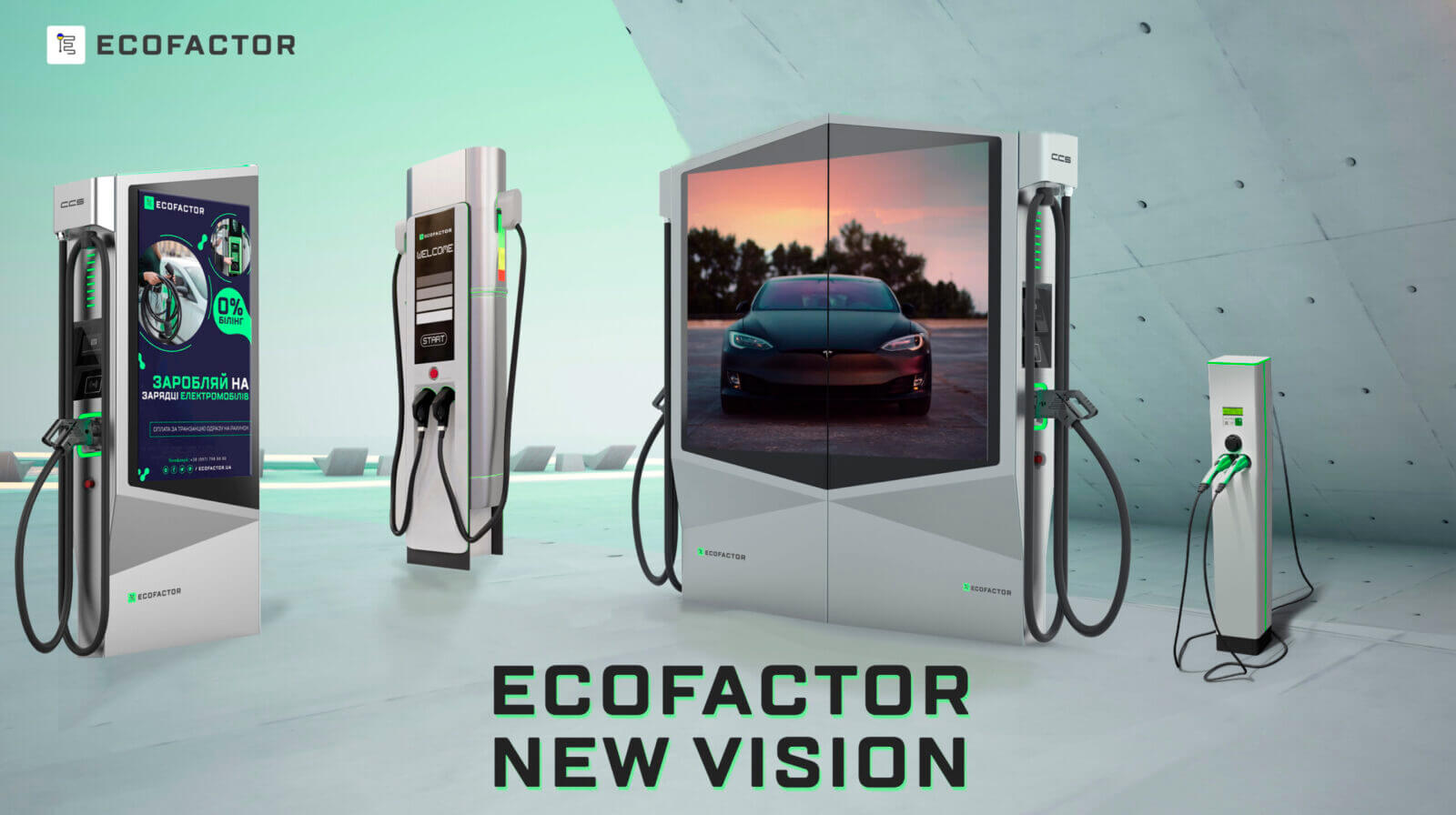
We are ECOFACTOR, specialising in the development and production of charging stations for electric vehicles. We design, manufacture and supply high-quality charging stations for businesses and individual users throughout Ukraine. Our charging stations comply with all industry standards and provide reliable and fast charging for electric car owners.
We also offer a full range of services for businesses: from the selection and installation of charging stations to maintenance and support. Our chargers are manufactured in Ukraine, which ensures their high quality and availability. All stations support both AC and DC charging, which allows electric car owners to use them for different types of charging, from slow to fast.
For the convenience of our customers, we have developed a mobile application available for iOS and Android. The application provides access to maps of charging stationsallowing drivers to easily find the nearest charging points across Ukraine. In our online store can be purchased not only charging stationsbut also accessories such as cables and adaptersThe charger is designed to provide maximum compatibility with various types of charging ports.
Our app helps to simplify the charging process by providing all the necessary information in real time. The map of charging stations allows drivers to easily plan their journeys and always find the right charging station on the way.
We believe that sustainability and energy efficiency are the future of mobility, and we strive to provide Ukrainian drivers with the best conditions for using electric cars.
Conclusion.
Charging the BMW i8 is an important aspect of maximising the potential of this elegant hybrid vehicle. Understanding the different types of chargers, charging times and costs allows owners to optimise the charging process depending on their needs. In Ukraine, there are a variety of charging options available, from standard home chargers to fast charging stations, which can save time when travelling.
Don't forget that thanks to our online store and ECOFACTOR mobile app, you have access to the best charging stations and accessories for charging your BMW i8. We strive to create a convenient infrastructure for electric car owners in Ukraine, helping to make the charging process as convenient and cost-effective as possible.
Frequently asked questions
1. How often do I need to charge the BMW i8?
The frequency of charging depends on your driving. If you use your vehicle daily, you can charge it once a day or every other day. For regular short-distance driving, Level 2 charging is sufficient to keep the battery at an optimal level.
2. Can I charge the BMW i8 at a regular power outlet?
Yes, the BMW i8 can be charged using a standard socket via a Level 1 charging cable, but it takes longer, up to 10 hours for a full charge. This is a good option for charging overnight if you don't need to use the car immediately.
3. How fast does the BMW i8 charge at fast charging stations?
At fast charging stations with DC support, the BMW i8 can be charged to 80% in 30 to 40 minutes. This is the best option for those who are on the road and need a quick charge on a long journey.
4. How can I find the nearest BMW i8 charging stations in Ukraine?
We recommend using the ECOFACTOR mobile app, available on iOS and Android platforms. The app provides access to a map of charging stations across Ukraine, making it easy to find the nearest charging points.
5. What accessories are required to charge the BMW i8?
You may need additional cables and adapters for a comfortable charging experience. In our online store, you can find everything you need to charge your car, including cables for AC and DC charging, as well as other accessories that ensure compatibility with different types of charging stations.
6. How much does it cost to charge a BMW i8 in Ukraine?
The cost of charging depends on the type of charging station and electricity tariffs in your area. Charging at home with a Level 2 charger will cost approximately UAH 50-70 for a full charge, while at public stations the price can vary from UAH 7 to 20 per kWh.
7. Can I use public charging stations for my BMW i8?
Yes, the BMW i8 is compatible with most public charging stations in Ukraine. You can use charging stations with a Type 2 connector for AC charging or CCS for fast charging at DC stations.


