





How to charge the BMW i4 efficiently: strategies for optimisation
Charging an electric vehicle is an important aspect of owning one, as it directly affects its performance, battery life and overall driving experience. BMW i4 owners who understand and implement effective charging strategies can enjoy a smooth, worry-free drive while optimising the longevity of their vehicle's battery. In this article, we take a look at the different charging strategies for the BMW i4, [...]
Content:
Charging an electric vehicle is an important aspect of owning one, as it directly affects its performance, battery life and overall driving experience. BMW i4 owners who understand and implement effective charging strategies can enjoy a smooth, worry-free drive while optimising the longevity of their vehicle's battery.
In this article, we'll take a look at the different BMW i4 charging strategies that owners can employ to maximise the performance of their electric vehicle. We'll look at issues such as optimising home charging, best practices for using public charging stations, battery maintenance and saving on energy costs.
We remind you that you can purchase home and commercial charging stations in our online storeand also use the public charging stations ECOFACTORcharging points located throughout Ukraine. For convenient access to charging infrastructure, we recommend using our mobile applicationwhich is available on iOS and Android.
Understanding the charging options for the BMW i4
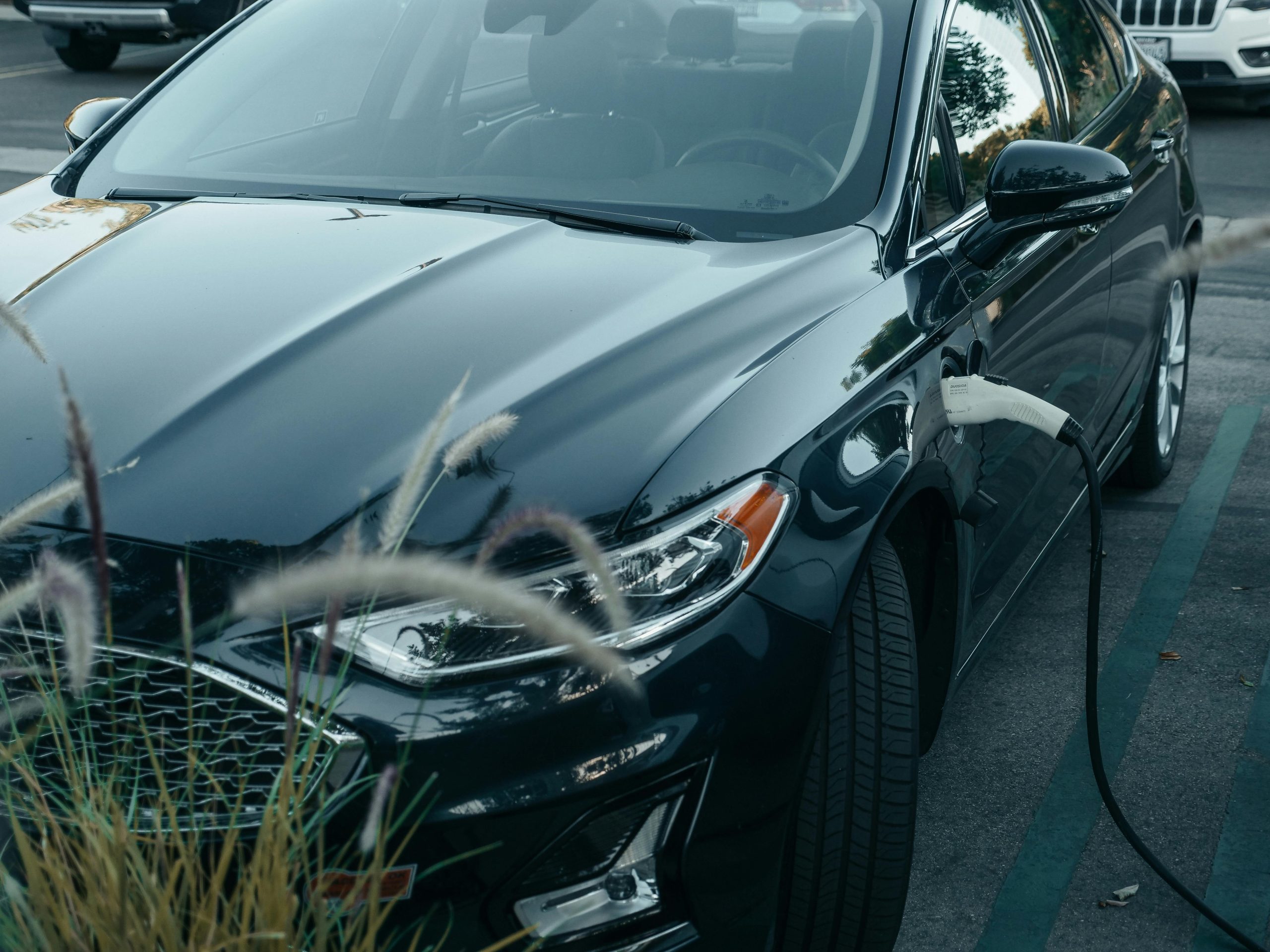
Before considering specific charging strategies, it is important to have a clear understanding of the charging capabilities of the BMW i4.
This car is equipped with an advanced lithium-ion battery pack that not only provides a long range but also supports fast charging, making it a versatile choice for green technology enthusiasts. The BMW i4 is one of the electric cars that has one of the best ranges on the market.
The BMW i4 supports two main charging methods: alternating current (AC) and direct current (DC). AC is typically used for home and office charging, where the vehicle is plugged into a Level 2 charging station or a standard wall socket. The vehicle's charger converts the AC power to DC power, which is stored in the battery.
For fast charging, the BMW i4 supports DC fast charging technology, which can be found at some public charging stations in Ukraine. This allows the current conversion stage to be skipped through the vehicle's charger and the energy to be supplied directly to the battery, which significantly speeds up the charging process.
When using DC fast-charging stations, the BMW i4 can be charged at up to 205 kW, which allows it to reach 80% of charge in approximately 31-32 minutes at stations up to 120 kW available in Ukraine.
How to charge the BMW i4 at home
For most BMW i4 owners, home charging will be the primary method of maintaining the charge level. An important part of effective home charging is the use of a Level 2 charging station. Although it is possible to charge the BMW i4 from a standard household socket (Level 1), this is much slower and less efficient. Investing in a Level 2 charging station, which delivers higher voltage and current, can significantly reduce charging times and increase energy efficiency.
To further improve charging efficiency, BMW i4 owners can take advantage of programmes that allow the vehicle to be charged at night or during low energy consumption hours, which reduces energy costs and relieves the grid.
In addition, to optimise costs, the BMW i4 has built-in intelligent features that allow owners to set a charging schedule, monitor the process remotely and even adjust the battery temperature to achieve maximum efficiency.
Tips for home charging:
- Use a Level 2 charging station to reduce charging time.
- Charge during off-peak hours, if possible, to save money.
- Keep an eye on the battery and use smart settings to maintain optimal conditions.
How to charge your BMW i4 at public charging stations
Occasionally, you will need to charge the BMW i4 at public charging stations, for example on long journeys or when you are away from home.
One important aspect is finding charging stations. The BMW i4 supports fast-charging technology, so owners can take advantage of charging stations on the road or in urban areas to quickly recharge the battery over long distances. BMW i4 owners should familiarise themselves with the location of charging stations compatible with their vehicle and plan their route in advance to minimise waiting times and ensure that they have sufficient charge for the journey ahead.
Modern smartphone apps, such as ECOFACTOR EV Charging, and online resources will help you plan your journeys based on the availability of charging stations and provide convenient access to cheaper charging rates.
Maximise battery life and performance
In addition to charging efficiently, BMW i4 owners can take additional steps to extend the battery's life and maintain the high performance of their vehicle. This includes a few simple but important practices to ensure that the battery remains in optimal condition and delivers maximum performance for a long time.
Tips for charging
To keep the battery in the best condition possible, it is important to keep the battery charge level between 20%-80% for daily use. This helps to avoid putting excessive strain on the battery, which can accelerate its wear and tear. The batteries of electric vehicles such as the BMW i4 perform best when the charge is kept in a moderate range rather than at extremes.
It is also important to avoid charging to 100% or fully discharging to 0%. While full charging may be necessary in certain situations, it is best to do so less frequently as it can cause additional wear and tear on the battery. For the majority of daily rides, maintaining the battery at 80% is the best option.
If the vehicle is to be stored for a long period of time, it is important to charge the battery to 50% before stopping use. This prevents battery degradation, as batteries that are left charged to the maximum or completely discharged are prone to a faster loss of capacity. For long-term storage, the 50% is optimally charged.
Battery maintenance
Monitoring the battery is critical for the long-term use of the BMW i4. To this end, the vehicle is equipped with an on-board diagnostic system that allows owners to check the health of the battery. Regular checks can detect any potential problems, such as malfunctions in the charging system or a decrease in battery capacity, in time to prevent more serious damage.
Regular maintenance is also an important part of battery care. We recommend that you visit an authorised BMW service centre to have the battery checked at least once a year. Professionals can check all the indicators and identify possible problems that could reduce battery efficiency and affect the overall performance of the vehicle.
Regenerative braking
One of the important features that significantly improves charging efficiency and extends the range is regenerative braking. This is a system that allows you to recover energy during braking by converting kinetic energy into electrical energy. This allows the energy that would otherwise be wasted in heat to be returned to the battery, helping to extend the range and improve charge efficiency.
The BMW i4 offers several levels of regenerative braking, allowing drivers to adjust the intensity of this function to suit their preferences and driving conditions. For example, in city traffic where braking is frequently required, increasing the level of regenerative braking can significantly reduce the frequency of use of conventional brakes, which not only increases efficiency but also helps to preserve battery life.
It's important to find a balance between driving comfort and maximum energy efficiency, as too much regenerative braking can be uncomfortable, especially on long journeys on fast roads. However, for daily city driving, it can be very beneficial to improve energy efficiency and reduce charging costs.
Strategies for saving money on charging the BMW i4
One of the main advantages of electric cars, such as the BMW i4, is the significant fuel savings, but also the ability to significantly reduce charging costs. In Ukraine, electricity tariffs for residential consumers vary, and choosing the right tariff plan can help you save a lot on charging your electric vehicle. Some energy companies offer tariff plans for electric car owners that provide discounts for charging during low electricity consumption hours, usually at night. However, not all companies offer such tariffs, so it is important to compare offers from different suppliers. This can significantly reduce energy costs, as electric cars require a significant amount of energy to charge.
In order to effectively save on charging, it is important to compare offers from different electricity suppliers and choose the most favourable tariff. In addition, it is worth considering switching to special tariff plans that offer discounts for electric car owners. Comparing tariffs, especially for nighttime hours, helps to reduce costs by charging your car during periods of low load on the power system.
Another cost-saving strategy is the use of renewable energy sources such as solar panels or wind turbines. Owners of such systems can not only reduce charging costs but also reduce their dependence on traditional energy sources. In Ukraine, the installation of solar panels is gaining popularity, in part due to support programmes from the state and local authorities. These may include soft loans, subsidies for the installation of renewable energy sources, or favourable tariffs for feeding energy back into the grid.
Installing solar panels can significantly reduce the cost of electricity needed to charge an electric vehicle, as the energy generated will be used for home needs and car charging. Moreover, such systems not only save money but also improve the environment by reducing carbon emissions and increasing energy independence.
In addition, some energy companies offer programmes to sell excess energy to the grid, allowing owners of solar panels or wind turbines to earn extra income or cover the cost of charging their car. However, not all energy companies support this function, so it is worth checking the terms and conditions of specific suppliers. Installing renewable energy sources is an investment in the future that allows you not only to save money but also to contribute to the preservation of the environment.
ECOFACTOR: your reliable partner for charging the BMW i4
We, ECOFACTOR, specialise in the development and production of charging stations for electric vehicles in Ukraine. Our products and services are focused on making the process of charging electric vehicles convenient, efficient and affordable for everyone. All our charging stations comply with international standards and are designed to provide high performance, which is important for optimising the energy use when charging your BMW i4.
We offer a wide range of charging stations - from mobile to powerful DC stations capable of delivering up to 420 kW. This allows owners of electric vehicles such as the BMW i4 to conveniently charge their vehicles both at home and at public stations, ensuring a fast and efficient charging process.
For the convenience of our customers, we have also developed a smartphone app available on iOS and Android. The app allows drivers to find charging stations, view their availability, and get up-to-date information on charging rates. In addition, the application has map of charging stationswhich allows you to conveniently plan trips in an electric car, such as a BMW i4, providing access to stations along the way.
In our online store you can find not only charging stationsbut also accessories such as cables and adapters for electric vehicles. This allows owners of BMW i4s and other electric vehicles to have everything they need to charge efficiently and connect to different types of stations.
Through our charging station operator platform, businesses and institutions can integrate electric vehicle charging solutions into their infrastructure, reducing energy costs and increasing charging station efficiency. We provide not only charging stations, but also a full range of maintenance services, including installation and technical support.
At ECOFACTOR, we provide comprehensive charging solutions for electric vehicles, contributing to the development of electric transport infrastructure in Ukraine and the convenience of electric car owners, such as the BMW i4.
Conclusion.
In this article, we've covered the key strategies for efficient charging of the BMW i4, including optimising home charging, using public charging stations, and the importance of proper battery maintenance to extend battery life. BMW i4 owners can significantly improve the efficiency of their vehicle by applying these strategies and also benefit from the modern charging solutions offered by ECOFACTOR. We provide a wide range of charging stations, accessories, a mobile app and business services to make charging electric vehicles as convenient and efficient as possible. With our innovative solutions, you can optimise your energy costs, extend your battery life and increase the comfort of your BMW i4.
Frequently asked questions
Can I charge the BMW i4 at home?
For example, the BMW i4 can be charged at home using a Level 2 charging station, which significantly reduces charging time and makes the process more efficient than a standard socket.
What is the charging speed of the BMW i4?
The BMW i4 supports fast charging of up to 200 kW, enabling 80% of charge in just 30 minutes when using compatible public DC fast charging stations.
How do I find a charging station for my BMW i4?
To make it easier to find charging stations, you can use the ECOFACTOR mobile app, which is available on iOS and Android. The app includes a map of the stations, as well as up-to-date information on their availability and tariffs.
Which accessories are required to charge the BMW i4?
To charge your BMW i4, you may need cables, adapters and other accessories, which are available from the ECOFACTOR online shop. The choice of accessories depends on the type of charging station to which you are connecting the vehicle.


