





The complete guide: how to choose an electric car charging cable
Many people think that a cable for an electric car is something minor that comes with the kit and that you don't need to worry about. But it's not that simple. Some charging stations in Ukraine - especially AC-type ones - do not have a built-in cable. So if you arrive without your own, you won't be able to charge. When choosing a charging cable, it is important to consider not [...]
Content:
Many people think that a cable for an electric car is something minor that comes with the kit and that you don't need to worry about. But it's not that simple. Some charging stations in Ukraine - especially AC-type ones - do not have a built-in cable. So if you arrive without your own, you won't be able to charge.
When choosing a charging cable, it's important to consider not only the type of connector, but also the power, length, and quality of materials. Buying a cable that's too short or slow can make charging a pain in the neck. And a cheap option can fail at the most unexpected moment - especially in winter. In this guide, we'll explain when you really need your own cable and how to choose the right one for you.
We remind you that you can purchase home and commercial charging stations in our online storeand also use the public charging stations ECOFACTORcharging points located throughout Ukraine. For convenient access to charging infrastructure, we recommend using our mobile applicationwhich is available on iOS and Android.
When will you need your own cable?
There are charging stations where you just drive up, pull the cable out of the charging station, plug it in, and that's it. It is convenient. But there are few such points in Ukraine, and they are mostly fast DC chargers. If you only use these, you can do without your own cable.
But as soon as you need to charge at a regular AC station or at home, the cable becomes a must. And it often happens that even at a paid station, it turns out that there is no cable, or someone has hidden it in the trunk and driven away. And then you can't do without your own.
Public charging points without a cable (sockets)
This is the most common option in Ukraine. Many Type 2 stations have only a socket, and the driver has to plug in his own cable. Such charging stations can be found near residential complexes, shopping malls, business centres, car dealerships, and supermarket car parks. It looks neat, takes up less space, but requires a trained user.
We've seen situations where a driver arrives at a charging point and is surprised and disappointed to find an empty socket. Therefore, even if you use apps like PlugShare or Uklon Drive, you shouldn't rely entirely on photos and labels - it's better to keep a cable in the trunk at all times. Like a spare wheel, only for current.
Home chargers
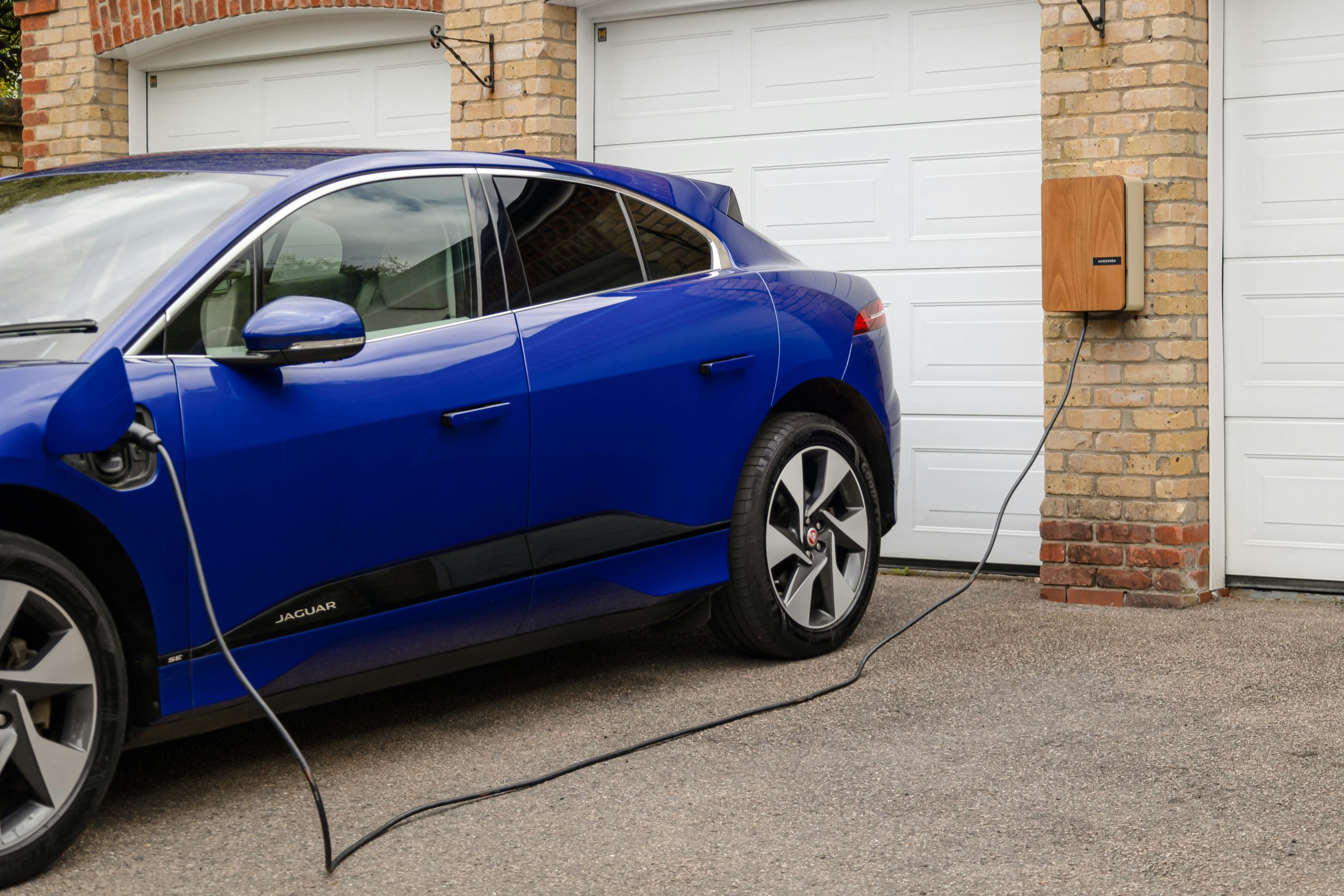
More and more Ukrainians are installing charging stations at home, especially owners of private houses and cottages. But they often choose models without a cable - just a wall socket with a controller. This option is cheaper, more compact and easier to maintain. But, again, you won't be able to use it without your own cable.
There are also portable chargers that plug into a regular household outlet. They usually come with the car, but not always. If you plan to charge your car at home at least occasionally, make sure you have a suitable cable or adapter. And make sure it is safe, especially if the wiring in your apartment is old.
Charging at work
Many companies in Ukraine, especially those in IT or logistics, install charging points for their employees. It's a nice bonus, but technically, it's the same as with public sockets. In most cases, these are AC stations with a type 2 socket without a cable.
You won't be able to charge your car if you forget the cable at home. Or you might be able to, but you'll have to borrow one from a colleague who will charge you for it in the form of coffee. To avoid being dependent on others and wasting time, keep the cable in your car, especially if you regularly leave it in the car park near your office for the day.
Other reasons to have your own cable
If you have a car with a Type 1 connector
Ukrainians are increasingly buying electric cars from the US, and this is normal - the choice is wide and the prices are attractive. However, many of these cars have a Type 1 connector, which is not supported by most tethered European chargers.
You simply cannot connect to Type 2 without an adapter. And not all of these adapters are safe - especially under high load. The best option is to have your own Type 1 to Type 2 cable that fits your machine. It's an investment in peace of mind.
If you want to charge from a household outlet
This is a slow but sometimes useful way. For example, you arrive in a village, there is no charging point nearby, and it's still 100 km to Kyiv. You pull out a cable with an adapter for 220V, plug it into a socket, and albeit slowly, the charge starts.
You should not use this method on a regular basis, as old wiring or a bad contact can cause overheating. But as an emergency solution, it's a perfectly workable solution. Just make sure that the cable is of high quality, has protection, and is not a fake from the market.

Do electric vehicles come with a cable?
Nowadays, most new cars (especially those officially sold in Ukraine or Europe) come with one cable, usually Type 2. But it's worth checking, because the equipment varies.
If you buy a car second-hand or from abroad, be sure to ask about the cable. This is not a trifle. A new one can cost several thousand hryvnias, depending on the type, length, and power.
Some drivers deliberately keep two cables: one at home (for charging via a wall socket) and one in the car. It's convenient: you don't have to roll it up, carry it around, or clean it every time. And the cable lasts longer if you don't alternately throw it into the garage or the trunk.
It is also worth buying a bag or container for storing the cable. This is a small thing that has a significant impact on the service life - especially in rain, snow and muddy weather.
How to choose a charging cable for an electric vehicle
What type of connector should it be?
In Ukraine, most plug-in (cable-free) charging stations are AC chargers with Type 1 or Type 2 connectors. There is no need to buy separate cables for high-speed DC connectors such as CCS or CHAdeMO - such stations already have a cable built in.
The exact type of connector your electric vehicle has depends on its model and the country from which it was imported.
Type 1 connector
Type 1 is an older standard that is mostly found in electric vehicles from the United States. Such cables are usually charged at a power of 3-7 kW. A half-hour charge can give you about 20 km of range. These connectors do not have a locking mechanism, meaning that the cable can be pulled out at any time.
As Type 1 is not a standard in Europe, it will be difficult to find a charger with a built-in cable of this type. If you have a Type 1 car, you will almost certainly need to have your own cable or adapter to charge in most places.
Type 2 connector
Type 2 is a modern European standard. These cables support charging at outputs ranging from 3 to 22 kW (some up to 43 kW). You can get up to 100 km of range in half an hour at maximum power. The connector has a locking mechanism - the cable cannot be pulled out during charging, which is much safer.
It is a Type 2 cable that you will need for charging at most home, public and work AC stations with a universal socket.
Are Type 1 and Type 2 connectors compatible?
No. A Type 1 cable is not suitable for charging a car with a Type 2 connector, and vice versa. These systems are not compatible with each other, and connection is possible only through universal sockets or adapters (which, by the way, are not always safe).
If you plan to charge at a power outlet, make sure that the power outlet supports the type you want or that you have the correct cable to connect.
How much power should the cable support?
The cable must comply with the maximum power that your vehicle can charge from a single-phase AC mains supply.
This figure depends on the model. For example, the Nissan Leaf has a maximum of 6.6 kW, and the Jaguar I-Pace has up to 7.4 kW on a single phase. If you buy a cable that supports less power than your car, you will simply lose in charging speed.
You can also get a cable with a margin - it won't charge faster, but it will be compatible with more powerful chargers. The main thing is not to get a slower one than you need.
Cheap cables often have limited speeds, which is another reason not to skimp on quality.
What cable length should I choose?
It all depends on where you will be charging. If the charging station is located next to a parking space, 5 metres is enough. But if the socket is on the wall or behind the car, you may need a longer cable.
The universal option is 7.5 metres. This cable is usually suitable for most situations and does not take up much space.
It is better to get a slightly longer cable than to drag it under the wheels or through puddles. It will be a little more inconvenient to store it, but it will save you many times on the road.

Additional tips for choosing a charging cable for your electric vehicle
Choose a 32A cable
When looking for a charging cable, look for models with 32 amps. They allow you to charge faster - up to 7.2 kW on a single-phase network. 16A cables are cheaper, but limit the speed to 3.6 kW, which can be slow even for a small battery.
If you've already spent money on an electric car, you shouldn't skimp on the cable, which will be a permanent part of your daily use.
Choose a high-quality and durable cable
An electric car is a serious investment, so the cable must be reliable. Do not buy the cheapest thing you find on the Internet. Such cables are often stiff, break in the cold, crack over time, and have a weak fixation in the connector.
A high-quality cable is flexible, holds well in your hands, does not slip, does not overheat and works in rain, snow or heat. It will make charging your car more pleasant and safer, especially in winter, when a thin and stiff cable turns into something like a pole.
Check whether the cable is recyclable
No cable lasts forever. Even the best ones will wear out, lose flexibility, or simply break down over time. It's better to buy one that can be recycled right away - it's not only more environmentally friendly, but also more practical.
Cheap cables are often not certified or made of materials that are difficult or impossible to recycle.
Avoid cables that are too short
The cheapest cables on the market are usually the shortest. But this is not always a plus. When you need to plug into a socket from an inconvenient side or the charging station is installed a little further away, a short cable will not reach or will be too stretched, which is dangerous for both the cable and the connectors.
The optimal length is 7.5 metres. It allows you to easily connect to almost any station, and at the same time does not create unnecessary storage problems. In some cases, a 5-metre cable is also convenient for home use, but for city or travelling, it is better to take something within 7-10 metres.

How we at ECOFACTOR help you choose the right charging cable
At ECOFACTOR, we have been working for over 10 years to make charging an electric vehicle in Ukraine convenient, understandable and affordable. Our approach is a complete solution: from the development of charging stations to software, cables, accessories and a mobile app for drivers.
Everything we're talking about in this article is based on real issues that our customers come to us with every day. Someone chooses a charging station for the office, someone needs to find an adapter for a non-standard connector, and someone is simply looking for a reliable cable that will work in summer and in cold weather. In our online store different types can be found cables: Type 2 - Type 2, Type 2 - Type 1, mobile chargers, Schuko adapters, industrial versions for 32A - everything you need in real life.
To make it easier to connect on the go, we also created a mobile app for iOS and Android. It offers an interactive map of charging stationswhich allows you to quickly find the nearest charging point, check its status, capacity, and even start charging directly from your smartphone. The app already unites more than 215,000 electric car drivers in Ukraine - and we are constantly working on its development.
We do not just sell equipment - we manufacture it ourselves in Ukraine. This applies to both AC and DC charging stations, as well as mobile solutions up to 44 and 420 kW. Our ECOFACTOR EFN platform allows charging network operators to manage tariffs, see energy consumption, connect new points and analyse the performance of the entire system.
And if you need help with your choice, we are always here for you. At ECOFACTOR, you don't just buy cables or accessories, you get a complete solution with support, installation and maintenance. All you need is an enquiry, and together we will find an option that really works in your environment.
Conclusions.
An electric car charging cable is more than just a wire. It is a tool that either simplifies your daily use of your car or, on the contrary, adds problems out of the blue. Knowing how and where you plan to charge, at which stations, in what conditions, you can choose the option that really works. One cable is not for everyone. Someone will use a short one for home use, while others will carry a 10-metre cable as a spare.
At ECOFACTOR, we know this from experience: drivers have different approaches to choosing a cable, but they all have the same goal - to charge quickly, safely and without unnecessary nerves. And if this article has helped you to understand the topic a little better, then we are moving in the right direction.
Frequently asked questions
Is it possible to charge an electric car with a cable with a power greater than the car's capacity?
Yes, you can. But you will still be charging at the maximum power that your car can handle. A cable with a "margin" simply won't limit your options in the future.
What should I do if the charging station has a socket and my cable is left at home?
Unfortunately, you won't be able to charge at such a station without a cable. The only solution is to return for the cable or look for another charger with a built-in cord.
What is the difference between a 16A cable and a 32A cable?
Charging power and speed. The 32A cable allows you to charge twice as fast as 16A. The difference is especially noticeable when you're charging at home or at work.
How often do I need to change the cable?
If the cable is of high quality and handled carefully, it can last for several years. But it's worth keeping an eye on its condition: if cracks appear, loss of flexibility or overheating, it's better to replace it.
Do I need a cable bag or case?
This is not necessary, but it is highly recommended. The cable will stay cleaner for longer, won't fray or deteriorate from moisture, especially if you keep it in the trunk all year round.


