





BYD Yuan Plus vs Tesla Model 3: comparison for Ukrainian realities
Modern electric vehicles are increasingly becoming an alternative to petrol cars in Ukraine. Some people see them as a way to save on fuel, while others are simply tired of queuing at petrol stations. But when it comes to choosing a specific model, questions arise. The Tesla Model 3 has long been associated with innovation and electric vehicles in general, but Chinese models are entering the market, which [...]
Content:
Modern electric vehicles are increasingly becoming an alternative to petrol cars in Ukraine. Some people see them as a way to save on fuel, while others are simply tired of queuing at petrol stations. But when it comes to choosing a specific model, questions arise. The Tesla Model 3 has long been associated with innovation and electric vehicles in general, but Chinese models are entering the market that look competitive. One such example is the BYD Yuan Plus.
In this article, we will look at how these two models actually differ, how convenient they are in Ukraine, and what to look for when choosing between them.
We remind you that you can purchase home and commercial charging stations in our online storeand also use the public charging stations ECOFACTORcharging points located throughout Ukraine. For convenient access to charging infrastructure, we recommend using our mobile applicationwhich is available on iOS and Android.
Format: sedan or crossover?
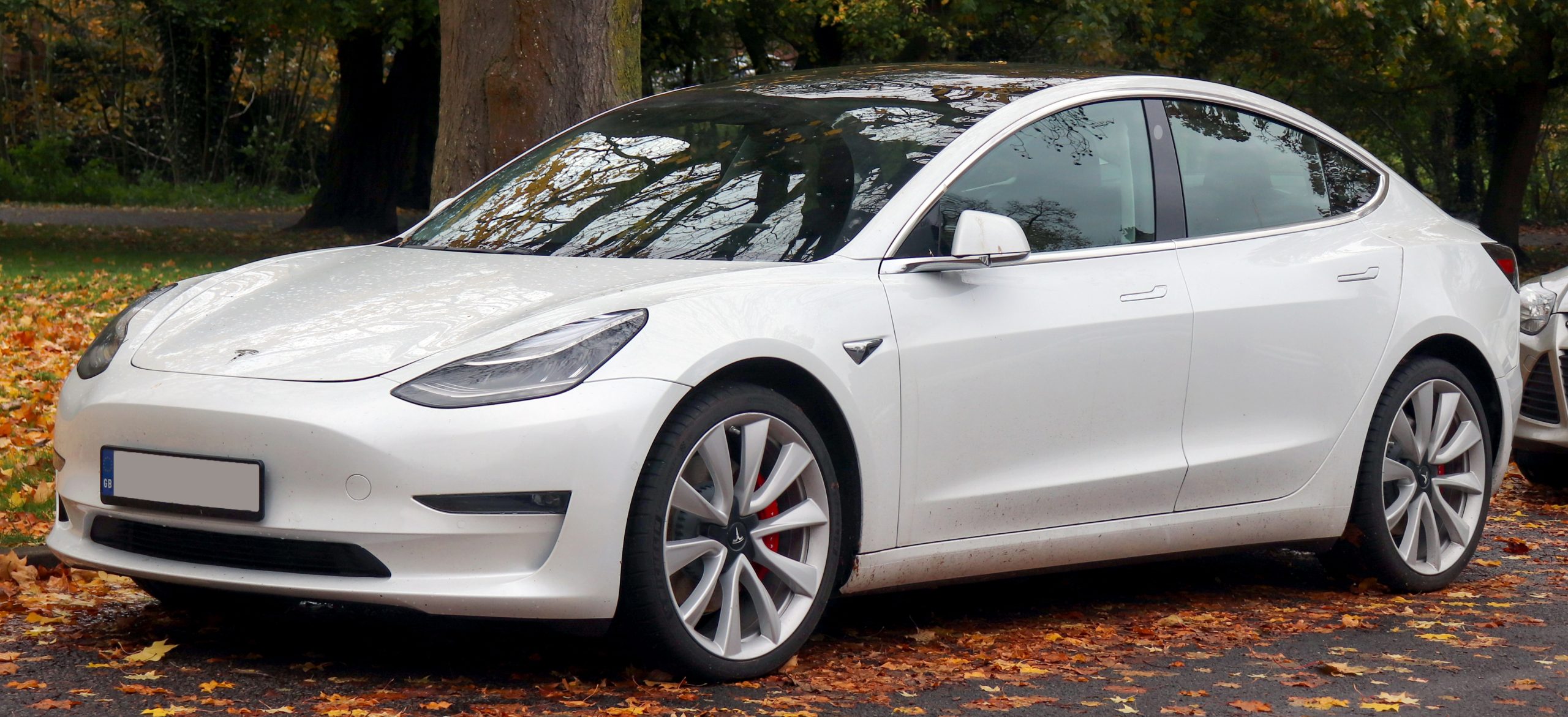
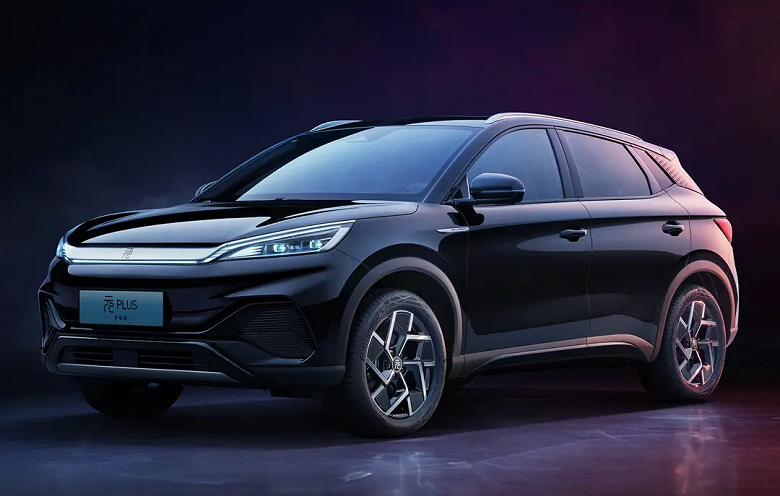
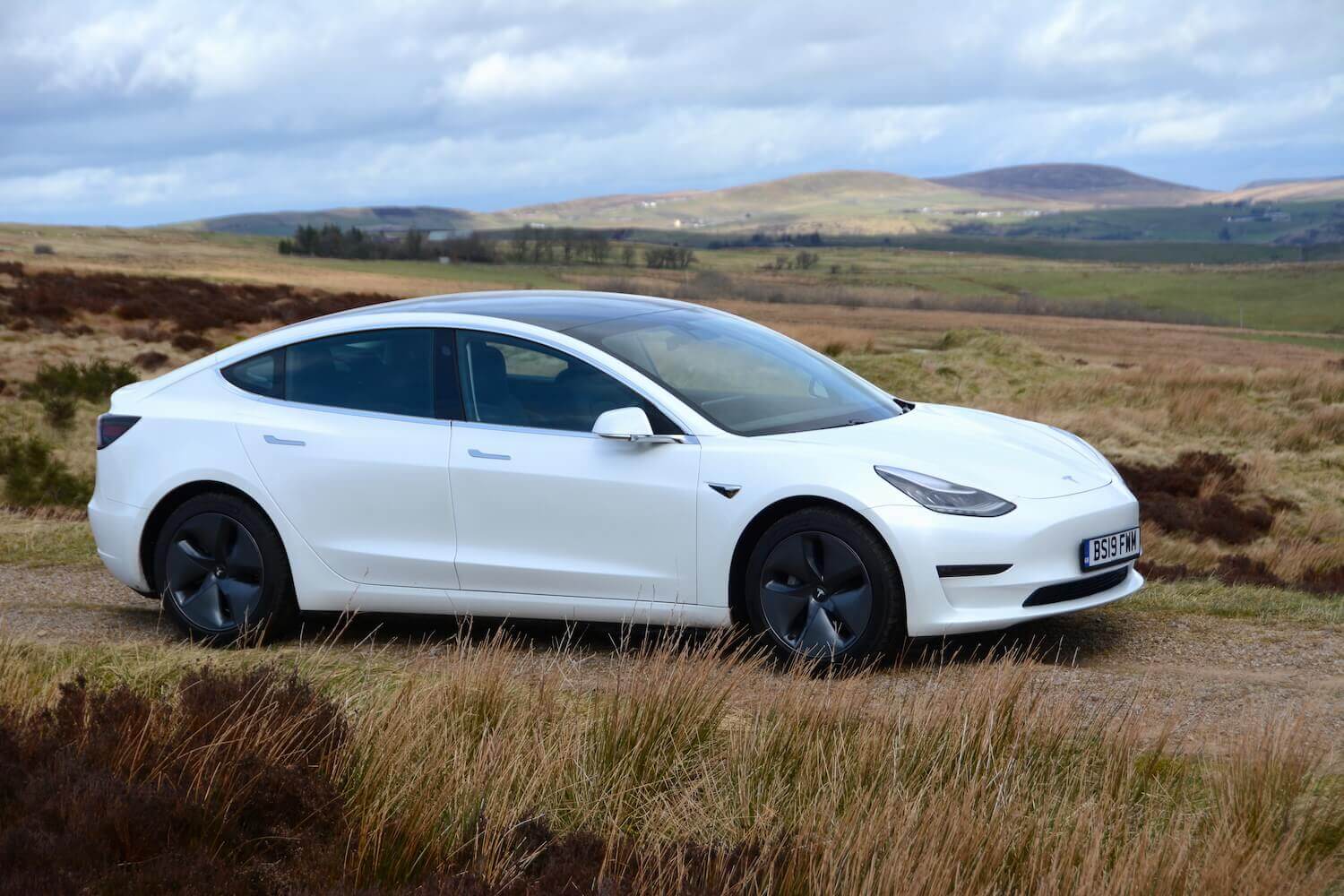
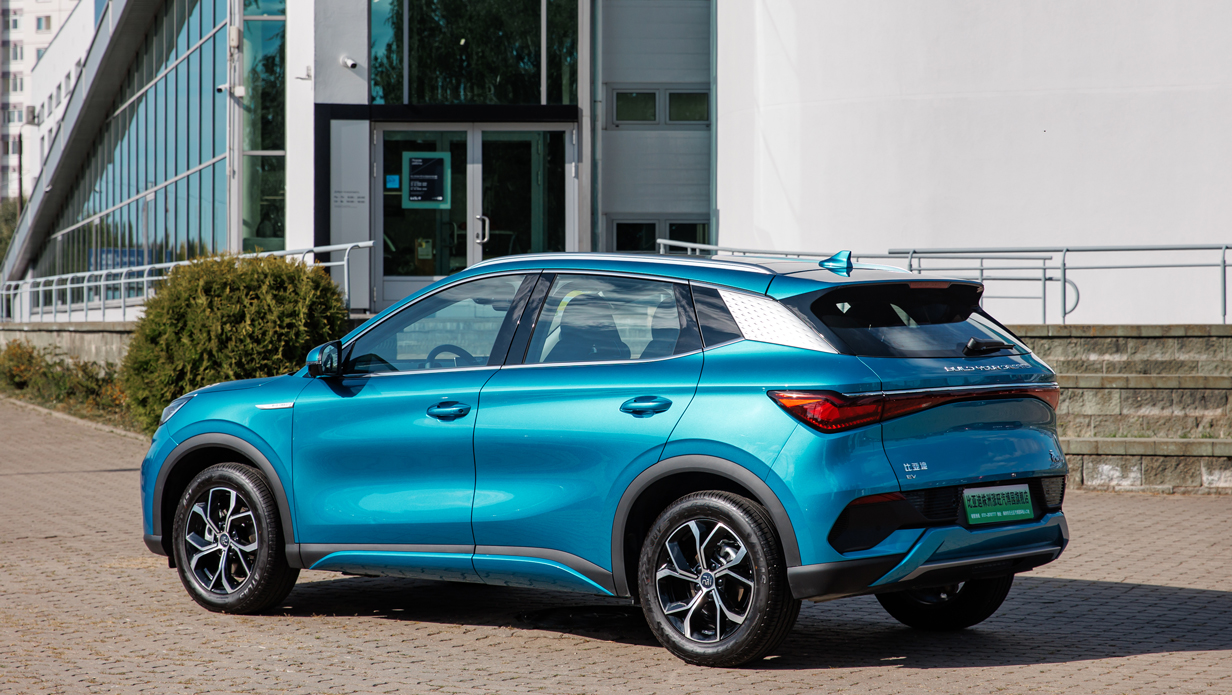
This is perhaps the first thing you should pay attention to. Tesla Model 3 is a typical sedan. It is low, with a compact body, ideal for good roads. But the BYD Yuan Plus is an electric crossover with a higher ground clearance and stance. It holds up better on pits, curbs, broken dirt roads - that is, on the realities we face in Ukrainian cities and villages.
Even if you drive in the city most of the time, but get off the road once or twice a month, the Yuan Plus seems like the more logical option. In this case, you'll have to be more careful with the Model 3, especially in winter or after rains.
Battery and range
Here, the gap between the cars is not so great, although on paper the numbers may seem significantly different. There are two battery options available in BYD Yuan Plus:
- 50.12 kWhrange of up to 430 km according to CLTC, or about 320 km according to WLTP
- 60.48 kWhUp to 510 km (CLTC), about 420 km (WLTP)
The Tesla Model 3 (2025 RWD version) has a battery with 60.5 kWh of usable capacity. According to the EV Database, the real range is about 445 km, and the WLTP is 520 km.
In the city, Tesla shows very good results, especially in the warm season. In the cold, mileage may drop, but not critically. The Yuan Plus depends more on driving style and conditions - on the highway at 110 km/h, it discharges faster than the Tesla.
Dynamics: power and acceleration
The Tesla Model 3 in the basic rear-wheel drive (RWD) version has a 208 kW electric motor (approximately 283 horsepower) and 420 N-m of torque. This is enough to accelerate the car to 100 km/h in 6.1 seconds. This is a very decent figure even for a car with a petrol engine, and even more so for an electric vehicle with one drive axle. The top speed is limited to 201 km/h, which is also more than enough for any Ukrainian road. Even if you occasionally take the motorway to the EU, there is still potential.
The BYD Yuan Plus has a slightly different dynamic philosophy. Here, under the hood, there is a front-wheel-drive permanent magnet synchronous electric motor with a capacity of 150 kW, which corresponds to 204 hp, and with a torque of 310 N-m. Acceleration to hundreds takes 7.3 seconds, and the top speed is limited to 160 km/h. For a crossover weighing about 1.6-1.7 tonnes, this is quite decent. In the city or on the highway, this is more than enough.
In real life, the difference in acceleration between 6.1 and 7.3 seconds is noticeable only to those who actively use the accelerator pedal. For most drivers, the most important thing is that the car overtakes confidently, keeps up the pace and doesn't make them nervous when leaving a secondary road. And here both models do a good job.
However, if you like dynamic driving, you need a crisp pedal response, even acceleration without slippage and maximum power transmission - Tesla has a head start here. More torque, rear-wheel drive and a better-tuned chassis make the car feel lighter and more agile. This is especially noticeable when cornering, changing lanes or making fast manoeuvres in the city.
At the same time, BYD Yuan Plus has another trump card - smoothness. It doesn't have sporty stiffness, it behaves more calmly, and acceleration is less aggressive. This can be an advantage for those who are not looking for drive, but want a stable and predictable ride without jerks.
Charging: fast and convenient
Tesla Model 3:
- AC charging up to 11 kW - full charge in 6.5 hours
- DC fast charging up to 175 kW - 10-80% in 24 minutes
- Port: CCS Combo 2
BYD Yuan Plus:
- AC charging up to 7 kW
- DC charging up to 80 kW (depending on version)
- Port: also CCS Combo 2 (in the European version)
In the city, this may not matter much - both charge overnight. But on the highway, Tesla is clearly faster. And although there are not many 150+ kW chargers in Ukraine yet, their number is growing, and this advantage will be relevant every year.
Salon and interior
Tesla and BYD showrooms are two completely different worlds. And it's not just the design, but the way each manufacturer sees the driver's experience.
Tesla Model 3 is made in the style of total minimalism. There are virtually no unnecessary buttons in the cabin. All control is concentrated on a large 15-inch horizontal touchscreen in the middle of the dashboard. It controls the climate, mirrors, audio, glove compartment, headlights, wipers and even door opening. Everything looks technologically advanced, neat and unified - like a tablet on wheels. But not everyone likes this.
If you're used to intuitive manual interaction with buttons or knobs, you'll have to adjust to Tesla. For example, to increase the airflow a little, you need to go to the menu, find the desired item, and only then change the parameter. It doesn't sound terrible, but it's distracting while driving. At the same time, all of this is updated over the air, and Tesla regularly adds new features or improvements to the interface.
BYD Yuan Plus, on the other hand, looks much more "lively" and a bit kitschy, but in a good way. Here, physical buttons have been left behind, and this makes the controls more traditional. For example, climate control or volume can be changed without a menu. There is a central screen - and it's also large - but there is still space for the usual elements.
The decoration is another story. Yuan Plus has a thematic approach to interior design.
- There are three decorative "strings" on the door panels, like a guitar. They are not just for decoration - when pulled, they produce a sound of different pitches.
- The ventilation openings are designed in the castanets style - unexpected but interesting.
- And most importantly: a built-in karaoke microphone right in the armrest. The car supports the corresponding apps and can output sound through the audio system.
This is not for everyone. But for those who are tired of the restrained grey of interiors, BYD will definitely evoke emotion. The cabin is warm, cosy, even a little "homey". There are several colour options - not only black, but also red, blue, and beige - that really change the mood in the cabin.
Dimensions and space
| Characteristics | BYD Yuan Plus | Tesla Model 3 |
| Length | 4455 mm | 4720 mm |
| Width | 1875 mm | 1849 mm |
| Height | 1615 mm | 1441 mm |
| Wheelbase | 2720 mm | 2875 mm |
| Boot capacity | ~440 л | 594 l + 88 l |
Tesla has a "franc" - a front trunk, plus more space in the main luggage compartment. But the Yuan Plus has a higher seating position and a higher roof - rear passengers are more comfortable, and cargo can be stowed a little higher.
Energy efficiency
When it comes to electric vehicles, energy consumption is no less important than the range. In petrol cars, we look at "litres per 100 km", here we look at "watt-hours per kilometre".
The Tesla Model 3 in the base version shows very stable and economical energy consumption of approximately 136 Watt-hours/km in real-world conditions. In warm weather in the city, the figure can even drop below 120 W-ppl/km. The successful combination of low weight, aerodynamic bodywork and rear-wheel drive make the difference. On the highway at 110 km/h, it consumes not much more than in the city, making it very efficient for long journeys.
According to the technical data, BYD Yuan Plus has a consumption of 125 Wh/km, but in real life, especially during active driving or at full load, the figure is closer to 140-150 Wh/km. This is not catastrophic, but there is still a difference. At speeds above 100 km/h, the Yuan Plus discharges noticeably faster than the Tesla.
Physical factors are at work here:
- Higher weight
- Less streamlined bodywork
- Higher centre of gravity and air resistance
In the city, both models work quite efficiently, and the difference will not be so noticeable. If you drive mostly short distances, this will not be a critical factor. But for those who regularly cover hundreds of kilometres, Tesla's efficiency will help you save on every kilowatt.
Security.
The Tesla Model 3 has full Euro NCAP certification with very high scores:
- Adult passenger protection - 90%
- Child protection - 93%
- Pedestrian and cyclist protection - 89%
- Driver assistance systems - 87%
This means that the car not only behaves well in the event of an accident, but also actively works to prevent it. The model is equipped with all-round cameras, automatic emergency braking, lane keeping assist, adaptive cruise control and other features.
BYD Yuan Plus has no official European certification yet (at the time of writing). But the Chinese market also requires strict safety standards, and BYD is one of the industry leaders. Yuan Plus has all the basic systems: ABS, ESP, front and side airbags, a rear view camera, parking sensors, and tyre pressure monitoring.
However, some of the assistance systems may be less "advanced" - for example, lane-keeping is less accurate than Tesla's. For drivers who value maximum safety, with confirmation through international tests, Tesla will be a more confident choice.
Smart features, updates, software
Tesla looks like the undisputed leader in this area. In fact, the car works like a large computer on wheels. All updates come via Wi-Fi, just like a smartphone. Throughout the year, you can get new features, interface improvements, or battery optimisation. Everything is integrated: the navigation takes into account charging stations, the system independently warms up the battery before fast charging, and the interface is fast and stable.
BYD Yuan Plus also has a mobile app. You can use it remotely:
- Start or stop charging
- Switch on the climate control
- Check the battery status
- Open/close the car
However, the software itself is less flexible. Updates are rare, the interface is not as modern and smooth, and some functions sometimes work unstably or require manual intervention. This is not critical - for most users, the basic functionality is enough. But if you value seamless integration, automation, and smart cars, Tesla is one step ahead.
Cost in Ukraine
Prices are one of the most important arguments. And here BYD Yuan Plus looks much more affordable.
- New Yuan Plus in showrooms in Ukraine will start from 28,000 $
- Tesla Model 3 (2025) in Europe costs approximately € 40,000
- Taking into account delivery, customs clearance, VAT, and logistics, this is already 42,000-47,000 $
And if you compare the new BYD with a used Tesla, the difference will still be noticeable.
Moreover, Yuan Plus can also be bought from China directly through importers. In this case, the price is even lower, especially if the model is not new, but with low mileage and an official warranty.
Tesla has not yet officially entered Ukraine, so service, delivery, registration - everything falls on the shoulders of the buyer or dealer.
What kind of car is it for?
The BYD Yuan Plus is best suited for those looking for a practical electric crossover for adequate money. This is an option for those who face broken roads, pits, curbs, and sometimes go out of town on a daily basis. Higher ride height, soft suspension, and a warranty make this model attractive to drivers who value comfort and peace of mind. If you are not afraid of a slightly shorter range or slower charging, but you want a new car without overpaying and with a bright interior, Yuan Plus will be a good choice. Especially if you do not plan long journeys every week and use mostly urban charging infrastructure.
Tesla Model 3 will be closer to those who are constantly on the move between cities, want to get the most out of the battery and appreciate sophisticated electronics. This is a car for a driver who is not afraid of touch screens, is used to a fast interface, remote control of the car, and expects regular updates of functions - just like in a smartphone. If you've already experienced Tesla or want to take your car to the next level of digital integration, and price is not a major factor, the Model 3 will not disappoint. This is a rational choice for those who want to not just "drive" but live in the Tesla ecosystem.

How we at ECOFACTOR help BYD and Tesla drivers charge without any hassle
In the article, we compared two popular electric models - BYD Yuan Plus and Tesla Model 3. But no matter how different these cars are, they both have one common need - a reliable and convenient charging infrastructure. This is exactly what we are working on at ECOFACTOR.
We are a Ukrainian company that has been creating complete solutions for the electric vehicle market for over 10 years. We have everything to provide drivers with a charge at home, on the road and at work. For owners of both BYD and Tesla, we offer charging stations AC and DC power supplies (AC up to 44 kW, DC up to 420 kW), which are suitable for most electric vehicles with Type 2, CCS Combo 2 or GB/T connectors.
We independently develop and manufacture these devices in Ukraine - from the electronics to the case. For businesses, we offer comprehensive solutions, including a networked charging management platform, SaaS services, technical support and installation. And for drivers, we offer convenient infrastructure across the country.
To find the nearest charging point, we have created the ECOFACTOR EV Charging mobile app, available on iOS and Android. In it, you can view map of charging stationsThe app allows you to add RFID cards, track charging history and see real-time port availability. The app also allows you to add RFID cards, track your charging history and see real-time port availability.
For home use as well as for small businesses, we have online shopwhere you can order charging stations, cables and adaptersand other accessories, from mounts to adapters. All the equipment is compatible with most modern electric cars, including Tesla, BYD, Volkswagen, Nissan, BMW and others.
Our network management platform is already in use by more than 500 operators in 11 countries across Europe and Central Asia. It has more than 3,500 charging ports and more than 500,000 stations available in roaming. Every driver, whether they drive a Tesla Model 3 or a BYD Yuan Plus, can use our infrastructure quickly and easily.
We understand that an electric car is not only about the car, but also about the environment. And if you have already chosen between the Yuan Plus and the Model 3, then the issue of charging is something we can definitely help with.
Conclusion.
BYD Yuan Plus and Tesla Model 3 are completely different approaches to electric mobility. One is a compact crossover with a striking design and practical interior, while the other is a minimalist sedan that focuses on technology and efficiency. If price, ground clearance and unpretentiousness in daily use are important, the Yuan Plus looks like a smart choice. If you're looking for a deeper dive into the digital world of cars, appreciate smart features and don't mind overpaying for innovation, the Model 3 will be more in line with your spirit.
The main thing is to decide what is important to you. Is it comfort? Power reserve? Price? Fast charging support? Each of these models has its own strengths, and it is not entirely correct to compare them directly. But that's a good thing, because the electric vehicle market is becoming more diverse, which means that everyone can find the right car for their lifestyle.
Frequently asked questions
What is the range of the Tesla Model 3 and BYD Yuan Plus in real conditions?
The Tesla Model 3 has a range of 400-500 km, depending on the version and driving style. The Yuan Plus averages about 350-400 km, although the figures may vary if you actively use the climate control or drive on the highway frequently.
Can I charge both models at home?
Yes, both cars can be safely charged from a household outlet or a wall charger. Tesla has a slightly more convenient system for adapting to different types of charging, but BYD also supports both slow and fast charging.
What about spare parts and service in Ukraine?
For Tesla, spare parts are usually delivered to order, although some are available at service stations that specialise in electric cars. BYD has a slightly easier situation, as parts overlap with other Chinese models, and new dealers are already building up warehouses.


