




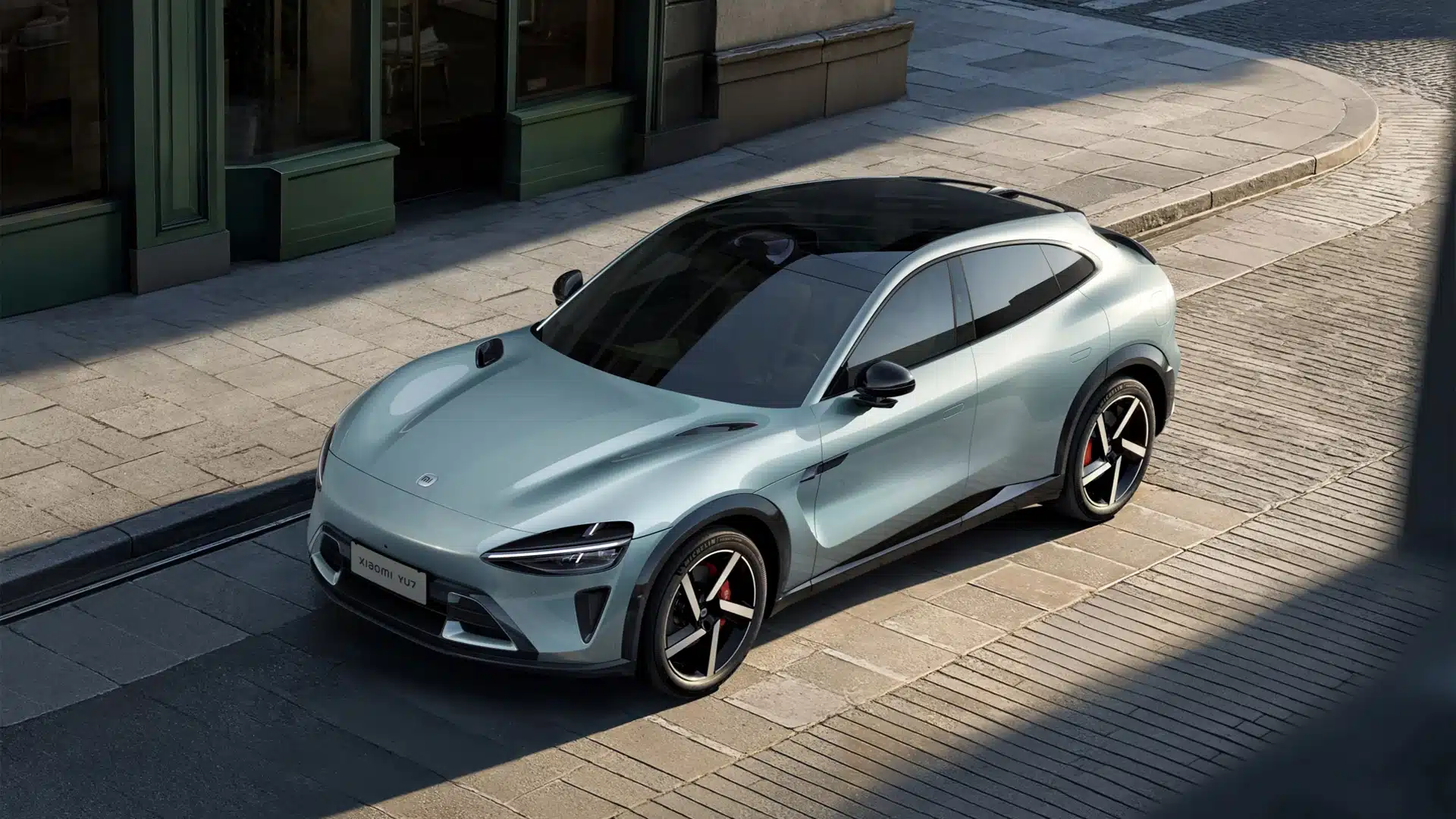
Xiaomi YU7 vs Tesla Model Y: which electric crossover to choose in 2025
The world of electric vehicles is experiencing a real explosion of innovation. While Elon Musk and his Tesla used to be the main star, today other tech giants are confidently joining the game. One of them is Xiaomi. Yes, the company that we are used to seeing in the world of smartphones and smart gadgets has now entered the automotive market and immediately announced its serious intentions. [...]
Content:
The world of electric vehicles is experiencing a real explosion of innovation. While Elon Musk and his Tesla used to be the main star, today other tech giants are confidently joining the game. One of them is Xiaomi. Yes, the company that we are used to seeing in the world of smartphones and smart gadgets has now entered the automotive market and immediately announced its serious intentions. [...]
Its new electric crossover, the Xiaomi YU7, has already caused a stir: hundreds of thousands of pre-orders in a matter of minutes. But can it really be an alternative to the Tesla Model Y, which is considered one of the most popular electric cars in the world?
Let's talk calmly and to the point - without unnecessary emotions, just about what is important for the future owner: power, range, comfort, technology, price and practicality.
We remind you that you can purchase home and commercial charging stations in our online storeand also use the public charging stations ECOFACTORcharging points located throughout Ukraine. For convenient access to charging infrastructure, we recommend using our mobile applicationwhich is available on iOS and Android.
General idea and positioning
Tesla Model Y Standard RWD (Juniper 2025 version) continues the company's tradition. It is a mid-sized electric crossover designed for daily travel in comfort and at minimal cost. It combines efficiency, stability and ease of use. Tesla positions the Model Y as a versatile electric vehicle for families or businesses with thoughtful ergonomics, a large trunk, a security system, and a proven Supercharger network. In the world of electric cars, this is already a kind of standard for practicality without excessive complexity.
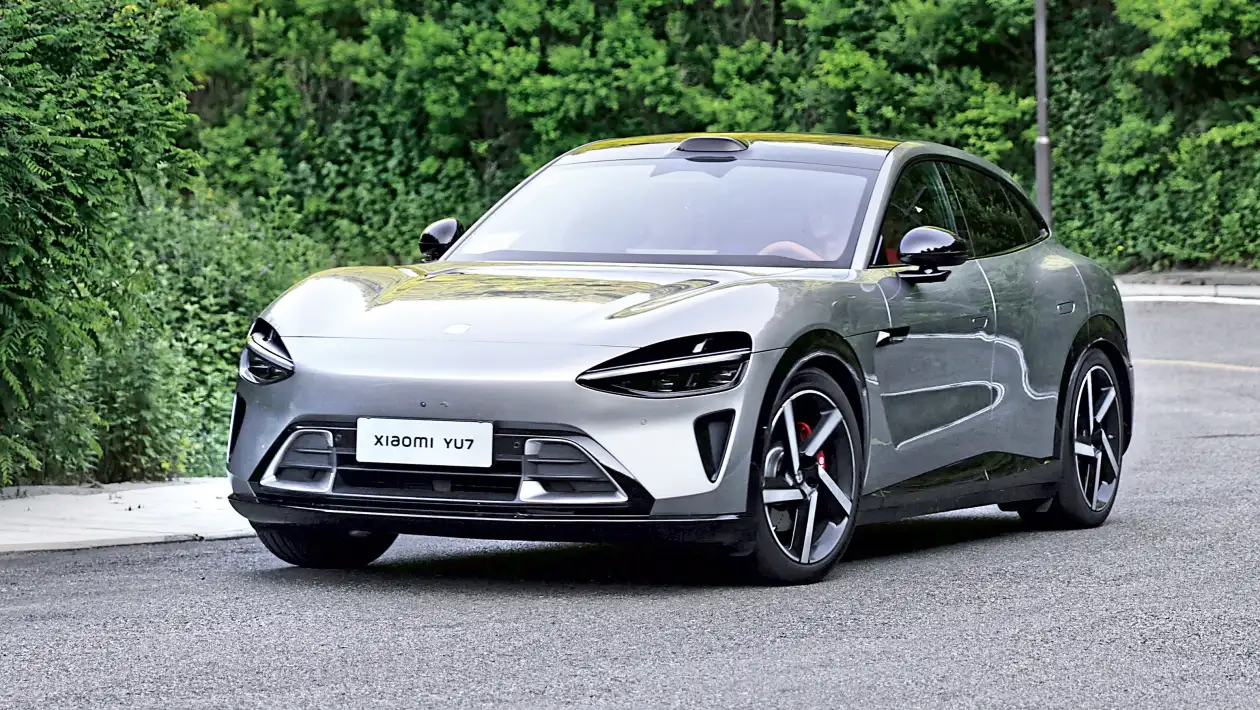
Xiaomi YU7, in turn, entered the market as a high-profile debut in the premium electric crossover segment. The company has relied on a combination of technological design, a long range (up to 835 km CLTC) and a more affordable price than Tesla. In fact, the YU7 has become a challenge for the Model Y. It is bigger, more powerful and more comfort-oriented, while Tesla remains a symbol of proven reliability and convenience. Both cars have a clear positioning, but different philosophies: Tesla is about stability and technological maturity, while Xiaomi is about innovation and ambition to catch up.
Design and dimensions
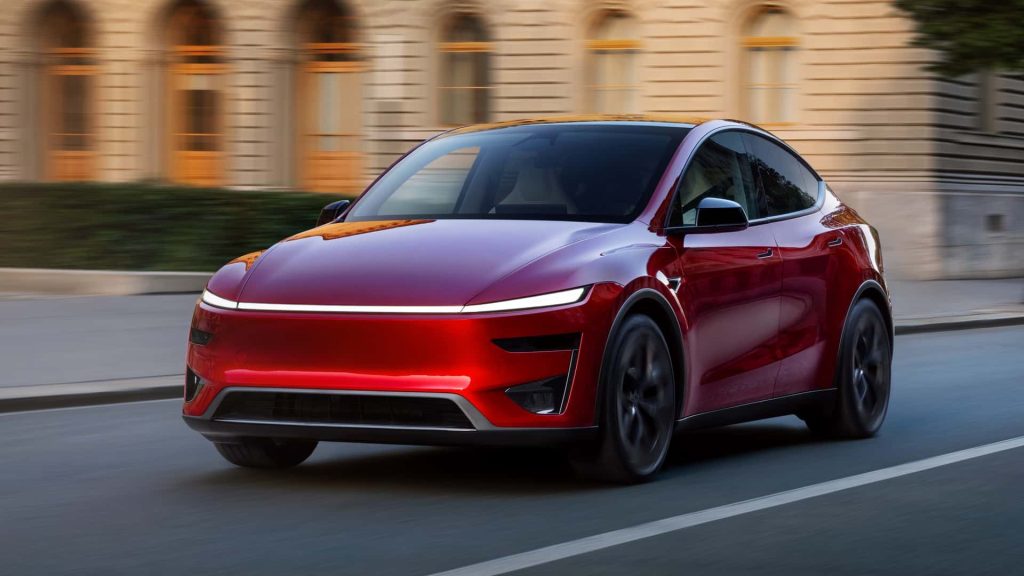
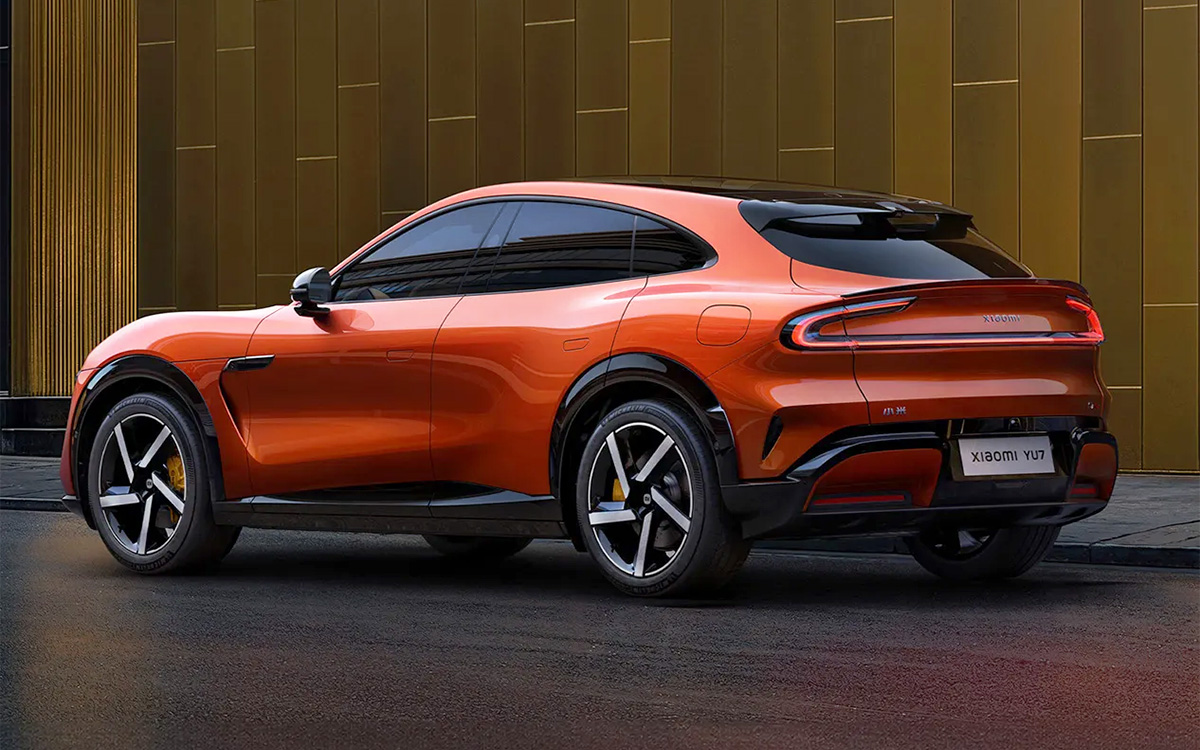
Xiaomi openly states that the YU7 model was created as a direct competitor to the Tesla Model Y. And it's clearly visible from the outside: the silhouettes are similar, but the visual impression of the cars is different. The YU7 looks more massive and luxurious, with an emphasis on smooth shapes, large wheels, and sporty proportions.
- Dimensions of Xiaomi YU7: 4,999 mm in length, 1,996 mm in width, 1,608 mm in height, 3,000 mm wheelbase.
- Dimensions of the Tesla Model Y Standard RWD: 4,797 mm in length, 1,982 mm in width, 1,621 mm in height, wheelbase 2,890 mm.
Tesla looks more compact and aerodynamic. Its design is based on the principle of minimalism: smooth surfaces, no unnecessary elements, with a streamlined body that reduces air resistance. The YU7, on the other hand, is perceived as a combination of technological style and premium aesthetics. The body lines are inspired by sports models such as the Ferrari Purosangue, and the large dimensions add to its solidity.
Conclusion: Xiaomi YU7 attracts those looking for a spectacular, "expensive" look and more space in the cabin. Tesla Model Y looks restrained, but its minimalist approach emphasises practicality and functionality. The choice here depends on what is more important to you - premium appearance or clean, well-thought-out design.
Power and dynamics
The Tesla Model Y Standard RWD has rear-wheel drive and a power output of 200 kW, which is equivalent to approximately 272 horsepower. The car accelerates to 100 km/h in 7.2 seconds and has a top speed of 201 km/h. This is not a sporty figure, but the dynamics are more than sufficient for a family electric crossover. Tesla has traditionally relied on stability, smoothness and predictable behaviour on the road.
Xiaomi YU7 in the basic Standard version has a power of 235 kW (320 hp) and accelerates to hundreds in 5.9 seconds. In more expensive versions, the figures are even higher: Pro accelerates in 4.27 seconds, and Max - in 3.23 seconds, which is closer to the level of a sports car. All YU7 variants are based on an 800-volt architecture that provides better energy efficiency and faster charging. Tesla is still using a 400-volt system, focusing on reliability and optimising battery life.
Conclusion: The Xiaomi YU7 is undeniably faster and more powerful, especially in the older versions. The Tesla Model Y Standard RWD, on the other hand, offers a calmer character, comfortable handling and stability while driving. If you want drive, the advantage is with Xiaomi, if you want a comfortable and balanced ride, go for Tesla.
Power reserve and battery
The range is one of the key parameters for any electric car. The Tesla Model Y Standard RWD has a 60 kWh battery (usable capacity) and can drive about 380 km in real-world conditions, according to EV Database. In more favourable weather, the figure can increase to 440 km, and in cold conditions, it can drop to 315 km. For its class, this is a good result, especially considering its efficiency, with an average energy consumption of only 158 Wh/km.
Xiaomi YU7 Standard has a much larger battery - 96.3 kWh, which gives up to 835 km of range on the CLTC cycle. Even when adjusted for real-world conditions, this is about 650-700 km, which is significantly more than Tesla. The Pro and Max versions are also equipped with 96.3 kWh and 101.7 kWh batteries, respectively, so the difference in autonomy between them is minimal.
Xiaomi's advantage is due not only to its larger battery capacity, but also to its 800-volt system, better aerodynamics (coefficient of 0.245 Cd) and advanced energy recovery system. Tesla operates on a 400-volt architecture, which ensures stability and durability, but is inferior in energy efficiency.
Conclusion: Xiaomi YU7 provides a significantly longer range, making it more convenient for long journeys without frequent stops. The Tesla Model Y Standard RWD, on the other hand, is aimed at urban and daily use, with an effective balance between energy consumption and performance.
Charging
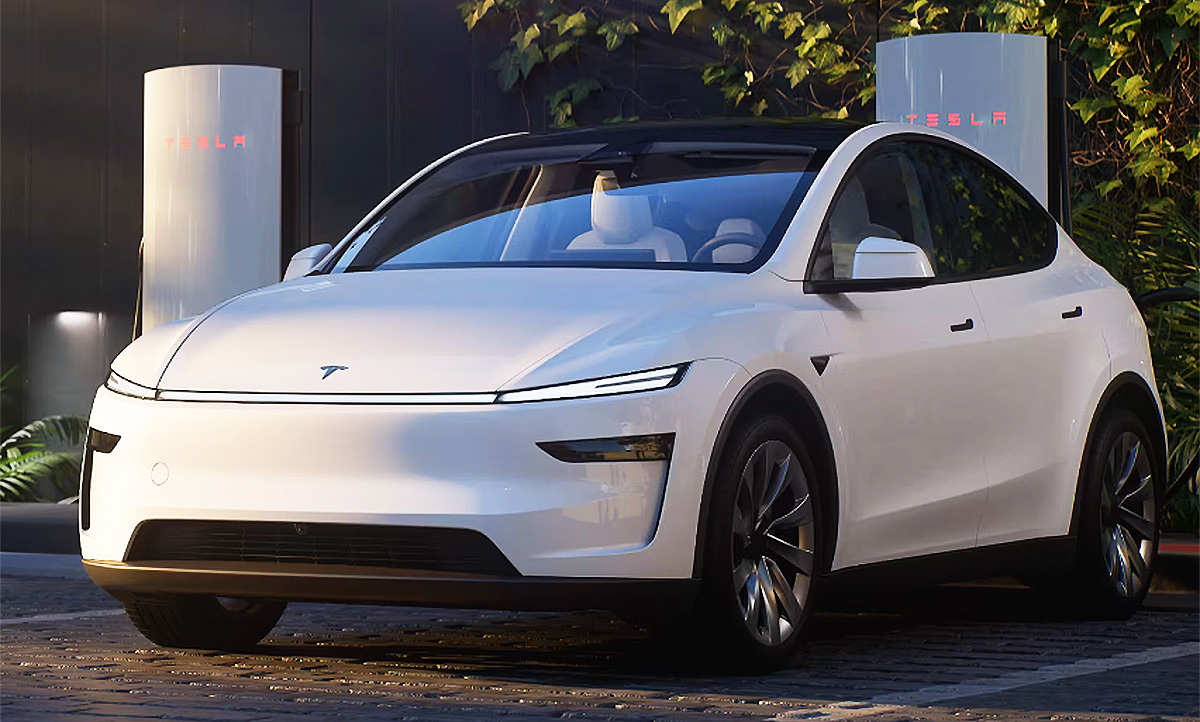
Tesla has traditionally been associated with the most extensive charging station network in the world. Its Supercharger system has more than 70,000 points, which operate with almost flawless stability ? about 99% of uptime. The Tesla Model Y Standard RWD supports fast charging with a capacity of up to 175 kW, which allows you to replenish the energy reserve from 10 to 80% in about 24 minutes. During this time, the car adds about 260 km of range, which makes travelling as convenient as possible even over long distances. At home, charging via the Type 2 port (11 kW AC) takes about 6.5 hours.
Xiaomi YU7 also supports fast charging: from 10 to 80% in 21 minutes via a CCS connector with a capacity of up to 400 kW. This is even faster than Tesla's, but the main difference is not in speed but in infrastructure. Tesla's network of charging stations already covers Europe, the US, and most major markets, while Xiaomi is still focused on the domestic Chinese market. For YU7 owners outside of China, the ability to charge will depend entirely on third-party operators.
Conclusion: The Tesla Model Y wins in terms of charging convenience and accessibility thanks to the global Supercharger infrastructure. Xiaomi is still demonstrating technical potential, but it still needs to build its own network to reach the level of international comfort.
Comfort and interior
The Tesla Model Y Standard RWD adheres to the brand's minimalism. There are almost no physical buttons in the cabin, everything is controlled via a large 15.4-inch touchscreen display or the Tesla App. The interior is restrained but well thought out: comfortable seats, a spacious luggage compartment (835 litres) and high-quality noise insulation create a feeling of modern, functional space. The company deliberately avoids unnecessary details so that the driver focuses on the road, not on screens or buttons.
Xiaomi, on the other hand, has gone for a technological sweep. The interior of the YU7 is actually a premium lounge on wheels. The central panel has a 16.1-inch screen, a separate 7.1-inch display in front of the driver, and additional removable screens for the rear passengers. There are even massage, heated and ventilated seats, a panoramic roof and three-zone climate control. All this makes the YU7 closer to a business class car than a standard electric crossover.
Conclusion: Tesla offers simplicity, practicality and clean design without frills. Xiaomi focuses on comfort, multimedia and premium details. While Tesla is about technological rationality, YU7 is about emotions and a sense of luxury.
Safety and autopilot
Tesla has long been associated with high safety standards. The Model Y Standard RWD is equipped with a range of systems: Forward Collision Warning, Active Emergency Braking, Lane Departure Avoidance and other active driver assistance functions. Add to this strong passive safety, a body with deformation zones, a low centre of gravity and a full set of airbags. The car has received excellent results in European and American crash tests.
Xiaomi YU7 is not far behind in this regard, and sometimes even surpasses it. It has a LiDAR sensor, 3 4D-type radars, 11 cameras and 12 ultrasonic sensors that form a detailed picture of the space around the car. The system helps to keep the lane, monitors the approach of pedestrians, cyclists and vehicles, and supports automatic parking.
Conclusion: Tesla has a time-tested autopilot and stable software, while Xiaomi is adding more "eyes" and sensors, which offers the potential for more accurate autonomous driving in the future. Both cars offer a high level of safety, just with a different approach - Tesla focuses on experience, while Xiaomi focuses on technological richness.
Technology and the ecosystem
Tesla has built a closed ecosystem in which everything is controlled through the Tesla App. The owner can check the charge, open doors, start the air conditioning, or monitor the car through Sentry Mode. Separate modes, Dog Mode and Camp Mode, allow you to maintain a comfortable temperature for pets or overnight stays in the cabin. Everything works within the same environment without the need for third-party services, which creates a sense of autonomy and stability.
Xiaomi has placed a premium on integration. Its YU7 runs on HyperOS, an operating system that integrates smartphones, tablets, TVs, watches, and even smart home devices. This allows you to synchronise user profiles, control the climate or charging directly from your smartphone, and play music or videos directly from other gadgets. As a result, the YU7 becomes not just a car, but a part of a smart home.
Conclusion: Tesla relies on the stability and full autonomy of its environment. Xiaomi, on the other hand, is opening the door to a wider ecosystem where cars are just another element of the user's digital life.

Charging infrastructure in Ukraine: how ECOFACTOR makes trips on Xiaomi YU7 and Tesla Y convenient and safe
When it comes to electric cars, the first logical question is where to charge? And while Tesla Model Y has long had its own global Supercharger network, the situation in Ukraine is a little different. That's where ECOFACTOR comes into play, a company that creates charging infrastructure that is accessible to every driver.
We are working to make charging an electric vehicle as easy as refuelling a conventional car. Our platform unites more than 3,500 charging ports across the country, and we develop, manufacture and maintain the stations ourselves. These include both AC stations with a capacity of up to 44 kW and DC fast chargers with a capacity of up to 420 kW, which are perfect for both the Tesla Model Y and the powerful Xiaomi YU7 with its large battery.
To make it easy for drivers to navigate, we have created mobile application ECOFACTOR, available for iOS and Android. It allows you to find the nearest station, view its status, and create a route through map of charging stationspay for charging or track your expenses. It's fast, convenient and straightforward - no matter what you drive.
For home, office or business, we have online shopwhere you can buy charging stations, cables and adapters, wall mounts, adapters and chargers. Whether you've just bought a Tesla Y or plan to charge your Xiaomi YU7 in your backyard, we have solutions for every scenario.
We also offer the ECOFACTOR operator platform, which allows you to manage your charging station network, set tariffs, monitor energy consumption and receive reports. It is an ideal solution for businesses: shopping centres, restaurants, residential complexes or private operators who want to develop their own charging network without technical difficulties.
And if you're travelling, our network supports roaming with European partners, so you can recharge outside Ukraine. We are creating an ecosystem that allows you to comfortably use any electric vehicle - from the proven Tesla to the innovative Xiaomi YU7.
No matter which electric car you choose, Tesla or Xiaomi, ECOFACTOR provides everything you need for charging, monitoring and convenient use. We make electric mobility real in Ukraine - simple, affordable and Ukrainian.
Bottom line: who is the best in 2025
Power and acceleration
Xiaomi YU7 is definitely ahead in terms of dynamics. Even the standard version has slightly higher power than the Tesla Model Y RWD, and the top-of-the-line YU7 Max accelerates to 100 km/h in 3.2 seconds - the level of sports cars. The Tesla remains fast and stable, but its dynamics look more restrained compared to the new competitor.
Power reserve
In terms of autonomy, Xiaomi YU7 has a significant advantage. Its base version can cover up to 835 km on the CLTC cycle, while the Tesla Model Y Standard RWD provides about 380 km in real-world conditions (or up to 440 km in mild climates). For those who frequently travel between cities, this difference can be decisive.
Charging infrastructure
Tesla remains the undisputed leader here. Its Supercharger network has more than 70,000 stations around the world with 99% stability. Xiaomi is still focused mainly on the Chinese market, so outside of China, YU7 owners will have to use third-party charging services.
Comfort and interior
The cabin of the Xiaomi YU7 is closer to the premium class: massage chairs, several screens for each passenger, a panoramic roof and a three-zone climate. This is a technological lounge designed for comfort. Tesla, on the other hand, offers conciseness and minimalism - a space without unnecessary elements that promotes focused driving.
Security.
Both cars provide a high level of safety, but with a different approach. Tesla has proven systems and excellent crash tests, while Xiaomi adds LiDAR, 11 cameras and 12 sensors that create a detailed 3D map of the environment. The result is a draw: Tesla is proven, Xiaomi is technologically advanced.
Practicality
The Tesla Model Y wins thanks to its larger boot (up to 2118 litres with the seats folded down), lighter construction and proven ergonomics. Xiaomi YU7 focuses on comfort, but is inferior in terms of capacity, the luggage compartment is smaller, although the front boot (franc) is larger.
Price.
In terms of price-quality ratio, Xiaomi YU7 has an advantage. Even the basic version is cheaper than the Tesla Model Y, but has a larger battery, better dynamics, and a more luxurious interior. For buyers looking for the most for their money, this looks very attractive.
Global accessibility
Tesla remains a leader in global presence. It can be officially purchased in most countries, with a warranty, service, and support. Xiaomi is currently selling YU7 only in China. However, if the brand enters the European market with the same prices, Tesla will have a truly equal rival for the first time.
Conclusion.
Tesla stands for stability, global infrastructure and proven technology. Xiaomi YU7 is about innovation, power, and luxury for affordable money. In 2025, Tesla remains the more practical choice, but if Xiaomi enters the global arena, the balance of power in the electric crossover market may change.
Frequently asked questions
1. What is the difference between Xiaomi YU7 and Tesla Model Y?
The Xiaomi YU7 has a longer range (up to 835 km CLTC), more powerful motors and a more luxurious interior with multiple screens. The Tesla Model Y, on the other hand, offers proven quality, a stable software ecosystem, and a global Supercharger network.
2. Which electric car is faster - Xiaomi YU7 or Tesla Model Y?
The top-end version of the Xiaomi YU7 Max accelerates to 100 km/h in 3.2 seconds, which is faster than any version of the Model Y. Even the standard YU7 has a slight advantage in dynamics over the Tesla RWD.
3. Who has a greater power reserve?
The Xiaomi YU7 has a larger battery (up to 101.7 kWh) and a range of up to 835 km on the CLTC cycle. Tesla Model Y has a lower range of 455 to 719 km, depending on the version.
4. Who wins in terms of interior comfort and equipment?
The Xiaomi YU7 is equipped with massage chairs, multiple screens for passengers, a three-zone climate and premium materials. Tesla relies on minimalism - one large screen and the simplest possible panel without unnecessary details.


