




Geely Galaxy E5 vs Tesla Model 3: which electric car to choose
The electric vehicle market is changing rapidly. Whereas Tesla used to set the tone, new competitors from China are now entering the scene, including Geely, which has made a huge technological leap in recent years. Its Geely Galaxy E5 model has become a symbol of a new approach to electric mobility: a combination of affordability, practicality and modern technology. At the same time, the Tesla Model 3 Standard Range remains [...]
Content:
The electric vehicle market is changing rapidly. Whereas Tesla used to set the tone, new competitors from China are now entering the scene, including Geely, which has made a huge technological leap in recent years. Its Geely Galaxy E5 model has become a symbol of a new approach to electric mobility: a combination of affordability, practicality and modern technology. Meanwhile, the Tesla Model 3 Standard Range remains the benchmark for efficiency and engineering precision.
In this comparison, we will look at how the two models differ in terms of range, power, comfort, practicality and safety. This is not just a technical summary - it is an attempt to understand which electric vehicle better meets the expectations of the driver in 2025.
We remind you that you can purchase home and commercial charging stations in our online storeand also use the public charging stations ECOFACTORcharging points located throughout Ukraine. For convenient access to charging infrastructure, we recommend using our mobile applicationwhich is available on iOS and Android.
Design and dimensions
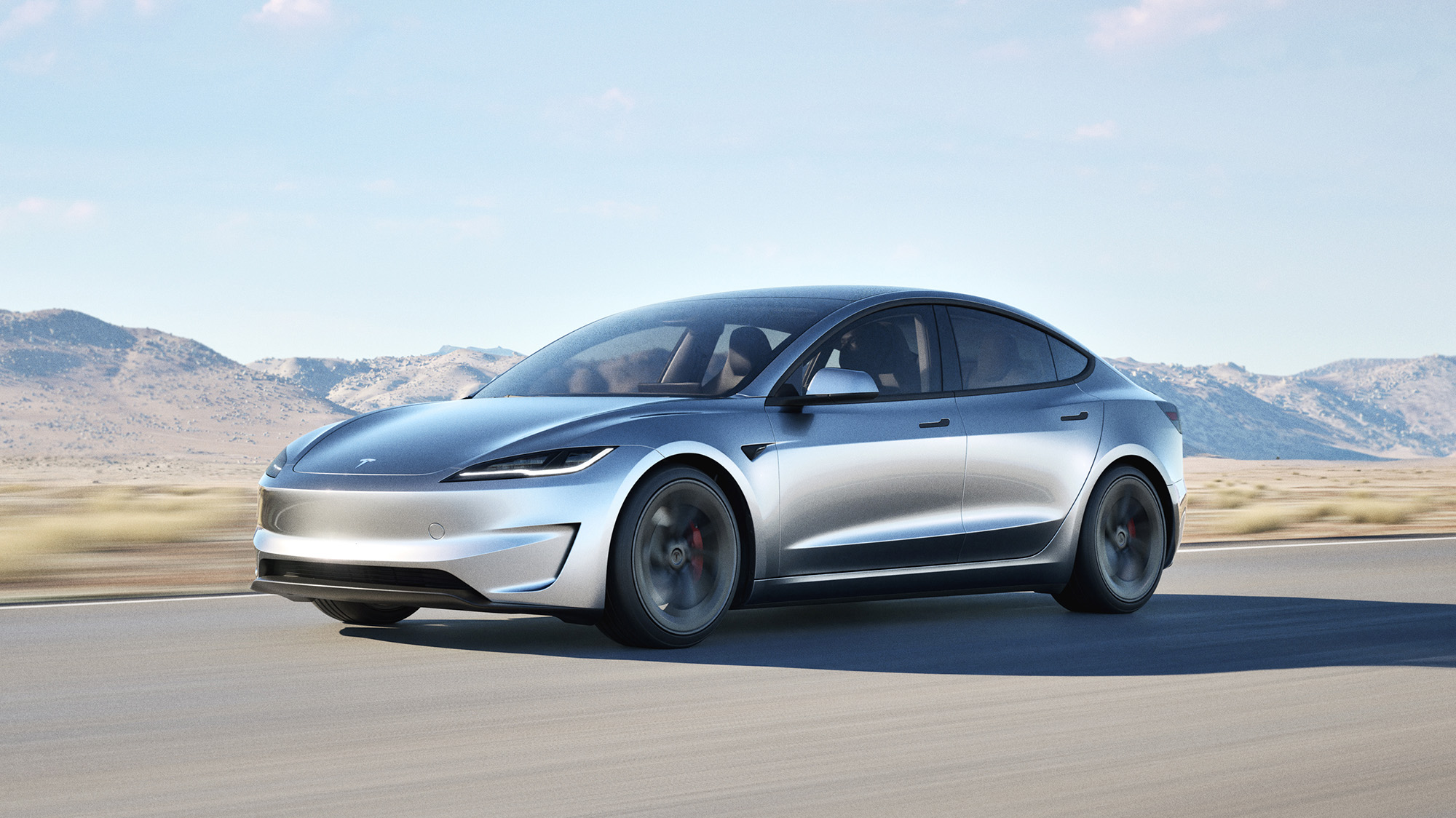
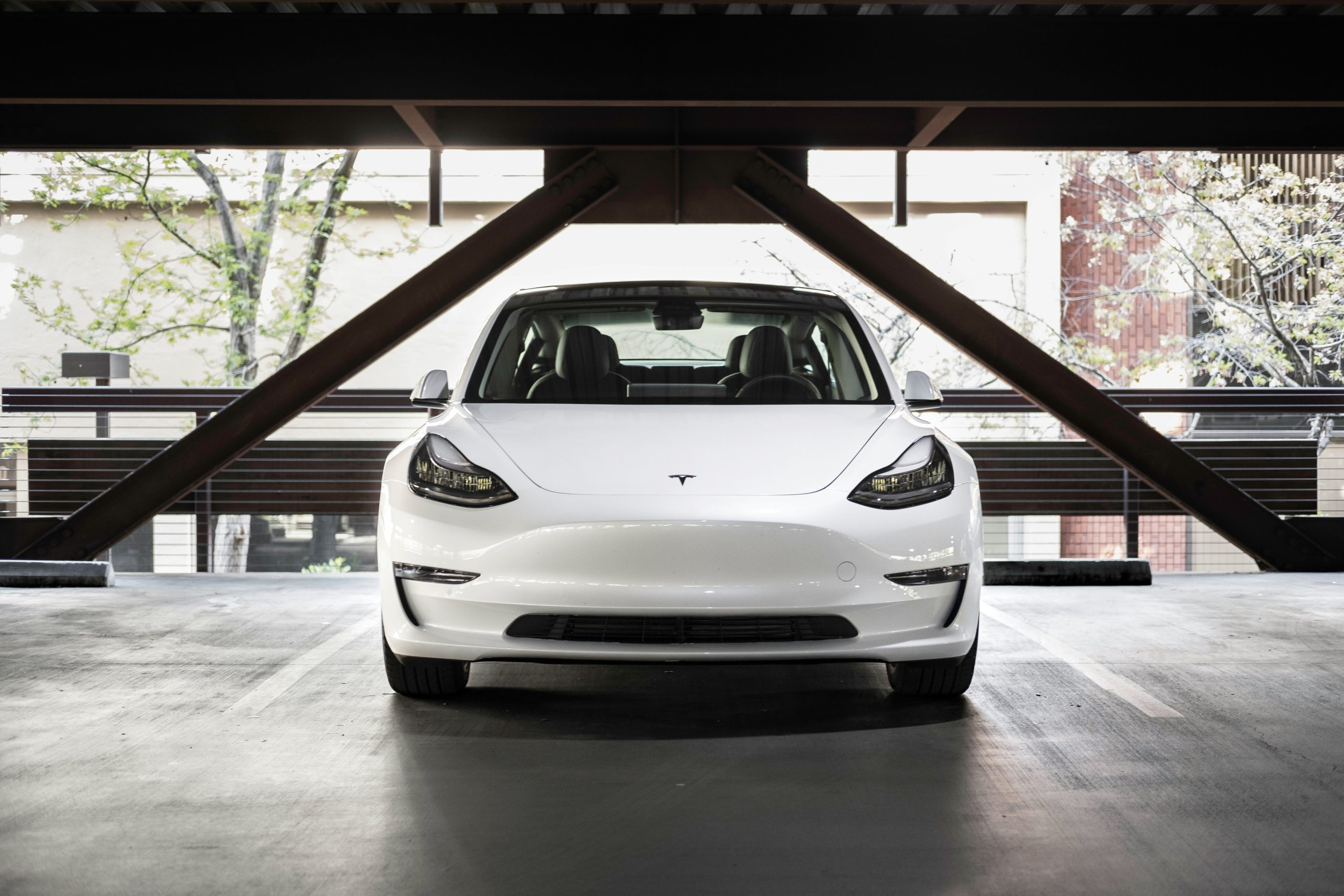
Both models have a modern minimalist design, but with a different character. The Tesla Model 3 retains recognisable features - clean lines, a streamlined profile and a highly simplified silhouette without unnecessary details. This sedan is built on the TESLA 3/Y platform with a length of 4694 mm, a width of 1850 mm and a height of 1443 mm. It looks restrained but elegant, focusing on aerodynamics.
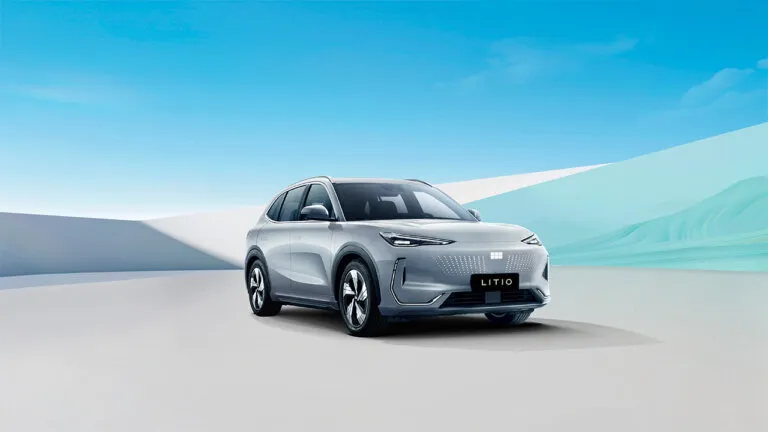
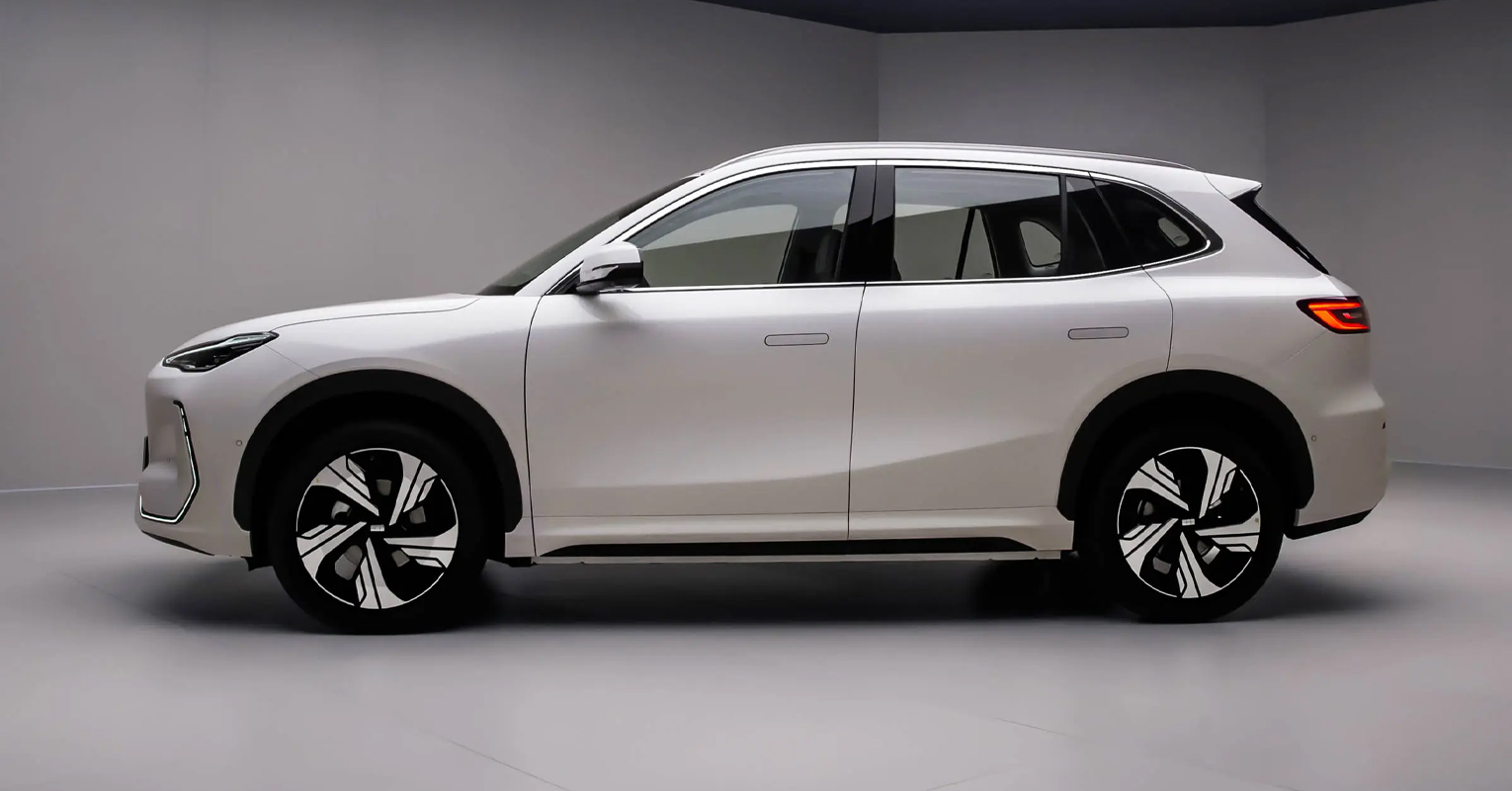
The Geely Galaxy E5, on the other hand, is a crossover with a distinctive appearance. Its dimensions are 4615 mm long, 1901 mm wide and 1670 mm high. Thanks to its tall body, it looks more massive and provides a better seating position for the driver. The aerodynamic drag coefficient is 0.269, an excellent figure for the SUV class.
Bottom line: Tesla attracts those who like dynamic sedans with a low centre of gravity, while Geely offers more space, versatility and a comfortable fit.
Power and dynamics
The Tesla Model 3 Standard Range is equipped with a 165 kW (224 hp) electric motor and 400 Nm of torque. Acceleration to 100 km/h takes 5.9 seconds and the top speed is 210 km/h. The drive is rear-wheel drive, which provides a sporty driving experience.
The Geely Galaxy E5 has a slightly lower top speed of 180 km/h, but its 218 hp and 320 Nm of torque make for a fairly quick 0-60 time of 6.9 seconds. This is a front-wheel drive model with one electric motor on the front axle.
In terms of dynamics, the Tesla wins, especially on the track, where the rear-wheel drive architecture is felt. The Geely, on the other hand, offers smoother and more predictable behaviour, which is better suited to urban and family use.
Cruising range and energy efficiency
This is where the difference between the two models is particularly noticeable. The Tesla Model 3 has a useful battery capacity of 40 kWh and a realistic range of about 265 km (in the combined cycle). Energy consumption is 151 Wh/km. In the best conditions (city, warm weather), the range can reach 395 km, while in the cold season it drops to 220 km.
The Geely Galaxy E5 is equipped with a larger 60.22 kWh battery with an official 530 km of driving range (CLTC). The average energy consumption is only 12.1 kWh/100 km, or about 121 Wh/km. This makes it 20-25% more economical than the Tesla, especially in city mode.
| Parameter. | Tesla Model 3 Standard Range | Geely Galaxy E5 (60.22 kWh) |
| Battery capacity | 40 kWh (useful), 50 kWh (nominal) | 60.22 kWh (total) |
| Battery type | : NCA (nickel-cobalt-aluminium) | LiFePO4 (lithium iron phosphate) |
| Official power reserve | 265 km | 530 km (CLTC) |
| Cruising range in the city (warm weather) | up to 395 km | about 480-500 km |
| Cruising range in cold weather | 220 km | about 400 km |
| Energy consumption | 151 W/km | 121 W/km |
| Efficiency | Superior on the track | The highest in the city |
| Charging 10-80% | 22 min (100 kW DC) | approx. 25-30 min (100-120 kW DC) |
In practice, the difference in range will be smaller, but the Geely has a clear advantage in long journeys without recharging. The Tesla, on the other hand, takes revenge with its charging speed and consistent performance at high speeds.
Charging and energy replenishment time
The Tesla Model 3 Standard Range supports AC charging up to 11 kW (Type 2). A full charge takes approximately 4.5 hours, providing a range of 62 km per hour of charging. For fast charging, a CCS port with a capacity of up to 100 kW DC is provided - from 10% to 80% batteries can be charged in 22 minutes, adding up to 500 km of range per hour.
Geely Galaxy E5, according to official data, uses a battery with LiFePO4 (lithium iron phosphate) technology, which supports fast charging cycles without losing its life. Although the exact charging capacity has not been released, fast charging of up to 100-120 kW DC is usually available for this type of battery.
So Tesla has the advantage of a proven Supercharger infrastructure and stable charging speeds, while Geely offers a larger battery that needs charging less frequently.
Practicality and comfort
Both cars are designed for 5 passengers, have an ISOFIX system and a high level of convenience. The Tesla Model 3 is known for its minimalist interior: a large central screen, no traditional dashboard, quiet operation and excellent ergonomics. The rear row is a bit cramped in terms of legroom, but the cabin is well insulated from noise.
Geely Galaxy E5 offers a larger cabin and trunk volume - from 461 to 1877 litres. The higher roof and upright seating position provide a comfortable fit even for taller passengers. The suspension is independent on both sides (McPherson in the front, multi-link in the rear), which improves the smoothness of the ride on uneven roads.
The Tesla feels more dynamic and sporty, while the Geely is calm, with an emphasis on comfort and roominess.
Security.
Tesla Model 3
Tesla Model 3 has an excellent Euro NCAP safety rating (2019):
- Adult passenger protection - 96%
- Child protection - 86%
- Pedestrian protection - 74%
- Assistance systems - 94%
These figures confirm the high quality of the body structure, a well-designed energy-absorbing structure and the effective operation of active safety systems. Tesla traditionally focuses on accident prevention through a range of electronic assistants, including autobraking, lane keeping and adaptive cruise control.
Geely Galaxy E5
Official European crash tests have not yet been conducted for the Geely Galaxy E5, but the Geely brand has a good reputation in Asian tests and is actively introducing modern safety technologies. Standard equipment includes ABS, ESP, tyre pressure monitoring, adaptive cruise control and automatic emergency braking.
Geely is gradually approaching Tesla's standards in active safety, while maintaining its focus on the mass market and the availability of technology.
Bottom line.
Tesla wins thanks to its proven Euro NCAP results and highly developed autopilot system. The Geely Galaxy E5 is currently inferior in terms of official ratings, but offers a wide range of auxiliary systems that significantly increase the level of safety during real-world use.
Technology and management expertise
Tesla remains a technological benchmark thanks to its integration with its own software. The Model 3 supports OTA updates not only for multimedia but also for battery management, autopilot, and suspension systems. This ensures that the car remains up-to-date even after several years of use.
Geely also has OTA updates, but they are currently mainly related to the multimedia system. At the same time, the Galaxy E5 offers an interface that supports voice control, a virtual dashboard, and smartphone integration. The user experience is focused on convenience and intuitiveness, rather than experimentation, like Tesla's.
Energy efficiency and battery life
Tesla uses a battery with an NCA (Nickel-Cobalt-Aluminium) cathode, which has a high energy density and provides a lighter vehicle structure. This type of battery allows for high power and fast energy return, which has a positive effect on dynamics. At the same time, these cells are sensitive to temperature fluctuations and can lose capacity faster than more stable chemical combinations over time.
Geely, in turn, uses a LiFePO4 (lithium iron phosphate) battery. It has a lower energy density, but is distinguished by its durability, stable operation in various climatic conditions and increased heat resistance. In terms of energy consumption, the Galaxy E5 shows better efficiency in urban environments, while the Tesla demonstrates an advantage on the highway thanks to optimised energy management. On average, the difference in energy consumption can reach 20-30% in favour of the Geely in a relaxed driving style.

ECOFACTOR: convenient charging for owners of Geely Galaxy E5 and Tesla 3
In any comparison of electric vehicles, the question inevitably arises: where and how to charge the car? Especially when it comes to models such as the Tesla Model 3 or Geely Galaxy E5, which are completely dependent on electricity. That is why we, ECOFACTOR, create solutions that make charging simple, fast and affordable for all drivers in Ukraine.
A complete ecosystem of charging stations
Our team develops, manufactures and services charging stations of its own production - from AC models up to 44 kW to DC solutions with a capacity of up to 420 kW. This allows us to efficiently charge both Tesla Model 3 and Geely Galaxy E5. Today, the ECOFACTOR platform supports more than 3,500 charging ports across the country, making us the largest Ukrainian electric charging network.
Mobile application for Android and iOS.
To make it convenient to use the chargers, we have created mobile application, available for iOS and Android. It allows drivers to find the nearest station and check its status, map of charging stations, build a route and even pay for charging online.
Online shop for home and business
For those who want to have their own charging point, we have online shopwhere you can buy various chargers, cables and adaptersIt is available in cradles, wall mounts and adapters. This is suitable for private use at home, as well as for offices or businesses that want to provide charging for their customers or employees.
A platform for charging network operators
ECOFACTOR has also developed an operator platform that helps businesses manage their own charging station network. It allows you to control energy consumption, set tariffs, generate analytical reports and support customers without complex technical processes. This solution is already actively used by shopping centres, business parks and residential complexes.
Charging in Ukraine and abroad
We also support roaming with international partners so that drivers can charge their cars even outside Ukraine. So, when you go on a trip with a Tesla or Geely, you can be sure that the ECOFACTOR charging infrastructure will accompany you abroad.
Regardless of whether you drive a Tesla Model 3 or choose a Geely Galaxy E5, we at ECOFACTOR provide everything you need for comfortable charging - from home solutions to powerful business stations. Simplicity, reliability and a Ukrainian approach to service are what make our infrastructure really convenient for every driver.
Conclusion: who wins the comparison
Both electric cars demonstrate a different approach to electric mobility. The Tesla Model 3 Standard Range remains the benchmark for energy efficiency, fast charging and technological updates. It is suitable for those looking for dynamics, innovation and a premium user experience.
The Geely Galaxy E5 relies on comfort, practicality and a long range. This is a car for those who want a modern electric car without excessive costs, with a spacious interior and a long-lasting battery.
If you need a technological drive, choose Tesla. If you want a balance between comfort, autonomy and price, Geely Galaxy E5 is a reasonable alternative.
Frequently asked questions (FAQ)
1. What is the battery life of the Geely Galaxy E5 in real conditions?
In city mode in the warm season, you can expect about 450-480 km, on the highway - 350-400 km, depending on speed and temperature.
2. How long does it take to fully charge a Tesla Model 3 Standard Range?
From a regular 11 kW home charger, it takes about 4.5 hours. At the Supercharger fast station, it takes about 22 minutes to charge the 80%.
3. Which car is more comfortable for family trips?
The Geely Galaxy E5 is better suited for family use thanks to its higher body and larger trunk.
4. Which car has a more efficient battery?
Geely has a higher capacity and more stable LiFePO4 technology, while Tesla is more efficient due to its lighter design and optimised energy management system.
5. Which electric car is better for the city?
The Tesla is suitable for active daily use thanks to its fast charging and easy handling, while the Geely offers more autonomy and softer suspension for everyday routes.


