




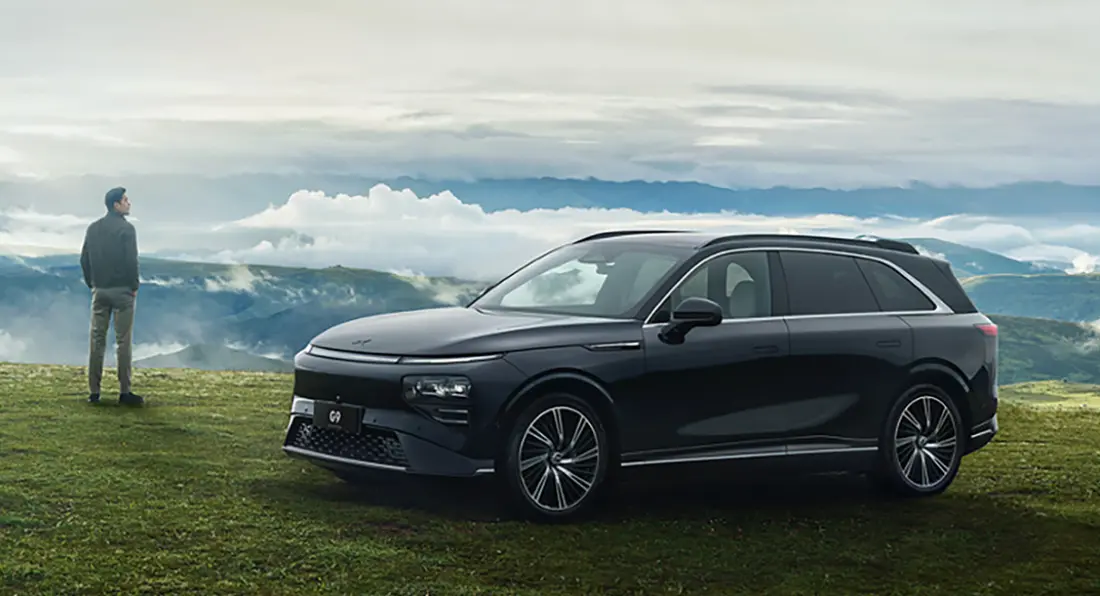
Xpeng G9 vs Tesla Model 3: an honest comparison
Today, China's XPeng and the US-based Tesla represent two different approaches to electric vehicles. Tesla created the market, set the standards, and still remains the benchmark for anyone who wants to drive a modern electric car. XPeng came on the scene later, but with the ambition to do things differently: more comfort, more technology, less pathos. In Ukraine, these two brands are causing a real [...]
Content:
Today, China's XPeng and the US-based Tesla represent two different approaches to electric vehicles. Tesla created the market, set the standards, and still remains the benchmark for anyone who wants to drive a modern electric car. XPeng came on the scene later, but with the ambition to do things differently: more comfort, more technology, less pathos.
In Ukraine, these two brands are generating real interest. The Model 3 has become a kind of symbol of the electric movement, while the G9 attracts the attention of those who want an SUV with a range, space for a family and charging in minutes. In this article, we'll take a look at the differences between the two and try to give an honest answer as to which one is better suited to our roads, climate and lifestyle.
We remind you that you can purchase home and commercial charging stations in our online storeand also use the public charging stations ECOFACTORcharging points located throughout Ukraine. For convenient access to charging infrastructure, we recommend using our mobile applicationwhich is available on iOS and Android.
Design and dimensions
The Tesla Model 3 is a classic sedan with laconic lines, a clean silhouette and a minimalist interior. Its length is 4.69 m and height is 1.44 m, making it ideal for the city. The car is compact, manoeuvrable and looks modern without frills.
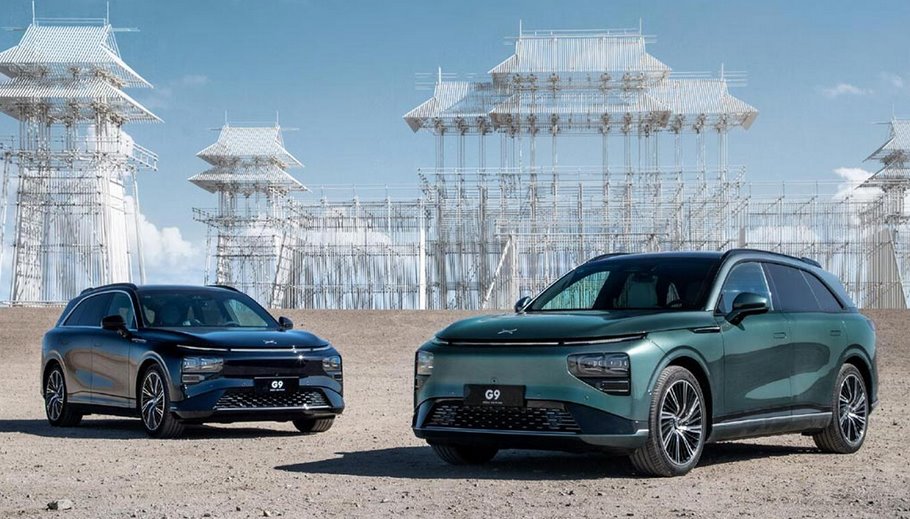
The Xpeng G9 is the complete opposite. It is a large crossover with a length of 4.89 m and a height of 1.68 m. It has massive proportions, a high stance and a pronounced confidence. Inside the G9 is a spacious cabin with a panoramic roof, soft seats and premium materials. The Chinese clearly focused on comfort rather than sportiness.
For a Ukrainian driver, this is a significant point: if you often go out of town or have a family, the space of the G9 will be a tangible advantage. If you need dynamics and compactness, the Tesla 3 remains a more practical choice.
Space and practicality
The Tesla Model 3 has a boot capacity of 561 litres, and with the seats down, 977 litres. There is also a small frank (88 litres). This is enough for city trips or two people on holiday. The Xpeng G9 has 660 litres of boot space, and with the seats folded down, it has 1576 litres. There is also a 71-litre frank. In addition, the rear row is more spacious, and even taller passengers are comfortable in it. For families or long journeys, the G9 is a more versatile option.
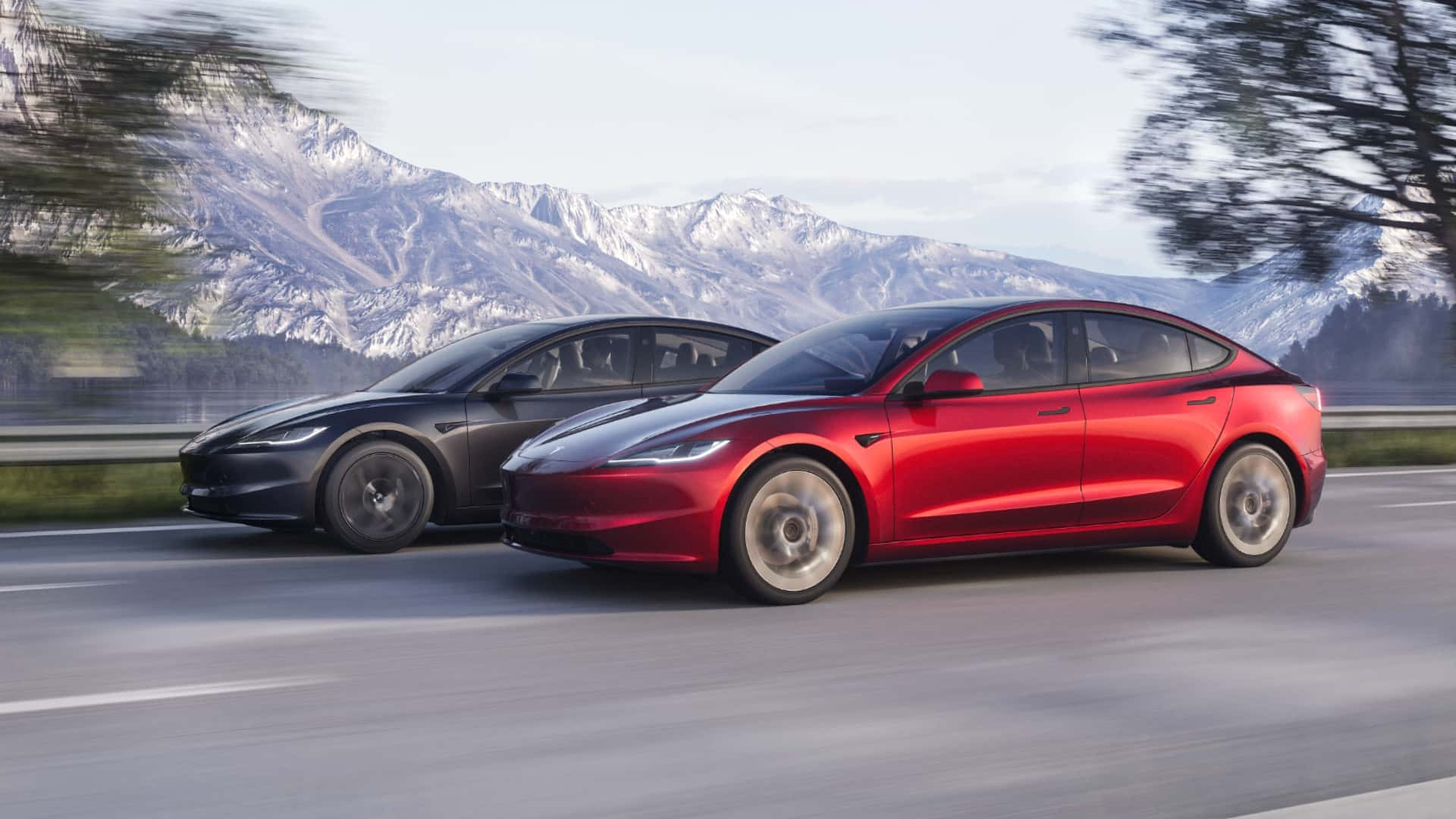
Technical specifications and dynamics
Power and acceleration
Tesla Model 3 Standard Range Plus
- Power: 208 kW (283 hp)
- Torqueт: 420 Nm
- Reason.: rear
- Acceleration 0-100 km/h: 5,6 с
Xpeng G9 RWD Standard Range
- Power: 258 kW (351 hp)
- Torque: 465 Nm
- Reason.: rear
- Acceleration 0-100 km/h: 6,6 с
The Tesla is lighter and more responsive - it's all about dynamics and sportiness. The G9, on the other hand, feels calmer and more massive, but has more power to spare, which is good for a crossover.
Power reserve: figures and reality
Tesla Model 3 Standard Range Plus
- Battery capacity: 51 kWh
- Real power reserve: about 350 km
- Summer.: 410 km
- In winter.: 290 km
- Battery type: NCA (nickel-cobalt-aluminium)
- Architecture: 400 В
Xpeng G9 RWD Standard Range
- Battery capacity: 78.2 kWh
- Real power reserve: approx. 410 km
- Summer.: 470 km
- In winter.: 350 km
- Battery type: LFP (lithium iron phosphate)
- Architecture: 800 В
For a Ukrainian driver, this means that the Tesla remains more economical and slightly more efficient in terms of energy consumption, especially when travelling in the city. The Xpeng G9, on the other hand, has a larger battery, so it is better suited for mixed routes and long journeys on the highway. Its LFP battery is less demanding on regular charging and lasts longer, although it may lose some efficiency in severe cold weather. However, thanks to its 800-volt architecture, the G9 charges quickly even in winter.
So, if you need an electric car for the city and economy, it is more rational to choose a Tesla Model 3. If range, comfort, and versatility are important, the Xpeng G9 is the best choice.
Charging and energy replenishment speed
Charging at home
Both models have 11 kW on-board chargers. This means that a three-phase station can fully charge a car in 5-9 hours. Tesla supports Type 2 (left rear), XPeng supports Type 2 (right rear).
Fast charging
This is where the G9 shows its class. It supports up to 445 kW DC and charges from 10 to 80% in 12 minutes, adding more than 280 km of range. That's twice as fast as the Tesla Model 3, which supports a maximum of 170 kW DC and takes about 21 minutes for the same range.
A conditional example
- XPeng G9: +1430 km/h charging speed
- Tesla Model 3: +700 km/h
Given the Ukrainian reality, where 350 kW of charging points are already appearing on major highways, the G9 has an advantage on long journeys.
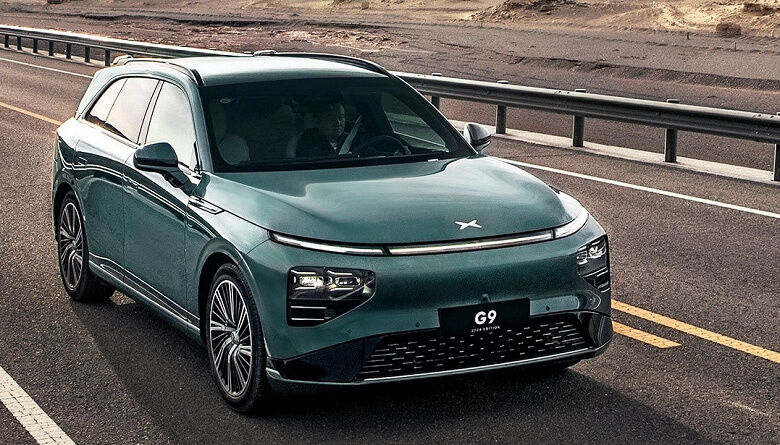
Efficiency and energy consumption
Tesla is traditionally noted for its efficiency - 146 Watt-hours/km versus 191 Watt-hours/km in the XPeng G9. In practice, this means that Tesla will go further on a smaller battery. However, the G9 compensates for the higher consumption with comfort and charging speed. Its large body and higher weight make consumption logically higher.
For city driving, the Model 3 is the more efficient solution. On the highway or in mixed conditions where fast charging is more important than small savings, the G9 makes more sense.

ECOFACTOR: charging infrastructure for modern electric vehicles
At ECOFACTOR, we are working to make the transition to electric transport in Ukraine as simple and convenient as possible. Our company develops, manufactures and services charging stations for electric vehicles, and offers a full range of solutions - from hardware to software for operators and a mobile application for drivers.
Our solutions
We create charging stations of various types - from mobile and household to powerful AC and DC models up to 420 kW. In our online store you can find everything you need for an electric car: cables and adapterscharging accessories, RFID cards and other equipment. All devices are fully designed and manufactured in Ukraine in accordance with international quality standards.
A platform for business
We enable operators to manage their own charging station network through our SaaS platform. It allows you to monitor energy consumption, create tariff plans, receive reports and connect new points. Today, ECOFACTOR cooperates with hundreds of operators in 11 countries across Europe and Central Asia, uniting more than 3,500 charging ports.
Convenience for drivers
For electric car users, we have created a mobile application available on iOS and Android. You can use it to find the nearest charging point, manage the charging process, pay for services, and track your session history. In addition, on our website and in the app, you can find map of charging stations, which helps to easily plan routes and plan trips around Ukraine.
Our approach
We see electric mobility not just as a technological trend, but as a real change in the way we travel. That is why our goal is to make charging accessible to both businesses and ordinary drivers. We help Ukrainians create their own infrastructure: from home stations to large networks in shopping centres, hotels or business parks.
ECOFACTOR is about practical solutions that really work. It's about charging points that are close by. And the comfort you feel when your electric vehicle is always ready to go.
Manageability
Tesla Model 3 is designed for those who love the feel of the road. Its low centre of gravity and rigid chassis provide excellent cornering stability. The steering wheel reacts quickly, without delay, so the car obeys the driver literally to the touch. In the city, this clarity is a pleasure, and on the highway, it gives you confidence. However, this comes at the cost of comfort: the suspension is quite stiff, and you can feel it on uneven roads, especially Ukrainian ones. For some, this is a trifle, while others will start to get tired of the shaking on potholes after a few days.
The Xpeng G9 has a completely different character. It is a large SUV with a soft suspension that swallows most potholes and bumps. Its behaviour on the road is calm, predictable, without any sudden jerks. The car doesn't provoke you to drive fast - on the contrary, you want to drive smoothly, relaxed, enjoying the silence in the cabin. Noise insulation is better here, and the high seating position gives you a feeling of control over the road and confidence in a tight city traffic. It's a feeling that reminds you of travelling in business class, not a sporting event.
Simply put, Tesla is more suitable for those who want active driving, precise reactions and drive. This is a car for those who like to drive themselves and feel every turn. The Xpeng G9, on the other hand, is designed for quiet rides, comfort and stability. It is perfect for Ukrainian roads, where sometimes it is more important to drive smoothly through pits than to accelerate a few seconds faster.
To sum up, we can say this: Tesla is about emotions and the feeling of control, and Xpeng is about comfort, space and tranquillity.
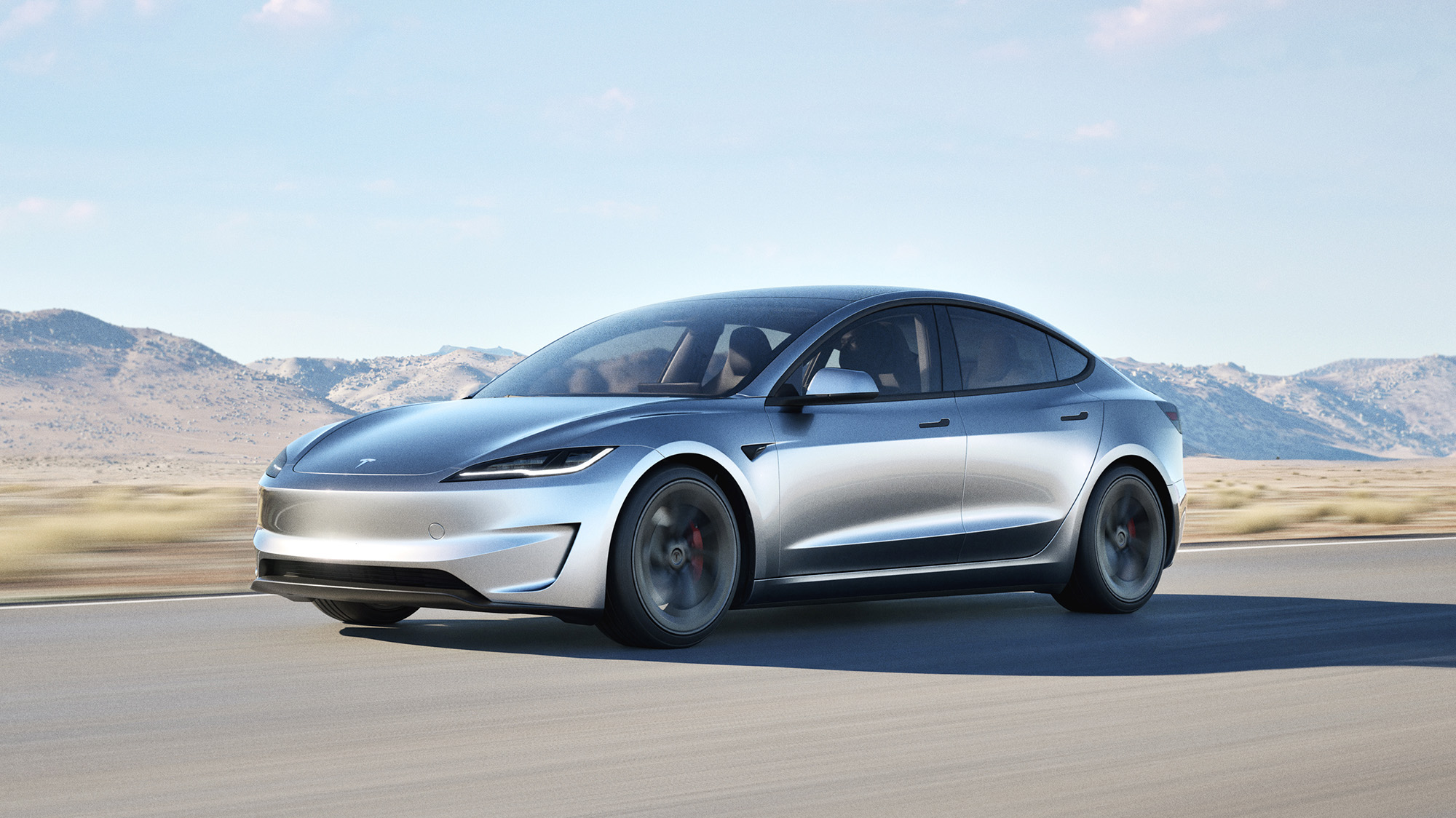
Technology and multimedia
Both brands rely on digital interfaces, but their approach is different.
Tesla Model 3
- 15-inch central display that replaces the instrument cluster
- minimum of buttons
- voice control
- autopilot and Traffic Jam Assist, Highway Assist functions
- mobile app with full car control
Xpeng G9
- three screens in the front panel (for driver, passenger and multimedia)
- support for Apple CarPlay and Android Auto
- automatic parking system
- all-round view cameras
- Vehicle-to-Load (V2L) function - you can connect household appliances
- proprietary driver assistance system with lane detection, adaptive cruise and blind spot monitoring
Tesla remains simple but stable. XPeng wins with a variety of features and convenience. For a Ukrainian user who wants to connect a phone, Google navigation or YouTube on the go, the G9 will be closer to a full-fledged multimedia centre.
Security.
The Tesla Model 3 has received high Euro NCAP ratings of 96% for adult protection and 86% for child protection. Its body has a low centre of gravity, withstands impacts well and retains the shape of the interior. In addition, Tesla offers one of the most advanced autopilots: automatic braking, lane keeping, adaptive cruise control and traffic jam assist.
The Xpeng G9 has not yet been tested in Europe, but according to Chinese data, its structural safety is close to that of Tesla. The car is equipped with a full range of sensors, cameras, and radars, and has automatic braking, lane keeping, and obstacle warning. The G9 is more focused on smart safety, analysing the situation around it and helping to avoid risks.
As a result, Tesla is a proven system with experience, and G9 is a new generation of electronic security with a focus on technology.
5. Warranty and service
- Tesla: 8 years or 160,000 km per battery
- XPeng: 8 years or 160,000 km, also applies to electric motors.
The G9 has an LFP battery that practically does not degrade during the first 300 thousand km, so in terms of durability, both look reliable.
Final comparison
| Parameter. | Tesla Model 3 | Xpeng G9 |
| Body type | Saloon | SUV |
| Power | 283 hp. | 351 hp. |
| Reason. | Rear | Rear / Full |
| Battery capacity | 51 kWh | 78.2 kWh |
| Real power reserve | 350 km | 410 km |
| Max. charging DC | 170 kW | 445 kW |
| Acceleration 0-100 km/h | 5,6 с | 6,6 с |
| Boot capacity | 561 л | 660 л |
| V2L support | No. | Yes |
| Apple/Android Auto | No. | Yes |
Conclusions.
Xpeng G9 is about comfort, technology and charging speed. Tesla Model 3 is about dynamics, simplicity and proven efficiency.
If you're looking for an electric car for the city, a compact one with low energy consumption, Tesla will remain a more practical choice. If you often drive long distances, have a family, or just want an SUV with a range and fast charging, the G9 will be a more logical option. And one more thing that should be said frankly: the Ukrainian market is gradually moving away from stereotypes that Chinese cars are inferior. The XPeng G9 shows that "Chinese" can mean high-quality, technologically advanced and adapted to real-world conditions.
Tesla is still the symbol of the electric movement, but now it has a worthy rival. And this is, without exaggeration, good news for all of us.
Questions and answers
1. Does it make sense to choose a Tesla Model 3 if the Xpeng G9 has a longer range?
Yes, it does. The Tesla Model 3 remains a great option for those who commute around the city or on short routes. It is lighter, more economical and consumes less energy. If you don't need a large trunk or high ground clearance, the Model 3 is still a very smart choice.
2. How do both models behave in winter under Ukrainian conditions?
Tesla's NCA battery is more sensitive to cold, so the range may be reduced. The Xpeng G9 has an LFP battery, which is better for frequent charging, but also loses a little efficiency in sub-zero temperatures. Thanks to the heated battery and 800-volt system, the G9 charges faster even in freezing temperatures.
3. How realistic is it to charge Xpeng G9 in Ukraine at full speed?
Yes, but not everywhere. There are already 350 kW stations in Ukraine, and their number is growing. ECOFACTOR and other networks are actively installing such charging stations along the main routes, so the potential of G9 can be fully utilised.


