





BYD Dolphin vs Tesla Model 3: which is better for a Ukrainian driver?
The world of electric vehicles has long ceased to be a niche market. In 2025, there are more and more new models, and prices are no longer as high as they used to be. In Ukraine, this is especially noticeable amid the development of charging infrastructure and the desire of drivers to get rid of their dependence on petrol. Two prominent representatives of the market are Tesla Model 3 and BYD Dolphin. Both electric cars are interesting, but very [...]
Content:
The world of electric vehicles has long ceased to be a niche market. In 2025, there are more and more new models, and prices are no longer as high as they used to be. In Ukraine, this is especially noticeable amid the development of charging infrastructure and the desire of drivers to get rid of their dependence on petrol. Two prominent representatives of the market are Tesla Model 3 and BYD Dolphin. Both electric cars are interesting, but very different. In this article, we will analyse how they differ, which is better suited to Ukrainian conditions, and where there are pitfalls.
We remind you that you can purchase home and commercial charging stations in our online storeand also use the public charging stations ECOFACTORcharging points located throughout Ukraine. For convenient access to charging infrastructure, we recommend using our mobile applicationwhich is available on iOS and Android.
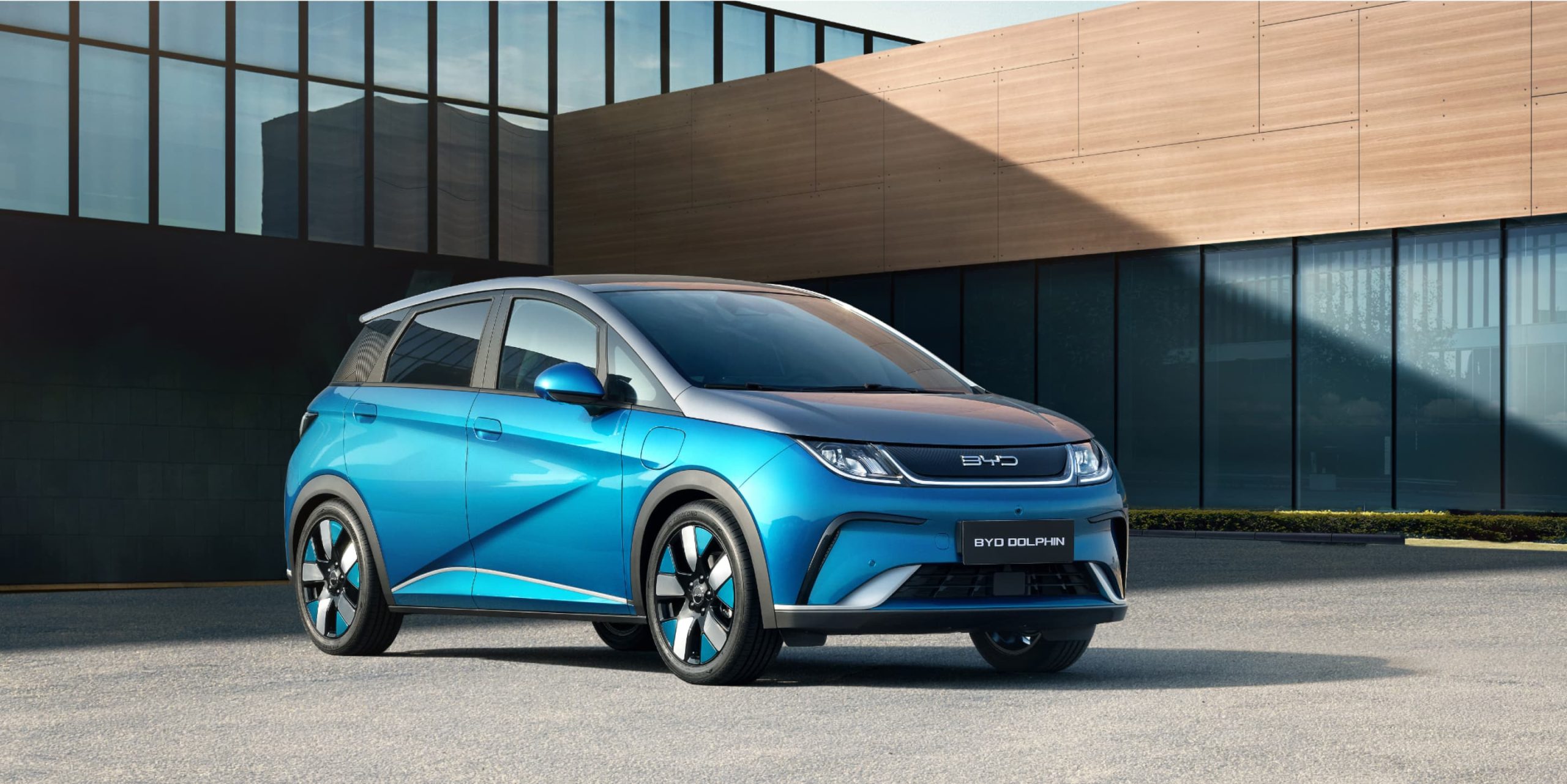
What is BYD Dolphin
The BYD Dolphin is an electric hatchback from China that is rapidly gaining popularity thanks to a combination of a reasonable price, modern design and a decent range. This model was created for urban life: it is compact, comfortable, easy to drive and quite practical at the same time. Dolphin does not have an overly aggressive appearance, but this is what makes it attractive to those who are not chasing status but are looking for a rational solution for everyday life.
Inside, it is a pleasant surprise: unusual materials, good equipment, and thoughtful details. And although some features are not yet polished, Dolphin looks like a very strong player in its price category.
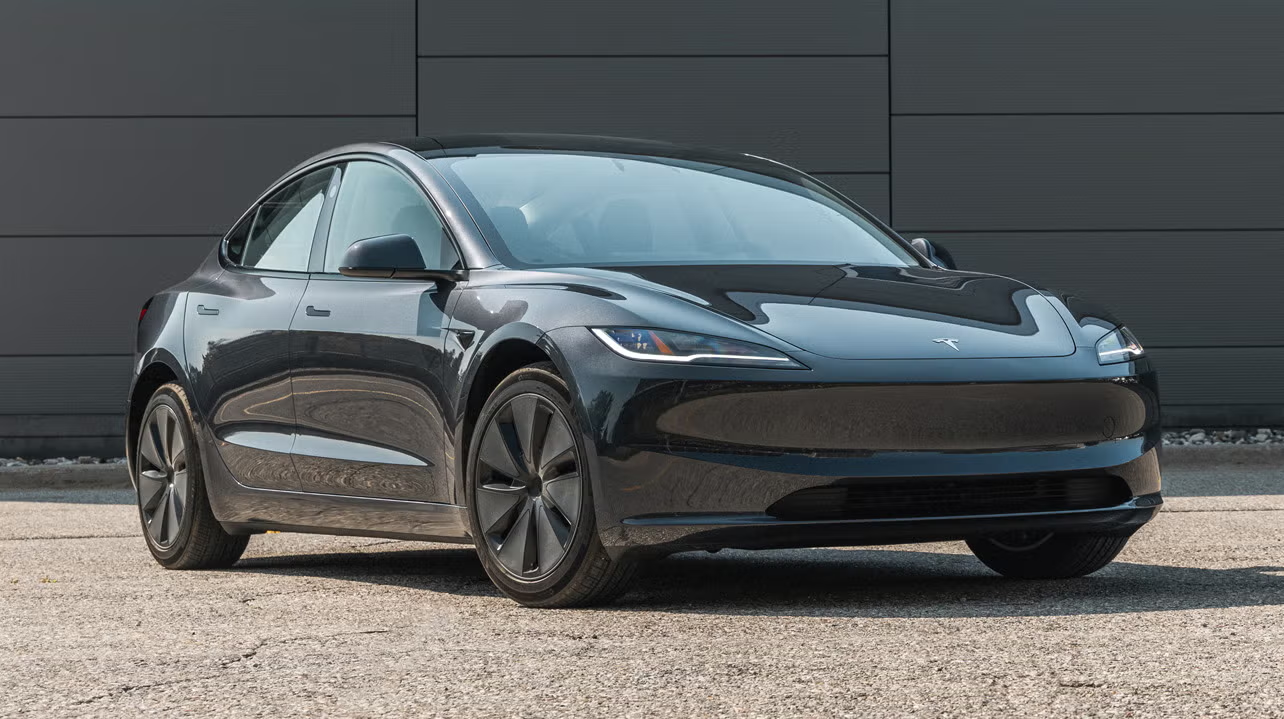
What is the Tesla Model 3
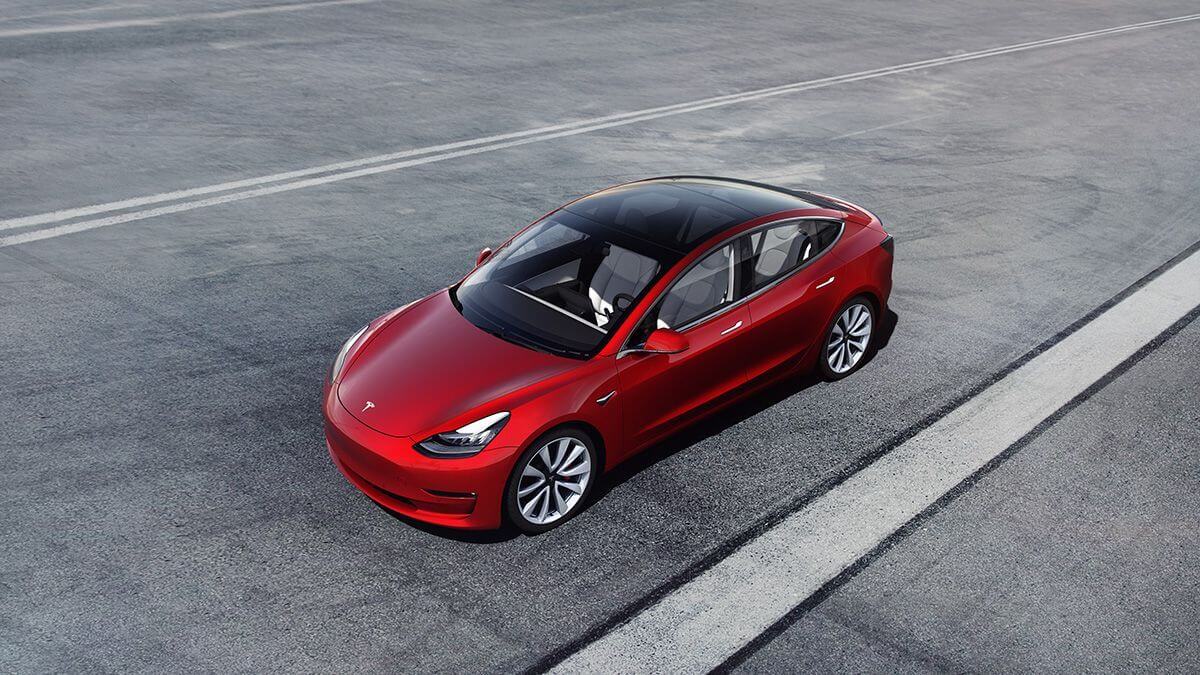
The Tesla Model 3 is no longer a newcomer to the market. It has long been the face of modern electric mobility, especially among those who value technology, speed and brand recognition. It is a sedan with rear or all-wheel drive, depending on the version, with a large range and impressive dynamics.
The interior of the Model 3 is minimalist to the point of being minimalist: almost everything is controlled from one large screen. It's not for everyone, but Tesla fans say that this is the philosophy of the future. The car performs well in the city, on the highway, and on the track, but it costs significantly more than the Dolphin.
Price and cost of ownership
For most Ukrainian buyers, price is the first factor of choice. Dolphin has a serious advantage here. The basic BYD package costs about €33,000, while the Tesla Model 3 starts at €40,000, and versions with larger batteries and more powerful engines can exceed €55,000.
But not only the starting price is important:
- BYD uses its own LFP batteries, which are longer lasting and cheaper to maintain
- Tesla has a higher residual value on resale
- Insurance for Tesla is usually more expensive
- BYD's service network in Ukraine is still weak, while Tesla has already formed a community of independent workshops
So, the Dolphin looks more budget-friendly, but the Tesla owner will benefit in the long run, especially when it comes to resale.
Dynamics and technical characteristics
Tesla traditionally focuses on speed and handling. The Model 3 in the Performance version accelerates to 100 km/h in 3.2 seconds. Is it impressive? Absolutely. But such dynamics are not critical for daily city driving.
BYD Dolphin in the top version produces 204 hp and has a torque of 310 Nm. It accelerates to hundreds in 7 seconds, which is more than enough for urban conditions. The car feels light, nimble, and has front-wheel drive, which is better suited for winter.
Tesla offers all-wheel drive, adaptive suspension and better stability on the road. This is a plus if you often travel between cities or drive on highways. But for a typical Ukrainian driver who drives between work, the supermarket, and the dacha, Dolphin looks more logical.
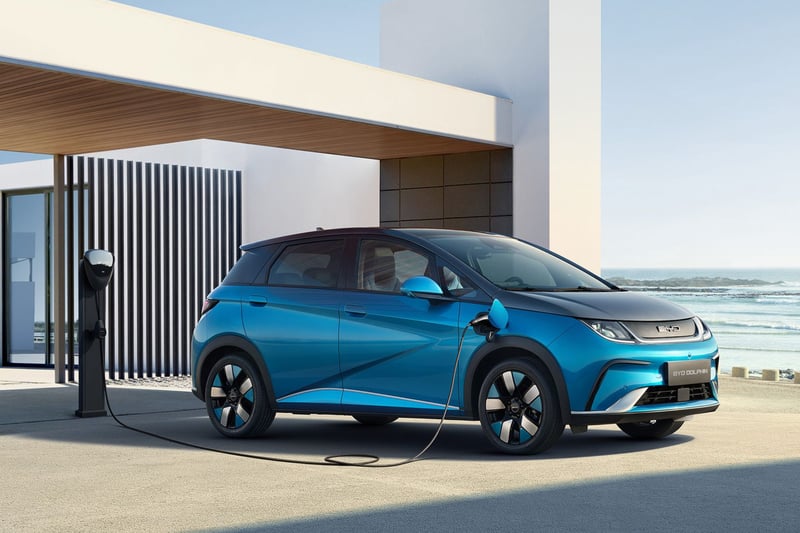
Power reserve and charging
This is where Tesla takes revenge. The new Model 3 has a range of up to 550 km (depending on the version), while the BYD Dolphin offers a maximum of 520 km.
But you have to take it into account:
- In real winter conditions, the range of both decreases by 20-30%
- V2L charging is available in Dolphin, which allows you to power other devices
- Tesla supports fast charging on superchargers, but they are still limited in Ukraine
- BYD charges more slowly on AC (up to 7 kW), which is not very convenient in the city
If autonomy is important to you and you often drive long distances, Tesla has the advantage. But for daily city use, even the basic Dolphin with a range of 345 km will be more than enough.

Charging solutions from ECOFACTOR
When comparing the range, charging types, and energy efficiency of Dolphin and Tesla, it is impossible not to mention the infrastructure itself. After all, what good is a car with a large battery if there is nowhere to charge it properly? That's why we at ECOFACTOR are focused on creating solutions that help Ukrainian drivers use electric vehicles safely in real-world conditions.
We design and manufacture charging stations in Ukraine - from mobile and home to powerful AC and DC systems of 44 kW and 420 kW. Our stations comply with international standards and are suitable for both private use and business - from car parks to shopping malls.
To enable drivers to charge their cars wherever it is convenient for them, we are developing a platform for charging network operators and providing access to more than 3,500 ports on our platform. We also support roaming with other charging networks in Europe.
For everyday use, we have created a convenient application for iOS and Android. In it you can find map of charging stationsYou can check their status, power, plan a route and even manage charging. All this is done in just a few clicks.
We also launched online shopwhere drivers can purchase the necessary accessories: cables and adapterski for different types of cars, RFID cards, holders and adapters. This is convenient, especially if you have a Tesla or BYD with a non-standard connector.
Comfort and interior
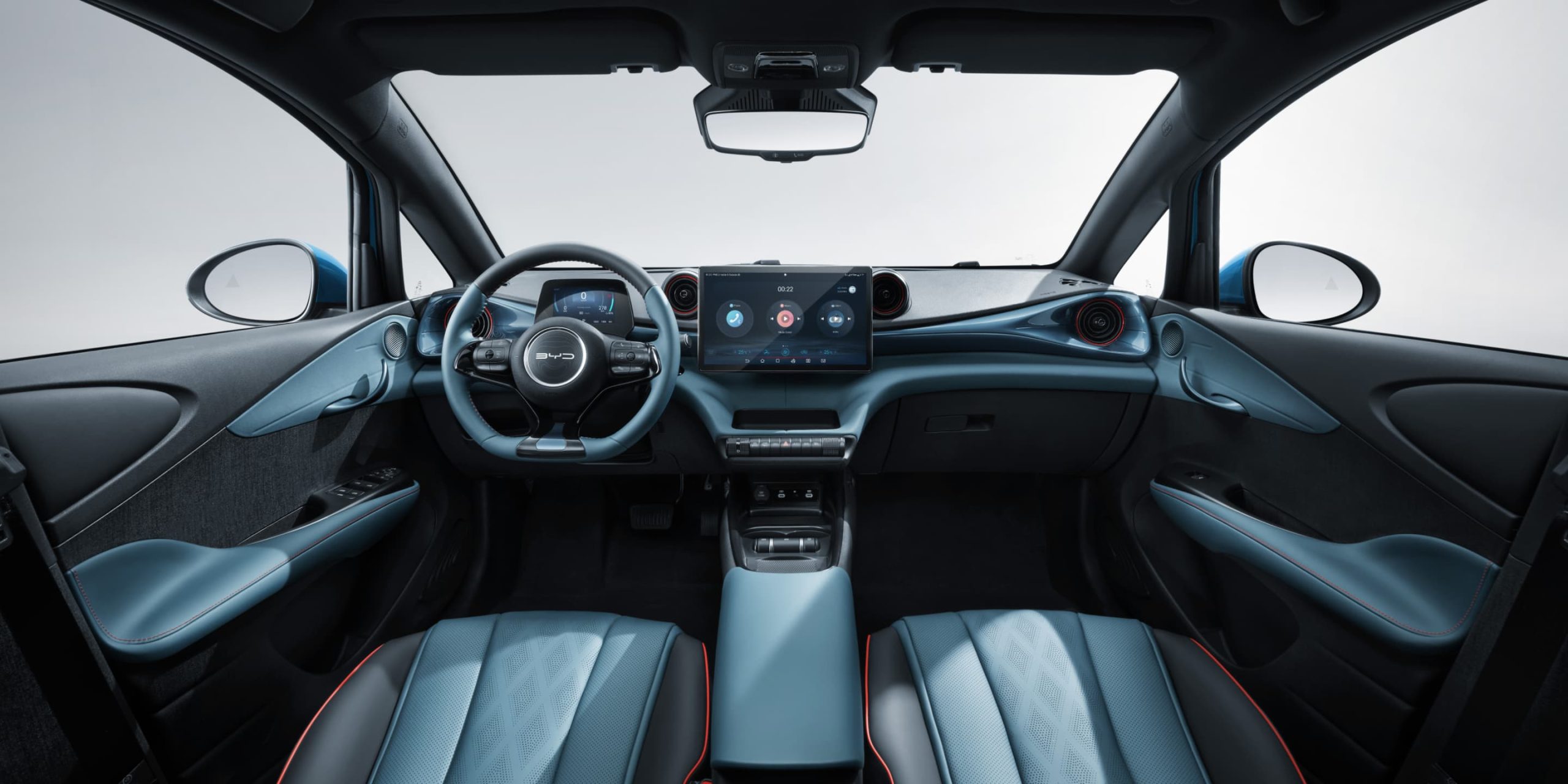
Both cars have a minimalist interior, a large screen in the centre, and a virtual dashboard. But the feel of the interior is completely different.
BYD Dolphin surprises with pleasant materials - neoprene, microfibre, glossy and matte inserts, comfortable seats. Some design decisions are inspired by the marine theme (fins on the door handles, wavy lines), but without kinks. Everything looks put together and functional.
Tesla Model 3 is more restrained. Minimalism is taken to the extreme. There is not even a traditional gear lever or dashboard in front of the driver. Everything is controlled through a large 15-inch screen. Some people find it convenient, others - on the contrary.
Dolphin is better suited to those who want a more "classic" driving experience, while Tesla is for fans of innovation and geeks.
Practical and spacious
The Tesla Model 3 is larger in size, and this is immediately noticeable in the luggage space. It has a rear boot with a capacity of 682 litres, plus an additional front compartment (the so-called frunk), which is convenient for cables or small items. This is useful if you often carry suitcases, packages or just like to have extra space at hand.
The BYD Dolphin loses in terms of trunk volume, but not critically. In the standard configuration, we have 345 litres, which is enough for everyday activities: shopping, bags, a baby carriage. And if you fold the rear seats, the volume increases to 1310 litres. This is already a good figure even against the background of larger models.
The Dolphin's interior has several thoughtful solutions that add to its comfort. The floor in the rear is completely flat, so passengers in the middle do not have to sit with their feet in the tunnel. A panoramic roof with a fabric curtain adds space and light - good in summer, even better in winter when you want more daylight.
The ergonomics of the seats also deserve a special mention. The Dolphin is comfortable to sit in both the front and rear. There's plenty of legroom, and the back of the rear sofa has a comfortable angle. The Tesla, despite its larger size, sometimes seems to be more rigid in its perception of space, due to its minimalist philosophy and restrained materials.
Security.
Both models received 5 stars for ANCAP, which is the highest rating a car can have on the market, so they are doing well in terms of basic safety parameters. But there are differences in the approaches to implementing driver assistance systems.
The Tesla Model 3 has a classic set of features: automatic emergency braking, lane keeping assist, and adaptive cruise control. Instead of traditional blind spot monitoring, Tesla uses cameras that display images on the screen during turns. It's an interesting solution, but it takes some getting used to, and not everyone finds it convenient in real traffic, especially in dense city traffic.
The BYD Dolphin has a similar set, but with some nuances. Lane Assist sometimes works a bit sharply, but it is quite correct. There are sound signals if the driver is distracted and a road sign recognition system. Another plus is the child detection system in the cabin. If someone is left in the back seat, the car signals and automatically switches on the air conditioning. This is a simple but important solution, especially for families with children.
In addition, Dolphin is equipped with a 360-degree camera, which really helps to park in tight courtyards or entrances. Tesla drivers are used to relying more on sensors and autopilot, which, although not fully active in Ukraine, still has a strong influence on driving habits.
Software and updates
Tesla is the leader in this regard, with constant OTA updates, interface improvements, new features, and autopilot (although it is not officially fully operational in Ukraine).
BYD is trying to catch up, but the Dolphin software is not yet that mature. There are some illogicalities in the menu, shortcomings in the localisation, but this can be resolved over time. BYD's screen rotates (horizontally or vertically), but CarPlay doesn't work in portrait mode, which is another oddity.
For whom each model is suitable
BYD Dolphin is for those who want an affordable, modern and comfortable electric car for the city or suburbs. If you are looking for your first EV, want to save money, but still get a good design, a sufficient range and normal comfort - Dolphin is definitely worth considering.
Tesla Model 3 is for those who value dynamics, long battery life, technology and brand. If power and comfort on the road are important to you and you are willing to pay extra for the name and gimmicks, this is your car.
Summary of the comparison
| Parameter. | BYD Dolphin | Tesla Model 3 |
| Price (from) | ~33,000 euros | ~40,000 euros |
| Power reserve | 2450-520 km | up to 550 km |
| Acceleration 0-100 km/h | 7 sec | 3.2 - 6.1 sec |
| Reason. | Front | Rear / Full |
| Boot capacity | 345 - 1310 л | up to 682 litres + frunk |
| Charging with alternating current | 7 kW | 11 kW |
| OTA updates | Limited to. | Fully |
| Software. | Simple but not perfect | More mature, more functional |
Conclusion.
Comparing BYD Dolphin and Tesla Model 3 directly is like putting a conventional iPhone and a solid mid-range smartphone side by side. Both cars have something to offer, but for different audiences. One driver wants maximum power and technology, while the other wants a practical and affordable vehicle that doesn't cost too much.
Dolphin fits perfectly into the realities of urban life: it is easy to drive, inexpensive, quite comfortable and does not require large investments. Tesla, on the other hand, wins in terms of range, performance, and technology, but it also costs accordingly.
The main thing here is not "who is better", but "who is more suitable for you". If you're looking for a workhorse for the city, go for Dolphin. If you want something with a wow effect and powerful acceleration - Model 3. Both options have the right to live. And it's good that now we have a lot to choose from.
Frequently asked questions
Is it easy to service BYD Dolphin in Ukraine?
There are still not as many options for services as there are for Tesla or ICE cars, but the situation is gradually improving. The main components are simple, and BYD batteries are made in-house, so wear and tear is minimal.
Is the Tesla Model 3 suitable for winter?
Yes, especially versions with all-wheel drive. However, you should take into account the drop in range at sub-zero temperatures. And it is advisable to have separate winter tyres - Tesla's summer tyres are not friendly to ice.
Why does Dolphin have slow AC charging?
This is a feature of the on-board charger. A maximum of 7 kW per AC is not critical for night charging at home, but in the city at public charging points it can be inconvenient.
Does it make sense to pay more for a Tesla if I drive mostly around the city?
Not so. In the city, Tesla's power is not used to its full potential, and Dolphin will feel even better in such conditions - smaller, easier to park, and less expensive.


