





BYD Leopard 5 vs Tesla Model 3: comparison for Ukrainian drivers
In 2025, the choice between a hybrid and an electric car in Ukraine is no longer limited to style or prestige. It is a practical decision: where to charge, how far to drive, how much to spend on maintenance. And this is where two prominent players enter the arena: the powerful BYD Leopard 5 hybrid SUV and the proven Tesla Model 3 electric sedan. These cars are like [...]
Content:
In 2025, the choice between a hybrid and an electric car in Ukraine is no longer limited to style or prestige. It is a practical decision: where to charge, how far to drive, how much to spend on maintenance. And this is where two prominent players enter the arena: the powerful BYD Leopard 5 hybrid SUV and the proven Tesla Model 3 electric sedan.
These cars seem to be from different worlds: one is designed for off-road and long journeys, the other for silence, style and fast charging. But both are actively appearing on Ukrainian roads. So let's compare what they really offer and who would be better suited to which car.
We remind you that you can purchase home and commercial charging stations in our online storeand also use the public charging stations ECOFACTORcharging points located throughout Ukraine. For convenient access to charging infrastructure, we recommend using our mobile applicationwhich is available on iOS and Android.
Body format: station wagon versus saloon
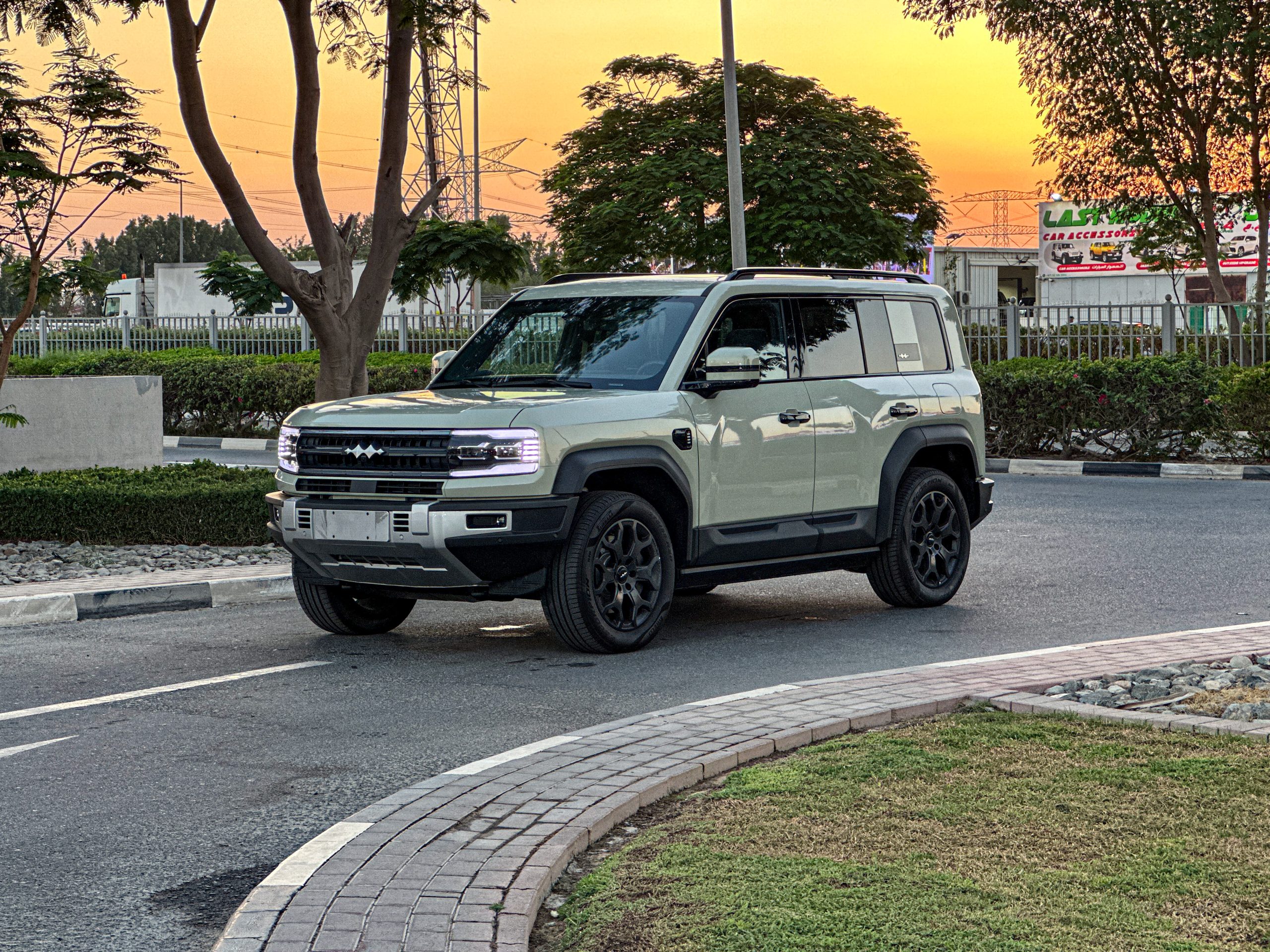
The Leopard 5 has a frame SUV form factor with a high seating position, high ground clearance and a distinctive muscular design. This car is designed to take the family outdoors, overcome uneven roads and not be afraid of deep snow in winter.
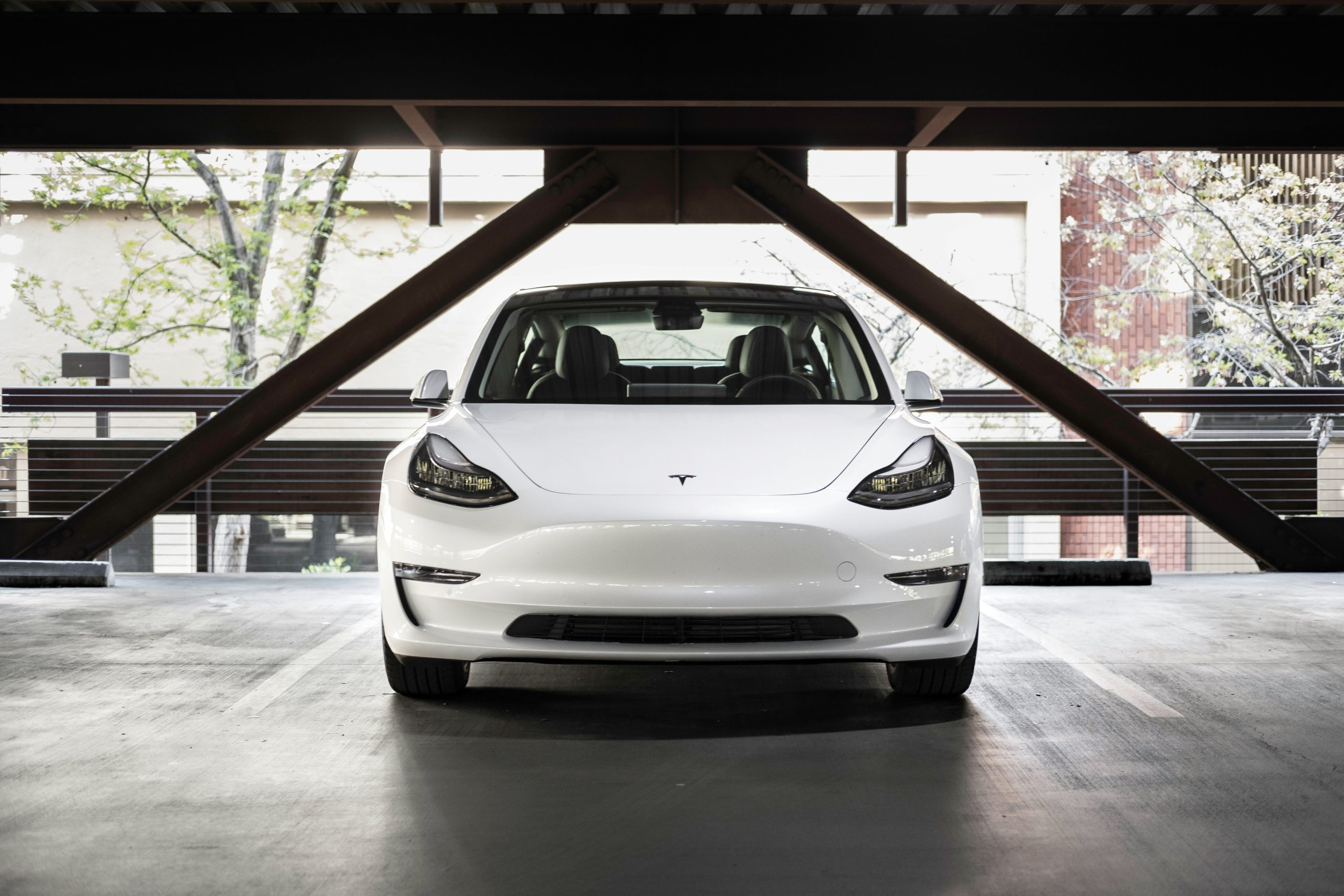
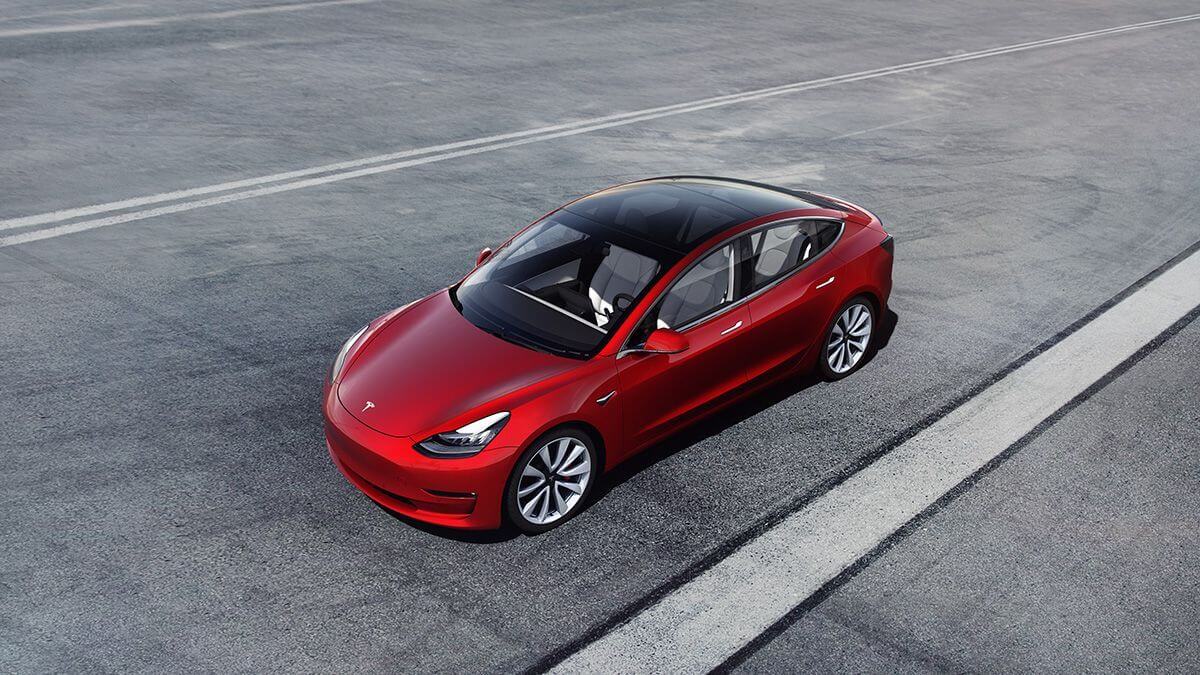
Tesla Model 3 is a mid-size sedan. It has a sleek silhouette, low profile, and comfortable aerodynamics. It behaves perfectly in the city and on the highway, but it's better not to go off-road for a picnic in the woods.
Drive type and transmission
The Leopard 5 is equipped with an all-wheel drive system with two electric motors and a 1.5T petrol engine. It is a plug-in hybrid (PHEV) that can run on electric power but can also connect the internal combustion engine when needed.
Tesla Model 3 RWD is rear-wheel drive. And although there is an all-wheel drive version with two motors, the base Highland model runs on a single electric motor at the rear.
Whatever works for you:
- All-wheel drive and off-road capabilities are important - Leopard 5
- Mostly asphalt, dry roads - Tesla Model 3
Cruising range: hybrid versus electric car
The Leopard 5 has an impressive overall range of up to 1,200 km according to the CLTC standard. This is thanks to the combination of a 31.8 kWh battery with a fuel tank. The electric drive can cover moderate distances, but the petrol engine is more active on long journeys.
The Tesla Model 3 (RWD) has a real-world range of about 445 km, and in ideal conditions, up to 520 km. But it is an all-electric model, so charging will be required more often.
When it matters:
- If you are planning long journeys in the absence of charging infrastructure - Leopard 5
- If you live in a city and have access to a charging network - Tesla Model 3
Charging and power consumption
With the Tesla Model 3, charging is a truly convenient and thoughtful part of the experience. With support for high-speed DC charging of up to 175 kW, you can recharge the car from 10% to 80% in just 24 minutes. That's about as long as it takes you to grab a coffee or a snack at the petrol station. And the best part is that it all happens automatically thanks to the Autocharge function, which remembers stations and doesn't require constant authorisation.
Daily charging at home or at work is also easy: up to 11 kW is supported via Type 2, allowing the battery to be fully charged overnight. In mild weather and moderate driving, the car consumes approximately 136 Wh per kilometre, and sometimes even less. This allows you to optimise your energy costs, especially if you use the night-time tariff.
The Leopard 5 is a completely different story. As a hybrid with a 31.8 kWh battery, it doesn't compete with Tesla in terms of charging speed. At home, it charges more slowly, and at public charging points, it doesn't push the maximum. But this is not the main thing - the main focus of the Leopard 5 is not charging, but the combination of electric traction with petrol. In the city, you can drive on the battery, and on the highway, you can connect the internal combustion engine and not worry about the charge level. This solution is more suitable for those who live in regions where charging is not yet very good.
In reality, the Leopard 5 rarely drives on electric power alone - the system automatically switches between engines to ensure an optimal balance of power and fuel consumption. This is convenient, but a little more complicated in terms of cost calculations.
Dynamics and power
Tesla Model 3 is undoubtedly about dynamics. A single electric motor on the rear axle delivers 208 kW of power (about 283 hp) and 420 Nm of torque. Thanks to this, the car accelerates from 0 to 100 km/h in 6.1 seconds, which is quite decent even compared to some sports cars. It's also quiet and smooth, with no jerks or gear changes. It's a pleasure to drive both in the city and on the highway.
The Leopard 5 takes a completely different approach. It has 760 Nm of combined torque from a 1.5T petrol engine and two electric motors (front and rear). This gives it an advantage in traction, especially when driving on sand, snow or off-road. However, the top speed is limited to 180 km/h, and the dynamics feel heavier - after all, this is a frame SUV, not a car.
The Tesla is lighter, sharper to the steering wheel, and more manoeuvrable in the city. The Leopard is more massive, more stable in more difficult conditions and better suited for pulling - for example, if you need to pull a trailer or get out of the mud.
Comfort, multimedia and features
Everything in the Tesla Model 3 is built around a central 15.4-inch touchscreen. It controls almost everything - climate, music, navigation, car settings. Rear passengers are not bored either - they have a separate 8-inch display. The cabin is very quiet thanks to the acoustic glass around the entire cabin. The seats are ventilated, and the 17-speaker audio system sounds like a good cinema.
There are also some nice features: Dog Mode, Sentry Mode, over-the-air updates, and car control via the app. Everything looks minimalistic, modern and very technologically advanced.
Leopard 5 takes a different approach. There are more classic controls, but there is no shortage of technology. The car has adaptive cruise control, adjustable suspension, and a large amount of space. The advantage is especially noticeable in the high seating position and ease of boarding and alighting.
Leopard is more for practical people who want comfort and no frills. Tesla is for those looking for technological aesthetics.
Boot and space
The Leopard 5 is not just big - it's family-friendly. Wide doors, a spacious second row of seats, easy entry even for the elderly or children. The volume of the boot is not clearly indicated, but the dimensions show that it can easily accommodate a baby carriage, two suitcases and some more food on top.
The Tesla Model 3 has two luggage compartments: 594 litres in the rear and a further 88 litres in the front (franc). This is quite enough for everyday needs, but the low roof makes it difficult to load bulky items. In the city, this is not a problem, but on holiday with the family it is more difficult.
Security.
Tesla has traditionally received high marks in crash tests. The Model 3 is on par:
- 90% protection of adult passengers
- 93% child protection
- 87% driver assistance systems
The car has perimeter cameras, automatic braking, collision warning and even driver fatigue monitoring.
The Leopard 5 has not yet passed European certification, but it is well equipped technically. Among the features are an active stabilisation system, L2 driver assistance, and blind spot monitoring. All this is available as standard.
Summary: which car is better for whom?
Choose BYD Leopard 5 if:
- You often travel outside the city or to regions with poor roads
- You have a large family or need space
- A long range is required without being tied to charging stations
- Do you like travelling to the mountains, forest, countryside or have a summer house
Choose a Tesla Model 3 if:
- Live in a city with access to charging points
- You value silence, design and technology
- Want a fully electric car without petrol
- You often travel for work, within 300-400 km per day
What to consider before buying?
Before making a final decision, you should ask yourself a few questions:
- Are there any charging stations near you?
- How much do you drive per day/week?
- Can you install home charging?
- Are you ready to pay for petrol if you choose a hybrid?
- What is more important to you: technology or versatility?
The answers to these questions will help you not only compare the characteristics, but also understand which car will suit your lifestyle.

Charging infrastructure for Leopard 5 and Tesla Model 3: how we at ECOFACTOR help drivers in Ukraine
In any comparison of electric vehicles and hybrids, the question sooner or later arises: where and how to charge? Especially when it comes to cars such as the Tesla Model 3, which is completely dependent on electricity, or the BYD Leopard 5, which, although it has a petrol engine, also uses a charge from the mains. That is why we, ECOFACTOR, develop solutions that cover all these needs - for both drivers and businesses.
We are working to make charging in Ukraine simple, clear and accessible. Our platform supports more than 3,500 charging ports, and the charging stations we design, manufacture and service our own equipment. This applies to both AC stations of up to 44 kW and DC solutions of up to 420 kW, which is perfect for fast charging a Tesla or recharging hybrids like the Leopard 5.
To make it easier for drivers to navigate the infrastructure, we have created the ECOFACTOR mobile app, available on iOS and Android. It makes it easy to find the nearest station, check its status, and plot a route through map of charging stationspay for charging or just see the cost statistics. If you drive a Tesla, it's convenient. If you have a Leopard 5, it's even more convenient.
For home, office or business, we have online shopwhere you can buy different models of charging stations and everything you need to connect them: cables and adapters, wall holders, adapters and the chargers. So, whether you've just bought a Tesla or are preparing your Leopard for charging in your backyard, we have a solution.
We have also developed an operator platform that helps manage the charging network, monitor energy consumption, set tariffs, and issue reports. It is suitable for shopping malls, restaurants, residential complexes or private initiatives that want to develop charging infrastructure without unnecessary headaches.
At the same time, if you travel frequently, please note that our network supports roaming with foreign partners, which means that even when travelling outside Ukraine, you will not be left without a charge. Tesla has been on the road for a long time - Leopard 5 is just gaining momentum, but both cars need a charging ecosystem, and we are creating it.
To summarise: whether you choose the all-electric Model 3 or the hybrid Leopard 5, we at ECOFACTOR provide everything you need for charging, monitoring and convenience. And most importantly, we do it the Ukrainian way, taking into account the realities of our roads, tariffs and lifestyle.
Conclusion.
To be honest, there is no universal answer to the question "which is better - BYD Leopard 5 or Tesla Model 3?". It's like comparing running shoes to hiking boots. Both are good, but for different routes.
The Leopard 5 is the choice for those who want to not only get to their destination but also not limit themselves to directions. The car feels confident where there is no asphalt, has hybrid flexibility, a lot of space, and the ability to recharge the battery when it is convenient, not when it is necessary. This car is not about fashionable screens, but about utility and independence from the charging infrastructure.
Tesla Model 3 is on the opposite side. If you value dynamics, technology, over-the-air updates, and minimal fuel costs, it will definitely take its place in urban or suburban life. It can be charged quickly, the ride is quiet, and the handling is pleasant. But you need to be prepared for route planning and dependence on an outlet.
In the end, it all comes down to your lifestyle. If you drive mainly within the city, have access to charging points and want to go completely electric, the Model 3 is the logical step. If you need versatility, space, traction and reliability on long journeys, the Leopard 5 will make you feel more free.
Frequently asked questions
Can I charge BYD Leopard 5 at the same stations as Tesla?
Yes, Leopard 5 supports charging from standard AC stations, just like Tesla, but it charges more slowly. Its main advantage is a hybrid system that does not require frequent recharging.
What type of charging is the most convenient for Tesla Model 3 in Ukraine?
The best way to do this is to combine home charging with a night-time tariff and high-speed DC charging on the road. Given the increased number of stations, this works quite conveniently.
Can the Leopard 5 be driven entirely on electricity?
Theoretically, yes, but in real life, the system switches between electric and petrol modes automatically. That is, it will be difficult to drive completely without using an internal combustion engine, especially outside the city.
How much charge does a Tesla have in winter?
In the cold season, the power reserve decreases, sometimes significantly. On average, it is 15-25% less than the one indicated in warm weather. But thanks to preheating via the app, this loss can be partially compensated for.


