





CCS1 vs CCS2: What you need to know to make the right choice
With the growing popularity of electric cars in Ukraine, it is important to understand which charging standards are most common. In this article, we will look at the two main charging standards - CCS1 and CCS2 - that are used to charge electric vehicles, particularly in Ukraine. We will explain their features, differences, and the impact on the choice of charging stations and the future of electric cars in Ukraine. [...]
Content:
With the growing popularity of electric cars in Ukraine, it is important to understand which charging standards are most common. In this article, we will look at the two main charging standards - CCS1 and CCS2 - that are used to charge electric vehicles, particularly in Ukraine. We will explain their features, differences, and the impact on the choice of charging stations and the future of electric vehicles in Ukraine.
We remind you that you can purchase home and commercial charging stations in our online storeand also use the public charging stations ECOFACTORcharging points located throughout Ukraine. For convenient access to charging infrastructure, we recommend using our mobile applicationwhich is available on iOS and Android.
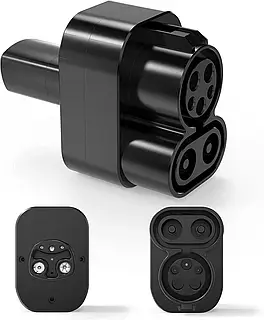
What is CCS1?
CCS1, or Type 1 CCS, is a charging standard for electric vehicles that is mostly used in North America and South Korea. This standard consists of two main components. The first is the J1772 (Type 1) connector for alternating current (AC) charging. This connector has five pins: two for AC, one for ground, one for proximity detection, and one for communication. Thanks to this design, this charging standard supports a power level of up to 7.4 kW when using single-phase AC. This makes it possible to charge the vehicle both at home and at medium-sized charging stations, where this is sufficient to support daily driving.
The second component of the CCS1 is an optional two-pin direct current (DC) connector that enables fast charging at charging stations that support this standard. The DC charging power can reach up to 350 kW, which significantly reduces charging time compared to conventional AC charging. This enables electric car owners to replenish their energy supply much faster at large high-speed charging stations.
Despite its popularity in North America, CCS1 has limited geographical distribution in Ukraine and other countries where CCS2 is dominant. In Ukraine, CCS1 is less widespread than CCS2, so drivers travelling abroad may face limited access to charging stations that support this standard. Nevertheless, CCS1 will remain an important standard for those who use electric cars in countries where it is the main standard.
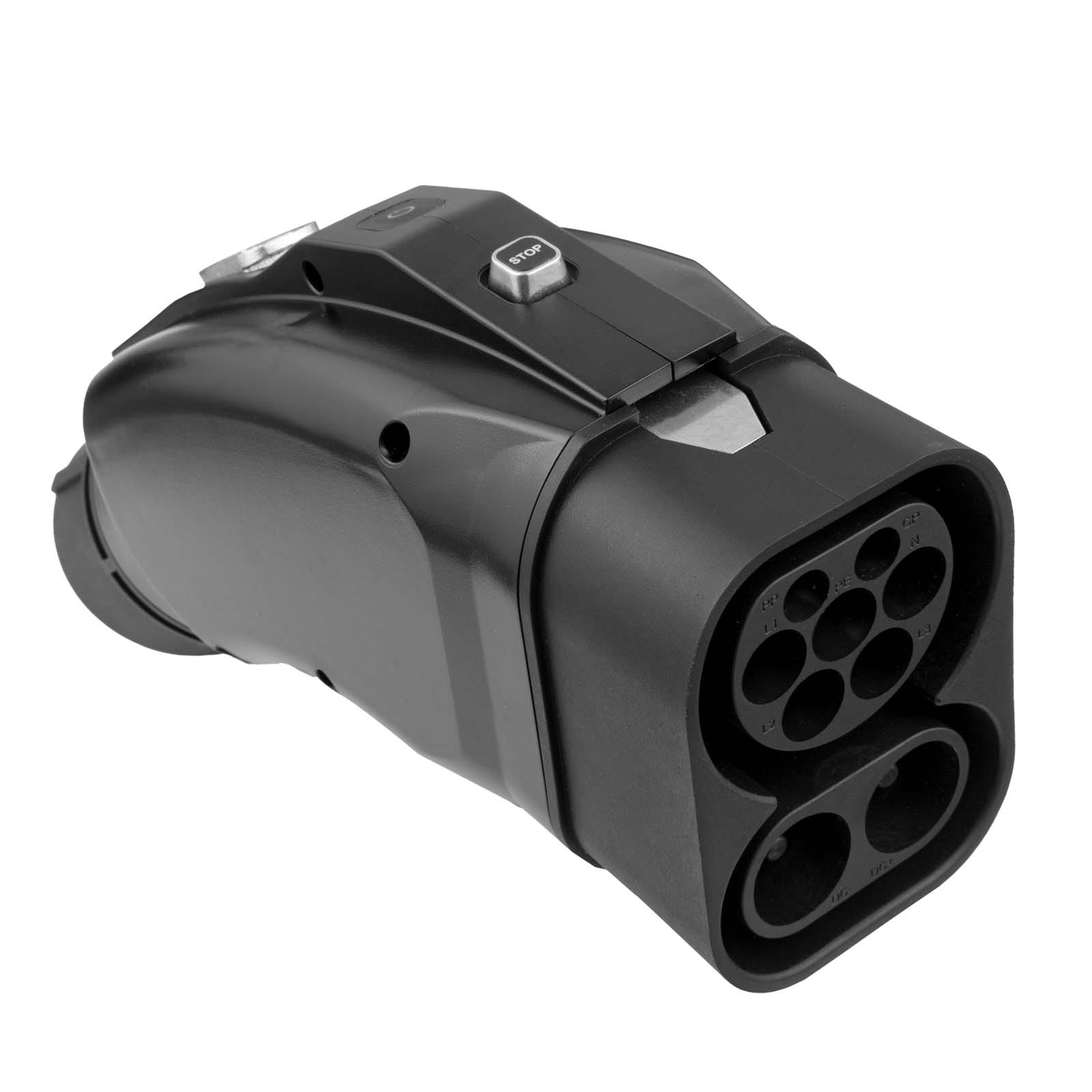
What is CCS2?
CCS2, or Type 2 CCS, is a charging standard that is widely used in Europe, Australia and parts of Asia. It has become the main charging standard for electric vehicles in these regions and is actively used in Ukraine. One of the main advantages of CCS2 is its design, which combines two components for AC and DC charging. The first component is a Type 2 connector (Mennekes), which is used for AC charging. Compared to the CCS1, this connector has seven pins: three for three-phase AC, one for the neutral contact, one for ground, one for proximity detection and one for communication. This design allows for a significantly higher charging capacity than the CCS1, supporting up to 43 kW at three-phase current, which makes it possible to charge the vehicle much faster at charging stations equipped with this connector.
The second component is a two-pin direct current (DC) connector that allows charging at fast-charging stations with a capacity of up to 350 kW. This standard supports both single-phase and three-phase charging, which is a significant advantage over CCS1, as three-phase charging allows for significantly higher power and shorter charging times. CCS2 also allows vehicles to be charged at charging stations that support this standard with both single-phase and three-phase currents, making it a versatile standard for different conditions.
CCS2 is becoming the dominant standard in Ukraine, thanks to the development of charging station infrastructure and strong support from European electric vehicle manufacturers. With many European electric vehicle manufacturers using CCS2, it is expected that this standard will expand its adoption in Ukraine in the near future. Due to its versatility and support for high power for fast charging, CCS2 remains the most popular standard in many countries, which contributes to the development of infrastructure for electric vehicles.
Main differences between CCS1 and CCS2
1. Charging speed and power
One of the main differences between CCS1 and CCS2 is their AC charging capabilities. The CCS1 standard only supports single-phase charging with a maximum power output of up to 7.4 kW, making it a great option for home charging stations or small charging points at work. This power is sufficient for charging in conditions where the vehicle does not need an urgent replenishment of energy, but it is relatively slow compared to other standards, such as CCS2.
Unlike the CCS1, the CCS2 supports both single-phase and three-phase charging, allowing for a power output of up to 43 kW at AC stations. Three-phase charging is significantly faster because it makes efficient use of electrical energy, which results in much faster charging. This offers great advantages, especially at public charging stations or when you need to quickly replenish your energy supply.
Although both CCS1 and CCS2 support direct current (DC) fast charging with a maximum power output of up to 350 kW, most charging stations today offer outputs between 50 and 175 kW. These capacities are sufficient to significantly accelerate the charging process, even at moderate charging speeds, so users of both standards can expect convenient and fast top-ups when travelling.
2. Connector design and foam configuration
The design of the charging connectors in the CCS1 and CCS2 standards also has significant differences, which affects their charging capabilities. CCS1 uses the J1772 (Type 1) connector for AC charging, which has five pins. These pins include two for AC power, one for ground, one for proximity detection, and one for communication. However, due to this design, the CCS1 only supports single-phase charging, which is a limitation, especially when used to charge large batteries or at large charging stations where fast charging is required.
In contrast, the CCS2 has a more sophisticated design - a Type 2 (Mennekes) AC connector with seven pins. With three pins for three-phase AC, the CCS2 allows for significantly higher power and enables fast charging of up to 43 kW at AC stations. In addition, the additional pins allow the CCS2 connector to support both single-phase and three-phase charging, which is a big plus for users as it allows them to charge their electric vehicle with maximum efficiency and speed.
3. Backward compatibility
Backward compatibility is another important difference between CCS1 and CCS2, as it determines which charging stations can be used with the respective connectors and which vehicles can be charged at those stations. CCS1 is compatible with the J1772 connector, which is the standard for AC charging in North America. This means that cars with a CCS1 connector can be charged at both CCS1 and J1772 stations, which greatly expands the options for users in regions where this standard is dominant. This is particularly convenient for drivers in North America, as they do not need to find specialised charging stations for each type of connector.
In turn, CCS2 is compatible with the Type 2 connector, which is the main charging standard in Europe. Therefore, vehicles equipped with CCS2 can be charged not only at CCS2 stations, but also at any station that uses the Type 2 connector. This makes CCS2 a more versatile standard for international travel, especially for drivers in Europe, as they can use a wide network of charging stations that support Type 2 connectors. In Ukraine, in particular, CCS2 is becoming increasingly popular, and most new electric cars use this standard.
Therefore, the backward compatibility of CCS1 and CCS2 has a significant impact on the usability of charging stations and access to infrastructure, especially when travelling between different regions where different charging standards may be used.
Advantages and disadvantages of CCS1 and CCS2
CCS1
| Aspect. | Advantages. | Disadvantages. |
| Distribution. | Widely distributed in North America and South Korea, providing a wide range of charging stations. | It is not widely distributed outside of North America, which can create difficulties when travelling to Europe or other regions. |
| Backward compatibility | Backward compatibility with J1772 allows charging at most charging stations in North America. | It does not support three-phase charging, which limits the charging speed in AC. |
| Charging speed | Supports fast DC charging up to 350 kW, which allows you to quickly charge your car at specialised stations. | Low power output when charging with AC (up to 7.4 kW), which makes charging slower at standard stations. |
| General compatibility with infrastructure | A large number of charging stations in North America, which provides convenience for users. | Limited international compatibility, which can be a problem when travelling to Europe or other countries. |
CCS2
| Aspect. | Advantages. | Disadvantages. |
| Distribution. | It is widespread in Europe, Australia and parts of Asia, providing a large number of charging stations. | It is less popular in North America and South Korea, which may limit the number of charging stations in these regions. |
| Backward compatibility | It is Type 2 compatible, which is the charging standard in Europe and allows charging at most stations. | More adapters are needed for compatibility with other standards outside Europe. |
| Charging speed | Supports three-phase charging up to 43 kW for AC, allowing the vehicle to be charged quickly. It also supports fast DC charging up to 350 kW. | Not all stations support the maximum charging power, which may limit the charging speed in some cases. |
| General compatibility with infrastructure | An extensive infrastructure of charging stations in Europe, Asia and Australia ensures a high level of charging availability. | The more complex design of the connector with seven pins can cause wear and tear and an increased risk of damage due to physical impact. |
Future development and trends
With the growing popularity of electric cars in Ukraine, the infrastructure of charging stations for CCS2 is actively developing. European manufacturers such as Audi, BMW, and Mercedes-Benz are choosing this standard for their models, which is driving demand for CCS2 charging stations. Over time, it is expected that this standard will become dominant in Ukraine, especially given that many new car models entering the market support CCS2.
This will allow for a more developed network of charging stations, which will allow for faster charging and shorter charging times compared to other standards. Given the general trends in the electric car market, CCS2 is set to become the main standard for Ukraine in the coming years.
The growing proliferation of different charging standards, such as CCS1 and CCS2, requires the development of adapters and multi-standard charging stations. This will allow drivers using cars with different connectors to charge their vehicles at the same stations. The development of such technologies will greatly facilitate the use of charging networks and make the charging process more accessible, regardless of the standard.
This approach will be especially important for international travel, where different charging standards may be used. Therefore, the development of adapters and multi-standard stations will be key to ensuring that charging is convenient and accessible in different regions.

ECOFACTOR: Solutions for charging electric cars in Ukraine
We are ECOFACTOR, a company specialising in the development and production of charging stations for electric vehicles. We design and manufacture AC charging stations up to 44 kW and DC charging stations up to 420 kW that meet modern market requirements. Our solutions contribute to the development of infrastructure for electric vehicles both in the business sector and for private users.
We offer not only charging stations, but also a full range of necessary accessories, including cables, adapters and other accessories for convenient charging. In our online store you will be able to find all the necessary products for charging of your electric vehicle. For the convenience of users, we have also developed an app for iOS and Android, which allows you to find charging stationscheck their availability and build a route through the map of charging stations.
Our company has already connected more than 3,500 charging ports at various stations, which makes it easy to use the network to charge electric cars throughout Ukraine. We are working on new solutions and constantly expanding our infrastructure to make the charging process even more accessible and fast for electric car drivers.
Conclusion.
As electric transport develops, it is important to understand the difference between the main charging standards, such as CCS1 and CCS2, as this has a direct impact on the availability and efficiency of charging infrastructure. CCS1, while still the dominant standard in North America, has limited geographical reach outside of this region, which can pose some challenges for international travel. In contrast, CCS2 is rapidly gaining popularity in Europe and Ukraine, thanks to its support for three-phase charging and higher power, which can significantly reduce charging times.
With the increasing popularity of electric vehicles in Ukraine, in particular with the support of companies like ECOFACTOR, the infrastructure of charging stations for CCS2 is rapidly developing, contributing to driver convenience and mobility. This process is also accompanied by the expansion of the network of multi-standard stations, which reduces barriers for drivers using different types of connectors and provides convenient access to charging regardless of the region.
Whether you own an electric car with CCS1 or CCS2, it is important to choose the right charging stations and charging accessories to ensure smooth and fast charging. At ECOFACTOR, we contribute to the development of electric vehicle infrastructure in Ukraine by offering charging solutions for both businesses and private users.
Frequently asked questions
What is the main difference between CCS1 and CCS2?
The main difference between the CCS1 and CCS2 is the number of pins in the connectors and the support for three-phase charging. The CCS1 only supports single-phase charging, while the CCS2 has three pins for three-phase AC, which allows you to charge your car much faster. CCS2 is also widely used in Europe and has greater infrastructure support.
What are the benefits of CCS2 for Ukraine?
CCS2 is becoming the dominant standard in Ukraine due to its versatility, ability to charge faster due to three-phase current, and widespread use by European electric vehicle manufacturers. This contributes to the development of charging infrastructure in the country and the availability of fast charging.
Is it possible to use CCS1 and CCS2 at the same charging stations?
This depends on the specific charging station. Some stations support adapters or multi-standard connectors that allow for both CCS1 and CCS2. However, for maximum comfort, drivers should pay attention to the type of standard supported when choosing a charging station.
What are the benefits of the ECOFACTOR app?
The ECOFACTOR app for iOS and Android enables electric car drivers to easily find charging stations, check their availability and quickly plan their routes. This ensures convenience and efficiency when using the charging infrastructure, which is especially important for long-distance journeys.
Can I use ECOFACTOR charging stations outside of Ukraine?
ECOFACTOR's charging stations are primarily located in Ukraine, but the company also cooperates with international networks to ensure wider availability of charging, particularly for users travelling across Europe and other countries.
How to choose the right charging station for your car?
The choice of charging station depends on the type of electric vehicle you have and the charging standard it supports. For CCS1 or CCS2, it is important to consider the compatibility with the connectors as well as the power of the charging station, which affects the charging speed. For detailed advice on the selection of charging stations, please contact ECOFACTOR specialists.


