





How to charge an electric car from a power outlet
Electric vehicles have become popular due to their environmental friendliness and efficiency, but charging is often a top concern for drivers. This is especially true for owners who have limited access to special charging stations. In this case, charging from a regular outlet is a simple and affordable way to maintain the vehicle's charge level. We remind you that in our online store you can buy charging [...]
Content:
Electric vehicles have become popular due to their environmental friendliness and efficiency, but charging is often a top concern for drivers. This is especially true for owners who have limited access to special charging stations. In this case, charging from a regular outlet is a simple and affordable way to maintain the vehicle's charge level.
We remind you that in our online store you can purchase charging stations for home and business, as well as use our public charging stations ECOFACTORlocated throughout the country. For your convenience, our application for iOS and Android.
How does charging from a power outlet work?
Charging an electric vehicle from a standard wall outlet is the easiest way to recharge your car's battery. It is suitable for those who do not need super-fast charging and can afford to charge their car overnight or for a long time. In this section, we'll look at how this process works, what the peculiarities are, and how to ensure maximum efficiency.
The basics of charging from a power outlet
Electric cars are equipped with several types of chargers, but the most common for domestic use is the mobile charging connector. This connector is supplied with the car and allows you to connect the car to a standard electrical network through a regular socket. In Ukraine, you can also use specialised charging stations to charge electric vehicles, which are offered by ECOFACTOR, a leader in the production of chargers that meet European quality standards.
Charging is carried out by transferring electrical energy from the mains to the vehicle battery. The charging process begins when you connect the mobile phone connector to the vehicle and to a power outlet. The socket must have a ground connection, as this ensures the safety of the process and protects against possible short circuits or electric shocks. If you want to charge your car with maximum efficiency and safety, ECOFACTOR chargers can help you, as they are certified to charge your car in optimal conditions.
Why is it important to have a ground connection?
An earth connection is an important element in the electrical connection system that ensures the safe flow of current in the event of a fault. A lack of grounding at the outlet can lead to dangerous situations, such as short circuits or electric shocks. Most mobile connectors require a ground connection for proper operation. However, ECOFACTOR chargers provide additional protection and guarantee safe charging, even in adverse weather conditions.
If you do not have a grounded outlet, there are third-party chargers that can work around this limitation. Such chargers can usually have additional safety features, but we recommend that you contact our service for advice to choose the most suitable option for your vehicle and charging location. ECOFACTOR offers professional solutions for homes and businesses, helping to implement safe and efficient charging systems.
In summary, plug-in charging is a convenient and cost-effective method of charging an electric vehicle that allows car owners to maintain their charge level without spending a lot of time searching for charging stations. The choice of this method depends on your needs and the ability to access an outlet with the right characteristics.
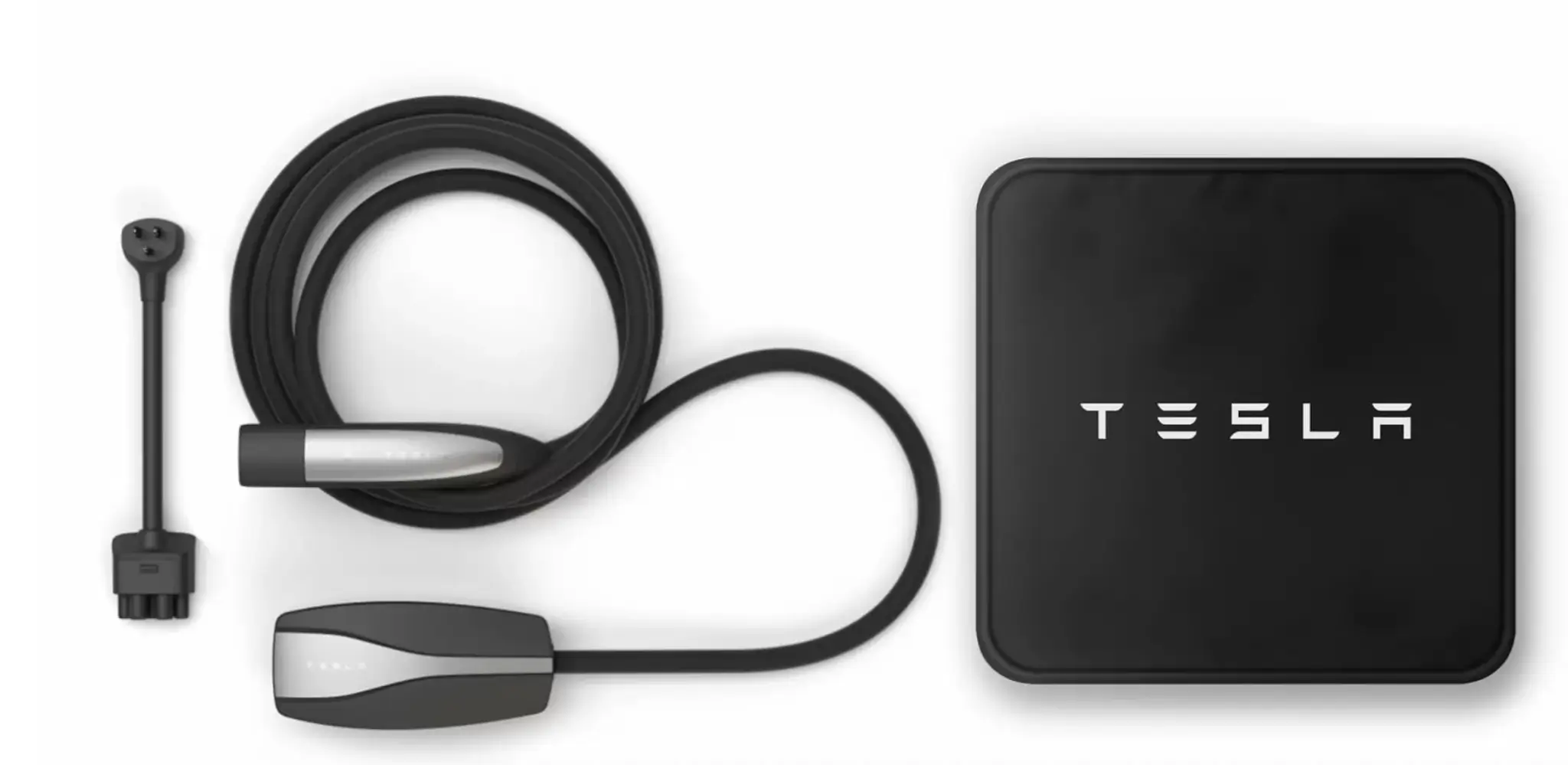
Charging via mobile connector
A mobile connector is one of the main tools for charging an electric vehicle at home via a standard household socket. It is supplied with the vehicle and allows users to connect the electric vehicle to the mains without the need to install specialised charging stations. For the convenience of drivers looking for efficient charging solutions, ECOFACTOR offers a wide range of mobile charging connectors that meet European quality standards. In this section, we will take a closer look at how charging via a mobile connector works, its features, advantages and disadvantages.
What is a mobile connector?
A mobile connector (sometimes called a "charging cable") is a portable charger that allows you to connect your electric vehicle to a standard electrical outlet (220 V). Included with electric cars from Tesla, Volkswagen, Nissan, BMW and other models, this connector allows you to charge your car at home or in another convenient place where you have access to a regular outlet. ECOFACTOR, a leading manufacturer of charging stations in Ukraine, also offers additional solutions for charging via a mobile connector, ensuring high quality and safety.
The mobile connector consists of a cable with a connector for connecting to the vehicle at one end and a standard plug for connecting to a power outlet at the other. It has a number of important features and benefits, but there are also some limitations that you should consider.
How does the mobile connector work?
Charging via the mobile connector starts with connecting it to the car and a standard socket. Once connected, the device starts transferring electrical energy from the mains to the car battery. It is important that the socket is earthed, as this ensures a safe charging process, reducing the risk of short circuits or other problems with electrical devices. ECOFACTOR also offers mobile charging stations that ensure a safe and efficient charging process even in adverse conditions.
The mobile connector is connected to the car via a special connector that is standard for most modern electric cars. During the charging process, the connector adjusts the amount of energy transferred according to the needs of the battery to ensure a safe and efficient charge replenishment process. Charging with a mobile connector is usually carried out at a voltage of 220 V and has a rated power of around 2.3-3.7 kW, depending on the car model and the characteristics of the connector.
Advantages of the mobile connector
- Convenience. - The mobile connector makes it possible to charge an electric vehicle anywhere there is a standard electrical outlet. This is ideal for charging at home or in the country when there is no access to specialised charging stations. ECOFACTOR also offers chargers that are suitable for use at home or in business locations.
- No need for additional investments - Unlike the installation of special charging stations or devices, a mobile connector is usually included with the car, making it available at no additional cost.
- Ease of use - The mobile connector is easy to connect to a car and a power outlet, so users do not need to have any special skills or knowledge to use it.
- Mobility - As the name suggests, the mobile connector allows you to take your charger with you, making it convenient for use in a variety of situations, especially when travelling or on business trips.
- Security. - The mobile connectors are equipped with overheat, overvoltage and short-circuit protection to ensure a safe charging process.
Limitations of the mobile connector
- Charging time - Although the mobile connector is a convenient and affordable way to charge, the process takes significantly longer than charging via dedicated stations or fast chargers. This can be frustrating for those who are used to fast charging in a short time. However, if charging is done overnight, this is not a problem.
- Charging power - The mobile connector delivers a lower power output (up to 3.7 kW) compared to other charging methods such as Wallbox or supercharging stations, where the output can be up to 22 kW or more. This means that charging via the mobile connector will take longer to fully charge the battery.
- The need for grounding - For the safety of charging via the mobile connector, it is important that the outlet is properly earthed. If it is not, charging can be dangerous. In such cases, you should contact a professional to install a suitable outlet or use third-party chargers that allow you to circumvent this limitation.
- Limited capacity for high charging speeds - charging via a mobile connector does not allow for high charging speeds, which can be a problem for drivers who need to recharge quickly.
How to choose a mobile connector?
When choosing a mobile connector for charging an electric vehicle, it is important to pay attention to several key points:
- Compatible with your vehicle - Before purchasing a connector, check whether it supports your vehicle type and the relevant charging standards.
- Power - Choose a connector with the optimal power for your network to ensure efficient charging without overloading.
- Cable length - Make sure that the cable is long enough to allow you to conveniently plug your vehicle into a power outlet, even if it is located at a distance.
Charging time via mobile connector
The charging time depends on several factors, including the battery capacity of your electric vehicle and the power of the connector itself. On average, a mobile connector charges an electric vehicle by 2-3 kW per hour. If your battery has a capacity of 40-60 kWh, it can take 12 to 20 hours to fully charge. However, if you charge your car at night, this time will not be a problem, as the car will be fully charged by morning.
Advantages of charging from a power outlet
Charging an electric vehicle via a standard household outlet is one of the most common and affordable ways to replenish the energy in the battery. This provides convenience for electric vehicle owners who want to charge their cars without having to install complex or expensive specialised charging stations. In this section, we will take a closer look at all the benefits of plug-in charging, including the convenience, cost-effectiveness, accessibility and safety of this method.
Accessibility and simplicity
One of the main advantages of plug-in charging is its accessibility. Most houses and apartments already have standard 220V electrical outlets, making it easy to connect an electric vehicle to the grid without the need for additional investment. There is no need to purchase specialised charging stations or have complicated settings, which makes this method as convenient as possible for users, especially when it comes to charging at home.
Charging via the socket also requires no additional setup effort. All you need to do is connect the mobile connector cable to your car and the socket, and the charging process will start automatically. This makes the process much simpler than other charging methods, which may require more complex settings or specialised equipment. ECOFACTOR actively supports the simplicity and convenience of its solutions, ensuring safe and efficient charging for a wide range of users.
Cost-effectiveness and no additional costs
Charging via a standard socket is a cost-effective option for those who want to minimise the cost of charging infrastructure. The cost of installing a home charging station or fast charger can be significant and, in some cases, very expensive. In contrast, there is no additional cost to charging via a power outlet other than the purchase of a mobile connector (if not included with the vehicle). This allows users to significantly reduce the cost of charging infrastructure.
Connecting to a standard socket also makes it possible to use the existing infrastructure in the home, avoiding the need to install specialised charging points or pay for the use of public charging stations, which often charge for each charging session. As a result, this allows electric vehicle owners to save money on long-term operation. With the ECOFACTOR solution, you can also be assured of savings because the mobile connector is designed to optimise energy efficiency and durability.
Safety and low risk of damage
Charging via a power outlet has a low risk of damage if you follow basic safety guidelines. For example, it is important that the outlet is properly earthed, as this ensures a safe connection to the mains and minimises the risk of short circuits or electrical accidents. This is especially important for those who live in older buildings or in areas with unstable power supply.
In addition, charging via a socket often includes additional protection systems, such as overheating and short-circuit protection. Most mobile connectors are equipped with electronic systems that automatically shut down the charging process if anomalies are detected, which prevents damage to both the vehicle and the electrical network. ECOFACTOR also provides innovative protection systems in its solutions to ensure safe charging in all conditions.
Convenience and flexibility
Charging via a power outlet is a very convenient way to replenish the energy of your car. You can charge your car at home, anywhere there is a power outlet. This is especially convenient for those who live in private homes or have access to a garage, as charging does not require specialised charging stations, which can be a problem in some regions or for those who live in apartment buildings.
In addition, plug-in charging gives you flexibility when it comes to timing. You can connect your car to the charger whenever you want, even if you don't have access to a fast charging station. This is useful if you only have a few hours to charge, or if you want to charge your car at night while you sleep. Unlike other charging methods, this option allows you to make the most of your time without wasting any extra effort. ECOFACTOR offers solutions that allow you to make the most of the available charging infrastructure without any additional restrictions.

Necessity for travelling or trips
Plug-in charging is also very important for those who frequently travel or commute, particularly over long distances. Many electric car users use this method when they are on business trips or holidays in places where there is no access to dedicated charging stations. The mobile connector allows them to charge their vehicle virtually anywhere there is an electrical grid.
It is also convenient for those travelling to the country, to relatives or friends where only standard sockets may be available. The ability to charge your car from a regular outlet makes travelling more convenient and less restrictive.
Charging capability in resource-constrained environments
In cases where there is no access to public or fast charging stations, plug-in charging becomes the only option for those with an electric vehicle. This may be true for users who live in remote locations or in areas where charging infrastructure is not yet developed. In such situations, charging via a standard wall outlet becomes the best and only way to replenish the energy in the battery.
Ability to combine charging with other household activities
Since charging at a wall outlet is usually slow, electric car owners can combine this process with other household activities, such as resting at night or cleaning the garage. They can simply plug the car into a wall outlet and use the rest of the time to do other things. Since most electric vehicles have a long range, these few hours of charging will not have a major impact on the schedule.
How to charge an electric car faster?
Charging electric cars is an important aspect of operating these vehicles, and one of the main questions drivers face is how to charge their vehicle as efficiently and quickly as possible. Charging speeds depend on several factors, including the type of charging station, the power of the network, the type of vehicle, and other technical features. In this section, we will look at the main ways to significantly speed up the charging process of an electric vehicle.
Choosing a fast charging station
The most effective way to speed up the charging of an electric vehicle is to use fast charging stations. They are much faster than standard sockets because they can deliver a higher power electric current. Modern fast charging stations are divided into three main types:
- Level 1 charging stations (slow): these are standard 220V sockets that provide a low charging speed but are available in almost every household. As a rule, they provide charging for 5-10 km of range per hour.
- Level 2 charging stations (medium speed): These charging stations are usually installed in public places, car parks or buildings. They can supply up to 22 kW of power, which allows you to charge your car much faster. Charging from such a station can add up to 60-100 km of range in one hour.
- Level 3 charging stations (fast): These stations, or so-called "superfast" chargers, can deliver up to 150-350 kW, which can significantly reduce charging times. These stations can charge up to 80% in 20-40 minutes, making it the fastest way to replenish the battery.
For maximum charging speed, you should use Level 2 or Level 3 charging stations, which deliver more power in less time.
Using high power charging
If your vehicle supports a high charging capacity, using charging stations with a higher capacity can significantly speed up the process. This is usually the case with modern electric vehicles, which have the capacity to accept power of up to 100 kW or more, which can significantly reduce the time it takes to recharge the battery.
To charge at maximum speed, you should choose stations that provide a high level of power and connect your vehicle to the mains using a suitable charging cable and adapter that supports this power. Please note that not all cars support charging at very high power levels, so you should check the technical specifications of your electric vehicle.
Charging at direct current stations (DC charging)
One of the fastest charging methods is charging at stations that use direct current (DC). The difference between DC and AC charging is that DC allows you to directly charge your car's battery without the need to convert it, making the process more efficient and faster.
The advantage of DC charging is that it can deliver power of up to several hundred kW, which significantly reduces charging time - the 80% can be recharged in 30 minutes. This is ideal for travelling when you need to quickly restore power to continue your route.
Using automotive technology to optimise charging
Some electric vehicles are equipped with technologies that optimise the charging process depending on conditions such as ambient temperature, battery level and the capacity of the available charging station. Such features include:
- Battery temperature control: Electric vehicle batteries charge fastest when they are in the optimum temperature zone. If the battery is too cold or too hot, the charging process may be slowed or limited. Some cars have built-in battery heating or cooling systems that help ensure the fastest charging by keeping the battery at the right temperature.
- Controlling the charging speed: Many electric cars allow you to adjust the charging speed depending on the driver's needs. For example, some models can automatically adjust the charging power to speed up the process as much as possible, or increase it to replenish energy slowly.
Choosing the best time to charge
The time you charge your electric vehicle can also affect the charging speed. Some charging station networks can experience peak loads during rush hours when a large number of users use these stations at the same time, which can reduce charging speeds due to capacity constraints.
If possible, it is best to charge your car during hours when the number of charging station users is lower, such as at night or early in the morning. Moreover, in some cases, electricity tariffs may be lower during these hours, which can not only speed up charging but also save money.
Connecting to high-power home charging stations
For those who can install a powerful charging station at home, connecting to such stations significantly speeds up the charging process. Installing a Level 2 charger with up to 22 kW of power in your home allows you to charge your car much faster than using a standard socket. This is especially useful for those who spend a lot of time at home or have the option of connecting their car to a charging station overnight.
Use cables and connectors that support high power
It is important to use charging cables and connectors that support the maximum power of your vehicle and the charging station. This ensures a smooth and fast charging process. Outdated or low-powered cables can cause a significant reduction in charging speed or even cause overheating.
The charging speed of an electric vehicle depends on several factors, with the most important ones being the type of charging station, the power of the network and the technical characteristics of the vehicle itself. To speed up the charging process as much as possible, you should use Level 2 or Level 3 fast charging stations, charge at stations with a constant current, and follow other tips for optimising the charging process.
If you are looking for additional options to speed up the charging process at home, ECOFACTOR provides solutions for installing high-performance charging stations that significantly increase charging efficiency. In particular, ECOFACTOR offers charging systems that meet all the modern requirements for fast and safe charging of electric vehicles at Level 2 or 3.
In addition, ECOFACTOR offers support in setting up charging stations for high-speed charging, which minimises the time spent replenishing the energy of your electric vehicle's battery. By integrating these solutions, you can significantly speed up charging while maintaining high reliability and safety.

ECOFACTOR: Leader in the development of charging stations for electric vehicles in Ukraine
ECOFACTOR - is a leading manufacturer of charging stations in Ukraine, which is actively working to develop the infrastructure for charging electric vehicles. We offer a wide range of products for charging electric vehicles, including mobile chargers, commercial DC and AC stations, and specialised software for monitoring and managing charging infrastructure. Our solutions are designed to meet the needs of both home users and businesses, enabling electric vehicles to be charged in any environment - from private homes to large shopping centres and enterprises.
We are constantly expanding map of charging stationsThe company has been increasing the number of public ECOFACTOR charging stations across the country. Our goal is to facilitate the transition to environmentally friendly transport and green energy. By creating innovative solutions, we strive to make charging electric vehicles not only fast and easy, but also affordable for everyone. Thanks to our constant work on technology development, ECOFACTOR actively supports global trends in the field of electromobility and technological progress.
Production and quality
All ECOFACTOR charging stations are manufactured in Ukraine and meet the most modern European quality standards. We guarantee high efficiency and reliability of our products, regardless of weather conditions. Our devices are equipped with protection systems against adverse factors, which ensures the safety and durability of charging stations in any conditions.
We offer a variety of charging station models for home and business. For private users, we have mobile chargers that can be easily installed at home, while for businesses and commercial facilities, we offer powerful charging stations that can provide fast and efficient charging of large batches of electric vehicles.
Mobile application for user convenience
For the convenience of electric car drivers, we have developed a special ECOFACTOR mobile applicationavailable for operating systems iOS and Android. This app allows users to easily locate ECOFACTOR charging stations, view their characteristics and plan routes with charging stops. Now charging an electric vehicle is no longer a hassle, but a convenient process that can be planned at any stage of the journey.
The mobile app allows you to not only find the nearest charging station, but also check the availability of a particular station in real time, which helps to save time and make your journey even more comfortable. Thanks to the support of various connector types, our products are suitable for most electric cars, including popular models that use Type 2, CCS2 and even CHADEMO connectors. This ensures wide compatibility of our chargers with different makes and models of electric vehicles.
Our advantages
- Quality and reliability: ECOFACTOR charging stations meet European quality standards and are highly efficient in all conditions.
- A wide range of products: From mobile stations for the home to powerful commercial solutions for businesses, we offer options for every need.
- Convenience and accessibility: Thanks to the mobile app, drivers can easily locate a charging station and monitor availability in real time.
- An ecological approach: We actively promote the development of green technologies and reduce carbon emissions by supporting sustainable transport.
- Support and warranty: Our devices are backed by a warranty service that provides users with additional confidence in the quality of the product.
ECOFACTOR continues to work on expanding the infrastructure of charging stations throughout Ukraine, and actively introduces innovations that make the process of charging electric vehicles fast, convenient and affordable for everyone. We are convinced that electric transport is the future, and we want to be part of this transformation.
Why does it take longer to charge from a power outlet?
Charging an electric vehicle from a standard socket differs significantly from charging at specialised charging stations. This is due to several technical and physical factors that result in longer charging times.
Power of a standard socket outlet
The main reason why charging from a standard socket takes longer is due to the limited power of the home electrical network. Most home sockets provide a voltage of 220 V (in Ukraine), which allows you to charge your car via a mobile connector. However, the power that can be drawn from such an outlet is limited, typically 2.3 kW, which is relatively low for charging a large electric vehicle battery.
In practice, this means that charging an electric vehicle in this way will be slow, and even overnight you may not have enough time to get a full charge, especially if the battery has a large capacity. For example, for an electric vehicle with a 60 kWh battery, charging from a standard wall outlet can take up to 25-30 hours to fully charge, depending on the efficiency of the charging process and the initial charge level.
Comparison with fast charging stations
By comparison, modern fast charging stations can provide significantly more power. For example, charging via standard AC (alternating current) at commercial charging stations can have a capacity of 22 kW, while charging via fast charging stations using direct current (DC) can deliver up to 150-250 kW, which allows you to charge a car's battery in a few hours or even minutes.
Compared to charging via a standard socket, the faster stations allow you to get many more kilometres in less time, as the power is ten times greater.
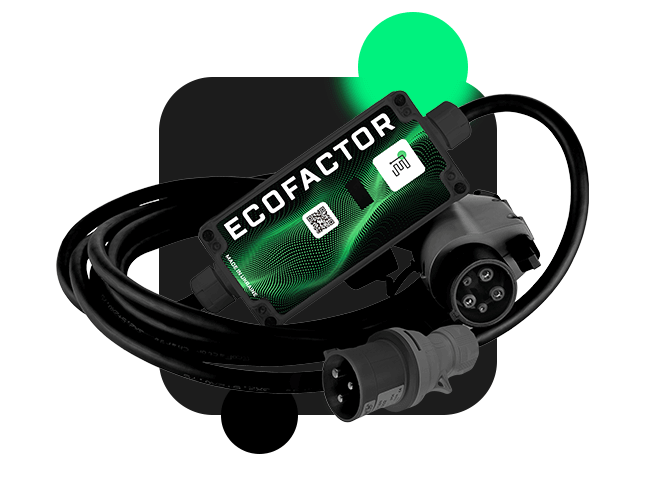
Application of the mobile connector
The mobile connector that comes with an electric vehicle may have limited capacity when used on standard household outlets. For example, charging through a standard household outlet typically uses a current of 10-16 amps, which limits the amount of electricity the outlet can deliver.
In order to increase the charging speed, you can use special adapters for charging from three-phase sockets, but even with this solution, charging will still be slower than at fast stations.
Heat loss and charging efficiency
Another reason for slow charging from a wall outlet is the heat loss that occurs during the charging process. The lower the power, the greater the energy loss in the form of heat. As a result, charging via a standard wall outlet may be less efficient, which also increases the time it takes to reach the desired charge level.
Temperature conditions
Charging times can also vary depending on the ambient temperature. In cold weather, electric vehicle batteries may charge more slowly because the low temperature affects the battery chemistry and its ability to accept energy. The same is true in hot weather. Mobile connectors that operate on standard sockets can be even more susceptible to temperature fluctuations, which further increases charging times.
Possibility to speed up the process
Charging from a standard wall outlet can be accelerated by ensuring that the input power is adequate. For example, using higher-powered outlets or providing additional grounding to improve charging safety can increase the efficiency of the process, but even this is not comparable to the efficiency of fast charging stations.
To speed up the charging process, ECOFACTOR offers solutions for installing charging stations that have a high power output and significantly reduce charging times. They can be connected to a standard household network or three-phase sockets, which ensures greater efficiency compared to conventional sockets.
ECOFACTOR also provides installation services for stationary charging stations that are suitable for home use and meet the requirements of high power. This makes it possible to reduce the charging time directly in your home, which will be a convenient option for those who want to charge their electric vehicle faster.
Conclusion.
Charging your electric vehicle at a wall outlet is an affordable and convenient way to keep your car running. Although this method takes longer, it is ideal for those who can charge their car at night, are in no hurry, and do not need to charge quickly during the day. If you want to increase your charging speed, you may want to consider using power outlets or installing a dedicated home charging station. For more details and advice, please contact our experts who will help you choose the best solution for your electric vehicle.
FAQ
1. Can I charge my electric vehicle via a standard socket?
Yes, an electric vehicle can be charged via a standard 220V household outlet using the mobile connector that comes with the car. However, this takes longer than charging via specialised charging stations.
2. Why does it take longer to charge via a power outlet?
This is due to the limited power of standard sockets, which can only supply 2.3 kW. By comparison, specialised charging stations have a capacity of up to 150-250 kW, which significantly reduces charging time.
3. Is it possible to speed up charging via a power outlet?
To speed up the charging process, you can use sockets with a higher power rating, such as three-phase sockets, or use adapters for this purpose. However, even with these methods, charging via a wall outlet will still be slower than at fast charging stations.
4. Can I charge an electric vehicle without grounding?
When charging via a standard wall outlet, it is important that it is earthed for safety. Third-party chargers can circumvent this requirement, but it is important to consult with experts to ensure the correct equipment is selected.
5. Can I charge my electric car at night via a power outlet?
For example, if you can charge your car overnight via a wall outlet, this can be a convenient option, as it can provide enough charge for most daily journeys. However, for longer journeys, it is better to use fast charging stations.
6. How do I know if my outlet is suitable for charging an electric vehicle?
It is best to check this with a specialist, as not only the power of the outlet is important for charging, but also the grounding and other technical characteristics. If you have any doubts, please contact our managers who can advise and help you choose the right equipment.


