





How to charge your Tesla Model X from a power outlet
Tesla Model X is not just an electric car, but a symbol of technology, environmental friendliness and convenience. For many owners, charging at home is becoming the most convenient solution. However, to use the battery efficiently, it is important to know how to organise the charging process correctly, taking into account the type of outlet, equipment and technical requirements. In this article, we'll look at all the nuances of charging the Tesla Model X from a regular outlet. [...]
Content:
Tesla Model X is not just an electric car, but a symbol of technology, environmental friendliness and convenience. For many owners, charging at home is becoming the most convenient solution. However, to ensure efficient use of the battery, it is important to know how to organise the charging process correctly, taking into account the type of outlet, equipment and technical requirements. In this article, we'll look at all the nuances of charging the Tesla Model X from a regular outlet.
Why charging your Tesla Model X at home is convenient
The Tesla Model X home charger has a number of advantages that make it an ideal solution for everyday use. It provides comfort, cost savings and the ability to charge your car without having to visit public stations. Let's take a closer look at these benefits.
1. Accessibility.
Every home or office has a 220V household socket, making charging as easy as possible. There is no need to install complex equipment or lay a new power grid for basic charging. This solution makes it easy to charge your Tesla Model X, even if you've just bought the car and haven't yet set up a dedicated charging point.
For private homeowners, this is even more convenient, as the car can be left charging in the garage or outside the house. If you live in an apartment building, even a standard socket can be adapted for use with a Tesla mobile connector or ECOFACTOR charging points.
2. Cost-effectiveness
Nighttime electricity tariffs are a strong argument in favour of home charging. In many regions of Ukraine, the cost of electricity at night can be twice or even more cheaper than during the day. This can significantly reduce the cost of charging a car.
For example, charging a Tesla Model X with a 75 kWh battery at night will be much cheaper than using public charging stations with hourly charges. Charging your car regularly at home can save you thousands of hryvnias a year.
3. Convenience.
Home charging offers an unprecedented level of comfort. You don't need to search for the nearest charging station or plan your journeys around the availability of public stations. Simply plug your car into the socket before you go to bed and it will be ready for use in the morning.
In addition, you control the charging process yourself. Using the Tesla mobile app, you can monitor your charge level, schedule charging times, and even program charging to start and end according to nightly electricity rates.
Charging equipment options
There are several basic solutions for charging a Tesla Model X at home that are suitable for different needs:
Tesla mobile connector
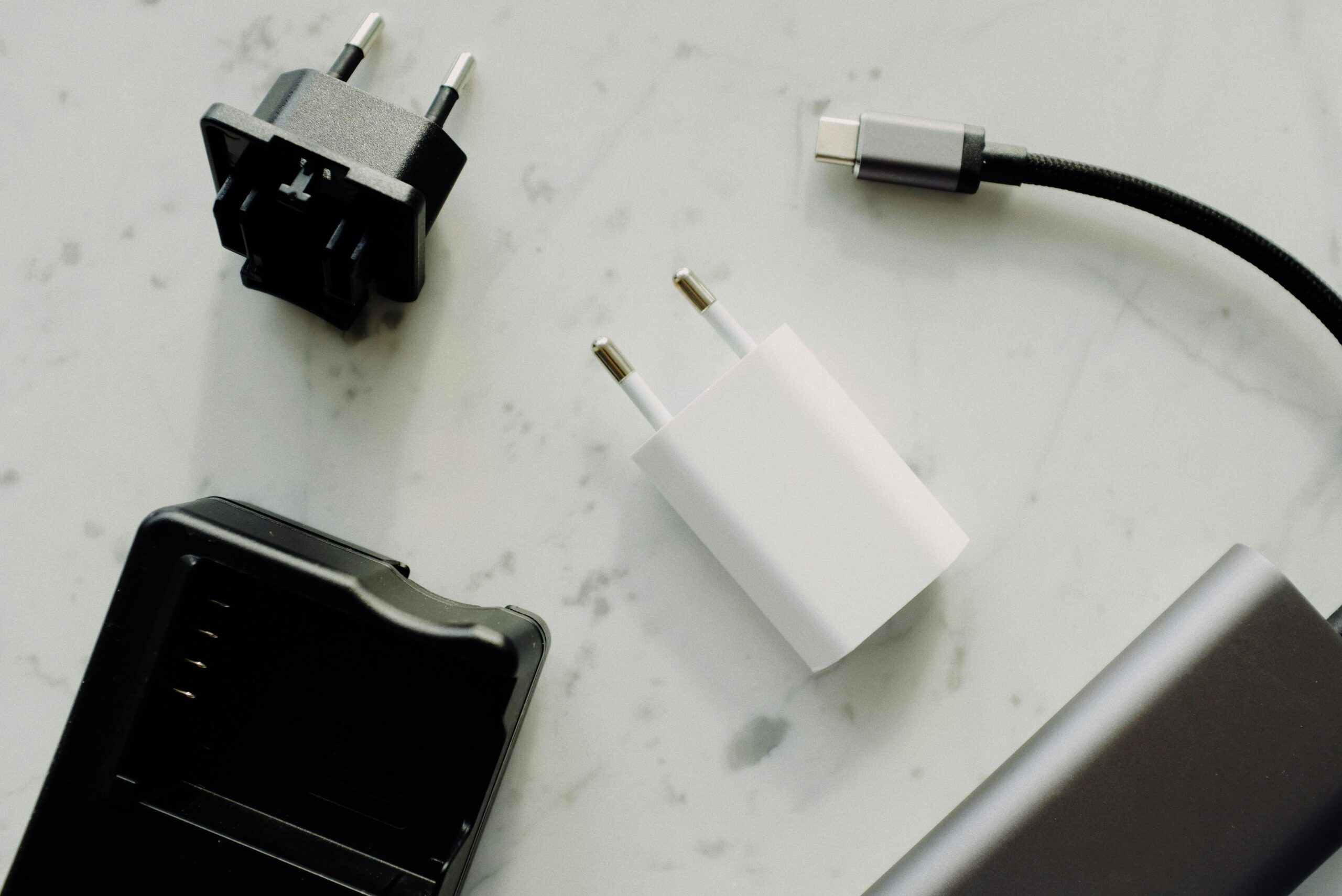
This is a standard charger that comes with the vehicle. It plugs into a standard 220 V socket and provides basic charging.
Features:
- Automatically adjusts the current to ensure battery safety.
- It is portable, so you can take it with you when travelling.
Requirements for use:
The mobile connector requires a ground connection in the power outlet. This is necessary for:
- Protection against static electricity that can accumulate on the car during charging.
- Ensures stable operation of the device and reduces the risk of voltage surges.
If there is no earth connection, this is not a problem. ECOFACTOR chargers are designed to work even without an earth connection. Our managers will help you choose the best option, taking into account the technical features of your home.
ECOFACTOR chargers
These chargers are a versatile solution for both domestic and commercial use. They offer additional features such as automatic restart, surge protection and the ability to operate without grounding.
Advantages:
- Suitable for all operating conditions.
- They allow for shorter charging times due to their higher power output.
- They have a mobile app for monitoring charging and finding the nearest stations.
Power sockets
Power sockets (red three-phase or blue single-phase) can significantly speed up the charging process of the Tesla Model X.
Red socket (three-phase):
- It is used for European Tesla models that support three-phase charging.
- With a power output of up to 22 kW, the 75 kWh battery of the 80% can be charged in just 4-5 hours.
Blue socket (single-phase):
- It is optimal for American Tesla models that support single-phase current.
- With a power output of up to 7.4 kW, the 80% battery can be charged in 8-10 hours.
Important:
American Teslas can be connected to a three-phase outlet via an adapter, but will only charge through one phase, with a capacity of up to 7.4 kW.
Charging from a standard socket: pros and cons
Charging the Tesla Model X from a standard outlet is the most affordable option that does not require additional equipment costs or modifications to the power grid. However, this method has both advantages and disadvantages that are worth considering.
Advantages of a standard socket
- Accessibility: There are 220V sockets in almost every home or office, making this charging method accessible to anyone. Even if you don't have a special charging station, the basic mobile connector that comes with your car allows you to start charging your Tesla at no extra cost.
- Cost-effectiveness: Using a nighttime electricity tariff can significantly reduce charging costs. For example, in many regions of Ukraine, reduced tariffs apply at night, which are half the price of daytime tariffs. This means that even with prolonged charging from a regular outlet, the costs will be minimal.
- Ease of use: The connection process takes only a few minutes: just plug the mobile connector into a power outlet and the car. Charging starts automatically and can be monitored via the Tesla mobile app.
Disadvantages of a standard socket
- Slow charging: A standard 220 V socket has a limited power output of approximately 3.5 kW. As a result, it can take 10-12 hours to charge the 75 kWh battery of the 50%. A full charge can take 24 hours, which is not always convenient for active users.
- The risk of overloading: Using the socket together with other powerful electrical appliances such as air conditioners or electric ovens can put additional strain on the mains. This increases the risk of short circuits, overheating, or damage to the socket.
- Network status: In older homes, the electrical network may be worn out or not designed to withstand a heavy load. Before charging, it is important to check the condition of the wiring and replace the outlet or cables if necessary.
Using power sockets: faster charging
Power strips are an effective way to reduce the charging time of your Tesla Model X. They have higher power and stability than standard sockets and are suitable for both European and American models.
Red socket (three-phase)
Suitable for European Tesla models that support three-phase charging.
Advantages:
- High power: The red socket delivers up to 22 kW of power, allowing the 75 kWh battery of the 80% to be charged in just 4-5 hours.
- Efficiency: The use of three phases ensures minimal energy loss, which is especially important for fast charging.
- Convenient for long journeys: Thanks to its high power output, the battery is quickly recharged, which is convenient for regular car use.
Features:
- Professional installation is required, including cabling, grounding and compliance with safety standards.
Blue socket (single phase)
The blue socket is ideal for American Tesla models that only support single-phase current.
Advantages:
- Stability: With a power output of up to 7.4 kW, the 80% can be charged in 8-10 hours.
- Accessibility: Easy installation and use make the blue socket the best choice for owners of American models.
- Cost-effectiveness: The cost of installing a blue socket is lower compared to a three-phase socket.
Disadvantages:
- Charging time is longer than with a three-phase socket.
- Does not use the full potential of European Tesla models that support three-phase charging.
Charging the American Tesla via a three-phase socket
American models can be connected to a three-phase outlet via an adapter, but will only charge through one phase.
Features:
- The capacity is limited: Despite the three-phase socket, the power output remains at 7.4 kW.
- Adapter: A special adapter is required to convert three-phase current to a format compatible with a single-phase system.
Charging solutions from ECOFACTOR
ECOFACTOR is a leading manufacturer of charging stations for electric vehicles in Ukraine, which actively promotes the development of ecological transport and the transition to green energy. The company is focused on creating convenient, fast and affordable solutions that meet modern European quality and safety standards.
ECOFACTOR offers chargers for different needs: from mobile stations that are ideal for home use to powerful commercial DC and AC chargers designed for business. All devices are designed and manufactured in Ukraine, which guarantees their compliance with local operating conditions and a high level of reliability. The company's range also includes accessories such as Cables and adaptersThe company's newly developed electric vehicle charging system is designed to be compatible with various models of electric vehicles.
The company pays significant attention to the development of charging infrastructure. Map of ECOFACTOR charging stations covers major cities, motorways and tourist areas. For the convenience of drivers, we have developed mobile application, available for iOS and Androidwhich allows you to quickly locate charging points, view their characteristics, and create routes with charging stops. The company's products support popular connector standards, including Type 2, CCS2 and CHADEMO, making them universal for most modern electric vehicles.
For businesses, ECOFACTOR offers a platform that enables efficient management of charging infrastructure. It allows you to monitor the status of charging stations in real time, track energy consumption and optimise maintenance processes. With this platform, businesses can monetise their charging stations, providing comfort and convenience to customers.
ECOFACTOR creates innovative solutions that combine high quality, reliability and convenience. The company's charging stations meet the highest safety standards, and technical support services help customers get the most out of their equipment. ECOFACTOR offers not just chargers, but a comprehensive approach to the development of electromobility, which contributes to the preservation of the environment and the transition to green energy sources.
If you are looking for a reliable partner to build your charging infrastructure, ECOFACTOR is ready to offer solutions that will meet any need. The company remains a leader in the field of electromobility, helping to make charging fast, affordable and safe.
Tips for effective charging
- Use nightly rates: Schedule charging at night to reduce energy costs.
- Check the condition of the power outlet and cables: An old or damaged socket can be dangerous for long-term charging. Make sure all items are in good condition before use.
- Install the power socket: If you regularly charge your car at home, consider installing a power socket (red or blue) to speed up the charging process.
- Only use certified chargers: Tesla or ECOFACTOR chargers ensure stable operation and minimise risks.
- Control the charging process through the app: The Tesla mobile app allows you to monitor the battery status, set the charging time, and receive notifications when the process is complete.
Bottom line.
Charging your Tesla Model X at a wall outlet is a convenient solution for everyday use. Despite the longer charging process compared to fast charging stations, home charging offers cost savings and comfort. If you want to speed up the process, consider installing power sockets or chargers from ECOFACTOR.
For advice, please contact our managers. We will help you find the best solution for your vehicle!
FAQ
Can I charge the Tesla Model 3 from a regular outlet?
Yes, you can. Charging via a standard 220V outlet is a convenient and affordable option for everyday use. However, keep in mind that the charging speed will be slower than at power outlets or fast charging stations.
2. Is grounding required for charging from a power outlet?
Yes, grounding is essential for the safe operation of the Tesla Mobile Connector. If grounding is not available, it is recommended to use third-party chargers such as ECOFACTOR, which can operate without this requirement.
How long does it take to charge a Tesla from a regular outlet?
The charging time depends on the battery capacity. For example, a 75 kWh battery for the 50% can take 10-12 hours to charge.
4. Should I install a power socket?
Yes, if you want to speed up charging. The red three-phase socket allows you to charge European Tesla models up to 80% in 4-5 hours, and the blue single-phase socket is suitable for American models and provides charging in 8-10 hours.
5. Can I charge an American Tesla via a three-phase outlet?
Yes, but charging will be carried out through only one phase, with a maximum power of up to 7.4 kW. For optimal performance, it is better to use a blue single-phase outlet.


