




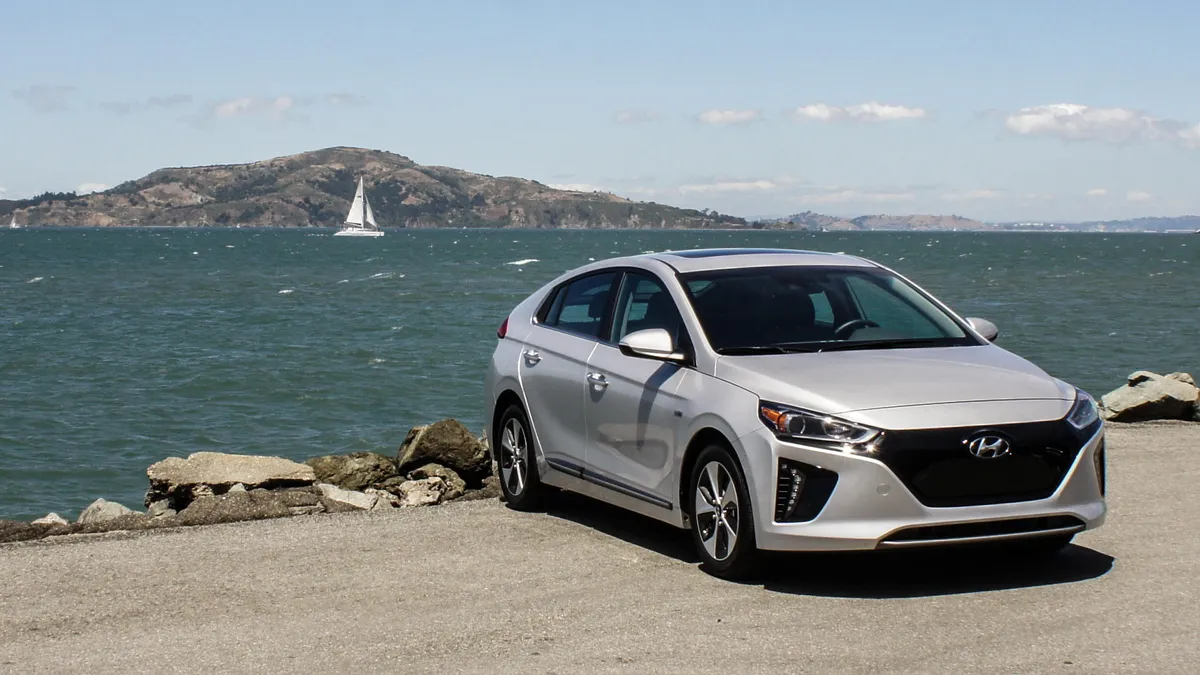
How to charge Hyundai IONIQ Electric: tips and tricks
The Hyundai IONIQ Electric is an electric car that impresses with its efficiency and style. It can be charged in a variety of places, and it's important to know how to choose the right type of charging to extend the battery's life. In this guide, we'll look at how to charge your IONIQ Electric in Ukraine, what charging station options are available, and how long the process takes. [...]
Content:
The Hyundai IONIQ Electric is an electric car that impresses with its efficiency and style. It can be charged in a variety of places, and it's important to know how to choose the right type of charging to extend the battery's life. In this guide, we'll look at how to charge your IONIQ Electric in Ukraine, what charging station options are available, and how long the process takes.
Despite the fact that this car is no longer on sale in Ukraine since 2022, many IONIQ Electric owners still use it on the country's roads. Understanding the nuances of charging will help you avoid problems and make the most of your electric vehicle's capabilities.
We remind you that you can purchase home and commercial charging stations in our online storeand also use the public charging stations ECOFACTORcharging points located throughout Ukraine. For convenient access to charging infrastructure, we recommend using our mobile applicationwhich is available on iOS and Android.
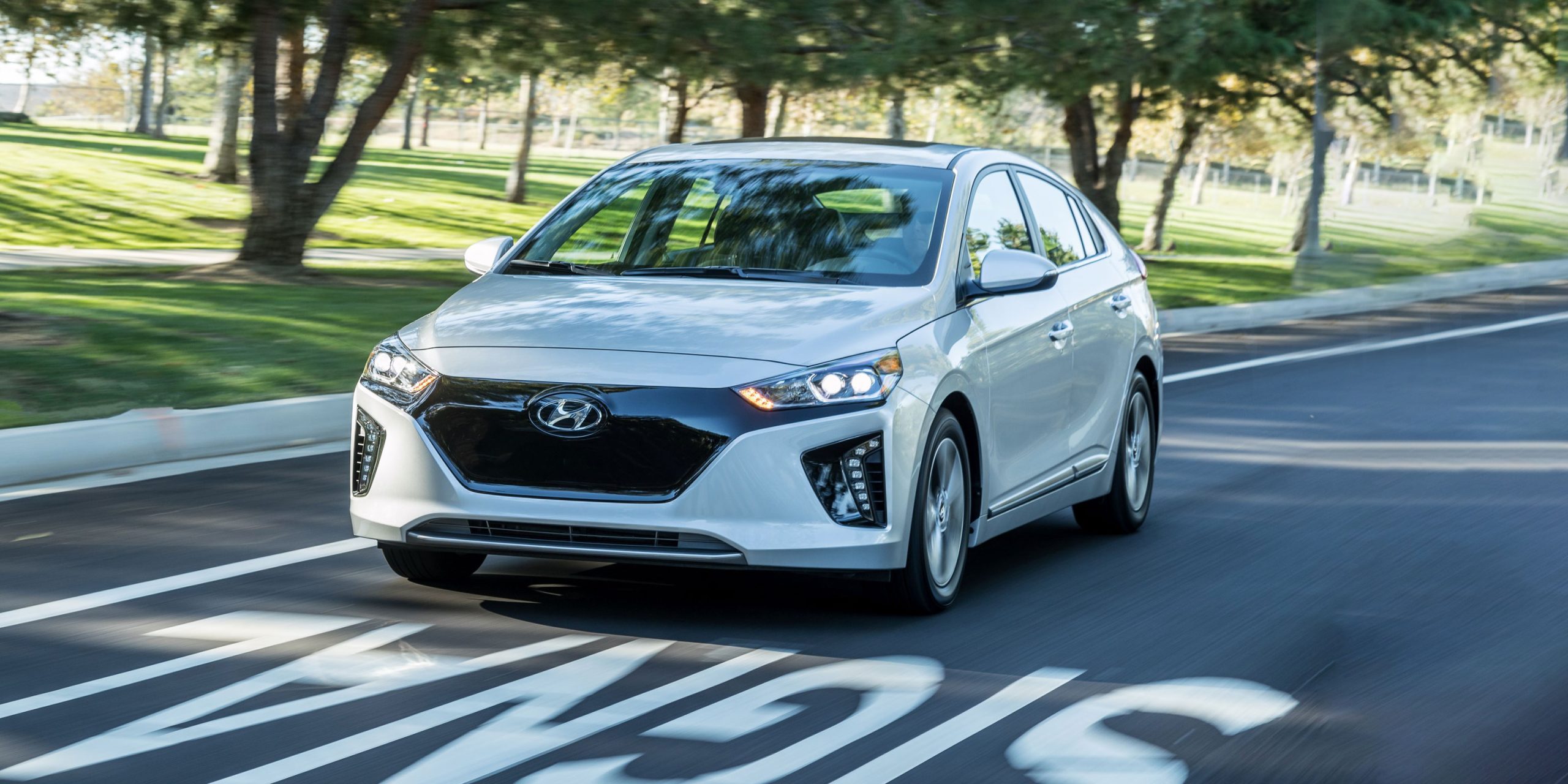
Technical characteristics of Hyundai IONIQ Electric
Hyundai IONIQ Electric is an electric car that does not produce CO2 emissions. It has a range of up to 250 km, which is the average for electric vehicles in Ukraine. The car can reach a top speed of 165 km/h and accelerate to 100 km/h in about 9 seconds. This is not the fastest result among electric cars, but it is quite enough for everyday travel. Although not a leader in its segment in terms of performance, Hyundai IONIQ Electric is a comfortable, economical and convenient choice for Ukrainian drivers.
Hyundai IONIQ Electric charging speed
Hyundai IONIQ Electric is equipped with a 38.3 kWh battery. The maximum charging speed via alternating current (AC) is 7.2 kW, and via direct current (DC) is 50 kW. For Ukraine, these figures are fairly standard, although some newer electric vehicle models already support faster charging. If you use the maximum DC charging speed, you can charge your 80% battery in just 32 minutes.
However, it is important to remember that you should not constantly charge Hyundai IONIQ Electric to 100%, as this may adversely affect the battery and shorten its life. It is better to keep charging between 20-80%, which will help to increase the battery life.
What type of charger does Hyundai IONIQ Electric use?
The Hyundai IONIQ Electric has two types of charging connectors: one for AC charging and one for DC charging. Both of these connectors are combined into one - CCS 2 (Combined Charging System 2).
- The top of the charger - is a Type 2 connector that can charge up to 7.2 kW. It is a standard AC charging connector in Ukraine and can be used at home charging stations, at work or on public charging networks.
- The bottom of the charger - is a CCS connector used for DC charging. This allows for charging speeds of up to 50 kW, which supports fast and ultra-fast charging, which are typically found at public charging stations.
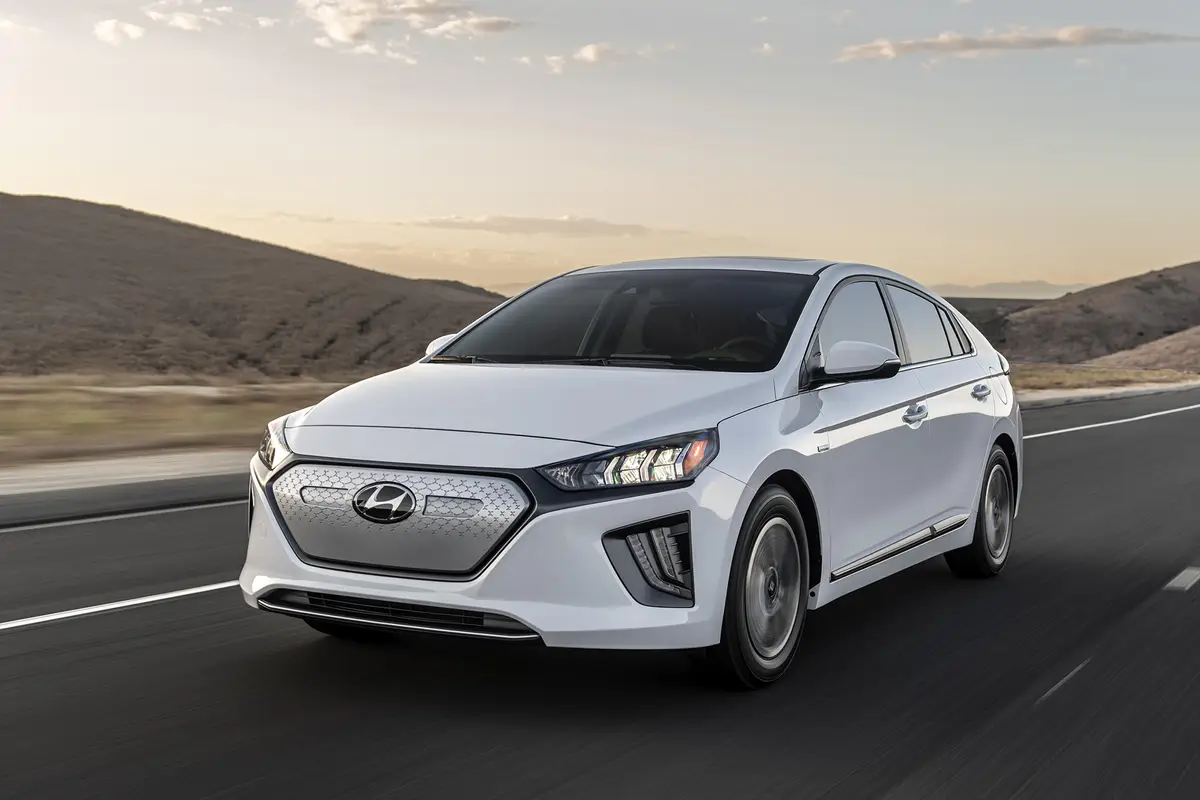
Where is the charging port in the Hyundai IONIQ Electric?
The charging port is located on the left-hand side of the vehicle, near the rear wheel, making it easy to connect. To start charging, simply plug the charging cable into the vehicle's socket. The 12V battery is located in the engine compartment on the left-hand side.
Typically, at public charging stations, you will need to have a special RFID card, download an app, or become a member of a relevant network to charge. Therefore, before you go charging, it is worth checking the requirements of the specific stations. Apps such as ECOFACTOR EV Charging can help you find the nearest available charging points.
How long does it take to charge the Hyundai IONIQ Electric?
Hyundai IONIQ Electric charging times vary from 30 minutes to 12 hours, depending on the charging speed. Each charger uses different connectors and can be located in different locations, so it is important to understand the difference between charging speeds to ensure an optimal experience.
The charging speed can also be affected by factors such as battery condition, battery life, vehicle load, ambient temperature and vehicle temperature.
To help you understand how long it will take to charge the Hyundai IONIQ Electric, we have calculated how long it will take to charge the car to 80% using typical charging stations. Since it is not recommended to fully charge or discharge the car to the end, we have calculated the charging time from 10% to 80%.
| Charging speed | Connector type | Hyundai IONIQ Electric charging time (10-80%) |
| 2.3 kW (household outlet) | EVSE adapter | ~13 hours |
| 3.6 kW | Type 2 connector | ~8.3 hours |
| 7 kW | Type 2 connector | ~4.1 hours |
| 50 kW | CCS connector | ~54 minutes |
2.3 kW (household outlet)
In Ukraine, standard sockets are most often used to charge Hyundai IONIQ Electric at home. They can be connected to the bundled adapter (EVSE) that comes with the car. This is convenient because you do not need to install a separate charging station immediately.
However, it is worth remembering that prolonged use of this method can overload the wiring, especially in older homes. Therefore, manufacturers advise considering this option only as a temporary solution or for recharging overnight.
How long does it take to fully charge?
If you use a regular wall outlet with a standard adapter, it can take almost 12 hours to charge Hyundai IONIQ Electric from 10% to 80%. This is slow, but convenient enough for daily top-ups if you charge your car at night.
3.6 kW charger
The 3.6 kW charger is a slow charger. You can find it at some public charging stations or install it at your home or work charging point. This is best used for long-duration charging, as it takes several hours to charge significantly.
How long does it take to fully charge?
It takes 7 hours and 27 minutes to charge the Hyundai IONIQ Electric from 10% to 80% using a 3.6 kW charger.
7 kW charger
The 7 kW charger uses a Type 2 connector for AC charging. This is a fairly slow charger that can be installed at home or at work. You can also find them at public charging stations, although they are not the most common type for fast charging in Ukraine.
How long does it take to fully charge?
The maximum charging speed of the Hyundai IONIQ Electric via the AC charger is 7.2 kW, so this charger will charge to almost the maximum speed. The charging time for 10% to 80% is 3 hours and 50 minutes.
22 kW charger
The 22 kW charger also uses a Type 2 connector, but you are unlikely to find this type of charging at home - it is mostly found at public charging stations or in rare cases at workplaces.
How long does it take to fully charge?
The Hyundai IONIQ Electric is not capable of charging at 22 kW as this exceeds the limit of a Type 2 charger. It will therefore charge at a maximum speed of 7.2 kW. The charging time from 10% to 80% using a 22 kW charger will be 3 hours and 43 minutes.
50 kW charger
A 50 kW charger is a fast charger that uses a CCS connector. These are available at public charging stations and are the most common DC charging speed in Ukraine.
How long does it take to fully charge?
It takes 32 minutes to charge Hyundai IONIQ Electric from 10% to 80% on a 50 kW charger.
Ultra-fast chargers
Ultra-fast chargers are capable of charging at speeds of more than 100 kW and use a CCS connector for DC charging. These stations are not yet very common in Ukraine, but they are gradually appearing in some regions.
How long does it take to fully charge?
The fastest charging speed for the Hyundai IONIQ Electric is 50 kW, so all ultra-fast chargers charge it at the same speed as 50 kW. The charging time from 10% to 80% is 32 minutes.
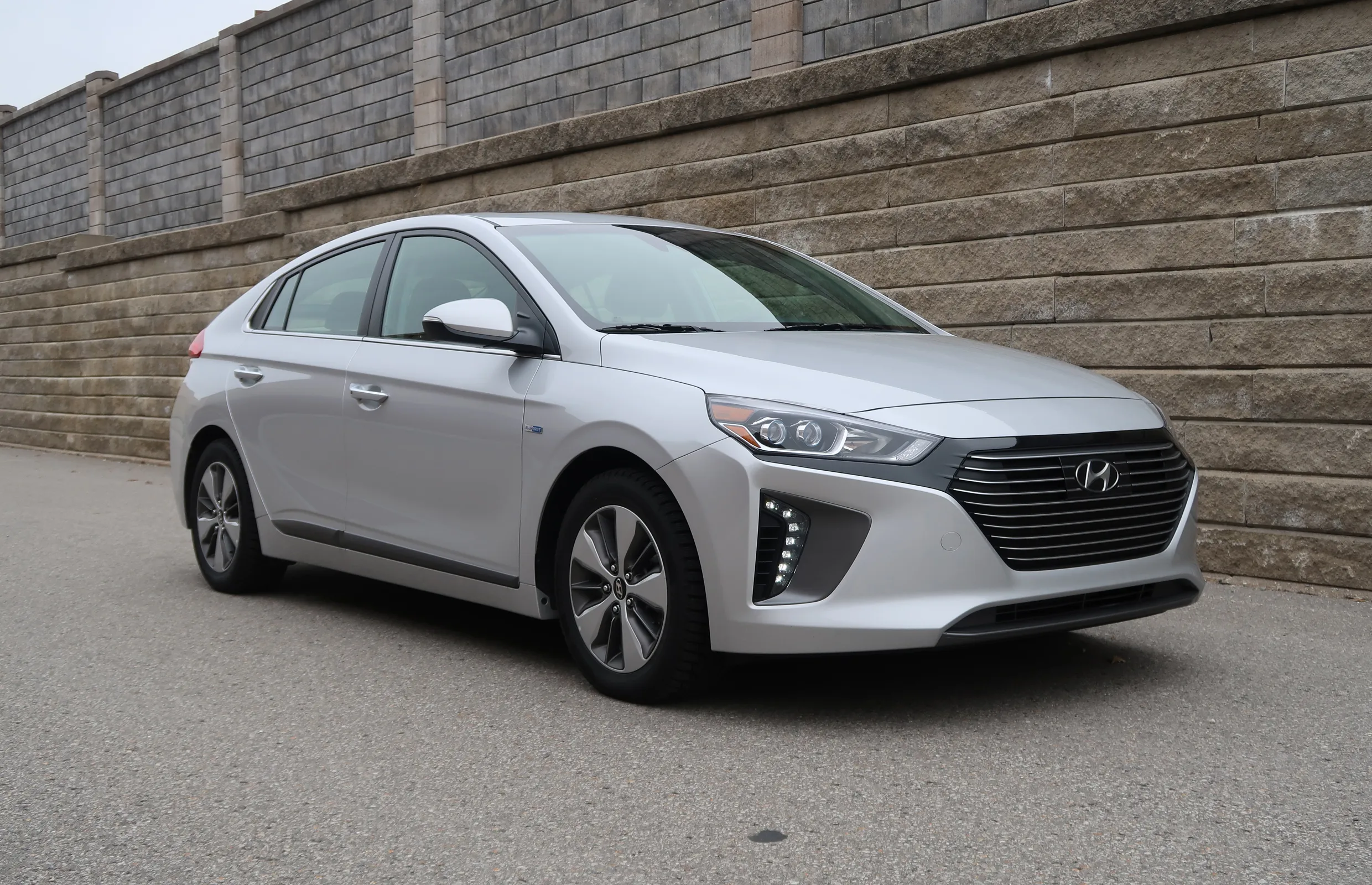
Where can I charge Hyundai IONIQ Electric in Ukraine?
In Ukraine, there are three main places to charge your Hyundai IONIQ Electric: at home, at work and at public charging stations. Each of these options has its own advantages and disadvantages, and it's important to understand what's right for you.
Public charging stations are the best option if you want to charge your car quickly, but charging at home or at work may be more convenient.
Charging at home
Hyundai IONIQ Electric can be charged at home using a standard adapter or by installing a special home charging station.
Charging at home is not the fastest option, as charging speeds vary from 2.3 to 7 kW. However, due to the relatively small battery capacity of the Hyundai IONIQ Electric, even such charging allows you to significantly replenish energy during prolonged use.
Advantages.
Installing a home charging station makes it possible to receive government grants that help to partially offset the installation costs. Charging at home is also very convenient, as you can charge your car at any time without having to spend time searching for public stations. In addition, at night, when electricity rates are usually lower, charging at home can be cost-effective.
Disadvantages.
However, charging at home is a long process that can take 7 to 12 hours, so you may need to look for other charging options for long-distance journeys. If you use a standard wall outlet adapter rather than a dedicated charging station, it can cause damage to your home's wiring due to excessive strain.
Charging at work
Some companies in Ukraine provide their employees with charging stations at work. Such charging points usually have a capacity of 3 to 7 kW, although sometimes there are stations with a capacity of up to 22 kW.
Advantages.
Charging your car while you're at work is very convenient, as you can use this time to top up your battery. If your employer provides charging, it may be free or at a much lower cost than charging at home or at public stations.
Disadvantages.
However, not all companies have charging stations for their employees, so you cannot always rely on this option. In addition, charging speeds at workplaces usually do not exceed 7 kW, which makes this method convenient, but not very fast for fully charging a car.
Public charging stations
Public charging stations are the best option for those who want to quickly charge their Hyundai IONIQ Electric. The number of such stations is growing in Ukraine today, and you can already find charging points in many large cities.
Advantages.
Public charging stations allow you to charge your car using fast chargers, which is especially convenient for those who travel frequently or need to fully recharge. In addition, some stations offer free charging or attractive rates, for example, at charging points in shopping malls.
Disadvantages.
There are several different networks of public charging stations in Ukraine, and each has its own conditions, tariffs and usage restrictions. Some stations may require a special app or membership to access. Also, if a station is located far from your place of residence or work, it may make using public stations less convenient.

The ECOFACTOR EV Charging app helps you find a charging station for your Hyundai IONIQ Electric
If you're looking for a simple and convenient way to find charging stations for your Hyundai IONIQ Electric, our app is exactly what you need. The ECOFACTOR EV Charging app is available for the following platforms iOS and Androidand it provides all the information you need to find the nearest charging stations. We created this tool so that you can quickly and easily find a charger for your electric vehicle wherever you are.
The main features of our application:
- Map of charging stations: easily find the nearest charging stations on the map, check their characteristics and availability.
- Interactive filtersChoose stations by connector type, charging power and availability.
- Ensuring fast paymentWith our app, you can securely pay for charging via integrated payment systems.
- Real-time informationGet up-to-date information about the status of charging stations and the availability of connectors.
Our app allows you not only to find a charging station, but also to get all the important information about it so that you can charge your electric vehicle with maximum convenience.
Our other services and areas of expertise
At ECOFACTOR, we also offer a variety of solutions for charging electric vehicles, including charging stations for home and business as well as accessories for electric vehicles. Our mobile charging stations, AC stations up to 44 kW and DC stations up to 420 kW meet all the requirements of industry standards and are manufactured in Ukraine.
In our online store you will find not only chargers, but also cables and adaptersto help you adapt your charging to different types of connectors.
Our main areas of focus:
- Design and manufacture of charging stationsWe design and manufacture chargers that meet all standards.
- Managing a network of charging stationsOur platform allows you to efficiently manage your charging station network, monitor energy consumption and set tariffs.
- Business supportWe help businesses install charging stations and provide the necessary technical support.
With our app, charging Hyundai IONIQ Electric will be as easy as planning your trip, because we always try to make the charging process as convenient and fast as possible.
Conclusion.
Charging your Hyundai IONIQ Electric is a process that should be as convenient and efficient as possible. Choosing the right charging method depends on your lifestyle and where you spend most of your time. If you live in a city and often travel short distances, charging at home or at work may be the best option. For long-distance journeys, public charging stations with high power are the best choice.
Remember that to extend the life of your electric vehicle's battery, it is important not to let it be charged up to 100% too often and to maintain an optimal charge level between 20-80%. With an app that helps you find nearby charging stations, you don't have to worry about where to find the right charging point. By choosing the right type of charging and managing your charging time, you can enjoy the benefits of the Hyundai IONIQ Electric without worry.
Frequently asked questions
1. How often do I need to charge my Hyundai IONIQ Electric?
It is optimal to charge your Hyundai IONIQ Electric between 20-80% to maintain battery health. This will help increase its lifespan. Charging your car to 100% all the time can have a negative impact on the battery.
2. Can I charge Hyundai IONIQ Electric on a regular outlet at home?
Yes, you can. With the Type 2 connector adapter, you can charge your vehicle via a standard home socket. However, it will be very slow and may take up to 12 hours to charge.
3. How long does it take to charge Hyundai IONIQ Electric at a public charging station?
Charging the 10% to 80% at a public charging station can take between 32 minutes and 3 hours, depending on the type of charging station. The fastest charging is at stations with a capacity of 50 kW or more.
4. How do I choose the right type of charger for my Hyundai IONIQ Electric?
For fast charging, it is better to use direct current (DC) charging stations, which can charge faster. For everyday charging at home or at work, alternating current (AC) chargers are sufficient.
5. Are there any free charging stations in Ukraine?
Yes, there are several public charging stations in Ukraine that provide free charging. They are usually located in shopping centres or on the premises of certain companies.


