





J1772 Connector: A complete overview of charging for electric vehicles
Electric vehicles are gaining popularity every year, and with that comes a growing need for standardised charging connectors. One of the most widely used standards in North America is the J1772 connector, which provides a universal, reliable and efficient connection between an electric vehicle and a charging station. The establishment of this standard was an important step towards the development of charging station infrastructure and [...]
Content:
Electric vehicles are gaining popularity every year, and with that comes a growing need for standardised charging connectors. One of the most common standards in North America is the J1772 connector, which provides a universal, reliable and efficient connection between an electric vehicle and a charging station. The establishment of this standard was an important step towards the development of charging station infrastructure and increased accessibility of charging for electric car owners.
We remind you that you can purchase home and commercial charging stations in our online storeand also use the public charging stations ECOFACTORcharging points located throughout Ukraine. For convenient access to charging infrastructure, we recommend using our mobile applicationwhich is available on iOS and Android.
In this article, we will take a closer look at the J1772 connector, its history, physical configuration, comparison with other connector types, and its role in the development of charging infrastructure.
What is J1772?
The J1772 is a standard electric vehicle charging connector developed by the Society of Automotive Engineers (SAE) that has become the primary standard for charging electric vehicles in the United States and Canada. The connector allows for compatibility between different models of electric vehicles and charging stations that use this standard. It is an alternating current (AC) charging standard that works for Level 1 and Level 2 charging, making it a versatile option for residential and commercial charging stations. Most electric cars, except for Tesla, are equipped with J1772-compliant ports or support it with an adapter. Tesla offers adapters that allow their vehicles to charge at stations that use J1772.
The history of this standard dates back to 2001, when the connector was adopted by the California Air Resources Board (CARB) as the primary standard for charging electric vehicles. The initial versions of the connector supported a power output of up to 6.6 kW, but in 2008 an updated design was developed that could support up to 19.2 kW, which provided faster charging for most electric vehicles.
How the J1772 connector works: charging for AC and DC
The J1772 connector is the standard for charging electric vehicles with both alternating current (AC) and direct current (DC). It is a universal connector that allows the vehicle to be charged using different types of charging stations to meet different user needs.
Charging with alternating current (AC)
The J1772 connector for AC charging is one of the most widely used standards for charging electric vehicles. It consists of five contacts:
- L1 (AC Line 1): The phase of the alternating current through which electrical energy is supplied for charging.
- N (Neutral): Neutral contact for current return.
- PE (Protective Earth): Grounding for safety during charging.
- PP (Proximity Pilot): A connector presence indicator that indicates whether the connector is properly connected to the vehicle. This helps prevent the vehicle from moving while charging.
- CP (Control Pilot): The control line through which the charging station and the vehicle exchange information. This allows the charge level to be monitored and charging parameters such as the permissible current to be controlled.
After connecting the connector to the vehicle, the charging station supplies AC power via pins L1 and N to the vehicle's on-board charger, which converts the AC power to DC power to charge the battery. This makes the charging process relatively slow compared to DC charging, but sufficient for everyday use when access to fast charging stations is limited.
Charging with direct current (DC) using the CCS Combo 1
The CCS Combo 1 standard is an extension of the basic J1772 connector and is designed for fast DC charging. This significantly reduces charging time, which is important for electric vehicle owners who often travel long distances.
This standard includes two additional contacts for DC transmission:
- DC+ (Positive DC): Positive terminal for transmitting direct current to the vehicle battery.
- DC- (Negative DC): Negative contact for closing the circuit and transmitting DC current.
After connecting the CCS Combo 1 connector to the vehicle, the charging station delivers direct current directly to the battery, which significantly reduces the charging time compared to AC charging. This charging method is used in most modern fast charging stations and ensures efficient charging even during relatively short stops.
Alarm and security process
The J1772 connector, for both AC and DC charging, uses a Control Pilot (CP) line signalling system. This system performs several important functions to ensure safe and efficient charging:
- Connection detection: The charging station detects the presence of a connected vehicle and readiness for charging.
- Set the maximum allowable charging current: Thanks to the pulse width modulation (PWM) of the CP signal, the charging station can determine the maximum current that can be delivered to safely charge the battery.
- Security: The alarm system also checks the grounding status and other parameters to prevent emergencies such as overloads or short circuits.
These mechanisms ensure that the charging process is safe for both parties - the charging station and the vehicle - and provide adequate protection when working with electrical systems.
In general, the J1772 connector provides flexibility in charging electric vehicles by supporting both AC charging via standard sockets and fast DC charging via the extended CCS Combo 1 standard. This allows electric vehicle owners to use different types of charging stations according to their needs, making electric transport even more convenient and affordable for daily use.
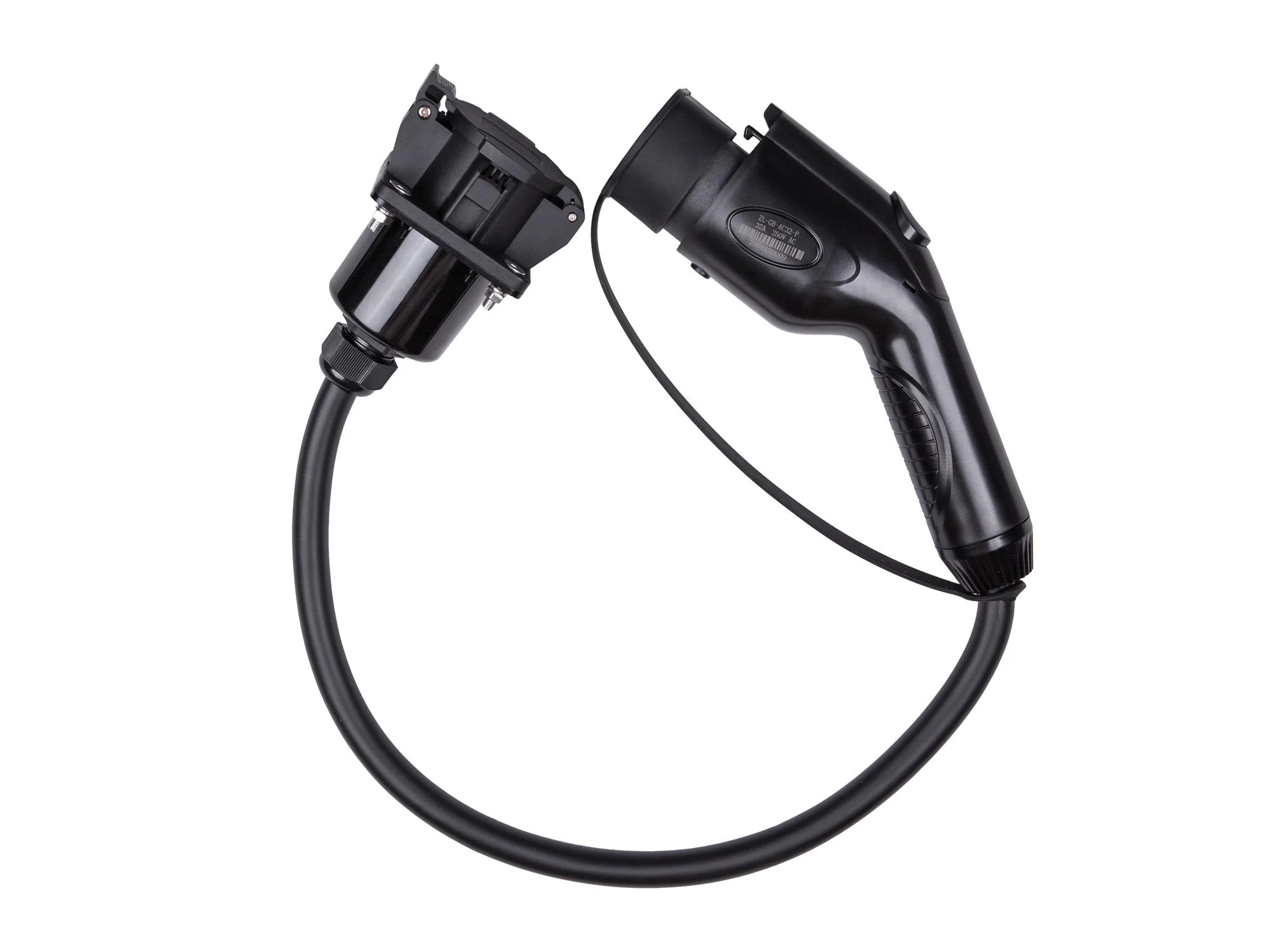
J1772 pin configuration: Overview of pins and their functions
The J1772 connector is one of the main standards for charging electric vehicles in North America, and its physical configuration is an important aspect to ensure a reliable and safe charging process. Each pin in this connector has a specific role to play, allowing for an optimised charging process, ensuring proper power transfer, charging control and safety during vehicle charging.
This standard five-pin connector is used to connect electric vehicles to charging stations and allows the charging station and the vehicle to communicate through various electrical signals. A detailed understanding of how each pin works helps to better understand the importance of proper connection and safety during charging. Now let's take a look at the function of each pin in the J1772 connector.
1. Line 1 (L1)
Pin L1 carries the main AC voltage that will be converted to DC in the vehicle's on-board charger. This pin is the main power source for charging the battery, providing it with sufficient power for the charging process.
2. Neutral (N)
Pin N acts as the termination of the electrical circuit, allowing the current flow to return to the power supply. This is necessary for the AC circuit to close and function properly.
3. Protective earth (PE)
The PE pin is key to the safety of the charging process as it ensures that the entire charging system is earthed. This reduces the risk of electric shock during charging and is a must-have element to protect the user from potential hazards.
4. Charging process (PP)
The PP pin is used for communication between the charging station and the vehicle. This contact allows the charging station to receive information about the charging capabilities of the vehicle and provide the appropriate charging power. This helps to start and adjust the charging process according to the vehicle's needs.
5. Charging control (CP)
The CP pin communicates bi-directionally between the vehicle and the charging station, determining the optimum voltage and power level for charging. This pin controls the process by requesting the necessary current to charge the battery correctly and safely.
Thanks to this configuration of foams, J1772 provides convenience, safety and efficiency in the charging process of electric vehicles, allowing cars to be connected to different charging stations without additional complications.
J1772: Description and characteristics
The J1772 standard is the primary standard for most electric vehicles using AC power and is the most widely used charging standard in North America. It supports charging at Level 1 and Level 2 stations, which can be used for everyday charging at home or at public charging stations. It is a standard that provides sufficient charging speed for most electric car owners.
The J1772 connector is typically used on Level 1 charging stations, which are 120V, providing slow charging, and Level 2 charging stations, which operate at 240V, providing faster charging that can take several hours depending on the power and capacity of the vehicle's battery. This standard is compatible with most electric vehicles, so J1772-based charging stations are available throughout North America.
Technical characteristics:
- Current type: Alternating current (AC)
- Charging speedUp to 7.7 kW for level 2 (level 1 - 1.4 kW)
- Compatibility: Supported by many cars, including Nissan Leaf, Chevrolet Bolt, Ford Mustang Mach-E, and others.
- Cable type: Type 1
- Region.: North America
The main advantage of J1772 is its versatility. Most electric car manufacturers support this standard, which ensures high availability of charging stations and the ability to charge the car at most public and private charging points. However, it has some limitations that are not always suitable for drivers who require high charging speeds.
Advantages:
- Widespread distributionThe standard is supported by most electric vehicles, allowing users to easily find charging stations.
- Versatility: the standard is compatible with many cars, including models from Nissan, Chevrolet, Ford, and others.
- Availability: numerous charging stations in North America, allowing users to charge their cars in any region.
Disadvantages:
- Limited charging speedAC charging limits the rate of battery recharge, making this standard less suitable for long journeys when you need to charge your car quickly.
- Low power output: the standard only supports charging up to 7.7 kW for Level 2, which does not allow for fast charge replenishment on long routes.
Charging levels according to J1772 standard
The J1772 standard offers two main charging levels: Level 1 and Level 2. Each of these levels has its own characteristics and is designed for different usage scenarios. Level 1 is the slowest charging method and is typically used for home use when charging is not urgent. Since it does not require special chargers and uses a standard household outlet, it provides simplicity and accessibility for a wide range of users. However, charging speeds at this level are significantly slower and may not be the best option for those who frequently use their car over long distances.
At the same time, Level 2 offers significantly faster charging and is used for more efficient top-ups when you need more power and speed. Now let's take a closer look at Level 1, its features and benefits.
Level 1 (slow charging):
Level 1 is the slowest way to charge electric cars, using a standard 120V household outlet. This is the most convenient charging method for users who may leave their cars charging for extended periods of time, such as at home overnight. As no additional chargers are required for this level, it is ideal for home use, especially in circumstances where the car is used mainly for short trips around the city.
This type of charging is suitable for users who do not require fast charging and can afford the time to top up the battery. Although Level 1 charging speeds are slow, this option is convenient for daily use and maintaining a charge without the need for additional costs for specialised equipment. However, for long journeys or those who use the car frequently, Level 1 charging may be too slow.
Now let's look at the specific characteristics of Level 1 charging to understand why it is suitable for certain situations.
- Voltage: 120 В.
- Power: up to 1.4 kW.
- Charging time: Since Level 1 uses a standard wall outlet, charging is significantly slower than the other levels. A full charge can take between 10 and 20 hours, depending on the battery capacity.
- Suitable for: For everyday short trips around the city, use at night or when you don't need an urgent charge.
- Usage: Ideal for users who may leave their car on charge for long periods of time (at home or at work).
- Infrastructure: No additional infrastructure is required for Level 1, as charging is carried out via a regular 120V household outlet that is available in every home. This makes charging as convenient and affordable as possible for a wide range of users, as there are no additional costs for specialised equipment or installations.
- Cost: As Level 1 charging does not require the installation of specialised chargers, it is one of the most cost-effective options for charging electric vehicles. For many users, it is the most budget-friendly solution that allows them to provide charging without additional infrastructure costs.
- Advantages: This is ideal for owners who do not need to charge urgently and can afford to leave their car for several hours or even overnight to top up the charge. In addition, Level 1 is suitable for people who use their car for short trips around town and do not regularly travel long distances.
However, for people who travel long distances or frequently need to charge quickly, Level 1 may be too slow and time-consuming. This should be taken into account when choosing the type of charging station that suits your needs.
So, while Level 1 is a very convenient and economical option for charging at home, it is not the best option for those who need a faster charge or for drivers who frequently travel long distances. In such cases, it may be advisable to turn to faster charging levels such as Level 2.
Level 2 (medium charging speed):
Level 2 provides significantly faster charging than Level 1 and is the most common type of charging for electric vehicles at public charging stations as well as for home use. Charging at this level uses a voltage of 240 V, which significantly reduces the time required to replenish the battery. This is ideal for electric car owners who use their vehicle frequently and need to charge faster than Level 1 can provide.
Level 2 charging takes much less time and can typically deliver a full battery charge in a few hours, which is a significant relief for people who need to restore their charge faster for their next journey. This level is also the most common at public charging points, making it accessible to most electric car drivers.
- Voltage: 240 В
- Power: up to 19.2 kW
- Charging time: 4-8 hours for a full charge, depending on battery capacity and charging station power
- Suitable for: Users who make average journeys or have the option of charging their car at home or at work and need faster charging
- Usage: Public charging stations, as well as the option of installing at home or at work
- Infrastructure: A specialised charging station is required to operate at 240 V, which requires certain equipment costs
- Cost: Higher than Level 1, as a specialised charging station must be purchased and installed. However, this level provides a faster charging process, which justifies the cost for users who need more speed
- Advantages: Level 2 provides significantly faster charging, which is ideal for users who use their car frequently. Charging stations are available in many public places and can also be installed at home or at work. This provides convenience and versatility, supporting most modern electric vehicles.
J1772 vs other standards
Despite its advantages, the J1772 standard has some limitations compared to other popular charging systems such as Tesla Supercharger, CHAdeMO or CCS1.
Tesla Supercharger uses direct current (DC) for fast charging and provides up to 250 kW of charging power at V3 stations. This standard provides significantly faster charging, but it is only compatible with Tesla vehicles.
CHAdeMO - is another popular standard for DC charging that supports up to 50 kW and is used mainly for Japanese cars such as Nissan and Mitsubishi. Its main advantage is fast charging, but it is currently less popular than CCS1 or J1772.
CCS1 (Combined Charging System) combines both AC and DC charging and enables charging with up to 350 kW of power, providing the fastest charging of any AC-enabled connector. CCS1 is supported by brands such as BMW, Audi, Volkswagen, Mercedes-Benz and is the main standard in Europe and North America for fast charging.
Which cars are compatible with the J1772 connector
The J1772 connector is the standard for many AC-powered electric vehicles. This connector is widely supported by various manufacturers, especially in North America. The J1772 connector is compatible with vehicles such as:
- Nissan Leaf
- Chevrolet Bolt EV
- Ford Mustang Mach-E
- BMW i3
- Volkswagen ID.4
- Honda Clarity
- Toyota Prius Prime (hybrid)
This standard is also supported by many other plug-in hybrid and electric vehicles from various manufacturers.
In which countries the J1772 connector is used
The J1772 connector is standard in North America, where it is used to charge most electric vehicles. This connector is also common in some other countries, including:
- USA - J1772 is the main standard for charging electric vehicles.
- Canada - Just like in the US, J1772 is the standard for most charging stations.
- Mexico - J1772 charging stations are also used in some regions of Mexico.
In Europe, Japan and other countries, this standard is not the main one, as they use other types of connectors (e.g. Type 2 or CHAdeMO). However, in recent years, there has been a trend towards increased availability of J1772 adapters and charging stations in some European countries.
ECOFACTOR: innovative solutions for charging electric vehicles
About the company ECOFACTOR We specialise in the development of advanced electric vehicle charging solutions that combine efficiency and environmental friendliness. We focus on reducing energy costs, speeding up the charging process and extending battery life. We create charging stationsThe company's products meet the highest requirements, ensuring their reliability, safety and maximum efficiency.
In addition to charging stations, we offer cables and adaptersThe Tesla Model 3 is equipped with European-standard charging points that ensure reliable charging in a variety of conditions. Tesla Model 3 owners can take advantage of our smart energy management solutions to ensure fast and consistent power replenishment.
We are constantly improving our products by integrating innovative technologies that make charging convenient and cost-effective. Our solutions allow you to:
- Optimise energy costs - ECOFACTOR technology helps to reduce power consumption, which reduces charging costs.
- Improve charging efficiency - special algorithms reduce energy losses, which allows for maximum power efficiency.
- Manage the charging process via the mobile app. - Our smart systems allow you to control the charging process through mobile application, available for iOS і Android. Drivers can monitor the charge level, choose the optimal charging time and receive detailed analytics of energy consumption.
- Promote sustainable development - ECOFACTOR charging stations help reduce CO₂ emissions and support the transition to clean energy.
Choosing solutions from ECOFACTOR - is an investment in comfort, economy and environmental friendliness. Our technologies reduce energy costs and provide maximum user convenience.
We are also actively working to expand our charging infrastructure, providing drivers with access to maps of charging stations, which helps you find the nearest points for safe and efficient charging.
Switching to NACS: replacing J1772 in the charging standard
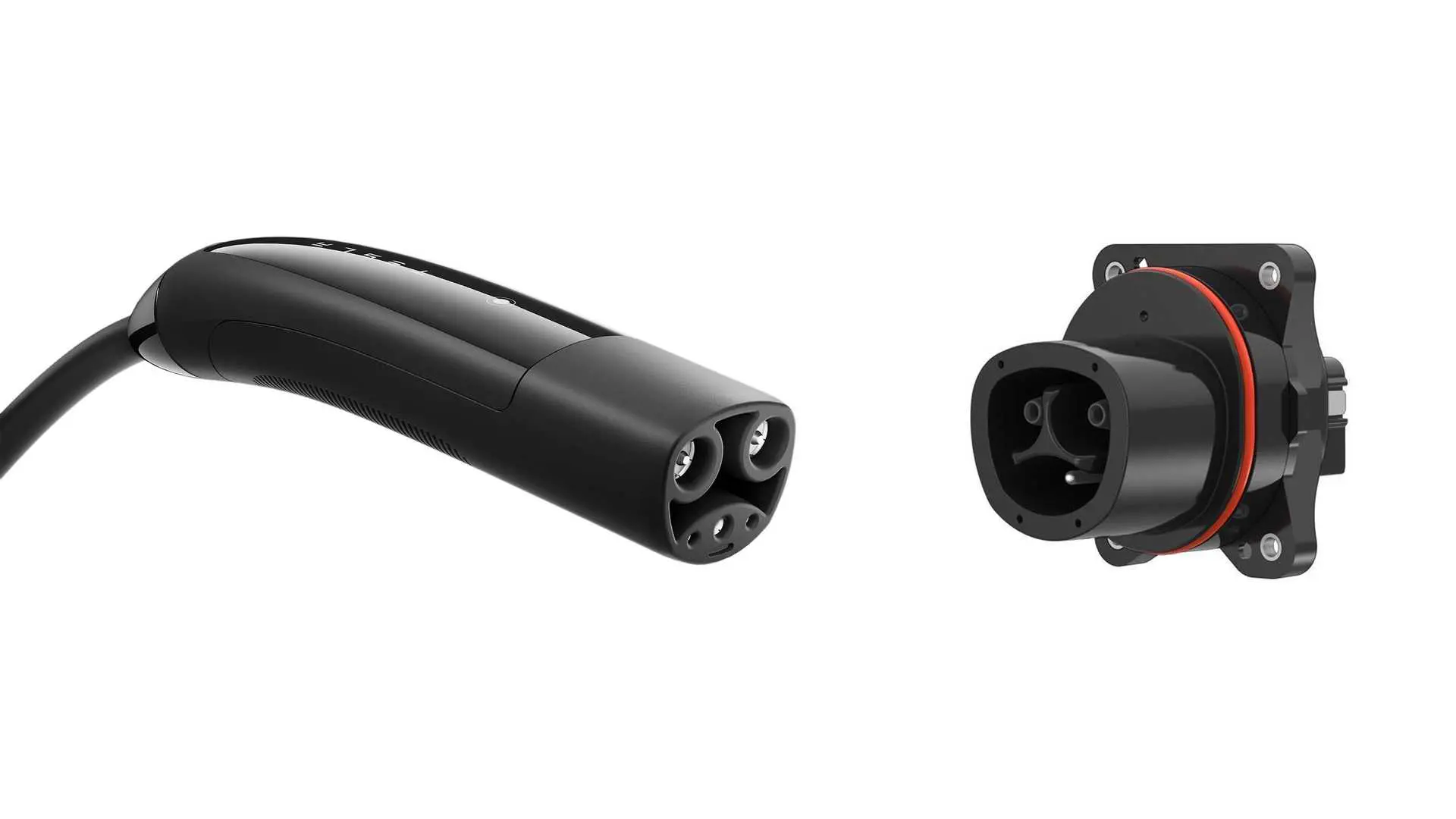
Since 2023, the NACS (North American Charging Standard) connector developed by Tesla has become the new standard for charging electric vehicles in North America. This means that NACS is gradually replacing the old J1772 standard, which has been used to charge most electric vehicles until now.
The NACS connector is smaller and more convenient than the J1772 connector, which ensures better compatibility and charging speed. As a result, a growing number of automakers such as Ford, General Motors, Mercedes-Benz, Nissan and others have announced support for NACS for their new electric vehicle models.
Another important change is the expansion of the Tesla Supercharger network, which is now available not only to Tesla owners but also to other car manufacturers that support the NACS standard. In addition, many charging networks, such as Electrify America, are also planning to equip their stations with the new connectors.
The transition to NACS makes charging electric vehicles easier and faster. However, J1772 will continue to be a relevant standard for many charging stations, especially for home charging.
Conclusion.
The J1772 connector has become an important milestone in the development of electric vehicle charging infrastructure, providing versatility and compatibility with most car models. Thanks to this standard, electric car owners can seamlessly use charging stations around the world. However, with the growing popularity of electric cars and the development of new charging technologies, charging stations are expected to continue to evolve. The future of charging will see the development of high-speed stations, intelligent monitoring systems and lower energy costs, making electric cars even more convenient and accessible to a wider range of users.
Frequently asked questions (FAQ)
1. What is the J1772 connector and why is it important for charging electric vehicles?
The J1772 connector is the standard for charging electric vehicles in North America. It provides universal compatibility between most electric vehicle models and charging stations that use AC power.
2. What is the charging speed with J1772?
The J1772 connector supports Level 1 and Level 2 charging. Level 1 charging delivers up to 1.4 kW of power, which is sufficient for slow charging at home, while Level 2 provides faster charging with up to 7.7 kW of power.
3. Can I charge Tesla cars at charging stations with a J1772 connector?
Thus, Tesla cars can be charged at stations with a J1772 connector using a special adapter that allows them to be connected to charging stations with this connector.
4. What are the main advantages and disadvantages of the J1772 connector compared to other standards?
The main advantage of J1772 is its versatility and compatibility with many models of electric vehicles. However, it has a limited charging speed compared to other standards such as CCS1 or Tesla Supercharger.
5. Which charging stations support J1772 and where can I find them?
J1772-compliant charging stations are available at most public and private charging points across North America.
6. How does charging with J1772 affect battery life?
Charging with the J1772 is safe for the battery because it uses alternating current and is less intense than DC charging. This keeps the battery in good condition for a long time.


