





Xiaomi SU7 vs Tesla Model Y: which is better to choose in 2025
The world of electric vehicles has become incredibly competitive in 2025. What used to seem almost synonymous with the word "electric car" - Tesla - now has worthy rivals from China. One of the most interesting examples is the Xiaomi SU7, which has already attracted attention for its design, technology, and energy efficiency. In this article, we will take a look at how the new flagship from Xiaomi looks like on ...
Content:
The world of electric vehicles has become incredibly competitive in 2025. What used to seem almost synonymous with the word "electric car" - Tesla - now has worthy rivals from China. One of the most interesting examples is the Xiaomi SU7, which has already attracted attention for its design, technology, and energy efficiency. In this article, we will take a look at how the new flagship from Xiaomi compares to the Tesla Model Y Standard Range, one of the most popular electric crossovers in the world.
We remind you that you can purchase home and commercial charging stations in our online storeand also use the public charging stations ECOFACTORcharging points located throughout Ukraine. For convenient access to charging infrastructure, we recommend using our mobile applicationwhich is available on iOS and Android.
General overview of the models
Xiaomi SU7
Xiaomi SU7 is a C-class luxury electric sedan built on the Xiaomi EV platform. The company positions it as a technological breakthrough that combines power, design, and deep integration with the smart home ecosystem. The SU7 is available in three versions - Standard, Pro and Max - but even the base version demonstrates excellent dynamic performance and intelligent features.
Tesla Model Y Standard Range
The Tesla Model Y Standard Range is an all-electric crossover with 40 kWh of usable battery capacity and a range of 255 km in real-world conditions. The model is based on the TESLA 3/Y platform and is designed for city and suburban driving. Despite being the simplest version in the lineup, it retains the main advantages of Tesla: fast charging, stable dynamics and advanced safety systems.
Design and aerodynamics
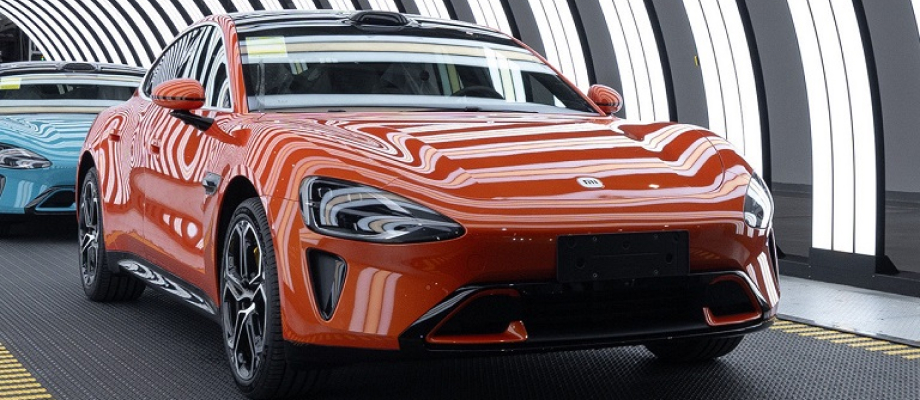
Xiaomi SU7 looks like a premium sports sedan at first glance. Its proportions are based on the "golden formula" principle, which strikes a balance between elegance and stability. The aerodynamic drag coefficient is only 0.195, which is one of the lowest among modern electric vehicles. The design features smooth body lines, soft contours, a duck tail on the boot lid and a continuous rear LED strip.
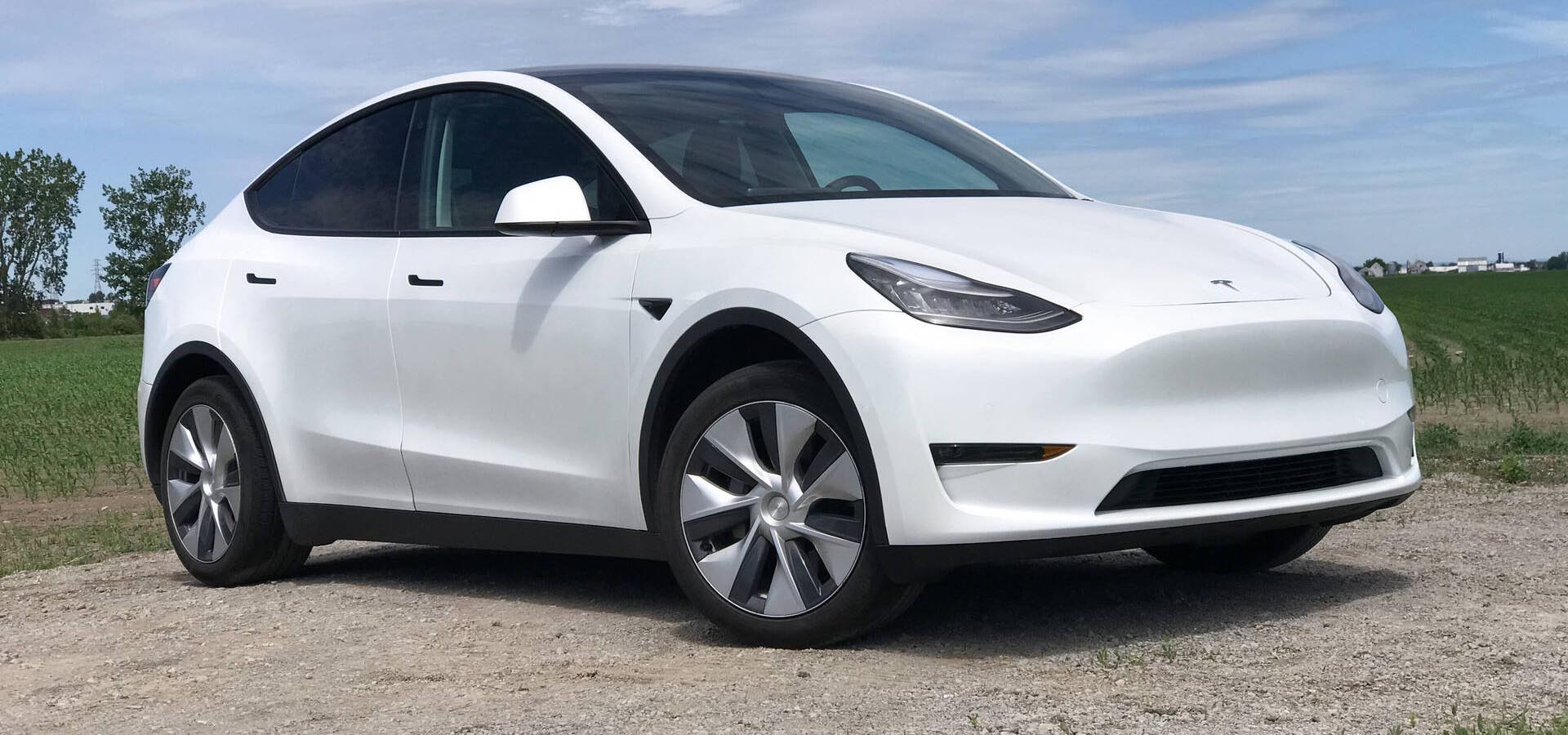
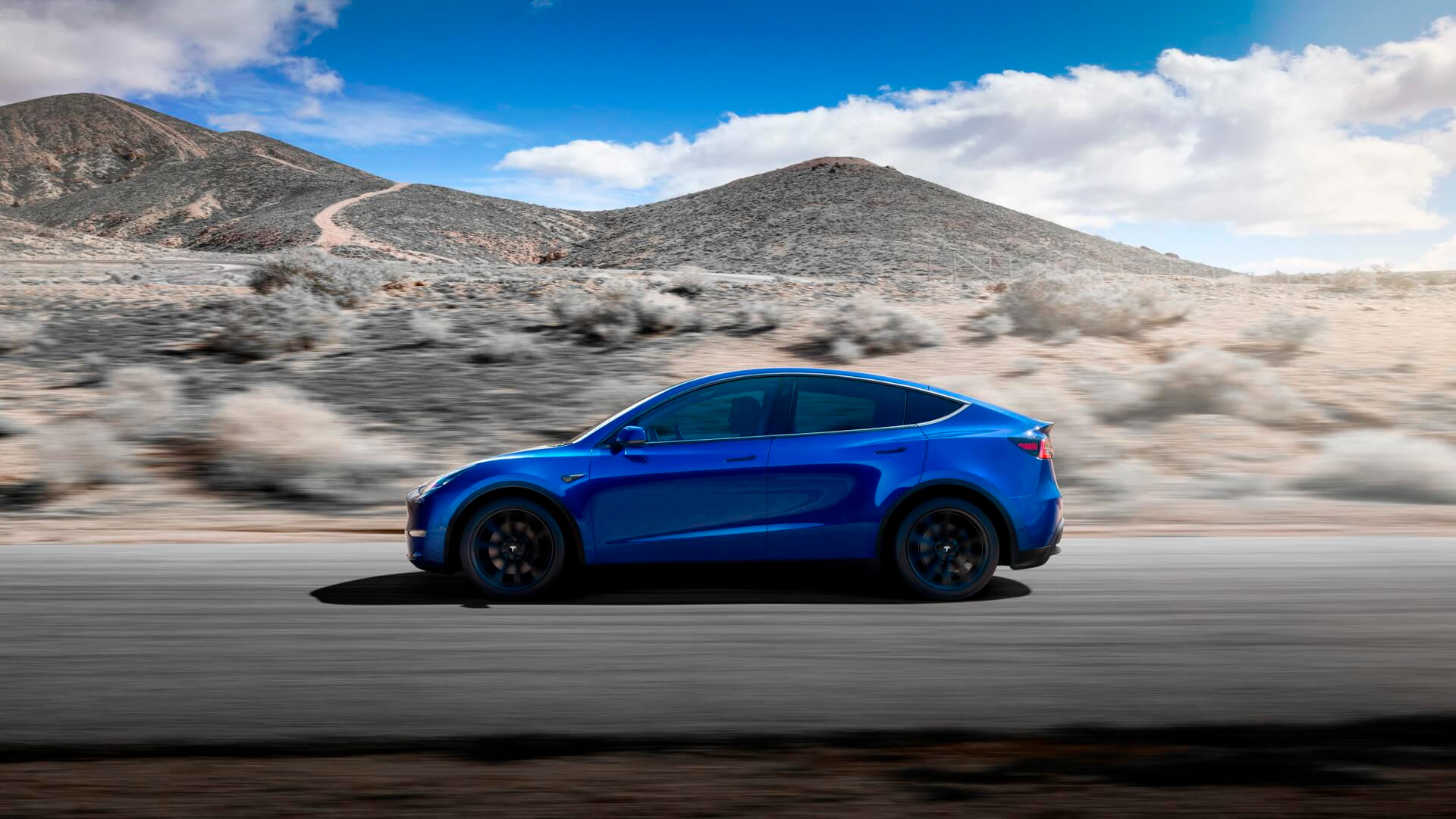
The Tesla Model Y, on the other hand, has a typical crossover shape with a high seating position and a massive rear end. Its aerodynamics are inferior to the Xiaomi sedan, but the overall image retains the recognisable Tesla style - minimalistic, functional and without unnecessary decorative elements.
Interior and comfort
Xiaomi SU7 offers a cabin that combines technology and sophistication. The centre stack is organised symmetrically, with all controls orientated around the driver. The large 16.1-inch 3K display is complemented by a 56-inch projection HUD. A special feature of the interior is the ability to integrate with the Xiaomi Smart Home ecosystem, which allows you to control your home devices directly from the car. The interior is available in several colours: Galaxy Gray, Twilight Red, Mist Purple and Obsidian Black.
The Tesla Model Y has a more restrained interior, but with a strong emphasis on functionality. The central 15-inch screen serves as the main control centre. Tesla stays true to its minimalist philosophy: there are virtually no physical buttons, and all controls are performed via the screen or mobile app. The interior space has been optimised and the rear seat backrest can be folded down to create up to 1,900 litres of luggage space.
Dynamics and power
Xiaomi SU7 demonstrates a sporty character: even the base version has a powerful electric drive that allows acceleration to 200 km/h and acceleration from 0 to 200 km/h in just 10.67 seconds. All modifications are equipped with silicone carbide inverters, chargers and compressors with an efficiency of up to 99.6%. This ensures quick response to the accelerator pedal and smooth acceleration without jerking.
The Tesla Model Y Standard Range has 150 kW (204 hp) of power, 350 N-m of torque and 0-100 km/h in 6.2 seconds. The top speed is 200 km/h, meaning that both models show the same top limit. However, Tesla is focused more on comfortable, stable driving than on sporty dynamics.
Power reserve and efficiency
There is a noticeable difference in philosophy between the models. The Xiaomi SU7 Max can provide 510 km of range in 15 minutes of charging, while the standard version can provide 350 km in the same time. These are impressive results, indicating the high power of the charging module and low energy losses. The overall range depends on the version, but even the base model exceeds the average in its class.
Tesla Model Y Standard Range has a real-world range of 255 km (from 180 km in cold weather to 380 km in mild conditions). Energy consumption is 157 Wh/km, which is equivalent to 1.8 l/100 km in fuel equivalent. Tesla's efficiency traditionally remains high, but the low battery capacity limits the range on a single charge.
Charging and power consumption
Xiaomi SU7 supports ultra-fast charging, which provides up to 510 km of range in 15 minutes. The use of silicon-carbide components increases the efficiency of the system to 99.6%, and the battery cooling is optimised for fast regeneration. In addition, Xiaomi HyperOS automatically selects the optimal charging mode depending on the conditions.
The Tesla Model Y Standard Range uses a CCS port for fast charging with a maximum capacity of 100 kW DC. From the 10% to the 80%, the battery is charged in 21 minutes, adding about 204 km of range. At home, charging is done via an 11 kW Type 2 port, with a full charge taking approximately 4.5 hours. Tesla also supports battery pre-conditioning for faster charging.
Technology and smart systems
The Xiaomi SU7 features extensive technology integration. The car runs on Xiaomi HyperOS and supports the full Human x Car x Home ecosystem. You can connect more than 1,000 Xiaomi smart devices, setting up automation at home via the in-car dashboard. It supports CarPlay, external Xiaomi Pad, iPad and additional screens that form a five-screen system inside the car. There are two variants of autonomous driving systems - Xiaomi Pilot Pro and Max, which are based on 11 cameras and the NVIDIA DRIVE Orin platform.
The Tesla Model Y is also equipped with Autopilot and road situation recognition using a camera, radar and ultrasonic sensors. The security system and driving assistants are regularly updated over the air (OTA), and a central computer controls all car functions. Although Tesla's integration is limited to the automotive sector, its ecosystem has the stability and reliability proven by millions of users.
Security.
Xiaomi SU7 has a steel-aluminium body frame with a reinforced safety cage and 16 active safety systems that provide 360-degree coverage. This includes adaptive cruise control, automatic braking, lane keeping, and driver status monitoring. Safety was a key element in the development of the model.
Tesla Model Y received the highest 5-star Euro NCAP rating (2022) with a score of 97% for adult passengers and 98% for driver assistance systems. This model has confirmed Tesla's reputation as one of the safest electric vehicle manufacturers in the world. The car's low centre of gravity and robust body structure ensure stability even in difficult road conditions.
Practicality and ease of use
Xiaomi SU7 is aimed at those who seek a premium driving experience. Its comfort is emphasised by noise insulation, quality materials and smooth ride. The personalisation system allows you to create your own driving modes by adjusting the suspension, dynamics and interior lighting.
Tesla Model Y, as a crossover, is more practical in everyday use. It has a spacious trunk, high ground clearance and the ability to tow a trailer weighing up to 1600 kg. For families and travellers, this is a strong argument in favour of Tesla.
Comparative table
| Parameter. | Xiaomi SU7 | Tesla Model Y Standard Range |
| Body type | Saloon | Crossover |
| Battery capacity | ≈50-100 kWh (depending on the version) | 40 kWh |
| Power reserve | up to 700 km (Max version), 350 km in 15 minutes of charging | 255 km (real) |
| Power | up to 495 kW (SU7 Max), base version is lower | 150 kW (204 hp) |
| Acceleration 0-100 km/h | from 2.8 to 6.0 s (depending on the modification) | 6.2 с |
| Top speed | up to 265 km/h | 200 km/h |
| Charging | up to 510 km in 15 minutes | 100 kW DC, 21 min (25→204 km) |
| Assistance system | Xiaomi Pilot Pro/Max | Tesla Autopilot |
| Security. | 16 active systems, steel frame | 5 Euro NCAP, 97% adults |
| Ecosystem | Integration with Xiaomi Smart Home, HyperOS | Tesla App, OTA updates |
| Drive type | Rear/full (depending on version) | Rear |
| Car class | C-Class (luxury saloon) | JD-class (large SUV) |

How ECOFACTOR is developing charging infrastructure for Xiaomi SU7 and Tesla Model Y owners in Ukraine
When comparing electric vehicles such as the Xiaomi SU7 and Tesla Model Y, a practical question inevitably arises: where to charge? After all, both models only reach their potential when they have access to a stable and extensive power supply network. At ECOFACTOR, we are working to make charging electric vehicles in Ukraine simple, clear and convenient for every driver.
Own charging stations for every need
We design, manufacture and service charging stations of our own production: from compact AC solutions up to 44 kW to powerful DC stations up to 420 kW. This means that Tesla Model Y owners can quickly restore their driving range during a trip, and Xiaomi SU7 drivers get the optimal balance between charging speed and energy efficiency.
Convenience through a mobile application
To make charging even easier, we've created mobile application ECOFACTOR, available on iOS and Android. It allows you to find the nearest station, check its status, build a route through map of charging stations or pay for charging directly from your phone. Everything is as intuitive as possible - no extra steps or queues.
Everything for home and business
For owners of private homes, offices or businesses, we offer ready-made solutions in our online store. Here you can buy not only charging stations, but also cables and adapters, wall holders, adapters and others chargers. That is, if you have just purchased a Xiaomi SU7 or Tesla Model Y and want to set up a charger at home, we already have everything you need.
Business and travel solutions
ECOFACTOR also creates tools for managing the charging network - a user-friendly operator platform that allows you to monitor energy consumption, set tariffs, issue reports and even control user access. This system is suitable for shopping centres, restaurants, residential complexes or companies looking to develop charging infrastructure without unnecessary technical complexity.
And for those who travel frequently, our network supports roaming with European partners, so charging your Tesla or Xiaomi is available even outside Ukraine.
No matter which electric car you choose: the powerful Tesla Model Y or the innovative Xiaomi SU7, we, ECOFACTOR, provide everything you need for comfortable charging, monitoring and energy management. We do this in the Ukrainian way: with an understanding of the realities of our roads, tariffs and the needs of drivers who are already creating the electric future.
Conclusion.
There's no clear winner in the Xiaomi SU7 vs Tesla Model Y duel - it all depends on your priorities. If you're looking for a smart, tech-savvy sedan with maximum digital integration and a long range, the Xiaomi SU7 looks more modern and functional.
If practicality, proven reliability and proven safety systems are important to you, the Tesla Model Y remains a proven choice.
In fact, Xiaomi has demonstrated that it can compete with Tesla not only in smartphones but also in electric vehicles, bringing a new level of interaction between people, cars and homes.
Frequently asked questions
1. What is the range of the Xiaomi SU7 compared to the Tesla Model Y?
The Xiaomi SU7 has a longer range - the standard version provides more than 600 km, while the Tesla Model Y Standard Range provides about 255 km in a mixed cycle.
2. Does Xiaomi SU7 support autonomous driving?
Yes, the car has two systems: Xiaomi Pilot Pro and Max, built on the NVIDIA Orin platform and a set of 11 cameras.
3. How fast do these cars charge?
Xiaomi SU7 can add up to 510 km in 15 minutes of charging. The Tesla Model Y charges from 10 to 80% in about 21 minutes at 100 kW DC.
4. Which car is safer?
The Tesla Model Y has an official Euro NCAP rating of 5, but the Xiaomi SU7 is also equipped with 16 active safety systems, so both models demonstrate a high level of safety.


