





Xiaomi YU7 vs Tesla Model 3: what to choose in 2025
Electric cars have long ceased to be exotic. In 2025, they will be a viable alternative to conventional cars with internal combustion engines. Chinese manufacturers are quickly catching up and sometimes surpassing Western competitors by offering powerful, long-range and technologically advanced models. One of the most striking examples is the Xiaomi YU7, the brand's first luxury electric SUV, which is set to take on established players like Tesla [...]
Content:
Electric cars have long ceased to be exotic. In 2025, they will be a viable alternative to conventional cars with internal combustion engines. Chinese manufacturers are quickly catching up and sometimes surpassing Western competitors by offering powerful, long-range and technologically advanced models. One of the most striking examples is the Xiaomi YU7, the brand's first luxury electric SUV, which is set to take on established players like Tesla [...]
In this article, we will compare these two models in terms of key parameters: design, interior, technology, dynamics, range, charging, comfort, safety, and intelligence.
We remind you that you can purchase home and commercial charging stations in our online storeand also use the public charging stations ECOFACTORcharging points located throughout Ukraine. For convenient access to charging infrastructure, we recommend using our mobile applicationwhich is available on iOS and Android.
Design and proportions: technological elegance versus minimalism
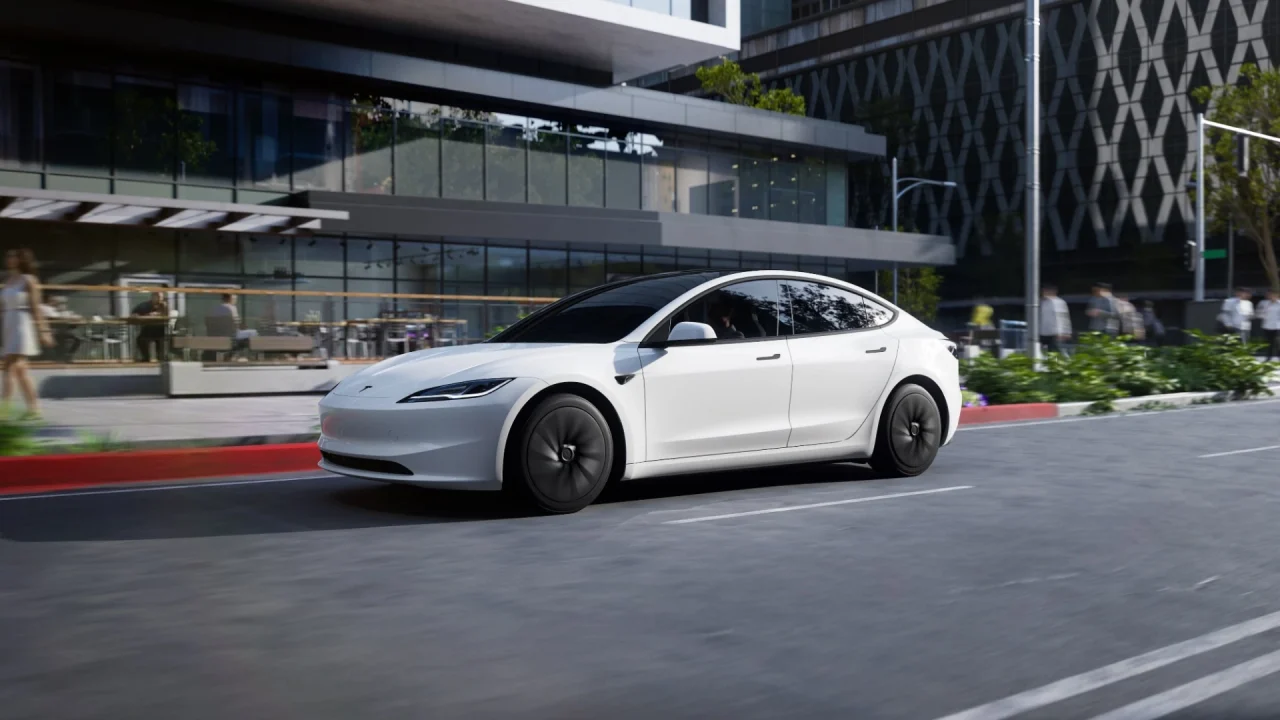
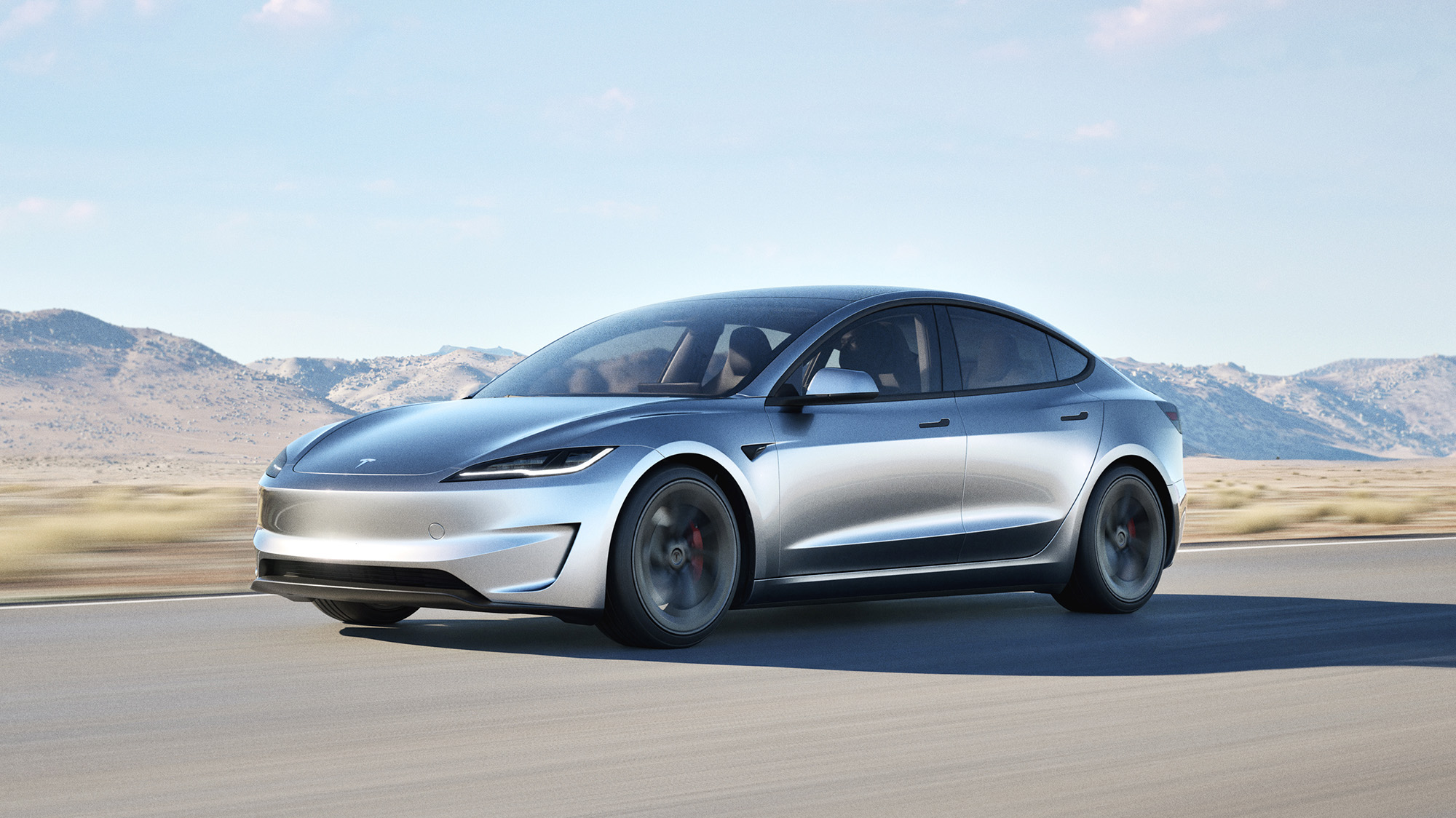
Tesla Model 3 is a familiar electric car that has retained the classic silhouette of a sedan. Its length is 4694 mm, width is 1850 mm, and height is 1443 mm, making it a typical representative of the middle D-class. The design is minimalist: smooth lines, clean surfaces, no unnecessary elements. Tesla relies on a restrained look and aerodynamics.
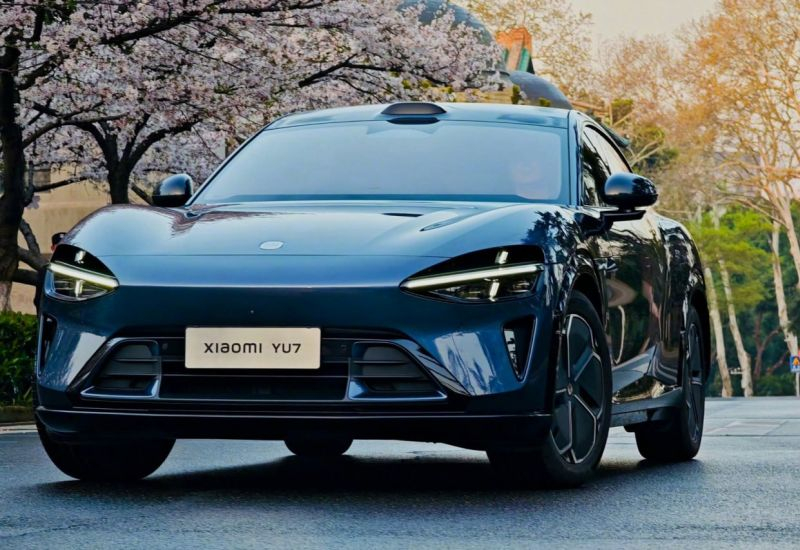
The Xiaomi YU7, on the other hand, demonstrates a completely different approach. It is a large electric SUV with proportions that set the tone for its class. The 3:1 wheelbase to body ratio and 1.25:1 width to height create a sense of power and stability. A massive front end with a long bonnet and muscular rear end creates a visual emphasis on dynamics and strength.
The YU7 also features a wide range of colours - nine options from Pearl White to Emerald Green - as well as a choice of wheels from 19 to 21 inches with different designs. Tesla has a more modest set of colours and wheels.
Bottom line: Tesla retains a minimalist style and simplicity, while Xiaomi adds expressiveness, premium and sporty character.
Interior: Tesla's simplicity versus Xiaomi's luxury
The interior of the Tesla Model 3 is the epitome of minimalism. In the centre is a large 15-inch screen that controls almost all car functions. The materials are of high quality, but the emphasis is on practicality and technology, not on a sense of luxury. The Model 3 has five seats, a trunk volume of 542 litres, and the option to fold the rear seats to increase space.
Xiaomi YU7 relies on premium comfort. The cabin is lined with OEKO-TEX Class 1 certified materials that are safe even for children's skin. The seats are covered with soft Nappa leather, and the front seats have a 10-point massage function. The rear seats have an adjustable backrest angle of up to 135° and are heated.
Even the smallest details have been worked out to the smallest detail: a built-in 4.6-litre fridge, dual 80W wireless charging, 25 Dolby Atmos speakers and an air filtration system with a HEPA filter that cleans the cabin in 35 seconds.
Bottom line: Tesla offers functionality, Xiaomi offers a luxury feel.
Technology and multimedia
Tesla has traditionally been a leader in digital systems. Its autopilot, over-the-air updates, and user-friendly interface have made it a cult car. However, in 2025, competitors have already come close.
Xiaomi YU7 has a new generation of electronic architecture with the NVIDIA DRIVE AGX Thor chip (700 TOPS of processing power) - twice as much as Tesla Model 3. The car has three Mini LED screens that project information directly onto the windscreen. In addition, the system has a Hyper XiaoAI multimodal voice assistant that recognises commands even outside the car.
Apple users will appreciate the deep integration of the iPhone: you can unlock the car via UWB, control it via Apple Watch, and use Apple Music without restrictions.
Bottom line: Tesla remains technologically advanced, but Xiaomi has actually created a new standard for multimedia capabilities and smart control.
Performance and dynamics
The Tesla Model 3 Standard Range has 165 kW of power (224 hp), accelerates to 100 km/h in 5.9 seconds and reaches a top speed of 210 km/h. The drive is rear-wheel drive. For most drivers, this is more than enough for comfortable city and long-distance travel.
The Xiaomi YU7 in the Max version has 288 kW of power (690 hp), 528 N-m of torque and accelerates from 0 to 100 km/h in 3.23 seconds. Even the base Standard version is a powerful RWD with excellent dynamics.
Xiaomi also uses the new HyperEngine V6s Plus platform, which runs up to 22,000 rpm and delivers impressive smoothness.
Bottom line: The Tesla Model 3 is more restrained and practical, while the Xiaomi YU7 is a real sports car in the body of an SUV.
Cruising range and energy efficiency
The Tesla Model 3 Standard Range uses a 50 kWh battery, of which 40 kWh is usable capacity. The actual range is 265 km (in average conditions). In the city in warm weather, it is up to 395 km, and in cold weather, about 220 km. Energy consumption is 151 Wh/km.
Xiaomi YU7 demonstrates completely different performance. The basic Standard version has a range of 835 km on the CLTC cycle, while the Pro and Max versions have a range of about 770 km. This is one of the best values among large electric SUVs.
This result was achieved thanks to the 800-volt platform, silicone-carbide components and sophisticated aerodynamics.
Bottom line: Tesla is a great city electric car, Xiaomi is a car for long journeys without frequent stops.
Charging: speed matters
Tesla Model 3 supports AC charging up to 11 kW and DC fast charging up to 100 kW. Charging from 10% to 80% takes about 22 minutes, adding 500 km/h to the range.
Xiaomi YU7 is based on an 800-volt architecture, so it charges even faster - from 10% to 80% in just 12 minutes. In 15 minutes at the station, you can get up to 620 km of range.
The car has also been tested for compatibility with 99% charging stations in China, and the network is planned to be expanded in the future.
Bottom line: In terms of charging, the Xiaomi YU7 definitely wins thanks to its ultra-fast capabilities and high compatibility.
Comfort and handling
The Tesla Model 3 has a suspension that is focused on stability, but sometimes stiff for our roads. In city conditions, the ride is pleasant, although the noise insulation is average.
Xiaomi YU7 is equipped with a two-lever front and five-lever rear independent suspension, air shock absorbers with adaptive adjustment and a road pre-scan function. The system changes the suspension stiffness depending on the surface.
Additionally, YU7 has an anti-sickness mode developed in conjunction with medical institutions. It reduces nausea while driving the 51%.
Bottom line: Xiaomi provides a level of comfort that is closer to business class, while Tesla remains laconic but functional.
Security.
Tesla Model 3 received 5 Euro NCAP stars in 2019: 96% for adult protection, 86% for child protection and 94% for driver assistance systems. These are high results that confirm the company's reputation.
Xiaomi YU7 continues the SU7 brand's safety policy. It uses 2200 MPa ultra-high-strength steel and 90% steel-aluminium body structure. The car has passed more than 50 crash tests, and the battery has a bulletproof coating and puncture protection.
In addition, Xiaomi YU7 has been tested in harsh climatic conditions - from +53°C to -41°C, with a mileage of more than 10 million km in tests.
Bottom line: Both cars are safe, but Xiaomi has a higher margin of safety for the body and a wider endurance test.
Intelligent systems and assistants
Tesla is traditionally strong in autopilot, but Xiaomi YU7 has taken a big step forward.
Xiaomi's driver assistance system is based on 10 million training examples from real drivers. It uses 11 cameras, LiDAR, 4D radar and 12 ultrasonic sensors.
The YU7 recognises objects better, avoids obstacles more smoothly and has a more "human" acceleration and braking logic. The car is also integrated into the Human × Car × Home ecosystem, which allows you to control your home devices directly from the cabin.
Bottom line: Tesla is a pioneer in autopilot, Xiaomi is a new standard for artificial intelligence in cars.
Final comparison
| Characteristics | Xiaomi YU7 | Tesla Model 3 Standard Range |
| Body type | SUV | Saloon |
| Power | up to 690 hp | 224 hp. |
| Acceleration 0-100 km/h | 3.23 с | 5.9 с |
| Power reserve | up to 835 km | 265 km |
| Charging power | up to 800 V (12 min 10-80%) | 100 kW (22 min 10-80%) |
| Comfort level | Premium, with massage and cooling | Minimalist |
| Security. | Ultra-high steel + 50 tests | 5 stars Euro NCAP |
| Technologies | AI, 700 TOPS, voice assistant | Autopilot, OTA |
| Format. | Luxury SUV | Compact saloon car |

Charging infrastructure for Xiaomi YU7 vs Tesla 3: how ECOFACTOR helps drivers in Ukraine
In any comparison of electric vehicles, a practical question arises: where to charge the car and how to do it conveniently? Especially when it comes to all-electric models like Tesla Model 3 or Xiaomi YU7, which depend on high-quality charging infrastructure. That is why we, ECOFACTOR, create solutions that make life easier for drivers and businesses in Ukraine.
We provide a full cycle of work with charging stationsfrom design and production to installation and maintenance. We have more than 3,500 charging ports in our network, and the stations are designed for different needs: AC stations up to 44 kW - convenient for home or office; DC solutions up to 420 kW - optimal for fast charging a Tesla Model 3 or Xiaomi YU7 on the go.
To make it easy to use the infrastructure, we have developed mobile application ECOFACTOR, available on iOS and Android. You can use it to find the nearest point on the map of charging stationsYou can check its status, pay for charging, get a report, or even plot a route to a connection point. The system works stably, so it takes only a few minutes to charge your car.
For those who want to charge at home or at work, we have online shop ECOFACTOR, where you can buy everything you need: charging stations, chargers, cables and adapters, adapters, wall holders and other equipment. Everything is certified and compatible with both Tesla and Xiaomi YU7.
We have also created a platform for operators that allows them to remotely manage the charging network, set tariffs, monitor electricity consumption and generate reports. This solution is already being used by shopping centres, restaurants, residential complexes and private companies that are developing their own charging infrastructure without any unnecessary complications.
For drivers who travel frequently, our network supports roaming with foreign partners. So even when travelling outside of Ukraine, you can find an ECOFACTOR station or partner charging point using the same map.
To summarise: whether you choose a Tesla Model 3 or Xiaomi YU7, we at ECOFACTOR provide everything you need for convenient charging: from home devices to powerful high-speed stations. We are developing the charging ecosystem in Ukraine, making electric mobility real, affordable and easy.
Conclusion.
Tesla Model 3 is a reliable and proven electric vehicle for those who value practicality, simplicity and stability. It's a great choice for urban environments or regular medium-distance journeys.
Xiaomi YU7, for its part, demonstrates how far Chinese manufacturers have come. This is an electric SUV with a record range, ultra-fast charging, premium interior and advanced technology. For those looking for maximum comfort, intelligent features and power, the YU7 will be an interesting alternative.
Frequently asked questions
1. What is the battery life of Xiaomi YU7?
The standard version has a range of up to 835 km, making it one of the leaders among electric SUVs.
2. How fast does Xiaomi YU7 charge compared to Tesla Model 3?
Xiaomi charges from 10% to 80% in 12 minutes (800 V), Tesla charges in 22 minutes at 100 kW.
3. Does Xiaomi YU7 support autopilot?
For example, the car has a driver assistance system based on 10 million training examples and LiDAR sensors.
4. What is the main difference between Xiaomi YU7 and Tesla Model 3?
Tesla is a lightweight, economical sedan for daily use. The Xiaomi YU7 is a large, luxurious SUV for long journeys and premium comfort.
5. Which car is better to choose in 2025?
It all depends on your needs: for the city and economy - Tesla Model 3; for comfort, range and technology - Xiaomi YU7.


