




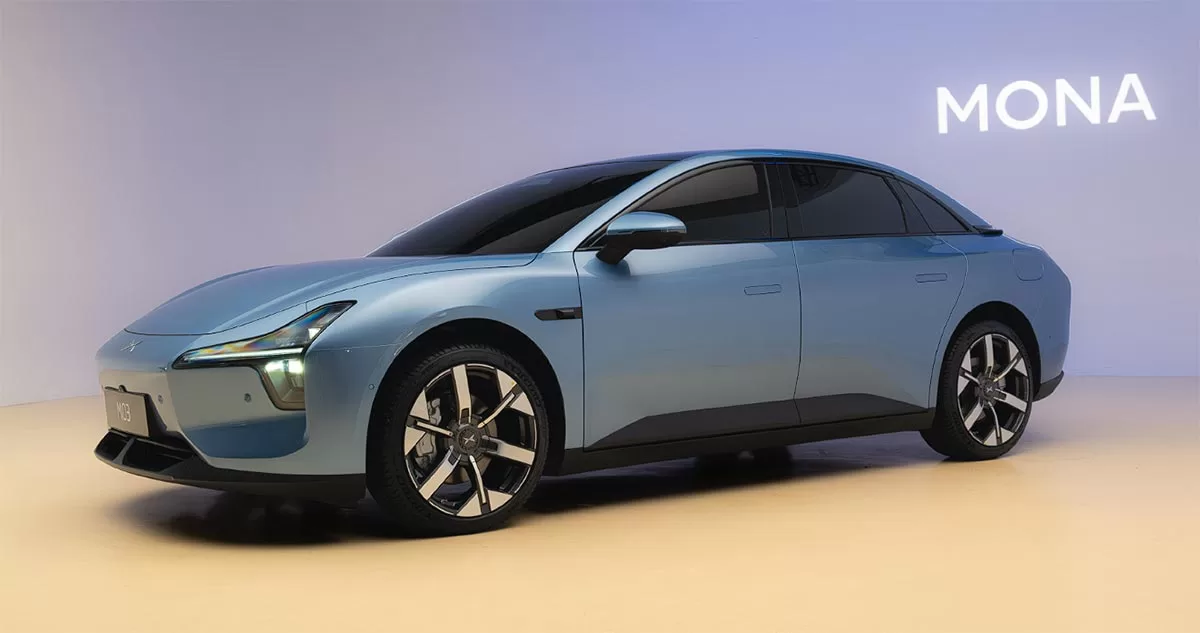
Xpeng Mona M03 vs Tesla Model 3: comparison of two electric cars
The electric vehicle market is growing very fast. While Tesla had virtually no competitors a few years ago, Chinese manufacturers are now actively filling the space, offering equally technological and sometimes even smarter solutions. One of the most interesting examples is the Xpeng Mona M03, a new model that is compared to the Tesla Model 3, as both cars belong to a similar class and [...]
Content:
The electric vehicle market is growing very fast. While Tesla had virtually no competitors a few years ago, Chinese manufacturers are now actively filling the space, offering equally technological and sometimes even smarter solutions. One of the most interesting examples is the Xpeng Mona M03, a new model that is compared to the Tesla Model 3, as both cars belong to a similar class and are designed for those looking for a modern electric car without compromise.
This comparison is particularly relevant for Ukrainian drivers. Tesla has long been known on our roads, and has developed support and charging infrastructure. But Xpeng is just starting to shape its image, offering high technology, a large range, and a lower price. So let's see which one looks more convincing for everyday use.
We remind you that you can purchase home and commercial charging stations in our online storeand also use the public charging stations ECOFACTORcharging points located throughout Ukraine. For convenient access to charging infrastructure, we recommend using our mobile applicationwhich is available on iOS and Android.
Design and aerodynamics: different philosophies
At first glance, both cars look minimalistic and modern, but their approaches to design are completely different.
Xpeng Mona M03
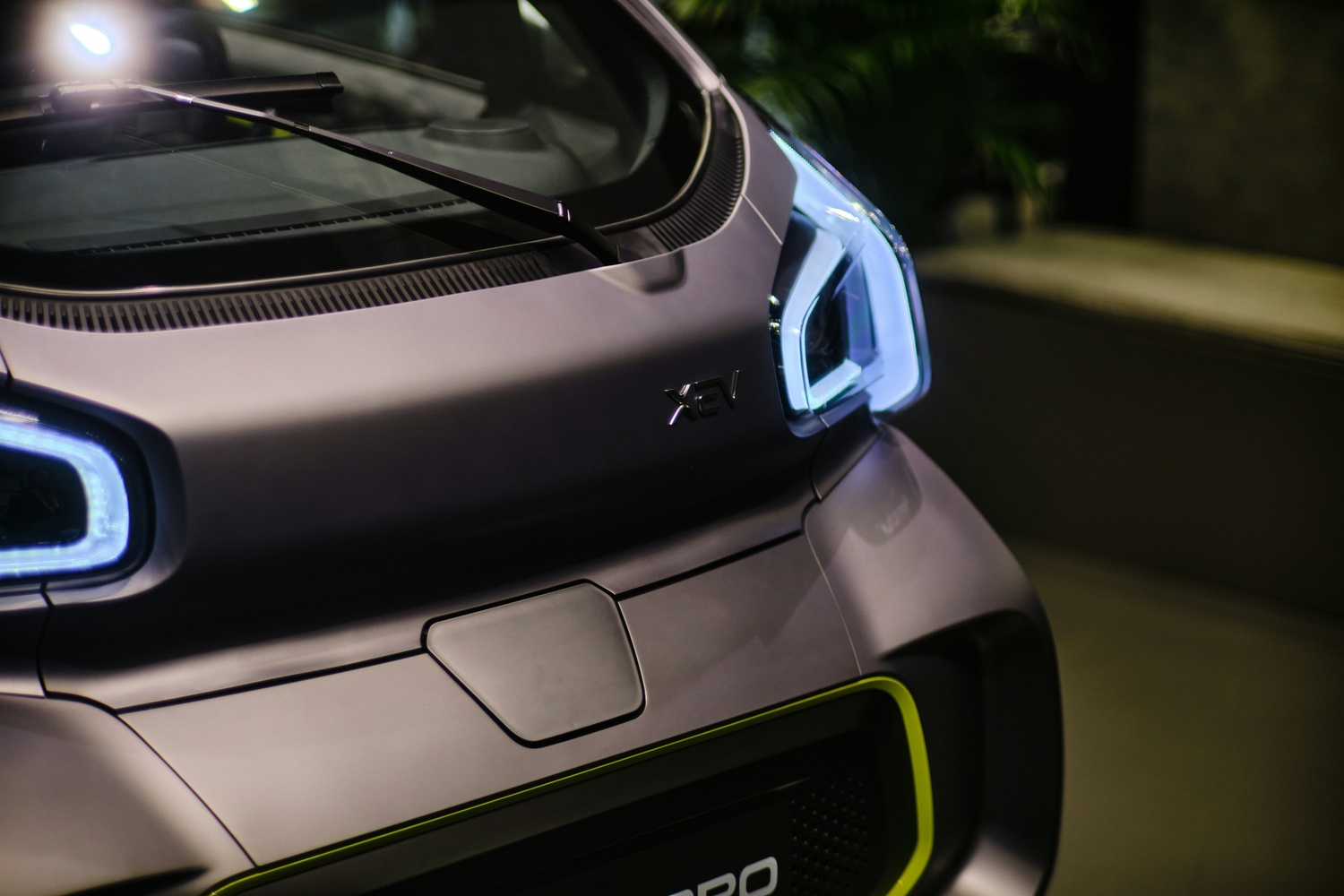
The Chinese hatchback features sleek body lines and an extremely low air resistance coefficient of just Cd 0.194, making it the most aerodynamic production electric vehicle in its class. This is not just a catalogue number: lower drag means lower energy consumption and a longer range.
Xpeng has used an active air damper system (AGS), special low-drag wheels and even a rear ducktail that directs airflow to reduce turbulence. All of this adds up to a range of around 60 km without increasing the battery.
Tesla Model 3
Tesla is also known for its clean, no-frills shape. However, its drag coefficient is slightly higher, around Cd 0.219, and this is noticeable on the road. The design is more reminiscent of a classic sedan with closed shapes, although the upgraded versions have updated optics and a more restrained front end.
For city roads, both cars look elegant, but the Mona M03 seems fresher, with a focus on functionality and energy efficiency rather than status.
Size and convenience
The Xpeng Mona M03 is 4780 mm long and has a wheelbase of 2815 mm. It is slightly larger than the Tesla Model 3 (4694 mm in length and 2875 mm in wheelbase), but the difference in the actual driving experience is almost imperceptible. On the road, Mona looks a little more massive, but in the cabin it adds a few important centimetres of space for passengers and luggage.
- Mona M03 - is more of an electric fastback that combines compactness with roominess.
- Tesla Model 3 - a typical sedan that looks restrained and predictable.
Both cars have a minimalist interior, but there is a difference in feel. Tesla is focused on simplicity: one large central screen, almost no physical buttons, and an emphasis on control via touch elements or voice commands. It looks impressive, but not everyone is comfortable with it, especially if you want to quickly switch something while driving.
Xpeng Mona M03 adds more "humanity" to the interaction. There are separate adaptive climate control modes, automatic liftgate and intelligent lighting and ventilation control. Thanks to the large panoramic glass area (1.22 m²), the interior appears brighter and more spacious. In everyday use, the Mona M03 feels a little more comfortable, especially in the rear seats, where there is more legroom. The Tesla remains a model of ergonomics for the driver - everything is at hand, but without frills.
As a result, when it comes to convenience for families or long journeys, the Xpeng has the edge. If compactness and driving focus are important, then Tesla still holds its own.
Power and battery life
One of the most important questions for any electric vehicle is how far it will go on a single charge.
Xpeng Mona M03
The model is available in three versions:
- 515 km power reserve (51.8 kWh)
- 580 km power reserve (62.2 kWh)
- 620 km range (62.2 kWh, Ultra Long Range version)
Energy consumption is just 11.5 kWh per 100 km, one of the lowest of any modern electric car. Charging is also fast: in 15 minutes, you can get +200 km of range, and from 30% to 80%, the battery is charged in less than half an hour.
Tesla Model 3
The Tesla Model 3 Standard Range Plus has 51 kWh of usable battery capacity and a realistic range of about 350 km. In the warm season, the figure can rise to 410 km, but in winter it drops to 290 km.
Tesla wins in terms of charging speed: up to 170 kW DC, which allows you to charge from 10% to 80% in 21 minutes. But at the same time, energy consumption is higher - about 14.6 kWh per 100 km.
So, Xpeng has an advantage in efficiency and range, which is especially noticeable in Ukrainian conditions, where every kilometre of range can be important on a long-distance route between cities. Tesla, on the other hand, offers a stable, proven charging system and access to superchargers, making life easier for owners in Europe.
ECOFACTOR: charging infrastructure for Xpeng and Tesla owners in Ukraine
At ECOFACTOR, we are working to ensure that electric vehicles - from Xpeng Mona M03 to Tesla Model 3 - can be conveniently charged in any city in Ukraine. Our team creates a full cycle of solutions: from development and production charging stations to their maintenance, network management and mobile application.
Our solutions
We design AC and DC charging stations suitable for both home and business. Xpeng or Tesla owners can choose the best option - from compact wall-mounted models to powerful high-speed chargers for commercial use. All devices are designed and manufactured in Ukraine in accordance with international safety standards. And through our online shop can be purchased not only charging stations, but also cables and adaptersand other accessories for electric vehicles. We understand that every detail is important, so we offer solutions that fit different connectors and car models.
Network and user experience
We have also created a platform for charging station operators that allows them to manage the network, track energy consumption, set tariffs and add new charging points. For drivers, there is an ECOFACTOR EV Charging mobile application available on iOS and Androidwhich allows you to find the nearest stations, check their status and start charging with a few taps.
Available map of charging stationsThe map is constantly updated. It covers public charging points all over Ukraine - from large cities to regional highways.
Everything we do is aimed at a simple thing - to make electric cars in Ukraine charge quickly, safely and without unnecessary complications.
Performance and dynamics
Xpeng Mona M03
Engine power depends on the version: from 188 to 218 hp. Acceleration to 100 km/h takes 7.4-7.8 seconds. This is not a sports car, but it is designed for stability, smooth running and confident driving. The average driver hardly needs more.
Tesla Model 3
Even the base Standard Range Plus version has 283 hp and 420 Nm of torque. Acceleration from 0-100 km/h takes 5.6 seconds, which means that Tesla is significantly more dynamic. Higher Performance trims do it even faster, but they are significantly more expensive.
Manageability
The Xpeng has a smaller turning radius (5.3 metres) and a light steering wheel, which is convenient in the city. The Tesla, on the other hand, gives you a sportier feel thanks to its low centre of gravity and precise steering. If you do more driving on the highway, the Tesla gives you more driving pleasure, while the Mona M03 offers comfort and stability.
Intelligent features and technologies
This is where the Xpeng Mona M03 really shines. It's not just an electric car, but a full-fledged technology platform that combines artificial intelligence, automation and smart driving.
Xpeng Mona M03
The car is built on the basis of a powerful Qualcomm Snapdragon 8155 chip and has a whole ecosystem of sensors that help it "see" the space around it.
Main technical elements
- 2 millimetre range radars
- 12 ultrasonic sensors
- 7 cameras for 360° viewing
- Centralised real-time data processing
Functions of the XNGP ADAS system (autonomy level 2.5+)
- Automatic parking (parallel and perpendicular)
- Lane keeping capacity (LCC)
- Adaptive cruise control (ACC)
- Driver fatigue monitoring system (DMS)
- Speed control depending on road conditions
- 3D navigation with precise lane positioning
- Recognise objects around you in real time
- Automatic braking in emergency situations
All of this makes Mona M03 a true "smart" car that helps not only to move, but also to think within the limits of the road.
Tesla Model 3
Tesla has a more well-known but less flexible Autopilot system, which, although stable, is still not ideal in Ukrainian conditions.
Main components
- Cameras around the perimeter of the vehicle to monitor the situation
- Radar and ultrasonic sensors (on older versions)
- Central data analysis system based on Tesla's proprietary chip
Autopilot features
- Adaptive cruise control with Stop & Go function
- Automatic lane keeping
- A system of assistance during restructuring
- Obstacle and pedestrian detection
- Automatic braking at risk of collision
- Over-the-air (OTA) software updates
- Support for Smart Summon (the car drives to the owner in the car park on its own)
Tesla does not have as many sensors as Xpeng, but its main advantage is its own ecosystem. It is constantly being updated, which allows you to improve the capabilities even a few years after the purchase.
Simply put, the Xpeng Mona M03 offers more features for less money: its systems are broader, more integrated and better suited to urban traffic. The Tesla Model 3 compensates for this with stability, regular updates, and the proven track record of the Autopilot system.
For a Ukrainian driver, the difference is noticeable: Xpeng offers more automation out of the box, while Tesla offers more trust in the brand and technologies that have already proven their reliability.
Security.
In the Xpeng Mona M03, safety is on par with technology. The body is constructed from a combination of high-strength steel and aluminium, making up 73% of the entire structure. This makes the car strong, but not too heavy, and the roof can withstand pressures that are more than five times the vehicle's own weight. In combination with the BOSCH IPB braking system and the CST comfort braking function, the car stops steadily and predictably - the stopping distance from 100 km/h is just 35.6 metres. In addition to passive protection, the Mona M03 has a range of active systems: automatic braking, blind spot monitoring, forward collision warning, lane control, adaptive headlights and even driver status monitoring. All of this works together to create the feeling that the car cares about passengers all the time, not just during an accident.
Tesla Model 3 has long been considered a benchmark in this regard. It has a five-star Euro NCAP rating with excellent driver and passenger protection, which has been confirmed in real-world crash tests. The design of the battery, located at the bottom of the body, provides a low centre of gravity, which minimises the risk of rollover. Tesla also actively uses its own safety algorithms: the Autopilot system detects obstacles, helps avoid collisions and brakes even before the driver reacts. Constant software updates allow these functions to be improved even after purchase.
In general, Tesla has an officially confirmed status of a safe car, but Xpeng demonstrates no less seriousness in its approach to protection. If Tesla is a proven standard, Mona M03 looks like a modern alternative with equally thoughtful solutions that fully meet the requirements of Ukrainian drivers.
For whom what choice
Xpeng Mona M03
- suitable for those who want a new electric car with smart features
- looking for efficiency and a large power reserve
- appreciates comfort and a quiet ride
Tesla Model 3
- the choice for those who value reliability and image
- needs fast charging and access to superchargers
- appreciates the sporty dynamics and the Tesla branded ecosystem
Bottom line.
Both cars deserve attention, but they speak different languages. The Tesla Model 3 is already a legend, proven by thousands of owners and years of use. It offers stability, good support and recognition. Xpeng Mona M03 is a fresh breath in the world of electric cars. It proves that new brands can not only catch up, but sometimes surpass Tesla in terms of technology and efficiency.
For Ukraine, the Mona M03 looks like a logical choice: more range, lower price and features that are really useful in everyday life. Tesla remains a symbol, but no longer the only option for those who want a smart and high-quality electric car.
Frequently asked questions
Is it worth buying Xpeng Mona M03 in Ukraine?
Yes, if you value a long range, modern driver assistance features and a reasonable price. The car is still less common on the road, but its performance looks competitive even next to well-known brands.
How difficult is it to charge a Tesla Model 3 in Ukraine?
Tesla can be charged both from domestic and public charging stations. Although Ukraine does not have its own Supercharger network, most owners have no problem using CCS stations that are compatible with their car.
Which car has a greater range?
The Xpeng Mona M03 in the top configuration offers up to 620 km on a single charge, while the Tesla Model 3 in the basic version provides about 350-410 km. This makes Xpeng a more favourable choice for long journeys.


