Table of contents:
At first glance, comparing the Hongguang Mini EV and Tesla Model Y seems like a strange idea. These are electric cars from completely different worlds. One is small, simple and as affordable as possible. The other is large, expensive, and versatile for almost any trip. But that’s exactly why this comparison makes sense.
In fact, many people choose an electric car not between similar models, but between approaches to life. Some people need the simplest possible transport for the city without unnecessary costs. Some people value range, comfort, and the ability to travel far without constant stops. In this article, we’ll take a look at how the Hongguang Mini EV and Tesla Model Y feel in everyday use and for whom each of them is suitable in reality, not on paper.
We remind you that you can purchase home and commercial
What is the Hongguang Mini EV and who is it for?
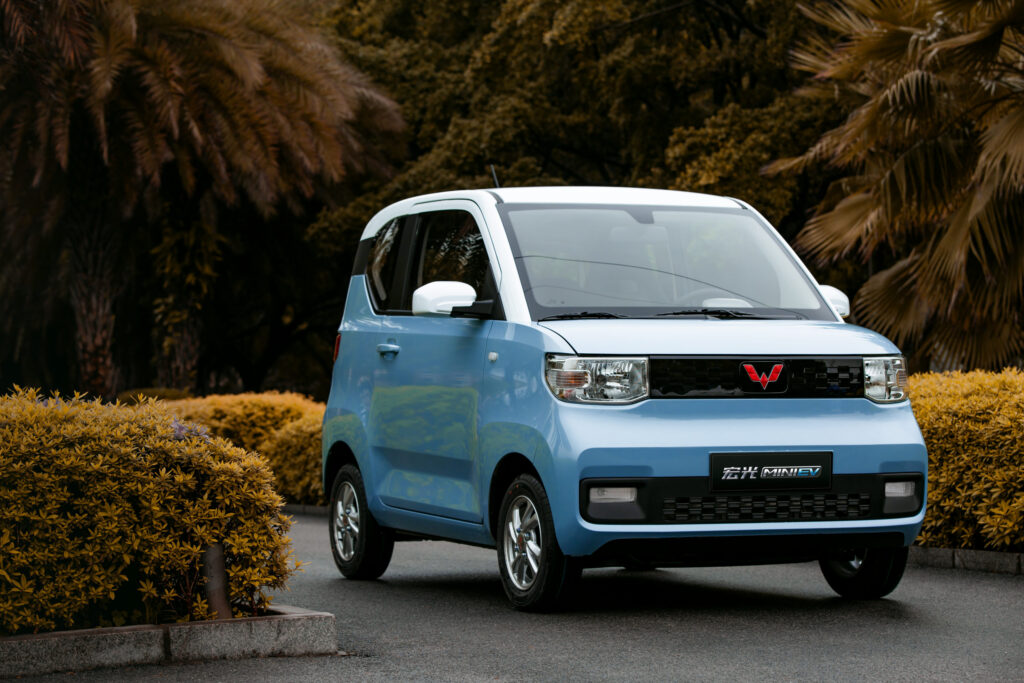
Wuling Hongguang Mini EV – це один з наймасовіших і найдоступніших electric vehiclesв у світі. Його складно сприймати як класичний автомобіль у європейському розумінні. Це радше компактний електричний транспорт для коротких поїздок.
The 2025 model has a 25.1 kWh battery, which, according to the Chinese CLTC cycle, gives a range of up to 301 km. In real life, this means city, suburban and daily commuting without the need to constantly look for a charge. Electricity consumption of 9.2 kWh per 100 km is a good indication of what this car is designed for.
The electric motor has a power output of 30 kW and a top speed of 101 km/h. This is not a car for the highway or for fast driving. But within the city, it is more than enough.
Key features of the Hongguang Mini EV in everyday life
Home ідея Mini EV – простота і мінімалізм. Це електрокар, створений для міських поїздок без зайвих ускладнень.
- Compact size and light weight. It is easy to manoeuvre in the city and does not cause problems with parking.
- Easy to charge and hold. The small battery allows you to charge your car without haste and without dependence on fast charging stations.
- Four seats. Suitable not only for one person, but the space in the cabin is limited.
- Adequate DC charging speed. Charging from 30 to 80 per cent takes about 0.6 hours, which is enough for a city rhythm.
The Mini EV performs its role well in the city and does not try to be a universal car.
What is the Tesla Model Y and how does it feel in real use
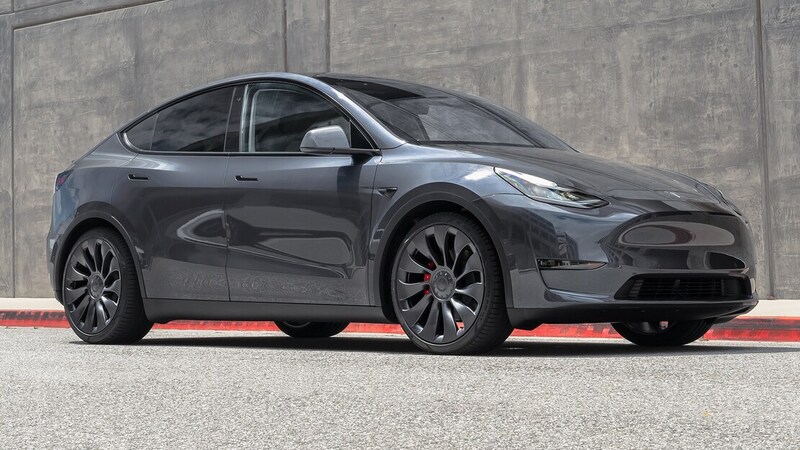
Tesla Model Y Standard RWD – це повноцінний середньорозмірний електричний кросовер. Його логіка протилежна Mini EV. Це автомобіль, який намагається бути універсальним для будь-яких сценаріїв.
The battery has a useful capacity of 60 kWh, and the real range, according to EV Database, is about 380 km. In mild weather conditions in the city, this figure can be significantly higher, while on the highway it can be lower.
Power силової установки – 220 kW, максимальна швидкість – 201 km/h. Це автомобіль, який без проблем почувається на трасі, у довгих поїздках і при високих швидкостях.
Comfort and versatility of the Model Y
The Tesla Model Y is designed as a car without strict limitations on usage scenarios. It is equally suitable for the city, the highway, and travelling.
- Spacious interior and five full seats. Passengers and driver do not feel cramped even on long journeys.
- A large trunk and practicality. The car allows you to transport things without the need for constant compromises.
- Modern electronics and comfort on the road. All systems are designed for convenience and to reduce fatigue during journeys.
- Fast DC charging up to 175 kW. In 20-25 minutes, you can significantly replenish the range, which is especially important on long routes.
The Model Y is well suited to the role of one car for all occasions.
Comparison of approaches: urban transport versus universal car
Power reserve and usage scenarios
The Hongguang Mini EV is designed for the urban rhythm, where most trips are within a few kilometres. A trip to work, the shops, school, and local business – this is where it feels natural. The power reserve usually lasts not for one day, but for several days of normal city use. This relieves the stress of charging: there is no need to look for a station after every trip.
At the same time, it is important to understand the limitations. The Mini EV was not designed as a car for highways or long-distance routes. Even if it has a sufficient power reserve, the car format itself does not encourage such trips. This is a vehicle for predictable, short routes without surprises.
Tesla Model Y has a completely different logic. It feels equally at ease in the city and on the highway. Its realistic range allows you to plan trips of hundreds of kilometres without constant stops. The city mode is easy and undemanding for it, but the real advantage is manifested when the route goes beyond daily trips. This is a car that does not force you to change your plans because of the range.
Speed and road behaviour
The Hongguang Mini EV’s limited top speed sets clear limits for its use. In the city, this is enough. Traffic, traffic lights, short accelerations – in such an environment, it looks logical and safe. The car does not provoke fast driving and does not require constant concentration on dynamics.
But on highways, these limitations become noticeable. High speeds, overtaking, long stretches without stopping – all this is not its element. Mini EVs are best perceived as vehicles that work within the city and suburbs, not as a universal car.
The Tesla Model Y, on the other hand, is designed with a margin of dynamics. It accelerates confidently, maintains high speeds steadily and does not create a feeling of tension on the road. Overtaking does not require long planning, and the behaviour on motorways remains predictable.
This is an important point for those who regularly travel out of town or frequently use expressways. Model Y does not force you to adapt your driving style to the car.
Charging and rhythm of travel
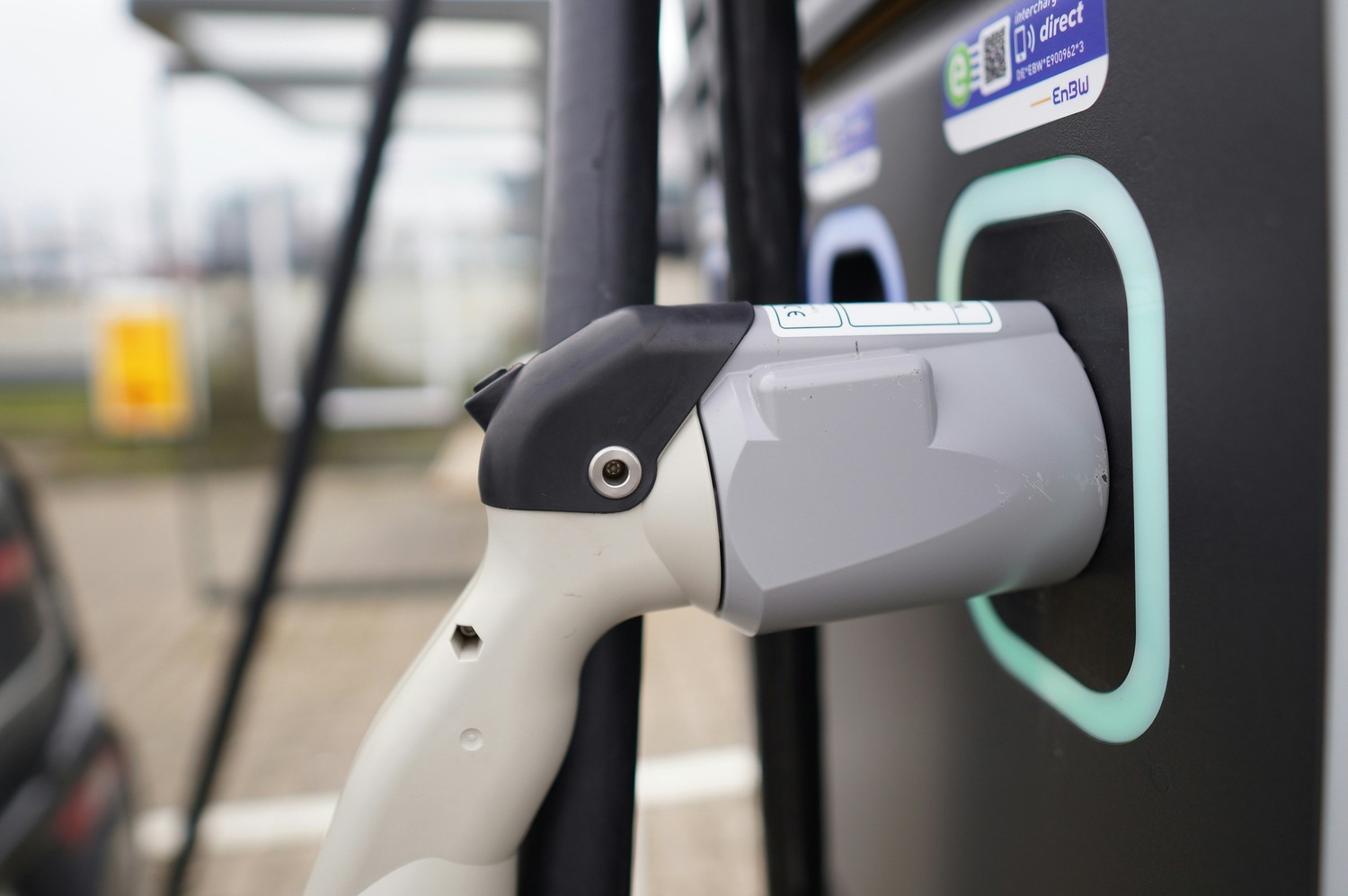
Charging the Hongguang Mini EV fits well into urban life. Its battery is small and its power consumption is low. This allows you to charge the car without haste, for example at night or between trips. Slower charging does not cause discomfort, because the usage scenario itself does not require a quick replenishment of the range.
This is even a plus for the city. The car does not depend on high-speed charging stations and does not force you to plan routes around them. Charging becomes a background part of life, not a separate task.
Tesla Model Y is built to a different rhythm. It actively uses fast charging stations, especially on long journeys. A short stop of 15-25 minutes allows you to continue your route without any significant delays. This changes the very perception of an electric car as a vehicle for travelling.
In the city, Model Y can also be charged slowly, but its potential is revealed on fast charging. This approach allows you not to be tied to one place and maintain the usual pace of travel even over long distances.
Charging: what it looks like in real life
Charging the Hongguang Mini EV
Hongguang Mini EV does not require a complex charging infrastructure. The small battery and low power consumption make the charging process simple and predictable. In an urban scenario, the car can be charged without haste – between trips or at night when it is simply parked.
Even if you use DC charging, the speed of replenishing the range is not the key factor here. The Mini EV is not designed for situations where you need to quickly cover a few hundred kilometres. Its logic is different: once you’ve charged it, you can drive in the usual rhythm for a few days.
It is also important that this approach removes the dependence on high-speed charging stations. For the urban user, this means less planning and less stress. Charging becomes a background part of everyday life, rather than a separate task that needs to be solved every day.
Charging the Tesla Model Y
The Tesla Model Y is built around the idea of fast charging and long-distance driving. Its battery is larger, and the support of high-power DC charging allows you to significantly replenish the range in a short time. This is especially noticeable when travelling, when a stop for 15-25 minutes is logically included in the route.
For daily urban use, Model Y does not require the constant use of fast charging stations. It can also be charged slowly, for example at home or at work. But the key advantage is that the car is ready for fast-paced travel without long pauses when needed.
As a result, Tesla Model Y charging becomes a tool of flexibility. The driver is not tied to one place and can plan routes much more freely. This is one of the main points that distinguishes it from compact city electric cars.
Charging infrastructure: how ECOFACTOR makes life easier for electric car drivers in Ukraine
When it comes to electric vehicles, whether it’s a compact city car or a versatile crossover, the first practical question is always the same – where and how to charge the car without any difficulties. That is why charging infrastructure plays a key role in the everyday use of electric vehicles. ECOFACTOR focuses on making charging in Ukraine clear, accessible and convenient both in the city and on the road.
Ours charging stations We provide a full cycle of services – from design and production to installation and maintenance. We offer AC solutions for home, office or car parks, as well as DC stations for fast charging on the roads and in public locations. Today, the ECOFACTOR network has more than 3,500 charging ports across the country, so it’s much easier to find a charging station near you.
For the convenience of drivers, we have developed a mobile
We pay special attention to those who want to organise charging at home or for business. В
For operators and owners of commercial facilities, ECOFACTOR offers a charging infrastructure management platform. It allows you to monitor electricity consumption, set tariffs, manage access and receive reports online. This approach is suitable for shopping centres, residential complexes, restaurants and office spaces.
In addition, the ECOFACTOR network supports roaming with foreign partners. This means that electric vehicle drivers can use a familiar charging system outside of Ukraine. We take into account real-world road and travel conditions and build an infrastructure that works without complications.
ECOFACTOR is not just charging stations, but a complete ecosystem for electric vehicles. We help drivers charge their cars at home, at work and on the road by offering clear solutions and the necessary tools. All of this is created in Ukraine and adapted to the real rhythm of Ukrainian drivers’ lives.
Who is the Hongguang Mini EV for?
- For city trips. The Mini EV is at home in everyday city traffic. Short journeys, traffic jams, traffic lights and finding parking are no problem.
- For short routes. This is a car for travelling within the neighbourhood or city. Work, shopping, school, errands – everything is close by without the need to plan a route in advance.
- For minimal costs. The low power consumption and simple design make ownership predictable and inexpensive. There are no unnecessary costs or complicated solutions.
- For those who value simplicity. The Mini EV is not overloaded with features. It’s easy to use and doesn’t feel like a complicated device.
This is a car without illusions. It does its job every day and does not try to be versatile or prestigious.
Who is the Tesla Model Y for?
- For the family. The spacious interior and large trunk allow the car to be used as the main vehicle for several people without compromise.
- For travelling. A realistic range and fast charging make long journeys relaxing and predictable.
- For the track. Model Y is confident on high-speed roads, does not require a special driving style and does not restrict the driver.
- For universal use. This is a car that is equally suitable for the city, the highway and mixed routes.
Model Y – це вибір для тих, кому потрібен один автомобіль на всі випадки життя без постійних компромісів.
Below is a brief comparison of the Hongguang Mini EV and Tesla Model Y to make it easy to see the difference between them in one place. The table helps you quickly understand what format and capabilities each electric car offers in everyday use.
| Characteristics | Hongguang Mini EV (2025) | The Tesla Model Y Standard RWD is a rear-wheel drive version with a single 200 kW (272 hp) motor. Acceleration from 0 to 100 km/h takes 7.2 seconds. The top speed is 201 km/h. The car is designed for stable, economical driving, not for racing. |
| Vehicle format | Compact city electric car | Mid-sized electric crossover |
| Main purpose | Short trips in the city | City, highway, travel |
| Number of seats | 4 | 5 |
| Power reserve | Up to 301 km (CLTC) | Around 380 km of real-world driving range |
| Power | 30 kW | 220 kW |
| Maximum speed | 101 km/h | 201 km/h |
| Battery type | LFP | LFP |
| Battery capacity | 25.1 kWh | 60 kWh of usable capacity |
| Energy consumption | 9.2 kWh per 100 km | Approx. 158 Watt-hours per km |
| DC charging | 30-80% in approximately 0.6 hours | 10-80% in about 24 minutes |
| Behaviour on the road | Not designed for highways | Comfortable and stable |
| Space in the cabin | Limited to. | Spacious |
| Trunk | Minimal | Large, suitable for travelling |
| Approximate price | Very affordable segment | Significantly more expensive |
Bottom line.
The Hongguang Mini EV and Tesla Model Y are not really in competition with each other. They show two different approaches to an electric vehicle as a means of transport. The Mini EV relies on simplicity, minimal costs and a clear urban scenario. It doesn’t promise more than it can deliver, and that’s its strength.
The Tesla Model Y, on the other hand, is designed as a versatile car. It is suitable for daily city driving, trips out of town and long-distance routes without the need for a second car. It is the choice for those who want one vehicle for all occasions and are willing to pay for comfort and flexibility.
Therefore, the choice between these models is not about comparing features or numbers in a table. It starts with understanding your own needs. How often do you drive, where do you go, and at what pace? When the answers to these questions are clear, the right electric car usually becomes obvious.
Frequently asked questions
Is it possible to compare Hongguang Mini EV and Tesla Model Y directly?
Technically, yes, but this is not a classic comparison of competitors. These are cars from different segments and with different ideas. Mini EV is about the minimum and the city, while Model Y is about versatility and long-distance travel.
Is the Hongguang Mini EV suitable for trips out of town?
Only to a limited extent. For short trips to the suburbs – yes. For regular trips on the highway or over long distances – no. The car is designed for the urban rhythm.
Can I use the Tesla Model Y only in the city?
You can, but its potential in the city is not fully utilised. The Model Y is comfortable in city traffic, but it offers the most advantages on the highway and when travelling.
Which electric car is cheaper to run?
Hongguang Mini EV is much cheaper to own. It consumes less electricity and does not require a complex charging infrastructure. The Tesla Model Y is more expensive, but offers a different level of comfort and capabilities.
Can I have a Mini EV as my only car?
Yes, if all trips take place in or near the city. If you often need to use the highway or long-distance routes, a Mini EV alone will not be enough.
Which option is better for the family?
Tesla Model Y. It has more space, a full five seats and is better suited for transporting passengers and luggage.