Table of contents:
In the electric vehicle market, it is increasingly necessary to choose not between “good” and “bad”, but between different approaches to the same task. This is exactly what the choice between Omoda E5 and Tesla Model 3 looks like. On the one hand, there is an electric crossover with a simple character and predictable behaviour. On the other is a sedan that has long set the standard for efficiency and dynamics. Both models […]
З одного боку – електричний кросовер з простим характером і прогнозованою поведінкою. З іншого – седан, який давно задає стандарти ефективності and динаміки. Обидві models підходять for щоденних поїздок, але відчуваються по-різному в реальному житті.
In this article, we will not compare “who is better in a vacuum”. Instead, we’ll look at how these two electric vehicles behave in common scenarios: city, highway, charging, winter, daily use. No complications and no theory for theory’s sake.
We remind you that you can purchase home and commercial charging stations in our online storeand also use the public charging stations ECOFACTORcharging points located throughout Ukraine. For convenient access to charging infrastructure, we recommend using our mobile applicationwhich is available on iOS and Android.
Positioning and approach to use
Omoda E5
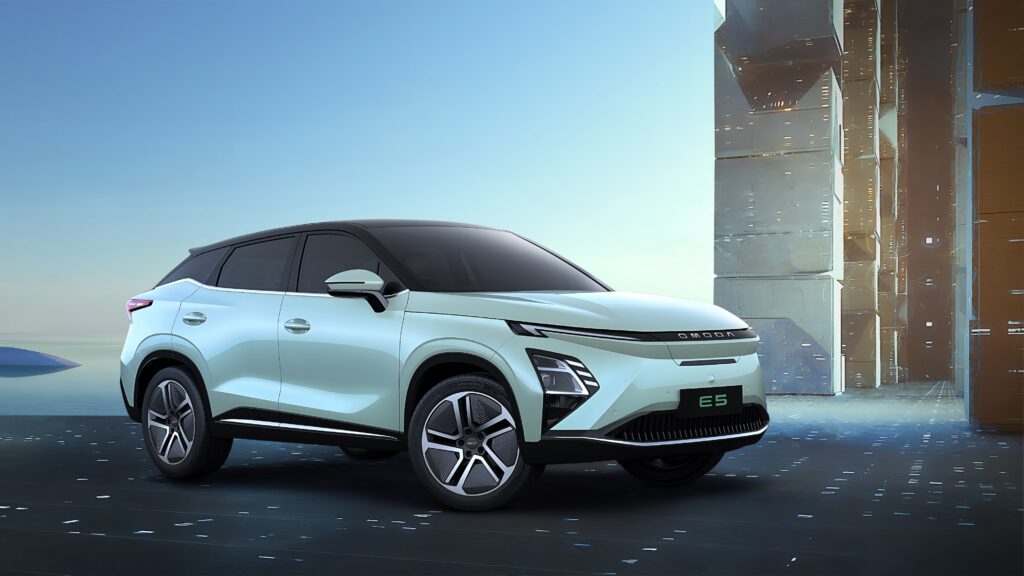
Omoda E5 was created as an electric crossover for everyday use. It does not try to surprise with numbers or technology and does not play sports or experiment. Its main feature is predictability and calmness.
This car is well suited to those who have already decided to go electric but do not want a complicated or overly expensive solution. It is not a super premium car, but it offers everything you need to get around the city and even beyond. This includes familiar dynamics, a decent range, adapted charging and ease of use.
Tesla Model 3 Standard Range Plus
Tesla Model 3 offers a different approach. It is an electric sedan with a focus on efficiency, dynamics and minimalist technology. The 2021 Standard Range Plus version was produced in the USA and is equipped with a Panasonic NCA battery, which is clearly visible in the car’s behaviour.
The Model 3 will appeal more to those who appreciate quick pedal response, frequent highway driving and pay attention to energy consumption and charging speed. This is a car that requires a little more attention from the driver, but in return gives a feeling of lightness, speed and control in the right scenario.
Dimensions and feel in the city
Omoda E5 in the city
The Omoda E5 is shorter than the Tesla Model 3, but at the same time taller and more massive visually. The crossover format is felt from the first trips around the city. The higher seating position gives you a better view, makes it easier to control the situation in traffic and easier to manoeuvre in yards and tight parking spaces. Curbs, speed bumps and uneven asphalt are perceived more calmly, without unnecessary stress.
Thanks to the body geometry and more upright stance, the Omoda E5 looks friendlier in everyday city use. It does not force you to constantly think about the ground clearance or length of the car and is well suited to the home-work-shopping rhythm.
Tesla Model 3 in the city
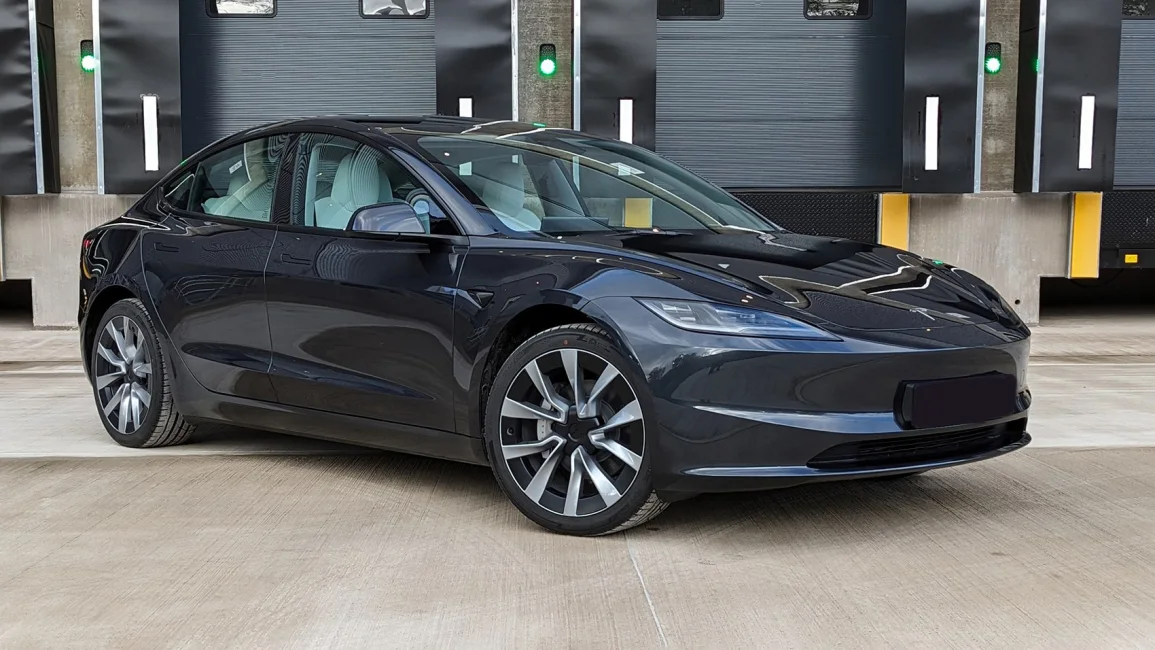
The Tesla Model 3 is longer and significantly lower. In a dense urban environment, this is immediately noticeable. The lower ground clearance and stance make you pay more attention to curbs, yard entrances and road bumps. Visibility in traffic is slightly worse, especially among crossovers and vans.
At the same time, the Model 3 has another strength. It moves easily in traffic, responds quickly to the pedal, and can easily keep up with the pace of city traffic. During quiet driving, Tesla consumes less energy, which is good for daily trips without recharging.
Dynamics and control
Tesla Model 3: focus on speed
Accelerating from 0-100 km/h in 5.6 seconds makes the Tesla Model 3 noticeably more lively. Even without the sporty styling, you can feel it:
- faster overtaking
- more confident driving on the track
- easier adaptation to fast flow
Rear-wheel drive adds to the handling, but requires care in winter.
Omoda E5: a calm character
Omoda E5 accelerates to 100 km/h in 7.6 seconds. It’s not slow, but it’s not emotionally overwhelming. The car is set to drive smoothly:
- no sudden starts
- without aggressive reactions
- with predictable behaviour
Front-wheel drive is more understandable for drivers without experience with electric vehicles.
Power reserve in real life
Tesla Model 3 Standard Range Plus
The real average range of the Tesla Model 3 Standard Range Plus is about 350 km. In the city in warm weather, the car can travel up to 515 km, which is a very good figure for this class. On the highway in winter, the range decreases to about 250 km, but even in such conditions, Tesla remains quite efficient.
The Model 3 is a winner thanks to its low energy consumption. It is one of the most fuel-efficient electric vehicles in its segment, especially in quiet driving.
Omoda E5
The Omoda E5 has a larger usable battery capacity, but consumes more energy per kilometre. On average, the real range is about 330 km. In urban conditions in warm weather, it can reach up to 490 km, and on the highway in winter, it drops to about 235 km.
The difference with the Tesla is not critical in everyday use, but the Model 3 consistently covers more kilometres per kilowatt, which is especially noticeable over longer distances.

Charging and long journeys
Tesla Model 3
The strength of the Tesla Model 3 in the context of long-distance travel is its fast DC charging and high energy efficiency. Even with a relatively small battery, the car feels good on the highway thanks to the quick recovery of range during stops.
- peak fast charging power – up to 170 kW
- charging from 10 to 80% takes approximately 21-22 minutes
- high speed of power reserve recovery at each stop
In terms of long distance suitability, the Tesla Model 3 scores 2.5 out of 5. This is not a record-breaking figure, but a stable result for an electric sedan in this class. In real-life travel, this means shorter stops and more predictable journey times.
Omoda E5
Omoda E5 is aimed at a different usage scenario. It also supports fast DC charging, but it does so at a more relaxed pace. For daily commuting and occasional trips out of town, this is usually enough, but on long routes, the difference with Tesla becomes noticeable.
- maximum DC charging power – up to 130 kW
- charging from 10 to 80% takes about 33 minutes
The Omoda E5’s long-distance rating is 2 out of 5. This means that the car is better suited for city and suburban routes, while regular long trips on the highway are easier for the Tesla Model 3 due to faster charging and lower energy consumption.

Charging infrastructure for Omoda E5 and Tesla Model 3 in Ukraine
Whether you choose the Omoda E5 or the Tesla Model 3, charging remains a key issue in your daily routine. It is important to have access to convenient solutions both at home and on the road. That’s why ECOFACTOR is developing a charging infrastructure adapted to the real needs of electric vehicle drivers in Ukraine.
Ours charging stations проходять complete цикл – від проєктування до обслуговування. We offer AC stations до 44 кВт for дому and бізнесу і DC solutions up to 420 kW for швидкої charges на трасі. Мережа ECOFACTOR вже охоплює понад 3 500 зарядних портів по всій країні, тому find charging стало простіше як for Omoda E5and for Tesla Model 3.
For the convenience of drivers, we have created a mobile application (
We are also developing online shop, where you can choose chargers for home or business, as well as cables and adapters and other accessories. A charging station network management platform with consumption and tariff control is available for corporate customers and operators.
ECOFACTOR – це цілісна екосистема for comfortable use of an electric vehicle. Ми допомагаємо власникам Omoda E5 і Tesla Model 3 заряджати авто вдома, на роботі and в подорожах, пропонуючи прості і зрозумілі рішення for українських реалій.
Battery and type of chemistry
The Tesla Model 3 uses an NCA battery, which has a higher energy density and provides better efficiency. At the same time, such a battery is more sensitive to charging modes and requires a more careful approach to operation.
Omoda E5 is equipped with an LFP battery. It is more stable, less demanding in daily use and better tolerates regular charging up to 100%. For quiet operation without constant monitoring of the charge percentage, LFP looks like a more practical solution.
Space and boot
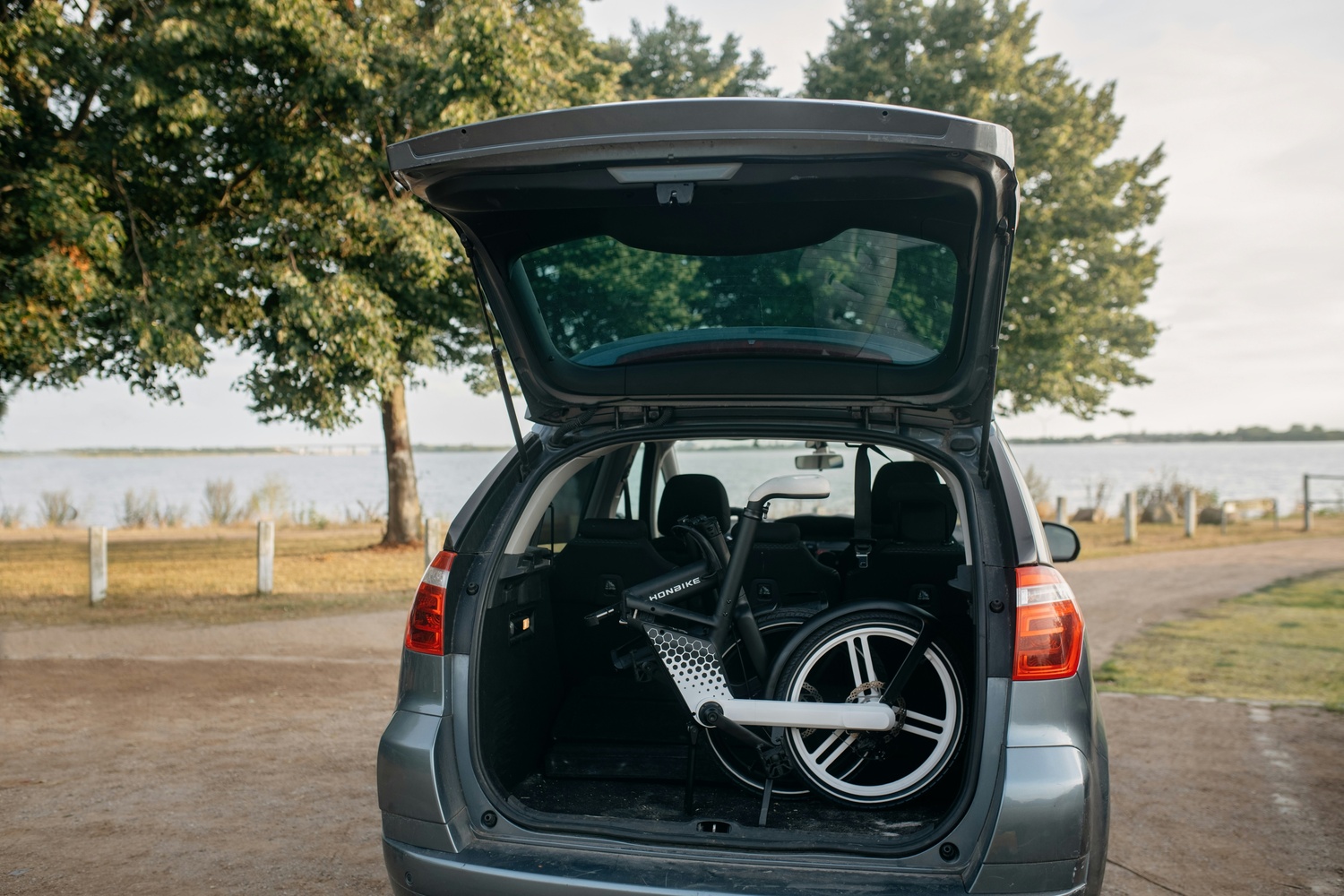
Omoda E5 wins in terms of versatility. The higher roofline and body shape make it easier to transport bulky items, and with the seats folded down, the car becomes more functional for everyday tasks.
The Tesla Model 3 has a large overall boot volume, including the front compartment. This is convenient for distributing things, but the lower opening shape limits the transport of large items.
Comparative table: Omoda E5 vs Tesla Model 3 Standard Range Plus
| Parameters. | Omoda E5 review: an electric crossover for the city and daily trips | Tesla Model 3 Standard Range Plus |
| Body type | SUV | Saloon |
| Reason. | Front | Rear |
| Power | 155 kW | 208 kW |
| Acceleration 0-100 km/h | 7,6 с | 5,6 с |
| Useful battery capacity | 58.9 kWh | 51.0 kWh |
| Battery type | LFP | NCA |
| Real average power reserve | ~330 km | ~350 km |
| Urban range (warm weather) | up to 490 km | up to 515 km |
| The track in winter | ~235 km | ~250 km |
| Average energy consumption: 13.8 kWh/100 km | ~178 Wh/km | ~146 Wh/km |
| Maximum DC charging | up to 130 kW | up to 170 kW |
| Charging 10-80% | ~33 min | ~21-22 min |
| AC charging | 11 kW | 11 kW |
| Suitability for long journeys | 2 / 5 | 2,5 / 5 |
| Body length | 4424 mm | 4694 mm |
| Height | 1588 mm | 1443 mm |
| Weight (EU) | 1785 kg | 1700 kg |
| Number of seats | 5 | 5 |
Which model is right for you
Omoda E5 is suitable if:
- This is the first electric vehicle and it is important that the transition to electric traction is as simple and straightforward as possible
- the first priority is the convenience of daily use without the need to delve into technical nuances
- need a higher seating position, better visibility and a sense of control in urban traffic
- the main trips are within the city or suburbs, without regular long-distance routes
The Omoda E5 is well suited to a calm rhythm of life, when the car is perceived as a practical tool, not as a source of emotions from driving.
Tesla Model 3 is suitable if:
- high efficiency, quick pedal response and a feeling of ease while driving are important
- Travelling on the highway is a regular part of using the car
- you appreciate fast DC charging and short stops during long journeys
- willing to put up with a lower ride height for better dynamics and handling
The Tesla Model 3 is more suitable for those who spend a lot of time behind the wheel and want to get not only practicality but also a sense of speed and efficiency from an electric car.
Conclusion
It is difficult to call Omoda E5 and Tesla Model 3 direct competitors, because they are two different approaches to the same task. Tesla relies on efficiency, dynamics, and fast charging, which is good for driving on the highway and during long journeys. It is more suitable for those who value active driving and want to make the most of electric traction.
The Omoda E5, in turn, takes its simplicity, clear logic of use and crossover format. It does not require adaptation of the driving style and fits well into everyday life, especially in the city and suburbs. It is a calm and predictable electric car without unnecessary complications.
As a result, the right choice between Omoda E5 and Tesla Model 3 depends not on the dry figures in the characteristics, but on how you plan to use the car on a daily basis and which scenarios are a priority for you.
Frequently asked questions
Which car is more convenient for daily trips around the city?
For the city, the Omoda E5 is usually more convenient. Higher seating position, better visibility and calm steering response make it more comfortable in dense traffic, courtyards and car parks. The Tesla Model 3 also feels good in the city, but requires more attention due to its lower ride height and ground clearance.
Is there a big difference in power reserve in real life?
There is a difference, but it is not critical. The Tesla Model 3 typically goes a little more kilometres on a single charge due to its lower energy consumption. The Omoda E5 has a larger battery, but consumes more energy per kilometre. In everyday city mode, both cars allow you to drive for several days without recharging.
Which electric car charges faster on the highway?
At fast charging stations, Tesla Model 3 has an advantage. It charges faster and restores the range faster, which is important on long journeys. The Omoda E5 charges more slowly, but this is usually enough for irregular trips out of town.
Which option is better for the first electric car?
As the first electric car, the Omoda E5 looks simpler and more straightforward. It is less demanding on charging modes, has front-wheel drive and does not provoke active driving. The Tesla Model 3 is more suitable for those who are ready to understand the nuances of an electric car and want to get the most out of it.
How do these cars behave in winter?
In winter, both electric vehicles lose some of their range, which is normal. The Tesla Model 3 usually covers a slightly longer distance thanks to its better efficiency, but the rear-wheel drive requires a more cautious driving style. The Omoda E5 with front-wheel drive behaves more predictably on slippery roads.