

Table of contents:
XPeng and Tesla are not just two brands. They are two different schools of thought. One is a new player that is rapidly building technical muscle. The other is a veteran with experience that has already made a splash in the industry.
In this article, we’ll see how XPeng P7+ with the new SEPA 2.0 platform and LFP battery stacks up against the Tesla Model 3, which, although older, is still a benchmark in its class. There will be no marketing clichés. Just data, comparisons, and a few observations from the perspective of those who look at electric vehicles not as a “trend” but as a tool.
The rest is just the point. Who charges faster? Who goes further? And who is simply more convenient in everyday use? Let’s take a closer look.
We remind you that you can purchase home and commercial
Concept and positioning
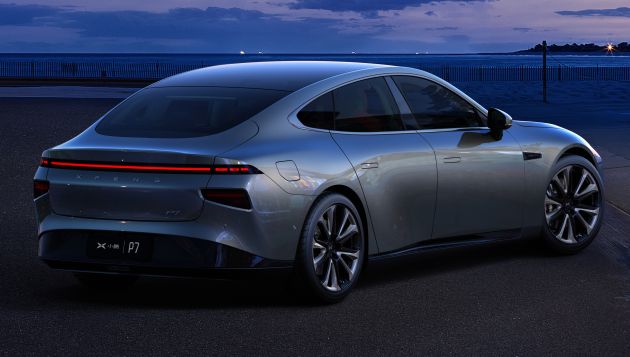
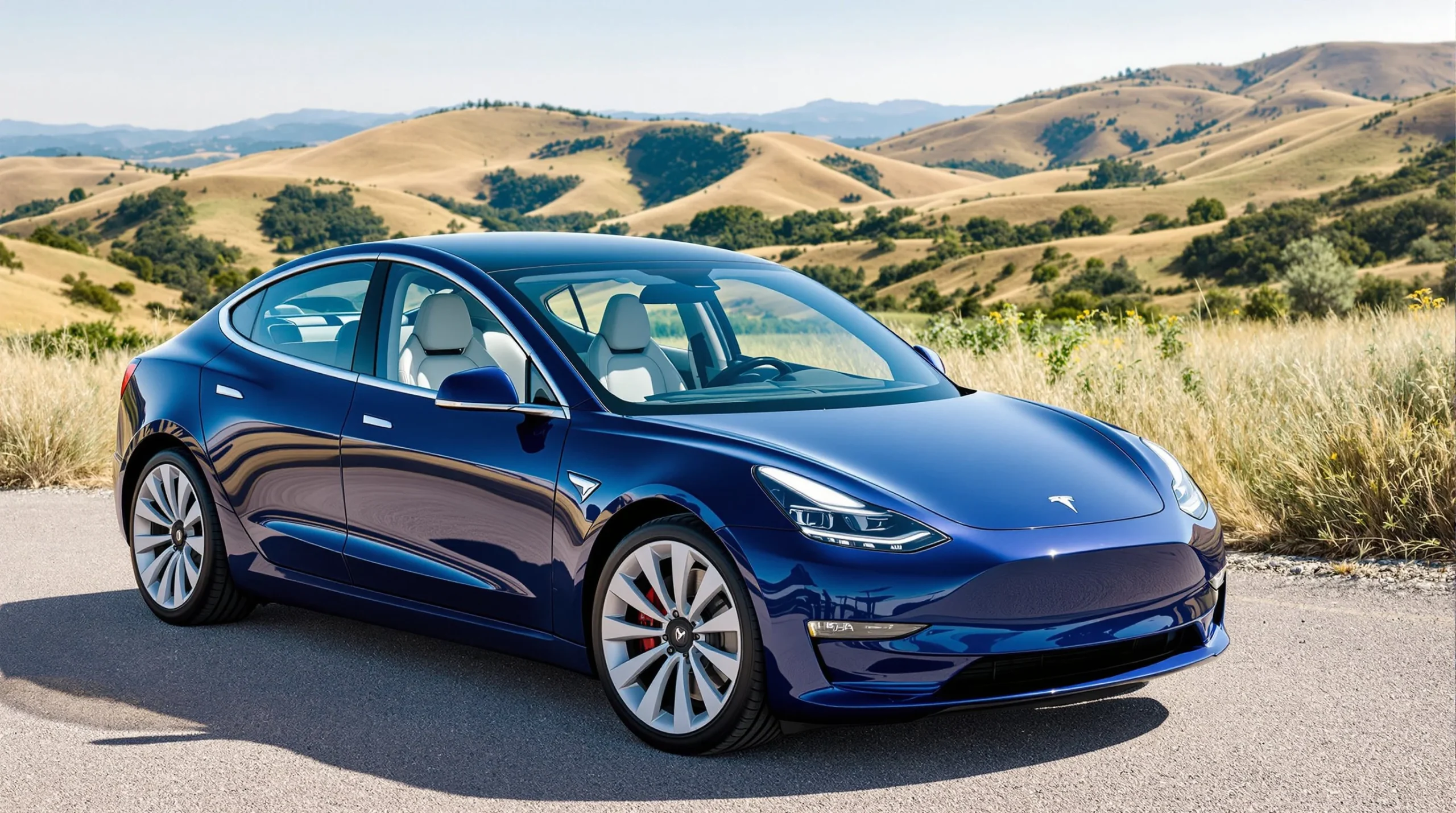
The XPeng P7+ and Tesla Model 3are electric sedans of a similar format, but with very different philosophies. Tesla has long been synonymous with the electric car in the public mind. It builds its ecosystem around simplicity, speed, and minimalism. XPeng, on the other hand, offers a more “classic” automotive approach with a greater focus on comfort, a richer set of features, and a state-of-the-art SEPA 2.0 platform with 800-volt architecture.
This is not a comparison of new and old – it is a clash of two strategies. One brand focuses on proven solutions, while the other relies on flexibility and technology.
Battery and range
The mileage without recharging is the first thing that interests the future owner of an electric car. In this regard, XPeng P7+ and Tesla Model 3(SR+ version) play on the same field, but with different tactics. One relies on a larger battery and modern chemistry, while the other relies on efficiency and optimisation of energy consumption.
XPeng P7+: a little more, a little more stable
The XPeng P7+ is equipped with a battery with LFP (lithium iron phosphate) chemistry, which:
- Withstands more full charging cycles.
- Safely charges up to 100% daily.
- It has a slightly lower energy density but a higher durability.
Main parameters:
- Useful capacity: 60.0 kWh
- Real range: about 375 km (in ideal conditions – up to 435 km)
- Urban maximum: up to 535 km
- The track in winter: approximately 270 km
This battery behaves well in everyday city rhythm: stable mileage, calm reaction to temperature, predictable consumption.
Tesla Model 3: smaller but more efficient
Tesla is going the other way. It has a Panasonic 2170L battery with NCA (nickel-cobalt-aluminium) chemistry, which:
- Lighter with the same power.
- Charges faster when combined with its platform.
- A little more sensitive to cold weather.
Key data:
- Useful capacity: 51.0 kWh
- Real power reserve: approximately 350 km
- Urban maximum: up to 515 km
- The track in winter: about 250 km
In dry numbers, Tesla looks more modest, but due to its efficiency, it can easily keep up with XPeng.
Charging architecture and speed
Charging time is not just about convenience. It’s about freedom of movement. XPeng and Tesla have different approaches to this issue. One plays by the new rules, the other adheres to the classics but does not lag behind.
XPeng P7+: 800 volts and serious charging acceleration
The XPeng P7+ uses a modern 800-volt electrical architecture. It’s the same as you’d find in a top-of-the-line model from Hyundai or Porsche. And it’s not just a brochure figure – it’s tangible in real use.
What it gives:
- Ultra-fast charging: from 10 to 80% in 12 minutes
- Medium power: 220 kW
- Maximum: up to 350 kW (with a compatible station)
- Support for Autocharge via CCS: just connect the cable and the process starts
This is the perfect solution for those who don’t want to stand on the track for an extra 10-15 minutes or are used to charging on the go with a coffee.
Tesla Model 3: a classic platform, but stable
The Tesla Model 3uses a 400-volt system, which is no longer impressive on paper but works in practice. Its capabilities are sufficient for comfortable everyday use, especially when paired with the Tesla Supercharger.
Main parameters:
- Charging time 10-80%: about 21 minutes
- Medium power: 105 kW
- Maximum: 170 kW
- Preconditioning: is, through navigation
- Autocharge: supported on compatible CCS stations, including Supercharger
- Plug & Charge: not supported
Tesla compensates for the lag behind XPeng with good charging stability, especially at branded stations.
Both cars charge quickly, but XPeng P7+ does it more aggressively. If you often drive on the highway and value every minute, the difference will be noticeable. If you charge most of the time at night or at home, both options will cope without any issues.
Charging infrastructure: how we help electric car owners
Regardless of whether you choose the XPeng P7+ or the Tesla Model 3, both cars only reach their potential when there is a stable charging infrastructure. And that’s exactly what we at ECOFACTOR are working on every day.
We have created the largest network of charging stations in Ukraine and cover the implementation of both
But the charging station is only part of the ecosystem. We have developed
To make charging convenient and on the go, we have created
We also have a full-fledged platform for operators charging stations, which enables network management, load monitoring, optimisation and analytics. Business users can connect stations to our system without having to spend resources on development from scratch.
At ECOFACTOR, we don’t just install chargers – we build an ecosystem that allows electric vehicles to be as convenient as traditional cars. If you are choosing between XPeng and Tesla, think not only about the car – think about where and how you will charge. We have taken care of this in advance.
Dynamics, power and handling
Tesla traditionally relies on dynamics. It accelerates to 100 km/h in 5.6 seconds, which is noticeably faster than the XPeng P7+, which does it in 6.9 seconds. Both models have rear-wheel drive, but the Tesla feels sharper on the pedal and more active in manoeuvres. This difference is especially noticeable when overtaking or at junctions, where every second counts.
The XPeng is equipped with a 180 kW electric motor, while the Tesla has a 208 kW motor. In city conditions, both cars have enough traction to move quickly from traffic lights or confidently manoeuvre in traffic. On the highway, the Tesla behaves more composedly: the steering wheel is tighter, the reactions are faster, but this is paired with a stiffer suspension. The XPeng’s handling is softer – less vibration, more smoothness, but also less sporty in feel.
Whatever is closer to you:
- If you want a reaction to pedal pressing, go for Tesla.
- If you’re looking for a gentle ride, XPeng is the way to go.
Size, space and comfort
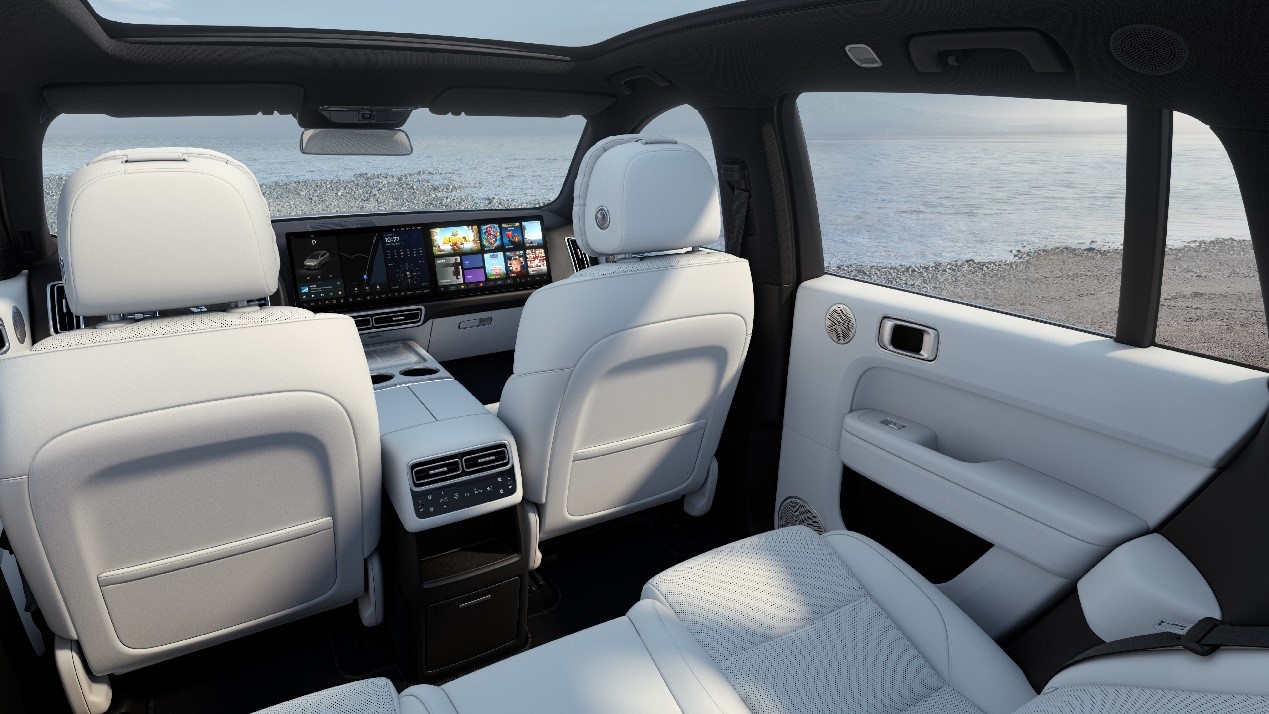
The XPeng is larger in size: the body length is 5071 mm, and the wheelbase extends to 3000 mm. Compared to it, the Tesla is more compact – 4694 mm in length and 2875 mm between the axles. In practice, this means that the XPeng has more legroom in the rear, and passengers in the second row will be more comfortable even on long journeys. In addition, the wider base has a positive effect on the smoothness of the ride.
In terms of luggage space, Tesla has a small 88-litre front boot (frunk), which is handy for a charging cable or small items, and a main rear boot with a capacity of 561 litres. The XPeng doesn’t have a front boot at all, but the rear boot is bigger at 573 litres, and with the seats folded down, it expands to 1931 litres. This is more than many crossovers.
In conclusion, the Tesla wins in terms of total boot space thanks to the frunk, but the XPeng offers significantly more space with the seats folded down – up to 1931 litres.
Equipment and features
XPeng goes a little further: it supports V2L (power to external devices) up to 3.3 kW via a Type 2 adapter. This allows you to connect a coffee maker, laptop or even a space heater in the open air.
Tesla does not offer this. The XPeng also has a higher towing capacity of 1,500 kg with brakes compared to 1,000 kg in the Model 3.
Both models have it:
- Heat pump
- Climate control
- Isofix mounts
- Driver assistants
Additional features of XPeng:
- V2L
- More space for rear passengers
- Proprietary SEPA 2.0 platform
For whom each model is suitable
The XPeng P7+ is a good choice for those who appreciate a quiet ride, soft suspension and comfort on daily trips and on the highway. This is a car for drivers who do not pursue sporty dynamics but want more space, quietness and confidence when travelling long distances. Thanks to its fast charging, the model is convenient for travelling with short stops at CCS charging points. Its smooth ride and large luggage compartment make it a practical option for family trips or regular long-distance routes.
Tesla Model 3is more suitable for those who like thrills behind the wheel, direct steering and a minimalist interior without unnecessary details. This is a well-balanced car for the city and the highway, which has already proven its reliability and gathered a large community of users in Ukraine. Tesla’s charging infrastructure covers many locations, including adapted Superchargers and independent charging hubs.
Which electric car is better for Ukraine
For large cities like Kyiv, Lviv, or Dnipro, both models will be convenient, but Tesla has an advantage in terms of prevalence, repair, and interface logic familiar to most.
The XPeng, on the other hand, is worth considering for those who frequently drive on highways, have access to fast CCS charges and put comfort first when driving.
Both cars are able to adapt to Ukrainian conditions, but they do so in different ways. Tesla is all about dynamics and ecosystem, while XPeng is all about silence and smoothness.
A brief comparison in numbers
| Characteristics | XPeng P7+ | Tesla Model 3 |
| Architecture | 800 В | 400 В |
| Charging 10-80% | 12 min (220 kW) | 21 min (105 kW) |
| Power reserve (real) | 375 km | 350 km |
| Acceleration 0-100 km/h | 6.9 с | 5.6 с |
| Trunk | 573 л | 561 litres + 88 litres (frunk) |
| V2L | Yes | No. |
Conclusions.
The XPeng P7+ is a modern, well-assembled electric sedan that wins not with bright promises but with practicality: a large interior, fast charging and a balanced ride. It does not try to impress with numbers, but gives a sense of thoughtfulness in every detail.
The Tesla Model 3, on the other hand, is dynamic, economical and has a technical base that has long proven its reliability. It is chosen by those who are accustomed to quick decisions, a laconic interface and a developed infrastructure.
If charging stations, quick pedal response and service availability are key to you, Tesla seems like the logical choice. If you value space, a quiet ride, and don’t mind a little novelty with unexpected amenities like the ability to charge your blender in the trunk, the XPeng may be a pleasant surprise.
In the end, it’s not about the logo on the steering wheel. It’s about which one of these cars adapts to your journeys, habits and daily routines. Because these are the things that make up the real driving experience – the one that isn’t measured in kilowatts or seconds.