Table of contents:
On paper, they are similar: rear-wheel drive, 60 kWh battery, close range. But as soon as you drive on our roads, the difference becomes noticeable. One of them is lower, the other sits higher. One with a liftback and minimalism, the other with a crossover seating position and a trunk that can fit a wheelchair, a dog and a little more. This article will not […]
We remind you that you can purchase home and commercial charging stations in our online storeand also use the public charging stations ECOFACTORcharging points located throughout Ukraine. For convenient access to charging infrastructure, we recommend using our mobile applicationwhich is available on iOS and Android.
XPeng P7+ vs Tesla Model Y: electric cars with different characters
Choosing an electric vehicle often comes down to the numbers. But when it comes to everyday operation in Ukraine – with tram tracks, broken slabs and 5-kilometre traffic jams at the entrance to the city – the numbers suddenly fade into the background.
The XPeng P7+ and Tesla Model Y have similar batteries and equipment, but they live completely different lives. And this is very noticeable on our roads.
Form factor: sedan with character versus practical SUV
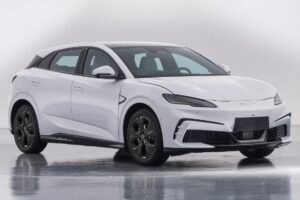
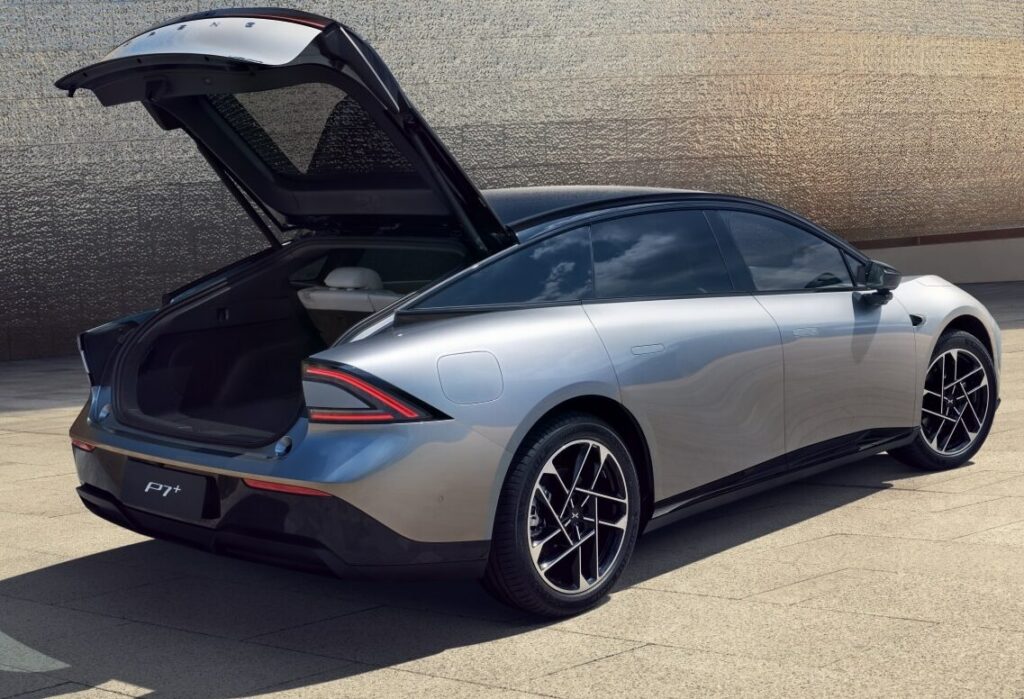
The XPeng P7+ is a liftback saloon with a length of more than 5 metres. It is a large, stretched car with smooth lines and a visually understated profile. The body height is only 1512 mm. It looks great. Not so much for driving on the curb near an old “Khrushchev”. Especially in winter, when the snow is not removed.
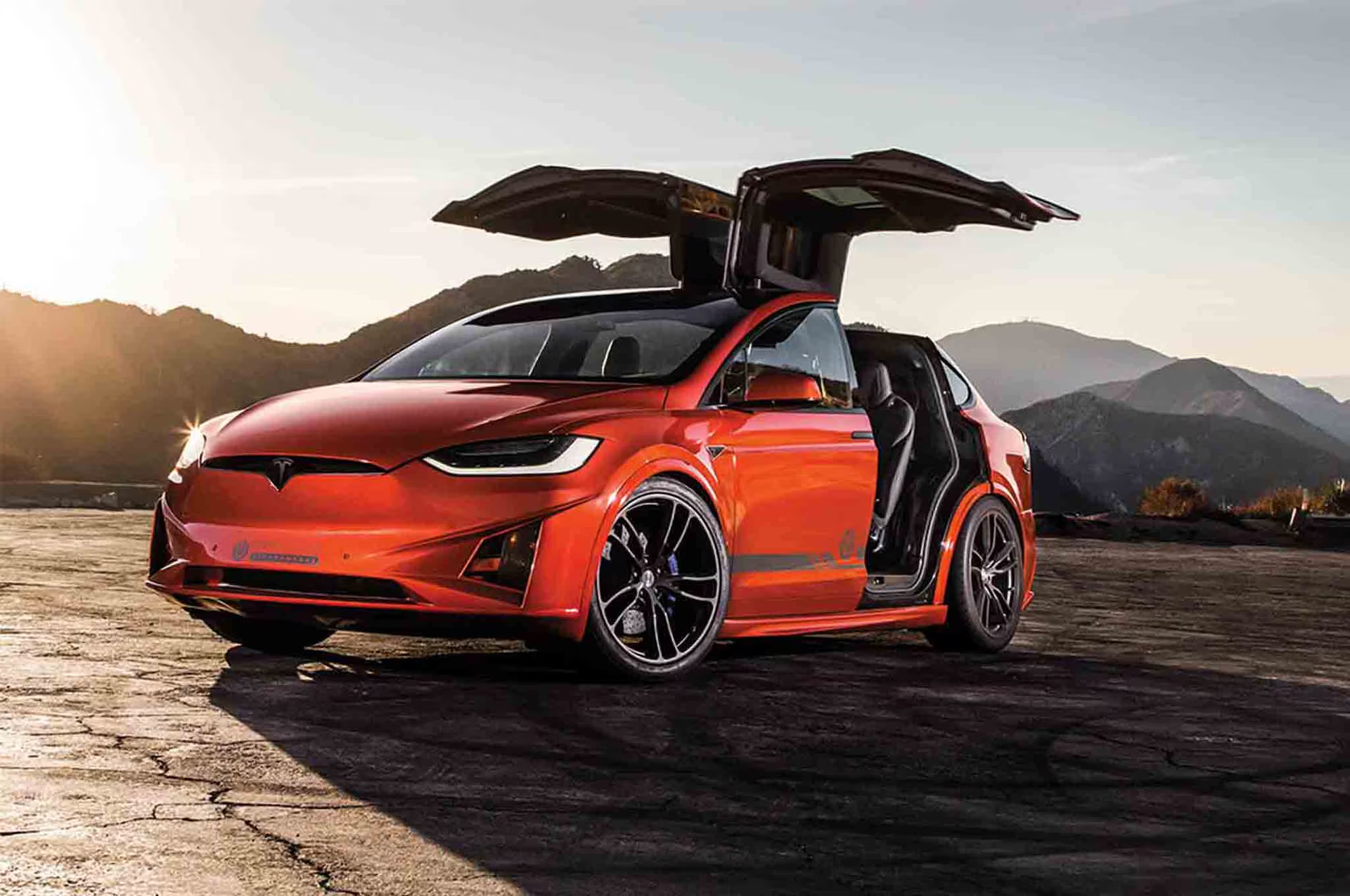
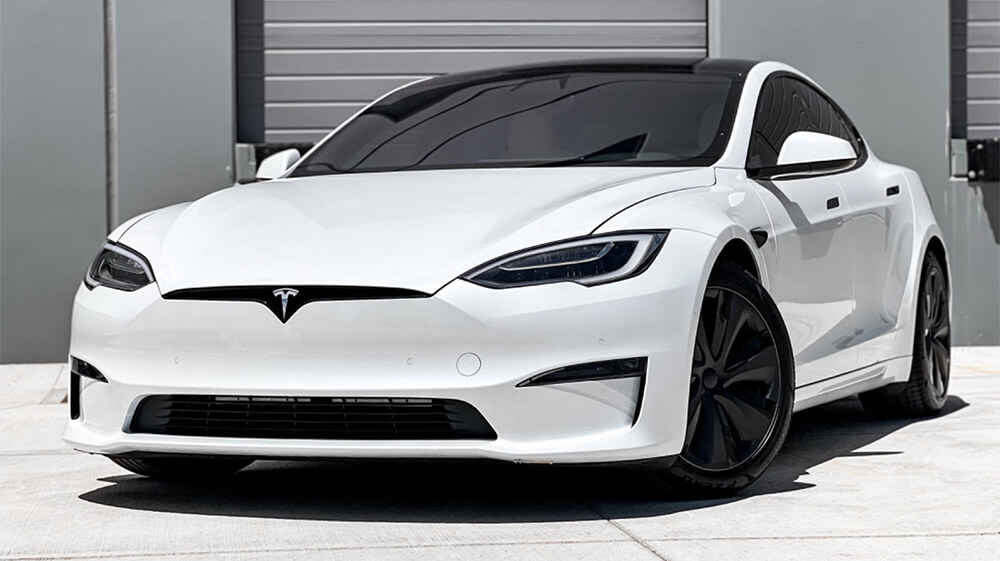
The Tesla Model Y is an SUV, but without the ostentatious massiveness. It is taller (1621 mm), shorter (4794 mm), but has a significant advantage: a crossover seating position, which greatly simplifies boarding and alighting. Especially if you often transport children, elderly parents, or are simply tired of bending over every time you get into a car.
Space and luggage: not everything is visible from the outside
Both cars look decent in the photos. Both the P7+ and Model Y give the impression of full-size cars with a normal trunk. But when it comes to actual use – packing bags, transporting boxes, or travelling with children – there are nuances. It’s not just the litre figure that matters here, but also the shape of the space, the availability of additional compartments, and how convenient it is to use it all.
Tesla Model Y
- Up to 2,118 litres of cargo space (with the rear seats folded down).
- 117 litres in the front boot, handy for a charging cable or backpack.
- The fifth door opens wide and high, without the risk of hitting your head.
- It can tow up to 1600 kg (with brakes).
The Model Y behaves like a true station wagon. Thanks to its high body, flat floor and large opening, even bulky loads are no problem. The front boot adds a +1 to the convenience score: you can always store everyday items that you don’t want to mix with the main boot contents.
XPeng P7+
- 573 litres of main boot, expanding to 1931 litres with the seats folded down.
- There is no front boot at all.
- The SEPA 2.0 platform is more about aerodynamics than cargo.
- Towing is possible, but only up to 1500 kg (with brakes).
The P7+ doesn’t lose out critically, but it doesn’t offer any additional advantages either. Its boot is quite roomy, but the shape of the loading compartment limits what you can put in it and how you can put it in. For a trip for two or on holiday, this will be more than enough, but it will be more difficult to transport an IKEA wardrobe or a stroller, a scooter and two backpacks at the same time.
What does this mean in practice?
In terms of numbers, the difference is not striking. But in reality, Tesla gives you more freedom: you just don’t think about whether it will fit or not. You can throw in tools, a gyroscope, children’s things, a box of vegetables from the village, and there will still be room. The XPeng is designed more for people than for cargo. If you don’t need to carry a lot of things, it will be enough. But if space in the car is important to you, then the Model Y is the way to go.
Battery: same size, different behaviour
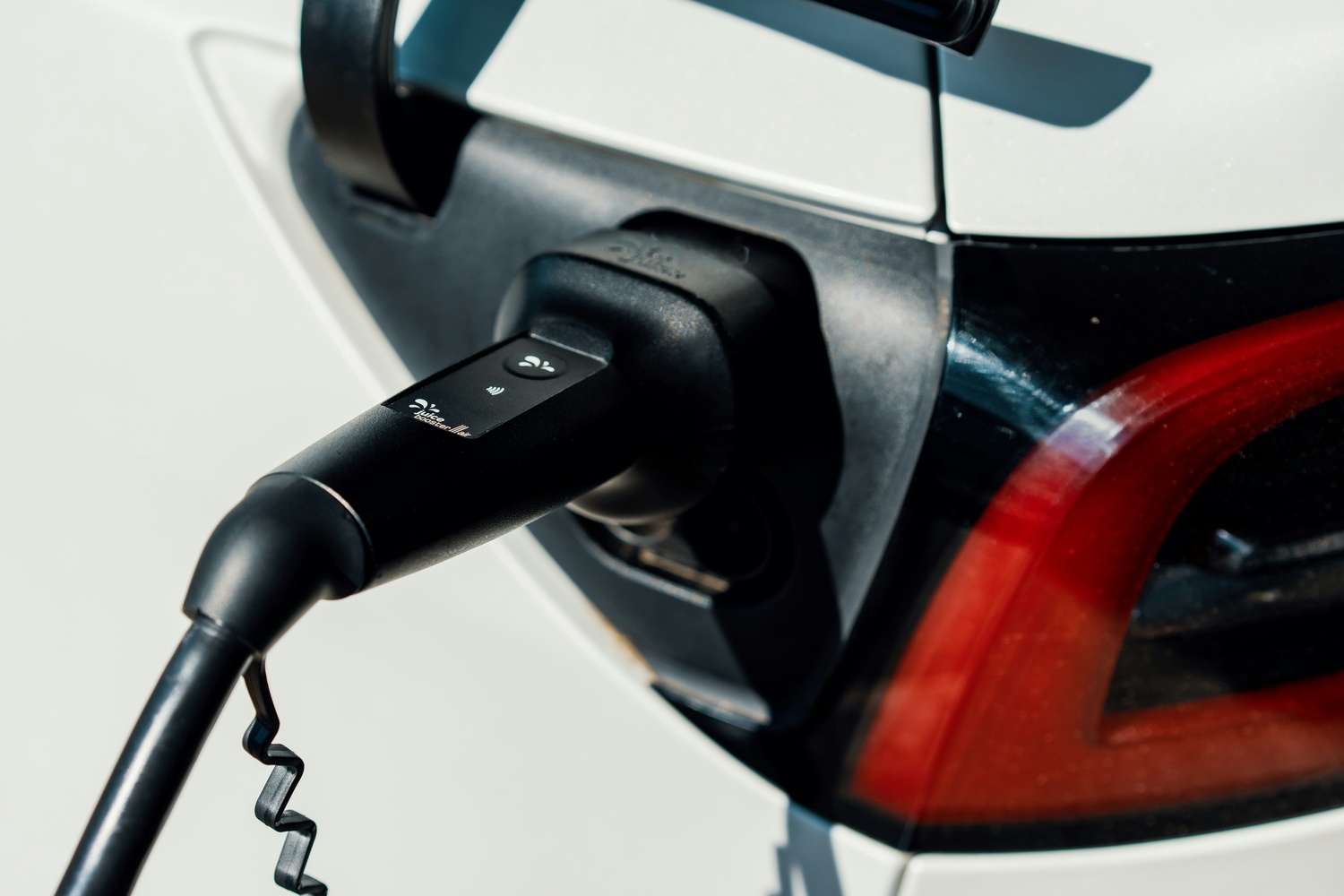
Both the XPeng P7+ and Tesla Model Y (Juniper’s Standard RWD version) have 60.0 kWh of usable capacity (LFP battery). But that’s where the similarities end. XPeng runs on an 800-volt architecture, while Tesla runs on a 400-volt architecture. This greatly affects charging and heat loss.
The XPeng P7+ supports a peak charging power of up to 220 kW, which allows you to charge from 10 to 80% in 12 minutes at a suitable fast charging station. Tesla is more relaxed: a maximum of 175 kW (actually 110 kW) and 24 minutes to the same 80%.
What does this mean in real life?
- If you often travel between cities, XPeng allows you to “top up” for coffee.
- If you charge at home or at night, this difference hardly matters.
Real power reserve: figures without embellishment
When we look at an electric car, the first thing that interests us is how many kilometres it can actually drive without recharging. Not in theory, not in the WLTP laboratory, but in everyday life: from Kyiv to Odesa, to work in the morning, in a traffic jam in the snow. And this is where it gets interesting, because XPeng P7+ and Tesla Model Y behave differently, even with the same usable battery capacity.
In warm weather
If the temperature is stable, around +23°C, and the air conditioning is switched off, both electric cars perform very similarly:
- XPeng P7+Combined range: up to 435 km in favourable weather (+23°C), up to 535 km in the city.
- Tesla Model Ycombined mode – 440 km, up to 555 km in the city at favourable temperatures and with the air conditioning switched off.
Here, Tesla is slightly ahead of XPeng, especially in the city. And this is logical due to the lower aerodynamic drag at low speeds and optimised consumption in Stop&Go conditions. However, the difference is minimal, and in a real-world scenario, you can feel it only at the limit: when you want to reach the charging station without stopping.
In cold weather
But in winter, the gap begins. And it’s not about the range, but about how quickly the battery “settles”, how the car heats up and how it charges.
- XPeng P7+combined mileage – 310 km, track – 270 km.
- Tesla Model YThe combined mileage was 315 km, the route was 270 km.
The numbers are almost identical. But there is an important nuance: The XPeng has an 800-volt architecture, which gives it an advantage in battery operation at low temperatures. The car warms up faster, loses less energy during the charging process, and generally behaves more stably. In Tesla, everything is a little simpler, and the range in cold weather “melts” more actively – especially if you stand for a long time with the heating on.
The bottom line is simple
In summer, you’ll hardly notice the difference – both cars are capable of covering long distances without strain. In winter, the XPeng looks a little more confident. Not drastically, but enough to be felt during daily use, especially if you live in a region where -10°C in winter is not unusual.
Ride comfort: smoothness versus direct stiffness
The XPeng drives like a saloon, and you can feel it right away. The steering wheel is softer, the reactions are calm, and the noise insulation is above average. At speed, the cabin remains quiet, especially on new asphalt. The suspension dampens waves well on the highway, but suffers on short joints or pits – let’s not forget about the low ground clearance.
Tesla is another matter. Everything is stiffer here. Even at ordinary city junctions, you can feel a slight impact on the steering wheel or seat. But this creates a sense of control, especially if you’re used to lively steering reactions. In the city, the Model Y feels shorter, although it is actually wider. The higher ride height and better visibility make it more comfortable for everyday routines.
Interface, management, localisation
Tesla has its own system with regular updates. It’s fast, has nice graphics and easy-to-use controls. However, sometimes the navigation does not build a route that is entirely logical, especially in lesser-known cities.
XPeng has a simpler but intuitive interface. The menu is clear, the maps work steadily, and the controls do not require getting used to. If you want to quickly find the desired function without unnecessary transitions, it is easier to do so here.
V2L: charging not only yourself
XPeng has Vehicle-to-Load (V2L) support, which means it can deliver current to the outside via a Type 2 adapter up to 3.3 kW. You can connect a coffee maker, laptop or charge another gadget directly from the car.
Tesla Model Y does not do this. Not a single socket. Neither external nor internal. If you need to charge something while camping or on a construction site, this is a clear argument in favour of XPeng.
Charging infrastructure in Ukraine: who will benefit?
Even the fastest electric car becomes a burden if there is nowhere to charge it. And although XPeng P7+ and Tesla Model Y support the same physical connectors (Type 2 and CCS Combo 2), the actual charging experience in Ukraine may differ, and not always in favour of the numbers in the technical specifications.
What can XPeng do?
- Supports Autocharge – that is, you can start a session simply by plugging in the cable, without any additional actions.
- It does not support Plug & Charge, but this is not critical at the moment – this technology is hardly used in Ukraine.
- Thanks to the 800-volt system, it can be fully utilised for high-speed charging of 150 kW and above.
XPeng is designed for modern infrastructure. If you charge at fast charging stations with powerful new speakers, you’ll get the most out of your charge – and save time.
What does Tesla offer?
- It also supports Autocharge, so connecting is quick and easy.
- There is no Plug & Charge according to ISO 15118, but the proprietary charging system works in much the same way – the connection is automatic on the Supercharger.
- It has access to the Supercharger network, but it is still limited in Ukraine.
- But the navigation to the charging stations is integrated into the proprietary system – it shows the station, power and even the queue.
Tesla wins with an ecosystem. Its route planning system, which takes into account charging, works directly from the home screen. You don’t need to search for anything in third-party apps. Everything is automatic, including preheating the battery before charging.
Who is in the best position?
- When it comes to charging speed, especially on the highway, XPeng has the advantage.
- If we talk about intuitiveness and automation, Tesla is still more comfortable.
Let’s put it this way: XPeng charges faster, but you need to know where to charge. Tesla charges more slowly, but it will tell you when and where to go. And here, it’s up to you to choose whether you want to control the process or delegate it to the system.
ECOFACTOR: when charging is not a problem, but a service
We do not just produce charging stations. We are creating an ecosystem that allows the owner of an XPeng, Tesla or any other electric car to not think about charging at all. At ECOFACTOR, we cover all areas: from the physical station to the digital platform, from the socket to the map.
Our charging stations are fully developed and manufactured in Ukraine, meeting international quality standards. We have a variety of models: from mobile stations to powerful DC charging stations capable of providing fast charging even for large electric vehicles. In addition, we offer
But it doesn’t stop with charging. For owners, we offer
- find the nearest charging point on an interactive map,
- check the port availability in real time,
- start the session remotely,
- view the charging history,
- receive discounts and promotions.
Our map of charging stations covers thousands of points that are managed through our own a platform for the operator. This means that both the operator and the end user can see the data transparently and without delays.
A separate part of our work is online shopwhere you can buy certified charging accessories. This is convenient, especially when you need to order a set for a second car or replace something without running around offline locations.
We work not for the sake of tick marks, but for people who drive, charge, and plan trips every day. Our goal is to make XPeng, Tesla, and any other electric car feel at home in Ukraine. If you are planning to switch to an electric car or already have one, come to us, we will definitely be helpful.
What is suitable for whom?
In this article, we have already gone through all the key differences between the XPeng P7+ and Tesla Model Y. But if you want to briefly understand which car is right for you, here are some specific situations. Everything here is honest: without fanaticism, just to the point. And without trying to convince you of the “right” choice.
XPeng P7+ is for those who:
- Looking for a quiet and smooth ride, without excessive noise in the cabin.
- He wants to charge as quickly as possible, especially when travelling.
- He has access to powerful charging stations and often drives on highways.
- He wants to charge external devices directly from the car – via V2L.
This is an option for those who prefer logic, silence and technology without noise around them. Especially if you don’t plan to drive graders all the time and it’s not critical that the machine “carry everything”.
Tesla Model Y is for those who:
- He lives in a city or suburb, often parks, transports his family and purchases.
- He wants a higher seat, better visibility and more space in the cabin.
- I’m willing to put up with suspension stiffness for stable handling.
- Appreciates the Tesla ecosystem: navigation, app, integration with charging stations.
- He wants the machine to just work without any extra settings.
This is a practical, durable electric car for every day. It is chosen not because it is “fashionable”, but because it solves many problems at once – from daily transportation of children to a holiday trip with half the trunk.
Bottom line.
These two models should not be seen as direct competitors. They simply respond to different requests. XPeng P7+ feels like a quiet engineer who does not attract attention, but does everything correctly: it charges quickly, does not make noise in the cabin and does not impose unnecessary things. It has a convenient logic and does not require explanations.
Tesla Model Y is another story. It’s a city wagon that you can throw into any scenario: city, highway, country house, transporting a baby carriage or bicycles, and it copes without any questions asked. There is more space, the seating position is higher, and the trunk can handle anything.
The choice becomes simple if you answer yourself honestly: is ground clearance important to you? Where do you usually charge – at home or on the road? And are you willing to sacrifice a little softness for versatility?
XPeng and Tesla are absolutely viable in Ukraine. It’s just that each has its own logic of movement. And its place on the road.
Frequently asked questions
u003cstrongu003eWhich electric car holds a charge better in cold weather?u003c/strongu003e
Both are good because they have a heat pump in the base. But the XPeng charges faster even in cold weather, and its mileage loss is slightly lower. Tesla eats more in the cold, especially if you often stand still.
u003cstrongu003eDoes it make sense to buy XPeng in Ukraine if all the chargers are for Tesla?u003c/strongu003e
It makes sense. XPeng uses standard Type 2 + CCS connectors, just like Tesla. It charges even faster. Plus, with ECOFACTOR, TOKA and other networks, there are more and more such stations. It’s just that Tesla’s navigation to them is better, and this should be taken into account.
u003cstrongu003eHow realistic is it to use V2L in XPeng?u003c/strongu003e
Realistic and convenient. Connecting a tool, coffee maker or even another car for charging is a breeze. Power up to 3.3 kW. It’s a small thing that comes in handy when other cars lack it.
u003cstrongu003eIs there a difference in the fit between these cars?u003c/strongu003e
Very much so. In the Model Y, you get in like a crossover – it’s comfortable, especially in winter or when your hands are full. In the XPeng, the seat is like in a sedan: low, but beautiful. It’s a matter of habit, but for families with children, Tesla will be more comfortable.
u003cstrongu003eWhy does XPeng charge faster if the batteries are the same?u003c/strongu003e
It’s all about architecture. XPeng has 800 V, Tesla has 400 V. It’s like comparing two hoses: both can fill a bucket of water, but one will do it twice as fast. This is how fast charging works in reality.
u003cstrongu003eCan both XPeng and Tesla be charged via ECOFACTOR?u003c/strongu003e
Yes. All modern ECOFACTOR stations support both vehicles. Plus, there is a mobile app with a map, an online accessories store and full support for drivers. We don’t care what brand of car you have – the main thing is that charging is convenient.