


Table of contents:
Comparing the Maxus T90 EV and the Tesla Model 3seems strange at first glance. One is a large electric pickup truck designed for work and commercial tasks. The other is a lightweight and efficient electric sedan designed for daily driving and long-distance trips. But in practice, it is often between these models that you have to choose. Businesses are looking for economy and versatility. A private driver is looking for convenience, […]
In practice, however, it is often between these models that we have to choose. Businesses are looking for savings and versatility. A private driver is looking for convenience, charging without unnecessary pauses, and predictable costs. This article will not be a competition of features for the sake of numbers. We will look at what each of these electric vehicles is suitable for in real life, where they are strong and where compromises are inevitable.
This is not a story about who is better. It’s a conversation about different use cases and different expectations of an electric vehicle.
We remind you that you can purchase home and commercial
Who are these machines for?
Tesla Model 3, in particular the Standard Range Plus, is designed for those who drive around the city every day, sometimes go on the road and do not want to think about maintenance, oil or exhaust. The car is suitable both as the first electric car and as the only vehicle in the family. It is comfortable enough, charges quickly, and has enough range even for short trips.
The Maxus T90 EV speaks to a different user: a small business owner, municipality or entrepreneur who needs payload, platform, space. It is a work tool that happens to be electric. It is not designed for speed or aerodynamics. Its main task is to take out the cargo, deliver something, and show that your business thinks in a modern way.
Body, platform, layout
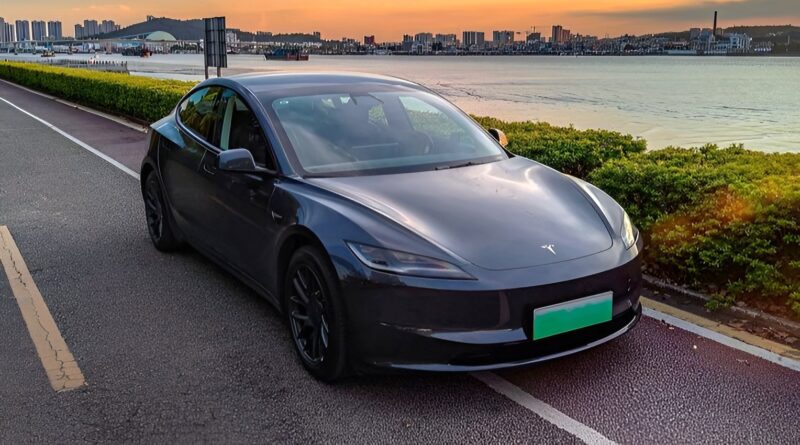
Tesla Model 3is a typical low-slung sedan. It is built on a platform designed from the ground up for electric traction. The weight is distributed almost evenly, the centre of mass is low, and the battery is integrated into the floor. This creates stability on the road, minimal roll, and easy handling.
Maxus T90 EV is a double-cab pickup truck. It is built on the T90 pickup platform adapted for an electric powertrain. And this was the source of the main compromises: we had to sacrifice all-wheel drive, ground clearance and suspension ergonomics.
Drivetrain, cross-country ability and ground clearance
The Tesla Model 3has a classic configuration for this segment: rear-wheel drive and ground clearance of about 140 mm. On smooth asphalt or even a bad city road, there are no problems. But as soon as you drive onto a broken dirt road or wet grass, you need to be careful. This is not a machine for experimenting with the surface.
The Maxus EV80 looks more solid and visually inspires confidence, as if it can go anywhere. But in practice, things are a little different. Yes, the ground clearance here is higher – 187 mm – and it seems that this should give an advantage. But for a pickup truck, it’s quite modest. In addition, the drive is also rear-wheel drive, and there is no all-wheel drive. Another nuance: the electric motor is located low, right on the rear axle, which increases the risk of hitting it on bumps or in a rut.
Although logic would suggest that the pickup should be more off-road, it’s all about the details. The Tesla is lighter, better distributed and has better traction control electronics. It is quiet and stable on wet gravel or snow. The Maxus, on the other hand, can get stuck even where you don’t expect it to. And if it gets stuck, it’s not easy to get it out.
Power reserve: where is the reality and where are the figures
The battery does not always determine how far an electric vehicle will go. It all depends on efficiency, aerodynamics, weight, and climate. Tesla and Maxus are an example of how two cars with very different batteries can achieve similar mileage.
Tesla Model 3:
- Battery: 51 kWh (useful)
- City run: up to 500 km in favourable conditions
- Track: about 300-330 km
- In winter: 250-290 km
- Average consumption: ~146 Wh/km
Maxus T90 EV:
- Battery: 88.5 kWh
- Declared mileage: 330 km WLTP (commercial class N1)
- Real mileage: 250-280 km in summer, 220-250 km in winter
- Average consumption: ~186 W-min/km and higher under load or in cold weather
Conclusion.
Tesla performs better even with a smaller battery. This is thanks to its lighter design and higher energy efficiency. The Maxus takes more volume, but consumes more, especially in cold weather or with a load.
Charging: where is the time and where is the patience
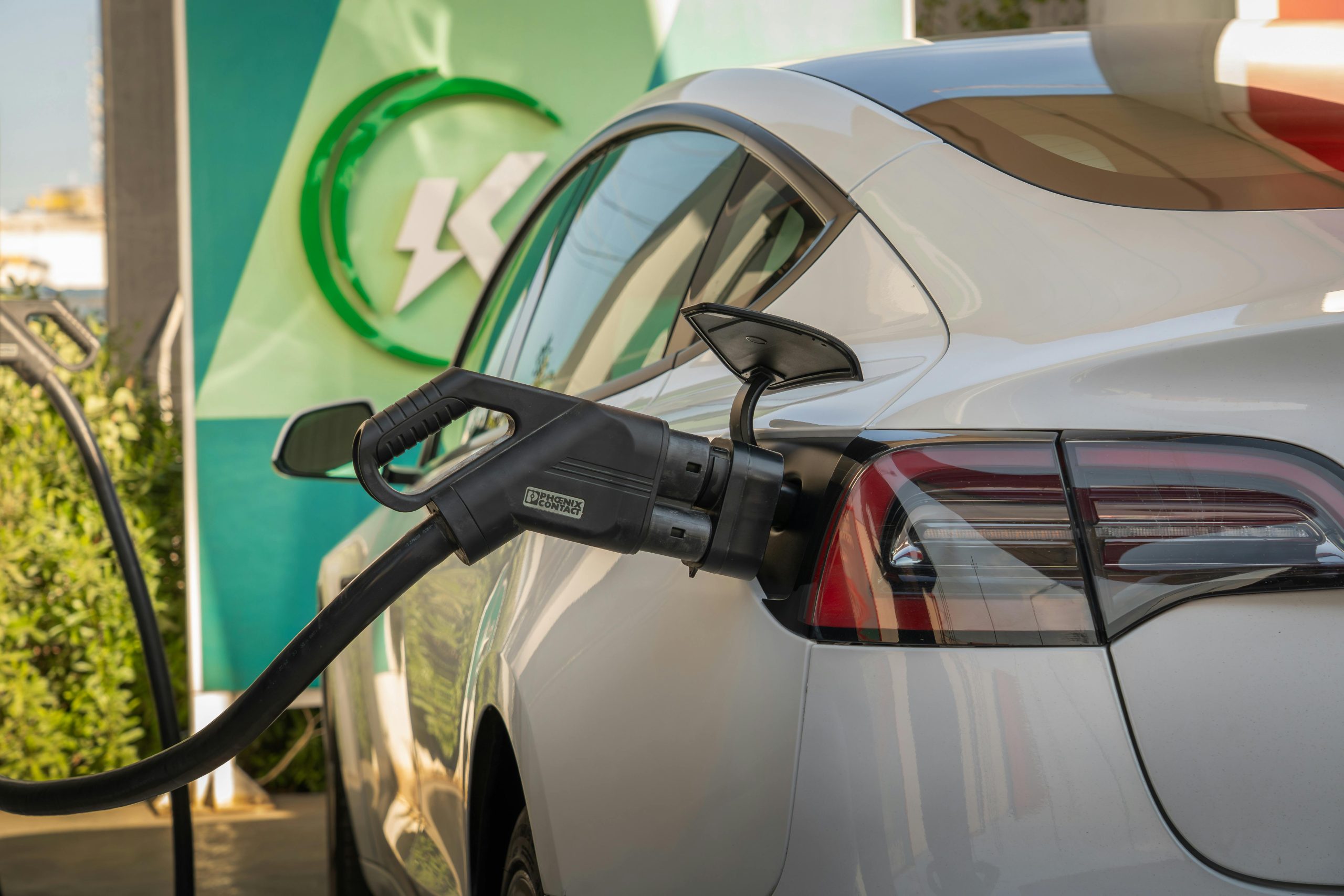
The charging speed depends not only on the battery but also on the car’s architecture. Tesla has a well-thought-out thermal management system and maintains high power even at an average charge level. Maxus charges more slowly both from fast stations and at home. This may not be critical in the city, but on the highway it requires planning.
Tesla Model 3:
- Supports up to 170 kW on the Supercharger.
- Charging from 10% to 80% in 21 minutes.
- Average power: ~105 kW.
Maxus T90 EV:
- Maximum 80 kW on DC.
- Charging from 20% to 80% in ~45 minutes.
- From an 11 kW AC charge: about 9 hours to a full charge.
Comparative table
| Parameters. | Tesla Model 3 | Maxus T90 EV |
| Battery (useful) | 51 kWh | 88.5 kWh |
| Power reserve (real, combined) | ~350-400 km | ~250-300 km |
| Fast charging (DC) | 170 kW | 80 kW |
| Charging 10-80% | ~21 min | ~45 min |
| Reason. | Rear | Rear |
| Ground clearance | ~140 mm | 187 mm |
Charging infrastructure: where to charge without hassle
Everyday use of an electric vehicle depends not only on the model, but also on where and how you can charge. This is where ECOFACTOR comes into play. We don’t just produce
Ours AC stations and DC stations are fully designed and manufactured in Ukraine. They work in both public spaces and private business locations. Do you need a mobile charging station or a 420 kW solution for a large hub? We have it all in our catalogue.
For drivers, we have created a convenient mobile application ECOFACTOR for iOS and Androidwhich allows you to find the nearest charging point, check availability, start a session and pay for it. On the interactive charging map ECOFACTOR already has more than a thousand active ports, and the network is constantly growing.
If you own an electric car, our online store ECOFACTOR you will find all the necessary accessories, inverters and mobile chargers.
For businesses, we offer operator platform – a comprehensive solution for managing the charging network: with analytics, load balancing and technical support. This is especially relevant for companies that are considering electric vehicles such as the Maxus T90 EV as part of their corporate fleet.
In short, ECOFACTOR is about convenience, control and scalability. And most importantly, everything works not on paper, but in the real world – here in Ukraine. So whether you’re driving a Tesla Model 3or working with a Maxus T90 EV, our infrastructure is ready to support your pace.
Interior, comfort, materials
These two cars have completely different approaches to how the interior should look. One is more about style and silence, the other about utilitarianism and simplicity. And this is noticeable from the first glance inside.
Tesla Model 3:
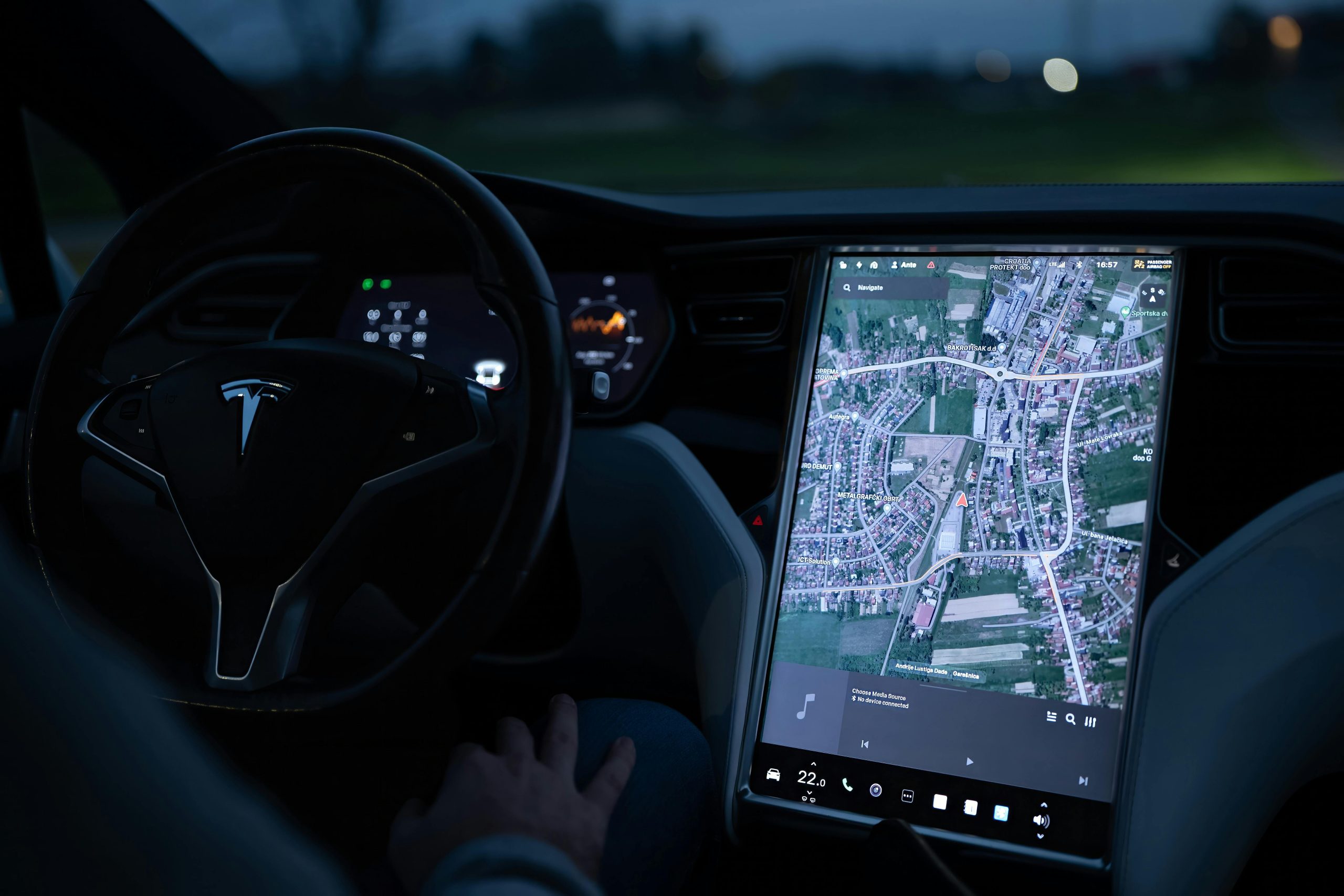
- Minimalist interior without a classic dashboard.
- The central 15-inch display, through which almost everything is controlled.
- High-quality finishing materials without being too “premium”.
- Heated seats in the base, heat pump.
- High level of noise insulation, although there may be noise from the front struts on the road.
Maxus T90 EV:
- The interior is of a utilitarian type with hard, simple plastic.
- Spacious, especially for second-row passengers.
- There is a large multimedia display with Apple CarPlay support (via cable).
- USB ports, 220V socket with power limitation.
- Heated seats are available, but only as an option.
- Rigid suspension via leaf springs, noticeably shaking on pits.
Both interiors are comfortable in their own way, but Tesla focuses on visual purity and silence, while Maxus focuses on simplicity and functionality, not bothering with soft materials or smoothness.
Dynamics and driving
The Tesla hits 100 km/h in 5.6 seconds. The top speed is 225 km/h. The car is lightweight, obedient, and easy to drive even in the city.
Maxus is not about that. Its acceleration to 100 km/h takes about 10 seconds, and the top speed is limited to 120 km/h. You can feel the weight behind the wheel. The steering wheel is soft, but too “empty”. Driving at high speed is not very comfortable, especially with a load.
Security: when technology matters
In the electric vehicle segment, safety has long been a standard rather than a luxury. But the level of this standard still varies greatly between different classes of cars. Tesla follows the principle of “more is better than less”, but Maxus takes a different approach to the issue – more basic.
Tesla Model 3:
- It has 5 stars in Euro NCAP crash tests.
- The result is the 96% adult occupant protection.
- Adaptive cruise control and automatic emergency braking are integrated.
- There is a lane keeping system, blind spot monitoring and other driver assistants.
- Well-configured software with frequent updates wirelessly.
Maxus T90 EV:
- There are no official crash tests in Europe – the car has not been certified by Euro NCAP.
- It is equipped with 6 airbags, stability control (ESC) and AEB (automatic braking).
- There is no basic cruise control, let alone adaptive cruise control.
- There’s a rear view camera and parking sensors, but no lane keeping assist.
In summary: Tesla has long operated as a ‘computer on wheels’ with a focus on active safety, whereas Maxus provides only a basic set of features, which is sufficient for urban and rural roads, but not for high-speed motorways or challenging road conditions.
Practicality: luggage rack, platform, towing
The practicality of these two electric vehicles is manifested in completely different ways. The Tesla Model 3is a sedan designed for everyday driving, with a good balance between comfort and useful space. It has a fairly large 561-litre boot in the rear, and there is also a “front” in the front – an additional 88-litre space for charging cables, a first aid kit or other small items. If you fold down the rear seats, the volume increases, and it is quite possible to fit a bicycle or a couple of large suitcases. In addition, Tesla can pull a trailer up to 1000 kg with brakes (with a certified towbar).
The Maxus T90 EV is a different story. This is a pickup truck, so the main useful space here is not in the cabin, but on the open cargo platform measuring 1485 by 1510 mm. This allows you to transport building materials, generators, furniture or other bulky equipment. The payload is up to 1000 kg, which means that Maxus is superior to Tesla in this regard. A trailer is also allowed up to 1000 kg, so from a utilitarian point of view, the pickup’s potential is higher. At the same time, due to the body design, there is no front end, and the cabin is already occupied by two rows of seats. If you need a closed luggage space, you will either have to install a kong or pack everything in the cabin.
Pros and cons: short and sweet
This section is not about fanaticism. It’s just a cold assessment of what works best in real life and what raises questions. One machine has an electric platform and well-coordinated efficiency. The other has a loading platform, a 220-volt socket and the ability to take half a tonne of crushed stone or equipment. And all this without noise and exhaust. However, both have their weaknesses.
Tesla Model 3
Pros:
- Efficiency even on the road and in winter
- Very fast charging at DC stations
- Comfortable in the city, stable at speed
- Proven security, including active systems
- Good noise insulation and soft suspension
Cons:
- Low ground clearance, not suitable for primers
- Limited cabin space for rear passengers
- Low load capacity
- Not suitable for commercial use
Maxus T90 EV
Pros:
- Actual load capacity up to 1000 kg
- A complete platform for business tasks
- 220V outlet in the cabin – convenient for tools
- Can pull a trailer just like a Tesla
- Higher ground clearance and stance – convenient for rural routes
Cons:
- No all-wheel drive – a disadvantage for a pick-up truck
- Long charging times even at high-speed stations
- Rigid suspension, especially when unloaded
- The interior is simple, sometimes outdated in terms of ergonomics
- Architecture not adapted to EVs from the ground up
Conclusions.
Tesla Model 3is for those who are looking for the best electric car for every day. It is a good solution for private use, highways, cities, and even travel.
The Maxus T90 EV is designed for companies operating within the city or suburbs, where payload is more important than speed or comfort. This is not a “dream car”, but a tool. And that’s what it’s designed for.
Frequently asked questions
Is it possible to compare a pickup truck and a sedan? They are completely different cars.
You can, and often do. Not everyone chooses a car by body type. Some people are looking for an electric car with a luggage platform for business, while others want an efficient daily car that can be recharged at home. Both Maxus and Tesla can be options – it’s just a matter of the usage scenario.
Which model is better suited for city driving and traffic?
The Tesla Model 3is clearly in its element here. It’s smaller, lower, easier to drive, and has a more predictable energy consumption over short distances. The Maxus can do the job, but its dimensions and stiff suspension are not too friendly for daily city driving without cargo.
How far can each model really go on a single charge?
The Tesla Model 3SR+ averages 350-400 km in a mixed cycle. Maxus T90 EV – about 250-280 km in optimal conditions. In winter, these figures sink, but the Tesla still looks more efficient despite the smaller battery.
Can I charge both cars at home?
Yes. Both Maxus and Tesla support home charging via a regular outlet or a charging station. But Tesla charges faster, especially on powerful networks. Maxus takes longer, especially if the battery is almost empty.
Which car is best for business?
This is where the Maxus T90 EV comes in. It has a payload of 1000 kg, an open platform, a 220V socket in the cabin and a favourable tax model for legal entities. Tesla is more about a comfortable ride than transportation.
What about the charging infrastructure? Is there enough of it in Ukraine?
Yes, and it is actively developing. ECOFACTOR, for example, offers a full range of solutions – from charging stations and an app for drivers to an online store with accessories. They have an interactive map, AC/DC chargers of their own production, and a stable platform. This makes life much easier for both Tesla owners and those who drive Maxus.
In short, which is better to buy?
It depends not on “better” but on “why”. If you’re looking for an electric car for daily commuting, comfortable driving, normal fast charging, and a proven ecosystem, then Tesla is the way to go. If you need an electric pickup truck that will carry cargo, work on sites, and at the same time be cheaper to use than a diesel, Maxus is the way to go.