


Table of contents:
Quick Summary: Fleet management is the strategic oversight of a company’s vehicle operations, encompassing acquisition, maintenance, tracking, and optimization. It matters because it directly impacts operational costs, driver safety, regulatory compliance, and overall business efficiency. Organizations with effective fleet management systems report significant cost reductions, improved asset utilization, and enhanced customer service. Without proper fleet management, businesses face escalating expenses, safety risks, and missed opportunities for operational improvement.
Organizations that depend on vehicle fleets face a complex challenge. Every vehicle represents a substantial investment, ongoing costs, and potential risks. Yet many businesses still manage their fleets using outdated methods—spreadsheets, manual logs, and reactive maintenance schedules.
The difference between struggling with fleet operations and running a lean, efficient system comes down to management. Proper fleet management isn’t just about knowing where vehicles are. It’s about understanding performance patterns, predicting issues before they become expensive problems, and making data-driven decisions that impact the bottom line.
According to the American Research Institute (ATRI), the average cost per mile for transport trucks reached $2.26 in 2024, with an hourly cost of $113. That represents an increase of $0.62 per mile compared with 2020. These rising costs make effective fleet management more critical than ever.
We remind you that you can purchase home and commercial charging stations in our online store, as well as use public charging stations ECOFACTOR located throughout Ukraine. For convenient access to charging infrastructure, we recommend using our mobile app, available on iOS and Android.
What Fleet Management Actually Means
Fleet management encompasses the systems, processes, and tools needed to oversee a company’s business vehicles throughout their entire lifecycle. This includes acquisition, financing, maintenance, tracking, compliance, and eventual disposal or replacement.
But it goes deeper than that. Fleet management also involves driver supervision, route optimization, fuel consumption monitoring, and safety program implementation. The goal is ensuring vehicles are driven efficiently, maintained appropriately, and operated under correct policies and procedures.
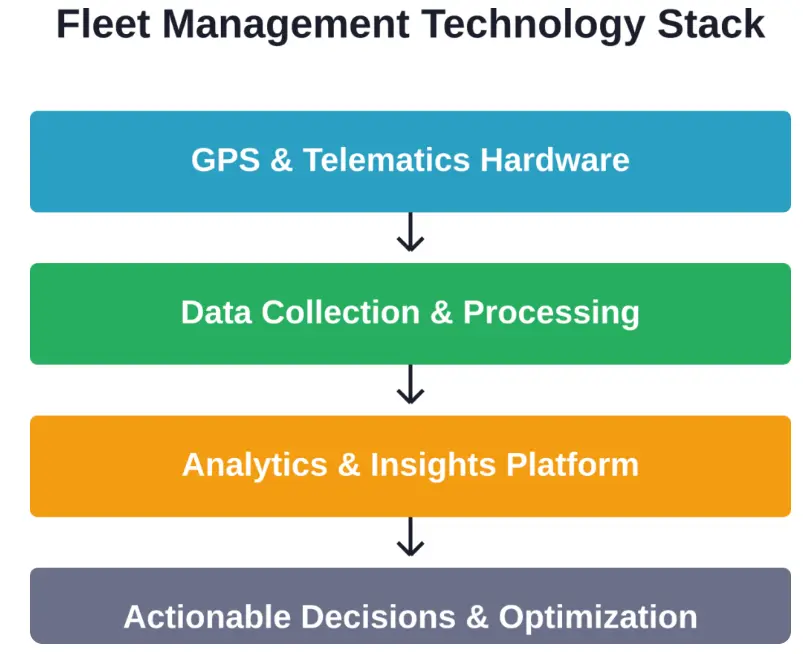
Modern fleet management relies heavily on telematics—the integration of telecommunications and vehicle monitoring systems. These systems collect real-time data about vehicle location, speed, idling time, harsh braking events, and dozens of other performance metrics.
The Core Reasons Fleet Management Matters
Real talk: businesses that ignore fleet management leave money on the table. Here’s why it matters.
Cost Control and Reduction
Fleet expenses add up quickly. Fuel, maintenance, insurance, registration, depreciation—each vehicle carries multiple cost categories. Without visibility into these expenses, overspending becomes inevitable.
Effective fleet management provides granular tracking of cost per mile operations and maintenance. Reports can include valuable data about each vehicle’s long-term performance and cost, highlighting opportunities for reduction.
Fuel represents a particularly significant expense area. Tracking can highlight potential fuel cost reduction opportunities, which account for around 40% of fleet expenses. According to industry sources, fleets can achieve significant fuel cost savings through improved management practices.
Effective fleet management involves tracking idling averages across drivers and jobs to identify training opportunities.
Safety and Risk Management
Driver safety directly impacts insurance costs, liability exposure, and company reputation. Fleet management systems track driver behavior—speeding, harsh acceleration, hard braking, and other risky actions.
Customizable reports and dashboards summarize safety-related data and help develop trends and benchmarks that can assist in developing a driver coaching plan. Defining a benchmark and then setting specific, reasonable, and measurable goals creates accountability.
Setting specific, measurable reduction targets for speeding incidents provides clear performance benchmarks. Consistent monitoring and coaching based on actual data dramatically improves outcomes.
Maintenance Optimization
Reactive maintenance is expensive. Waiting until something breaks means unexpected downtime, rush repair costs, and potential safety issues.
Fleet management systems enable preventive maintenance scheduling based on actual usage—mileage, engine hours, and operating conditions. This shifts maintenance from reactive to proactive.
Fleet operations benefit from scheduling preventive maintenance systematically based on manufacturer recommendations and operating conditions. This approach reduces emergency repairs, extends vehicle lifespan, and improves reliability.
Organizations should track warranty recovery opportunities to maximize cost recovery on repairs and defective parts.
Regulatory Compliance
Transportation regulations continue expanding. Hours of service rules, electronic logging device mandates, emission standards, and safety requirements create compliance challenges.
Fleet management systems automate compliance tracking. Electronic logs, driver qualification files, vehicle inspection reports, and maintenance records remain accessible and audit-ready.
Non-compliance carries steep penalties. But beyond avoiding fines, proper compliance management protects operating authority and reduces legal liability.
The Role of Technology in Modern Fleet Management
Technology transformed what’s possible in fleet operations. GPS tracking was just the beginning.
Telematics and Connected Vehicles
Telematics systems collect vehicle data continuously. Location, speed, engine diagnostics, fuel consumption, idling time—all transmitted in real-time to fleet management platforms.
This data enables unprecedented visibility. Fleet managers know not just where vehicles are, but how they’re being operated, what maintenance they need, and which routes prove most efficient.
Academic research on IoT-based predictive maintenance shows machine learning algorithms can assess vehicle health with significant accuracy. The stacked ensemble of deep learning algorithms demonstrated 80.3% decision accuracy for risk management systems according to vehicle health monitoring studies.
Data-Driven Decision Making
A fleet management platform sorts, aggregates, and analyzes data to identify meaningful trends. This allows fleet managers to use these insights to make informed decisions that impact productivity, customer service, and their bottom line.
But even with valuable data at hand, measuring success requires the right approach. Key performance indicators provide the framework for understanding fleet effectiveness.
Key Performance Indicators Fleet Managers Track
Effective fleet management requires measuring the right metrics. Here’s what matters.
| KPI Category | Key Metrics | Industry Target |
|---|---|---|
| Cost Efficiency | Cost per mile, cost per hour | $2.26/mile (2024 avg) |
| Maintenance | Scheduled vs. reactive work | 60% scheduled |
| Fuel Management | Fuel consumption, idling time | Minimize idle time |
| Safety | Incidents, violations, harsh events | Measurable reduction targets |
| Utilization | Vehicle usage rate, downtime | Maximize productive hours |
| Compliance | Violations, inspection failures | Zero violations |
Cost Per Mile Tracking
This fundamental metric combines all operating expenses divided by total miles driven. It reveals the true cost of fleet operations and enables comparison across vehicles, routes, and time periods.
Tracking cost per mile over time shows whether efficiency initiatives actually work. Rising costs per mile signal issues requiring investigation—perhaps maintenance problems, inefficient routing, or driver behavior concerns.
Vehicle Utilization Rates
Underutilized vehicles represent wasted capital. If a vehicle sits idle frequently, the business is paying financing, insurance, and depreciation costs without receiving value.
Utilization tracking shows which vehicles are truly needed and which represent excess capacity. This information drives right-sizing decisions—reducing fleet size to match actual requirements.
Maintenance Metrics
Beyond the scheduled versus reactive maintenance ratio, additional metrics matter. Mean time between failures indicates vehicle reliability. Maintenance cost per vehicle highlights units requiring excessive repairs—potential replacement candidates.
Downtime duration measures how long vehicles remain out of service for repairs. Extended downtime suggests maintenance process improvements are needed.
Operational Benefits That Drive Business Success
The benefits of fleet management extend beyond simple cost tracking. They fundamentally change how businesses operate.
Improved Customer Service
Real-time vehicle tracking enables accurate arrival estimates. Dispatchers can reroute the closest available vehicle when urgent requests come in. Customers receive proactive updates about service windows.
This visibility transforms customer experience. Instead of vague “sometime Tuesday” promises, businesses provide specific timing and live updates.
Enhanced Asset Lifecycle Management
Fleet management systems track total cost of ownership from acquisition through disposal. This data reveals the optimal replacement cycle for each vehicle type.
Some vehicles might perform well for eight years. Others might become maintenance nightmares after five. Data-driven replacement decisions maximize value extraction while avoiding the expensive final years of vehicle life.
Environmental Impact Reduction
Organizations increasingly focus on sustainability. Fleet operations often represent significant environmental impact. Organizations are increasingly tracking fleet-related emissions as part of sustainability initiatives.
Fleet management enables emission reduction through route optimization, idling reduction, driver behavior improvement, and informed transition to electric vehicles. Green initiatives aren’t just good public relations—they often reduce costs simultaneously.
Scalability and Growth Support
As businesses expand, fleet management systems scale accordingly. Adding vehicles, drivers, and service areas becomes manageable because the infrastructure already exists.
Without proper systems, growth creates chaos. With solid fleet management foundations, expansion becomes systematic and controlled.
Best Practices for Effective Fleet Management
Implementing fleet management successfully requires more than just installing software.
Define Clear Objectives and KPIs
Start with specific goals. Reduce fuel costs? Achieve significant fuel cost savings through improved practices? Decrease safety incidents?
Clear objectives drive system configuration, team focus, and success measurement. Vague intentions produce vague results.
Invest in Driver Training and Engagement
Technology collects data, but drivers control outcomes. Without driver buy-in, fleet management efforts fall flat.
Frame monitoring as safety and efficiency support, not surveillance. Use data for coaching conversations, not punishment. Recognize and reward improvement.
Establish Preventive Maintenance Schedules
Move from reactive to proactive maintenance. Use manufacturer recommendations, operating conditions, and historical data to create appropriate service intervals.
Stick to schedules even when vehicles seem fine. Preventive maintenance prevents problems, not fixes them.
Leverage Data for Continuous Improvement
Regular reporting reveals trends and opportunities. Monthly KPI reviews identify what’s working and what needs adjustment.
Fleet management isn’t a set-it-and-forget-it system. Continuous refinement based on actual results drives ongoing improvement.
Plan for Technology Integration
Fleet management systems should integrate with other business software—accounting, dispatching, customer relationship management. These connections eliminate duplicate data entry and enable comprehensive analysis.
Consider integration capabilities when selecting fleet management platforms.
Keep EV Fleets Ready With ECOFACTOR
Fleet management matters because even small delays can affect routes, schedules, costs, and vehicle availability. ECOFACTOR supports the EV charging side with charging stations, network tools, and an app for iOS and Android. The charging station map helps drivers find charging points and check station information during the workday. Businesses can also use ECOFACTOR’s online store to buy chargers, cables and adapters for offices, parking areas, fleet bases, or other EV charging locations.
ECOFACTOR can help companies avoid charging-related issues through:
- Charging access at company locations
- Equipment for regular EV use
- Mobile tools for driver charging needs
- Accessories that support daily fleet charging
Contact ECOFACTOR to keep EV charging organized and help your fleet stay ready for daily work.
Common Challenges Fleet Managers Face Without Proper Systems
Understanding what goes wrong without fleet management highlights why it matters so much.
Invisible Cost Bleed
Without detailed tracking, costs accumulate invisibly. Excessive idling, inefficient routes, unauthorized vehicle use, and neglected maintenance all drain budgets. But without data, identifying specific problems becomes nearly impossible.
Organizations often don’t realize how much they’re overspending until implementing fleet management and seeing the comparison.
Reactive Maintenance Cycles
The “fix it when it breaks” approach feels simpler at the moment. No scheduling, no complex tracking systems. Just wait for problems.
But this approach costs far more long-term. Emergency repairs are expensive. Breakdowns cause service disruptions. Neglected maintenance leads to premature vehicle failure.
Compliance Gaps and Risk
Paper-based compliance systems are error-prone. Missing inspection reports, expired certifications, overlooked maintenance requirements—each represents potential violations and liability.
During audits, scrambling to produce documentation creates stress and often reveals gaps that result in penalties.
Limited Visibility and Control
Where are the vehicles right now? How are they being operated? Which drivers need coaching? Without telematics, these questions lack answers.
This blind spot prevents optimization. Fleet managers make decisions based on assumptions rather than data, missing opportunities for improvement.
Choosing the Right Fleet Management Solution
Not all fleet management systems are equal. Here’s what matters when evaluating options.
| Consideration | Why It Matters | Questions to Ask |
|---|---|---|
| Scalability | Fleet size changes over time | Does pricing scale reasonably? Can it handle growth? |
| Ease of Use | Complex systems go unused | Is the interface intuitive? What training is required? |
| Integration | Siloed data limits value | What systems does it connect with? |
| Reporting | Insights drive decisions | Are reports customizable and actionable? |
| Support | Implementation challenges arise | What support is included? Response times? |
| Hardware | Installation affects upfront cost | Professional install or DIY? Device reliability? |
Evaluate Total Cost of Ownership
Look beyond monthly subscription fees. Hardware costs, installation, training, and integration all contribute to total investment.
Calculate expected ROI based on projected savings in fuel, maintenance, and operational efficiency. Many organizations see positive ROI within the first year.
Request Demonstrations and Trials
Seeing the system in action reveals whether it meets actual needs. Pay attention to report generation, alert configuration, and daily workflow integration.
Trial periods with a subset of vehicles provide real-world validation before full commitment.
The Future of Fleet Management
Fleet management continues evolving rapidly. Several trends are reshaping what’s possible.
Electric Vehicle Integration
Electric vehicles require different management approaches. Charging infrastructure, range planning, battery health monitoring, and electricity cost tracking create new considerations.
Forward-thinking fleet management platforms already incorporate EV-specific features. Organizations piloting electric vehicles benefit from systems that handle both conventional and electric fleets seamlessly.
Advanced Analytics and AI
Machine learning algorithms increasingly power predictive capabilities. Rather than just tracking current conditions, systems predict future problems, optimal replacement timing, and maintenance needs.
These AI-driven insights enable even more proactive management, catching issues earlier and optimizing decisions with greater precision.
Autonomous Vehicle Preparation
While fully autonomous fleets remain future developments, the data infrastructure and management systems being built today create the foundation for that transition.
Organizations establishing robust fleet management capabilities now position themselves to adopt autonomous technology smoothly when it becomes commercially viable.
Frequently Asked Questions
What is the primary benefit of fleet management?
Cost reduction stands out as the primary benefit. Organizations achieve this through multiple channels—fuel efficiency improvements, optimized maintenance reducing emergency repairs, better vehicle utilization, and data-driven decisions that eliminate waste. According to the American Research Institute (ATRI), average transport truck costs reached $2.26 per mile in 2024, making even small percentage improvements financially significant.
How much does fleet management software typically cost?
Pricing varies significantly based on fleet size, feature requirements, and hardware needs. Generally speaking, monthly subscription costs range from modest per-vehicle fees for basic tracking to comprehensive enterprise pricing for full-featured platforms. Check specific providers’ official websites for current pricing, as costs change and volume discounts often apply. Most organizations find positive ROI within the first year through operational savings.
Can small businesses benefit from fleet management systems?
Absolutely. Even small fleets of 5-10 vehicles benefit from improved visibility, maintenance tracking, and driver safety monitoring. Many systems scale pricing appropriately for smaller operations. The percentage cost savings often matter more for smaller businesses operating on tight margins. Small fleets can start with basic telematics and expand capabilities as needs grow.
What’s the difference between fleet management and GPS tracking?
GPS tracking is one component of comprehensive fleet management. While GPS shows vehicle location, complete fleet management encompasses maintenance scheduling, fuel monitoring, driver behavior analysis, compliance documentation, cost tracking, and optimization recommendations. Think of GPS tracking as the foundation that enables broader fleet management capabilities.
How does fleet management improve driver safety?
Fleet management systems monitor driving behaviors including speeding, harsh braking, rapid acceleration, and sharp cornering. This data enables targeted driver coaching rather than generic safety training. Setting specific benchmarks creates measurable accountability. Consistent monitoring and feedback loops dramatically reduce risky behaviors over time.
What maintenance metrics should fleet managers prioritize?
The ratio of scheduled versus reactive maintenance is critical. Additionally, track maintenance cost per vehicle to identify problematic units, monitor warranty recovery rates, and measure downtime duration. These metrics collectively indicate whether maintenance strategies actually work or need adjustment.
How long does it take to implement a fleet management system?
Implementation timelines depend on fleet size and system complexity. Small fleets might complete basic telematics deployment in weeks, while large operations with extensive integration requirements might need several months. Hardware installation timing, staff training schedules, and data migration complexity all influence timelines. Most providers offer implementation support and phased rollout options that allow gradual adoption while maintaining operations.
Taking Action on Fleet Management
The evidence is clear. Fleet management isn’t optional for organizations serious about operational efficiency, cost control, and safety. The question isn’t whether to implement fleet management, but how quickly it can be done.
Organizations currently managing fleets manually face escalating costs, invisible inefficiencies, and unnecessary risks. Every month without proper systems means money left on the table and problems going unaddressed.
But here’s the thing—implementation doesn’t require massive disruption. Start with clear objectives. Identify the most pressing challenges your fleet faces. Then select systems and approaches that address those specific issues.
Begin with a pilot program if needed. Test with a subset of vehicles, measure results, and expand based on demonstrated value. The data will speak for itself.
Ready to transform fleet operations? Evaluate current pain points, research appropriate solutions, and take the first step toward data-driven fleet management. The ROI timeline is shorter than most organizations expect, and the competitive advantages compound over time.