


Table of contents:
Quick Summary: Fleet management in shipping goods is the strategic oversight and coordination of commercial vehicles, vessels, and assets involved in freight transportation. It encompasses vehicle acquisition, maintenance scheduling, route optimization, driver management, fuel efficiency tracking, and regulatory compliance to ensure safe, cost-effective delivery of cargo. Modern fleet management relies heavily on telematics, GPS tracking, and digital platforms that provide real-time visibility into fleet operations.
Every day, millions of goods move across continents—through trucks, ships, vans, and cargo carriers. Behind this constant motion sits a complex web of planning, coordination, and optimization that most people never see. Fleet management is what keeps this entire system functioning.
For businesses that depend on transportation, fleet management isn’t just about owning vehicles. It’s about turning those vehicles into strategic assets that deliver consistent value, cut operating costs, and meet customer expectations reliably.
But what does fleet management actually involve when it comes to shipping goods? And why does it matter so much in today’s supply chain environment?
We remind you that you can purchase home and commercial charging stations in our online store, as well as use public charging stations ECOFACTOR located throughout Ukraine. For convenient access to charging infrastructure, we recommend using our mobile app, available on iOS and Android.
Understanding Fleet Management in the Shipping Context
Fleet management oversees the running and maximizes efficiency of commercial vehicles, whether they’re cars, trucks, vans, or even entire ships. When applied to shipping goods specifically, fleet management becomes the backbone of logistics operations—coordinating how cargo moves from point A to point B while minimizing costs and maximizing reliability.
The scope extends far beyond simply dispatching drivers. Fleet management encompasses vehicle acquisition and disposal, maintenance scheduling and repair coordination, fuel management, route planning, driver safety programs, regulatory compliance, and increasingly, environmental performance monitoring.
According to ISO, fleet vehicles are critical assets that keep modern transport moving and supply chains functioning. Whether it’s a family-run business or a global enterprise, an efficient fleet is no longer just a logistical necessity—it’s a competitive advantage.
The Evolution From Simple Tracking to Strategic Management
Fleet management wasn’t always this sophisticated. Decades ago, managing a fleet meant keeping paper logs, tracking mileage manually, and hoping vehicles stayed operational.
Technology changed everything. The introduction of GPS tracking in the 1990s gave fleet operators real-time visibility. Telematics systems emerged, combining telecommunications and informatics to monitor vehicle performance, driver behavior, and route efficiency simultaneously.
Now, fleet management has evolved into a data-driven discipline that relies on connected systems, IoT devices, and predictive analytics. Modern platforms can predict maintenance needs before breakdowns occur, optimize routes based on real-time traffic conditions, and even coach drivers on fuel-efficient behaviors.
Core Components of Fleet Management for Shipping Goods
Several interconnected elements work together to create an effective fleet management system. Each component plays a distinct role in ensuring goods reach their destinations safely, efficiently, and economically.
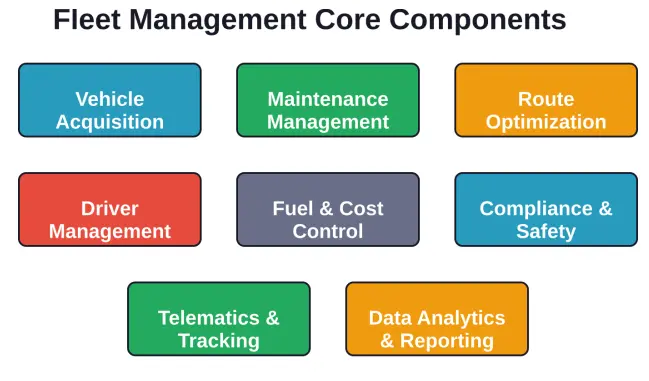
Vehicle Acquisition and Lifecycle Management
The lifecycle begins with strategic decisions about which vehicles to acquire, whether to lease or purchase, and how to spec vehicles for specific cargo types. Different goods require different vehicle configurations—refrigerated units for perishables, flatbeds for construction materials, enclosed trailers for sensitive electronics.
Fleet replacement planning determines the optimal time to retire aging vehicles before maintenance costs spiral out of control. Academic research suggests systematic approaches to fleet management can reduce fleet operating costs through improved vehicle specification and management.
Maintenance and Repair Coordination
Preventive maintenance keeps vehicles operational and extends their useful life. Fleet managers schedule regular inspections, oil changes, tire rotations, and component replacements based on mileage intervals or calendar dates.
Real-world data illustrates the consequences of neglecting maintenance. Research examining the AIBiltrans Haulage Company in Zimbabwe found that fleet maintenance costs rose from 7% to 22% when systematic maintenance practices broke down, directly impairing competitiveness in the road freight sector.
Modern telematics systems monitor engine diagnostics continuously, alerting managers to potential issues before they cause breakdowns. This predictive approach reduces unplanned downtime and keeps shipments moving on schedule.
Route Planning and Optimization
Route optimization goes beyond finding the shortest distance between two points. It considers traffic patterns, delivery time windows, driver hours of service regulations, fuel costs, toll roads, and vehicle capacity constraints.
Advanced routing software recalculates paths dynamically as conditions change—rerouting around accidents, adjusting for weather delays, or incorporating last-minute delivery additions. This flexibility helps fleets maintain on-time performance even when unexpected disruptions occur.
Driver Management and Safety Programs
Drivers are the human element that determines whether carefully optimized plans succeed or fail. Fleet management includes recruiting qualified drivers, providing ongoing training, monitoring performance, and ensuring compliance with hours-of-service regulations.
Telematics systems track driver behaviors like harsh braking, rapid acceleration, speeding, and idling time. This data feeds into coaching programs that improve safety and fuel efficiency. Some fleet management platforms incorporate gamification, rewarding drivers who consistently demonstrate safe, efficient driving habits.
Fuel Management and Cost Control
Fuel typically represents one of the largest operating expenses for shipping fleets. Fleet management systems track fuel consumption per vehicle, identify inefficient patterns, and implement strategies to reduce waste.
Techniques include optimizing routes to minimize mileage, reducing idling time, maintaining proper tire pressure, training drivers in fuel-efficient techniques, and using fuel cards that provide detailed transaction data and prevent unauthorized purchases.
Compliance and Regulatory Management
Transportation is heavily regulated. Fleet managers must ensure drivers maintain valid commercial licenses, vehicles pass required inspections, hours-of-service logs are accurate, and operations comply with environmental regulations.
For maritime shipping specifically, the International Maritime Organization has implemented stringent environmental standards. The Energy Efficiency Design Index (EEDI) mandates technical and operational energy efficiency measures to reduce CO2 emissions from international shipping. The EEDI provides a specific figure for individual ship designs, expressed in grams of CO2 per ship’s capacity-mile. Ship types covered by EEDI include tankers, bulk carriers, gas carriers, general cargo ships, container ships, refrigerated cargo carriers, and combination carriers.
The EEDI framework tightens every five years. The first phase mandated a 10% CO2 reduction compared to a reference line. Phase requirements have been tightened over successive periods.
Support Shipping Fleets With ECOFACTOR EV Charging
Fleet management in shipping is about keeping vehicles, deliveries, schedules, and movement between locations under control. ECOFACTOR helps businesses organize the EV charging part with charging stations, management tools, and an iOS and Android app.
Drivers can use the charging station map while moving between warehouses, customer areas, service locations, or company sites. ECOFACTOR also has an online store with chargers, cables and adapters for businesses that need EV equipment at parking areas, depots, or operational bases.
ECOFACTOR can support shipping-related fleets with:
- Charging setups for depots and business locations
- Mobile access to charging station information
- Equipment for electric delivery or service vehicles
- Accessories for regular EV charging needs
Contact ECOFACTOR to make EV charging easier to plan around shipping and delivery operations.
How Technology Powers Modern Fleet Management
Technology transformed fleet management from a reactive, paper-based process into a proactive, data-driven operation. Several key technologies work together to enable the sophisticated fleet management systems businesses rely on today.
GPS Tracking and Vehicle Location Systems
GPS tracking provides real-time visibility into where every vehicle is located at any given moment. This transparency benefits multiple stakeholders—fleet managers can monitor progress, customers can receive accurate delivery estimates, and dispatchers can identify the nearest vehicle for urgent pickups.
Location data also supports security and theft prevention. If a vehicle deviates from its planned route or enters an unauthorized area, automated alerts notify managers immediately.
Telematics: The Nervous System of Fleet Operations
Telematics systems combine GPS tracking with onboard diagnostics, creating a comprehensive view of vehicle and driver performance. These systems monitor:
- Engine performance metrics (RPM, temperature, oil pressure)
- Fuel consumption and efficiency
- Driver behaviors (speed, braking, acceleration, cornering)
- Idle time and unauthorized vehicle use
- Diagnostic trouble codes and maintenance needs
- Hours of service and regulatory compliance
This constant stream of data flows into centralized fleet management platforms where it’s analyzed, visualized, and translated into actionable insights.
Fleet Management Software Platforms
Modern fleet management software integrates data from multiple sources—telematics devices, fuel cards, maintenance records, driver logs, customer orders—into a single unified interface.
These platforms provide dashboards that display key performance indicators, automated alerts for issues requiring attention, reporting tools for analyzing trends, and workflow automation that reduces administrative burden.
Cloud-based deployment makes these systems accessible from anywhere, enabling fleet managers to monitor operations remotely and coordinate with drivers in the field.
Connected Vehicles and IoT Integration
The connected car revolution extends to commercial fleets. Modern vehicles equipped with IoT sensors generate unprecedented amounts of operational data—tire pressure, brake wear, cargo temperature, door open/close events, and much more.
This connectivity enables predictive maintenance that identifies failing components before they break, reducing unplanned downtime. It also supports advanced cargo monitoring, particularly important for temperature-sensitive goods or high-value shipments requiring extra security.
Key Benefits of Effective Fleet Management
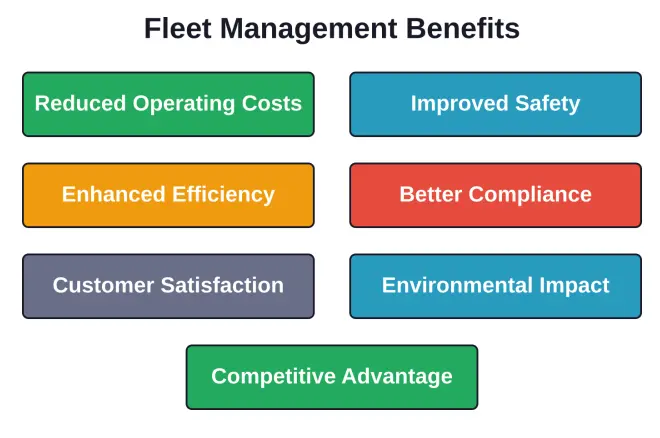
Organizations that implement comprehensive fleet management systems realize measurable improvements across multiple dimensions of their operations.
Cost Reduction Across Multiple Areas
Fleet management drives down costs in several ways. Optimized routes reduce fuel consumption and vehicle wear. Preventive maintenance prevents expensive emergency repairs and extends vehicle lifespan. Better driver behaviors reduce accident rates and associated insurance premiums.
Data-driven decision making helps identify underutilized vehicles that can be eliminated from the fleet, consolidate shipments to improve load factors, and negotiate better rates with fuel suppliers based on accurate consumption data.
Enhanced Safety and Risk Mitigation
Safety improvements protect drivers, cargo, and the public. Telematics-based driver coaching reduces risky behaviors. Regular vehicle inspections catch mechanical issues before they cause accidents. Hours-of-service monitoring prevents fatigued driving.
The International Maritime Organization has addressed safety concerns in shipping operations, including dangerous practices like ship-to-ship transfers in the open ocean and methods used to obscure ship identities by turning off AIS transponders. These “dark fleet” activities pose significant risks that proper fleet management and regulatory oversight work to prevent.
Operational Efficiency and Productivity Gains
Efficiency improvements come from eliminating waste throughout operations. Route optimization reduces miles driven. Automated dispatching speeds decision-making. Mobile apps eliminate paperwork and accelerate communications between drivers and dispatchers.
Real-time visibility enables proactive problem-solving. When delays occur, managers can reassign deliveries, notify customers immediately, and minimize disruptions.
Regulatory Compliance and Documentation
Fleet management systems automate compliance documentation, reducing the administrative burden and the risk of violations. Electronic logging devices automatically record hours of service. Maintenance management systems track inspection schedules and generate compliance reports.
For international shipping, compliance extends to environmental standards, safety certifications, and country-specific regulations that vary across routes and cargo types.
Improved Customer Service and Satisfaction
Customers increasingly expect transparency and reliability. Fleet management enables accurate delivery time estimates, proactive delay notifications, and proof of delivery documentation.
On-time performance improves when route optimization, preventive maintenance, and real-time tracking work together. Consistent, reliable service strengthens customer relationships and supports business growth.
Environmental Sustainability
Environmental considerations are no longer optional. Regulations, customer expectations, and corporate responsibility commitments drive fleets toward greener operations.
Fleet management contributes to sustainability through fuel consumption reduction, route optimization that minimizes emissions, vehicle lifecycle management that retires inefficient older vehicles, and data that supports transition to alternative fuel vehicles.
The maritime sector faces particularly stringent environmental requirements. The Ship Energy Efficiency Management Plan (SEEMP) and the Energy Efficiency Design Index (EEDI) entered into force on 1 January 2013, establishing operational measures to improve energy efficiency and reduce emissions.
Fleet Management Challenges in Modern Shipping
Despite significant advances, fleet managers still confront persistent challenges that require ongoing attention and adaptation.
Rising Fuel Costs and Economic Volatility
Fuel prices fluctuate unpredictably, creating budgeting challenges and squeezing profit margins. Fleet managers must continuously balance cost control against service level requirements.
Hedging strategies, fuel-efficient vehicle selection, and driver training programs help mitigate fuel cost impacts, but external market forces remain largely beyond fleet managers’ control.
Driver Recruitment and Retention
The commercial driving profession faces chronic labor shortages in many markets. Recruiting qualified drivers is expensive and time-consuming. High turnover rates compound the challenge.
Fleet management contributes to retention by improving working conditions—better route planning reduces excessive hours, modern vehicles provide safer and more comfortable work environments, and transparent performance tracking supports fair compensation and advancement opportunities.
Technology Integration and Data Overload
Modern fleet management systems generate enormous volumes of data. The challenge shifts from data availability to data utilization—extracting actionable insights from the noise.
Integration challenges arise when telematics, maintenance, fuel cards, and customer systems don’t communicate effectively. Fleet managers need integrated platforms that consolidate data sources and present unified insights.
Regulatory Complexity and Compliance Burden
Transportation regulations continue to evolve and expand. Electronic logging device mandates, environmental standards, safety requirements, and cross-border regulations create compliance complexity.
Fleet management systems help by automating compliance tracking, but staying current with changing regulations requires continuous attention and often specialized expertise.
Supply Chain Disruptions and Unpredictability
Recent years have demonstrated how fragile global supply chains can be. Port congestion, capacity constraints, and unexpected disruptions force fleet managers to become increasingly agile.
According to ISO’s examination of supply chain reliability, in 2021, container ships idled for weeks outside the Port of Los Angeles, creating a stark visual reminder of how fragile modern supply chain reliability had become. The backlog sent shockwaves across industries—factories stalled, shelves emptied, and businesses scrambled for alternatives.
Fleet management contributes to resilience through flexibility in routing, carrier diversification, and data-driven contingency planning that enables rapid response to disruptions.
Best Practices for Implementing Fleet Management
Organizations looking to improve their fleet management capabilities should consider these proven practices.
Start With Clear Objectives and Metrics
Define what success looks like before implementing new systems or processes. Common metrics include cost per mile, fuel efficiency, on-time delivery percentage, maintenance cost per vehicle, safety incident rates, and vehicle utilization rates.
Establish baseline measurements so improvements can be quantified. Set realistic targets that balance ambitious goals with achievable milestones.
Invest in Integrated Technology Platforms
Avoid technology silos. Select fleet management platforms that integrate with existing business systems—accounting, customer relationship management, warehouse management, and enterprise resource planning.
Cloud-based solutions offer scalability, accessibility, and lower upfront costs compared to on-premises systems. Prioritize platforms with open APIs that support future integration needs.
Prioritize Driver Engagement and Training
Technology alone doesn’t deliver results—people do. Engage drivers early in fleet management initiatives. Explain how systems benefit them, not just the organization.
Provide thorough training on new tools and processes. Create feedback channels where drivers can report issues and suggest improvements. Recognize and reward drivers who excel in safety, efficiency, and customer service.
Implement Preventive Maintenance Rigorously
Don’t wait for breakdowns. Establish maintenance schedules based on manufacturer recommendations and vehicle usage patterns. Track maintenance history for each vehicle to identify recurring issues.
Use telematics data to shift from time-based to condition-based maintenance where appropriate. Monitor diagnostic codes and address minor issues before they escalate into major repairs.
Continuously Analyze Data and Refine Processes
Fleet management isn’t a set-it-and-forget-it discipline. Schedule regular reviews of key metrics. Investigate anomalies and trends. Test process improvements on a small scale before fleet-wide rollout.
Benchmark performance against industry standards and competitors when possible. Identify top performers within the fleet and determine what makes them successful so those practices can be replicated.
The Future of Fleet Management in Shipping
Fleet management continues to evolve as new technologies emerge and business requirements change.
Autonomous Vehicles and Advanced Driver Assistance
Self-driving technology progresses steadily. While fully autonomous freight operations remain years away in most applications, advanced driver assistance systems are already available—lane keeping, automatic emergency braking, adaptive cruise control.
These technologies improve safety and fuel efficiency while easing driver workload. Fleet managers who adopt them gain competitive advantages and prepare their operations for the gradual transition toward higher levels of autonomy.
Electric and Alternative Fuel Vehicles
Environmental regulations and sustainability commitments accelerate the shift away from diesel-powered fleets. Electric vehicles offer lower operating costs and zero tailpipe emissions, though charging infrastructure and range limitations present challenges for certain applications.
Fleet managers must evaluate total cost of ownership, route characteristics, and infrastructure availability when planning the transition to alternative fuels.
Artificial Intelligence and Predictive Analytics
AI-powered systems analyze vast datasets to identify patterns humans might miss. Predictive maintenance algorithms forecast component failures weeks in advance. Route optimization engines consider hundreds of variables simultaneously to identify the truly optimal path.
Machine learning improves continuously as systems process more data, creating a virtuous cycle of increasing accuracy and value.
Blockchain for Supply Chain Transparency
Blockchain technology promises immutable, transparent records of cargo movement, custody transfers, and compliance documentation. This transparency benefits all supply chain participants—shippers, carriers, customers, and regulators.
While adoption remains limited, pilot programs demonstrate potential for reducing fraud, streamlining documentation, and improving traceability.
| Technology Trend | Current Status | Primary Benefits | Implementation Timeline |
|---|---|---|---|
| Advanced Telematics | Widely deployed | Real-time visibility, driver coaching, maintenance alerts | Immediate |
| Electric Vehicles | Emerging adoption | Lower fuel costs, reduced emissions, quieter operation | 1-3 years |
| Predictive Analytics | Growing adoption | Proactive maintenance, optimized routing, cost reduction | 1-2 years |
| Autonomous Vehicles | Limited pilot programs | Safety improvement, driver shortage mitigation, efficiency | 5-10 years |
| Blockchain Integration | Experimental | Supply chain transparency, documentation automation | 3-7 years |
Selecting the Right Fleet Management Approach
Not every organization needs the same fleet management solution. The right approach depends on fleet size, cargo types, geographic scope, and business priorities.
Small Fleet Considerations
Operations with fewer than 10 vehicles may not need enterprise-grade platforms. Basic GPS tracking, fuel card programs, and simple maintenance tracking spreadsheets can provide substantial value at minimal cost.
As fleets grow, transitioning to dedicated fleet management software becomes worthwhile. Cloud-based solutions with subscription pricing make sophisticated capabilities accessible to small operations.
Medium Fleet Optimization
Fleets of 10-100 vehicles benefit most from integrated platforms that combine telematics, maintenance management, routing optimization, and compliance tracking. The operational complexity at this scale justifies investment in comprehensive solutions.
Medium fleets should prioritize scalable platforms that can grow with the business without requiring complete system replacements.
Enterprise Fleet Management
Large fleets spanning multiple locations, vehicle types, and operating regions require enterprise platforms with advanced capabilities—multi-user access controls, customizable workflows, sophisticated reporting, and API integrations with other enterprise systems.
Enterprise implementations demand careful planning, phased rollouts, and dedicated resources for system administration and user support.
Frequently Asked Questions
What’s the difference between fleet management and logistics management?
Fleet management focuses specifically on vehicles and drivers—acquisition, maintenance, tracking, and optimization of the physical assets that move goods. Logistics management encompasses a broader scope including warehousing, inventory management, order fulfillment, and supply chain coordination. Fleet management is a component within the larger logistics operation.
How much does fleet management software typically cost?
Pricing for fleet management software varies significantly based on features and deployment model. Cloud-based solutions with subscription pricing make sophisticated capabilities accessible to businesses of all sizes. Check vendors’ official websites for current pricing structures and available tiers.
Can small businesses benefit from fleet management systems?
Absolutely. Even businesses with just a handful of vehicles realize measurable benefits from basic fleet management practices. GPS tracking improves routing and customer service. Maintenance scheduling prevents costly breakdowns. Fuel card programs provide expense visibility. Cloud-based solutions with affordable subscription pricing make fleet management accessible to businesses of all sizes.
What ROI can organizations expect from fleet management implementation?
Academic research suggests systematic approaches to fleet management can reduce fleet operating costs through improved vehicle specification and management. Specific ROI depends on current operational efficiency, implementation quality, and which improvements are prioritized. Fuel savings, maintenance cost reduction, and improved vehicle utilization typically deliver the fastest payback.
How does fleet management address environmental concerns?
Fleet management supports environmental sustainability through multiple mechanisms. Route optimization reduces unnecessary mileage and emissions. Idle time monitoring and driver training cut fuel waste. Maintenance ensures engines run efficiently. Lifecycle management retires inefficient older vehicles. Data-driven decisions support transition to electric or alternative fuel vehicles. For maritime shipping, systems help vessels comply with stringent IMO environmental standards including the EEDI and SEEMP requirements.
What skills do fleet managers need in modern operations?
Modern fleet managers need a blend of traditional logistics expertise and technology proficiency. Important skills include data analysis and interpretation, understanding of vehicle mechanics and maintenance, knowledge of transportation regulations, budget management, vendor negotiation, and team leadership. Increasingly, fleet managers also need familiarity with telematics platforms, route optimization algorithms, and emerging technologies like electric vehicles and predictive analytics.
How do fleet management systems handle multi-modal shipping?
Advanced fleet management platforms can coordinate across different transportation modes—trucks, ships, rail, and air. They track cargo as it moves between modes, coordinate timing for intermodal transfers, and maintain visibility throughout the journey. Integration with partners’ systems enables seamless hand-offs and comprehensive tracking even when cargo moves between different carriers and transport types.
Moving Forward With Fleet Management
Fleet management transforms commercial vehicles from simple transportation tools into strategic assets that deliver measurable competitive advantages. The discipline encompasses far more than tracking vehicle locations—it’s about optimizing every aspect of how goods move from origin to destination.
Organizations that implement comprehensive fleet management realize substantial benefits: reduced operating costs, improved safety, enhanced efficiency, better compliance, increased customer satisfaction, and reduced environmental impact. These improvements directly support business growth and profitability.
But here’s the thing: fleet management isn’t a one-time project. It’s an ongoing process of continuous improvement driven by data, enabled by technology, and executed by people. The organizations that excel are those that treat fleet management as a strategic discipline rather than just an operational necessity.
Whether managing three delivery vans or three hundred container ships, the fundamentals remain consistent. Know where vehicles are. Keep them maintained and operating efficiently. Optimize routes and reduce waste. Ensure regulatory compliance. Support drivers with tools and training. Use data to drive better decisions.
The technology available today makes sophisticated fleet management accessible to organizations of all sizes. Cloud-based platforms, affordable telematics devices, and mobile applications democratize capabilities that were once available only to the largest enterprises.
Start where you are. Identify the biggest pain points in current operations—excessive fuel costs, frequent breakdowns, poor on-time performance, compliance headaches. Focus fleet management initiatives on addressing those specific challenges first. Build momentum with early wins, then expand to additional capabilities.
The future of shipping goods depends on efficient, sustainable, resilient supply chains. Fleet management sits at the heart of that future, turning individual vehicles into coordinated networks that move goods reliably, economically, and responsibly. Organizations that invest in fleet management capabilities today position themselves to thrive in the increasingly complex, competitive logistics landscape ahead.