





Type 2 Connector for electric vehicles: a detailed overview
Electric cars are no longer something new to the modern world, and their popularity is growing every year. However, with the expansion of the electric vehicle market comes a new challenge: a variety of charging connector standards. This creates certain difficulties for electric vehicle owners, as each type of connector has its own characteristics and requirements for charging stations. One of the most common [...]
Content:
Electric cars are no longer something new to the modern world, and their popularity is growing every year. However, with the expansion of the electric vehicle market comes a new challenge: a variety of charging connector standards. This creates certain difficulties for electric vehicle owners, as each type of connector has its own characteristics and requirements for charging stations. One of the most common and standardised options for charging electric vehicles in Europe is the Type 2 connector, which has become the main standard since 2013 and continues to be actively used for both home and public charging.
We remind you that you can purchase home and commercial charging stations in our online storeand also use the public charging stations ECOFACTORcharging points located throughout Ukraine. For convenient access to charging infrastructure, we recommend using our mobile applicationwhich is available on iOS and Android.
But what makes the Type 2 connector so important for the future of electric mobility? How does it work, how fast does it charge electric cars, and what are its advantages compared to other types of connectors? In this article, we will explore all of these questions, as well as why the European Union chose this standard to ensure compatibility between different types of charging stations and vehicles.
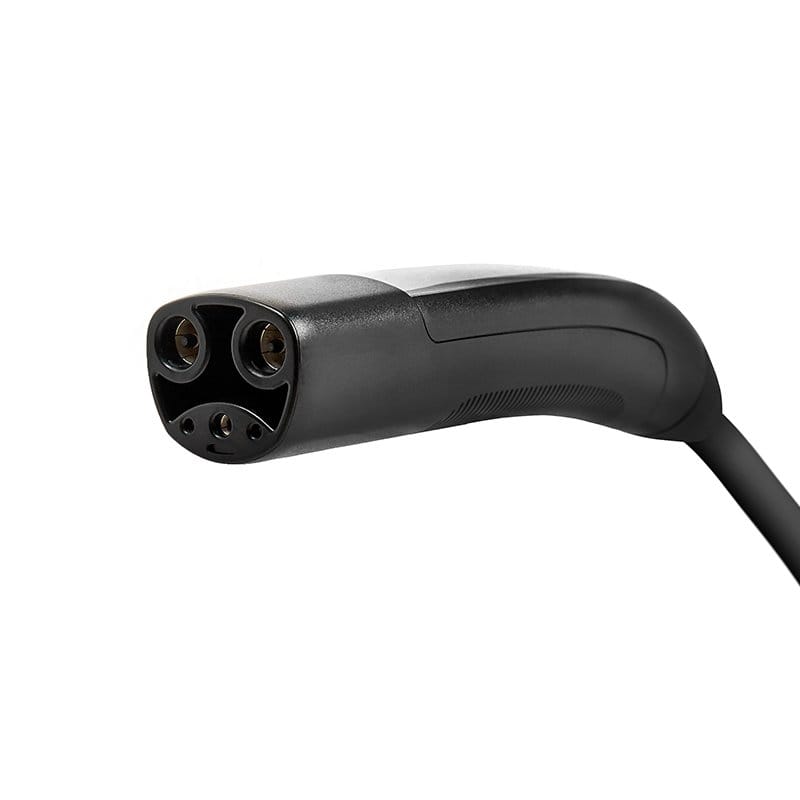
What is a Type 2 Connector?
Type 2 is an electric vehicle charging connector that has become the standard for all charging stations in the European Union. This connector was chosen as the main standard in 2013 for alternating current (AC) charging. The connector has 7 pins that allow both single-phase and three-phase charging. As a result, it can work with different types of charging stations - from slow home sockets to fast public charging stations.
The main goal of introducing Type 2 was to provide versatility and convenience for electric car owners. Previously, there were a large number of different charging connector standards, which made it difficult to use public charging stations. However, over time, Type 2 has become the most popular and recognisable connector and is now the standard for most electric cars on the European market.
Characteristics and principle of operation of Type 2 Connector
The Type 2 connector has 7 pins, each of which has its own function. Two of the pins are used to communicate between the vehicle and the charging station, allowing the charging process to be monitored and the power to be adjusted. These pins are important to ensure the safety and efficiency of the charging process, as they allow the system to detect when the vehicle is connected to the charging station and activate a locking mechanism to prevent accidental disconnection.
Another important aspect is the Type 2 connector's ability to operate with both single-phase and three-phase AC power. This allows the connector to be used both for slow charging at home using a standard socket and for fast charging at public charging stations, where the power can reach up to 22 kW in three-phase mode.
A typical Type 2 connector has the following characteristics:
- 7 pins for data transmission and power supply.
- It can transmit up to 43 kW of power.
- Supports three-phase and single-phase charging.
- Maximum voltage: 500 V.
Charging speed with Type 2 Connector
One of the main advantages of the Type 2 connector is its ability to provide fast charging for electric vehicles. For example, using a 22 kW public charging station, a car based on a Type 2 connector can charge up to 125 km of range in just one hour.
In general, the charging speed depends on several factors such as the power of the charging station, the current battery level and the type of charger. On average, if a battery is charged to 80%, the remaining 20% will charge much more slowly, regardless of the type of connector. This is due to the peculiarities of the battery chemistry, which requires a careful approach to the last stages of charging to extend the battery life.
Compatibility and adapters
The Type 2 connector is widespread in Europe and is the standard for many charging stations. However, other types of connectors can still be found on the market, such as Type 3 or CHAdeMO. In order to use these older types of connectors at public charging stations, special adapters may be required.
For example, if you have an electric car with a Type 2 connector and the station only supports the older Type 3 connector, you can purchase an adapter that will allow you to connect your car to the charging station without any problems. These adapters are available through different manufacturers, such as Renault and others, and ensure compatibility between different types of charging stations and cars.
Combo 2 Connector: fast charging and more
A separate variant of the Type 2 connector, which has additional fast charging pins, is the Combo 2 (CSS Type 2) connector. This connector is used for a combined charging system that allows the transfer of direct current (DC) without the need to convert AC to DC.
Thanks to the additional DC pins, Combo 2 enables fast charging with up to 350 kW of power, which significantly reduces charging time compared to a conventional Type 2 connector. This standard is used in many public charging stations for fast charging.
As a result, the Type 2 connector is the main charging standard for electric vehicles in Europe. Its versatility, compatibility with single-phase and three-phase AC power, and ability to provide fast charging makes it the ideal choice for most electric vehicle users. With the introduction of this standard, electric vehicle users have a convenient and universal way to connect to charging stations across Europe.
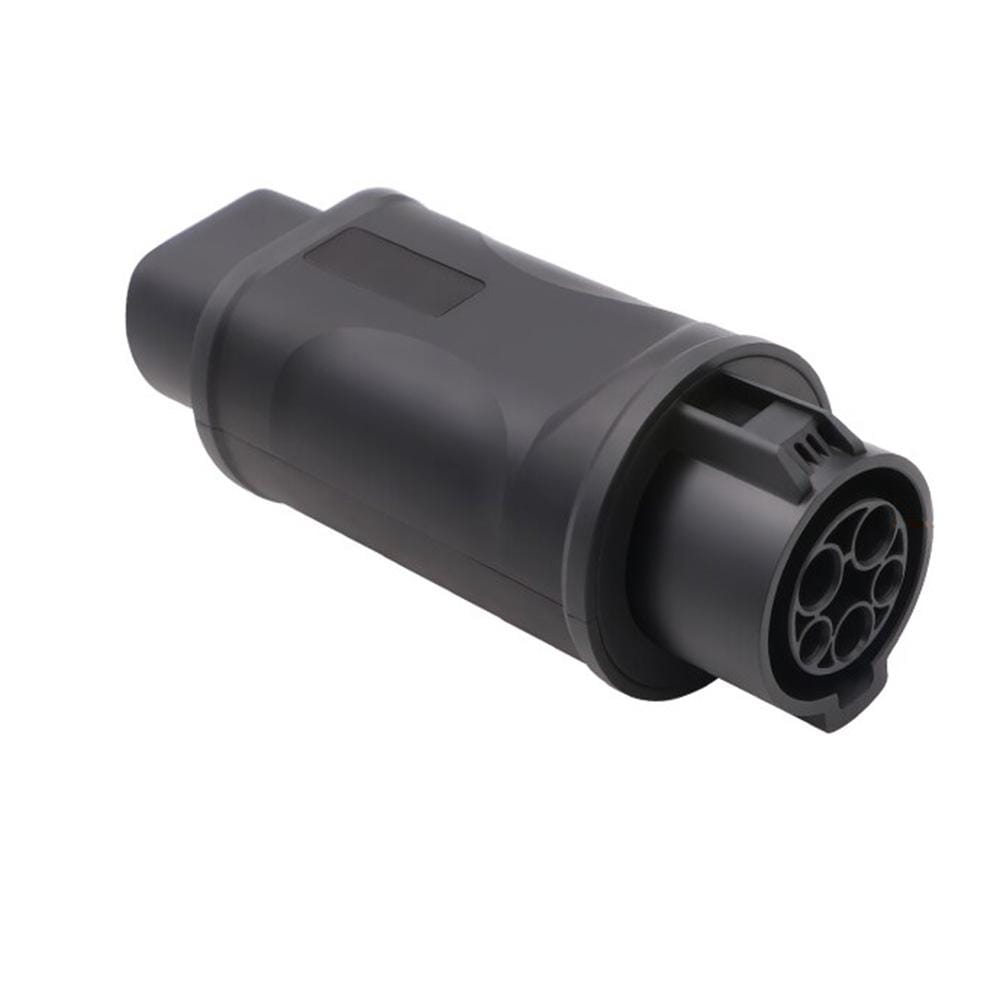
Difference between Type 1 and Type 2 connectors for electric vehicles
There is some confusion about charging connectors for electric vehicles, as there are several standards on the market and it is important to understand which one is right for your vehicle. The most common connectors are Type 1 and Type 2. Their main function is to connect an electric car to a charging station to replenish the energy in the battery. However, each of these connectors has its own characteristics that determine where and how they can be used. In this article, we will look at how they differ from each other, what are the advantages of each type, and how to choose the right connector for your car.
Type 1
The Type 1 connector is used primarily in electric vehicles sold in North America, Japan and other Asian countries. It has five pins, of which three pins are responsible for transmitting electrical power, and the other two are used for communication between the vehicle and the charging station. It is a single-phase connector, which means that it is suitable for charging up to 19.2 kW. The Type 1 connector is equipped with a locking mechanism that holds it in place during charging, preventing it from being accidentally disconnected.
Features:
- The number of foams: 5
- Current type: single-phase
- Maximum power: up to 19.2 kW
- Features: locking mechanism for fixing the connector
- Suitable for: North America, Japan and some other Asian countries
Type 2
The Type 2 connector is the standard for charging in Europe and has seven pins. It is a more versatile option that supports both single-phase and three-phase charging, allowing for up to 22 kW of power at three-phase charging stations. As this connector has a higher number of pins, it provides more stable power transfer and communication between the vehicle and the charging station. In addition, the Type 2 connector does not have a mechanical lock, but instead uses a locking system that automatically locks the connector during charging, ensuring its safety.
Features:
- The number of foams: 7
- Current type: single-phase and three-phase
- Maximum power: up to 22 kW on three-phase current
- Features: automatic locking system
- Suitable for: Europe and the majority of electric vehicles on the European market
The main differences between Type 1 and Type 2
1. Number of foams and types of charging
The Type 1 cable has 5 pins and supports single-phase charging only, making it suitable for home use or charging stations with limited power. The Type 2 cable has 7 pins and supports both single-phase and three-phase charging, making it more versatile for different types of charging stations, including fast charging.
2. Application.
Type 1 is most common in North America and Japan, while Type 2 is the standard for Europe. Electric car owners in Europe typically use Type 2 cables to connect to home and public charging stations. This also allows for compatibility between different charging networks across the continent.
3. Safety and security
Type 1 cables have a special lock that locks the connector in place and prevents accidental disconnection during charging. Whereas Type 2 cables use a locking mechanism that allows the car or charging station to automatically lock the cable during the charging process, providing greater safety for users.
4. Compatible with different vehicles
Different cars are equipped with different types of connectors depending on their production and market. Type 1 cables are used in models such as the Nissan Leaf (2012-2017), Mitsubishi Outlander PHEV, Kia Soul EV and others. While cars such as the Audi Etron, BMW i3, Jaguar, Renault Zoe and Tesla are usually equipped with Type 2 connectors, making them compatible with more powerful charging stations.
Which connector to choose?
If you are in Europe, it is likely that your car will use a Type 2 connector, as this is the standard for most charging stations on the continent. However, if you have imported your car from other regions that use Type 1 connectors, you should check whether your charging stations are compatible with this type of connector. If necessary, adapters can be used to ensure compatibility between different standards.
The choice between Type 1 and Type 2 depends on where you are, what type of charging infrastructure is available and what type of connector your car has.

ECOFACTOR: The solution for environmentally friendly and efficient charging of electric vehicles
About the company ECOFACTOR We are committed to developing innovative electric vehicle charging products that combine high efficiency with minimal environmental impact. Our goal is to help reduce energy consumption, speed up the charging process and increase battery life. We offer charging stationsThe company's products meet the highest standards of safety and efficiency, providing convenience and durability for users.
In addition to the main charging stations, we also offer cables and adaptersWe offer European-standard charging points that ensure reliable connectivity in all conditions. Tesla Model 3 owners can take advantage of our intelligent solutions to monitor and optimise energy consumption, enabling fast and stable charging.
We are constantly working to improve our solutions by integrating the latest technology to make the charging process even more convenient and cost-effective. Here's how our innovations help:
- Reduce energy costs ECOFACTOR technologies significantly reduce energy consumption, which helps to reduce the cost of charging electric vehicles.
- Improve charging efficiency: - Thanks to specially developed algorithms, we reduce energy losses, which maximises power utilisation.
- Manage charging via a mobile app: - Our solutions allow drivers to control the entire charging process through mobile applicationwhich is available for iOS і Android. This makes it possible to monitor the charge level, choose the optimal time for charging, and receive full analytics of energy consumption.
- Contribute to the preservation of the environment: - ECOFACTOR charging stations help reduce CO₂ emissions and support the transition to clean energy.
Choosing solutions from ECOFACTOR - is an investment not only in convenience but also in sustainable development. Our technologies help to save energy and provide maximum comfort for users.
We are also actively working to expand our network of charging stations, providing drivers with access to maps of charging stations, which allows you to find the nearest points for efficient and safe charging throughout the territory.
Compatibility issues between different standards and adapters
Despite the standardisation, compatibility between different types of connectors can still be an issue, especially if the charging station has a different type of connector. This can be a hindrance if you are travelling or moving to another country where different standards are used. For such situations, there are adapters on the market that allow you to connect a vehicle with a Type 1 connector to a charging station that uses a Type 2 connector, or vice versa. These adapters are usually easy to use and do not affect the charging speed or safety of the process.
However, you should pay attention to the quality of such adapters - cheap analogues may have problems with the strength and reliability of the connection. It's also important to remember that if you use an adapter, you may not be able to use high-speed charging stations, as adapters do not always support the required power.
How to care for charging connectors and extend their service life
Charging connectors are an important element of an electric vehicle's infrastructure, and maintaining them properly can significantly extend their service life. Here are some tips on how to care for your connectors:
- Cleanliness: Always clean the connector after use. Dirt and moisture can cause the foams to corrode or break contact. Use a soft, lint-free cloth for cleaning to avoid scratching the surface.
- Storage: If you do not use the connector for a while, store it in a dry place to avoid exposure to weather conditions such as rain or snow, which can damage the electrical components.
- Checking for damage: Check the connectors regularly for cracks or other damage. If you notice damage, it is best to replace the cable or connector immediately to avoid potentially dangerous situations.
- Replacing the rubber seals: The rubber seals on the connectors ensure a tight seal and protect against moisture and dust. If the seal is damaged, it must be replaced to avoid short circuits or corrosion.
- Avoiding excessive cable tension: When you connect the connector, do not pull the cable too hard, as this may cause damage to the connector or internal wires.
Conclusion.
Type 1 and Type 2 connectors are the main standards for charging electric vehicles, each with its own features, benefits and limitations. Choosing the right connector depends on where you are, what type of charging infrastructure is available, and the type of vehicle you have. An important part is to take care of your charging connectors to ensure they last longer and work to their full potential. With the development of new technologies and standards, the future of charging looks even more convenient and faster, with the prospects of wireless technology and advanced systems.
Frequently asked questions (FAQ)
1. Can I use a Type 1 cable to charge a car with a Type 2 connector?
No, these two types of connectors are not compatible. You need an adapter or cable with the appropriate connector.
2. How fast can an electric car be charged with a Type 2 connector?
Charging time depends on the capacity of the charging station. With the Type 2, you can charge up to 22 kW at a three-phase charging station, which allows you to charge most vehicles up to 80% in 1-2 hours.
3. Can I charge an electric car with a Type 2 connector at home?
Yes, you can use the Type 2 connector with a home charging station (Wallbox), which will provide fast charging even if you are using a single-phase connection.
4. What if the charging station has a different type of connector than my car?
In this case, you can use an adapter that allows you to connect your car to a station with a different connector.
5. How often do I need to check the charging connectors for damage?
It is recommended to check the connectors for damage every few months or after each use, especially if the cable is frequently subjected to mechanical stress.
6. Is there a risk of overheating when charging via Type 2 connector?
If the charging station and cable meet the technical requirements, overheating should not occur. It is important to use certified charging stations and cables to prevent problems.


