

Table of contents:
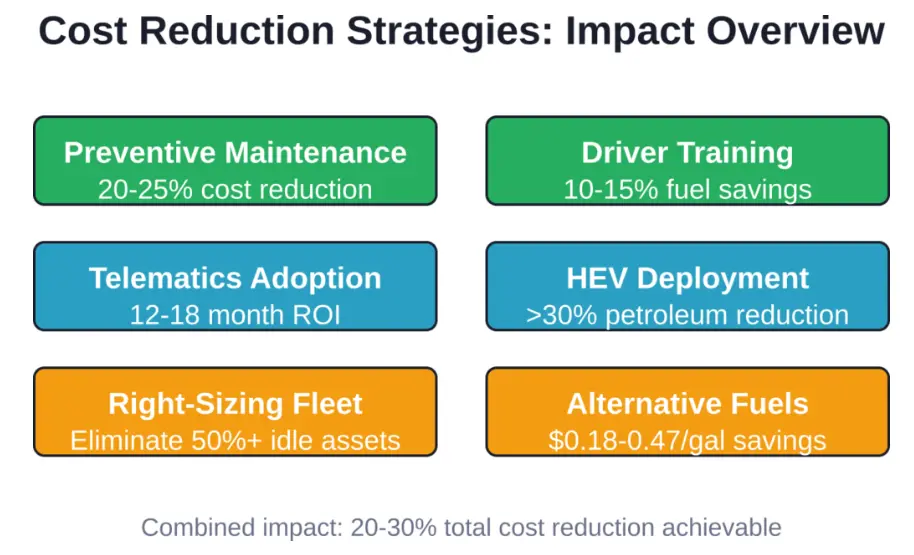
Quick Summary: Fleet management costs can be reduced by 20-30% through preventive maintenance, right-sizing vehicle allocation, driver training, telematics adoption, and fuel optimization. Data-driven decision-making and strategic procurement help minimize both fixed and variable expenses while improving operational efficiency.
Fleet costs are spiraling. Between fuel volatility, maintenance backlogs, and vehicle depreciation, operators face mounting pressure to cut expenses without sacrificing service quality.
But here’s the thing: not all cost-cutting strategies are created equal. Slash the wrong budget line and downtime skyrockets. Skip maintenance and repair bills triple. The challenge isn’t just spending less—it’s spending smarter.
This guide breaks down the most effective, data-backed methods to reduce fleet management costs while maintaining operational efficiency. From calculating your true cost per mile to leveraging telematics for fuel savings, these strategies deliver measurable results.
We remind you that you can purchase home and commercial charging stations in our online store, as well as use public charging stations ECOFACTOR located throughout Ukraine. For convenient access to charging infrastructure, we recommend using our mobile app, available on iOS and Android.
Understanding Fleet Management Costs
Before cutting costs, operators need to understand what they’re actually spending. Fleet expenses break down into three main categories, each requiring different optimization approaches.
Fixed Costs vs. Variable Costs
Fixed costs remain constant regardless of vehicle usage. These include vehicle financing, insurance premiums, registration fees, and administrative overhead. In the trucking industry, fixed financing costs represent an average of 17% of total marginal costs.
Variable costs fluctuate based on fleet activity. Fuel typically accounts for around 21% of total costs in trucking operations, while maintenance represents approximately 9%. These percentages shift dramatically across industries—delivery fleets might see higher fuel ratios, while specialized equipment fleets carry heavier maintenance burdens.
The distinction matters because reduction strategies differ. Fixed costs require strategic decisions about fleet size and composition. Variable costs respond to operational improvements and behavior changes.
Hidden Indirect Costs
The real budget killers often hide in plain sight. Downtime from unplanned repairs doesn’t just mean maintenance bills—it means lost revenue, missed deliveries, and customer dissatisfaction. Driver turnover carries recruitment, training, and productivity costs that rarely appear on fleet expense reports.
Compliance violations, insurance claim increases, and fuel waste from inefficient routing all chip away at profitability. These indirect costs are harder to quantify but equally important to address.
Calculate Your True Cost Per Mile
Accurate cost tracking starts with knowing exactly what each vehicle costs to operate. The cost per mile (CPM) metric provides this clarity.
Take the total maintenance costs for a vehicle over a specific period, divided by the total mileage during the same period. If a vehicle had $950 in maintenance costs in a month and drove 2,000 miles, its maintenance CPM would be $950 / 2,000 miles = $0.48 per mile.
This formula extends beyond maintenance to calculate total operating CPM. Add fuel costs, insurance, depreciation, and all other expenses, then divide by total miles driven. This reveals which vehicles drain budgets and which routes actually generate profit.
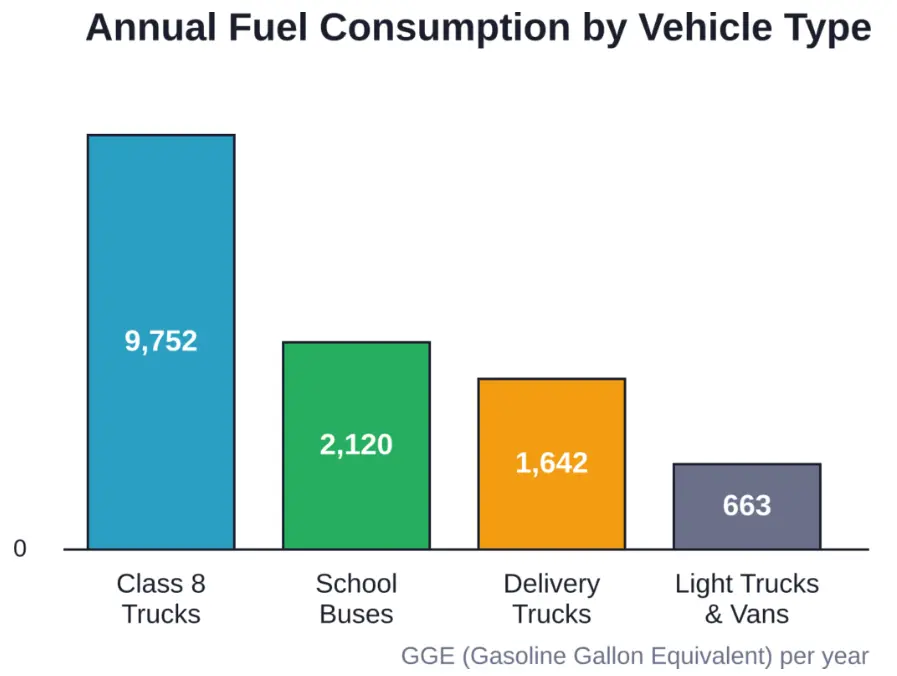
Different vehicle classes show dramatically different fuel consumption patterns. Class 8 trucks average 9,752 GGE (gasoline gallon equivalent) per year, while school buses use approximately 2,120 GGE annually. Delivery trucks consume around 1,642 GGE yearly, and light trucks or vans average 663 GGE per year. These benchmarks help operators identify outliers and efficiency opportunities.
Proven Strategies to Reduce Fleet Management Costs
Now the actionable part. These strategies have delivered measurable cost reductions across government and private fleets.
Implement Preventive Maintenance Programs
Reactive maintenance costs three to four times more than preventive service. Waiting for breakdowns means emergency repair rates, expedited parts shipping, and lost productivity during unexpected downtime.
A structured preventive maintenance schedule catches problems early. Oil changes, tire rotations, brake inspections, and fluid checks cost relatively little but prevent catastrophic failures. Fleet management software automates service scheduling based on mileage or engine hours, eliminating the guesswork.
The data backs this up. Operators who shift from reactive to preventive maintenance typically see maintenance costs drop by 20-25% within the first year. Vehicles stay in service longer, depreciation slows, and replacement cycles extend.
Right-Size Your Fleet
Many fleets carry excess vehicles that sit idle more than they operate. Optimal utilization rates fall between 70-85%; vehicles below 50% utilization are candidates for elimination or redeployment.
Telematics data reveals actual usage patterns. That backup truck that “might be needed” but sits unused for weeks? It’s costing insurance, depreciation, and maintenance dollars without generating value. Eliminating underutilized assets or reallocating them to higher-demand routes immediately cuts fixed costs.
Right-sizing also means matching vehicle capability to mission requirements. The Federal Energy Management Program recommends selecting vehicles appropriate to their specific tasks rather than defaulting to oversized options. A delivery route that never exceeds 5,000 pounds doesn’t need a one-ton truck—a half-ton saves fuel, maintenance, and acquisition costs.
Optimize Fuel Consumption
Fuel represents the largest variable expense for most fleets. Alternative fuel price data from July 2025 showed price variations across fuel types. At current price levels, even modest efficiency gains translate to substantial savings.
Driver behavior drives fuel consumption more than most operators realize. Excessive idling, aggressive acceleration, speeding, and inefficient routing all waste fuel. Telematics systems identify these behaviors in real-time, enabling targeted coaching.
Alternative fuels offer additional savings opportunities. Alternative fuel options such as CNG and E85 ethanol can provide cost advantages compared to traditional gasoline and diesel, though specific pricing varies by region and time period.
For fleets ready to make the transition, hybrid electric vehicles (HEVs) can deliver more than 30% reduction in petroleum use compared to conventional vehicles, according to the Federal Energy Management Program. This represents significant long-term savings despite higher upfront acquisition costs.
| Fuel Type | National Avg. Price (July 2025) | Savings vs. Gasoline |
| Regular Gasoline | $3.19/gallon | Baseline |
| Diesel | $3.75/gallon | -$0.56/gallon |
| CNG | $3.01/gallon | +$0.18/gallon |
| E85 Ethanol | $2.72/gallon | -$0.35/GGE (on an energy-equivalent basis, E85 costs more than gasoline: E85 is $3.54 per GGE vs $3.19 per gallon of gasoline, representing an extra cost/negative savings of -$0.35/GGE) |
| Propane | $3.24/gallon | -$0.05/gallon |
| Biodiesel B20 | $3.77/gallon | -$0.58/gallon |
Invest in Driver Training
The person behind the wheel determines whether a vehicle operates efficiently or wastefully. Comprehensive driver training programs reduce accidents, improve fuel economy, and extend vehicle lifespan.
Focus training on fuel-efficient driving techniques: smooth acceleration, anticipating traffic flow, minimizing idle time, and maintaining consistent speeds. Defensive driving reduces accident rates, which in turn lowers insurance premiums and repair costs.
Many operators see 10-15% fuel efficiency improvements after implementing driver training programs. The ROI typically pays back within six months through reduced fuel consumption and fewer accidents.
Deploy Telematics and Fleet Management Software
Making decisions without data is expensive guesswork. Telematics systems provide real-time visibility into vehicle location, fuel consumption, idle time, maintenance needs, and driver behavior.
This technology enables route optimization that cuts unnecessary miles, reducing both fuel costs and vehicle wear. Geofencing alerts when vehicles deviate from assigned routes. Maintenance tracking automates service scheduling and parts inventory management.
The initial investment in telematics typically returns within 12-18 months through fuel savings, reduced maintenance costs, and improved asset utilization. Fleet management software centralizes all this data, turning raw information into actionable insights.
Negotiate Strategic Vendor Relationships
Fleet operators who consolidate vendors and negotiate volume discounts reduce administrative overhead and secure better pricing. Establishing preferred service centers for maintenance, tire purchases, and parts procurement streamlines operations and improves cost predictability.
Fuel card programs with negotiated discounts deliver immediate per-gallon savings across the entire fleet. Bulk purchasing agreements for tires, batteries, and high-consumption parts lower unit costs. These savings compound—a 5% reduction across all variable costs can significantly improve annual profitability.
Extend Vehicle Lifecycle Through Proper Care
Premature vehicle replacement drains capital budgets. Extending service life by even one year through proper maintenance and care delays major capital expenditures and maximizes return on asset investment.
Regular cleaning prevents rust and corrosion. Proper storage protects vehicles from weather damage. Addressing minor issues before they escalate—fixing small oil leaks, replacing worn belts, maintaining cooling systems—prevents expensive breakdowns.
Penn State’s fleet management initiative emphasizes consolidating policy and procedures to improve vehicle oversight and efficiency across all university campuses. Standardized maintenance protocols ensure consistent care regardless of vehicle location or assignment.
The Electric Vehicle Consideration
Electric vehicles generate significant discussion in fleet management circles, but adoption remains limited. Fewer than 10 percent of vehicles on the road today are EVs, and fleet managers show considerable hesitation about widespread EV deployment due to charging infrastructure requirements, maintenance training needs, and range limitations.
The skepticism has merit. Calculating return on investment for a single EV is straightforward, but for an entire fleet the analysis becomes complex. EV fleets require charging infrastructure—either public or privately owned. Maintenance staff need specialized EV training. Range limitations affect route planning and operational flexibility.
That said, EVs do offer potential long-term cost advantages: lower fuel costs, reduced maintenance needs (no oil changes, fewer brake replacements), and potential incentives. The decision requires careful analysis of specific use cases, route profiles, and total cost of ownership over the vehicle lifecycle.
Reduce EV Charging Friction With ECOFACTOR
Reducing fleet management cost often means cutting the small delays and gaps that repeat across daily operations. ECOFACTOR helps businesses make EV charging easier to plan with charging stations, station management tools, and a mobile app for iOS and Android. Drivers can use the charging station map to find charging points instead of losing time searching manually. ECOFACTOR’s online store also gives companies access to chargers, cables and adapters, so basic EV charging equipment can be prepared for offices, fleet parking, depots, or service areas.
ECOFACTOR can help reduce charging-related issues with:
- Charging access at business locations
- Equipment for regular EV fleet use
- Mobile tools for finding charging points
- Accessories that support everyday charging
Contact ECOFACTOR to organize EV charging in a way that helps reduce delays, missing equipment, and avoidable downtime.
Avoiding False Economies
Not all cost-cutting delivers value. Some reductions backfire spectacularly.
Delaying maintenance to defer expenses creates much larger repair bills down the road. Buying the cheapest tires increases fuel consumption and reduces safety. Eliminating driver training leads to more accidents, higher insurance premiums, and increased downtime.
Cutting fleet size too aggressively forces remaining vehicles into overuse, accelerating wear and triggering premature replacements. Skipping telematics to save subscription fees means operating blind—losing far more money to inefficient routing and poor asset utilization than the technology costs.
Real talk: the goal isn’t minimum spending. It’s optimal spending that maximizes operational efficiency and long-term value.
Building a Data-Driven Cost Reduction Plan
Sustainable cost reduction requires systematic analysis. Start by establishing baseline metrics: current CPM by vehicle, actual utilization rates, maintenance spending by category, fuel consumption patterns, and accident rates.
Compare these benchmarks against industry standards for similar fleet types. Identify the largest gaps—these represent the biggest opportunities. A fleet spending 40% more than industry average on maintenance has a clear priority. One with utilization rates below 60% needs right-sizing.
Implement changes methodically. Deploy one or two strategies, measure results, refine the approach, then expand. Quick wins build momentum: negotiating better fuel card rates delivers immediate savings, while preventive maintenance programs show benefits within months.
Track everything. Without measurement, decision-makers are guessing whether changes actually work. Fleet management software makes this easier by automatically capturing and analyzing operational data.
Frequently Asked Questions
What is the average cost per mile for fleet vehicles?
Cost per mile varies dramatically by vehicle type, usage, and region. Light-duty vehicles typically range from $0.50 to $0.80 per mile including all expenses, while heavy-duty trucks can exceed $1.50 per mile. Calculate your specific CPM by dividing total vehicle costs by total miles driven over the same period for accurate benchmarking.
How much can preventive maintenance reduce fleet costs?
Preventive maintenance programs typically reduce overall maintenance costs by 20-25% compared to reactive approaches. The savings come from catching problems early before they require expensive emergency repairs, reducing vehicle downtime, and extending asset lifecycles. Most operators see positive ROI within the first year of implementation.
Are electric vehicles cost-effective for fleet operations?
Electric vehicle cost-effectiveness depends heavily on specific use cases. EVs work well for predictable routes with daily charging opportunities and lower daily mileage requirements. Initial acquisition costs remain higher, but lower fuel and maintenance costs can deliver favorable total cost of ownership over time. Fewer than 10 percent of vehicles on the road today are EVs, and fleet adoption remains cautious due to infrastructure requirements and range limitations.
How does telematics software reduce fleet expenses?
Telematics reduces costs through multiple channels: optimized routing that cuts unnecessary miles, real-time visibility that improves asset utilization, automated maintenance scheduling that prevents costly breakdowns, and driver behavior monitoring that reduces fuel waste and accidents. Most fleets achieve positive ROI within 12-18 months through these combined savings.
What alternative fuels offer the best cost savings?
Alternative fuels such as E85 ethanol can offer cost advantages compared to regular gasoline, though specific pricing varies by region. Cost-effectiveness also depends on vehicle compatibility, fuel availability along your routes, and any infrastructure investments required for refueling.
How do you identify underutilized vehicles in a fleet?
Telematics and fleet management software track actual vehicle usage, including miles driven, engine hours, and idle time. Optimal utilization rates fall between 70-85% of available time. Vehicles consistently operating below 50% utilization are strong candidates for elimination or redeployment to higher-demand applications. Compare utilization data against mission requirements to identify optimization opportunities.
What’s the fastest way to reduce fleet fuel costs?
Driver training delivers the quickest fuel savings—typically 10-15% improvement within weeks of implementation. Focus on smooth acceleration, reduced idling, consistent speeds, and efficient routing. Combine training with telematics monitoring to identify and coach drivers with wasteful habits. Route optimization provides additional immediate savings by eliminating unnecessary miles.
Conclusion
Reducing fleet management costs doesn’t require drastic cuts or operational compromises. The most effective approach combines preventive maintenance, data-driven decision-making, driver training, and strategic technology adoption.
Start with the fundamentals: calculate accurate cost per mile, establish utilization benchmarks, and implement preventive maintenance. These foundational steps deliver immediate returns while building the data infrastructure needed for ongoing optimization.
Technology amplifies results. Telematics, fleet management software, and alternative fuels turn incremental improvements into substantial savings. But remember—the goal isn’t cutting costs at any price. It’s building a lean, efficient operation that delivers reliable service at optimal expense levels.
The fleets that thrive in 2026 and beyond will be those that embrace systematic analysis, invest strategically in efficiency, and continuously refine their operations based on real performance data. Start measuring, start optimizing, and watch the savings compound.