

Table of contents:
Quick Summary: Fleet management software is a digital platform that helps businesses monitor, coordinate, and optimize their commercial vehicle operations through a centralized interface. It tracks vehicle location, driver behavior, maintenance schedules, fuel consumption, and compliance data in real time. This technology enables companies to reduce operational costs, improve safety, and make data-driven decisions about their mobile assets.
Managing a fleet of commercial vehicles without the right tools feels like trying to conduct an orchestra while blindfolded. Dispatchers lose track of vehicle locations. Maintenance issues pop up at the worst possible times. Fuel costs spiral out of control.
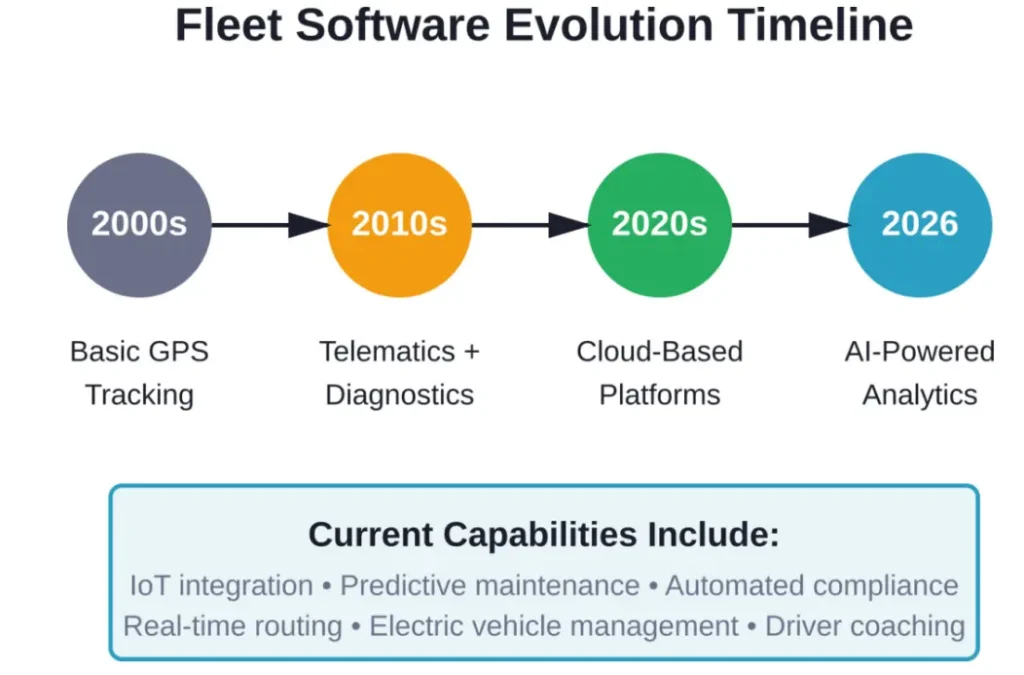
Fleet management software changed all that. What started as basic GPS tracking has evolved into comprehensive platforms that handle everything from route optimization to compliance reporting.
But here’s the thing—not all businesses understand what this software actually does or how it works. Some think it’s just vehicle tracking. Others assume it’s only for massive trucking companies.
The reality? Fleet management software has become essential for any business running more than a handful of commercial vehicles, from delivery services to construction companies to municipal governments.
We remind you that you can purchase home and commercial charging stations in our online store, as well as use public charging stations ECOFACTOR located throughout Ukraine. For convenient access to charging infrastructure, we recommend using our mobile app, available on iOS and Android.
What Fleet Management Software Actually Does
Fleet management software is a cloud-based platform that provides a single interface for overseeing all aspects of commercial vehicle operations. Think of it as a command center that brings together data from vehicles, drivers, and systems into one accessible dashboard.
The software’s primary purpose is improving operational efficiency and reducing costs. It achieves this through continuous monitoring and data analysis that would be impossible to manage manually.
Modern platforms incorporate artificial intelligence and machine learning to quickly analyze patterns and flag potential issues before they become expensive problems. According to Capterra reviewers, 94% rated vehicle tracking as a critical fleet management feature.
Core Functions That Matter
Vehicle tracking forms the foundation. GPS technology monitors real-time location, speed, direction, and route history for every vehicle in the fleet. Managers can see exactly where assets are at any moment.
But the software goes well beyond location data. It pulls diagnostic information directly from vehicle systems—engine health, battery status, fault codes, and performance metrics. This telematic data enables predictive maintenance rather than reactive repairs.
Driver behavior monitoring captures how operators actually handle vehicles. Hard braking events, rapid acceleration, excessive idling, speeding violations—all get logged and analyzed. This information proves invaluable for safety programs and insurance negotiations.
Fuel management tools track consumption patterns, identify inefficiencies, and calculate costs per vehicle or per route. Given that fuel represents one of the largest fleet expenses, these insights deliver immediate ROI.
How Businesses Actually Use This Technology
The practical applications vary by industry, but certain use cases appear universally across sectors.
Route optimization stands out as a major efficiency driver. Software analyzes traffic patterns, delivery windows, vehicle capacity, and driver availability to calculate the most efficient routes. This isn’t just about shorter distances—it’s about reducing drive time, fuel consumption, and wear on vehicles.
Maintenance management moves from reactive to proactive. Instead of waiting for breakdowns, the system triggers service alerts based on mileage, engine hours, or diagnostic codes. Scheduled maintenance costs far less than emergency repairs and prevents costly downtime.
Compliance management has become increasingly critical, especially with electronic logging device mandates. The software automatically tracks hours of service, generates required reports, and ensures drivers stay within legal limits. This reduces violation risks and simplifies audits.
Asset utilization analysis reveals which vehicles get used efficiently and which sit idle. Businesses often discover they can reduce fleet size by optimizing deployment, saving thousands in acquisition and maintenance costs.
Industries Relying on Fleet Management
Transportation and logistics companies represent the largest user base. Trucking firms, courier services, and freight operators depend on fleet software for dispatch, tracking, and regulatory compliance.
Construction businesses use it to monitor equipment location, prevent theft, and coordinate deliveries across multiple job sites. Field service companies—plumbers, electricians, HVAC technicians—optimize technician routes and improve customer communication.
Municipal governments manage emergency vehicles, waste collection trucks, and public transit buses through these platforms. Even organizations like utilities and telecommunications companies with service vehicle fleets have adopted the technology.
The common thread? Any business where vehicles represent significant capital investment and operational expense benefits from centralized management and data-driven optimization.
Key Metrics Fleet Software Tracks
Data means nothing without context. Fleet management platforms track specific metrics that directly impact the bottom line.
| Metric Category | What It Measures | Business Impact |
|---|---|---|
| Vehicle Utilization | Active hours, idle time, trip frequency | Identifies underused assets, optimizes fleet size |
| Fuel Efficiency | MPG, consumption patterns, idling costs | Reduces fuel expenses, flags inefficient vehicles |
| Driver Safety | Speed violations, harsh events, distraction | Lowers accident rates, reduces insurance premiums |
| Maintenance Costs | Repair frequency, part expenses, downtime | Extends vehicle lifespan, prevents breakdowns |
| Compliance Status | HOS violations, inspection reports, violations | Avoids fines, maintains operating authority |
Location and tracking data forms the baseline. Managers monitor current position, route history, stop duration, and geofence violations. This visibility alone eliminates unauthorized vehicle use and improves customer service through accurate ETAs.
Vehicle diagnostics pull engine fault codes, battery voltage, coolant temperature, and dozens of other parameters. Technicians can diagnose issues remotely before vehicles even return to the yard.
Driver performance metrics quantify behavior. Scorecards rank operators based on safety incidents, fuel efficiency, and adherence to schedules. This gamification often motivates improvement without heavy-handed management.
Modern Fleet Software Capabilities
The technology has advanced significantly beyond basic GPS tracking. Today’s platforms integrate with other business systems and leverage emerging technologies:
- IoT connectivity enables real-time communication between vehicles, devices, and central systems. Sensors monitor cargo temperature, track trailer location independently from trucks, and detect unauthorized door openings.
- Cloud-based architecture means managers can access fleet data from any device with internet connection. Mobile apps put dispatch information, navigation, and communication tools directly in drivers’ hands.
- AI and machine learning analyze historical data to predict maintenance needs, optimize routing, and identify efficiency opportunities humans might miss. These systems continuously improve as they process more information.
- Integration capabilities connect fleet software with ERP systems, accounting platforms, fuel card programs, and customer relationship management tools. This eliminates duplicate data entry and ensures consistency across business operations.
Entrust EV Charging Solutions to ECOFACTOR
Fleet management software is used to make vehicle operations easier to monitor, plan, and control. For electric fleets, charging data and station access can also become part of that process. ECOFACTOR helps businesses manage EV charging through station management tools, charging stations, and a mobile app for iOS and Android.
Drivers can use the charging station map to find charging points and see station details before charging. ECOFACTOR also has an online store where companies can buy chargers, cables and adapters for workplace charging, commercial parking areas, and other EV-related needs.
ECOFACTOR can help companies add more structure to EV charging with:
- Station monitoring and access tools
- Mobile support for drivers using charging points
- Charging equipment for business locations
- Practical accessories for regular EV use
Contact ECOFACTOR to make charging easier to manage alongside your fleet software and daily vehicle operations.
Why Businesses Invest in Fleet Management Software
The decision to implement fleet software typically stems from specific pain points or growth challenges:
- Cost reduction ranks as the primary motivator: Fleet expenses—fuel, maintenance, insurance, depreciation—add up quickly. Software provides the visibility needed to identify waste and inefficiencies. Businesses implementing fleet management software often report operational cost reductions.
- Safety improvements matter for both ethical and financial reasons: Accident costs extend far beyond vehicle repairs—they include worker compensation, legal liability, increased insurance premiums, and potential loss of business. Driver behavior monitoring and coaching programs demonstrably reduce incident rates.
- Regulatory compliance has become non-negotiable: Electronic logging device mandates, hours-of-service regulations, vehicle inspection requirements—the administrative burden continues growing. Automated compliance tracking prevents violations and simplifies audits.
- Customer service enhancement provides competitive advantage: Real-time tracking enables accurate delivery windows. Automated notifications keep customers informed. Service history builds trust through transparency and accountability.
- Scalability concerns drive adoption for growing businesses: Managing five vehicles manually might work. Managing fifty becomes impossible without systems. Fleet software provides the infrastructure to scale operations without proportionally increasing administrative overhead.
Emerging Trends Shaping Fleet Management
Electric vehicle integration represents a major evolution. Major logistics companies are committing to electric vehicle fleet transitions. Fleet management systems now incorporate charge level monitoring, charging station location, and range calculations specific to EV operations.
Automated driving technology integration has begun. While fully autonomous commercial vehicles remain limited, advanced driver assistance systems and platooning capabilities require specialized monitoring and management tools.
Sustainability reporting has gained priority as businesses face pressure to reduce carbon footprints. Fleet software now calculates emissions, tracks environmental impact, and generates ESG reports for stakeholders.
Predictive analytics continue improving. Machine learning models don’t just flag maintenance needs—they predict optimal vehicle replacement timing, forecast future fuel costs, and recommend operational changes based on trend analysis.
Procurement and Implementation Considerations
Selecting fleet management software requires careful evaluation beyond feature lists and pricing.
Deployment models affect accessibility and cost structure. Cloud-based SaaS platforms offer lower upfront costs, automatic updates, and remote access. On-premise installations provide more control but require IT infrastructure and maintenance.
Hardware requirements vary by provider. Some systems use proprietary tracking devices. Others work with third-party telematics equipment. Installation complexity ranges from simple plug-and-play OBD-II adapters to professional hardwired installations.
Pricing structures differ significantly. Some providers charge per vehicle per month. Others base pricing on features, data usage, or user licenses. Pricing varies significantly by provider and feature set.
Integration capabilities determine how well the software fits existing workflows. Check compatibility with accounting systems, dispatch software, fuel card programs, and other tools the business already uses.
Support and training shouldn’t be overlooked. Implementation assistance, ongoing technical support, and user training significantly impact adoption success. Community discussions consistently highlight support quality as a key differentiator between providers.
Frequently Asked Questions
What size fleet needs management software?
Any business operating three or more commercial vehicles typically benefits from fleet management software. The crossover point where manual tracking becomes inefficient happens quickly. Businesses with 5-10 vehicles often see immediate ROI through fuel savings and maintenance optimization alone. Larger fleets find the software essential rather than optional.
Does fleet management software work offline?
Most modern fleet management platforms require internet connectivity for real-time tracking and data synchronization. However, quality systems cache data locally during connectivity gaps and sync automatically when connection restores. GPS tracking typically continues logging location data offline, uploading once internet access returns. Mobile apps often include offline modes for essential driver functions.
How does fleet software improve driver safety?
The technology monitors driving behaviors including speeding, harsh braking, rapid acceleration, and distracted driving. Managers receive immediate alerts for dangerous incidents. Driver scorecards identify those needing coaching. The awareness that behavior is monitored often improves performance. Businesses implementing monitoring systems with active coaching programs typically see reductions in accident rates.
Can fleet management software reduce insurance costs?
Yes, substantially in many cases. Insurance providers increasingly offer discounts for fleets using telematics and safety monitoring. The software provides documentation of safety programs and driving standards that underwriters value. After accidents, video footage and telemetry data can prove driver innocence, preventing fraudulent claims and protecting premiums from increases.
What’s the difference between fleet management software and GPS tracking?
GPS tracking represents just one component of comprehensive fleet management software. Basic GPS systems only show vehicle location. Fleet management platforms incorporate GPS data along with vehicle diagnostics, driver behavior monitoring, maintenance scheduling, fuel tracking, compliance reporting, and business analytics. Think of GPS tracking as a feature within fleet management software rather than a complete solution.
How long does fleet management software implementation take?
Implementation timelines vary based on fleet size and system complexity. Small fleets with simple plug-and-play devices can be operational within days. Larger fleets requiring professional hardware installation, custom integrations, and extensive training might need 4-8 weeks. Most providers offer phased rollouts, allowing businesses to start with a pilot group before expanding fleet-wide.
Does fleet management software work for mixed fleets?
Modern platforms handle diverse vehicle types—light-duty trucks, heavy-duty tractors, trailers, construction equipment, service vans, and even non-powered assets. Advanced systems manage mixed conventional and electric vehicle fleets simultaneously. The software adapts tracking and reporting parameters based on vehicle classification, providing relevant metrics for each asset type within a unified interface.
Making the Decision
Fleet management software has evolved from a nice-to-have tracking system into essential business infrastructure for vehicle-dependent operations. The technology delivers measurable returns through cost reduction, safety improvement, compliance automation, and operational optimization.
The barriers to entry have dropped significantly. Cloud platforms eliminated large capital investments. Competition drove pricing down. User interfaces became more intuitive. Integration capabilities expanded.
For businesses still managing fleets through spreadsheets and phone calls, the efficiency gap widens daily compared to competitors using modern management platforms. The question isn’t whether to implement fleet software anymore—it’s which platform best fits specific operational needs.
Start by identifying the biggest pain points current processes create. Is fuel costs spiraling? Are maintenance issues causing excessive downtime? Do compliance requirements consume administrative resources? The problems prioritized should guide software evaluation.
Request demos from multiple providers. Test interfaces with actual users—dispatchers, managers, and drivers—who’ll interact with the system daily. Check references from businesses with similar fleet sizes and operational models.
Ready to optimize fleet operations? Evaluate your current vehicle management processes, identify improvement opportunities, and explore platforms designed for your industry and fleet size. The right fleet management software transforms vehicle operations from a cost center into a competitive advantage.