

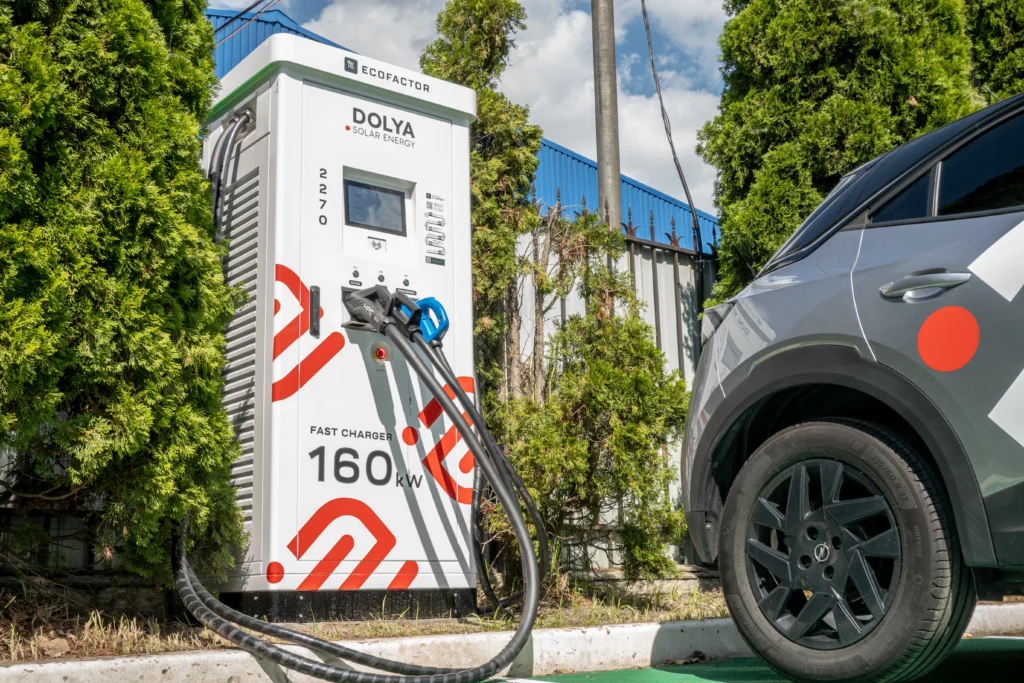
Table of contents:
Owning an electric vehicle (EV) is no longer something strange and unaffordable. They are increasingly gaining popularity in Ukraine due to their environmental benefits and lower operating costs compared to traditional internal combustion engine cars. But, as with any other vehicle, it is important to understand how much it costs to maintain an electric car, including charging costs.
There are several factors that affect charging costs, including the type of charger, electricity tariff and charging location. To estimate these costs, you can use an electric car charging cost calculator.
We remind you that you can purchase home and commercial
What is an electric car charger?
An electric car charger is a piece of equipment that connects to the mains and charges your car’s battery. There are different types of chargers that differ in terms of power and charging speed.
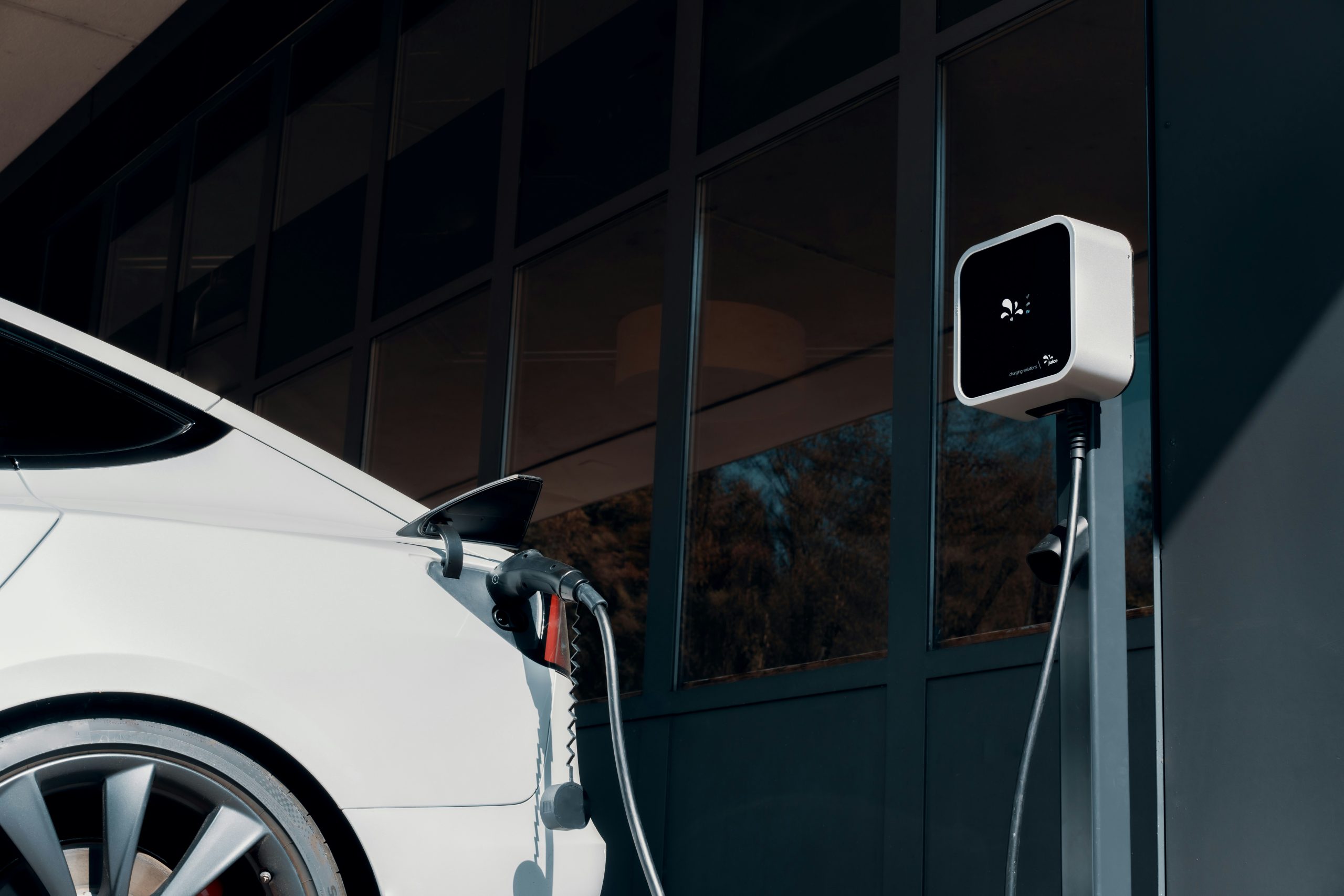
Types of chargers:
- Level 1 charger: Uses a standard 220 V socket and provides a slow charge. This is convenient for charging at home, especially if you have the option of charging your car at night.
- Level 2 charger: Designed for faster charging, often requiring a dedicated 380V socket. This type is usually used at charging stations or in garages for private homes.
- Level 3 chargers: Known as fast charging stations or DC fast chargers. They provide very fast charging and are popular at public charging stations, for example at petrol stations or shopping centres.
How to use the electric car charging calculator?
The electric car charging cost calculator lets you quickly find out how much it will cost to charge your car. Here’s how to use it:
- Select your car model: To do this, select the make and model of your vehicle so that the calculator can use accurate battery power data.
- Enter the battery size: Enter the battery capacity of your vehicle in kWh (if you don’t know the exact figure, the calculator can fill it in for you based on the model you have selected).
- Selecting a charging method: Select between home charging and charging stations. This will help you compare the costs of charging at home and at public charging stations.
- Enter your charging habits: Enter how many kilometres you usually drive per day. This will help the calculator calculate how often you will need to charge your car.
- Introduce electricity tariffs: To calculate the cost of home charging, enter the electricity tariff you use. For public charging stations, the calculator may use average rates or allow you to select a specific network.
- Overview of the results: After entering all the data, the calculator will show you the estimated cost of charging your vehicle. You will also get a breakdown of the cost for home and public charging.
Factors affecting the cost of charging an electric car in Ukraine
Before you start calculating the cost of charging, it is important to familiarise yourself with the main factors that affect the price:
1. Electricity tariffs
In Ukraine, electricity prices can vary depending on the supplier, region and time of day. The cost of charging an electric vehicle directly depends on electricity tariffs.
2. Type of charger
The price of charging will vary depending on whether you charge your car at home or use public charging stations. Charging at public charging stations, including fast chargers, may be more expensive.
3. Charging speed and efficiency
Fast charging stations are more expensive, but they can charge your car much faster. You should also consider the charging efficiency – how much energy is converted into a charge in the battery.
4. The battery capacity of your vehicle
The bigger the battery in your car, the more electricity it takes to charge it, and the higher the cost.
5. Payments for the network of public charging stations
If you use public charging stations, the cost may vary depending on the network and location of the station.
6. Charging location and accessibility
Charging prices may vary depending on the location of charging stations. Charging in the central areas of large cities may be more expensive than on the periphery.

Electric car charging cost calculator
To calculate the cost of charging an electric car, you can use the following formula:
Charging cost = Battery capacity × Electricity tariff
This formula allows you to get the total cost of charging based on the car’s battery capacity and electricity tariff. It is universal and suitable for any electric vehicle model.
Example: Charging costs for the Renault Zoe
The Renault Zoe is a popular compact electric car fitted with a 40 kWh battery. To calculate the cost of charging in Ukraine, we will use the average electricity tariff, which is 2.5 UAH per kWh (this is the average tariff for households, although it is worth noting that the tariff may vary depending on the supplier and region).
Calculation.
The cost of a full charge for a Renault Zoe with a 40 kWh battery will look like this:
Charging cost = Battery capacity × Electricity tariff
Charging cost = 40 kWh × 2.5 UAH/kWh
Charging cost = 100 UAH
So, in order to fully charge the Renault Zoe, you will need to pay approximately
If you charge your car at night, you may be able to take advantage of the nighttime rate, which is usually lower, which will save you money. Also, the cost of charging at public charging stations can be higher than at home, especially if you are looking for fast charging.
This example gives a realistic idea of how much it costs to charge a popular electric car in Ukraine.
Average costs for charging electric cars in Ukraine
Below is a table with the average charging costs depending on the battery capacity of your car, calculated on the basis of standard electricity tariffs in Ukraine:
| Battery capacity (kWh) | Average cost of charging (UAH) |
| 5 | 12.5 |
| 10 | 25 |
| 15 | 37.5 |
| 20 | 50 |
| 25 | 62.5 |
| 30 | 75 |
| 35 | 87.5 |
| 40 | 100 |
| 45 | 112.5 |
| 50 | 125 |
Comparing the cost of charging at home and at public stations
When choosing how to charge your electric vehicle, it is important to understand the cost differences between charging at home and at public charging stations. Each of these options has its advantages and disadvantages, which depend on factors such as convenience, charging speed, and accessibility of stations. Here are the main differences to help you choose the most suitable option for your needs.
| Criterion. | Charging at home | Charging at public stations |
| Cost savings | Charging at home is usually cheaper, especially when using nighttime tariffs. Charging at night can significantly reduce your energy costs. | Public stations are usually more expensive, especially for fast charging at high power. |
| Charging speed | Slower charging, especially when using standard chargers (level 1). | Faster charging stations (Level 2 or DC fast charging) allow you to top up your charge faster, especially on long journeys. |
| Convenience. | You can charge it at night without leaving your home, which is ideal for daily commuting. | You need to visit public charging stations, which can be less convenient. |
| Accessibility for non-owners of garages | Charging at home requires access to private parking or a garage, which can be a limitation for those living in apartment buildings. | Public charging stations are accessible to everyone, especially those without access to private parking. They can be located in urban areas, shopping centres and on key transport routes. |
| Process control | Full control over charging time and the ability to optimise energy costs. | Less control: you depend on the availability of charging stations and their tariffs. |
| Refuelling in case of emergency | It can be charged whenever you want, ensuring you’re always ready to go. | Public charging stations offer the possibility of fast charging when needed, especially on long journeys, allowing you to quickly replenish your energy supply. |
How to save on electric car charging costs
Now that you have a general idea of the costs of charging your electric car, you can start working on ways to reduce these costs and make the charging process more economical. Here are some strategies to help you save on your charging costs, making your journey to electric car ownership even more profitable and environmentally friendly.
Optimising charging time
One of the most effective ways to reduce charging costs is to choose the right time to charge. Many energy suppliers in Ukraine offer tariffs with differentiated prices depending on the time of day, with lower rates at night or in the early morning. By scheduling charging at night, you can significantly reduce the cost of each charge. Well-known charging cost calculators allow you to compare prices between peak and off-peak hours, allowing you to make informed decisions about when to charge.

Installing a home charging station and government subsidies
Installing a home charging station can save you money in the long run. While the initial installation costs can be quite high, the convenience and lower electricity rates at home compared to public stations make it a worthwhile investment. In addition, there are government programmes and subsidies available in Ukraine to reduce the cost of installing charging stations, making this option even more beneficial.
Use of smart technologies
Investing in smart charging stations is another way to save on costs. Smart chargers can automatically schedule charging times to coincide with the lowest tariffs, thereby optimising costs. What’s more, some systems can be integrated with renewable energy sources, such as solar panels, allowing you to charge your car using eco-friendly energy that you generate yourself.
Search for free public charging stations
Some public charging stations in Ukraine offer free charging as part of promotions or in special car parks. Use mobile apps and online maps to find these free charging points, allowing you to save on charging whenever possible.
Membership in charging station networks
Some public charging station networks in Ukraine offer subscription plans with discounts or unlimited charging options. Evaluating your driving habits and choosing the right plan can help you save on charging costs, especially if you use public stations frequently.
Trip planning
When planning long journeys, look out for charging stations along the route where you can take advantage of reduced rates or free charging. This will help you avoid the high cost of fast charging when you’re away from home.
Regular maintenance and efficient driving
Regular maintenance of your electric car can also help reduce charging costs. Keeping your car in good condition will avoid wasting energy. In addition, driving efficiently, using gentle acceleration and energy recovery during braking can increase the range on a single charge, reducing the frequency and cost of charging.

Charging electric vehicles with ECOFACTOR in a cost-effective manner
At ECOFACTOR, we offer reliable charging solutions for electric vehicles that not only meet high quality standards but also optimise costs. Our
Our charging stations are suitable for use at home and in business and provide fast and reliable charging of electric vehicles at no extra cost. We offer a variety of models for different needs: from mobile stations to powerful stationary solutions. In our
We also provide the opportunity to use the mobile application to
Our company strives to provide cost-effective charging for every electric car owner by offering solutions that not only meet high quality requirements, but also allow you to save on electricity costs.
Conclusion
When making the switch to an electric car, it is important not only to consider the cost of purchasing one, but also to estimate the cost of charging. Calculating the cost of charging allows you to better understand how to effectively manage costs and optimise the charging process for your car. With the help of a cost calculator, you can more accurately determine how much charging will cost depending on the type of device, electricity tariffs, and your habits. By using saving tips, such as optimising charging times, opting for nighttime tariffs or using smart charging stations, you can significantly reduce your electricity costs.
Frequently asked questions
How can I calculate the cost of charging my electric car?
To calculate the cost of charging, you need to know the battery capacity of your car and the electricity tariff you use. Using the cost calculator, you can get an accurate estimate of the costs.
What is the difference between Level 1, 2 and 3 charging stations?
Level 1 charging stations use a standard 220V socket and provide slow charging. Level 2 provides faster charging and typically uses 380V. Level 3 is fast charging, which is used at public stations and can top up your car’s charge much faster.
Is it possible to save money on charging using nighttime tariffs?
For example, many energy companies offer nighttime rates that are significantly cheaper. By scheduling your charging at night, you can significantly reduce your energy costs.
How to choose the best charging station for your electric car?
It all depends on your needs: mobile or stationary Level 2 stations are suitable for home use, while Level 3 fast chargers are suitable for business or public access. The choice depends on the type of car you have and the location where you plan to charge it.
Are there any free charging stations in Ukraine?
For example, some public charging stations in Ukraine provide free charging as part of promotions or in certain locations. You can use the ECOFACTOR mobile app to find the nearest free charging stations.