


Table of contents:
The Tesla Model 3 and the YangWang U8 are such different cars that comparing them might seem like a strange idea. One is a lightweight city saloon; the other is a hybrid behemoth that can swim and spin on the spot. But if you’re torn between practicality, off-road capability, comfort and cost, this article will help you sort everything out. And most importantly, we’ll look at everything from the perspective of a real Ukrainian user, rather than just idealised brochures.
We remind you that you can purchase home and commercial charging stations in our online storeand also use the public charging stations ECOFACTORcharging points located throughout Ukraine. For convenient access to charging infrastructure, we recommend using our mobile applicationwhich is available on iOS and Android.
Dimensions and purpose: a city against the elements
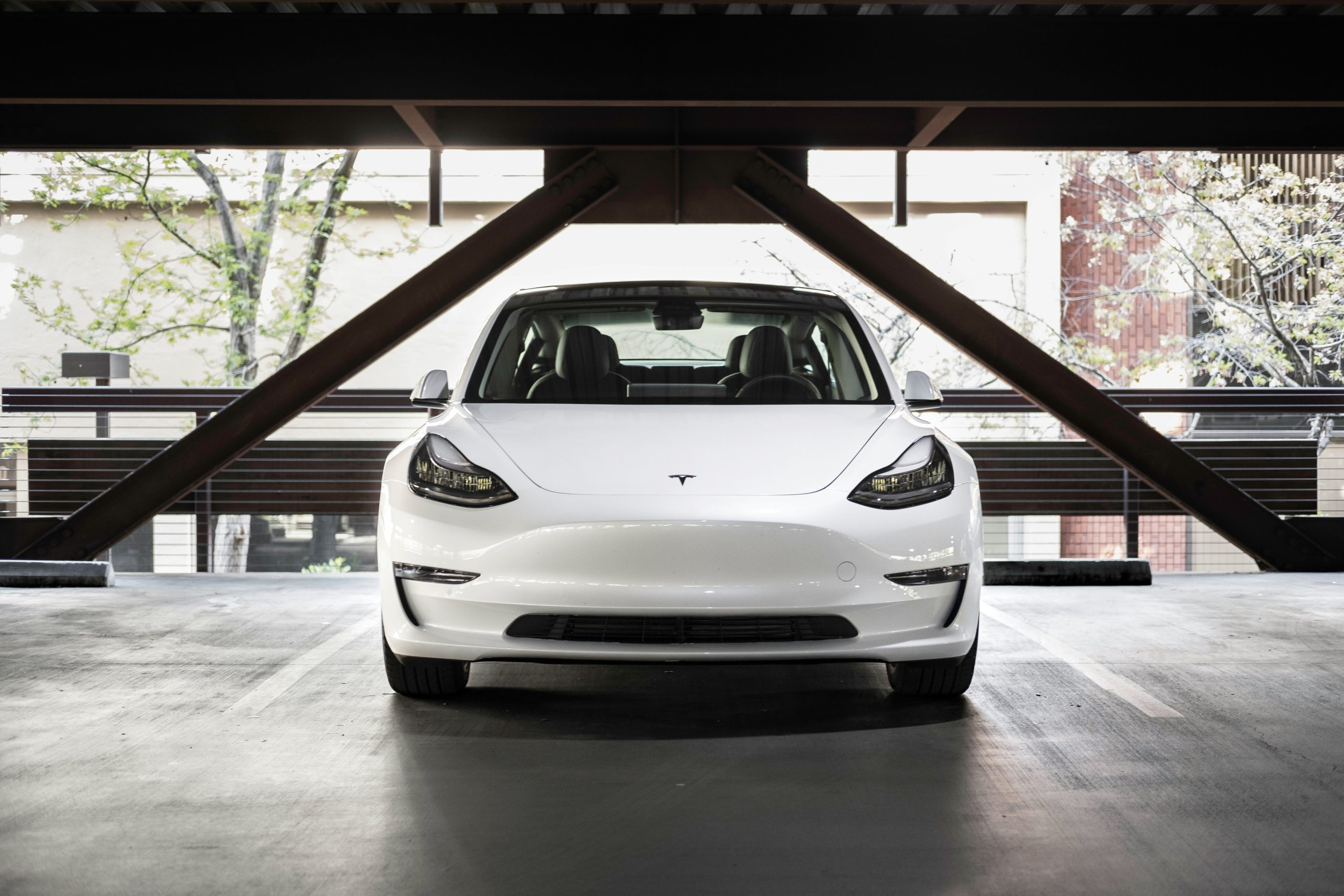
Tesla Model 3
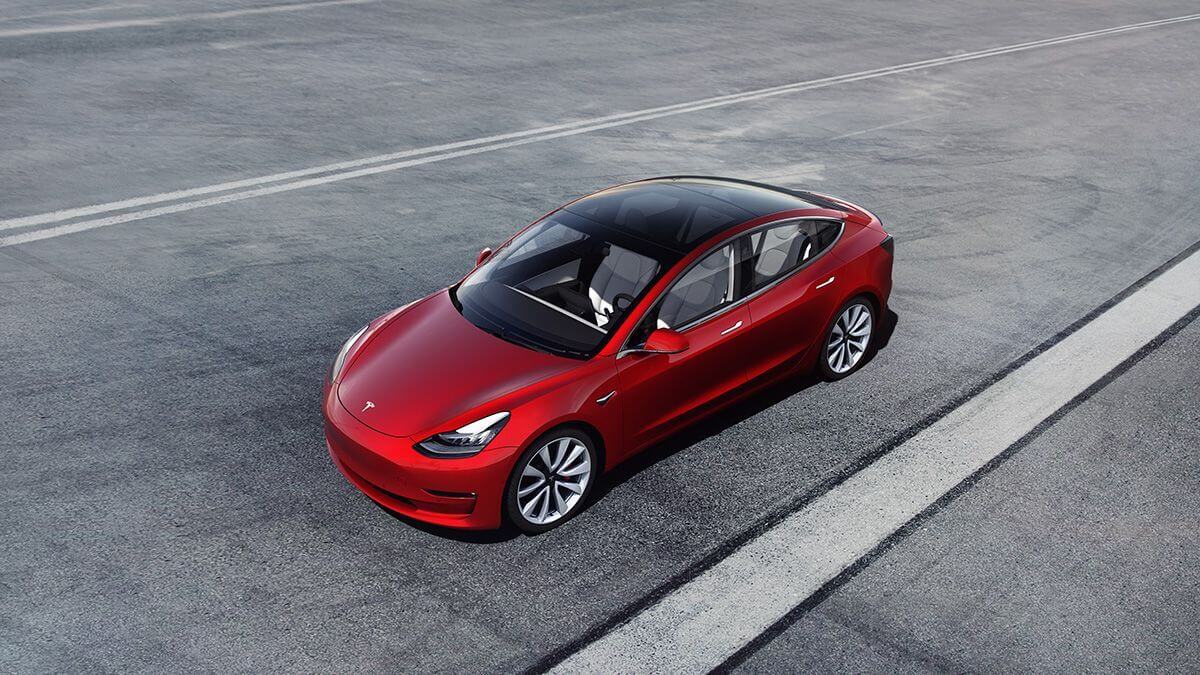
The Tesla Model 3 is a classic mid-size electric saloon. It is 4,720 mm long, 1,849 mm wide and just 1,441 mm high. The vehicle weighs 1,836 kg, and thanks to its low centre of gravity, it handles superbly. In town, the Model 3 feels confident: it’s manoeuvrable, light and doesn’t require much space for parking. On the track, it’s stable, composed and offers pleasant handling even at high speeds.
However, as soon as the road begins to resemble Ukrainian off-road conditions, the Tesla gives up. The low ground clearance, low front bumper, and complete lack of protection from below make it vulnerable to even medium-sized pits and puddles. This car is not for adventure, but for asphalt.
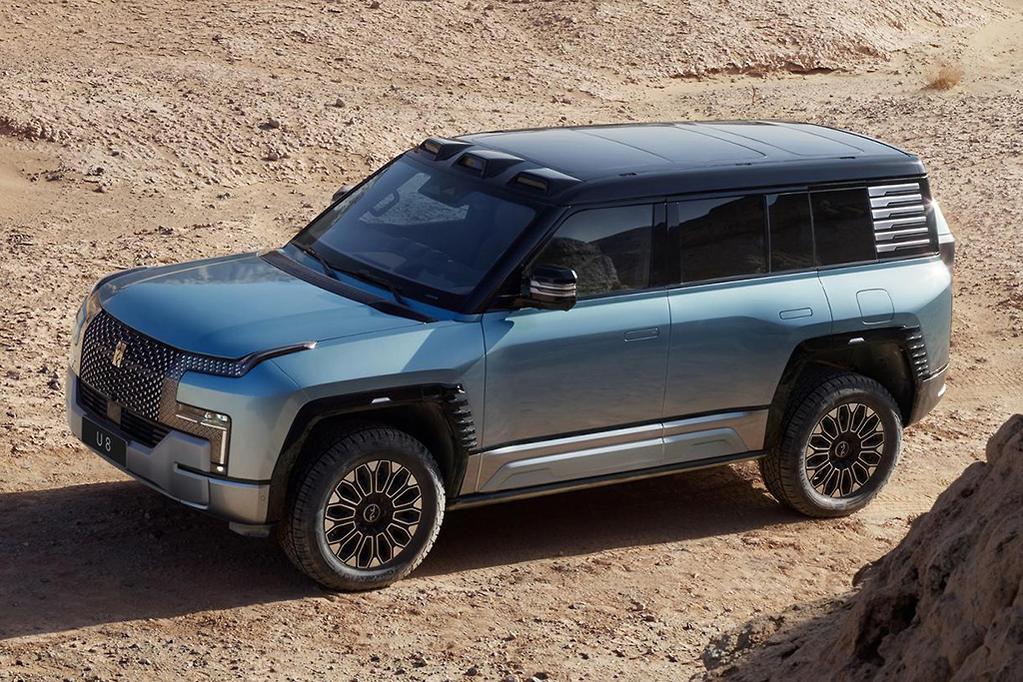
YangWang U8
The YangWang U8 is the complete opposite. This off-roader from BYD’s premium sub-brand is 5,319 mm long, 2,050 mm wide and 1,930 mm high. It weighs almost 4 tonnes and has a wheelbase of 3,050 mm. It is a massive body-on-frame SUV, designed for those who want to go where others wouldn’t even dare to venture.
The U8 has an air suspension that can change the ground clearance by up to 150 mm. The car can be raised to avoid damage off-road, or lowered for comfortable entry into the garage. And the most interesting thing is that it can float on water for up to 30 minutes at a speed of 3 km/h. This is no joke: BYD has actually developed an emergency “float mode” in case of floods or natural disasters.
For Ukrainian conditions, where rivers burst their banks in spring and roads in villages sometimes resemble swamps, this feature sounds not like a luxury but like life insurance.
Technology: electric versus hybrid giant
Tesla Model 3 – all-electric
The Model 3 is powered by a 60 kWh battery (LFP, manufactured by CATL). It is an all-electric vehicle with rear-wheel drive and a range of about 440 km in real-world conditions. The maximum power output is 208 kW (283 hp) and torque is 420 Nm. Acceleration from 0 to 100 km/h takes 6.1 seconds, and the top speed is 201 km/h.
This car is designed for everyday use: commuting, weekend trips, motorway journeys with charging stations. Its architecture is simple, reliable, without complex hybrid systems. But the main disadvantage is its dependence on charging infrastructure.
YangWang U8 – an electric car with a petrol backup
The U8 belongs to the EREV (Extended Range Electric Vehicle) class, which is a hybrid with an extended range. Under the hood is a 2.0-litre turbo engine that does not turn the wheels but acts as a generator, recharging the 49.05 kWh Blade battery.
In addition, each wheel of the U8 has its own 220 kW electric motor, which gives a total of 880 kW (1197 hp) and 1280 Nm of torque. That’s a lot of power even for a supercar, let alone an SUV.
It can accelerate to 100 in 3.6 seconds, making the U8 faster than most sports cars. And best of all, it can travel up to 1,000 km on a full tank and a full charge. For travelling around Ukraine, this is a huge advantage.
Everyday use: who is easier to feed and park
The Tesla Model 3 can be charged at home from a regular outlet or from a station with a capacity of up to 11 kW. Fast charging (DC) at 110 kW allows you to replenish the battery from 10 to 80% in 24 minutes. It’s fast, practical and petrol-free.
But you need to have access to a charging station, which is not always possible in small towns or villages.
The U8, on the other hand, combines both worlds. If you can charge it, great. If not, you just fill up with petrol and drive on. Its 75-litre tank gives you a range that’s enough to drive from Kyiv to Uzhhorod without stopping.
On the other hand, parking the U8 is a real challenge. In the city centre or in an underground car park, its size is a real test. So, in the city, the Tesla comes out on top, but on the open road and in the mountains, the U8 is the clear winner.
Off-road capability: when the tarmac runs out
The Tesla Model 3 is a car designed for smooth roads. Its main focus is on comfort and efficiency on tarmac. It does not have all-wheel drive (the base version is RWD) and is not suited to mud, deep puddles or uneven surfaces.
The YangWang U8 is designed for something completely different. Its e4 technology allows each wheel to spin independently. This means that the car can literally turn on the spot, spin the wheels in opposite directions and stabilise even if a tyre is punctured.
He also has:
- Air suspension with height adjustment
- Body protection against water (IP68)
- “Swimming mode” – swimming for up to 30 minutes
- “Tank U-turn by 180°
BYD does not recommend using the swim mode on a regular basis, but as an emergency evacuation function, it can save lives during floods.
Charging and range: who will last longer
On long journeys, the question is not only about the distance a car can drive without stopping, but also about the convenience of charging – where, how and how long it takes. This is where the Tesla Model 3 and YangWang U8 demonstrate two different philosophies.
Tesla Model 3: all-electric – and nothing superfluous
The Tesla Model 3 has a 60 kWh battery and supports fast charging with up to 110 kW of direct current (DC). According to official data, this allows the battery to be charged from 10 to 80% in just 24 minutes, which is equivalent to approximately 310-330 km of driving range.
Types of charging supported by Model 3:
- Type 2 (AC): 11 kW home or office charger (full charge in 6.5 hours)
- CCS Combo 2 (DC): public fast charging up to 110 kW
One handy feature is that Tesla automatically pre-heats the battery before charging if you’ve planned a route that takes you past a charging station. This reduces charging time and minimises battery wear and tear. The car also accurately shows how far it is to the nearest charging stations, and even takes weather conditions into account in its calculations.
However, the main problem for Ukrainian drivers is infrastructure. In big cities, such as Kyiv, Lviv or Dnipro, the situation is better. However, in rural areas or when travelling to the Carpathians, difficulties can arise. And it’s not a given that every charging point is working properly or free.
YangWang U8: when charging isn’t a must
The U8 belongs to the class of extended range hybrids (EREV). Its 49.05 kWh battery provides up to 180 km of electric range without the aid of an internal combustion engine. But the main thing is the 2.0-litre turbo engine, which works as a generator and charges the battery while driving or at a standstill. When paired with a 75-litre fuel tank, this gives a combined range of up to 1,000 km.
Charging types for U8:
- AC charging: 7-11 kW (overnight charging at home)
- DC charging: up to 110 kW (like Tesla), charge from 30 to 80% in 18 minutes
- VTL (Vehicle to Load): the ability to power other devices (up to 6 kW, up to 25 hours)
Of course, the pure electric range is less than Tesla’s. But the ability to fill up with petrol at any petrol station makes the U8 much less dependent on charging infrastructure. This is especially important in remote regions where there is neither a Supercharger nor normal household charging.
In addition, the hybrid architecture means that you don’t have to worry about the battery drain during cold weather – the engine-generator automatically switches on and keeps the system running.

Charging infrastructure in the context of choosing between Tesla Model 3 and YangWang U8: how we at ECOFACTOR help drivers
When comparing Tesla Model 3 and YangWang U8 in terms of Ukrainian realities, it is impossible to avoid the issue of charging infrastructure. Without reliable access to stations, any electric vehicle loses half of its convenience. This is where we, ECOFACTOR, come in.
At ECOFACTOR, we have been working for more than 10 years to ensure that charging in Ukraine is not a complicated technical process, but a normal part of the journey. We do not simply supply charging stations – we design and manufacture them in Ukraine, adapting them to local conditions and the needs of drivers and businesses.
Our stations aren’t just AC or DC chargers up to 420 kW, but also mobile solutions. TheYangWang U8 is a fast charger that can be easily used at home or in locations with limited access to the mains supply. This is relevant both for Tesla owners who charge their vehicles daily and for those who plan to use the YangWang U8 on remote routes where they sometimes have to rely solely on a domestic socket or a generator.
To find the nearest charging point or plan your route, you can use our mobile app, which is available on iOSand on the Android. The application includes map of charging stations throughout Ukraine with information on power, status and connector type. This is convenient, especially if you are on the road, in a new city or want to avoid queues.
We also offer a wide range of accessories for everyday use of your electric vehicle, cables and adapterswhich are available in our online store. They are compatible with most electric cars, including Tesla, and can be useful in situations where a non-standard charging option or a transition between different types of connectors is required.
We also work with commercial facilities such as hotels, restaurants, and business centres to help install charging stations for their customers. If you own such a space and plan to serve electric vehicle owners, including new cars like the U8, we can organise everything from equipment selection to service support.
Whatever you choose – a city-going Tesla or an all-terrain YangWang – without a charging ecosystem, your purchase won’t work to its full potential. That’s why we’ve created the ECOFACTOR platform, which brings together charging stations, software, service and support into a single system that makes everyday life and driving a breeze.
Interior and technology: different philosophies of comfort
Tesla Model 3
The Tesla interior is all about minimalism. A single large 15-inch display in the centre, with almost no physical buttons. Everything is controlled via the screen. It feels spacious and clean, but a little cold.
Advantages:
- Simplicity and logic
- Constant software updates:
- Convenient autopilot control and multimedia
Disadvantages:
- Minimum of premium materials
- A lack of ‘warmth’ in the design
- Dependence on the touchscreen for even the smallest things
YangWang U8
The Salon U8 is the antithesis of minimalism. It features six screens, including 23.6-inch displays for the driver and passenger, separate screens in the rear, a 50-inch HUD and luxurious Nappa leather trim.
Additionally:
- 22 Dynaudio speakers
- Satellite phone
- Thermal camera for night vision
- Premium noise insulation
If the Tesla is like a gadget, then the U8 is like a luxury off-roader with a high-tech heart.
Security and assistance systems
Tesla Model 3 received 5 stars from Euro NCAP:
- Protection of adults – 90%
- Child protection – 93%
- Support systems – 87 per cent
ADAS and the autopilot work brilliantly, and the collision avoidance system is one of the best in the world.
The YangWang U8 features its own Nvidia Drive Orin control platform with 38 sensors, including LiDAR, radars and cameras. Its data processing power is 508 TOPS.
The U8 supports Level 2 automation, but BYD is gradually updating the software. For an SUV, this is sufficient to avoid dangerous situations in challenging conditions.
Cost, availability and realities of the Ukrainian market
The Tesla Model 3 RWD costs around 40,000 euros in Europe. In Ukraine, its price after customs clearance starts at around 45,000 dollars. On the second-hand market, Teslas are no longer a rarity – spare parts are available and the service network is expanding.
The YangWang U8 is in a league of its own. Its official price in China is around 1,089,000 yuan (around $150,000). In Ukraine, it is not yet officially on sale. Clearly, this car is not intended for the average buyer.
Conclusion
When comparing the YangWang U8 and the Tesla Model 3, it’s easy to see that these represent two different approaches to electric mobility. The Tesla is a sensible choice for those who value simplicity, economy and a quiet ride on the road. It is ideal for daily journeys within the city or between major cities, where the charging infrastructure has already become part of everyday life.
The YangWang U8 is a completely different story. It’s a car for those who want to feel confident in any conditions. It can go where others simply wouldn’t dare, whilst offering a level of comfort more akin to a business-class cabin. On Ukrainian roads, where the tarmac often ends abruptly, this is a real advantage.
Both cars have their own strengths. Choosing between them isn’t just a question of budget, but also of lifestyle. If you value technological simplicity, fast charging and environmental friendliness, the Tesla Model 3 will be an excellent choice. If, on the other hand, you’re looking for reliability, range and a sense of complete control, the YangWang U8 is sure to impress.
In any case, no matter which model you choose, it is important to have a reliable charging infrastructure nearby. And this is where ECOFACTOR solutions can make your electric car journey across Ukraine truly comfortable.
Frequently asked questions
Can I charge my Tesla Model 3 at ECOFACTOR stations?
Yes, the Tesla Model 3 is compatible with most ECOFACTOR charging stations. Some models may require an adapter or a suitable cable, which can be purchased in our online store.
How long does it take to fully charge a Tesla Model 3 from a home station?
Depending on the power of your network, a full charge takes about 6-7 hours on an 11 kW station. It is convenient to do this at night – you wake up and the battery is already full.
Does YangWang U8 support charging on regular household outlets?
Yes, U8 can be charged even from a standard outlet, although the process will take longer. This is convenient when travelling or in places where there are no fast charging stations.
What type of charger is better to install at home?
For a Tesla or any other electric vehicle, the best option is a wall-mounted AC station with a capacity of 7-11 kW. It is safe, fast and suitable for daily use. ECOFACTOR offers ready-made solutions for both apartments and private houses.