


Table of contents:
The electric vehicle market in Ukraine has long ceased to be exotic. Tesla is not just a household name – it’s on the roads, in yards, at charging points, on TikTok and OLX. But new players are increasingly appearing alongside it. One of them is the Chinese Zeekr, a subsidiary brand of the Geely Group. Its Zeekr X model looks unusual, charging […]
So which is better – the tried-and-tested Tesla Model 3 or the new Zeekr X? If you’re seriously considering an electric car on a budget of up to $50,000, this article is for you. Without further ado, here are the key points: charging, range, interior space, suspension, acceleration, technology and practicality in real-world conditions.
We remind you that you can purchase home and commercial charging stations in our online storeand also use the public charging stations ECOFACTORcharging points located throughout Ukraine. For convenient access to charging infrastructure, we recommend using our mobile applicationwhich is available on iOS and Android.
Sedan or crossover: the difference is immediately apparent
Let’s start with the basics: the shape of the body.
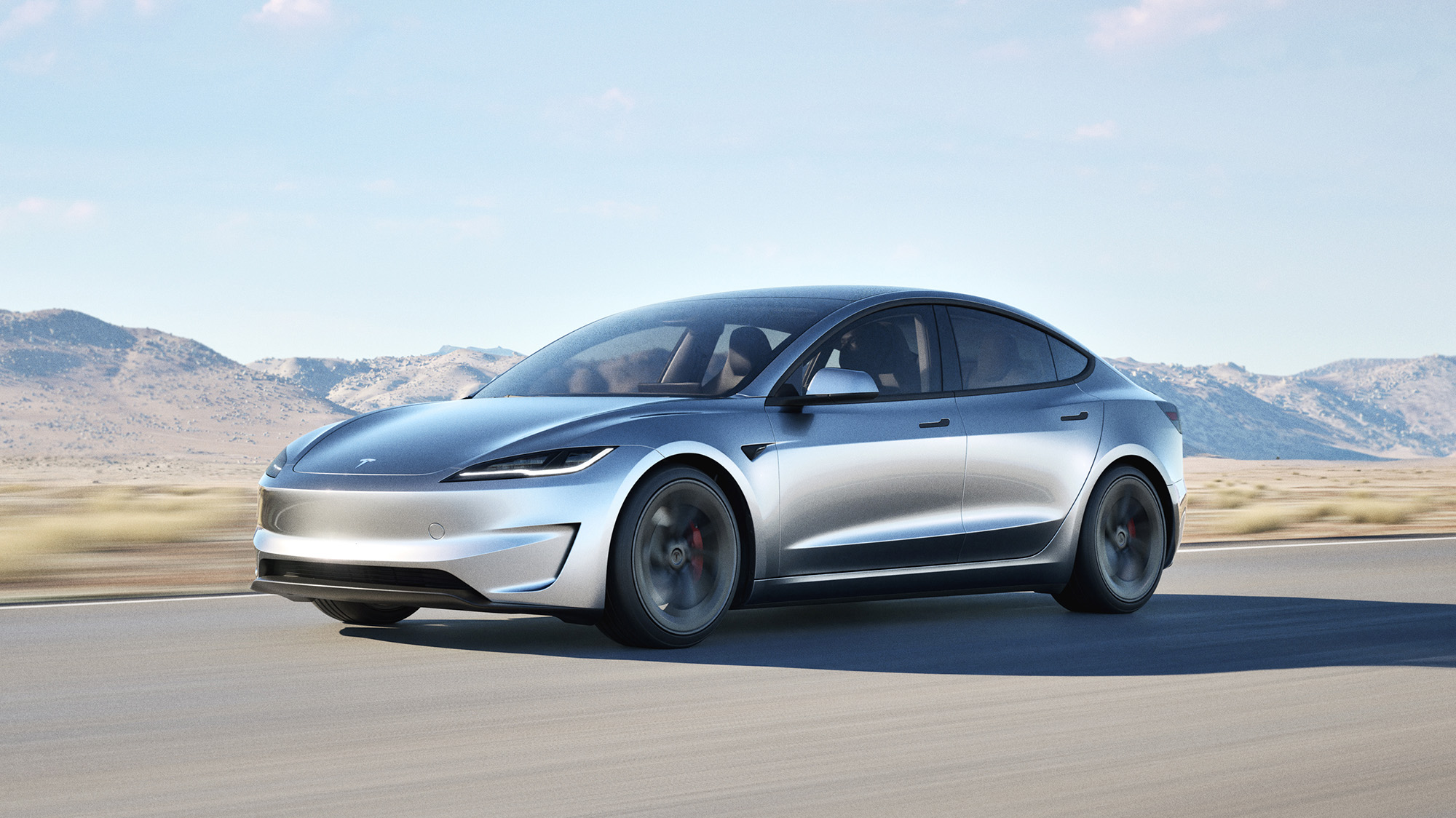
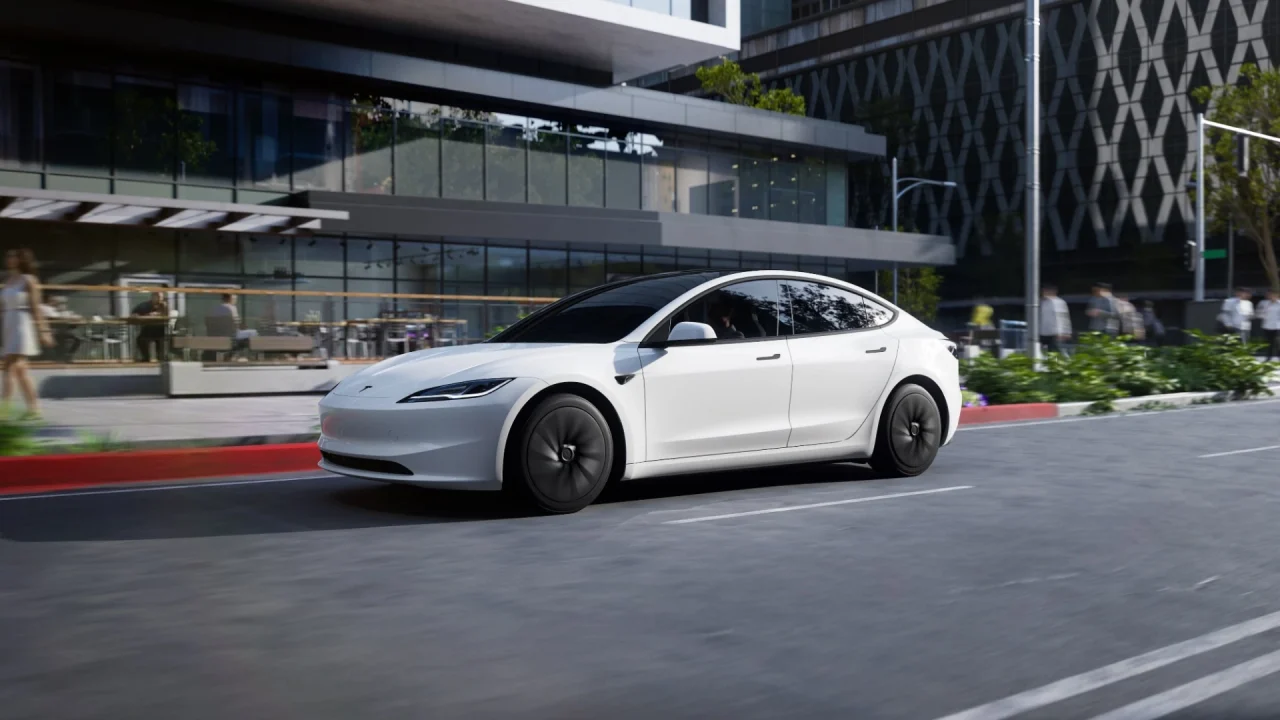
The Tesla Model 3 is a typical saloon. Aerodynamic, low-slung and slightly ‘flattened’, especially when compared to the crossovers that have been taking over the market in recent years. It’s nearly 4.7 metres long, sits low to the ground, has a sharp profile and a minimalist silhouette. The boot offers over 500 litres of space, plus extra room in the front compartment (frunk), which easily accommodates a rucksack, a cable or even a spare tyre.
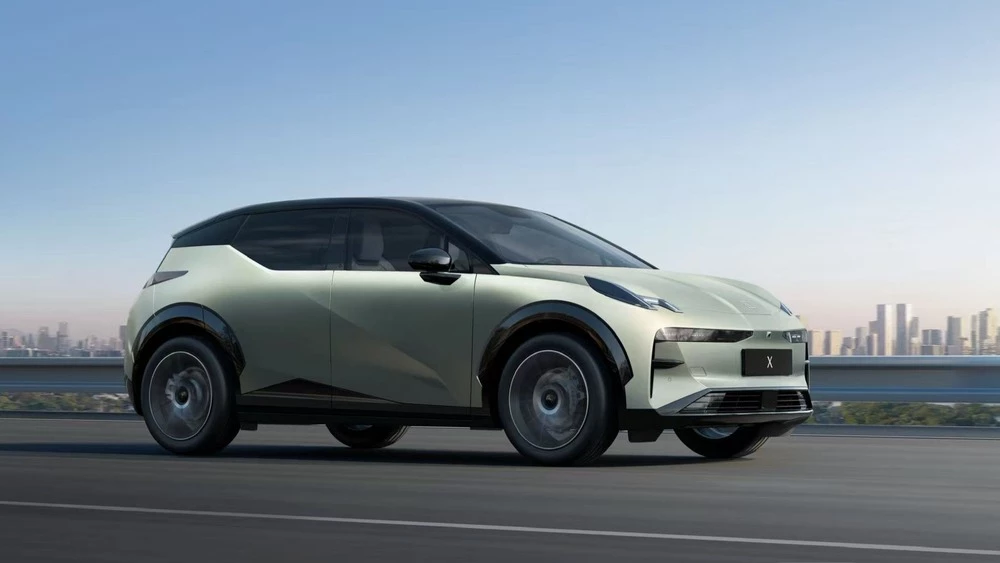
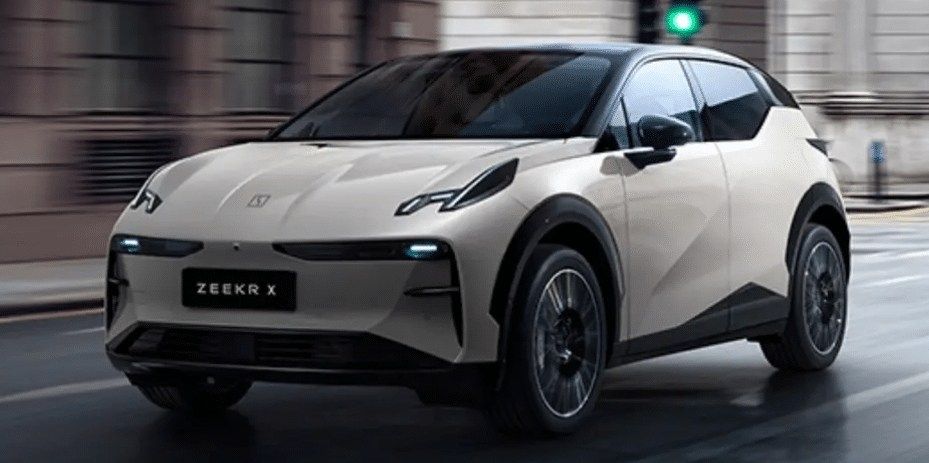
The Zeekr X is more compact, yet looks more substantial. It’s narrower but taller, with a ground clearance of 170 mm compared to 138 mm for the Tesla. And you really notice the difference when you’re driving on a gravel track, approaching a high kerb, or when winter throws up a surprise in the form of frozen, icicle-like snow under the wheels.
The entry height in the Zeekr is also higher – you sit down rather than ‘climb down’ into the car, as you do with a Tesla. This is an advantage if you get in and out frequently, or if you’re travelling with children – you don’t have to bend down as much, and it’s easier to fasten the child seat.
A small conclusion:
- Do you like the feel of a coupe and precise handling? Tesla Model 3.
- Want a higher ride height, more headroom and confidence on less-than-ideal roads? Zeekr X.
Dimensions and space
Dimensions aren’t just about the measurements on paper. They affect how comfortable the car is in town, how manoeuvrable it is in car parks, the sense of speed, and even the amount of space available in the cabin.
The Tesla Model 3 is 4694 mm long, 1849 mm wide (with 2088 mm mirrors) and 1443 mm high. The wheelbase is 2875 mm. It is longer, lower, and narrower than the Zeekr X, which means better aerodynamics, but lower ground clearance (only 138 mm), which can sometimes be a problem on Ukrainian curbs or broken garage entrances.
Zeekr X is 4432 mm long, 1836 mm wide (2029 mm with mirrors), 1566 mm high and has a wheelbase of 2750 mm. The ground clearance is 170 mm, which significantly improves cross-country ability, especially in winter or in conditions where you often have to “jump” over people lying down or pits. The compact length makes parking in the city a little easier, although the width is felt when manoeuvring in narrow courtyards.
Trunk space: what should you choose if you often carry something?
The question of practicality often comes down not only to consumption or range, but also to the banal question of storage space – where to put things. Here, the Tesla Model 3 has a distinct advantage: 561 litres of main boot space plus an additional 88 litres in the front luggage compartment (frunk). That’s almost 650 litres in total – more than many mid-size crossovers. Everything fits in without any tambourine dancing: large suitcases, a pushchair, boxes of household appliances or even bicycles with the wheels removed.
The Zeekr X has a more modest boot capacity of 362 litres. It looks taller, but isn’t as deep. And although this is enough for everyday use – a handbag, shopping bags, a couple of rucksacks – when you need to transport something bulky, you’ll have to consider folding down the rear seat backs. The Zeekr X doesn’t have a frunk, so you won’t get any extra space at the front.
However, it is worth considering that the rear seats in the Zeekr are significantly more spacious, so if your passengers are more important than your cargo, the crossover seems like a more logical choice. But if you often have to transport something – whether it’s trips to the country, moving, or the habit of taking half your house with you even on a short trip – Tesla is clearly more practical. It doesn’t look like a roomy car, but inside it is a very rationally organised space that is easy to use.
The bottom line is this: if your priority is luggage, the choice is obvious. If, on the other hand, you’re mainly travelling with just yourself and a couple of bags, the Zeekr will cope without any problems.
Power reserve and winter: how far and on what
In an average cycle, these two electric vehicles show completely different results:
- Tesla Model 3 gives about 350 km in the average cycle
- Zeekr X – approximately 270 km under similar conditions
These two models are essentially in different categories in terms of efficiency. The main reason is simple: Tesla achieves its range with a 51 kWh battery, while Zeekr has a smaller 49 kWh battery. That is, Tesla consumes less energy per kilometre, and this is clearly visible during frequent trips around the city or on the highway.
In cold weather, the situation changes slightly. The Zeekr X has a heat pump and efficient pre-conditioning, so it retains a better range when temperatures drop below freezing. At -10°C, it can drive about 230 km. The Tesla Model 3 in the same conditions retains about 290 km, and here again its energy efficiency gives it an advantage.
For daily use, both models comfortably fit within their real-world range, especially if you charge the car at home. But if you regularly drive long distances or don’t want to constantly think about recharging in winter conditions, the Tesla is significantly more practical due to its more stable range.
Charging: where Zeekr wins and where Tesla wins
It all depends on where and how you usually charge your car.
Everyday AC charging (at home or at work)
- Zeekr X supports charging up to 11 kW, so if you have a three-phase charging station, the battery will be full in less than 5.5 hours.
- Tesla Model 3 is also limited to 11 kW, so a full cycle also takes 5.5 hours.
Fast DC charging (on the road)
- Tesla: up to 170 kW, average charging time from 10% to 80% – 21 minutes
- Zeekr: up to 130 kW, 10–80% – 31 minutes
In reality, the difference is a few minutes, and it almost disappears if you use stations with an average power of 100-120 kW. Zeekr has a stable charge curve, which means that it keeps high numbers longer.
Tesla supports Autocharge and Supercharger, but these technologies are not yet developed in Ukraine, which limits its advantages in infrastructure. Zeekr has a V2L function, which means you can connect a coffee maker, laptop, or scooter to the car directly from the outlet.

ECOFACTOR – charging infrastructure for those who already drive electric vehicles
We, the ECOFACTOR team, are working to ensure that an electric car in Ukraine is not only a convenient, but also a truly practical choice. While you are weighing up which is better for you – Tesla Model 3 or Zeekr X – we make sure that both of these cars have a place to charge quickly, both at home and on the road.
What we offer:
- Charging stations manufactured in-house – AC up to 44 kW and DC up to 420 kW. We can find the right solution for both business and private use.
- Mobile charging stations – for those who want to remain self-sufficient regardless of their route.
- An online shop selling accessories, cables and adapters – everything you need to charge any modern electric vehicle, including Zeekr and Tesla.
- A modern mobile application on iOS and Androidto see map of charging stations, track your charging sessions and manage your account.
- A platform for operators – if you want to do more than just use the charging infrastructure; you want to manage it. The platform enables flexible network management, energy consumption monitoring and tariff configuration.
Zeekr X supports V2L and fast AC charging up to 11 kW – we have such stations. The Tesla Model 3 has its own vision of the charging ecosystem – we adapt to both approaches. Ours are not just universal connectors, but full integration with your driving experience. It doesn’t matter whether you have a compact sedan or an urban crossover.
Convenient charging isn’t just about kilowatts. It’s about reliability, an intuitive interface, having the right cable to hand, and being able to control it all from your mobile. That’s exactly what we provide.
Interior and technology: different approaches
In the cabin, these two differ radically.
Tesla
- Everything is on the large 15-inch screen: speed, climate, mirrors – all in one interface.
- Minimal buttons, maximum cleanliness.
- No CarPlay or Android Auto – just Tesla’s own ecosystem.
- There are heated seats, steering wheel, multi-zone climate.
Zeekr
- It also has a large display – 14.6 inches – but some of the controls are still physical buttons.
- Android Auto and Apple CarPlay support right out of the box.
- 360° cameras, adaptive cruise, mobile app with remote control.
- The base model doesn’t have a heated steering wheel – you’ll need to check the specification.
Tesla takes some getting used to, but fans appreciate it for its simplicity and ‘clean’ user experience. Zeekr offers more familiar conveniences right from the start, particularly for Android users.
Safety: official tests and real-world assistance systems
Both models have passed Euro NCAP crash tests and received a 5-star rating, which is good. But there are nuances.
The Tesla Model 3 was tested in 2019. Then it gained:
- 96% for the protection of adult passengers
- 86% for the protection of children
- 74% for pedestrian safety
- 94% for electronic security systems
It’s worth acknowledging that, at the time, these were very high scores. Tesla was recognised for the effectiveness of its automatic braking, adaptive cruise control and lane-keeping assist. However, the 2019 testing standard was slightly less stringent than it is today.
The Zeekr X was tested by Euro NCAP in 2024, using a new, more rigorous methodology. Its results:
- 91% for the protection of adults
- 90% for the protection of children
- 84% for safety for vulnerable road users
- 83% for the work of assistants
What does this mean in practice? Zeekr features more up-to-date sensors, improved pedestrian and cyclist detection, and more advanced driver-assistance algorithms. 360° cameras, adaptive cruise control, lane-keeping assist and blind-spot monitoring – all of these are included even in the basic or mid-range trim levels. Tesla has all of this too, but it is partly limited by geography and software updates (for example, not all versions of Autopilot work in the same way in Ukraine).
Both models are safe. However, Zeekr has the edge when it comes to cutting-edge technology, whilst Tesla excels in terms of refined software. If the very latest electronics are a must for you, go for Zeekr. If you place greater trust in tried-and-tested systems, go for Tesla.
Road behaviour and comfort
Comfort and handling in these two models represent almost opposite approaches. The Tesla Model 3 has a low centre of gravity, which is immediately noticeable during fast cornering. The steering is quite sharp, responds quickly, and the suspension is firm. On the track, this gives a sense of control and excitement, but in town, especially on our potholes and patchwork roads, it can feel a bit too ‘tiring’. Accelerating to 100 km/h takes 5.6 seconds, which is genuinely fast, but even here Tesla delivers it in a matter-of-fact way, without any excessive emotion – it simply gets the job done.
The Zeekr X feels different. It’s smoother in every respect: the more supple suspension copes better with our roads, the cabin is quieter, and road noise is muffled. It accelerates to 100 km/h in 5.9 seconds, and the acceleration feels smoother and less aggressive. Due to the higher ride height, there’s a bit more body roll at high speeds, but it’s not a major issue. It’s more of a quirk that you only notice after switching from a Tesla.
To put it simply: Model 3 is better suited for those who like to drive, who like the car’s precise response and the “hard” truth of the road under their wheels. The Zeekr will be more suitable for those who drive every day, value comfort and peace of mind, and don’t want to feel every pothole with their back.
Conclusion: Which to choose – the Zeekr X or the Tesla Model 3?
Choosing between the Zeekr X and the Tesla Model 3 isn’t about which one is better on paper. It’s about which one suits you best. The Tesla is an electric car that has already become an icon. It’s efficient, understated and fast – ideal for those who appreciate dynamic performance and are used to being in complete control. If precise handling, a minimalist interior and the brand’s reputation are important to you, the Model 3 ticks all those boxes.
The Zeekr X, on the other hand, offers a fresh perspective. It’s more suited to city driving, handles better on rough roads, comes with more modern features ‘out of the box’ and simply creates a slightly different vibe. It’s not an alternative to Tesla, but a different philosophy – one that appeals more to those for whom comfort and space are more important than ‘proper’ handling on bends.
So approach your choice with honesty. If you’re planning frequent journeys, want to save money and aren’t looking for the latest thing – go for a Tesla. If you’re after something a little more upmarket, smoother, more comfortable and high-tech – Zeekr will deliver on those fronts. The Ukrainian electric vehicle market has come of age just as these choices have become a reality.
Frequently asked questions about Zeekr X and Tesla Model 3
Does Zeekr X have fast charging on the highway like Tesla?
Yes, Zeekr supports charging up to 130 kW via CCS. This is less than the Model 3, but in reality, both models charge from 10 to 80% in 20-30 minutes. If the station is of high quality, you will not feel a significant difference.
Which model is better for winter operation in Ukraine?
Zeekr has a higher ground clearance, a heat pump and a larger battery. In cold weather, this helps to retain more charge. The Tesla also has a heat pump in later versions, but due to its lower ride height, it is less comfortable on snowy or poorly maintained roads.
Is it worth buying a Tesla Model 3 from the USA?
Yes, but you should check the history of the car and the quality of the repair. Often, these cars were after an accident, and not all services adhere to factory technology. In addition, some Tesla features may be partially restricted after import.