


Table of contents:
The Chinese automotive industry is rapidly nipping at the heels of Western giants, and the electric vehicle segment is no exception. Tesla has already become synonymous with the electric car, but what if we look beyond that? GAC’s new Aion RT model offers a different vision: not premium, but a reasonable balance of price, range, and equipment. In this comparison, we will focus on what really matters: how these […]
In this comparison, we’ll focus on what really matters: how these two cars compare to Ukrainian roads, sockets and budgets.
We remind you that you can purchase home and commercial charging stations in our online storeand also use the public charging stations ECOFACTORcharging points located throughout Ukraine. For convenient access to charging infrastructure, we recommend using our mobile applicationwhich is available on iOS and Android.
Technical base: what is offered under the hood?
Both models are fully-fledged electric cars featuring state-of-the-art technology. However, they tackle the same challenge in completely different ways.
Aion RT: China’s answer with a practical twist
The model is built on the company’s own AEP 3.0 electric platform. And although it sounds less loud than Tesla’s, in reality, everything is in place.
Available configurations:
- Battery 55.1 kWhup to 520 km on the Chinese CLTC cycle
- Battery 68.1 kWh: up to 650 km CLTC
In practice, these figures should be reduced by 20-25% for cold weather and real-world traffic. As a result:
- Small battery: ~370-400 km
- Large battery: ~450-500 km
Engine power depends on the configuration:
- 150 kW (200 hp)
- 165 kW (221 hp)
This is enough not only for the city, but also for quiet driving on the highway with overtaking and passengers.
Tesla Model Y: recognisable power and standard
Tesla has long since chosen the philosophy of “one motor for maximum efficiency”, especially in the Standard RWD version. Here we have a 60 kWh LFP battery.
Real power reserve
- ~440 km in summer
- ~270-315 km in winter
- ~380 km in average operating conditions
The engine produces 200 kW (272 PS), and it accelerates to 100 km/h in 7.2 seconds. That’s faster than most petrol cars in this class. And whilst it’s not a record, it’s more than enough for most drivers.
Design: which look is closer to you?
While some people choose an electric car solely on the basis of technical parameters, others want the car to be pleasing to the eye. Here, Tesla and the GAC Aion RT demonstrate two different approaches.
Tesla Model Y: minimalism with a ‘cute but recognisable’ twist
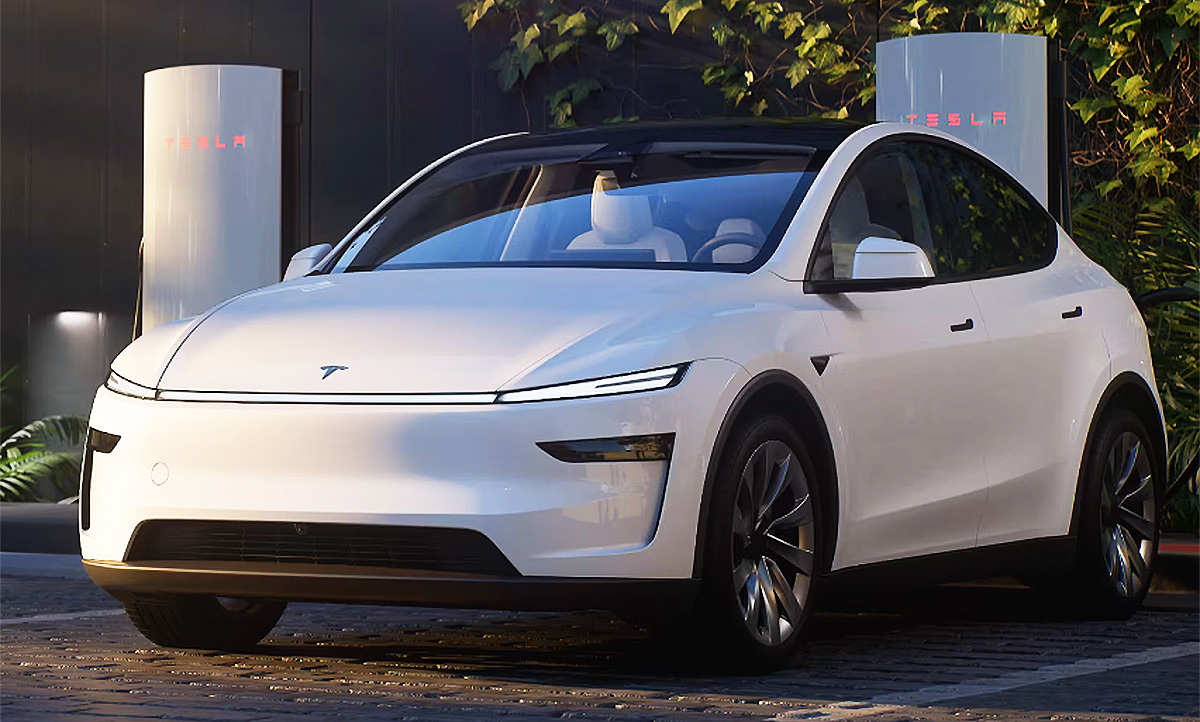
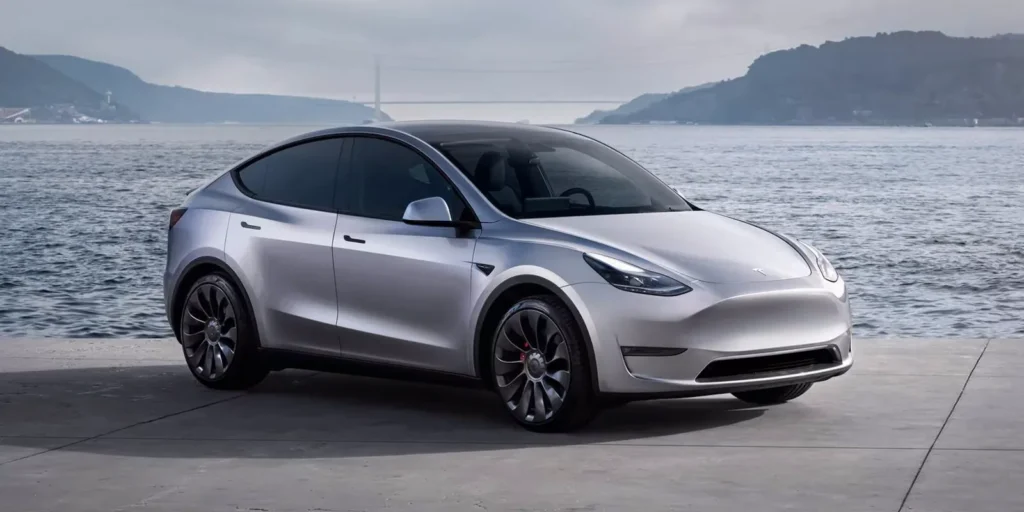
The Model Y looks like a typical member of the Tesla family. Streamlined lines, the absence of unnecessary elements, a clean profile and a small grille – all this creates a sense of “functional aesthetics”. The car does not try to stand out on the road, but it is recognisable at first sight. Some people will call the design boring, while others will call it restrained and elegant. The interior is the same: one large screen, not a single button, and almost laboratory-like simplicity. But this is a matter of taste.
For a Ukrainian driver who is not chasing a “wow effect” but wants everything to be logical and neat, Tesla looks convincing.
GAC Aion RT: a little more spice
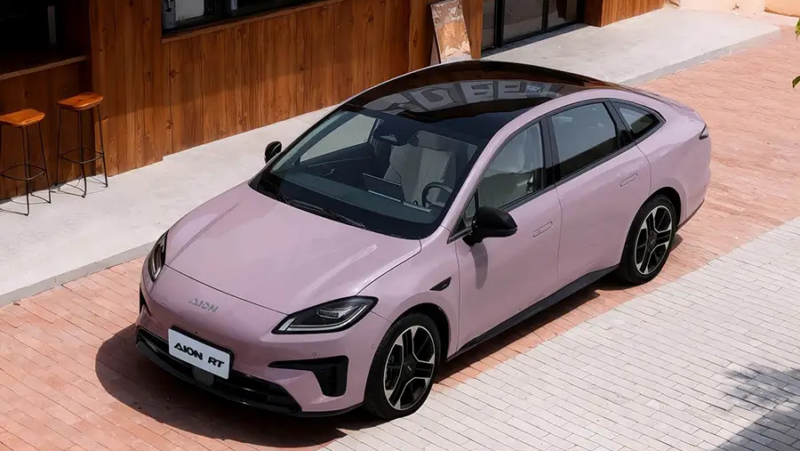
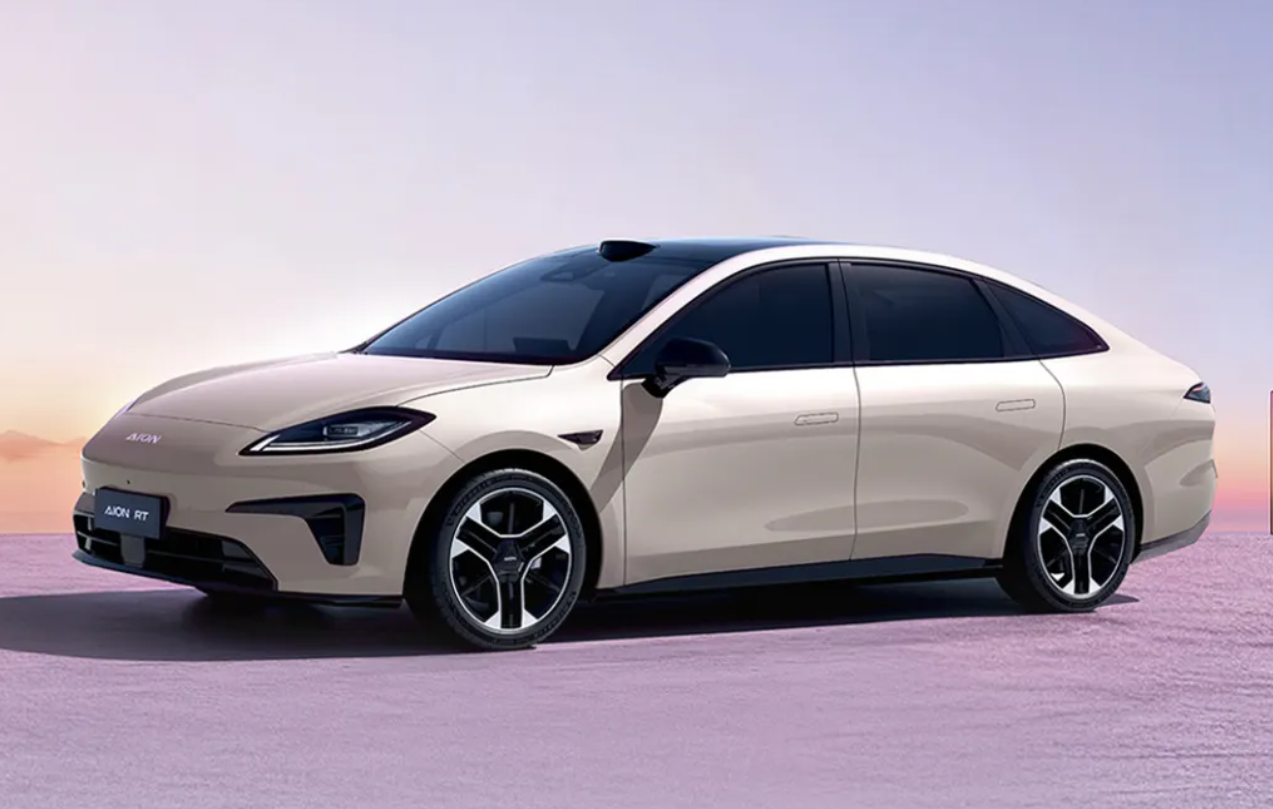
The Aion RT strikes a balance between the understated elegance of European saloons and the futuristic styling of new Chinese models. At the front, it features narrow headlights, aggressive lighting elements and a ‘techno’ design. The side profile is smooth, but with a noticeable break near the rear wheel arch. The rear end looks modern, with an elongated LED strip reminiscent of an Audi or BYD. The interior is simpler than that of a Tesla, but with physical buttons where they’re needed. The multimedia system is centrally located and slightly less flexible, but the design doesn’t look ‘cheap’ like in some older Chinese cars.
Aion RT will most likely appeal to those who want to look modern but not ostentatious. Especially in light colours or with dark accents, this model has a pleasant aesthetic that is not too aggressive, but not boring either.
Dimensions, seating comfort and capacity
| Parameter. | GAC Aion RT | Tesla Model Y |
| Length | 4,865 mm | 4,797 mm |
| Width | 1,875 mm | 1982 mm |
| Height | 1,500 mm | 1,621 mm |
| Wheelbase | 2,760 mm | 2,890 mm |
| Body type | Saloon | SUV (crossover) |
| Rear boot | ~500–600 litres | up to 2,118 litres (with seats folded down) |
| Front luggage compartment | there is a small spare | 117 litres |
Impressions of landing
- The Tesla Model Y is taller, making it easier to get in and out of, particularly for families with children or older people. You sit higher up, just like in a crossover, so you have a better view.
- The Aion RT is more of a ‘saloon’ with a traditional driving position. It will appeal to those who aren’t fans of crossovers and are looking for something closer to a classic car.
Power reserve: theory and Ukrainian reality
All official tests always look optimistic. But what about in our conditions?
The average forecast is +20°C:
- Aion RT 55.1 kWh: 390 km
- Aion RT 68.1 kWh: 480 km
- Model Y 60 kWh: 440 km
In winter conditions (-10°C):
- Aion RT 55.1 kWh: 300-330 km
- Aion RT 68.1 kWh: 380-420 km
- Model Y 60 kWh: 270-315 km
Tesla loses in range due to its slightly smaller battery and larger body size. But it has stable performance and well-optimised electronics. The Aion RT has a better range for the same money, but without deep integration of energy management systems.
Charging: where is faster, where is more convenient?
The issue of charging isn’t just about the figures in the specifications. What matters is how quickly you can recharge your vehicle’s range in real-world conditions: on the motorway, in the car park of a block of flats, or at a public charging point in a shopping centre.
Tesla Model Y: speed without compromise
Tesla has a stable advantage in terms of charging architecture. Model Y supports it:
- AC charging (Type 2)Up to 11 kW. A full charge from scratch takes approximately 6 hours and 30 minutes.
- DC fast charging (CCS Combo 2)up to 175 kW, which allows the battery to be charged from 10% to 80% in just 24 minutes under ideal conditions.
- Average charging speed at such stations: about 660 km/h.
Tesla owners in Ukraine have access to a part of the Supercharger network, as well as almost all CCS and Type 2 public charging stations. The car also supports the Autocharge function, which means that the charging process can be started automatically without authorisation if the station allows it.
In big cities, Tesla looks very comfortable. But on the Kyiv-Cherkasy highway or somewhere in Kamianets-Podilskyi, the situation is not so clear. It is harder to find a 175 kW charger there
GAC Aion RT: not too fast, but flexible enough
The GAC Aion RT charges a little slower, but it all depends on the specific version:
- AC charging (Type 2): 6.6 kW in the base models, or 11 kW in the higher-end models. This means charging in 6 to 10 hours, depending on the power of the network.
- DC fast charging: up to 90-120 kW (approximately). It takes about 30-40 minutes to fully charge from 10% to 80%.
The batteries are supplied by CATL, which means that we are dealing with reliable LFP cells that can withstand frequent charge/discharge cycles. However, the charging electronics in the Aion RT are less “aggressive” – temperature, speed, and safety limits are activated earlier than in Tesla.

Charging electric vehicles in Ukraine: ECOFACTOR
When it comes to choosing an electric vehicle, such as the GAC Aion RT or Tesla Model Y, another equally important question often arises – where and how to charge it. This is where real use begins, not just a test drive. At ECOFACTOR, we are working to make this process in Ukraine simple, clear and affordable, regardless of which brand you choose.
Our company develops full-cycle charging stations – from design and manufacturing to maintenance and digital support. All devices are manufactured in Ukraine and comply with current technical standards. Our platform already has over 3,500 charging points, and our app brings together a community of more than 215,000 drivers who use the charging infrastructure across the country every day.
To prevent charging from turning into a quest, we have developed a convenient mobile app – it is available on iOSand on the Android. You can use it to find the nearest charging station, start charging, view your session history, or track your expenses. Full-featured map of charging stations – in your pocket.
We should also mention our online shopin which we have collected everything that can be useful to an electric car driver. Here you will find cables and adaptersRFID cards, mobile charging stationsand accessories for organising home charging. This is especially true if you charge your car at home or want to set up a separate point in your office, restaurant or service station.
We offer a network management platform for businesses: it allows them to control electricity consumption, flexibly adjust tariffs, connect new points and have transparent analytics. This is suitable for those who want to place charging points near their hotels and for companies that are gradually switching their fleet to electric vehicles.
Applications, ecosystem, navigation
Tesla: a complete digital ecosystem
Tesla has long gone beyond just a car with an app. Its ecosystem is part of the company’s philosophy, and it works as a well-oiled machine.
- The Tesla App is one of the most user-friendly apps among all car manufacturers.
- Navigation in the car is built into the multimedia and has up-to-date maps, supports the search for charging points (including Supercharger), and can also predict the remaining charge at the point of arrival.
- Over-the-air (OTA) updates are coming on a regular basis. They add new features, improve handling, and sometimes even increase performance or range. All of this is done without a service, just by connecting to Wi-Fi.
- Integration with mobile platforms – Tesla works with Android and iOS, and supports widgets, smartwatches, push notifications and even short video clips from the car’s cameras.
If you want your car to ‘communicate’ with you every day, Tesla will do so to the highest standard.
GAC Aion RT: basic functions with potential
In the case of Aion RT, everything is a bit simpler. Yes, there is an app – it is a proprietary GAC Aion app that operates in China. In global versions or those adapted for export, the functionality may be reduced or require customisation.
- Telematics – basic functions available: checking the charge level, remote locking/unlocking, starting or stopping charging
- Navigation in the car is usually tied to Chinese services. Therefore, Ukrainian dealers or importers often flash multimedia to Android or add CarPlay/Android Auto.
- System updates There may be, but they are less common and often require specialist intervention or connection through a service centre.
- Third-party solutions – many owners simply use tried-and-tested Ukrainian or global services
Security: what to expect?
Safety is about more than just the number of airbags. It’s also about the car’s handling, driver assistance systems and build quality. And here it’s important to understand that both brands have their strengths and weaknesses.
Tesla Model Y: automation to the max
At Tesla, safety is not just about physical defence, but also a suite of electronic assistance systems:
- 7 airbags, including a knee airbag
- Adaptive cruise control with lane keeping
- Automatic emergency braking
- Recognition of pedestrians, cyclists, animals
- Cameras around the car perimeter with USB recording
All this works through the Autopilot system. And although Autopilot’s functionality is limited in Ukraine, even the basic assistants do a great job.
By the way, Tesla has high scores in the NHTSA and Euro NCAP crash tests, thanks in part to its body design and the correct placement of the battery.
GAC Aion RT: basic set + Chinese telematics
Aion RT has a slightly more modest list of systems:
- 6 airbags
- Electronic stability programme (ESP)
- Rear view cameras
- Parking sensors
- Cruise control with speed limiter
- Emergency Braking and Lane Keeping Assist – available on top models
The car also features ADiGO – GAC’s own driver assistance system – but its functionality is not always fully active in the versions available on our market. Often, some of the features have to be reflashed or activated via third-party services.
This does not mean that the Aion RT is unsafe. It’s just that it does not yet offer the same level of integration as Tesla. However, in terms of its physical build, it’s right up to scratch: the chassis is rigid and the battery is positioned low down – meaning the centre of gravity is well-balanced, which is important in emergency situations.
Who is each model suitable for?
Choose Aion RT if:
- You are satisfied with the classic saloon body
- You don’t need a premium, but value practicality
- Ready to tweak something from time to time or look for non-standard solutions
Choose a Tesla Model Y if:
- A complete all-in-one ecosystem is important
- You can pay more for comfort and status
- Live in a big city with good charging infrastructure
- Want a long-term investment in a proven brand
Conclusion
This comparison isn’t about who will come out on top. It’s about choosing the option that works best in your particular circumstances. The Model Y is the obvious choice for those who want something that’s ready to go and reliable straight out of the box. But it comes at a price, of course.
The GAC Aion RT offers the chance to get a no-frills electric car, with a decent range and an affordable price. This is particularly relevant for those who have already used Chinese vehicles and have no illusions about the brands.
If you’re looking for an everyday car without any fuss, the Aion RT feels like a ‘normal’ electric car. If, on the other hand, you want more features, status and seamless performance, then go for the Model Y. Both cars are perfectly capable of getting you from A to B. The only question is – whose road will it be?
Frequently asked questions
Is it realistic to buy a GAC Aion RT in Ukraine and what about service?
Yes, these cars are already being brought to Ukraine through intermediaries or small import companies. In Kyiv, Lviv, and Kharkiv, there are services that adapt, firmware, and repair Chinese electric cars. Spare parts are available, but sometimes you have to wait several weeks for delivery from China. At the same time, the car itself is not too complicated, and many components are compatible with other GAC or CATL models.
Is the real range of the Tesla and GAC Aion RT much different in winter?
Yes, the difference can be noticeable in winter. The Tesla’s combined range is usually around 315 km, but can reach 360 km in the city and drop to 270 km on the highway, while the top-of-the-line Aion RT still holds around 380-400 km. This is due to the Tesla’s smaller battery and taller body, which creates more air resistance. However, Tesla has a heat pump that saves a little energy for heating.
Can both models be charged from a regular outlet in the yard?
You can, but it takes a long time. Both Tesla and Aion RT support charging from a 220 V household network, but a full cycle can take 20-30 hours. For everyday use, it’s better to install a Wallbox at home or charge at public stations – at least 7-11 kW.
Is the Aion RT suitable for the track, or is it a purely urban option?
It’s perfectly suitable. The car is stable at speed, has decent acceleration and a range that’s more than enough for the journey from Kyiv to Vinnytsia without needing to recharge. The only thing is that the sound insulation is not as good as in a Tesla, so it gets a bit noisier on the motorway once you go over 110 km/h.