


Table of contents:
In the tables, they are both electric vehicles. But when you go out to the car park in the morning, keys in hand, and it’s -7°C and icy outside, the numbers are no longer the most important thing. This is where everyday life with an electric car begins. And it is here that the BYD Qin Plus and Tesla Model Y reveal themselves in different ways. This is not a technical battle for the sake of points. We are just looking at these two […]
This is not a technical battle for the sake of points. We are simply looking at these two cars the way Ukrainian drivers look at them. Who are looking for the first electric car for the city. Those who drive their children to school. Who works in delivery or just wants to pay less for fuel. No marketing slogans. No idealisation. Just as it is.
We remind you that you can purchase home and commercial
Concept: saloon versus crossover
At first glance, these are just two electrically driven machines. But if you dig a little deeper, it becomes obvious: BYD Qin Plus and Tesla Model Y solve different problems.
The BYD Qin Plus is an electric sedan that is more focused on economy, compactness and the logic of the first step into the world of electric vehicles. There is no complicated philosophy here: it drives, charges, and allows you to understand how to live with a battery instead of a tank for little money. The interior is restrained, the controls are familiar, and the range is impressive for the price.
Tesla Model Y, on the other hand, sells not just a car but an experience. It is no longer just a vehicle. It’s an ecosystem where you update over the air, see cameras from your phone, control the climate remotely, and in the future you can even sell electricity back to the grid. But you have to pay more for it. And not only with money, but also with adaptation to a new type of car use.
BYD is a practical tool. Tesla is a platform for a new type of mobility.
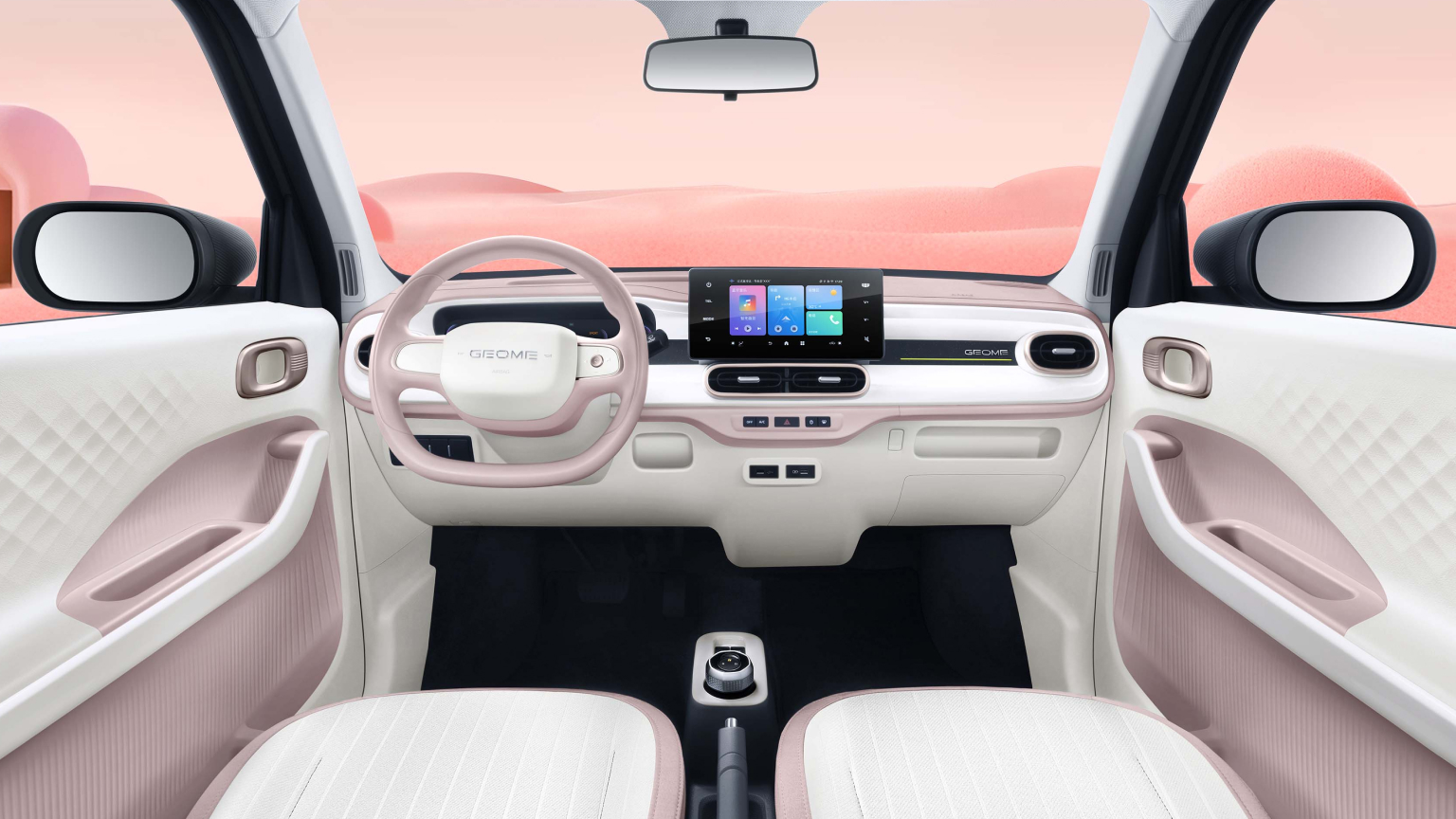
Dimensions and space: a saloon is not always smaller
On paper, Tesla is bigger, taller and heavier. And indeed, when standing side by side, it seems more massive. But in reality, this is not always the case.
BYD in the city: easier to turn around and park
On paper, Tesla is bigger, taller and heavier. And indeed, when standing side by side, it seems more massive. But in reality, this is not always the case.
In the city, BYD is more compact. It’s easier to manoeuvre in a tight yard and find parking spaces. This is especially noticeable in old neighbourhoods with narrow streets, where large SUVs become an obstacle to themselves.
Tesla inside: more air and space in the cabin
Tesla takes a different approach. The high roof gives you a sense of space. It is more comfortable to sit in the back row, especially if you are over 180 cm tall. In addition, a huge two-part trunk (rear and frunk) allows you to easily throw a stroller, bags, chargers, and more on top.
What is more convenient for you – everyday observations
If you need a specific comparison, here it is:
- With BYD, you’ll find it easy to get to work, the shops, schools and clubs.
- It will be convenient to take your family with you on a weekend in the Carpathians or on a long road with suitcases.
Power reserve: we look not at numbers, but at experience
In Ukraine, there are still “expectations of 600 km on a single charge”. But it is now well understood that the reality is that everything depends on the weather, driving style and terrain.
BYD has more options: tailored to your needs and conditions
In Ukraine, there are still “expectations of 600 km on a single charge”. But it is now well understood that the reality is that everything depends on the weather, driving style and terrain.
BYD Qin Plus offers three battery options, and this is a big plus. If you want to save money, take the 47.5 kWh version, which is more than enough for the city. If you want to go to the country without recharging, there is a 71.7 kWh version.
In real life:
- In the city (warm): 450-500 km easily.
- Winter, with traffic jams and heating: 300-350 km maximum.
Tesla: one option, but more stable
Tesla Model Y (Standard RWD) has one version of the battery – 60 kWh. It is more stable in terms of calculations:
- Summer, careful driving: up to 440 km.
- Winter, the track: 270-315 km.
Stability in everyday life: the Tesla advantage
But the key is not only in the range, but in how predictably it all works. And here Tesla wins: the built-in pre-heating of the battery, temperature monitoring, and stop planning all work automatically.
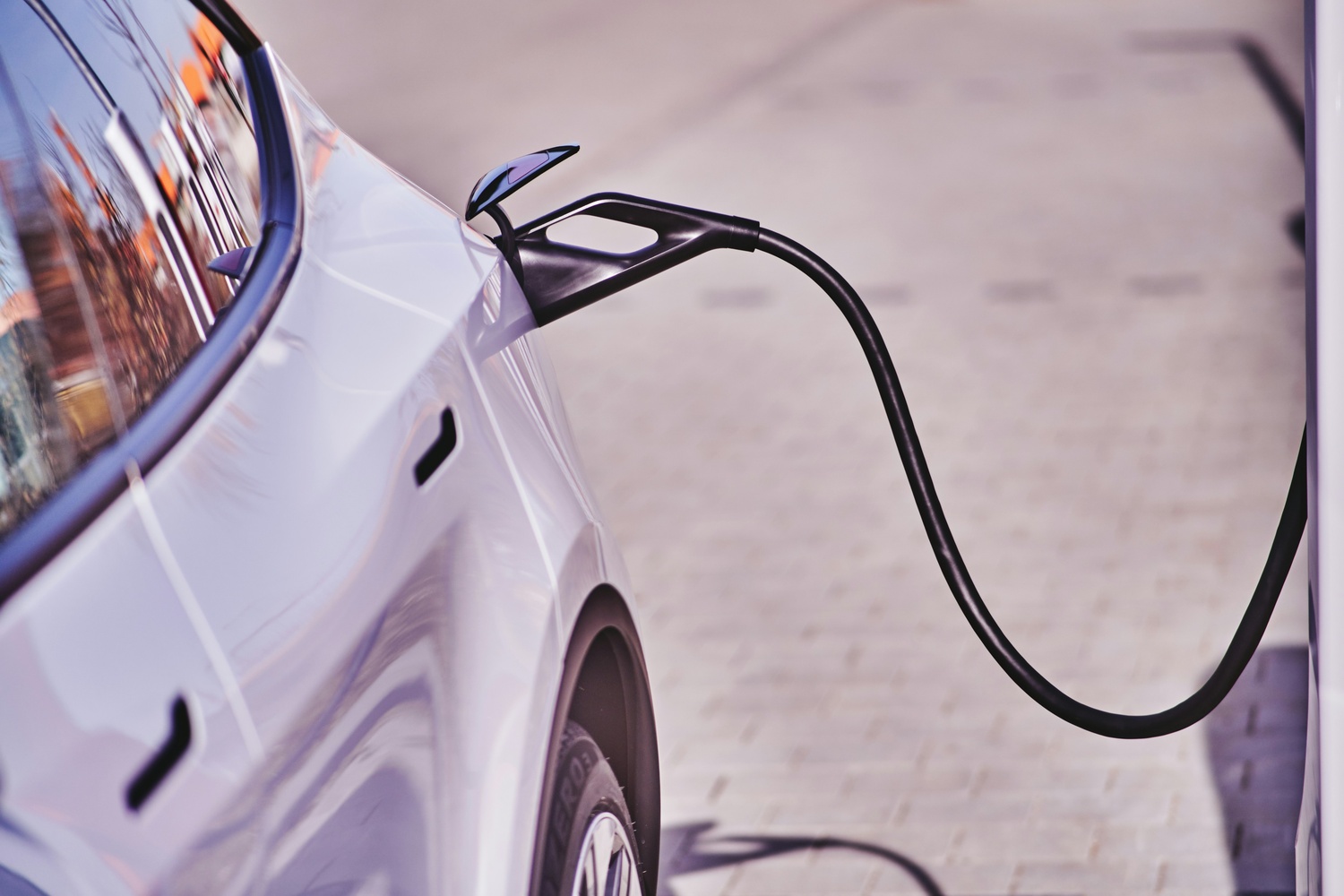
Charging: city routine and highway reality
This is one of the most important points for the Ukrainian user. It is charging that often “kills” the impression of an electric car.
BYD Qin Plus is charged on AC up to 7 kW, which is quite normal for the city. At home or in the office – a full charge overnight. But on the highway, 50-60 kW DC is not enough. The stop will take 40 minutes or more. If you rarely travel outside the city, there will be no problems.
Tesla Model Y is a completely different story. 175 kW of peak power is what allows you to fill up 250+ km of range in 20-25 minutes. You drive up to a Supercharger, and after a coffee, you can drive on.
What is important for Ukraine:
- Both cars can be charged at home.
- Tesla is better suited for active driving between cities.
- If you have a 7-11 kW AC charger near your home, both cars are quite convenient.
Charging infrastructure in Ukraine: what we offer
When we talk about the daily use of an electric vehicle in Ukraine, charging infrastructure is not a “nice addition” but a mandatory part of the route. That’s why we at ECOFACTOR have created a full-fledged ecosystem that covers both businesses and drivers.
We don’t just deliver, we design, manufacture and support
For drivers of electric cars – both BYD and Tesla – we have made everything as simple as possible. On our
For businesses, we offer turnkey charging solutions – from small
And if you need to buy something, there’s a charging cable,
We believe that an electric car should be convenient every day, not just in the first weeks after purchase. That’s why we focus on simplicity, reliability and technical support. And if you’re just choosing your first electric car – BYD or Tesla – you’ll be comfortable with ECOFACTOR in any case.
Handling on the road: softness versus stability
Ukrainian roads are not always suitable for “Western comfort”. Therefore, it is important to know how the car behaves in pits, when overtaking, and on slippery surfaces.
BYD Qin Plus:
- Soft front suspension.
- Smooth traffic in the city.
- At high speeds, it floats a bit.
- Absorbs small irregularities.
Tesla Model Y:
- Stiffer chassis.
- Perfectly holds its trajectory on the track.
- A little pressure on the lower back in bad areas.
For daily city trips with potholes, curbs and minibuses around, BYD is more comfortable. For the highway, overtaking, driving at speed – Tesla gives you more confidence.
Interface and intelligence: how the user interacts with the car
It’s a matter of taste. Some people like to click buttons. Some people want everything to be in the app.
BYD Qin Plus:
- Classic button layout.
- The screen turns to the driver.
- There is basic navigation, media, climate.
- Cruise control, karaoke, backlight colours.
Tesla Model Y:
- Everything is controlled from the central screen.
- The interface is intuitive but sometimes complicated.
- Constant updates, built-in games, YouTube.
- You can see the car’s charge from your phone.
BYD will be more understandable for people switching from petrol cars. Tesla is for those who are used to living with a screen in their hand.
Service and support in Ukraine
This is a painful topic. Because official services are rare. But the situation is improving.
BYD Qin Plus:
- It is supplied through importers.
- There are service stations that have experience with this model.
- Spare parts from China are coming faster than it seems.
- The service is simpler because there are fewer “smart” electronics.
Tesla Model Y:
- There is no official service in Ukraine.
- But there are dozens of services that deal with Tesla.
- Diagnostics – via the app or Wi-Fi.
- Some parts come only from the EU/US, sometimes for a long time.
Tesla has an advantage in remote service, but physical repairs can take a long time. BYD is simpler in the classic sense of “going to the service station”.
What works for whom: practical scenarios
After comparing all the features – from size to charging – the question often arises not “who is better”, but “which one is best for me”. To make the choice easier, we’ve considered several real-life scenarios that are most common in Ukraine.
If this is your first electric car
BYD Qin Plus will be a comfortable start. It is simple, clear, and does not require immersion in the “digital logic” of Tesla.
Why BYD wins in this role:
- There is no overload of screens, menus and features.
- All the buttons and controls are in place, just like in a conventional petrol car.
- The cost is lower – it’s easier to make decisions and less stressful if something goes wrong.
- Roomy interior, familiar controls, adequate noise insulation.
Ideal if:
- You’re upgrading from a petrol saloon or hatchback.
- Most trips are for work, shopping, and children’s clubs.
- You don’t want to spend a lot on your first experience.
If you need a car for your family and trips to the countryside
The Tesla Model Y is spacious, fast and technologically advanced, and is chosen by those who already understand how electric vehicles work and want more convenience at the touch of a button.
This gives Tesla an advantage in this category:
- More space inside, especially for second-row passengers.
- Large trunk + frunk, easily accommodates things for trips.
- Charges faster – important on the road or in the Carpathians.
- Phone connection, climate control, access to the car’s camera.
When it works best:
- You have children, a lot of luggage, and travel to other cities every month.
- You plan to take the car to Europe or on long routes.
- You are already familiar with electric vehicles and are looking for something “smarter”.
If you live in a big city
The BYD Qin Plus wins in Kyiv, Kharkiv or Lviv thanks to its compactness and soft suspension. The Tesla Model Y is also comfortable, but larger, which is not always a plus in tight yards.
What to consider:
- BYD is easier to park.
- Less consumption is more profitable if you charge with a limit.
- Both cars charge on AC, but the BYD is slower, which is not critical for city routes.
If you often drive on the motorway
There are no options here – Tesla Model Y. There are several reasons for this:
- A longer range in winter.
- Higher charging speed.
- Automatic stop planning.
- Better stability at high speeds.
This is important for:
- Delivery between cities.
- Business trips.
- Traveling 300+ km at a time.
Conclusion
This is not a competition with a winner. BYD Qin Plus and Tesla Model Y are two different answers to different questions. One car is chosen for its practicality, simplicity and reasonable price. The other is chosen for its technology, comfort on the road, and the feeling that you are driving into the future today.
BYD is suitable for those who want to take the first step without unnecessary complications. It is chosen for its affordability, logical operation and calmness in everyday use. This is the option when the car just does its job – without pathos, but confidently.
Tesla is for those who are ready for more. Those who value integration, functionality, new use cases, and are not afraid to update the firmware from time to time instead of visiting a service centre. There is a sense of depth and scale here, even if not all functions are needed every day.
The Ukrainian electric vehicle market is raising more questions than it did a few years ago. And this is good. Because now we really have a choice. And everyone can find a car not based on advertising, but on their own. Based on how they live, where they go, and what matters to them.
Frequently asked questions
Which of these electric vehicles is best suited for intercity travel?
Tesla Model Y. It charges faster on the highway, supports charges of up to 175 kW, and allows you to get hundreds of kilometres of range in 20-25 minutes. If you often travel between cities or cover long distances in a day, it is simply more convenient. BYD’s charging is slower, and you’ll have to plan your stops more often.
Can I charge both cars at home from a regular outlet?
Yes, it is possible. But you need to understand that this is a slow option. A full charge will take more than 20 hours. If you have access to a 7-11 kW charger, both BYD and Tesla can be easily charged overnight. Ideally, you should have a separate station, for example, from ECOFACTOR, so that everything works stably and without overheating.
Which electric car is better for the first experience?
BYD Qin Plus. Lower price, clear interior, simple controls. If you just want to “try an electric car” and don’t plan to dive into apps, updates, and settings, this option is much more relaxed. Tesla may seem a little “smarter than you want” at first.
What about security?
Both cars have basic modern safety systems: ABS, ESP, blind spot monitoring. In Tesla, some functions are updated automatically, such as autopilot or adaptive cruise. In BYD, everything is more classic, without surprises. If you need maximum electronic support on the road, Tesla wins.
What kind of charging infrastructure is better to use in Ukraine?
The most convenient are networks that have a mobile app and support Autocharge. For example, ECOFACTOR: they have a large map of stations across the country, everything is synchronised with your phone, and you can pay in one click. This is convenient for both cars, but it is especially noticeable with Tesla.
How big is the difference in service costs?
BYD is cheaper not only to buy, but also to repair. Fewer sensors, simpler system logic. Tesla is more expensive to maintain, especially if you need an original part from the EU or the US. But on the other hand, many problems can be solved through the app, without visiting a service centre.