


Table of contents:
The Toyota Prius Prime is one of the most convenient ways to switch to electric driving without the fear of running out of power. You can drive around town on electric power, and when the charge runs out, simply switch to petrol and carry on. That’s precisely why the question of Prius Prime charging is on the mind of almost every owner or prospective buyer.
In practice, it’s simpler than it seems. You can charge your Prius Prime at home from a standard socket, at work or at public charging points. There’s no need for expensive fast chargers or complex infrastructure. In this guide, we’ll look at how to charge it properly, how long it takes and how to get the most out of every kilowatt-hour.
We remind you that you can purchase home and commercial charging stations in our online storeand also use the public charging stations ECOFACTORcharging points located throughout Ukraine. For convenient access to charging infrastructure, we recommend using our mobile applicationwhich is available on iOS and Android.
The Prius Prime as a plug-in hybrid: differences and charging logic
The Prius Prime is a plug-in hybrid (PHEV), that is, a car that combines an electric motor with a battery that can be charged from a mains socket, a petrol engine as a backup, a regenerative braking system and the ability to run on electric power alone. Unlike a conventional hybrid, which only recharges whilst driving, the Prime can be plugged into the mains just like an electric car. In urban conditions, this allows most journeys to be made without using petrol, and for many drivers, electric mode covers up to 80–90 per cent of their daily journeys.
Why isn’t fast charging included?
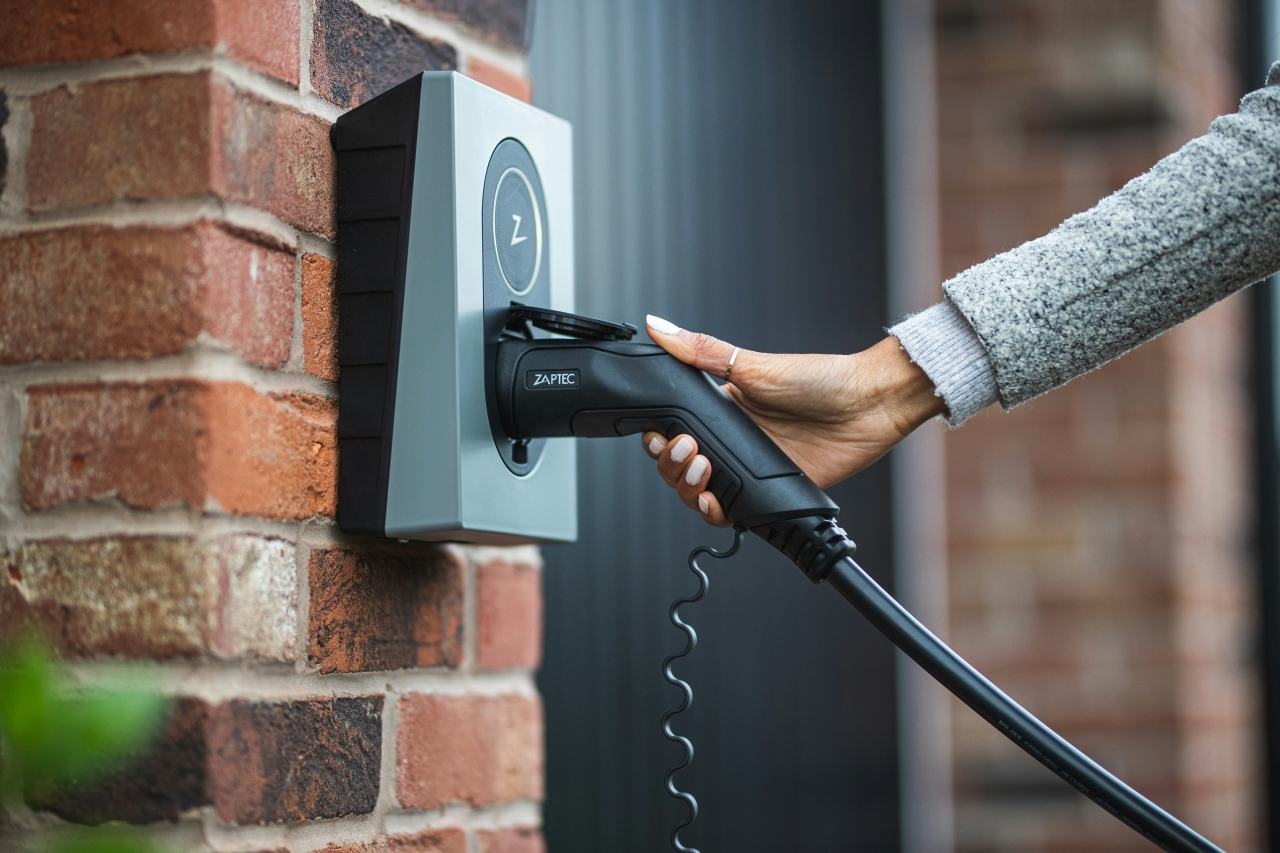
The Prius Prime does not support fast DC charging, but this is a characteristic of the plug-in hybrid concept rather than a shortcoming. The car is designed for overnight charging at home, slow or medium AC charging, and regular top-ups rather than infrequent full charging cycles. In fact, it behaves like a smartphone on wheels – you simply plug it in whenever you get the chance.
The battery charges fairly quickly even from a standard mains supply, and slow charging is gentler on the battery. Furthermore, the petrol engine provides a range in case the electric charge runs out, so there’s no need to wait at fast-charging stations. A plug-in hybrid works on a different principle – the battery isn’t ‘recharged’ once and for all, but its charge is maintained as part of everyday use.
Charging at home – the most convenient option
Most owners charge their Prius Prime at home. And that makes sense – the car sits stationary for several hours, there’s no need to plan anything, and the electricity tariff is usually the lowest. This is more than enough for everyday use.
Charging from a regular power outlet
The simplest way is to use a standard domestic socket.
Advantages:
- no additional equipment is required
- You can charge it straight after purchase
- minimal maintenance costs
- Suitable for flats and detached houses
Disadvantages:
- Longer charging times compared to fast charging stations.
- Proper wiring is required
- a separate line is preferable
A full charge usually takes around 5–6 hours. If the battery isn’t completely flat, it will take less time. The car will charge without any problems overnight, even from an ordinary socket.
Home Station Level 2
If you make frequent use of electric mode, it is worth considering installing a home charging station. It allows you to fully charge the battery in around 2 hours, provides a more stable power supply, a higher level of safety and a more convenient cable, and also enables you to make several electric journeys in a single day.
This option is particularly suitable for those who frequently travel home, use their car as their main means of family transport, or wish to minimise their petrol costs as much as possible.
Can I use an extension cord to charge my Tesla?
This is a question that many owners ask. Technically, you can use an extension lead, but only if a few important conditions are met: the cable must be of good quality and thick enough, preferably as short as possible, protected from moisture and free from any damage, and the socket itself must not overheat during use.
An unreliable extension lead can lead to overheating or a loss of power, so if you’re charging regularly, it’s best to install a fixed socket or a dedicated power supply.
Charging the Prius Prime away from home
You can recharge your vehicle whilst going about your daily business, without having to set aside any extra time. A few hours’ parking is usually enough to significantly top up your range and reduce your petrol consumption.
Charging at work
This is the second most popular charging method after home charging. The car remains stationary for several hours, so you can get a full charge without spending any extra time. Many companies are already installing AC charging stations for their staff, and even a low-power station is sufficient for a plug-in hybrid.
As a result, the driver gets free or low-cost electricity, enough range to get home, lower petrol costs and the option of not having to charge the car at home every day.
Public charging stations
The Prius Prime is compatible with most AC charging points in Europe and Ukraine, which usually feature a Type 2 connector. Such charging points are located in many everyday places, including near shopping centres, in business centre car parks, near restaurants and hotels, at petrol stations and in residential complexes.
A plug-in hybrid charges quite quickly even at slow charging points, so whilst you’re out shopping or attending a meeting, you can top up a significant portion of the battery without having to make any special stops.

ECOFACTOR infrastructure solutions for Prius Prime owners
The Toyota Prius Prime is a plug-in hybrid for which regular, slow charging is important, rather than fast-charging stations. Thanks to its small battery and the nature of urban journeys, the car is usually charged wherever the driver spends their day – at home, at work or near shopping centres. It is precisely for such scenarios that we at ECOFACTOR are developing a charging infrastructure for the use of the Prius Prime in Ukraine.
The Prius Prime charges well from AC networks, which form the backbone of urban infrastructure. At ECOFACTOR, we design and manufacture charging stations for residential complexes, business centres, car parks and commercial premises where cars can be left for several hours. This allows owners of plug-in hybrids to charge their cars in familiar locations without having to alter their route.
In practice, this offers clear advantages:
- Convenient charging from AC charging points without the need for DC infrastructure
- the ability to keep the battery charged whilst going about your daily routine
- lower running costs and reduced dependence on petrol in the city
We work not only with drivers, but also with businesses that install charging solutions. The ECOFACTOR platform enables the management of charging stations, monitoring of electricity consumption and flexible tariff configuration. Thanks to this, the infrastructure for the Prius Prime remains stable and accessible wherever it is needed on a daily basis.
To make using the network easy, we are developing a mobile app for drivers on iOS and Android. Through the app, you can access a map of charging stations across Ukraine, check the availability of charging points, start charging and view your session history. For Prius Prime owners, this means that charging becomes part of their usual journey.
As well as public infrastructure, the home environment is also important. Our online shop stocks chargers for home and business use, as well as cables, adaptors and accessories for safe connection to different types of networks. This is particularly relevant for plug-in hybrids, as most charging takes place at home or at work.
Cost and electricity consumption whilst charging the Prius Prime
The cost of charging depends on electricity tariffs, but in Ukraine it is usually significantly lower than the cost of petrol. The cheapest way to charge your car is at home, especially using the night-time tariff, when the price per kWh is at its lowest. Public AC charging stations may be more expensive, but even in this case, electric journeys work out cheaper than using petrol, and in some locations charging can even be free of charge. As a result, the cost per kilometre when driving an electric car is usually 3–5 times lower than when driving on petrol.
How much electricity is needed for a full charge?
Battery. The Prius Prime has a relatively small capacity, so a full charge consumes approximately 6–7 kWh of electricity, depending on the model and losses during charging. This is significantly less than that of fully electric cars and does not place a noticeable strain on the domestic electricity supply.
To put this into perspective, this amount of electricity is roughly equivalent to:
- the operation of a storage water heater with a capacity of 80–100 litres for 2–3 hours
- cooking food in an electric oven for several hours
- a powerful air-conditioner running throughout the evening
For most households, this is moderate consumption, which does not have a significant impact on electricity bills, particularly when using the night-time tariff.

Daily exercise and Prius Prime battery maintenance
Experienced owners follow a simple approach that allows them to make the most of electric driving. It’s worth plugging the car in whenever possible, without waiting for the battery to run completely flat, and, where possible, taking advantage of off-peak electricity rates. It is convenient to plan charging around your daily routine, and frequent charging does not damage the battery. Modern batteries perform better within a moderate charge range than when subjected to constant full charge cycles.
Do you need to charge it to 100 per cent?
For plug-in hybrids, a full charge is the standard operating mode. The battery management system automatically sets safe limits, so even when the indicator shows 100 per cent, the actual level is slightly lower. This margin is built in by the manufacturer to ensure the battery’s longevity.
How to extend battery life
Battery. The Prius Prime is designed for a long service life, but good habits can help maintain its performance for even longer. It is not advisable to leave the car stationary for long periods, expose it to constant heat or extreme cold, drive aggressively, or allow the battery to run completely flat.
Instead, it is a good idea to use your car regularly, charge it more frequently in small increments, park in the shade or in a garage, and use regenerative braking whilst driving. This helps to maintain the battery’s performance over many years.
Conclusion
The Toyota Prius Prime shows that the transition to electric driving doesn’t have to be drastic or complicated. It’s a car that fits easily into the normal rhythm of life. You don’t need to make any special preparations for journeys or adjust your schedule to fit in charging. Simply plug it in when it’s parked and not moving, and the electric mode will work every day without any extra effort.
The main advantage of the Prius Prime is that it doesn’t force you to give up your usual routines. If you have the option to charge it, you save on fuel and drive quietly and in an environmentally friendly way. If not, the petrol engine takes care of things without any hassle. It is precisely this flexibility that makes the plug-in hybrid a sensible choice for cities, especially where the infrastructure is still developing.
Ultimately, charging the Prius Prime isn’t about technical complexities, but about getting into the habit. After a few weeks, it becomes as routine as plugging your phone in overnight. And that’s probably the best indication that the technology is genuinely convenient.
Frequently asked questions
1. Is it possible not to charge the Prius Prime at all?
Yes, the car will operate like a standard hybrid and use a petrol engine in conjunction with regenerative braking. However, without regular charging, you won’t be able to enjoy the main advantage of these models – the ability to drive on electric power and make significant savings on fuel.
2. How long does it take to fully charge the device at home?
A full charge from a standard socket usually takes around five to six hours. If a home charging station is used, the time can be reduced to around two hours, depending on the power output of the equipment.
3. Is it safe to charge your car every night?
Yes, this is normal operation. The battery management system monitors the process and prevents dangerous overcharging. On the contrary, regular overnight charging is the most convenient and recommended approach.
4. Can you charge the Prius Prime in winter?
It is possible, but in cold weather, charging times may increase slightly and the electric range will decrease. This is normal behaviour for any battery-powered car.
5. Is it harmful to connect the battery frequently?
No, modern batteries are specifically designed for regular charging cycles. For a plug-in hybrid, it’s actually better to keep the charge at a moderate level than to constantly discharge the battery to its minimum capacity.
6. Do you need a special charging station?
No, you can charge the car from a standard domestic socket. A charging station simply reduces charging time and makes it more convenient, but it is not essential for everyday use.