

Table of contents:
Quick Summary: Fleet management is the process of overseeing and optimizing a company’s vehicles from acquisition through disposal, using software, telematics, and GPS tracking to monitor maintenance, driver behavior, fuel consumption, and compliance. The system works through centralized data collection from vehicles, real-time analysis, and automated workflows that help fleet managers make informed decisions to reduce costs and improve operational efficiency. Modern fleet management systems can reduce fuel costs by up to 36.93% through fleet diversification optimization and maintenance expenses by 31% through preventive scheduling while increasing asset utilization.
Walk into any delivery company’s operations center and you’ll see screens displaying dozens of moving dots. Each represents a vehicle transmitting location, speed, engine diagnostics, and driver behavior in real time.
That’s fleet management in action. But the screens are just the surface.
Behind those dots runs a complex system of hardware, software, and workflows designed to answer one deceptively simple question: how do we get the most value from our vehicles while keeping costs, risks, and emissions under control?
The answer involves more than just tracking. It’s about connecting data from multiple sources, automating decisions, and giving fleet managers the visibility they need to act before small problems become expensive failures.
We remind you that you can purchase home and commercial charging stations in our online store, as well as use public charging stations ECOFACTOR located throughout Ukraine. For convenient access to charging infrastructure, we recommend using our mobile app, available on iOS and Android.
What Is Fleet Management?
Fleet management is the process of managing a company’s vehicles and assets from acquisition to disposal. The goal is to improve operational efficiency, reduce costs, and increase performance across the entire vehicle lifecycle.
Businesses across industries—construction, delivery, transportation, utilities, field services—rely on commercial vehicles to move people and products. These commercial vehicles form a fleet, often one of the company’s largest capital investments.
The management process covers vehicle procurement, financing, maintenance scheduling, fuel management, driver assignment, safety compliance, telematics integration, route optimization, and eventual resale or disposal.
Modern fleet management leverages software platforms, GPS tracking systems, and telematics devices to provide real-time insights into vehicle location, condition, utilization, and driver behavior. This technology transforms vehicles from simple operational tools into strategic assets that generate actionable data.
How Does Fleet Management Work? The Core Process
Here’s the thing though—fleet management isn’t a single activity. It’s a continuous cycle that operates simultaneously across acquisition, operation, and optimization.

1. Data Collection Through Telematics
Everything starts with data. Telematics devices installed in vehicles collect and transmit information via cellular or satellite connections to a central platform.
These devices capture GPS location, speed, acceleration, braking patterns, engine diagnostics, fuel consumption, idle time, harsh cornering events, and maintenance codes. Some advanced systems also monitor driver identification through key fobs or mobile apps.
The data flows continuously—often every few seconds—creating a detailed operational record for each vehicle.
2. Centralized Platform Integration
Raw telematics data alone doesn’t solve problems. Fleet management software aggregates streams from all vehicles into a single dashboard where managers can view the entire fleet or drill down to individual assets.
The platform integrates with maintenance databases, fuel card systems, driver records, compliance logs, and route planning tools. This creates a unified view across procurement, operations, and disposition.
3. Real-Time Monitoring and Alerts
The system continuously analyzes incoming data against predefined thresholds. When a vehicle exceeds speed limits, idles too long, triggers a check-engine light, or deviates from its assigned route, the platform generates automatic alerts.
Fleet managers receive notifications via dashboard, email, or mobile app. This enables proactive intervention before issues escalate into costly breakdowns or safety incidents.
4. Automated Workflows and Reporting
Modern systems don’t just report problems—they trigger actions. When a vehicle reaches its scheduled maintenance interval, the system automatically generates a work order and notifies the appropriate service provider.
Fuel consumption reports, driver scorecards, utilization metrics, and compliance documentation generate automatically on preset schedules, reducing administrative burden and ensuring regulatory requirements are met.
5. Decision Support and Optimization
The platform analyzes historical and real-time data to recommend optimizations: route adjustments to reduce mileage, vehicle reassignments to balance utilization, maintenance schedule changes to prevent failures, and driver coaching opportunities to improve safety scores.
Advanced systems use optimization algorithms to solve complex problems like route sequencing and vehicle allocation, often identifying savings opportunities that manual planning would miss.
The Technology Stack Behind Fleet Management
So what hardware and software actually makes this work?
| Component | Function | Data Captured |
|---|---|---|
| GPS Receiver | Satellite positioning | Location, speed, direction |
| Onboard Diagnostics Port | Vehicle systems interface | Engine codes, fuel use, odometer |
| Accelerometer | Motion detection | Harsh braking, acceleration, cornering |
| Cellular Modem | Data transmission | Real-time upload to cloud platform |
| Cloud Platform | Data storage and processing | Historical records, analytics, dashboards |
| Mobile Apps | Driver and manager interfaces | User inputs, inspection logs, messaging |
The telematics hardware connects to the vehicle’s onboard diagnostics port, drawing power and reading diagnostic codes directly from the engine control unit. GPS receivers triangulate position from satellite signals, while accelerometers detect motion patterns that GPS alone can’t capture.
Cellular modems transmit collected data to cloud servers where analytics engines process it in near-real time. Web dashboards and mobile apps provide interfaces for managers and drivers to access insights and input additional information like pre-trip inspections or delivery confirmations.
What Does a Fleet Manager Actually Do?
Technology enables fleet management, but people run it. Fleet managers oversee all aspects of fleet operations and handle a surprisingly broad range of responsibilities.
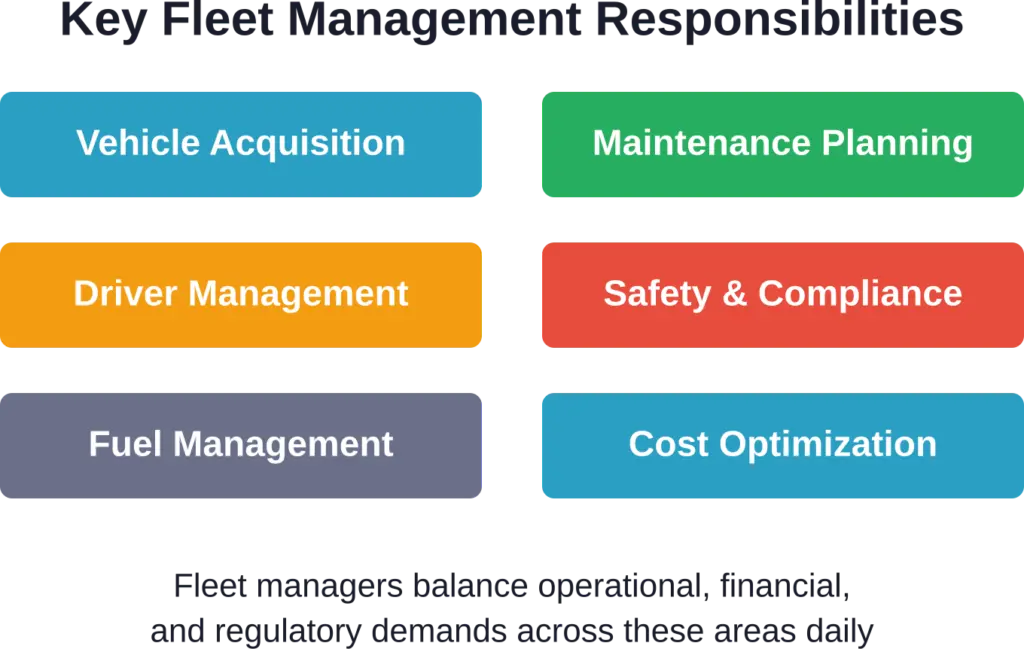
The role includes vehicle procurement and disposal, maintenance scheduling and vendor management, fuel program administration, driver recruitment and training, safety compliance and reporting, telematics system management, route planning and dispatch, budget management, and performance reporting to executives.
On any given day, a fleet manager might negotiate a lease agreement, review a driver’s safety score after a speeding alert, approve a repair estimate, analyze fuel consumption trends, update compliance documentation for a regulatory audit, and present cost-per-mile metrics to senior leadership.
The position requires technical knowledge, analytical skills, vendor management capability, and the ability to balance competing priorities—cost, safety, compliance, and operational demand—simultaneously.
Key Benefits of Fleet Management Systems
Organizations implementing telematics have documented significant reductions in risky driving behaviors such as speeding instances. That’s a consistent finding across implementations.
Organizations that implement comprehensive fleet management systems consistently report measurable improvements across multiple metrics.
Cost Reduction
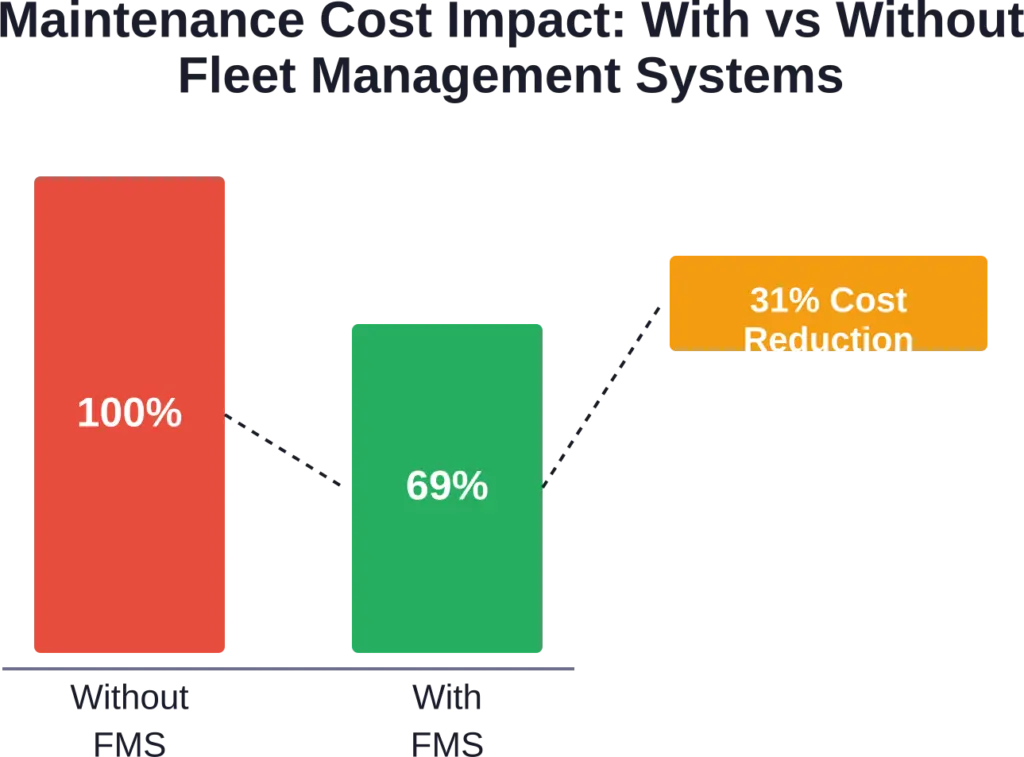
Fleet operations represent one of the largest controllable expenses in many businesses. Research from academia shows that modern fleet management systems can reduce fuel costs by up to 36.93% through fleet diversification optimization, while proper maintenance scheduling has decreased maintenance spend by 31% in documented implementations.
These savings come from reduced fuel waste through route optimization and idle time monitoring, lower maintenance costs through preventive scheduling rather than reactive repairs, decreased insurance premiums through improved safety records, and optimized vehicle utilization that reduces the need for excess capacity.
Operational Efficiency
Real-time visibility eliminates guesswork. Dispatchers know exactly where vehicles are and can respond dynamically to changes in demand or traffic conditions.
Research indicates that optimization modeling can improve fleet utilization by 15%, translating to increased operational efficiency and better customer service through accurate arrival time estimates.
Automated workflows reduce administrative burden. Tasks that once required manual tracking—inspection logs, fuel reconciliation, compliance documentation—now happen automatically within the system.
Safety and Compliance
Safety programs built on data rather than assumptions deliver better results. Fleet management systems identify high-risk behaviors—speeding, harsh braking, rapid acceleration—and provide objective evidence for coaching conversations.
Compliance tracking becomes systematic rather than reactive. The system maintains electronic logs for hours of service, vehicle inspection records, driver qualification files, and maintenance documentation, ensuring audit readiness and reducing regulatory risk.
Environmental Impact
Optimization extends beyond cost to environmental performance. Multi-objective fleet optimization studies document carbon emissions decreases of 39% through fleet optimization and vehicle diversification strategies.
Fleet managers can track and report emissions metrics, supporting corporate environmental goals and increasingly important ESG reporting requirements.
Common Challenges Fleet Managers Face
But wait. If the technology is this good, why do fleet managers still struggle?
Because technology solves technical problems. It doesn’t eliminate organizational, human, or external challenges.
Driver Adoption and Resistance
Drivers sometimes view telematics as intrusive surveillance rather than a safety tool. Overcoming this perception requires transparent communication about how data will be used and focusing coaching on improvement rather than punishment.
Data Overload
Modern systems generate enormous volumes of data. Without clear priorities and properly configured alerts, managers can become overwhelmed by information that doesn’t drive decisions. The challenge shifts from getting data to identifying which data matters.
Integration Complexity
Fleet management rarely operates in isolation. The system needs to exchange data with fuel card providers, maintenance vendors, accounting systems, dispatch software, and customer relationship management platforms. Poor integration creates duplicate data entry and reconciliation headaches.
Balancing Cost and Coverage
Comprehensive systems deliver more value but carry higher costs. Smaller fleets must balance subscription fees, hardware costs, and training investment against potential savings, sometimes leading to underinvestment in capabilities that would pay for themselves.
Keeping Pace with Technology
The fleet management technology landscape evolves rapidly. Electric vehicles require different monitoring and charging management. Autonomous vehicle pilots introduce new data streams. Mobile workforce expectations change. Staying current requires ongoing investment and adaptation.
The Role of Telematics in Modern Fleet Management
Telematics is the nervous system of fleet management—the sensor network that makes everything else possible.
The term combines telecommunications and informatics, referring to the integrated use of communications and information processing to transmit data from remote objects.
In fleet management specifically, telematics captures vehicle location, performance, and usage data, then transmits it to centralized platforms for analysis and action.
Without telematics, fleet management reverts to clipboard-based manual processes: drivers filling out paper logs, mechanics noting odometer readings by hand, managers estimating locations by asking drivers over radio or phone.
With telematics, all that data flows automatically, continuously, and accurately. The manager’s job shifts from data collection to data analysis—from asking “where are my vehicles?” to “how can I deploy them more effectively?”
How Fleet Management Systems Process and Present Data
Raw data isn’t useful. Fleet management platforms transform data streams into actionable insights through several processing layers.
Data Validation and Cleaning
Not all incoming data is accurate. GPS signals can glitch. Sensors can malfunction. The system applies validation rules to filter anomalies—rejecting impossible speeds, identifying sensor failures, and flagging inconsistent readings for review.
Contextual Analysis
The platform doesn’t just record that a vehicle traveled 250 miles. It contextualizes that against assigned routes, traffic conditions, time of day, driver identity, and historical patterns to determine if the trip was efficient or if deviations occurred.
Aggregation and Summarization
Managers don’t need to see every GPS ping. The system aggregates granular data into summary metrics: total miles driven, average fuel economy, idle time percentage, safety score by driver, utilization rate by vehicle.
Visualization
Dashboards present information visually—maps showing vehicle locations, graphs tracking fuel consumption trends, color-coded alerts highlighting vehicles needing attention. Good visualization design enables pattern recognition that raw numbers obscure.
Predictive Analytics
Advanced systems apply machine learning to historical data to predict future needs: which vehicles are likely to require maintenance soon, which routes consistently encounter delays, which drivers show improving or declining performance trends.
Choosing the Right Fleet Management Approach
Not every fleet needs the same solution. The right approach depends on fleet size, vehicle types, operational complexity, budget, and organizational maturity.
For Small Fleets (5-25 vehicles)
Basic GPS tracking with maintenance reminders often provides sufficient value. The focus should be on simple, low-cost solutions that don’t require dedicated IT support.
Cloud-based platforms with monthly per-vehicle subscription pricing keep upfront costs manageable. Look for providers offering bundled hardware and software with straightforward installation.
For Medium Fleets (25-100 vehicles)
Comprehensive telematics with driver behavior monitoring, fuel management integration, and route optimization becomes cost-justified. The fleet is large enough that optimization opportunities multiply.
Integration with existing business systems—accounting, dispatch, customer relationship management—starts delivering workflow efficiency beyond just vehicle monitoring.
For Large Fleets (100+ vehicles)
Enterprise platforms with advanced analytics, predictive maintenance, API integration capabilities, and dedicated support make sense. The complexity justifies sophisticated tools.
Custom configuration, driver training programs, and ongoing optimization consulting often provide returns that exceed their costs at this scale.
Support Fleet Workflows With ECOFACTOR EV Charging
When a company uses electric vehicles, charging becomes another part of that workflow. ECOFACTOR helps businesses handle it with charging stations, network tools, and an iOS and Android app for drivers. The charging station map can make charging easier to plan during the day, especially when vehicles move between company sites, customer locations, or public charging points. ECOFACTOR also provides an online store where businesses can find chargers, cables and adapters for regular EV use.
ECOFACTOR can support fleet workflows that need:
- Reliable charging access for electric vehicles
- Better visibility over available charging points
- Practical equipment for workplace or commercial charging
- Easier driver access to station information through mobile tools
Contact ECOFACTOR to organize the charging part of fleet management and help electric vehicles stay ready for daily work.
Implementation Best Practices
Technology purchases don’t automatically deliver results. Successful fleet management implementation requires deliberate planning and change management:
- Start with clear objectives: What specific problems need solving? Reduced fuel costs? Improved safety scores? Better maintenance scheduling? Compliance automation? Defined goals guide system configuration and success measurement.
- Involve drivers early: Explain what’s being monitored and why. Frame telematics as a tool that protects them in disputes and helps identify training needs, not as surveillance.
- Configure alerts thoughtfully: Too many notifications create alarm fatigue. Focus on high-value, actionable alerts rather than monitoring everything possible.
- Establish baseline metrics before implementation: Performance can’t be measured for improvement without knowing starting performance.
- Plan for integration: Identify which systems need to exchange data and budget for integration development or middleware if direct connections aren’t available.
- Invest in training: Both managers and drivers need to understand how to use the system effectively. Vendors often provide training resources—use them.
- Review and optimize regularly: Schedule quarterly reviews of system usage, alert configurations, and performance metrics to ensure the platform continues delivering value as operations evolve.
Getting Started with Fleet Management
Real talk: the hardest part isn’t choosing a system. It’s making the decision to implement one.
Manual fleet management feels familiar. It’s how things have always been done. The problems seem manageable, even if they’re expensive.
But the organizations seeing 31% maintenance cost reductions and 36.93% fuel savings didn’t get there by maintaining the status quo. They made the commitment to systematic, data-driven fleet management.
Start by auditing current fleet costs and performance. Document total cost of ownership, fuel consumption, maintenance expenses, utilization rates, and safety incidents. These baselines quantify opportunity and measure improvement.
Define specific objectives. What would success look like in twelve months? Clearer objectives produce better vendor conversations and more focused implementations.
Research providers that serve fleets of similar size and industry. Schedule demonstrations. Ask about integration capabilities, support quality, and implementation timelines.
Run a pilot with a subset of vehicles before full deployment. This validates system performance, identifies configuration needs, and builds organizational confidence.
Fleet management works through systematic data collection, intelligent analysis, and workflow automation that transforms vehicle operations from reactive management to proactive optimization. The technology exists, the processes are proven, and the returns are measurable.
The question isn’t whether fleet management works. It’s whether your organization is ready to make it work.
Frequently Asked Questions
How much does fleet management software cost?
Pricing varies significantly based on fleet size, features, and provider. Basic GPS tracking typically costs between $15-$30 per vehicle per month, while comprehensive telematics platforms with advanced features range from $40-$75 per vehicle monthly. Hardware installation adds $100-$400 per vehicle as a one-time cost. Enterprise solutions for large fleets often negotiate custom pricing. Check providers’ official websites for current pricing details specific to your needs.
Can fleet management systems work with older vehicles?
Yes. Any vehicle with an OBD-II port (standard on vehicles manufactured after 1996 in most markets) can support a telematics device. Older vehicles may provide less diagnostic data than newer models, but location tracking, speed monitoring, and basic utilization metrics work regardless of vehicle age. Some very old vehicles may require alternative installation methods like hardwiring to the vehicle’s power system.
How quickly can a fleet see ROI from a management system?
Most fleets experience measurable returns within 6-12 months through reduced fuel consumption, lower insurance premiums, decreased maintenance costs, or improved utilization. The timeframe depends on starting efficiency—poorly managed fleets often see faster returns because optimization opportunities are larger. Documented case studies show maintenance cost reductions of 31% and fuel savings up to 36.93%, which quickly offset system costs for most operations.
What’s the difference between GPS tracking and telematics?
GPS tracking provides vehicle location data—where assets are and where they’ve been. Telematics encompasses GPS but adds vehicle diagnostics, driver behavior monitoring, fuel consumption tracking, engine performance data, and maintenance information. Think of GPS as a subset of telematics: all telematics systems include GPS, but not all GPS trackers provide comprehensive telematics data.
Do drivers need special equipment to use fleet management systems?
The vehicle requires a telematics device installed in the OBD-II port or hardwired to the electrical system. Drivers typically don’t need special equipment, though some systems offer optional mobile apps for electronic logging, pre-trip inspections, or delivery confirmation. Driver identification may use key fobs, RFID cards, or smartphone apps depending on the system configuration.
How does fleet management help with compliance?
Systems automate compliance documentation by maintaining electronic logs for hours of service, vehicle inspection records, maintenance history, and driver qualification tracking. Automated alerts notify managers when inspections are due, licenses need renewal, or vehicles require service to maintain warranty coverage. This systematic approach reduces regulatory risk and simplifies audit preparation compared to manual paper-based processes.
Can fleet management systems integrate with existing business software?
Most modern platforms offer integration capabilities through APIs, webhooks, or pre-built connectors for popular business systems. Common integrations include accounting software for expense tracking, dispatch systems for route optimization, fuel card programs for transaction reconciliation, and maintenance management software for work order automation. Integration complexity and availability vary by provider—verify specific integration needs during vendor evaluation.
The Future of Fleet Management
Fleet management continues evolving as new technologies emerge and operational demands shift.
Electric vehicle adoption is accelerating, requiring new capabilities for charging infrastructure management, range optimization, and battery health monitoring. Fleet management systems are adapting to track charge levels, locate charging stations along routes, and schedule charging during off-peak electricity rate periods.
Autonomous vehicle pilots are generating unprecedented data volumes and introducing new management considerations around fleet coordination, sensor health, and software versioning.
Artificial intelligence and machine learning are moving from experimental to production, enabling predictive maintenance that forecasts component failures before diagnostic codes appear and dynamic route optimization that adapts in real time to traffic, weather, and demand changes.
Sustainability reporting is becoming standard rather than optional, with fleet management systems providing the emissions data and utilization metrics organizations need for ESG disclosure and carbon reduction initiatives.
The core function remains constant—extracting maximum value from vehicle assets while controlling cost, risk, and environmental impact. But the tools, data sources, and analytical capabilities continue advancing, making fleet management increasingly sophisticated and valuable.