


Table of contents:
Quick Summary: Fleet management improvement centers on preventive maintenance, data-driven decision-making, and operational efficiency. Key strategies include standardizing maintenance schedules, tracking fuel consumption, implementing total cost of ownership (TCO) analysis, and leveraging modern fleet management software to reduce costs and maximize uptime.
Fleet operations face unprecedented pressure. According to the American Transportation Research Institute, average operating margins fell below 2 percent across all trucking sectors except LTL in 2024, with the truckload sector posting a negative 2.3 percent margin. Rising costs—particularly the 36 percent increase in auto liability premiums per mile in the past 8 years—have squeezed profitability to historic lows.
The good news? Strategic improvements in fleet management can reverse these trends. Through standardized maintenance programs, data analytics, and operational discipline, fleet managers are cutting costs while improving safety and uptime.
Here’s the thing though—improvement doesn’t require massive capital investment all at once. The most successful fleets focus on consistency, visibility, and making decisions based on real data rather than assumptions.
We remind you that you can purchase home and commercial charging stations in our online store, as well as use public charging stations ECOFACTOR located throughout Ukraine. For convenient access to charging infrastructure, we recommend using our mobile app, available on iOS and Android.
Why Fleet Management Optimization Matters Now
The trucking industry faced the most challenging freight market in years during 2024, with loads down and costs climbing. When the American Transportation Research Institute released its 2025 report analyzing 2024 data, the findings painted a stark picture: the average cost of operating a truck reached $2.260 per mile in 2024, and when fuel costs were excluded, marginal costs rose 3.6 percent to $1.779 per mile—the highest non-fuel operating costs ever recorded.
Meanwhile, vehicle breakdowns, inefficient routing, and reactive maintenance continue draining resources. But wait. There’s a flip side to this pressure.
Fleets that implement structured management practices are seeing measurable results. Industry reports indicate that vehicles on proper preventive maintenance schedules cost 25–35 percent less per year in repairs compared to reactive-only approaches. That cost difference compounds across an entire fleet.
Penn State launched a University-wide Fleet Management Organization, announced December 10, 2025 to consolidate and streamline policy for University-owned vehicles across all campuses, recognizing that centralized oversight and standardized procedures improve both efficiency and accountability.
1. Standardize Preventive Maintenance Across the Fleet
The cost gap between preventive and reactive maintenance is massive. A routine oil change and inspection runs $150–$250. An engine failure from neglected maintenance? That exceeds $10,000—not counting lost productivity while the vehicle sits in the shop.
Preventive maintenance also extends vehicle lifespan and keeps assets running when they’re needed most. Fleets with strong inspection and preventive maintenance programs report significantly lower maintenance expenses overall.
Setting up a standardized PM schedule means:
- Automating service triggers based on mileage, engine hours, or calendar intervals
- Tracking maintenance history for every vehicle in the fleet
- Sending real-time reminders before service windows close
- Documenting completed work to identify patterns and recurring issues
Real talk: consistency beats perfection. A simple maintenance schedule followed religiously outperforms a complex system that’s applied inconsistently.
2. Track and Analyze Fuel Consumption Patterns
Fuel represents one of the largest line items in fleet budgets. Small inefficiencies—aggressive acceleration, excessive idling, poorly maintained engines—add up quickly when multiplied across dozens or hundreds of vehicles.
Tracking fuel consumption at the vehicle level reveals patterns that aggregate data masks. One vehicle burning significantly more fuel than similar models in the fleet signals a maintenance issue, driver behavior problem, or route inefficiency that needs attention.
The Federal Energy Management Program notes that regular engine tune-ups ensure vehicles operate efficiently. Using the manufacturer’s recommended grade of motor oil can improve fuel economy by up to 2 percent. Properly inflated tires last longer, increase fuel economy, and improve safety.
Those improvements sound small. But across a fleet running hundreds of thousands of miles annually, a 2 percent fuel economy gain translates to thousands of dollars saved.
3. Implement Total Cost of Ownership Analysis
Purchase price tells only part of the story. Total cost of ownership (TCO) accounts for acquisition, maintenance, fuel, insurance, depreciation, and disposal costs over a vehicle’s entire service life.
TCO analysis drives smarter replacement decisions. Holding onto aging vehicles too long increases maintenance costs and downtime. Replacing them too early means paying for depreciation without capturing full value. TCO helps identify the optimal replacement window for each vehicle class in the fleet.
| TCO Component | Impact on Fleet Budget | Optimization Strategy |
|---|---|---|
| Acquisition Cost | Initial capital outlay | Right-size vehicles to actual needs |
| Fuel | Ongoing operating expense | Track consumption, maintain engines, train drivers |
| Maintenance | Increases with vehicle age | Preventive schedules, reliable vendors |
| Insurance | Risk-based premium | Safety programs, driver training |
| Depreciation | Value loss over time | Optimal replacement timing |
| Downtime | Lost productivity | Preventive maintenance reduces breakdowns |
Capital planning becomes more strategic when built on TCO rather than sticker price alone. Fleet managers can justify investment in higher-quality vehicles that cost more upfront but deliver lower total ownership costs.
4. Digitize Maintenance Records and Documentation
Paper logbooks and spreadsheets create gaps. Missed services, incomplete documentation, and lost records lead to duplicated work, compliance headaches, and uncertainty about vehicle condition.
Digital record-keeping centralizes information. Maintenance history, inspection reports, fuel logs, and incident documentation live in one accessible system. Technicians see what work was done when. Managers spot trends across vehicles or operators.
Digitization also supports compliance. Regulations require documentation of inspections, repairs, and driver qualifications. Electronic systems make audits straightforward rather than scrambling to assemble scattered paperwork.
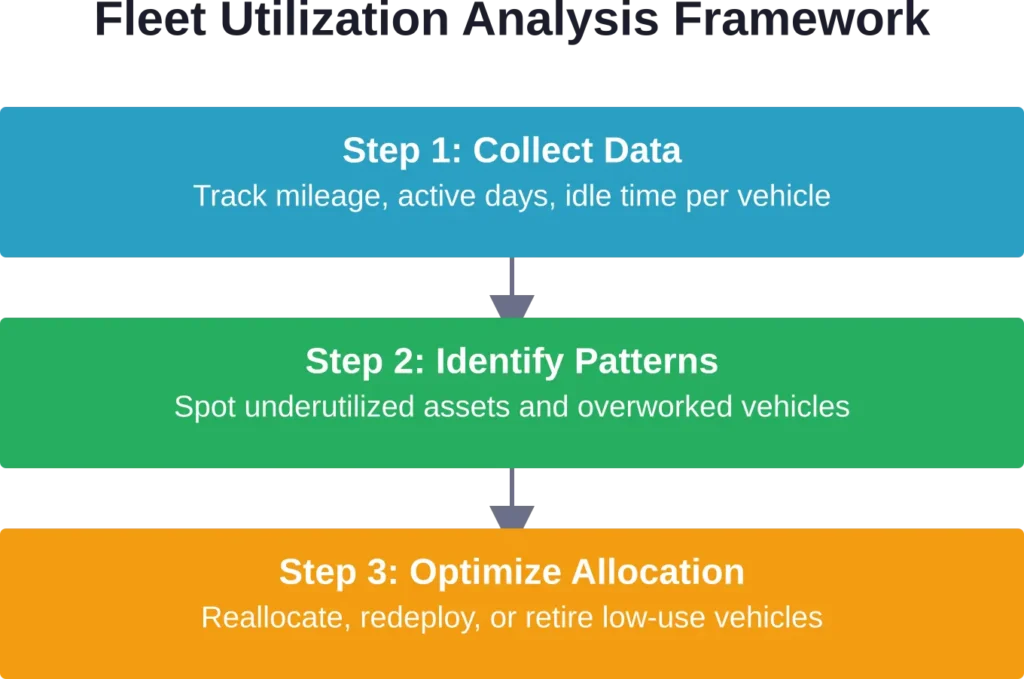
5. Monitor Vehicle Utilization Rates
Are all vehicles in the fleet actually needed? Utilization tracking reveals which assets sit idle and which are overworked.
Low utilization indicates overcapacity—paying for insurance, depreciation, and storage on vehicles that don’t generate value. High utilization on specific vehicles suggests opportunities to redistribute loads or identify where additional capacity is genuinely needed.
GPS and telematics systems provide utilization data automatically. But even basic tracking—logging mileage and active days per month—surfaces actionable insights.
Some fleets discover they can reduce vehicle count by 10–15 percent simply by reallocating existing assets more effectively. That’s significant savings without cutting operational capability.
6. Develop Clear Policies and Fleet Management Guidelines
Inconsistent practices create inefficiency. When drivers, dispatchers, and maintenance staff all operate by different rules, things fall through cracks.
Clear policies establish expectations:
- Who’s authorized to drive which vehicles
- How to report damage or mechanical issues
- Fuel card usage and expense documentation
- Pre-trip and post-trip inspection requirements
- Maintenance approval workflows
Documentation matters, but it doesn’t need to be complicated. A straightforward handbook that people actually read beats a comprehensive manual that sits ignored.
Penn State’s fleet consolidation initiative specifically focused on streamlining policy and procedures across multiple campuses, recognizing that standardized guidelines improve oversight and operational efficiency.
7. Prioritize Driver Training and Accountability
Driver behavior directly impacts fuel costs, maintenance expenses, safety incidents, and vehicle lifespan. Aggressive driving—hard acceleration, speeding, sudden braking—increases fuel consumption and accelerates wear on brakes, tires, and drivetrains.
Training programs that emphasize defensive driving, smooth acceleration, and proper vehicle operation reduce these costs. Telematics systems provide objective data on driving behaviors, creating accountability without relying on subjective observation.
Safety matters beyond cost. Insurance costs have climbed 36 percent per mile in the past 8 years. Investing in driver safety programs helps control those premiums while protecting people.
8. Embrace Data-Driven Decision Making
Gut feel and experience have value. But data reveals patterns that intuition misses.
Modern fleet management relies on information from GPS, telematics, maintenance systems, and fuel cards. Analyzing this data identifies inefficiencies, predicts maintenance needs, and supports better resource allocation.
The Federal Energy Management Program recommends a structured framework: plan, collect data, strategize based on analysis, then implement improvements. That cycle repeats continuously as new data refines understanding.
Now, this is where it gets interesting. Data doesn’t solve problems automatically. It surfaces opportunities. Fleet managers still need to interpret findings, prioritize actions, and execute changes. But decisions backed by real numbers outperform guesswork consistently.
9. Centralize Asset Tracking and Communication
Fragmented information slows everything down. Maintenance schedules in one system, fuel logs in another, GPS data in a third—pulling it all together for analysis becomes a project in itself.
Centralized platforms consolidate asset tracking, work orders, driver communication, and reporting. Everyone accesses the same current information rather than working from outdated or incomplete data.
Better communication between departments and drivers reduces confusion. When a vehicle needs service, the dispatcher knows immediately. When a driver reports an issue, maintenance sees it without delay. Response times improve, and fewer problems escalate.
10. Invest in Scalable Fleet Management Software
Manual processes don’t scale. A fleet manager can track 10 vehicles with spreadsheets. Fifty vehicles? That’s pushing it. A hundred or more? Forget it.
Fleet management software automates scheduling, alerts, reporting, and documentation. It scales from small operations to large enterprises without proportionally increasing administrative workload.
Look for systems that support:
- Automated maintenance scheduling based on multiple triggers
- Real-time vehicle tracking and utilization reporting
- Fuel management and cost analysis
- Driver behavior monitoring
- Compliance documentation and audit trails
- Integration with existing accounting and ERP systems
The short answer? Software pays for itself through reduced administrative time, fewer missed services, and better decision-making. But check current pricing and feature availability directly with vendors, as subscription tiers and capabilities evolve frequently.
Improve Fleet Operations With ECOFACTOR Charging Support
Improving fleet management also means removing small daily delays, and for electric fleets, charging is one of the first things that needs to be organized properly. ECOFACTOR helps businesses manage this side with charging stations, network tools, and a mobile app for iOS and Android. Its charging station map can help drivers plan charging around daily routes instead of treating it as a separate problem. ECOFACTOR also has an online store with chargers, cables and adapters, which makes it easier for companies to prepare workplace parking, service areas, or internal charging points.
ECOFACTOR can support fleet teams that need to:
- Reduce charging-related downtime during the workday
- Add EV charging access at company locations
- Give drivers clearer information about nearby charging points
- Keep the right charging hardware and accessories available
Contact ECOFACTOR to make EV charging a more organized part of fleet management, not another task that gets handled at the last minute.
Building a Sustainable Fleet Management Strategy
Sustainable practices go beyond environmental concerns—they’re about long-term operational viability. Fuel efficiency improvements reduce both emissions and costs. Extending vehicle lifespan through preventive maintenance delays replacement expenses. Right-sizing the fleet eliminates unnecessary capacity.
Some fleets are exploring alternative fuel vehicles, electric options, or hybrid powertrains. The economics depend on use cases, routes, and infrastructure availability. TCO analysis helps evaluate whether newer technologies make financial sense for specific applications.
Sustainability improvements don’t require major capital investment. Incremental improvements—better route planning, reduced idling, proper tire pressure—add up over time.
Measuring Fleet Management Performance
What gets measured gets managed. Key performance indicators (KPIs) track whether improvements are working:
| KPI | What It Measures | Target Direction |
|---|---|---|
| Cost per mile | Total operating cost divided by miles driven | Decrease |
| Maintenance cost per vehicle | Annual maintenance spending per asset | Decrease (with preventive approach) |
| Fuel economy | Miles per gallon or cost per mile | Increase MPG, decrease cost |
| Vehicle utilization | Percentage of time vehicles are productively used | Increase (optimal range, not maximum) |
| Downtime | Days vehicles are unavailable due to repairs | Decrease |
| Safety incidents | Accidents, violations, claims per mile | Decrease |
Tracking KPIs monthly or quarterly reveals trends. A single month’s data might be noise. Six months shows whether changes are delivering results.
Common Fleet Management Pitfalls to Avoid
Even well-intentioned improvement efforts hit obstacles. Being aware of common mistakes helps avoid them:
- Skipping preventive maintenance when budgets tighten: It feels like savings. It’s not. Deferred maintenance leads to bigger failures and higher costs down the road.
- Buying software without defining processes first: Technology can’t fix broken workflows. Understand what needs improvement, then select tools that address those specific needs.
- Ignoring driver input: Drivers see problems firsthand. Their feedback on vehicle issues, route inefficiencies, or policy gaps is valuable. Ignoring it means missing early warning signs.
- Holding vehicles too long: Loyalty to aging equipment is expensive. When repair costs and downtime exceed the TCO of replacement, it’s time to let go.
- Lack of accountability: Without clear ownership—who’s responsible for maintenance decisions, fuel costs, utilization—nothing improves consistently.
Frequently Asked Questions
What’s the most cost-effective way to improve fleet management?
Implementing a preventive maintenance schedule delivers the highest return with minimal upfront cost. Industry reports show vehicles on preventive schedules cost 25–35 percent less annually in repairs compared to reactive maintenance. Even basic scheduling—tracking mileage and setting service intervals—makes a significant difference without requiring expensive software or systems.
How can small fleets compete with larger operations?
Small fleets can’t match large operations on purchasing power, but they excel at flexibility and attention to detail. Focus on maximizing utilization, maintaining vehicles rigorously, and building strong vendor relationships. Many fleet management software platforms offer scalable pricing that makes professional tools accessible to operations of any size. Consistency matters more than scale.
What data should fleet managers track first?
Start with maintenance records, fuel consumption, and vehicle utilization. These three data points reveal the most common cost drivers and inefficiencies. Maintenance history shows whether preventive schedules are followed. Fuel data exposes consumption patterns and anomalies. Utilization indicates whether fleet size matches actual needs. More sophisticated tracking—driver behavior, route optimization—builds on this foundation.
How often should fleet vehicles be replaced?
There’s no universal answer—it depends on TCO analysis for each vehicle class. Light-duty vehicles often reach optimal replacement around 5–7 years or 100,000–150,000 miles, while heavy-duty trucks might run economically much longer. When maintenance costs, downtime, and reliability issues exceed the annualized cost of a replacement vehicle, it’s time to retire the asset. Track repair frequency and cost trends to identify that inflection point.
Does fleet management software really pay for itself?
For fleets beyond 15–20 vehicles, software typically delivers positive ROI within the first year through reduced administrative time, fewer missed services, better fuel tracking, and improved decision-making. The key is selecting a platform that matches operational needs rather than paying for features that won’t be used. Check vendor websites for current pricing and feature availability, as subscription models and capabilities change frequently.
What’s the biggest driver of fleet costs currently?
According to the American Transportation Research Institute’s 2025 report analyzing 2024 data, non-fuel marginal costs rose to $1.779 per mile—the highest ever recorded. Insurance costs in particular have climbed dramatically, with auto liability premiums increasing 36 percent per mile in the past 8 years. Fuel, maintenance, and driver wages remain major expenses, but insurance pressure is intensifying across the industry.
How can fleets reduce fuel consumption without buying new vehicles?
Driver training makes an immediate impact. Smooth acceleration, reduced idling, and maintaining steady speeds improve fuel economy 5–15 percent. Basic maintenance—proper tire inflation, regular oil changes using manufacturer-recommended grades, engine tune-ups—adds another 2–5 percent. Route optimization reduces unnecessary miles. The Federal Energy Management Program notes that using recommended motor oil alone can improve fuel economy up to 2 percent, and properly inflated tires deliver additional gains.
Take Action: Your Fleet Management Improvement Plan
Fleet management improvement doesn’t happen overnight. But consistent progress compounds.
Start with preventive maintenance. Audit current practices, identify gaps, and build a standardized schedule. That single step reduces costs and prevents breakdowns.
Add data collection. Even basic tracking—maintenance logs, fuel receipts, mileage records—provides visibility into patterns and opportunities.
Review total cost of ownership for each vehicle class. Identify aging assets that are draining resources and plan strategic replacements.
Implement driver training focused on fuel efficiency and safety. Monitor behavior with available tools and recognize improvement.
Evaluate whether fleet management software makes sense for your operation. For fleets managing more than a handful of vehicles, centralized platforms deliver measurable efficiency gains.
The trucking industry faces tight margins and rising costs—that’s the reality in 2026. But fleets that commit to operational excellence, data-driven decisions, and preventive practices are not just surviving. They’re building sustainable competitive advantages that will matter for years to come.