


Table of contents:
Quick Summary: A fleet management company provides specialized services, software, and expertise to help businesses efficiently manage their commercial vehicles. These companies handle everything from vehicle acquisition and maintenance to driver safety, fuel management, and compliance tracking, allowing organizations to reduce costs, improve operational efficiency, and focus on their core business activities.
Commercial vehicles are the backbone of modern business operations. From delivery services to utility providers, organizations across industries depend on fleets to transport goods, provide services, and keep operations running smoothly.
But managing a fleet is complex. Vehicles require maintenance, drivers need monitoring, fuel costs fluctuate, and regulatory compliance never stops. That’s where fleet management companies come in.
These specialized service providers take the headache out of managing commercial vehicles, offering everything from software solutions to hands-on operational support. Let’s explore what these companies actually do and why businesses rely on them.
We remind you that you can purchase home and commercial charging stations in our online store, as well as use public charging stations ECOFACTOR located throughout Ukraine. For convenient access to charging infrastructure, we recommend using our mobile app, available on iOS and Android.
Understanding Fleet Management Companies
A fleet management company provides hardware, software, and services designed to help businesses manage their commercial vehicles more effectively. These companies specialize in optimizing every aspect of vehicle operations, from acquisition to disposal.
Fleet management companies usually provide solutions to help commercial fleets improve safety, efficiency, and productivity. They serve organizations that operate multiple vehicles for business purposes, whether that’s five vans or five thousand trucks.
The goal? Reduce operational costs, maximize vehicle uptime, and give fleet managers the insights they need to make smarter decisions.
Who Uses Fleet Management Companies?
Pretty much any organization with commercial vehicles can benefit. Delivery companies, utility providers, construction firms, transportation services, field service businesses, government agencies, and even educational institutions manage fleets.
The common thread is simple: these organizations need their vehicles running efficiently without diverting excessive time and resources from their core business operations.
Core Services Fleet Management Companies Provide
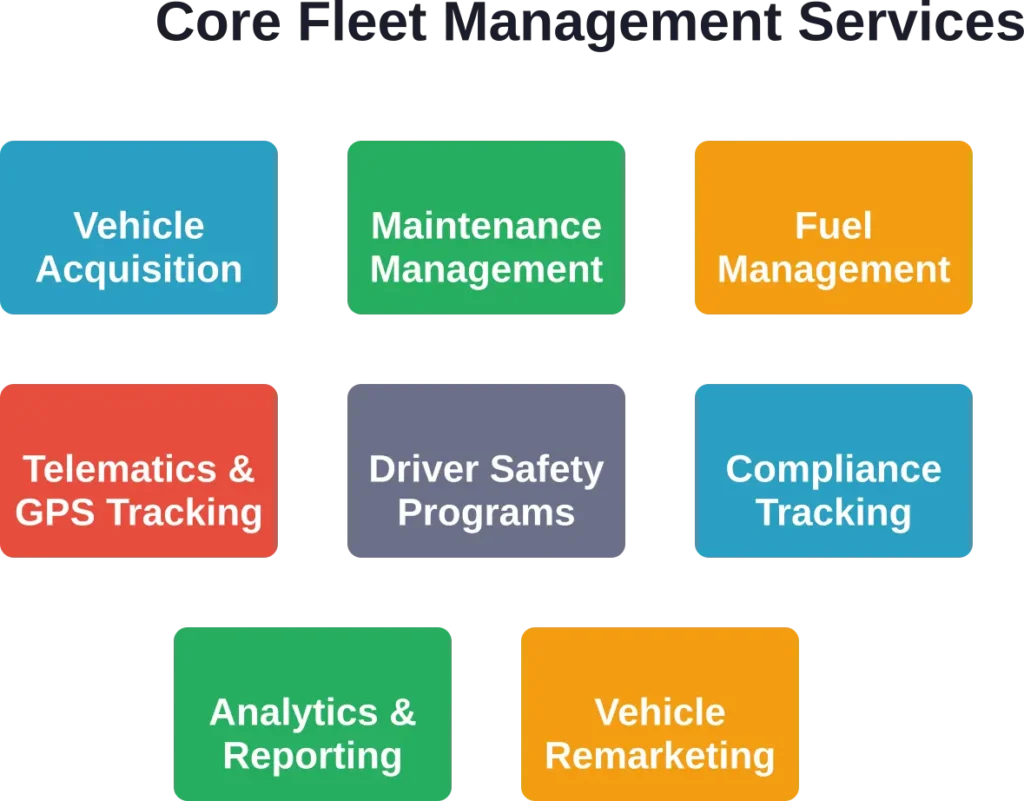
Fleet management companies don’t just sell software and call it a day. The best providers offer comprehensive services that cover the entire vehicle lifecycle.
Vehicle Acquisition and Leasing
Many fleet management companies help businesses acquire vehicles through purchasing programs or leasing arrangements. They negotiate with manufacturers, handle financing, and ensure organizations get the right vehicles at competitive prices.
This takes the complexity out of fleet expansion and replacement cycles.
Maintenance and Repair Management
Keeping vehicles roadworthy is critical. Fleet management companies coordinate scheduled maintenance, track service history, manage repair facilities, and ensure vehicles receive preventive care before breakdowns occur.
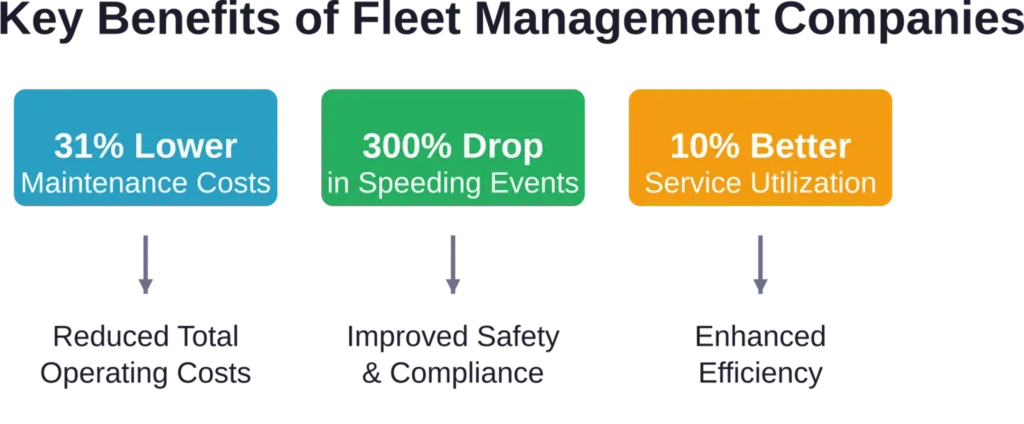
Some provide maintenance networks across wide geographic areas, giving businesses access to certified repair facilities wherever their vehicles operate. When Tuff Shed, Inc. incorporated telematics into their fleet management processes, they experienced a maintenance spend decrease of 31% and utilization of maintenance services increased by 10%.
That’s the power of proper maintenance management.
Fuel Management
Fuel represents one of the largest operating expenses for any fleet. Fleet management companies implement fuel card programs, track consumption patterns, identify inefficiencies, and help businesses reduce fuel costs through better routing and driver behavior.
Advanced providers analyze fuel data to spot waste and recommend eco-driving techniques that simultaneously reduce fuel consumption and improve safety.
Telematics and GPS Tracking
Modern fleet management relies heavily on telematics technology—systems that collect and transmit vehicle data in real time. Fleet management companies provide GPS tracking systems that monitor vehicle location, speed, idle time, harsh braking, and other driver behaviors.
This visibility allows managers to optimize routes, improve customer service, verify work completion, and enhance driver safety.
Driver Safety and Training
Safe drivers reduce accidents, insurance costs, and liability exposure. Fleet management companies offer driver monitoring systems, safety scorecards, coaching programs, and training resources.
According to the Truckload Carriers Association’s Fleet Safety Awards program, accident investigation and prevention carries 15 points in safety program evaluation, while inspection and maintenance of equipment also carries 15 points, highlighting the critical importance of safety management in fleet operations.
When Tuff Shed incorporated telematics to monitor driver behavior, they saw a 300% reduction in speeding instances. That’s not just safer—it’s also cheaper on fuel and vehicle wear.
Compliance Management
Commercial vehicles operate under extensive regulatory requirements. Hours of service rules, vehicle inspections, driver qualification files, and safety regulations create substantial compliance burdens.
Fleet management companies help businesses stay compliant by automating record-keeping, tracking certification expiration dates, managing driver files, and ensuring regulatory requirements are met across the entire fleet.
Analytics and Reporting
Data is worthless without insights. Fleet management companies provide reporting dashboards that turn raw vehicle data into actionable intelligence.
Managers can analyze utilization rates, identify underperforming vehicles, track total cost of ownership, compare driver performance, and spot trends that inform better operational decisions.
Benefits of Working With Fleet Management Companies
Why outsource fleet management instead of handling everything in-house? The benefits are substantial for most organizations.
Cost Reduction
Fleet management companies bring economies of scale, negotiating power with vendors, and specialized expertise that typically reduces total fleet operating costs significantly. Lower maintenance expenses, reduced fuel consumption, better vehicle pricing, and decreased insurance premiums add up quickly.
Increased Operational Efficiency
Real-time visibility, optimized routing, predictive maintenance, and better resource allocation all improve operational efficiency. Vehicles spend more time working and less time sitting idle or in the shop.
Risk Mitigation
Safety programs, driver monitoring, compliance tracking, and professional management reduce accident rates, regulatory violations, and liability exposure. That protects the bottom line and the organization’s reputation.
Focus on Core Business
Managing a fleet demands time, expertise, and resources. Partnering with a fleet management company lets organizations redirect those resources toward their primary business activities instead of becoming vehicle management experts.
Scalability
Fleet management companies provide infrastructure and processes that scale with business growth. Adding vehicles doesn’t require proportional increases in administrative staff or internal systems.
Types of Fleet Management Solutions
Fleet management companies offer different service models depending on business needs and fleet complexity.
Software-Only Solutions
Some providers offer fleet management software platforms that businesses operate themselves. These systems typically include telematics integration, maintenance tracking, reporting dashboards, and driver management tools.
This model works well for organizations that want technology but prefer keeping operational control in-house.
Full-Service Management
Full-service providers handle everything—vehicle acquisition, maintenance coordination, fuel programs, compliance management, and reporting. The fleet management company essentially becomes the outsourced fleet department.
Organizations with limited internal resources or specialized fleet needs often prefer this comprehensive approach.
Hybrid Models
Many fleet management companies offer flexible arrangements where businesses select specific services rather than adopting an all-or-nothing approach. A company might handle its own maintenance but rely on the provider for telematics, fuel management, and compliance tracking.
Work With ECOFACTOR on EV Charging
For companies moving toward electric vehicles, charging infrastructure becomes one of the practical things that needs attention. ECOFACTOR supports this part with charging stations, station management tools, and an app for iOS and Android. The company also provides a charging station map that helps drivers find available charging points and check station information. Through its online store, businesses can buy chargers, cables and adapters for office parking, commercial sites, fleet locations, or private charging needs.
ECOFACTOR can support businesses that need:
- Charging stations for EV fleet use
- Tools for managing station access and activity
- Charging equipment for company locations
Contact ECOFACTOR to build the charging side of your EV fleet setup with the right equipment and tools.
How to Choose a Fleet Management Company
Not all fleet management companies are created equal. Selecting the right partner requires careful evaluation.
Industry Experience
Look for providers with experience in similar industries. A company that specializes in long-haul trucking may not be the best fit for a local utility provider with specialized equipment needs.
Technology Capabilities
Evaluate the technology platform carefully. The system should be user-friendly, provide real-time data access, integrate with existing business systems, and offer mobile capabilities for drivers and field managers.
According to SBA guidelines for choosing business software, testimonials from businesses similar in size and industry provide valuable insights into actual performance.
Service Network
For maintenance and repair services, confirm the provider has adequate coverage in all areas where vehicles operate. A maintenance network means little if there aren’t convenient facilities along primary routes.
Reporting and Analytics
Strong reporting capabilities separate good providers from great ones. The system should deliver actionable insights, not just raw data dumps.
Customer Support
Fleet operations run 24/7, and issues don’t wait for business hours. Evaluate the provider’s support availability, response times, and account management approach.
Pricing Structure
Understand exactly what the pricing includes and what costs extra. Some providers charge per vehicle, others use transaction-based models, and full-service arrangements often bundle services into comprehensive packages.
Compare total cost of ownership rather than just monthly fees.
| Selection Criteria | What to Look For | Red Flags |
|---|---|---|
| Industry Experience | Proven track record with similar fleets and operations | Generic solutions with no vertical specialization |
| Technology Platform | Intuitive interface, mobile access, real-time data, integrations | Outdated systems, poor mobile support, limited reporting |
| Service Network | Wide coverage in operating areas, certified facilities | Limited geographic reach, unvetted repair partners |
| Support Quality | 24/7 availability, dedicated account management, fast response | Business-hours-only support, generic help desk |
| Pricing Transparency | Clear structure, predictable costs, comprehensive packages | Hidden fees, vague pricing, nickel-and-dime approach |
The Role of Technology in Fleet Management
Modern fleet management is technology-driven. GPS tracking, telematics sensors, mobile apps, and cloud-based platforms have transformed how businesses manage vehicles.
Telematics Systems
These systems collect data on vehicle location, speed, engine performance, fuel consumption, idle time, harsh driving events, and maintenance needs. The information flows to centralized platforms where managers can monitor the entire fleet in real time.
Fleet Management Software
Cloud-based platforms aggregate data from multiple sources and present it through dashboards, reports, and alerts. Managers can schedule maintenance, track compliance deadlines, analyze costs, and monitor driver performance from any device.
Mobile Applications
Drivers use mobile apps for vehicle inspections, electronic logging, route navigation, proof of delivery, and communication with dispatchers. This eliminates paperwork and improves data accuracy.
Predictive Analytics
Advanced systems use historical data and machine learning to predict maintenance needs before breakdowns occur, identify vehicles approaching end of useful life, and forecast future operating costs.
Safety Management Through Fleet Companies
Safety represents a critical focus area for fleet management companies. According to the Truckload Carriers Association’s Fleet Safety Awards program, comprehensive safety programs evaluate multiple factors including accident investigation and prevention, inspection and maintenance of equipment, outside activities and general highway safety, and company safety program uniqueness.
Each category carries specific point values, with accident investigation and prevention and inspection and maintenance both weighted at 15 points, demonstrating their importance in overall safety performance.
Fleet management companies implement driver scorecards that track speeding, harsh braking, rapid acceleration, and other risky behaviors. Real-time coaching systems provide immediate feedback to drivers, creating opportunities for improvement before accidents occur.
Research has shown that even small improvements in eco-driving performance significantly decrease collision risk. The connection between fuel-efficient driving techniques and safety isn’t coincidental—smooth acceleration, proper following distance, and controlled speeds benefit both.
Compliance and Regulatory Support
Commercial fleet operations fall under numerous regulations at federal, state, and local levels. Hours of service regulations limit how long commercial drivers can operate vehicles. Vehicle inspection requirements mandate regular safety checks. Driver qualification standards establish training and certification requirements.
Fleet management companies maintain compliance by automating hours of service logging through electronic logging devices, tracking vehicle inspection schedules and documentation, managing driver qualification files and certification renewals, and monitoring regulatory changes that affect fleet operations.
For government and academic institutions, compliance requirements can be even more complex. For instance, the State of New Mexico mandates that seventy-five percent (75%) of all vehicles purchased or leased by state agencies or institutions of higher education be capable of using an alternative fuel or are a hybrid (gas/electric) type of vehicle.
Fleet management companies help navigate these specialized requirements.
Environmental Considerations
Sustainability has become increasingly important in fleet operations. Fleet management companies help businesses reduce environmental impact through multiple approaches.
Fuel efficiency programs minimize consumption through route optimization and driver training. Vehicle selection assistance helps organizations choose hybrid, electric, or alternative fuel vehicles when appropriate. Idle time reduction saves fuel and reduces emissions. Proper maintenance ensures engines run cleanly and efficiently.
Many organizations now factor environmental, social, and governance goals into fleet management strategies, and fleet management companies provide the data and processes to measure and improve environmental performance.
Real-World Impact of Fleet Management
The difference between managed and unmanaged fleets shows up clearly in operational data. Organizations implementing comprehensive fleet management solutions consistently report measurable improvements.
Maintenance costs dropped significantly—Tuff Shed saw a 31% decrease. Service utilization improves as vehicles receive timely preventive care. Driver behavior changes dramatically when monitoring systems are in place, with speeding instances often dropping by several hundred percent.
But the benefits extend beyond immediate cost savings. Better data enables smarter decisions about fleet composition, replacement cycles, and operational strategies. Reduced accident rates improve safety records and lower insurance premiums. Enhanced compliance reduces regulatory risk.
These improvements free up management attention for strategic priorities rather than constant firefighting around vehicle issues.
Frequently Asked Questions
What exactly does a fleet management company do?
Fleet management companies provide services and technology to help businesses manage commercial vehicles efficiently. This includes vehicle acquisition, maintenance coordination, fuel management, GPS tracking, driver safety programs, compliance tracking, and reporting. They handle the operational complexity of running a fleet so businesses can focus on their core activities.
How much does fleet management cost?
Pricing varies widely based on fleet size, services selected, and provider. Software-only solutions may charge per vehicle monthly fees, while full-service management typically bundles comprehensive services into package pricing. Check provider websites for current pricing since costs and packages change frequently based on technology advancements and market conditions.
Do small businesses need fleet management companies?
Even small fleets benefit from professional fleet management. Organizations with just five to ten vehicles often lack the time and expertise to optimize maintenance, monitor driver behavior, and manage compliance effectively. Many fleet management companies offer solutions scaled for smaller operations, making professional management accessible regardless of fleet size.
Can fleet management companies really reduce costs?
Yes, the data consistently shows significant cost reductions. Organizations implementing fleet management solutions report maintenance spending decreases of 31% or more, substantial drops in fuel consumption, reduced accident rates, and improved vehicle utilization. The combination of better maintenance timing, driver behavior monitoring, fuel management, and operational optimization delivers measurable financial returns.
What’s the difference between fleet management software and a fleet management company?
Fleet management software is a technology platform businesses operate themselves to track and manage vehicles. A fleet management company provides comprehensive services that may include software but also offers hands-on management like maintenance coordination, compliance support, and operational expertise. Full-service providers essentially become an outsourced fleet department.
How do fleet management companies improve driver safety?
They implement multiple safety measures including telematics systems that monitor driver behavior, scorecards that track speeding and harsh driving, real-time coaching systems that provide immediate feedback, training programs focused on defensive driving, and accident investigation processes that identify and address root causes. These combined approaches significantly reduce collision risk.
What should I look for when choosing a fleet management company?
Prioritize industry experience with fleets similar to yours, proven technology platforms with strong mobile capabilities, adequate service network coverage in your operating areas, comprehensive reporting and analytics, responsive customer support, and transparent pricing. Request references from similar organizations and evaluate the provider’s track record with businesses like yours.
Moving Forward With Fleet Management
Fleet management companies offer specialized expertise, proven technology, and comprehensive services that transform how organizations operate commercial vehicles. The measurable benefits—reduced costs, improved safety, enhanced efficiency, and better compliance—make professional fleet management a strategic advantage rather than just an operational expense.
For businesses that depend on vehicles to deliver services, transport goods, or support field operations, partnering with the right fleet management company can fundamentally improve performance while freeing up internal resources for core business priorities.
The question isn’t whether fleet management companies provide value. The data proves they do. The real question is which provider best fits specific organizational needs, operational requirements, and strategic goals.
Start by evaluating current fleet challenges, identifying the most pressing operational issues, and researching providers with proven experience in similar applications. The right partnership can transform fleet operations from a constant headache into a competitive advantage.