


Table of contents:
Quick Summary: A fleet management system is a comprehensive platform that helps organizations track, maintain, and optimize their vehicle fleets through technology. It combines GPS tracking, telematics, maintenance scheduling, and data analytics to reduce costs, improve safety, and maximize operational efficiency. Modern fleet management systems typically deliver 12% fuel cost savings and can reduce vehicle downtime by 20%, transforming how businesses manage their mobile assets.
Managing a fleet of vehicles without proper systems is like flying blind. Organizations that rely on transportation assets need visibility into where vehicles are, how they’re performing, and what maintenance they require.
That’s where fleet management systems come in. These platforms have evolved from simple GPS trackers into sophisticated operations centers that touch every aspect of vehicle lifecycle management.
But here’s the thing—not every business understands what these systems actually do or how they deliver measurable returns. Real-world implementations show dramatic improvements: data-driven fleets using optimization tools achieve 12% fuel cost savings, while targeted reductions in vehicle downtime can reach 20%.
We remind you that you can purchase home and commercial charging stations in our online store, as well as use public charging stations ECOFACTOR located throughout Ukraine. For convenient access to charging infrastructure, we recommend using our mobile app, available on iOS and Android.
Understanding Fleet Management Systems
A fleet management system is a technology platform that oversees and optimizes an organization’s fleet of vehicles throughout their entire lifecycle. These systems integrate hardware, software, and connectivity to provide real-time visibility into fleet operations.
The core function revolves around collecting data from vehicles and drivers, then transforming that information into actionable insights. Think GPS location tracking, engine diagnostics, fuel consumption patterns, driver behavior metrics, and maintenance schedules—all consolidated into a single dashboard.
Fleet management encompasses more than just tracking. It’s the complete process of ensuring vehicles are maintained, drivers are supervised, and operations run at maximum efficiency. Organizations achieve this through a combination of telematics devices installed in vehicles, cloud-based software platforms, and mobile applications.
Core Components of Modern Systems
Every fleet management system builds on several foundational technologies. GPS tracking forms the base layer, providing real-time location data for every vehicle. Telematics devices capture engine data through onboard diagnostics ports, monitoring everything from fuel consumption to diagnostic trouble codes.
The software layer processes this raw data and presents it through user-friendly interfaces. Fleet managers access dashboards showing vehicle locations, maintenance alerts, driver behavior scores, and compliance reports. Mobile apps extend this access to drivers and field personnel.
Communication systems tie everything together. Cellular or satellite connectivity transmits data from vehicles to central servers, enabling real-time updates and instant alerts when issues arise.
How Fleet Management Systems Work in Practice
The operational flow starts when telematics devices installed in vehicles begin transmitting data. These small hardware units connect to the vehicle’s onboard diagnostic port and communicate through cellular networks.
Location data updates continuously, typically every 30 seconds to two minutes depending on system configuration. Engine data flows whenever the vehicle operates—tracking metrics like RPM, fuel consumption, idle time, harsh braking events, and rapid acceleration.
This continuous stream of information uploads to cloud servers where software algorithms process it. The system identifies patterns, triggers alerts for exceptions, and generates reports. Fleet managers receive notifications about maintenance needs, unsafe driving behaviors, route deviations, or unauthorized vehicle use.
Real-Time Tracking and Route Optimization
GPS tracking allows dispatchers to see exact vehicle locations on digital maps. This visibility enables dynamic route adjustments when traffic conditions change or new jobs arrive. Organizations can dispatch the nearest available vehicle rather than guessing based on outdated information.
Route optimization algorithms calculate the most efficient paths considering multiple variables: distance, traffic patterns, delivery windows, vehicle capacity, and driver hours. Some advanced systems automatically plan routes for entire fleets each morning, balancing workload across drivers while minimizing total miles traveled.
The impact shows up immediately in fuel budgets. Data-driven fleets using optimization tools achieve 12% fuel cost savings compared to operations relying on manual planning.
Maintenance Management and Predictive Analytics
Tracking maintenance becomes systematic rather than reactive. Fleet management systems monitor vehicle usage and automatically schedule service based on mileage intervals or engine hours. No more forgotten oil changes or expired inspections.
Diagnostic trouble codes provide early warning when engine components show signs of failure. A single engine diagnostic trouble code alert helped one service organization save nearly $800 on a repair bill by identifying the problem remotely before the vehicle required towing.
Predictive analytics take this further. Systems analyze historical maintenance data to forecast when parts will likely fail, enabling proactive replacement during scheduled downtime rather than emergency repairs.
Key Benefits for Organizations
The measurable improvements from implementing fleet management systems extend across operational, financial, and safety dimensions. Organizations that adopt these technologies see returns that justify the investment—sometimes dramatically.
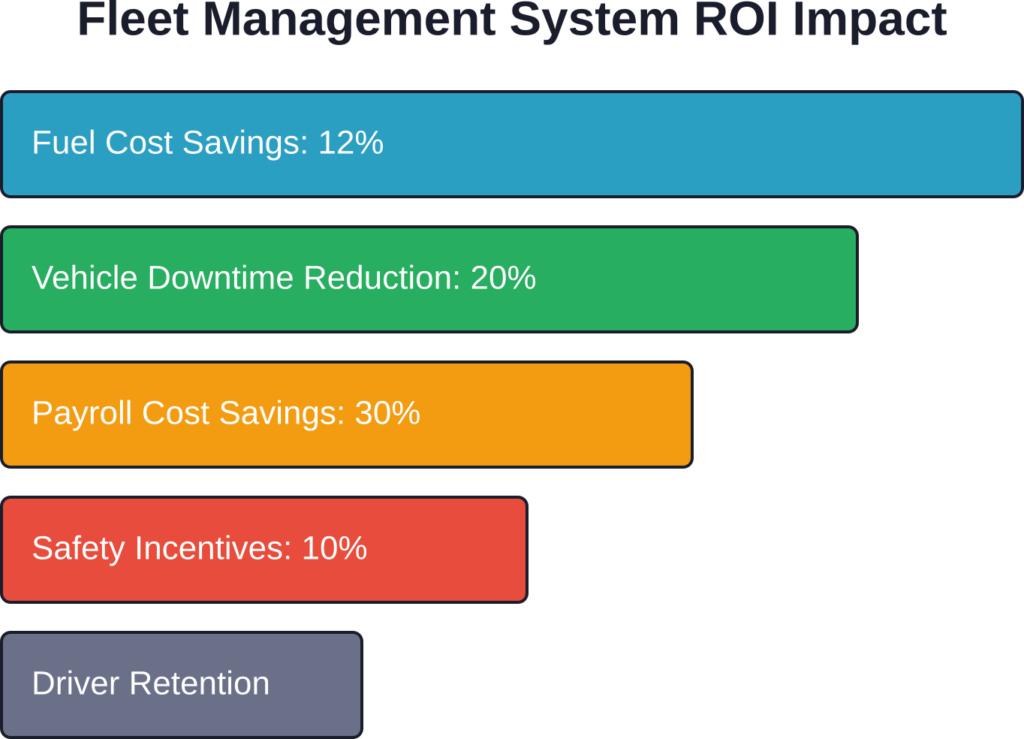
| Benefit Category | Typical Improvement | Impact Area |
|---|---|---|
| Fuel Efficiency | 12% reduction in costs | Direct operating expenses |
| Vehicle Downtime | 20% decrease | Maintenance optimization |
| Payroll Costs | 30% reduction | Accurate time tracking |
| Asset Recovery | $500,000 recovered | Theft prevention |
| Driver Safety | 10% earnings increase | Incentive programs |
Cost Reduction and ROI
Financial benefits manifest across multiple expense categories. Fuel represents the most visible savings—12% reduction translates to thousands of dollars annually for even modest-sized fleets. Reduced idle time contributes significantly to this improvement.
Maintenance costs decline through preventive scheduling. Organizations targeting a 20% decrease in vehicle downtime see those results materialize through systematic service intervals and early problem detection.
Labor costs become more transparent. GPS-based time tracking eliminated payroll discrepancies for some transportation companies, with one operation achieving a 30% reduction in payroll costs after implementing accurate GPS tracking systems.
Asset protection delivers unexpected returns. When Diamond Landscapes had trucks stolen, asset tracking systems helped recover $500,000 worth of stolen vehicles. The technology paid for itself multiple times over in a single incident.
Safety and Compliance Improvements
Driver behavior monitoring identifies unsafe practices: excessive speeding, harsh braking, rapid acceleration, and sharp cornering. Fleet managers receive alerts enabling coaching conversations before incidents occur.
Safety programs become data-driven rather than subjective. Top-level drivers with perfect driving records may earn up to 10% more as a result of safety programs.
Regulatory compliance simplifies considerably. Electronic logging devices automatically track hours of service for commercial drivers, ensuring compliance with transportation regulations. The system prevents violations by alerting drivers approaching their limits.
Operational Efficiency Gains
Dispatching becomes faster and more accurate. Real-time visibility eliminates phone calls to drivers asking for locations or estimated arrival times. Dispatchers know exactly where vehicles are and can provide customers with precise arrival windows.
Asset utilization improves when managers can see which vehicles sit idle versus which are overworked. Balancing workload across the fleet extends vehicle lifespans and maximizes return on capital investments.
Administrative burden decreases through automation. Systems generate compliance reports, maintenance records, and utilization summaries automatically rather than requiring manual compilation from paper logs.
Essential Features to Look For
Not all fleet management systems offer identical capabilities. Understanding which features matter most helps organizations select platforms aligned with their specific needs.
Vehicle Tracking and Visibility
Real-time GPS tracking represents the foundational feature—94% of Capterra reviewers rated vehicle tracking as a critical fleet management feature. The system should update locations frequently enough for operational needs, typically every 30-120 seconds.
Historical playback allows reviewing where vehicles traveled on previous days. This proves invaluable for resolving customer disputes, verifying service completion, or investigating incidents.
Driver Behavior and Safety Monitoring
Comprehensive driver scorecards track multiple behaviors: speeding events, harsh braking, rapid acceleration, sharp cornering, and seatbelt usage. The system should identify specific incidents with time stamps and locations for coaching conversations.
AI-powered dash cams represent the latest evolution. These devices provide instant in-cab voice feedback when detecting risky behaviors like distraction, tailgating, or rolling stops. Drivers receive immediate correction rather than feedback days later.
Maintenance and Diagnostics
Automated maintenance scheduling based on mileage, engine hours, or calendar intervals prevents missed service appointments. The system should generate work orders and integrate with shop management software.
Engine diagnostics through OBD-II connections detect problems early. Diagnostic trouble codes alert managers to check engine lights, battery issues, or sensor failures. Remote identification of engine problems can save substantial amounts—one organization saved nearly $800 on a repair bill by diagnosing the issue remotely rather than towing the vehicle for inspection.
Fuel Management and Efficiency
Detailed fuel consumption reporting breaks down costs by vehicle, driver, route, or time period. The system should identify fuel waste through excessive idling, inefficient routing, or aggressive driving.
Integration with fuel card systems matches purchases to vehicle tanks, detecting fraud or theft. Discrepancies between GPS location and purchase location flag suspicious transactions.
Compliance and Reporting
Electronic logging devices ensure hours-of-service compliance for commercial drivers. The system must meet regulatory requirements and simplify inspections through electronic record submission.
Custom reporting capabilities let managers create dashboards showing metrics relevant to their operations. Pre-built templates for common reports save time while custom report builders handle unique requirements.
Add ECOFACTOR Charging Tools to Your Fleet System
A fleet management system helps companies keep daily vehicle operations more organized, and for EV fleets, charging needs to be part of that system too. ECOFACTOR supports this side with charging stations, station management tools, and a mobile app for iOS and Android. Drivers can use the charging station map to find charging points and check station details before they arrive. For companies that need equipment for offices, depots, parking areas, or service locations, ECOFACTOR also has an online store with chargers, cables and adapters.
ECOFACTOR can help businesses connect EV charging to fleet operations through:
- Charging equipment for company locations and public-use points
- Mobile tools that help drivers find and use charging stations
- Hardware and accessories for everyday EV charging needs
Contact ECOFACTOR to make EV charging a clearer part of your fleet management system, from station access to the equipment your vehicles use every day.
Who Benefits from Fleet Management Systems
While any organization operating multiple vehicles can benefit, certain industries and fleet sizes see the most dramatic improvements.
Commercial Fleet Operations
Trucking companies gain the most obvious advantages. Long-haul operations optimize routes, ensure compliance with driving hours regulations, and reduce fuel costs through behavior modification.
Delivery services achieve tighter delivery windows through real-time tracking and dynamic dispatch. Customers receive accurate arrival estimates, improving satisfaction scores.
Service businesses—plumbers, electricians, HVAC technicians—dispatch the nearest available technician and provide customers with real-time arrival updates.
Government and Municipal Fleets
Public sector organizations face unique accountability requirements. Centralized fleet decision-making follows master plans allowing municipalities to forecast purchases, repurpose assets, and maximize vehicle life.
University fleet programs, for example, centralize vehicle acquisition and maintenance under one department, controlling costs while emphasizing safety, sustainability, and best practices.
Small Business Fleets
Organizations operating 5-50 vehicles often lack dedicated fleet managers. Fleet management systems provide structure and visibility without requiring full-time staff.
Small businesses benefit disproportionately from theft recovery capabilities. When a significant percentage of assets could be lost in a single theft incident, recovery systems justify their cost quickly.
Implementation Considerations
Deploying fleet management systems requires planning beyond simply purchasing software. Success depends on addressing technical, organizational, and human factors.
Hardware Installation and Connectivity
Telematics devices require professional installation or careful DIY following manufacturer instructions. OBD-II port connections offer plug-and-play simplicity but may not work in all vehicle types. Hardwired installations provide more permanent solutions for specialized equipment.
Cellular connectivity is essential for real-time tracking. Organizations should verify network coverage in their operating regions and understand data costs. Some remote areas may require satellite-based tracking at higher costs.
Driver Acceptance and Training
Driver resistance represents a common implementation challenge. Transparent communication about system purposes helps—emphasizing safety, efficiency, and theft recovery rather than surveillance.
Training drivers on how the system works and what behaviors are monitored reduces anxiety. Involving drivers in setting reasonable performance standards builds buy-in.
Incentive programs tied to safety scores transform monitoring from punitive to rewarding. Drivers earning recognition and bonuses for safe operation typically embrace the technology.
Data Integration with Existing Systems
Fleet management systems work best when integrated into broader business operations. APIs should connect with accounting software, dispatch systems, maintenance platforms, and customer relationship management tools.
Integration eliminates duplicate data entry and ensures information consistency across systems. Automatic invoice generation based on completed routes or maintenance work orders streamlines administrative workflows.
Evaluating Return on Investment
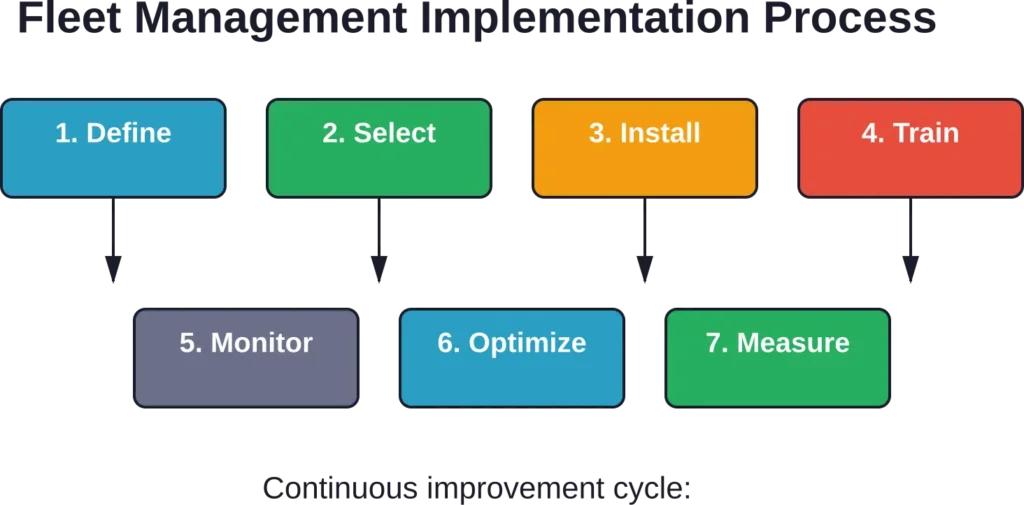
Before implementation, organizations should identify specific problems they aim to solve: reducing fuel costs, improving route efficiency, or enhancing driver safety. Clear objectives enable measuring whether the system delivers expected returns.
Baseline metrics established before implementation provide comparison points. Track fuel consumption, maintenance costs, driver safety incidents, and operational efficiency, then measure changes six months after deployment.
Comprehensive ROI calculations should consider both direct savings and operational improvements. One documented case achieved substantial return on investment by quantifying fuel savings, maintenance cost reductions, and increased revenue.
Common Challenges and Solutions
Organizations face predictable obstacles when adopting fleet management technology. Understanding these challenges helps prepare effective responses.
Data Overload and Analysis Paralysis
Modern systems generate enormous volumes of data. Without clear focus, managers drown in reports without extracting actionable insights.
Solution: Start with three to five key performance indicators aligned with business objectives. Master those metrics before expanding to secondary measurements. Most platforms allow customizing dashboards to show only priority information.
Driver Privacy Concerns
Drivers often perceive tracking as intrusive surveillance. Privacy concerns can fuel resistance and create adversarial relationships between management and drivers.
Solution: Establish transparent policies about what data is collected, how it’s used, and when managers review it. Many organizations track vehicles only during working hours, disabling monitoring during off-duty periods. Clear communication about using data for safety and efficiency rather than punishment reduces anxiety.
Technology Integration Complexity
Organizations running multiple business systems struggle with data silos. Information trapped in the fleet management platform doesn’t benefit other departments.
Solution: Prioritize platforms offering robust API access and pre-built integrations with commonly used business software. Invest in initial setup time to connect systems properly rather than accepting manual data transfer between platforms.
Cost Justification for Small Fleets
Small operations question whether fleet management systems deliver sufficient returns to justify subscription costs and hardware investments.
Solution: Calculate total cost of ownership including prevented costs, not just direct savings. A single prevented accident, recovered stolen vehicle, or avoided regulatory fine often exceeds annual system costs. Even modest operational improvements compound when projected across vehicle lifespans.
The Future of Fleet Management Technology
Fleet management systems continue evolving as new technologies mature. Several trends are reshaping what these platforms offer.
Electric Vehicle Integration
As fleets electrify, management systems adapt to track new metrics: battery state of charge, charging session costs, range optimization, and charging infrastructure availability. Route planning algorithms now consider vehicle range and charging station locations.
Artificial Intelligence and Predictive Analytics
Machine learning algorithms identify patterns invisible to human analysts. AI predicts component failures weeks before they occur, recommends optimal replacement timing for aging vehicles, and suggests route modifications based on historical traffic patterns.
AI-powered dash cams now provide real-time driver coaching. These systems detect distracted driving, following distance violations, and other risky behaviors, delivering immediate voice feedback to correct behavior in the moment.
IoT and Connected Fleet Ecosystems
Internet of Things technology expands beyond vehicles to encompass trailers, cargo containers, and individual assets. Temperature sensors monitor refrigerated goods, pressure sensors track tire conditions, and asset trackers protect valuable equipment.
Comprehensive IoT-driven fleet management systems for industrial operations integrate these diverse data streams into unified platforms, enabling organizations to monitor their entire mobile ecosystem through single interfaces.
Autonomous Vehicle Readiness
Forward-looking fleet management platforms prepare for gradual automation adoption. Systems that currently monitor human drivers will eventually supervise autonomous systems, tracking different metrics but serving similar oversight functions.
Frequently Asked Questions
What is the difference between fleet management and telematics?
Telematics refers specifically to the technology that collects and transmits vehicle data — the hardware devices and communication systems. Fleet management is the broader process of overseeing all aspects of fleet operations, including vehicle acquisition, maintenance, driver management, and optimization. Telematics is one component within comprehensive fleet management. Think of telematics as the data collection tool and fleet management as the complete operational framework.
How much does a fleet management system cost?
Costs vary by vendor, features required, and fleet size. Organizations should check vendor websites for current pricing since subscription models and tiers change frequently. Many vendors offer custom pricing for larger fleets.
Can fleet management systems help reduce fuel consumption?
Yes, data-driven fleets achieve significant fuel savings — 12% fuel cost reductions are documented in real-world implementations. Systems reduce consumption through multiple mechanisms: identifying and correcting excessive idling, optimizing routes to minimize miles driven, detecting aggressive driving behaviors that waste fuel, and monitoring engine performance to ensure vehicles operate efficiently. The combination of route optimization and driver behavior modification delivers the largest fuel savings.
Are fleet management systems required by law?
Electronic logging devices are legally required for commercial motor vehicles in the United States under federal hours-of-service regulations. However, basic fleet management systems are not universally mandated. Specific industries or regions may have additional requirements. Organizations should consult applicable transportation regulations for their jurisdiction and vehicle types. Many fleets adopt systems voluntarily for the operational and financial benefits rather than regulatory compliance.
How long does it take to see ROI from fleet management systems?
Most organizations observe measurable improvements within three to six months of implementation. Fuel savings and reduced idle time appear almost immediately. Maintenance cost reductions accumulate over longer periods as preventive scheduling prevents expensive repairs. Safety improvements require several months as driver behavior changes take effect. Some organizations have documented substantial returns on investment by quantifying fuel savings, maintenance cost reductions, and increased revenue, though typical returns vary based on fleet size, operational challenges, and how aggressively organizations act on system insights.
What happens if vehicles operate in areas without cellular coverage?
Fleet management systems typically store data locally in the telematics device when connectivity is unavailable, then upload buffered information once vehicles return to coverage areas. This means tracking shows gaps during no-coverage periods but historical data eventually populates. For fleets regularly operating in remote regions, satellite-based tracking systems provide coverage where cellular networks don’t reach, though at higher monthly costs. Organizations should assess their coverage needs when selecting platforms.
Can fleet management systems integrate with existing business software?
Modern platforms offer extensive integration capabilities through APIs and pre-built connectors. Common integrations include accounting systems, dispatch software, maintenance management platforms, fuel card systems, and customer relationship management tools. Integration eliminates duplicate data entry and enables automated workflows — like generating invoices from completed routes or creating work orders from maintenance alerts. Organizations should verify specific integration availability with vendors, as capabilities vary by platform.
Taking the Next Step
Fleet management systems have evolved from nice-to-have tracking tools into essential operational platforms. Organizations that adopt these technologies see measurable improvements across costs, safety, efficiency, and customer satisfaction.
The documented benefits speak clearly: 12% fuel savings, 20% reduction in vehicle downtime, and substantial improvements in driver safety. These aren’t theoretical projections—they’re verified results from real-world implementations.
But technology alone doesn’t deliver these outcomes. Success requires selecting platforms aligned with specific organizational needs, implementing systems thoughtfully, training staff effectively, and acting on the insights generated.
For organizations evaluating fleet management systems, the starting point is identifying current operational pain points. Which problems cost the most? Excessive fuel consumption? Frequent vehicle breakdowns? Driver safety incidents? Regulatory compliance challenges?
Prioritize systems offering strong capabilities in areas that matter most for the specific operation. Check vendor websites for current pricing and feature availability, as both change frequently. Request demonstrations showing how platforms address identified problems.
The investment in fleet management technology pays dividends through reduced costs, improved safety, and operational efficiency. Organizations that master these systems gain competitive advantages through capabilities competitors relying on manual processes can’t match.
Fleet management represents the difference between operating vehicles and optimizing mobile assets. Make the choice that positions the fleet for success in 2026 and beyond.