Table of contents:
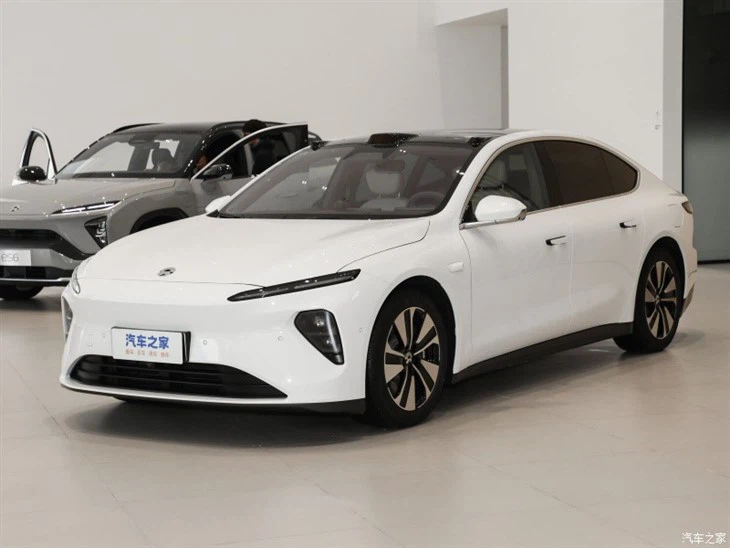
The XPeng P7+ looks like a modern liftback, but inside it is a fairly balanced electric car with a well-thought-out architecture. It does not have the highest figures among competitors, but it is not the worst either. This is a car for those who are not chasing the “tops” but are looking for something practical – with a reasonable charging speed, acceptable efficiency and without pathos. This review contains everything that […]
This review contains everything you need to know about XPeng P7+: range, battery, charging, dimensions and other technical features. No emotions and advertising slogans – just the facts, as if you were looking for an answer to the question: is this car right for me?
We remind you that you can purchase home and commercial
Why we created XPeng P7+
The P7+ is not about showrooms. It was not designed to impress a person who is driving an electric car for the first time. It was made for those who are already a bit in the know and want to finally get the balance right. It is not the most powerful, not the most expensive, not “all-inclusive”. But a well-assembled, logical and technically sound electric car for every day.
This is a car that offers a fair range, very fast charging, a practical interior and normal interaction with the infrastructure. It’s not trying to be the second Tesla, it’s not trying to copy the Porsche Taycan. And this is its strength. XPeng has made a model that does not chase ratings, but consistently delivers what it promises.
Power reserve: no illusions
The claimed WLTP range of the XPeng P7+ is 455 km. This is an official figure obtained under standardised conditions, but in real use it is almost never literally repeated. In mixed driving without aggressive driving and without constant operation of the climate systems, you should aim for about 375 km.
In the city, under favourable conditions – warm weather around 23°C and without air conditioning – the car can cover more than 500 km. In winter, however, the range is reduced to around 270 km on the highway at a steady speed. That’s why XPeng sets out a wide and fair range of real-world mileage right from the start.
The real-world range of the P7+ varies between 270 and 535 km, depending on temperature, route type, driving speed and climate use. These are not record-breaking figures, but they are well suited to everyday, unadorned use.
Approximate actual power reserve:
- City (warm, about 23°C, no climate):
- Track (warm, 110 km/h): up to 355 km
- Combined (heat): about 435 km
- Track (frost, about -10°C): up to 270 km
- Combined (frost): about 310 km
Battery and power consumption
The P7+ is powered by a lithium iron phosphate (LFP) battery with a usable capacity of 60 kWh. It’s not the largest battery in the class, but XPeng has focused on efficiency. In the city, the car consumes approximately 160 Wh/km, and during leisurely driving in the summer, this number drops to 112.
This allows you to maintain a moderate consumption even at sub-zero temperatures. It is also worth mentioning that there is a heat pump installed in the base. This helps in winter, as it allows you to spend less energy on heating the cabin.
Estimated consumption:
- The city in summer: ~112 Wh/km
- The track in summer: ~169 Wh/km
- The track in winter: Up to 222 W-min/km
Charging speed: it’s serious business
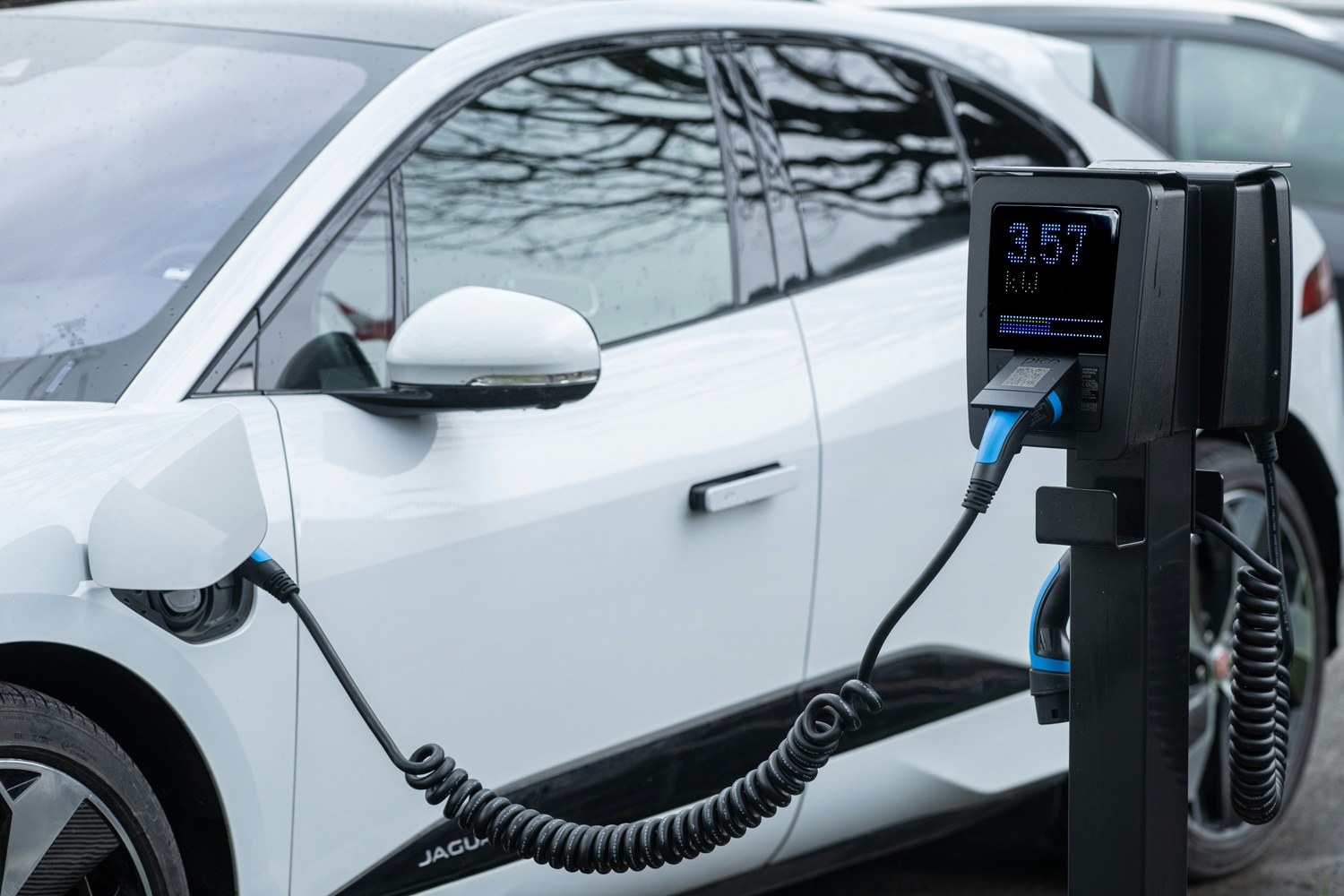
This is perhaps one of the main selling points of the P7+: fast charging with a peak output of up to 350 kW. In real-world conditions, the car is usually charged at around 220 kW in the 10-80% range, which still provides a very fast replenishment of the range.
The car supports Autocharge, which means that a charging session can be started automatically at compatible stations without cards or apps. However, Plug & Charge according to the ISO 15118 standard is not implemented here, meaning that the function where the car identifies itself after connecting the cable, as in the Tesla Supercharger, does not work.
At 11 kW home stations, it takes about 6.5 hours to charge to full capacity. This is standard for a modern electric car.
Charging types:
- AC (Type 2)up to 11 kW
- DC (CCS Combo 2)up to 220 kW (peak)
- Charging time (10-80%): 12-13 min
- Autocharge support: yes
- Plug & Charge: no
Where to charge in Ukraine: a few words about ECOFACTOR
If you are planning to use XPeng P7+ in Ukraine, it is important to have convenient and reliable access to charging infrastructure. This is where ECOFACTOR comes into play – a Ukrainian platform that covers almost all the needs of electric vehicles: from
We build AC and DC charging stations – from simple
To make it easy for drivers to plan their routes, we have created
For those looking for charging accessories or mobile chargers, we have online shopwhere it is easy to order adapters, inverters, fasteners and more. Everything you need to connect XPeng or any other electric car to the grid is in one place.
In addition, we offer SaaS solutions for businesses – if you want to manage your own charging station network through our
Platform and drive
The XPeng P7+ is based on the SEPA 2.0 platform, which has already proven its stability. It is a rear-wheel drive model with an electric motor with a capacity of 180 kW, or about 245 horsepower. Torque is 450 N-m. The car accelerates to hundreds in 6.9 seconds – not a sports car, but a good choice for daily commuting.
At 110 km/h, the P7+ feels confident on the highway, but doesn’t provoke aggressive driving. It’s more of a laid-back style, where everything is balanced and you don’t waste too much.
How suitable is XPeng P7+ for long journeys
The P7+ doesn’t promise to cross Europe without stopping, but it is quite comfortable for trips within 400-500 km. According to the test profile from EV Database, with one 15-minute stop for charging, the car covered 491 km in average conditions. This is not ideal, but compared to other models in this class, it is very good.
Also important: after the first stretch (about 276 km), charging takes only 15 minutes, and you can drive another 215 km. In practice, this is enough time to avoid getting nervous on the road and sitting on the charger for 40 minutes.
What it means in practice:
- A one-day trip of 500 km is no problem.
- It is convenient for long-distance routes with one short stop.
- You should plan to stop more often on the road in cold weather.
- Charging is fast, but Plug & Charge is not enough.
Charging infrastructure: how easy is it?
The XPeng P7+ is charged via CCS Combo 2, so it is compatible with most modern fast charging stations in Europe and Ukraine. Thanks to its 800-volt architecture, the car gets the most out of powerful hubs (e.g. 220 kW at 350 kW stations).
It should be borne in mind that the maximum charging speed is achieved only under favourable conditions: a preheated battery, a powerful station without a queue, and an ideal temperature. In reality, charging at 125-150 kW is already a normal scenario.
The car supports battery pre-conditioning via navigation, meaning it will prepare itself for charging if you put a point on the map.

Practicality: space, boot, convenience
The XPeng P7+ looks more compact than it actually is. The body length is just over 5 metres and the wheelbase is 3 metres. This gives a sense of spaciousness in the cabin, especially for second-row passengers. The height is 151 cm, so the roof is a little low for tall people, but there is enough space overall.
The boot has a capacity of 573 litres in the standard configuration. When the seats are folded down, the volume increases to 1931 litres. There is no front boot, which is perhaps the biggest disadvantage in terms of electric functionality.
It is also possible to install a towbar – towing with a brake is allowed up to 1500 kg.
Everyday convenience: warmth, little things, use
The XPeng doesn’t go for futurism, but almost everything is made of basic things: a heat pump is standard, two ISOFIX mounts, and ground clearance is sufficient for ordinary Ukrainian roads. The turning radius is 11.7 metres, which is not bad for a five-metre car.
The interfaces are typical for Chinese models – a large central screen, everything is tied to multimedia, and there are few physical buttons. It takes some getting used to.
The car weighs more than 2 tonnes, but thanks to its smooth acceleration and energy efficiency, this is not very noticeable in the city.
Who is XPeng P7+ for?
The P7+ doesn’t try to be all things to all people. It’s not the fastest car, the most luxurious, or the most popular. But it has its own clear audience:
- Drivers who need fast charging but don’t want to overpay for top-of-the-line models.
- Those who want a smooth electrical experience without excessive attention to detail.
- People who need a real driving range, not a number on the screen.
- Families or business owners who want a spacious interior and boot.
This is not a car that you buy for status. It is a tool that is comfortable to live with. And although it doesn’t have a front boot or a fantastic 700 km of range, it does have stability, logic and a sense of forethought.
Main pros and cons
To avoid getting lost in the numbers, here is a brief summary of the model’s strengths and weaknesses.
Pros:
- Fast DC charging (up to 220 kW)
- Large interior space
- Heat pump in the base
- Realistic power reserve
- High efficiency in the city
- Convenient luggage compartment (up to 1931 litres with seats folded down)
Cons:
- No Plug & Charge
- No front luggage compartment
- Only rear-wheel drive (for some, this is a disadvantage)
- Ground clearance not for off-roading
- Chinese interface takes some getting used to
Conclusion
XPeng P7+ does not shout about itself. It’s not about “wow”, it’s about “logical”. Everything here works, charges, drives, and saves. It’s not the first choice for fans of electric cars, but it’s a very strong option for those who just want to use an electric car – without unnecessary worries and high expectations.
It has what is really important: stability, predictability and economic viability. Yes, it’s without some gimmicks. But to be honest, they are not always needed in everyday use.
XPeng P7+ is about how enough is better than “as much as possible at once”.
Frequently asked questions
u003cstrongu003eHow far can XPeng P7+ really go on a single charge?u003c/strongu003e
On average, you can expect 370-400 km in a mixed cycle. It will be more in the city in summer and less on the highway in winter. It all depends on the riding style, weather and terrain.
u003cstrongu003eDoes XPeng P7+ support ultra-fast charging in Ukraine?u003c/strongu003e
Yes, if the station supports CCS and has sufficient power. For example, the ECOFACTOR network has DC chargers that are fully compatible with this model.
u003cstrongu003eHow long does it take to charge from 10 to 80%?u003c/strongu003e
Under ideal conditions, it takes about 12 minutes. But if the station is weaker or the battery is not warmed up, it may take longer. Realistically, count on 15-20 minutes.
u003cstrongu003eDoes the XPeng P7+ have a front luggage rack?u003c/strongu003e
No, it is not provided here. The entire luggage area is the rear compartment with a capacity of up to 1931 litres with the seats folded down.
u003cstrongu003eHow convenient is XPeng P7+ in everyday use?u003c/strongu003e
It has a large interior, smooth dynamics, good sound insulation and a heat pump in the base. It’s not a flagship, but it’s a pleasure to drive every day.
u003cstrongu003eCan I find XPeng chargers through the app?u003c/strongu003e
Yes. For example, in the ECOFACTOR app, you can view a map of charging stations, check their status and start charging directly from your phone.
u003cstrongu003eShould I choose XPeng P7+ over Tesla or other brands?u003c/strongu003e
If peace of mind, stability and a reasonable price are important to you, this is a good option. But if you need a front boot or AWD, you may need to look for other models.