


Table of contents:
At first glance, comparing the Aito M9 and the Tesla Model 3 seems like a strange decision. These are cars from different classes, with different philosophies and entirely different ideas of comfort. But that is precisely why such a comparison makes sense. They often catch the eye of the same buyers, who are torn between minimalism and technology, or space and versatility.
The Tesla Model 3 has long been the benchmark for a simple electric vehicle for everyday journeys. The Aito M9, by contrast, offers maximum comfort, more sophisticated features and the feeling of a car that’s ‘about life’, rather than just getting from A to B. In this article, we’ll take a look at both models – how they perform in real-world scenarios and which approach will appeal more to whom.
We remind you that you can purchase home and commercial charging stations in our online storeand also use the public charging stations ECOFACTORcharging points located throughout Ukraine. For convenient access to charging infrastructure, we recommend using our mobile applicationwhich is available on iOS and Android.
The philosophy behind these cars
Aito M9
The Aito M9 has been designed as a large electric car for people who don’t want to compromise on space or the feel of a ‘proper car’. It is a six-seater SUV with generous dimensions and a focus on comfort for all passengers, not just the driver.
The Philosophy M9 makes its mark from the very first kilometre. The car doesn’t try to come across as compact or sporty. It immediately sets a different pace. What matters here is stability, smoothness and a wealth of capabilities. The 530 hp isn’t there to show off, but to ensure confident driving regardless of load or road conditions.
The Aito M9 is usually chosen by those who value:
- to have a large and spacious car for the family or for business
- to travel a lot and far without getting constantly tired
- not to be restricted by size or power
- to combine electric propulsion with the practicality of a large SUV
Tesla Model 3
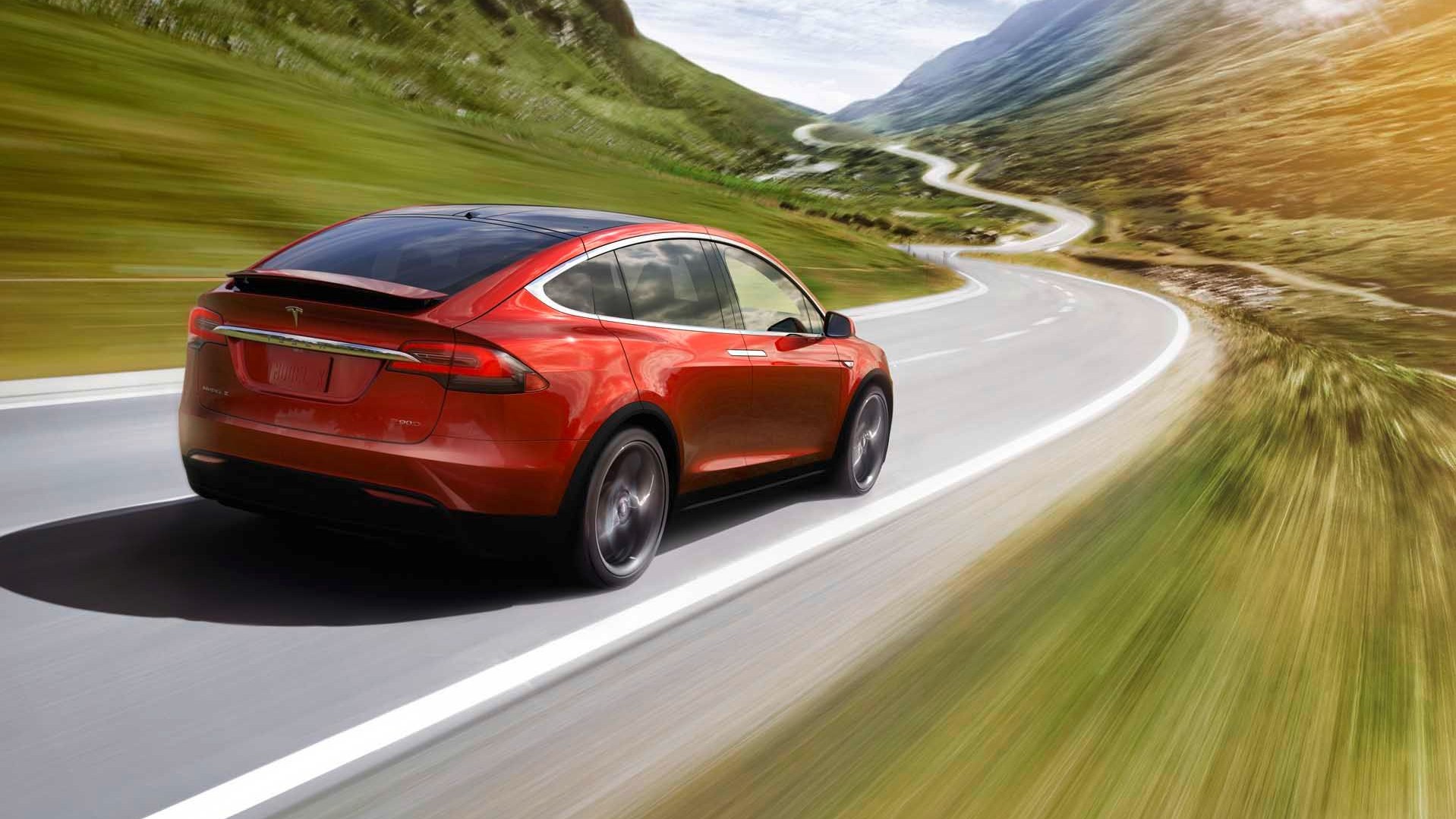
The Tesla Model 3 represents a completely different approach. It is an electric car that prioritises efficiency and simplicity above all else. A compact saloon car without any unnecessary features, where every design choice is aimed at reducing complexity and making it easier to use.
The Model 3 fits in well with city and suburban life. It isn’t trying to replace a large family car. Its purpose is different – to be fast, economical and predictable on everyday journeys. Everything about it is logical and minimalist, from the interior to its handling on the road.
Tesla Model 3 is more likely to be suitable for drivers who:
- They travel a lot in the city or the suburbs
- value simplicity and minimalism
- They want a straightforward electric car without any complicated concepts
Dimensions and sense of space
Aito M9: spacious and comfortable
The Aito M9 feels spacious in every sense. With a length of over 5.2 metres, a width of almost 2 metres and a wheelbase of 3,110 mm, it creates an interior where the sense of space is not just on paper, but physically tangible. It is a car that can easily accommodate six adults without compromise.
The second and third rows do not look like a ‘just in case’ option. They are fully-fledged and suitable for long journeys. The boot capacity varies depending on the seat configuration, which allows the car to be adapted to different needs.
Tesla Model 3: practical minimalism
The Tesla Model 3 is considerably more compact. It is shorter, lower and lighter, which is immediately noticeable when driving in the city. There is enough space in the cabin for five people, but the focus is on the front row and the two rear passengers.
The boot in the Model 3 is pleasantly surprising in terms of its capacity, especially given the front compartment. It’s more than enough for everyday use. But when compared directly with the Aito M9, the difference in the sense of space is obvious.
Salon
The Aito M9’s interior is designed for long journeys. It’s not just the seating that matters here, but also the small details that all add up to an overall sense of comfort. Spacious seats, a wide central section of the cabin, and a large glass area.
The car doesn’t feel cramped, even when fully loaded. The high seating position gives a sense of control and calm. It’s a car in which you can easily spend several hours behind the wheel without feeling stressed.
The Tesla Model 3 interior is designed around minimalism. There are almost no physical buttons, and most functions are controlled via the central screen. This creates a clean and tidy space, which some find perfect, whilst others find it a bit too sterile.
The Comfort trim on the Model 3 is more about ergonomics and practicality than luxury. The seats are comfortable, and the low seating position emphasises the car’s sporty character.
Multimedia and technology
Aito M9
The Aito M9 features state-of-the-art electronics with a focus on versatility. The large central screen, digital instrument panel and additional displays create a sense of a high-tech interior.
The system operates quickly, with no noticeable delays. The controls are intuitive, and the multimedia system is designed not only for the driver but also for the passengers.
Tesla Model 3
The Tesla Model 3 is known for its software-based approach. It has a single screen, but the interface is extremely well thought out. Navigation, charging and vehicle settings are all integrated into a single system, which is regularly updated.
Multimedia Tesla is less about effects and more about stability and logic. It’s a tool that simply works.
Power reserve and charging
Aito M9
The all-electric version of the Aito M9 is fitted with a 100 kWh battery and runs on an 800-volt architecture. The claimed range under the CLTC cycle is up to 630 km, which is an impressive figure for a large SUV.
An average energy consumption of 17.4 kWh per 100 km seems quite modest, given the vehicle’s weight of over 2.5 tonnes. In practice, this means you can use the car without having to constantly monitor every kilometre.
The Aito M9 is ideal for those who want to worry less about charging and focus more on the journey itself.
Tesla Model 3
The Tesla Model 3 Standard Range Plus is fitted with a battery with a usable capacity of around 51 kWh. The real-world range in mixed driving conditions is around 350 km, but this varies significantly depending on temperature and driving style.
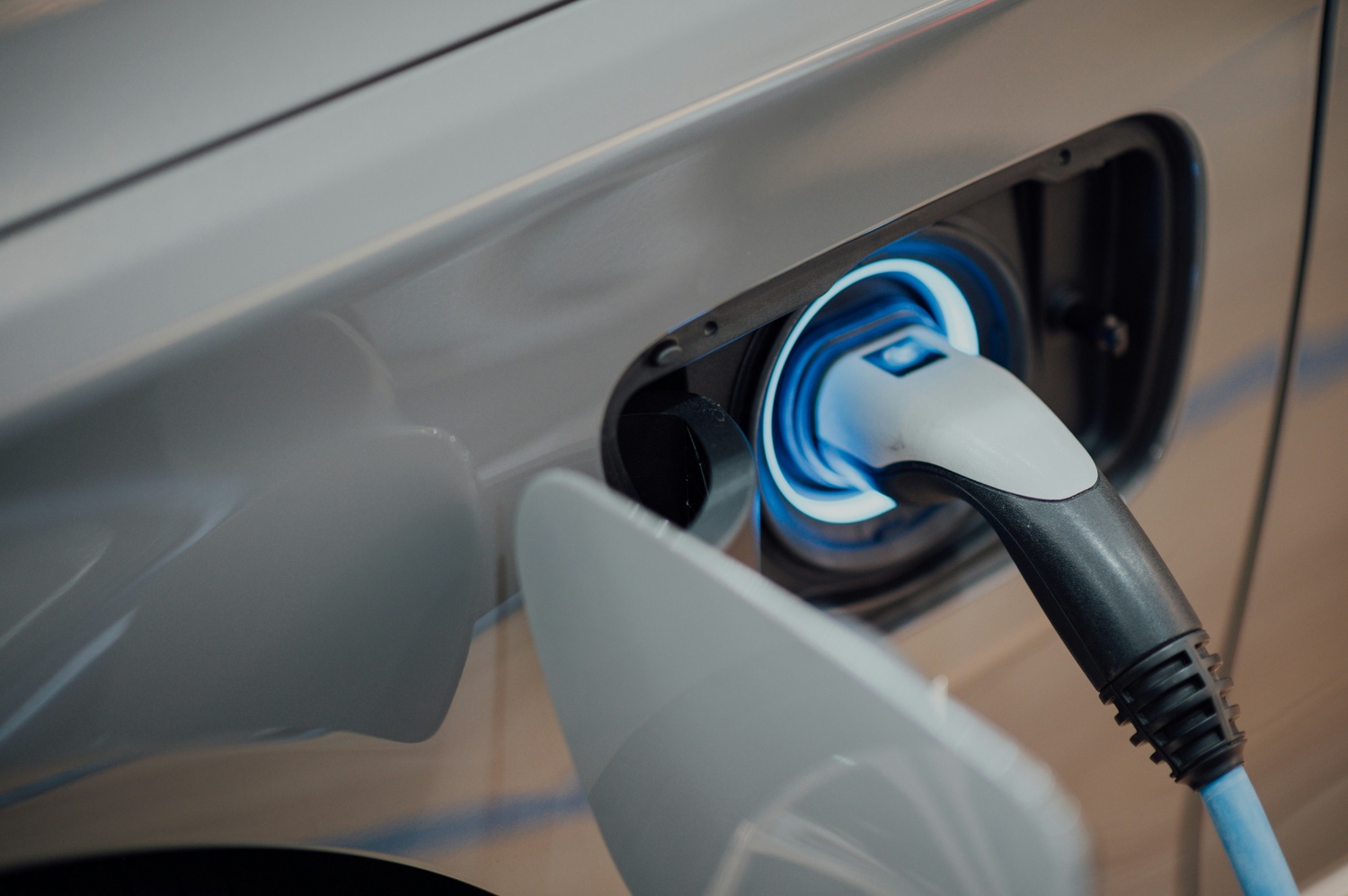
The Model 3, on the other hand, excels in efficiency. Its energy consumption is among the lowest in its class. Fast charging of up to 170 kW and access to the Supercharger network make long-distance journeys possible, but with a bit of planning.
Charging infrastructure for the Aito M9 and Tesla Model 3 in Ukraine: a solution from ECOFACTOR
For owners of electric vehicles, the key question is always the same – where can they charge their car quickly and hassle-free? This applies both to the Tesla Model 3 and to the Aito M9, which is also widely used in electric mode. That is precisely why ECOFACTOR develops solutions that allow you to charge your car conveniently at home, in town and on the road.
Our charging stations go through the entire cycle – from design to maintenance. We offer AC solutions for homes and offices, and high-power DC stations for fast charging on motorways. The ECOFACTOR network already comprises over 3,500 charging points across Ukraine, so finding a charging point is now much easier.
For drivers, the ECOFACTOR mobile app is available for iOS and Android. It features a map of charging stations, status checks, route planning and online payment. This is particularly convenient for everyday use and for planning journeys in both the Tesla Model 3 and the Aito M9.
Our online shop caters for both home and business needs, offering a range of chargers, cables, adaptors and related equipment. This makes it possible to find a solution for any charging requirement without the need for complex technical solutions.
All in all, ECOFACTOR is not just a network of charging stations, but a convenient infrastructure that ensures a comfortable experience for drivers of both the Tesla Model 3 and the Aito M9, regardless of driving style, operating conditions or charging formats in Ukraine.
Energy consumption
Aito M9
Average consumption according to the CLTC cycle is 17.4 kWh per 100 km, which is equivalent to approximately 174 Wh per kilometre. For a car weighing over 2.5 tonnes, with all-wheel drive and two electric motors, this seems modest. The 800-volt architecture and the advanced 100 kWh battery play a major role here.
Tesla Model 3
The Tesla Model 3 has always prioritised efficiency, and this is clearly evident from its real-world consumption figures. Average real-world consumption in mixed driving conditions is around 146 Wh per kilometre.
Manageability and dynamics
Aito M9
The Aito M9 accelerates to 100 km/h in 4.3 seconds, which is impressive for a large SUV. All-wheel drive and two electric motors ensure smooth and confident acceleration without any sudden jolts.
The car does not encourage aggressive driving. It is stable, predictable and comfortable, even at high speeds. The Pendant handles uneven road surfaces well and does not transmit excessive vibrations into the cabin.
Tesla Model 3
The Tesla Model 3 accelerates to 100 km/h in 5.6 seconds, but feels faster thanks to its lower kerb weight. It responds readily to the steering, takes corners with ease and handles well in heavy city traffic. This is a car for those who enjoy active driving and precise handling.
Safety for the driver and passengers
The Aito M9 features a comprehensive range of active and passive safety systems. Its robust body construction, numerous airbags and electronic driver-assistance systems all contribute to a feeling of safety.
The car is designed for relaxed family journeys, where safety operates in the background.
The Tesla Model 3, on the other hand, has received high ratings from Euro NCAP. Its driver assistance system, robust structure and sophisticated electronics make it one of the safest cars in its segment.
Autopilot and driver-assistance systems reduce the burden on the driver, but do not replace them entirely.
A brief comparison of the Aito M9 and the Tesla Model 3
| Criterion. | Aito M9 | Tesla Model 3 Standard Range Plus |
| Vehicle type | Large electric SUV, 6 seats | Mid-range electric saloon |
| The main idea | Maximum space, power and comfort in a large format | An efficient, straightforward electric car for everyday use |
| Range | Up to 630 km according to the CLTC cycle | Around 350 km of real-world range in mixed conditions |
| Purely electric mode | Fully electric BEV | Fully electric BEV |
| Reliance on charging stations | Moderate, thanks to the large battery | Higher, requires regular charging planning |
| Charging in the city | Suitable for less frequent charging, large power reserve | Convenient with regular access to charging points |
| Long-distance travel | Comfortable thanks to a large power reserve and spacious interior | Possible, but requires route planning |
| Space in the cabin | Very spacious interior, full-size second and third rows | Sufficient for 4–5 people, more compact design |
| Seat comfort | Designed for long journeys and passenger comfort | Comfortable seats with a focus on the driver |
| Multimedia | Multiple screens, with an emphasis on passengers and functionality | A single central screen, a simple and intuitive interface |
| Dynamics | 0–100 km/h in 4.3 seconds, smooth and confident acceleration | 0–100 km/h in 5.6 seconds, feels light and lively |
| Handling | Stable, comfortable, with an emphasis on smoothness | Precise, lively, more engaging for the driver |
| Safety. | State-of-the-art driver assistance and passenger protection systems | High Euro NCAP ratings and advanced driver assistance systems |
Who is it best suited for?
Aito M9:
- families with children or those with a lot of luggage
- for those who frequently travel long distances
- for drivers who value space and power
- for those who want a large electric SUV
Tesla Model 3:
- urban and commuter drivers
- for those looking for an economical electric car
- for fans of minimalism
- people who are prepared to plan for charges
Bottom line.
The Aito M9 and the Tesla Model 3 cater to completely different needs and are based on different visions of what a modern car should be.
The Aito M9 is the choice for those who see a car as a living space. It’s all about comfort on the road, a quiet ride, a long range and a sense of calm, regardless of the route. The spacious interior, powerful powertrain and high-capacity battery mean you don’t have to adapt to the car, but can use it in whatever way suits you best. It’s a car for families, long journeys and active everyday use without having to constantly worry about the little things.
The Tesla Model 3, on the other hand, embodies a different philosophy. It is focused on efficiency, simplicity and straightforward electric logic. It is a car that fits well into city life, doesn’t overwhelm the driver with unnecessary features, and offers an intuitive, tech-savvy experience. The Model 3 is ideal for those who are prepared to plan their charging, appreciate minimalism and want to get the most out of every kilowatt-hour.
Ultimately, the choice between the Aito M9 and the Tesla Model 3 isn’t just about comparing figures, seconds or kilometres. It’s about lifestyle, driving habits and personal priorities. One car offers a sense of space and plenty of everything, whilst the other offers lightness and efficiency. If you’re honest with yourself about how and why you use your car, the decision becomes obvious without any compromises.
Frequently asked questions
Is the Tesla Model 3 suitable for daily city driving?
Yes. The Model 3 is at home in the city, thanks to its compact dimensions, high energy efficiency and easy handling.
Which car is less demanding in terms of charging frequency?
Aito M9. The large 100 kWh battery and impressive range allow for less frequent charging.
Is it possible to comfortably travel long distances on a Tesla Model 3?
You can, but with route and charge planning. The car charges quickly, but the range is less than that of the Aito M9.
Which car is best for a large family?
Aito M9. A spacious interior, six full seats and a large body make it more convenient for family use.
Is there a difference in dynamics between these models?
Bottom line. The Aito M9 is faster in acceleration, but the Tesla Model 3 feels lighter and more lively in the city.
Which car is easier to use in everyday life?
Tesla Model 3. It is more compact, lighter and requires less space for manoeuvring and parking.
Are these cars suitable for cold climates?
Yes, but the range of the Tesla Model 3 decreases more noticeably in cold weather. Aito M9 is less sensitive to this factor thanks to its large battery.
Is there any direct competition between these models?
No. These are cars of different classes and for different scenarios. The choice depends not on the characteristics, but on the lifestyle and tasks.