

Table of contents:
Quick Summary: The Chevrolet Bolt EUV is a compact electric crossover that offers 247 miles (398 km) of EPA range, a 65 kWh battery, 200 hp power, and an 8-year/100,000-mile warranty. It differs from the Bolt EV with greater length (169.5 inches), increased space for rear passengers, and Super Cruise availability. Key advantages: high energy efficiency (115 MPGe combined), fast DC charging (up to 95 miles in 30 minutes), and affordable operating costs ($650 per year).
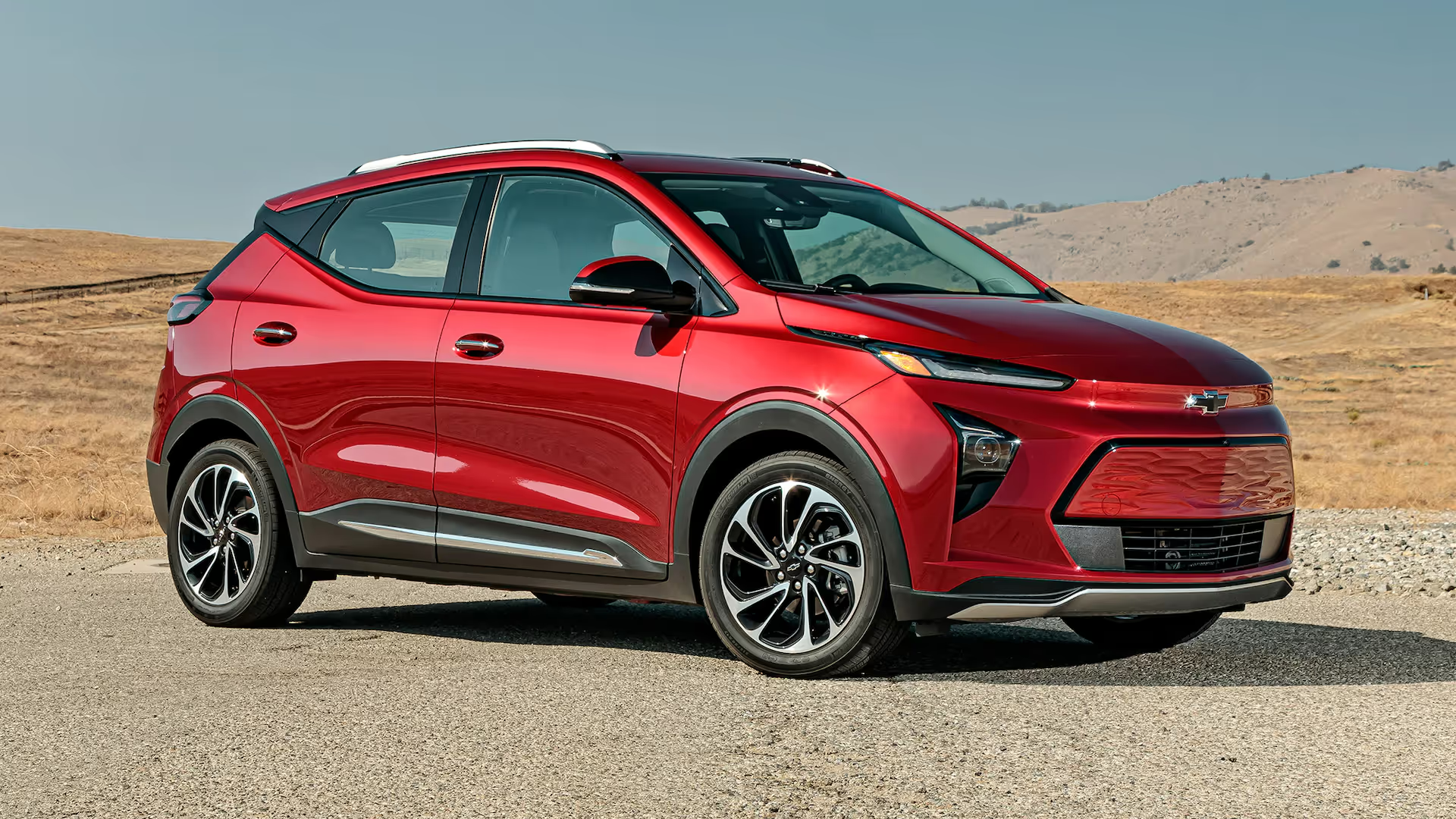
The Chevrolet Bolt EUV entered the market as a logical continuation of General Motors’ successful electric vehicle lineup. While the classic Bolt EV gained popularity as a compact hatchback, the EUV offers more space, a crossover silhouette, and expanded functionality.
But what exactly makes this electric crossover an attractive option? Let’s examine it in detail.
We remind you that you can purchase home and commercial charging stations in our online store, as well as use public charging stations ECOFACTOR located throughout Ukraine. For convenient access to charging infrastructure, we recommend using our mobile app, available on iOS and Android.
What Is the Chevrolet Bolt EUV and How It Differs from the Bolt EV
The Chevrolet Bolt EUV (Electric Utility Vehicle) is an extended version of the Bolt EV with a crossover body. The main difference lies in physical dimensions and interior layout.
The Bolt EUV has a length of 169.5 inches compared to 163.2 inches for the base Bolt EV. The wheelbase is 105.3 inches (2675 mm) — 3 inches longer.
This extra space primarily benefits rear passengers. Legroom has increased, making long trips more comfortable.
Main Differences Between Bolt EV and Bolt EUV
| Parameter | Bolt EV | Bolt EUV |
|---|---|---|
| Overall Length | 163.2 inches | 169.5 inches |
| Wheelbase | 102.4 inches | 105.3 inches |
| EPA Range | 259 miles | 247 miles |
| Rear Passenger Space | Standard | Increased (+3 inches) |
| Super Cruise Availability | No | Yes |
| Turning Radius | Smaller | 38.3 feet (11.66 m) |
The range difference — 247 miles (398 km) for the EUV versus 259 miles for the EV — is due to the added weight and crossover dimensions. However, for most daily use scenarios, 247 miles is more than sufficient.
Technical Specifications and Powertrain
Under the Bolt EUV body is General Motors’ proven electric platform. The permanent-magnet electric motor delivers 200 hp (150 kW) and 360 Nm of torque for the 2022 model year.
It sounds modest compared to some premium electric vehicles. But in real-world operation, these figures are more than enough for confident acceleration and urban maneuvering.
The battery has a capacity of 65 kWh and consists of 288 lithium-ion cells. This provides 247 miles (398 km) of range under the EPA cycle.
Battery and Warranty Obligations
General Motors provides an 8-year or 100,000-mile warranty on the battery and electric components. This is one of the best indicators in the affordable electric vehicle segment.
The battery uses lithium-ion chemistry with 288 cells combined into modules. The thermal management system actively cools and heats the battery to maintain optimal operating temperatures.
This is important for longevity and capacity retention over years of operation.
Energy Efficiency and Operating Costs
According to fueleconomy.gov data, the 2022 Chevrolet Bolt EUV has a rating of 115 MPGe combined (125 MPGe city, 104 MPGe highway). MPGe is the miles-per-gallon equivalent for electric vehicles, where 1 gallon of gasoline equals 33.7 kWh of electricity.
Energy consumption is 29 kWh per 100 miles. This is a very competitive figure.
According to EPA data, the annual electricity cost for the Bolt EUV is approximately $650 at average mileage. Compared to gasoline vehicles, savings over 5 years can reach $7,500.
The cost to drive 25 miles is about $1.10, which is significantly lower than any gasoline counterpart in the same class.
Charging: Speed and Capabilities
The Bolt EUV supports several charging modes depending on the type of charging station.
On a 120V home charger (standard outlet), you can get about 4 miles of range per hour. This is suitable for overnight charging with small daily mileage.
A 240V (Level 2) charger provides a full charge in approximately 7 hours. On a 48-amp 240-volt station, the Bolt EUV gains about 59 km of range per hour.
DC fast charging (DC Fast Charge) is the fastest option. The Bolt EUV can add up to 95 miles of range in just 30 minutes at a compatible station.
It is important to understand that charging time depends not only on the charger type but also on the current battery charge level. DC charging speed decreases after 80% to protect the battery from overheating.

Connect Charging for Your Electric Vehicle Right Now
If you are considering the Chevrolet Bolt EUV as a daily electric vehicle, the charging question quickly moves into the practical realm. ECOFACTOR makes sure everything works simply: the mobile app for Android and iOS, a map of charging stations for route planning, and an online store where you can immediately find accessories, cables, and mobile chargers without extra steps.
When it comes to installation, there is no need to assemble the solution piece by piece. There is a charging station configurator to select an AC station or DC station for your specific conditions. For scaling, the operator platform is available, which allows managing the charging network and users in one environment. If a systemic approach is needed, pay attention to energy-efficient solutions and white-label solutions to avoid extra integrations.
Contact ECOFACTOR and connect charging infrastructure that works without constant modifications.
Design, Interior and Cabin Space
Externally, the Bolt EUV resembles the classic Bolt EV but with more elongated proportions. The crossover silhouette adds respectability, and the increased ground clearance improves passability.
17-inch aluminum wheels with Michelin Energy Saver A/S 215/50R17 tires provide a balance between comfort and handling.
The interior looks modern. The instrument panel has an 8-inch diagonal color driver display and a 10.2-inch touchscreen infotainment system.
Space and Functionality
The increased wheelbase allowed expanding space for rear passengers. Now it is comfortable even for adults on long trips.
The trunk has sufficient volume for family trips. Folding rear seats expand the possibilities for transporting oversized items.
The finishing materials are of good quality, though not premium. This is fully justified by the vehicle’s price positioning.
Technologies and Driver Assistance Systems
One of the main advantages of the Bolt EUV is the availability of the Super Cruise system (not available on the base Bolt EV).
Super Cruise works on marked highways and allows lane keeping, distance maintenance, and even assists with lane changes with blind spot monitoring. A camera tracks the driver’s attention.
This is not full autonomy, but a significant relief during long highway trips.
The standard safety package includes:
- Automatic emergency braking with pedestrian detection
- Lane departure warning
- Lane keeping assist
- Adaptive cruise control
- Blind spot monitor
- Rear-view camera with dynamic guidelines
Chevrolet has integrated Android Auto and Apple CarPlay, wireless smartphone connection support, navigation, and voice control.
Practical Operation and Driving Modes
The Bolt EUV offers several driving modes that change the accelerator pedal response and the level of regenerative braking.
One-Pedal Driving mode allows you to practically not use the brake pedal in most situations. When the driver releases the accelerator, the motor turns into a generator that brakes the car and returns energy to the battery.
This is not only convenient but also increases efficiency.
The turning radius is 38.3 feet (11.66 m), making the Bolt EUV maneuverable in urban conditions despite its increased dimensions.
Cost of Ownership and Economic Feasibility
According to official fueleconomy.gov data, the cost to drive 25 miles in the 2022 Bolt EUV is $1.10. The annual electricity cost is about $650 at average mileage.
Compared to gasoline vehicles of the same class, fuel savings over 5 years can reach $7,500. This does not include reduced maintenance costs.
Electric vehicles do not require oil, filter, or spark plug changes. Brake pads wear more slowly thanks to regenerative braking.
| Expense Item | Bolt EUV (Electric) | Gasoline Equivalent |
|---|---|---|
| Annual Fuel/Energy Cost | $650 | $2,100+ |
| Oil Change (per year) | $0 | $150–300 |
| Brake Pads Replacement (5 years) | Rarely | $400–800 |
| Maintenance (per year) | Minimal | $500–1,000 |
| Savings Over 5 Years | — | $7,500+ fuel only |
Of course, you need to consider the cost of installing a Level 2 home charger if you don’t have one. But even with these costs, the overall savings remain significant.
Advantages of the Chevrolet Bolt EUV
Let’s summarize the main strengths of this electric crossover:
- Sufficient Range: 247 miles EPA for most daily scenarios
- Fast DC Charging: up to 95 miles in 30 minutes
- Increased Space: comfort for five passengers, especially in the rear
- Super Cruise: semi-autonomous driving on marked highways
- Low Operating Costs: $650 per year on electricity only
- Reliable Warranty: 8 years or 100,000 miles on the battery
- Modern Technologies: digital instrument cluster, large touchscreen, safety systems

Potential Disadvantages and Limitations
However, the Bolt EUV is not perfect. There are several points worth considering:
- Lower Range Than the Bolt EV: A difference of 12 miles can be critical for those who regularly make long trips.
- Larger Turning Radius: 38.3 feet — larger than the compact Bolt EV. This can be noticeable in tight parking lots.
- Slower DC Charging Compared to Newer Platforms: Some modern electric vehicles charge faster, although 95 miles in 30 minutes is quite sufficient for most Bolt EUV use cases.
- Non-Premium Interior Materials: Finishing quality matches the price category but lags behind more expensive models.
Who the Chevrolet Bolt EUV Is Suitable For
The Bolt EUV is an excellent choice for:
- Families who need space and comfort for five people
- Drivers with daily mileage up to 150 miles who need only one charge
- Those who value technologies like Super Cruise
- Owners who have the ability to install a Level 2 home charger
- Buyers looking for an economically advantageous alternative to gasoline crossovers
Less suitable for those who:
- Regularly make trips over 200 miles without charging opportunities
- Live in regions with limited charging station infrastructure
- Are looking for a premium electric vehicle with luxury finishing
Comparison with Competitors
There are several alternatives to the Bolt EUV in a similar price category on the market.
The Hyundai Kona Electric offers similar range (258 miles in the top version) and compact dimensions. The Kia Niro EV is another competitor with 239 miles of range and a spacious interior.
The Nissan Leaf Plus has 215 miles of range, which is less, but offers proven reliability and a wide service network.
The Bolt EUV stands out with Super Cruise availability, which none of these competitors offer in the base configuration. It is also worth noting the long battery warranty — 8 years/100,000 miles.
Model History and Evolution
The Chevrolet Bolt EV first appeared in 2017 as one of the first affordable electric vehicles with a range of over 200 miles. The model quickly gained popularity due to the balance of price and capabilities.
In 2022, General Motors introduced an updated lineup: a refreshed Bolt EV and a completely new Bolt EUV. Both models received a fresh design, improved interior, and expanded technological equipment.
The Bolt EUV became a logical response to the growing demand for crossovers. The company decided not to create a completely new platform but to adapt the proven Bolt EV base.
Production of both models was carried out at the Orion Assembly plant in Michigan — a specialized General Motors facility that received investments of over $2 billion for modernization for electric vehicles.
Operating Experience in Various Conditions
Some Bolt owners in online communities report that in warm weather, real-world range often exceeds the EPA’s 247 miles with calm driving.
However, in cold weather, like all electric vehicles, the Bolt EUV loses some range. Lithium-ion batteries are less efficient at low temperatures, and cabin heating consumes extra energy.
Some owners report a 20–30% range reduction at temperatures below zero, but this varies depending on conditions. Pre-heating the cabin and battery during charging can partially compensate for this effect.
City driving promotes better efficiency thanks to regenerative braking. Highway driving at high speeds reduces range due to increased aerodynamic drag.
Conclusion
The Chevrolet Bolt EUV is a well-thought-out electric crossover that offers a balance of practicality, technology, and affordability. 247 miles EPA range, fast DC charging, increased cabin space, and the Super Cruise system make it an attractive option for families and city drivers.
Low operating costs ($650 per year on electricity) and savings of up to $7,500 over 5 years compared to gasoline counterparts confirm the economic feasibility of switching to electric traction.
The 8-year or 100,000-mile battery warranty provides peace of mind and confidence in the reliability of the investment.
If you need a simple, convenient, and efficient electric vehicle for daily trips without premium ambitions — the Bolt EUV deserves attention.
Detailed specifications, current prices, and test drive opportunities should be clarified on the official Chevrolet website or with dealers.
Frequently Asked Questions (FAQ)
What Is the Range of the Chevrolet Bolt EUV?
According to EPA data, the Chevrolet Bolt EUV has a range of 247 miles (398 km) on a full charge of its 65 kWh battery. Real-world range depends on driving style, temperature, and road conditions.
How Long Does It Take to Charge the Bolt EUV?
A full charge on a 240V home charger (Level 2) takes approximately 7 hours. On DC fast charging, you can add up to 95 miles of range in 30 minutes. A standard 120V outlet provides about 4 miles per hour.
How Does the Bolt EUV Differ from the Bolt EV?
The Bolt EUV is longer (169.5 inches vs 163.2), has a longer wheelbase (105.3 inches vs 102.4), and offers more space for rear passengers. The EUV also supports the Super Cruise system, which is not available on the Bolt EV. The EUV’s range is slightly lower — 247 miles vs 259 miles on the EV.
What Is the Battery Warranty for the Bolt EUV?
General Motors provides an 8-year or 100,000-mile warranty on the battery and electric components, whichever comes first. This is one of the best warranties in the affordable electric vehicle segment.
How Much Does It Cost to Operate the Bolt EUV Per Year?
According to fueleconomy.gov, the annual electricity cost for the 2022 Bolt EUV is approximately $650 at average mileage. This is significantly less than gasoline costs for similar vehicles. The cost to drive 25 miles is about $1.10.
Is the Bolt EUV Suitable for Long Trips?
The Bolt EUV is quite suitable for trips up to 200 miles one way, especially if there is access to DC fast charging along the route. For regular trips over 250 miles without charging, it is better to consider models with a longer range.
What Is Super Cruise in the Bolt EUV?
Super Cruise is General Motors’ semi-autonomous driving system, available on the Bolt EUV. It works on marked highways and allows the vehicle to keep in lane and maintain distance. A camera monitors the driver’s attention for safety.