

Table of contents:
Electric utilities build infrastructure with the expectation that it will perform reliably for years, not just during the first months after installation. EV charging is no different. While software can evolve through updates, the hardware installed today often remains in service for a decade or more. That makes durability, serviceability, and long-term performance just as important as charging speed or power output.
This article explains why hardware lifecycle matters for utility-grade charging networks, what affects the lifespan of charging equipment, and how choosing reliable, upgradeable hardware can reduce operating costs while supporting stable, dependable charging infrastructure.
We remind you that you can purchase home and commercial charging stations in our store, as well as use public charging stations ECOFACTOR located throughout Ukraine. For convenient access to charging infrastructure, we recommend using our mobile app, available on iOS and Android.
What Utility-Grade Reliability Actually Means
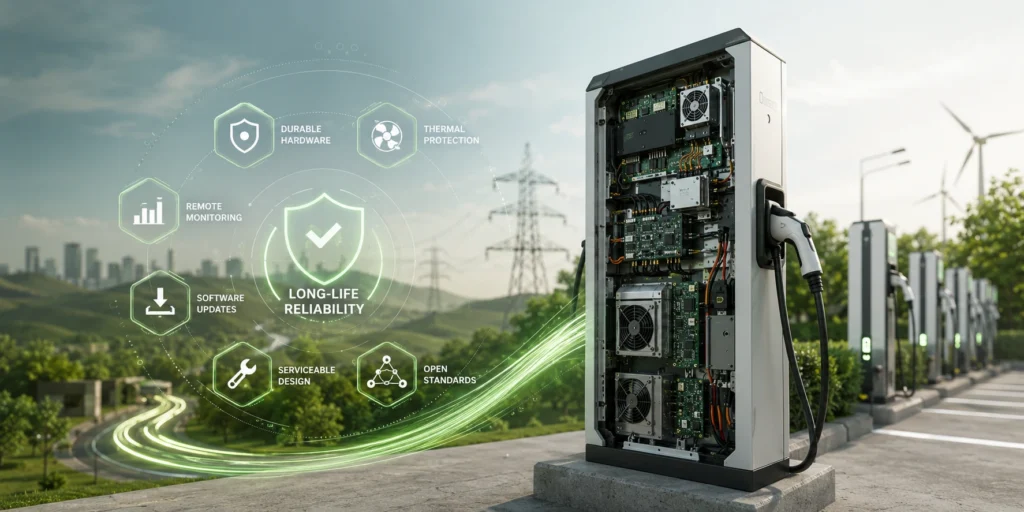
Utility-grade reliability means the charger can work predictably for years, not only look strong during commissioning. For utilities, a charging station becomes part of a larger energy system. It has to handle daily charging sessions, weather, voltage changes, remote monitoring, software updates, and routine service without constant failures.
Power output still matters, but it is only one part of reliability. A charger with high power but weak cables, poor cooling, limited service access, or unstable communication will create problems later. Utility-grade hardware needs to be durable, repairable, and supported long after installation. In practice, this means strong enclosures, protected electronics, reliable connectors, stable firmware, good thermal management, and available spare parts. The charger should be easy to maintain, not painful to keep alive.
Why Charger Lifespan Affects the Whole Network
One failed charger is a repair task. A network full of aging chargers is a business problem. Short hardware life affects more than one location. It creates pressure across the whole operation: lower uptime as more faults mean fewer chargers available to drivers, higher service costs as technicians spend more time fixing breakdowns instead of doing planned maintenance, weaker driver trust as people stop relying on stations that look available in the app but fail on site, slower expansion as money goes into early replacements instead of new charging locations, and harder planning as operators cannot predict costs clearly when equipment starts failing too soon.
Long-lifecycle hardware gives utilities and CPOs a steadier network to manage. Older chargers keep working while new stations are added, maintenance becomes easier to plan, and availability stays more consistent. In Ukraine, where public charging reliability affects real route planning, this is not a small detail. It shapes whether drivers see the network as dependable or risky.

Build Reliable Charging Networks With ECOFACTOR
Long-lasting equipment can simplify maintenance planning and support stable charging operations over time. Alongside charging stations, ECOFACTOR offers hybrid inverters, battery systems, and solar panels for utility and commercial charging projects. The company also provides an iOS and Android app with a charging station map for easier access to charging locations.
ECOFACTOR can support reliable charging infrastructure with:
- Equipment designed for long-term deployment
- Energy solutions for integrated charging systems
- Charging technologies for commercial projects
- Cables and accessories for installation and ongoing operation
Contact ECOFACTOR to discuss infrastructure solutions that support long-term charging network reliability.
The Parts of a Charger That Decide Its Service Life
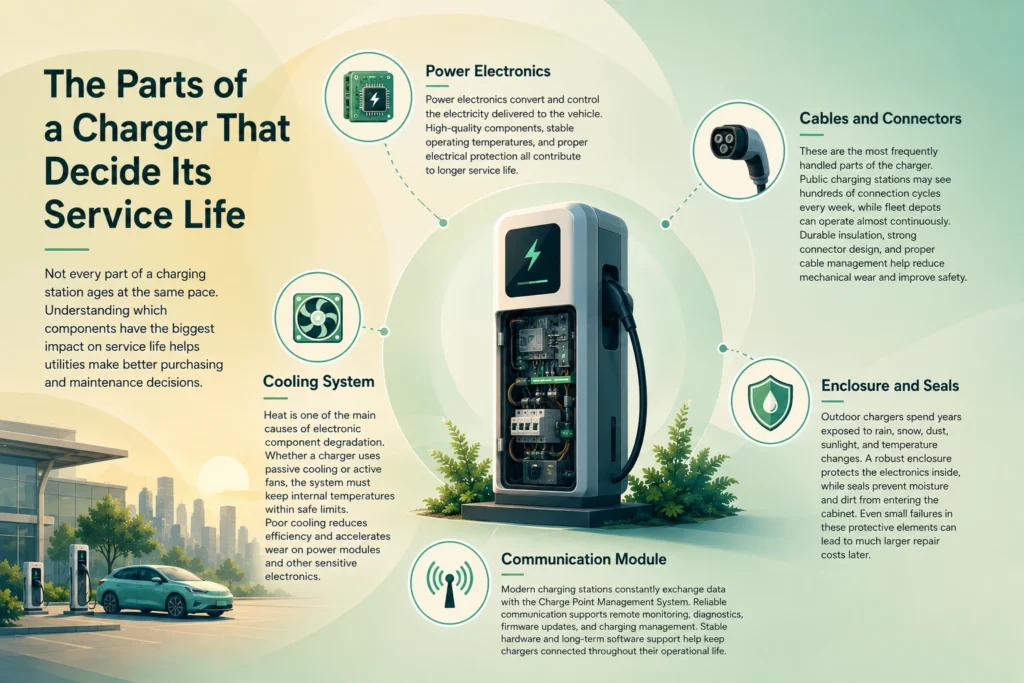
Not every part of a charging station ages at the same pace. Some components experience electrical stress every time a vehicle charges, while others spend years protecting the equipment from weather and physical damage. Understanding which parts have the biggest impact on service life helps utilities make better purchasing and maintenance decisions.
Power Electronics
Power electronics convert and control the electricity delivered to the vehicle. They operate under continuous electrical and thermal stress, making them one of the most important parts of the charger. High-quality components, stable operating temperatures, and proper electrical protection all contribute to longer service life.
Cooling System
Heat is one of the main causes of electronic component degradation. Whether a charger uses passive cooling or active fans, the system must keep internal temperatures within safe limits. Poor cooling reduces efficiency and accelerates wear on power modules and other sensitive electronics.
Cables and Connectors
These are the most frequently handled parts of the charger. Public charging stations may see hundreds of connection cycles every week, while fleet depots can operate almost continuously. Durable insulation, strong connector design, and proper cable management help reduce mechanical wear and improve safety.
Enclosure and Seals
Outdoor chargers spend years exposed to rain, snow, dust, sunlight, and temperature changes. A robust enclosure protects the electronics inside, while seals prevent moisture and dirt from entering the cabinet. Even small failures in these protective elements can lead to much larger repair costs later.
Communication Module
Modern charging stations constantly exchange data with the Charge Point Management System. Reliable communication supports remote monitoring, diagnostics, firmware updates, and charging management. Stable hardware and long-term software support help keep chargers connected throughout their operational life.
Real Conditions That Shorten Charger Life
Charging stations rarely operate under ideal conditions. Daily exposure to weather, heavy use, and electrical disturbances gradually affects every component. Long-lifecycle hardware is designed to withstand these challenges, but good installation and regular maintenance remain just as important.
Weather and Temperature Changes
Outdoor chargers experience constant expansion and contraction as temperatures rise and fall. Over time, repeated thermal cycling can affect seals, plastics, electrical connections, and electronic components. Installing chargers under canopies or reducing direct sun exposure helps limit unnecessary stress.
Dust, Moisture, and Corrosion
Dust blocks ventilation, moisture affects electrical components, and corrosion slowly damages metal parts and connectors. These risks are particularly relevant for outdoor installations and regions with high humidity or winter road salt. Regular inspection and cleaning help maintain the protection provided by the enclosure.
Physical Wear From Daily Use
Every charging session adds a little more wear. Drivers plug and unplug connectors, cables are bent and moved, and public chargers are exposed to accidental impacts. Quality materials extend service life, but cable supports, proper parking layouts, and routine inspections are equally important.
Grid Surges and Unstable Power
Voltage fluctuations and lightning strikes can damage charger electronics in seconds. In countries where grid conditions are less predictable, including parts of Ukraine, electrical protection becomes even more important. Proper grounding and surge protection devices help protect charging infrastructure and reduce the risk of costly equipment failures.
Long-Lifecycle Hardware Starts at Installation
The lifespan of a charging station is influenced long before the first charging session. Even well-designed hardware will wear faster if it is installed in the wrong location or without proper electrical protection.
Good installation reduces stress on the equipment from the very beginning. A charger placed under a canopy or away from direct afternoon sun operates at lower temperatures. Proper drainage prevents water from collecting around the foundation, while adequate ventilation helps remove excess heat from the enclosure.
Mechanical protection matters just as much. Cable holders or retractors reduce strain on charging cables, and leaving enough space around the charger makes future servicing faster and safer. Electrical protection should not be overlooked either. Surge protection devices and proper grounding help protect sensitive electronics from voltage spikes and unstable grid conditions.
Lifecycle Support Keeps Chargers Useful for Longer
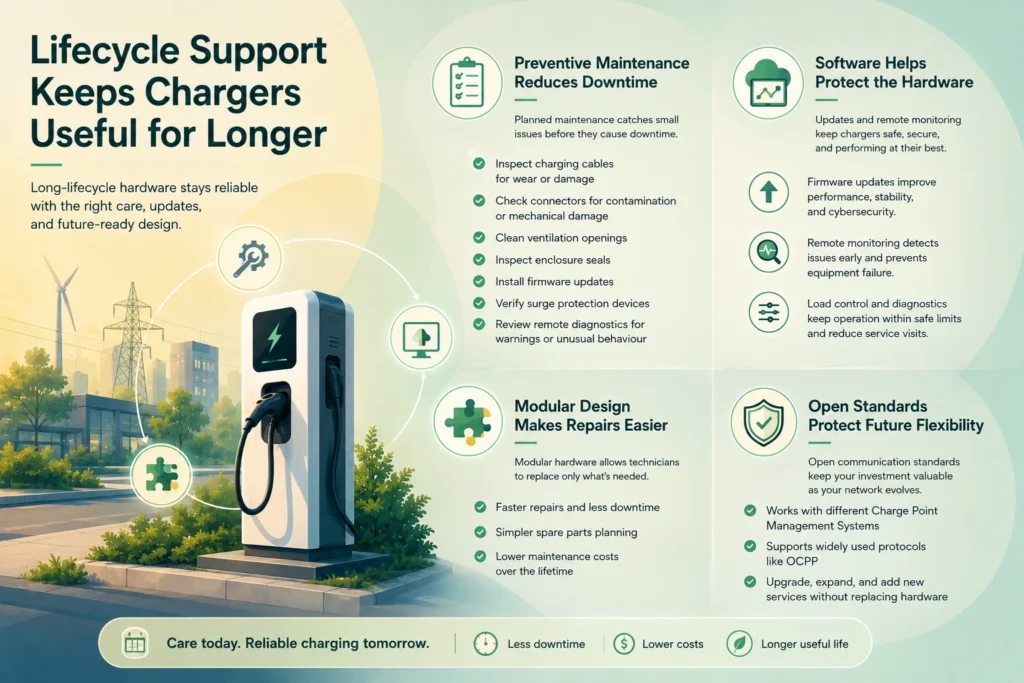
Long-lifecycle hardware is not only about strong components. It also depends on how easily the charger can be maintained, updated, repaired, and connected to future systems. For utilities, this matters because a charging station should remain useful for many years, even as software platforms, service requirements, and network size change.
Preventive Maintenance Reduces Downtime
Reliable charging networks are built on planned maintenance, not emergency repairs. Small issues are usually easier and cheaper to fix before they cause downtime.
A practical maintenance routine should include inspecting charging cables for wear or insulation damage, checking connectors for contamination or mechanical damage, cleaning ventilation openings to support proper cooling, inspecting enclosure seals for moisture or dust ingress, installing firmware updates recommended by the manufacturer, verifying the condition of surge protection devices, and reviewing remote diagnostics for recurring warnings or unusual behaviour. These checks do not need to be complicated. What matters is consistency. Regular maintenance helps extend equipment life and keeps charger availability more stable.
Software Helps Protect the Hardware
Charging hardware and software work together throughout the service life of the station. Firmware updates can improve charging behaviour, thermal management, communication stability, and cybersecurity. They are not just about adding new features.
Remote monitoring adds another layer of protection. Operators can notice repeated faults, abnormal temperature readings, communication interruptions, or declining performance before they turn into equipment failure. Load control and diagnostic tools help keep the charger operating within safe limits and reduce unnecessary service visits.
Modular Design Makes Repairs Easier
No charging station lasts forever without service, but repairs should not require replacing the entire unit. Modular hardware allows technicians to replace individual components such as communication modules, power electronics, cooling parts, or other serviceable elements. That reduces repair time, simplifies spare parts planning, and lowers maintenance costs over the equipment’s lifetime. For utilities operating larger networks, modular design means less downtime and a longer useful life for every installation.
Open Standards Protect Future Flexibility
Charging infrastructure should remain useful even as platforms and operational requirements change. Hardware that supports open communication standards and works with different Charge Point Management Systems gives operators more flexibility. Instead of being locked into one closed ecosystem, utilities can upgrade software, expand networks, or introduce new services without replacing existing chargers. Compatibility with widely used protocols such as OCPP helps protect long-term investments by making hardware easier to integrate with different platforms as network needs evolve.
Lifecycle Cost Is More Important Than Purchase Price
The least expensive charger is not always the most economical choice. Utilities usually evaluate equipment over its entire service life, where maintenance, repairs, and uptime often have a greater financial impact than the initial purchase price.
| What looks cheap at first | What matters over time |
|---|---|
| Low hardware price | Lower maintenance cost |
| High power rating | Stable performance |
| Basic warranty | Spare parts availability |
| Closed system | Platform flexibility |
| Fast installation | Safe, serviceable installation |
Looking beyond the purchase price helps operators avoid early replacements and build charging networks that remain reliable for many years.
What Ukrainian Operators Should Pay Attention To
Charging infrastructure in Ukraine operates under conditions that require careful planning. Voltage fluctuations, outdoor installations, seasonal weather, and growing charging demand all place additional stress on equipment.
Choosing hardware designed for long service life is only part of the solution. Operators should pay equal attention to installation quality, electrical protection, remote monitoring, and preventive maintenance. Equipment that performs reliably through changing conditions helps reduce operating costs while supporting the expansion of public and commercial charging networks.
As charging infrastructure continues to grow across the country, scalable maintenance practices and durable hardware will become just as important as adding new charging locations.
Frequently Asked Questions
How long should a commercial EV charging station last?
A well-built commercial charger can remain in service for 8 to 10 years or longer. The actual lifespan depends on hardware quality, installation, environmental conditions, and whether the equipment receives regular maintenance.
What causes EV chargers to fail most often?
Many failures are linked to everyday wear rather than manufacturing defects. Heat, moisture, dust, damaged cables, power surges, poor installation, and missed maintenance all reduce the service life of charging equipment.
Why do utilities care about long-lifecycle hardware?
Utilities manage charging infrastructure as long-term assets. Hardware that stays reliable for many years helps reduce maintenance costs, improve charger availability, and avoid replacing equipment sooner than planned.
Does software affect the lifespan of charging hardware?
Yes. Firmware updates can improve charging behaviour, thermal management, communication stability, and cybersecurity. Combined with remote monitoring, they help detect problems early and reduce unnecessary stress on the hardware.
Why is modular charger design important?
Modular chargers allow technicians to replace individual components instead of the entire unit. Repairs are faster, downtime is shorter, and operators can extend the life of existing equipment without major replacements.
Can open standards make charging infrastructure more future-proof?
They can. Chargers that support open communication protocols and integrate with different Charge Point Management Systems give operators more flexibility. That makes it easier to upgrade software, expand the network, or switch platforms without replacing compatible hardware.
Final Thoughts
Utility-grade charging infrastructure is built for years of operation, not just successful installation.
Long-lifecycle hardware reduces maintenance, improves uptime, and gives operators more predictable costs as their networks expand. Combined with proper installation, regular maintenance, open standards, and reliable software support, durable charging equipment becomes a long-term infrastructure asset rather than a device that needs replacing after only a few years.
For utilities and charging operators planning future growth, investing in hardware that is designed to last is often one of the most practical decisions they can make.