


Table of contents:
On paper, they’re both electric vehicles, with batteries, zero emissions and CCS charging. But when you look at the Maxus T90EV and the Tesla Model Y in real-world use, things become simpler. One is designed for commercial use in the city. The other is designed for family trips and motorway journeys.
This article is not for brand fans. We’re just going to break everything down, with a focus on the experience of a Ukrainian driver: charging, roads, winter, comfort, maintenance. And we’ll try to answer the question of which of these cars is really better in Ukrainian conditions.
We remind you that you can purchase home and commercial charging stations in our online storeand also use the public charging stations ECOFACTORcharging points located throughout Ukraine. For convenient access to charging infrastructure, we recommend using our mobile applicationwhich is available on iOS and Android.
The essence and philosophy: what sort of car are we looking at?
Let’s be honest: the Maxus T90EV and the Tesla Model Y have little in common in terms of concept. They represent two very different approaches to what an electric car should be.
The Maxus T90EV is, in essence, a diesel pick-up that has been adapted for electric propulsion. It wasn’t designed from scratch as an EV. It has been reimagined: the internal combustion engine has been removed, a battery has been added, and the classic design with a frame, leaf springs and a rear axle has been retained. There’s nothing wrong with that – it’s built for work, carrying loads and travelling between warehouses. It’s a vehicle that gets the job done and doesn’t pretend to be anything else.
The Tesla Model Y is the opposite. It was designed as an electric car from the very start. Its entire platform, layout, efficiency philosophy, low centre of gravity and maximum integration are all part of this. Everything here is geared towards a single goal: making the EV practical for everyday life. The result is a spacious crossover without the traditional compromises of an internal combustion engine, featuring its own charging ecosystem, a minimalist interior and quite impressive performance.
Both cars have their place. But each has its own niche. The Maxus is better suited to those with a practical mindset: “I need to transport things”, “I need a power socket in the load bed”, “I want a pick-up, but I don’t want a diesel”. The Tesla is more for those who want versatility: for city driving, for long journeys, with children, and without any unnecessary hassle.
They aren’t rivals; they’re simply responses to different needs. And that’s precisely why it’s interesting to compare them.
Battery and range: different approaches to efficiency
The Tesla Model Y has an LFP battery with a rated capacity of 64 kWh, of which 60 kWh is available for use. In real-world conditions, this provides a range of around 380 km in a combined cycle, or up to 555 km in urban driving during the warmer months. In winter, the range drops to 270–315 km depending on speed and load. However, the figures remain competitive, even if they fall slightly short of the official WLTP rating (534 km).
The Maxus T90EV has a larger battery – 88.5 kWh – but its energy consumption is also higher. On paper, the WLTP range is also 330 km, but this is calculated according to the standard for commercial vans (i.e. with a load). In practice, this translates to 220–250 km in winter and just over 300 km in summer. In town, it is theoretically possible to achieve up to 470 km, but only under ideal conditions, at low speeds and with no load.
In conclusion, despite having a smaller battery, the Tesla offers better efficiency. The Maxus has a larger capacity, but its greater weight and drag cancel out this advantage.
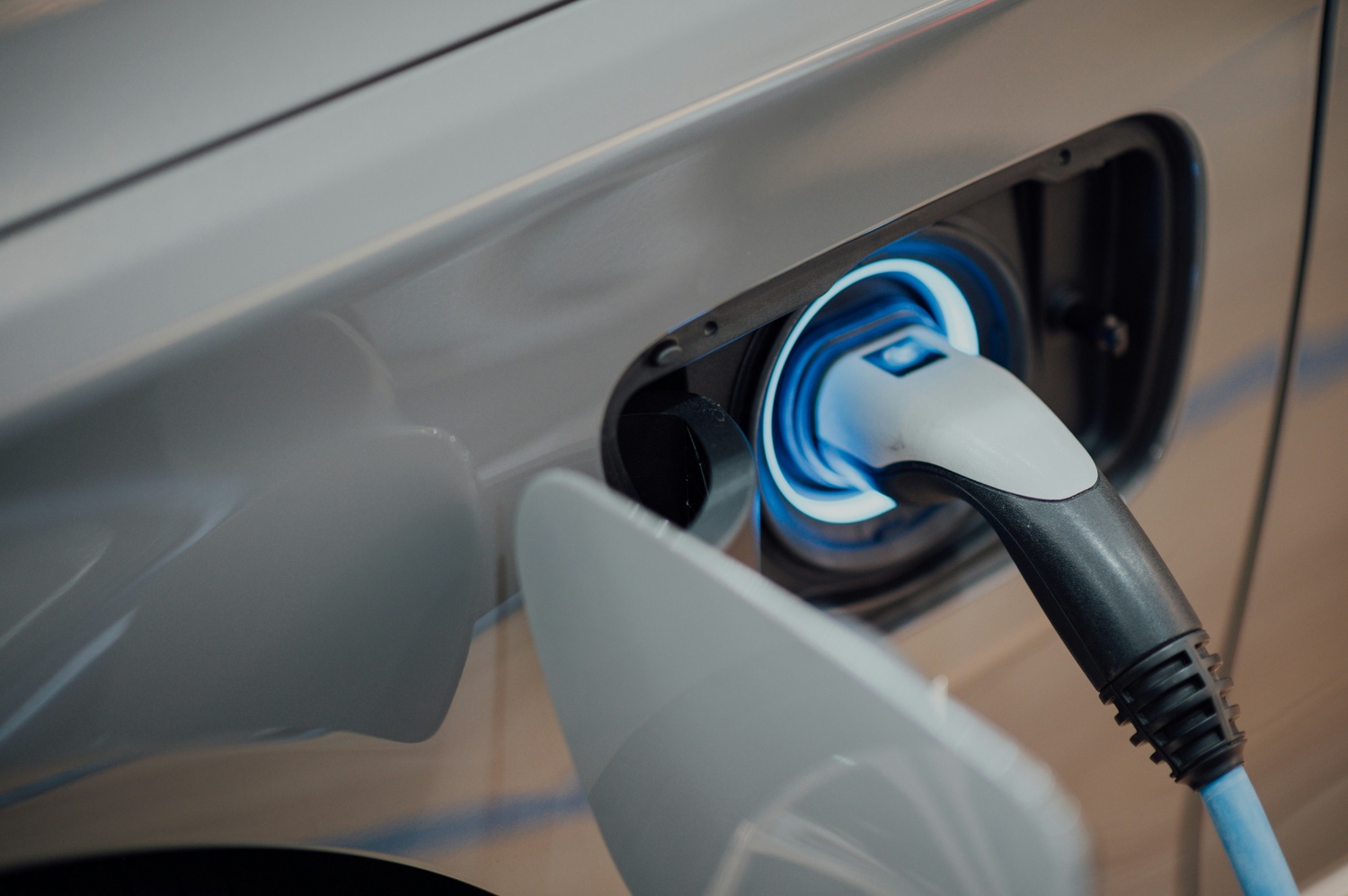
Charging architecture: speed and convenience
It all comes down to charging. Even the best electric car becomes a burden if it takes too long or is too fiddly to charge. That’s why charging speed and convenience in day-to-day use are just as important as the range figures.
From its very first versions, Tesla has built its entire system around the concept of ‘pull up, plug in, drive off’. And in the Model Y, this system works almost flawlessly.
In the case of the Maxus T90EV, the situation is slightly different: charging here is more ‘adapted’ to general standards, without any particular optimisation or smart features. The car charges, but more slowly and without the extra conveniences that Tesla drivers have come to expect.
Tesla Model Y:
- AC charging – 11 kW (6.5 hours to a full charge).
- DC – up to 175 kW, averaging 110 kW (10–80% in 24 minutes).
- Autocharge support, battery pre-heating via the sat-nav.
Maxus T90EV:
- AC – also 11 kW (9 hours from 5% to 100%).
- At charging points with a capacity of up to 80 kW, the charging time from 20 to 80 per cent is around 45 minutes, but this depends on the battery temperature and charge level.
- Plug & Charge is not supported, nor is Autocharge.
Comment.
The Tesla charges almost twice as fast on the motorway, and the entire Supercharger ecosystem is designed for simplicity. Even third-party CCS stations integrate easily thanks to the Autocharge feature and automatic battery pre-heating before charging. The Maxus charges more slowly, and although 80 kW might seem ‘normal’, it’s actually not enough for an 88.5 kWh battery. Especially if you need to charge not just ‘a little at a time’, but to build up most of the charge whilst on the road.
In town, it’s still manageable, but on the motorway the difference becomes clear: a Tesla can cover over 250 km in 15 minutes, whilst a Maxus manages around 100–120 km in the same time. And that does affect the pace of the journey.
What you need to know about the charging infrastructure in Ukraine
When choosing an electric car, it’s worth thinking about more than just the battery or performance. Without convenient charging, any advantage quickly disappears. And whilst Tesla has its own closed ecosystem, other cars – including the Maxus T90EV – require access to a wide, stable charging network. This is where we come in.
We are the ECOFACTOR team. Our platform develops a full-cycle charging infrastructure in Ukraine: from the manufacture of charging stations to 6.2.1. The licence to use the ECOFACTOR Network mobile application is valid for two years from the date on which the Buyer actually receives the charging station from the Seller, even if the Seller has not connected the station to this software. The expiry date of the licence is specified in the licence agreement. for drivers. We don’t just buy equipment; we design and manufacture it ourselves. We already have over a thousand of our own charging stations and charging ports operating through our operator system. We also offer charging accessories, inverters and batteries.
We offer:
- Chargers AS stations and DC stations.
- Mobile charging solutions for businesses and private customers.
- An online shop for everything you need for charging.
- Map of charging stations with filters by type, power and availability.
- The ECOFACTOR app for iOS and Android, featuring integration of all services: station search, charging initiation, session history, support and community.
We also provide a comprehensive a platform for operators (SaaS), which enables you to manage stations and monitor usage, maintenance and payments in real time.
Our system works with all cars and means drivers don’t have to worry about whether there’s a charging point nearby or whether it’s working. Just open the app, select a location on the map, plug in the cable – and start charging.
We know that the future of mobility starts with the simple things. That’s why we’ve created an ecosystem that requires no extra effort from the driver. And it doesn’t matter whether you drive a Maxus, a Tesla or any other electric car – charging should work in such a way that you don’t have to think about it.
Reason, dynamics, handling
The Tesla Model Y RWD has rear-wheel drive, a power output of 220 kW (299 hp), and accelerates from 0 to 100 km/h in approximately 7.2 seconds. Its performance is more than adequate in town and on the motorway, and thanks to its low centre of gravity, the car handles with confidence. The suspension is a bit stiff, but suitable for everyday use.
The Maxus T90EV is also rear-wheel drive, but considerably less dynamic: 180 k.s., 310 Nm, a top speed limited to 120 km/h, and it takes over 10 seconds to accelerate to 100 km/h. The car weighs 2.3 tonnes and has leaf springs at the rear – you can really feel this even on tarmac. There is plenty of torque when accelerating, but only up to the first 50 km/h. After that, it’s all about inertia.
The Tesla handles noticeably better and is much more dynamic. The Maxus isn’t about speed, but about low-end torque and stability under load.
Ground clearance and approach angle
Surprisingly, the Model Y has a ground clearance of 167–172 mm, whilst the Maxus T90EV has 187 mm. However, the difference in chassis geometry works against the pick-up: the long wheelbase, the protruding battery and the motor mounted on the rear differential reduce the approach and departure angles. In addition, the Tesla has a low centre of gravity, which compensates for this to a large extent in everyday use.
The Maxus looks like a pick-up, but isn’t designed for serious off-roading. The Model Y is an urban crossover with no off-road ambitions, yet it doesn’t get stuck in every pothole.
Comfort and interior
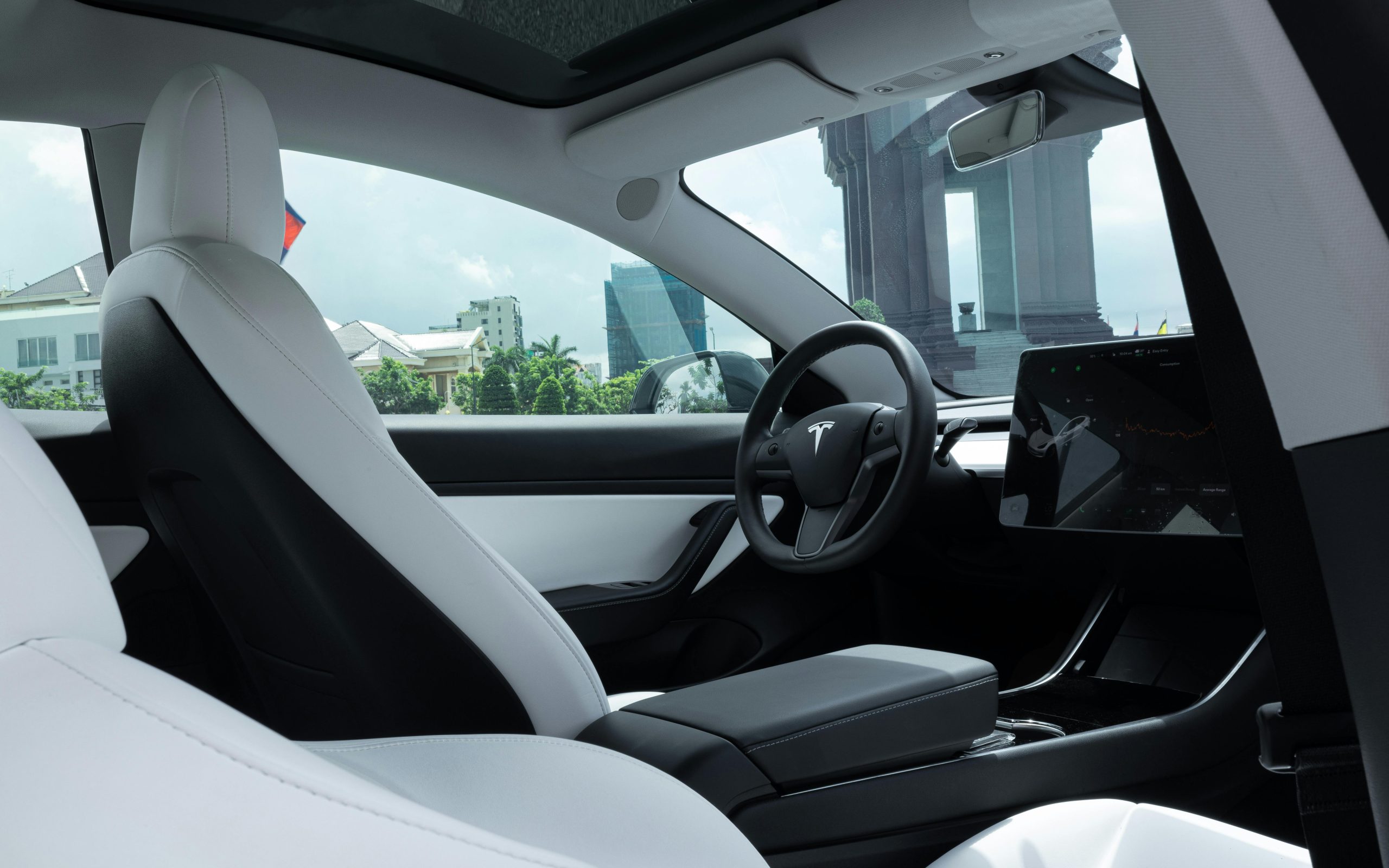
The Tesla Model Y features a minimalist design, a large display and electronic controls for everything, including the glove compartment. The seats are comfortable, visibility is good, noise insulation is average, and the climate control system operates via a heat pump. There’s plenty of space in the second row, and all the seats are heated. However, the materials are more functional than premium.
The Maxus T90EV takes a more ‘old-school’ approach: separate buttons, a rotary selector and an analogue key card. It features a 10.25-inch display with Apple CarPlay (via a cable), and heated front seats are available as an option. The plastic is hard and sometimes creaks. However, the seats are comfortable, with a seating position typical of pick-ups. There are 12V and 220V sockets in the load compartment.
Load capacity and practicality
There’s no competition here:
Maxus T90EV:
- Load capacity: 1 ,000 kg
- Trailer: up to 1,000 kg
- Loading platform: 1485 × 1510 × 530 mm
- Cabin: Double only, 5 seats
Tesla Model Y:
- Load capacity: 510 kg
- Trailer: up to 1,600 kg with brakes
- Boot capacity: 835 litres, up to 2,118 litres with the seats folded down
- In addition: 117 litres in the front boot
Maxus wins on weight and platform, whilst Tesla wins on the versatility of its interior space.
What kind of car for whom
The Maxus T90EV is a pick-up truck designed for practical tasks. It doesn’t try to come across as premium or innovative. Its main purpose is to transport cargo without unnecessary noise, fuel consumption or maintenance. This sort of vehicle is ideal for those for whom every kilometre counts and every kilogramme of load matters.
Who is the Maxus T90EV suitable for:
- For those who regularly transport heavy items – tonnes are no problem at all.
- For those who work within the city or in the suburbs, where high speeds are not required.
- For those who value a simple, tried-and-tested design without any unnecessary ‘bells and whistles’.
- For those who can charge their vehicles overnight at home or at their base, and do not rely on fast charging.
- For those for whom the track is a rare exception rather than a daily routine.
This model is ideal for small businesses, delivery services, municipal needs or personal use on the farm. The Maxus doesn’t make a big fuss, but it gets the job done reliably – and that’s what it’s all about.
The Tesla Model Y is a versatile electric car for everyday life. It has a different focus: comfort, integration into the ecosystem, and a sense of technological sophistication. It won’t replace a pick-up, but it will make any journey easier – whether it’s a trip to the shops or across half the country. People choose it not for its load-carrying capacity, but for its convenience.
Who is suitable for Tesla Model Y:
- For those looking for a single car to do it all: family, work and travel.
- For those who occasionally travel long distances and appreciate the convenience of Superchargers.
- For those who want a car that’s quiet, fast and comfortable.
- For those who want plenty of space in the cabin and boot, without compromising.
- For those who are already used to mobile apps, cameras instead of mirrors, and updates via Wi-Fi.
The Tesla Model Y isn’t just about getting from A to B; it’s about a comfortable, electric lifestyle: silent, no refuelling, and no complicated maintenance.
Conclusions.
The Maxus T90EV and the Tesla Model Y aren’t rivals in the same category. They represent completely different approaches to the question ‘why do I need an electric car?’. One is designed for work, where endurance and simplicity are key. The other is for everyday life, where convenience, versatility and the ecosystem come first.
If you’re torn between them, it means either you have a very wide range of tasks, or you haven’t yet decided what’s most important to you. Because as soon as you’ve mapped out your path, your pace and your actual needs, the choice will become obvious.
To put it simply, Maxus is for those who work, whilst Tesla is for those who want to live in comfort.
Frequently asked questions
Is the Maxus T90EV really more economical than the Tesla Model Y in daily use?
Not really. Although the Maxus has a larger battery, its energy consumption is higher and it charges more slowly. Tesla has lower consumption per kilometre, faster charging and better optimised routes. If you drive a lot and fast, Tesla will be cheaper to run. If you work in a city with regular stops, Maxus also makes sense.
Can I charge the Maxus T90EV at ECOFACTOR stations?
Yes. Maxus uses the CCS standard for fast charging and Type 2 for AC – all supported by the ECOFACTOR platform. You can find charging points via the mobile app, see power, occupancy and even start a session remotely.
Why doesn’t Tesla have all-wheel drive in the basic version?
Because this is a standard RWD modification designed for city, highway and basic weather conditions. If you need AWD, you need to take the Long Range or Performance. By the way, the Maxus doesn’t have all-wheel drive at all.
Which electric car is best suited for a business that delivers or transports goods?
Maxus T90EV. It has a load capacity of 1000 kg, an open platform, 220V sockets and a simple design. Tesla is more about people than cargo.
Is it worth choosing Maxus if you plan to travel on the highway every day?
If you have time to charge, you can. But remember: the range is lower, charging is slower, and the dynamics are limited. On the highway, Tesla is more comfortable and consumes less energy at higher speeds.
What does the ECOFACTOR app offer electric vehicle drivers?
It’s more than just a map. We allow you to see stations in real time, manage charging, filter by power, save your favourite points, and even connect to a station with one click. The app is available for Android and iOS, and works with most models on the market.