

Table of contents:
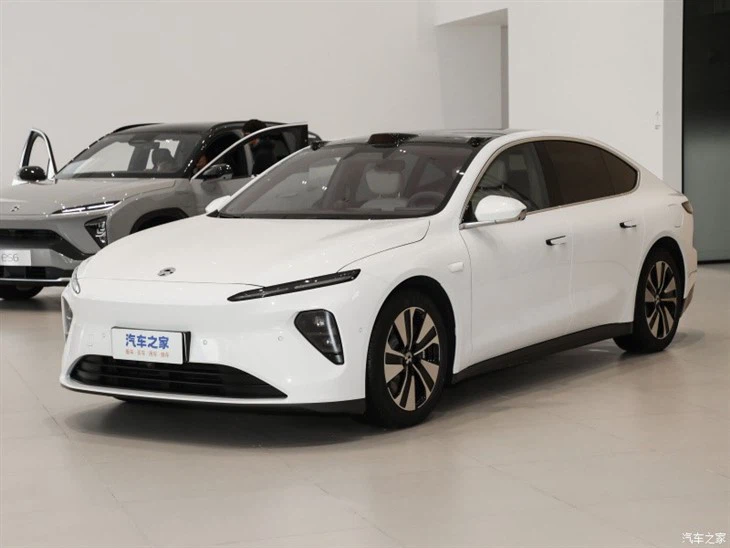
The NIO ET7 looks like a luxury saloon and drives as if to prove it. It doesn’t just have impressive figures in the brochure – it has a well-balanced platform, all-wheel drive, a realistic range and a charging process that doesn’t take half a day.
But what’s actually under the bonnet? In this article, we’ll break down the NIO ET7’s specifications piece by piece – concisely and objectively, as if an engineer were explaining it to another engineer. We won’t praise or criticise – we’ll simply present the facts.
We remind you that you can purchase home and commercial charging stations in our online storeand also use the public charging stations ECOFACTORcharging points located throughout Ukraine. For convenient access to charging infrastructure, we recommend using our mobile applicationwhich is available on iOS and Android.
What sort of car is this, and how does it position itself?
Let’s start by saying that the NIO ET7 isn’t just another electric saloon. It’s a model that NIO positions as its flagship in the premium segment. In short, it’s a large electric saloon with an emphasis on comfort, technology and performance. The ET7 is designed for those who want to combine electric propulsion with the traditional qualities of a large saloon: a quiet ride, a spacious interior and the smooth operation of the entire system.
This car is often compared to high-end models from other brands that have been on the market for a long time. But the NIO ET7 is banking on its own vision of the electric vehicle of the future: not just travelling many kilometres on a single charge, but offering convenience in everyday life – in the city, on the motorway or when travelling. Thanks to a wide range of technological solutions (safety systems, driver-assistance features and advanced comfort options), it aims to appeal to those who are used to getting the most ‘fully-equipped’ car possible without any unnecessary compromises.
It is also worth noting the after-sales support system, subscriptions and services offered by NIO – these form part of the brand’s overall philosophy: the vehicle is complemented by services that make using the car easier and more predictable. As a result, the ET7 is perceived not merely as a set of technical specifications, but as a fully-fledged mobile space for life and travel.

Battery system and range
The NIO ET7 is available with two battery variants: the Standard Range, with a usable capacity of 73.5 kWh, and the Long Range, with a capacity of 90.0 kWh. Both variants are built on the NT2 platform, which supports a 400-volt architecture and battery pre-conditioning systems.
In mild weather, the Long Range model can achieve a range of up to 705 km in urban driving, whilst the Standard Range model can achieve up to 585 km. In mixed conditions (city and motorway), these figures drop to 580 km for the Long Range and 480 km for the Standard. In the colder months, the combined range falls to 425 km (Long) and 350 km (Standard).
Efficiency and energy consumption
Average energy consumption is 177 Wh/km for the Standard Range and 178 Wh/km for the Long Range.
In mild weather in the city, energy consumption falls to 126–128 Wh/km, whilst in cold weather (−10°C) when driving on the motorway, it can rise to 241–243 Wh/km.
Dynamics, power and drive
Both versions of the NIO ET7 feature the same powertrain – two electric motors providing all-wheel drive, with a combined power output of 480 kW (653 hp) and torque of 850 N·m. Acceleration to 100 km/h takes 3.8 seconds, putting the car on a par with many sports cars. The top speed is limited to 200 km/h, which is considered standard in the F-class segment.
Charging infrastructure and time
For home charging, both versions use a Type 2 connector and an on-board 11 kW charger. A full charge of the standard battery takes around 8 hours, whilst the extended-range battery takes up to 9 hours 45 minutes. With CCS fast charging, the situation is slightly different:
- The Standard Range supports up to 140 kW and charges at an average rate of 110 kW (30 minutes to 80 per cent).
- The Long Range version is limited to 127 kW and takes around 40 minutes.
It is worth noting that Plug & Charge is not supported, but the Autocharge function is available on both models. Pre-heating the battery whilst using the sat-nav is also supported, which is particularly important for winter journeys.
How we help charge cars such as the NIO ET7
Here at ECOFACTOR, we fully understand that a high-performance electric car is only half the story. Without a high-quality charging infrastructure, it remains a potential that cannot be realised. That is precisely why we are developing solutions that allow owners of electric cars, such as the NIO ET7, to charge conveniently, quickly and without any hassle.
Our network covers thousands of ports across the country. We design and manufacture our own charging stations in Ukraine – offering maximum protection. The casing is sealed, so the device is not affected by immersion in water. Ideal for harsh weather conditions, yet rarely found in portable models. From models for everyday use to powerful AC solutions ranging from 22 to 44 kW and DC stations up to 420 kW. Our devices meet international quality and safety standards.
Through our online shop You can order not only the stations themselves, but also all the necessary accessories: RFID card adaptors, connector holders, inverters and batteries. Everything comes with descriptions, prices and the option to get advice directly. If you’re not sure what to choose, just submit an enquiry and we’ll recommend something that’s really suited to your needs.
We’re particularly proud of our map of charging stations, which you can use online or via the mobile app. The app is available for Android and iOS, and through it you can find charging points, start a charging session, view your history and manage your profile. It works quickly, without any unnecessary screens or fiddly registration processes.
We don’t just sell equipment; we’re building an ecosystem. And if you’re already looking at models such as the NIO ET7, chances are we’re on the same wavelength. Charge up in comfort – we’ve taken care of the rest.
Dimensions and weight
Both versions have the same dimensions:
- Body length – 5,101 mm
- width – 1987 mm (2202 mm including wing mirrors)
- height – 1509 mm
- wheelbase – 3,060 mm
Unladen weight: 2,434 kg (Standard Range) and 2,454 kg (Long Range). The weight distribution on the Long Range model is close to ideal (49/51), which has a positive effect on handling.
Load capacity
The boot capacity of the NIO ET7 is 363 litres, regardless of the version. There is no front boot (frunk). The maximum permissible weight of a braked trailer is up to 2,000 kg. The vertical load on the tow bar is up to 100 kg. This capacity is sufficient for everyday use, but some competitors offer solutions with more flexible storage space.
Security and rating Euro NCAP
Both models were awarded the maximum 5 stars by Euro NCAP in 2022. Safety ratings:
- 91% – adult passengers
- 87% – children
- 95% – the work of digital assistants
- 73% – pedestrian safety
This means that the NIO ET7 can be classified as one of the safest electric saloons in its class.
Range Assessment (1-Stop Range)
On long journeys, it is not only the overall range that matters, but also how far the car can travel on a single fast charge. In this respect:
- Standard Range: up to 456 km, 147 km after 15 minutes’ charging.
- Long Range: up to 509 km, 133 km after 15 minutes’ charging.
These are perfectly respectable figures for a premium saloon that isn’t designed exclusively for the motorway.
Further observations
There are certain aspects that do not directly affect acceleration or range, but are nonetheless important in day-to-day use. Below are a few points worth bearing in mind before considering the NIO ET7 as your next electric car:
- V2L, V2H and V2G are not supported.
- Both versions come with a heat pump as standard.
- No roof rails or front boot rack.
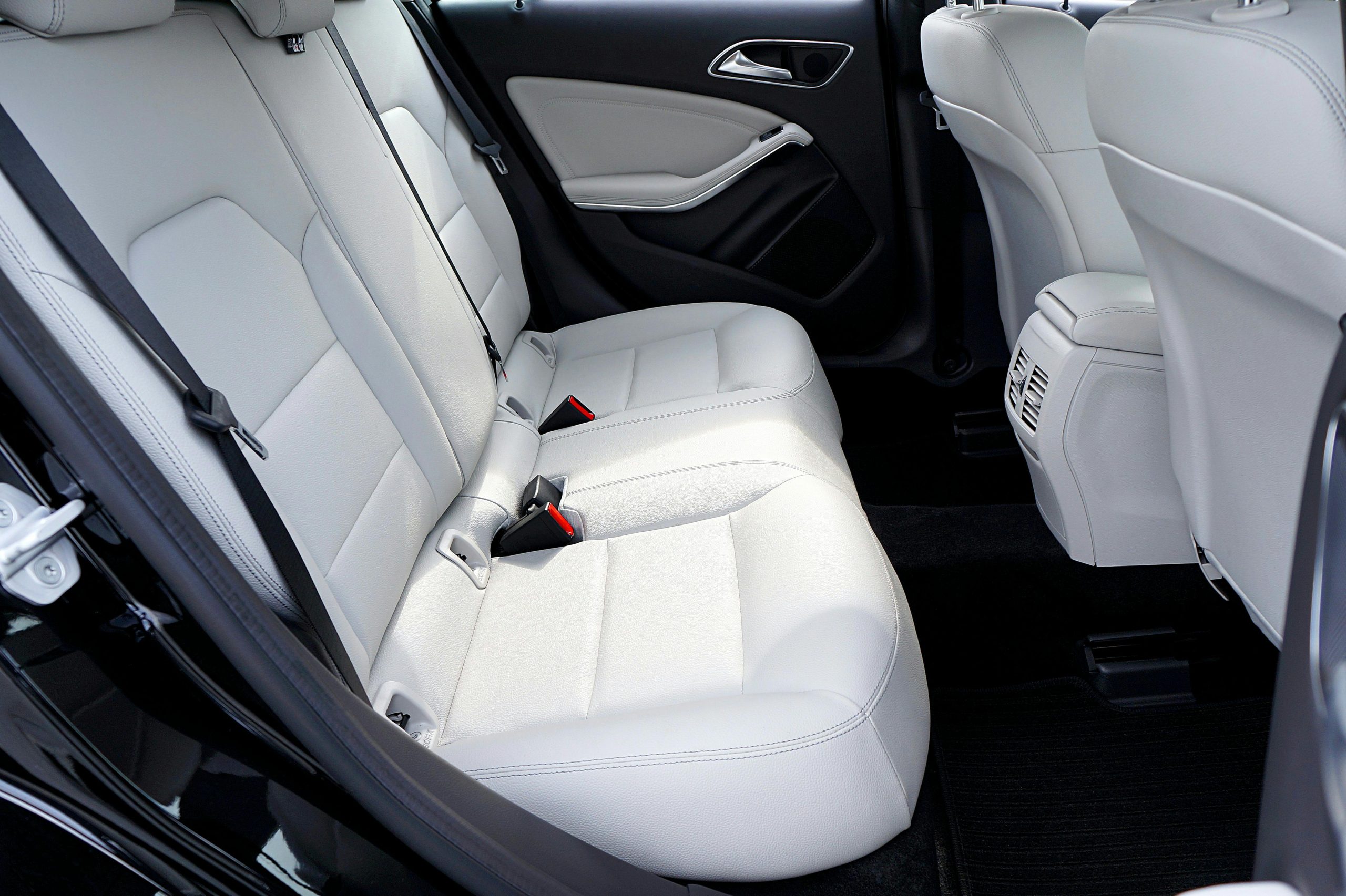
- The interior has 5 seats, two of which are equipped with Isofix.
- Turning circle – 12.4 m.
Conclusions.
The NIO ET7 is an example of how a Chinese brand has entered the market with a genuine competitor in the electric saloon segment. No flashy slogans, no visual flamboyance – just figures that match reality. The features are well-balanced: a high-capacity battery, predictable energy consumption, lively performance and sensible charging logic.
The Standard Range is suitable for those who mainly drive in town or over medium distances. The Long Range is the choice for those who are often on the road and want fewer stops. There are some limitations, such as the lack of Plug & Charge or V2G, but these are unlikely to be a major issue for most users.
Frequently asked questions
What is the difference between the Standard Range and Long Range versions?
It all comes down to the battery. The capacity of the Standard is slightly lower – 73.5 kWh versus 90 kWh in the Long. This results in a different range (415 km versus 505 km) and charging time. Everything else – dynamics, drive train, interior – is the same.
What is the real mileage you can get in the city?
In mild weather, the Long Range can easily cover up to 600-650 km in quiet city driving. But if it’s winter, heating, traffic jams and aggressive braking, count on about 400.
Does the NIO ET7 support fast charging?
Yes, and that’s quite reasonable. The Standard version takes a maximum of 140 kW, whilst the Long version takes slightly less – 127 kW. A 15–30-minute charge on a CCS charger, and you’re good to go. There’s no Plug & Charge, though.
Does the NIO ET7 have a front luggage rack?
No, there is no frunk. All the electronics are under the hood. That leaves 363 litres of main boot space in the back. Not much for the size of the car, but enough for most people.
Are ECOFACTOR charging stations suitable for the NIO ET7?
Yes, of course. The ET7 charges via a Type 2 or CCS connector, which are the formats we support. Our AC and DC solutions, adapters and cables fit without any adapters.
Is it a premium car? Can it be compared to BMW or Audi?
In terms of size, power and interior features, yes. The ET7 does not play “electric car for everyone”. It is a comfortable, quiet, adult car with a serious reserve. But instead of a logo with a history, this is a Chinese brand that is still gaining trust.