

Table of contents:
Electric cars are becoming increasingly popular every year. This is partly due to the growth of environmental awareness, but also to the development of technologies that make it easier to use such cars. However, while electric cars bring many benefits, they are not without their challenges, one of which is the issue of charging. With the growing popularity of electric vehicles, there is also a large […]
As the popularity of electric vehicles has grown, so has the variety of connectors for charging them. Each manufacturer may apply different standards, which makes the charging process much more complicated, especially if you are travelling or moving around an area with different types of charging stations. Knowing which type of connector fits your vehicle will help avoid misunderstandings and ensure fast and convenient charging in any environment.
We remind you that you can purchase home and commercial
To make the choice of connector easier to understand, let’s take a look at the main types of connectors used for charging electric vehicles. This will help you not only understand which connector is right for you, but also make the charging process easier and less confusing.
Main types of connectors
As technology advances, electric cars are becoming more and more popular, leading to a growing variety of charging connectors. Each manufacturer may apply different standards to their electric car models, which can make the charging process more complicated, especially if you travel frequently or change your place of residence. It’s important to know which type of connector is right for your car, as this will ensure fast and convenient charging at the nearest charging stations.
There are two main types of connectors: alternating current (AC) charging and direct current (DC) charging. The type of charging you choose will depend on your needs, the type of electric vehicle you have, and the location where you plan to charge your car. In this section, we will look at the most common types of connectors you may encounter when charging your electric vehicle.
1. Type 1 (SAE J1772, J-PLUG, J-plug)
Type 1 is a five-pin connector which is the standard for North America and Japan. This connector only supports AC charging and is typically used for cars manufactured for the US and Japanese markets. Although this type of connector is no longer used in Europe (where Type 2 is used), it remains popular for imported cars, particularly in North America.
Type 1 charging is slower, so it is ideal for use at home or at local charging stations. The maximum power output of this connector is limited to 7.4 kW, which allows you to charge your car quickly enough for daily use, but may not be enough for long journeys or fast charging.
Features:
- Maximum power (AC): 7.4 kW
- Maximum power (DC): not supported
- Maximum voltage: 220 V
- Current: 32 A
- Number of contacts: 5
Advantages:
- Ease of use, which makes this type popular in the US and Japanese markets.
- Great for charging at home or at local charging stations.
- It is common in the market of imported electric vehicles.
Disadvantages:
- Limited charging power of up to 7.4 kW, which makes charging slow for long journeys.
- Does not support DC charging, which limits the ability to charge quickly.
Type 1 is the best option for home use or for charging within the city, provided you have a car that supports this standard. However, for long-distance journeys, more powerful charging stations that support other types of connectors will be more convenient.
2. Type 2 (Mennekes)
Type 2 is a European standard that has become the norm for most electric cars manufactured in Europe. This connector has seven pins and supports both single-phase and three-phase connections, which allows for higher-power charging. Typically, this standard is used on electric vehicles designed for the European market, such as the Nissan Leaf, BMW i3, Audi e-Tron and others.
Thanks to its ability to support three-phase charging, Type 2 allows for significantly higher power outputs of up to 22 kW, making it ideal for public charging stations or for quick charging at home. This type of connector has become the standard in Europe and is supported by most charging stations.
Features:
- Maximum power (AC): 22 kW
- Maximum power (DC): not supported
- Maximum voltage: 380 V
- Current: 60 A
- Number of contacts: 7
Advantages:
- Fast charging up to 22 kW, making it ideal for public charging stations and home use.
- Supports single-phase and three-phase connections for higher power charging.
- Versatility, as it is the standard for most electric vehicles in Europe.
Disadvantages:
- Does not support fast DC charging.
- Limited compatibility with charging stations that do not support Type 2.
Type 2 is the best option for European users due to its high charging power and versatility. If you are planning to travel around Europe or use your electric car at home, this will be the most convenient and fastest charging option.
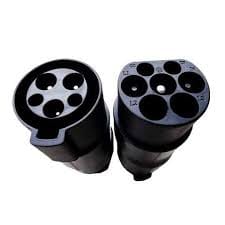
3. GB/T (GBT) AC
GB/T is a standard widely used in China for charging Chinese-manufactured electric vehicles. Externally, this connector resembles a Type 2 connector, but has several design differences; in particular, the plug and socket are reversed in China. This standard is mandatory for all charging stations serving Chinese electric vehicles.
The GB/T supports AC charging and has a power output of up to 7.4 kW, which is sufficient for everyday driving. This type of connector is common among Chinese car brands and is the main standard in the Chinese market.
Features:
- Maximum power (AC): 7.4 kW
- Maximum power (DC): not supported
- Maximum voltage: 220 V
- Current: 32 A
- Number of contacts: 7
Advantages:
- It is common among Chinese manufacturers and charging stations in China.
- Easy to use for Chinese electric cars.
- Compatible with most charging stations in China.
Disadvantages:
- Does not support DC charging.
- Limited compatibility outside of China, which can be a problem when travelling.
- Slow charging, not suitable for fast, long-distance journeys.
GB/T is the best choice for Chinese electric vehicles, but for those travelling outside China, this standard can be a limitation due to compatibility issues with other connectors.
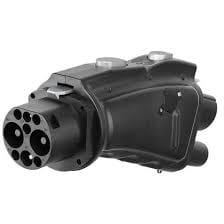
4. GB/T (GBT) DC
GB/T DC is a fast-charging connector that is also used in China. This type of connector supports direct current charging and allows power delivery of up to 237.5 kW, making it ideal for fast charging at dedicated charging stations.
The GB/T DC connector is mandatory for all Chinese electric vehicles and can be found at charging stations that cater to Chinese cars. If you own a Chinese-made car, this type of connector will be your primary option for fast charging.
Features:
- Maximum power (AC): not supported
- Maximum power (direct current): 237.5 kW
- Maximum voltage: 950 V
- Current: 250 A
- Number of contacts: 9
Advantages:
- Supports high power (up to 237.5 kW), which allows you to quickly charge your car.
- Ideal for Chinese electric vehicles.
- Fast charging that significantly reduces charging time.
Disadvantages:
- Does not support AC charging.
- Limited use outside of China.
- Increased cost of installing GB/T charging stations.
GB/T DC is ideal for fast charging Chinese electric vehicles, providing high power and convenience when used at local charging stations. For international travel, it is worth paying attention to the availability of adapters.
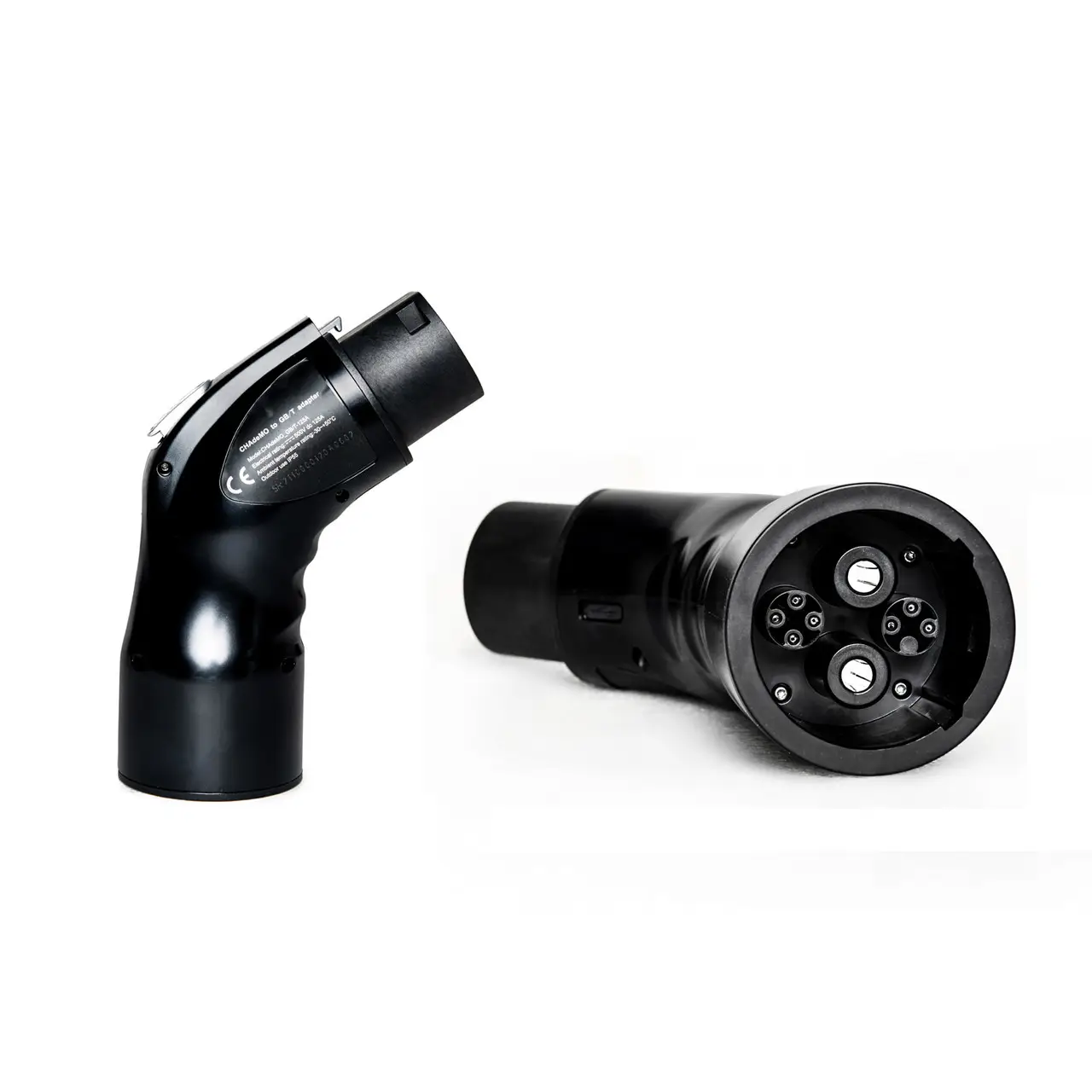
5. CHAdeMO
CHAdeMO is a Japanese standard for fast DC charging, developed for Japanese-manufactured electric vehicles. It has gained popularity due to its high charging speed and is commonly used on right-hand-drive Japanese cars, such as the Nissan Leaf and Mitsubishi i-MiEV, as well as in some European and American models. CHAdeMO supports direct current charging and delivers power of up to 62.5 kW. Newer versions of the standard allow charging at up to 400 kW, providing even faster charging speeds.
CHAdeMO delivers fast charging speeds and is ideal for long-distance journeys or for quick top-ups in the car.
Features:
- Maximum power (AC): not supported
- Maximum power (direct current): 62.5 kW
- Maximum voltage: 500 V
- Current: 125 A
- Number of contacts: 10
Advantages:
- Fast DC charging up to 62.5 kW.
- A common standard for Japanese electric vehicles such as the Nissan Leaf and Mitsubishi i-MiEV.
- Can be charged at specialised charging stations with high power support.
Disadvantages:
- Limited support in some regions (especially in Europe and the US, where other standards are popular).
- Does not support AC charging.
- An outdated version with a maximum capacity of 62.5 kW, although newer models can charge up to 400 kW, and this may take time before widespread adoption.
CHAdeMO is a good option for owners of Japanese electric vehicles, particularly in Japan, but its use is limited for users in other countries. The introduction of a new version of CHAdeMO with a power output of up to 400 kW will significantly improve charging speeds in the future.
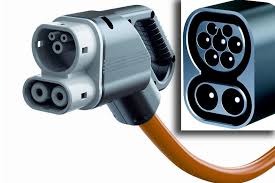
6. CCS Combo (Combined Charging System)
CCS Combo is a combined connector that supports both AC and DC charging. There are two main types of CCS Combo: CCS Combo 1 and CCS Combo 2. CCS Combo 2 is the most common in Europe and allows electric cars to be charged at DC charging stations with a power output of up to 350 kW.
The CCS Combo adds two additional contacts to the Type 2 standard, enabling both slow and fast charging at different stations. This provides charging flexibility suitable for vehicles that require different types of charging. Given its fast DC charging, the CCS Combo 2 is the ideal choice for users who want to charge their cars quickly at public charging stations.
Features:
- Maximum power (AC): 7.4 kW
- Maximum power output (direct current): 350 kW
- Maximum voltage: 200–500 V
- Current: 200 A
- Number of contacts: 5+2 (CCS1) or 3+2 (CCS2)
Advantages:
- Versatility: supports both AC and DC charging.
- Fast DC charging with a maximum output of up to 350 kW.
- It is supported at most modern charging stations in Europe and the USA.
- It is widely used for most new European electric vehicles.
Disadvantages:
- It only supports 7.4 kW for AC charging, which may not be enough for fast charging in some situations.
- Not all charging stations support combined connector types.
The CCS Combo is one of the most promising options for fast charging at public stations due to its high power and versatility. This type of connector is becoming the standard for many European cars and is the best choice for those who want to charge their car both quickly and conveniently.
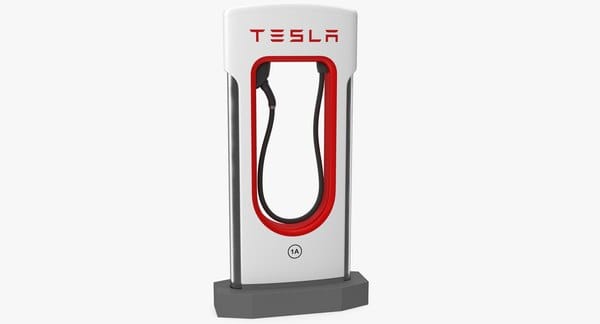
7. Tesla Supercharger
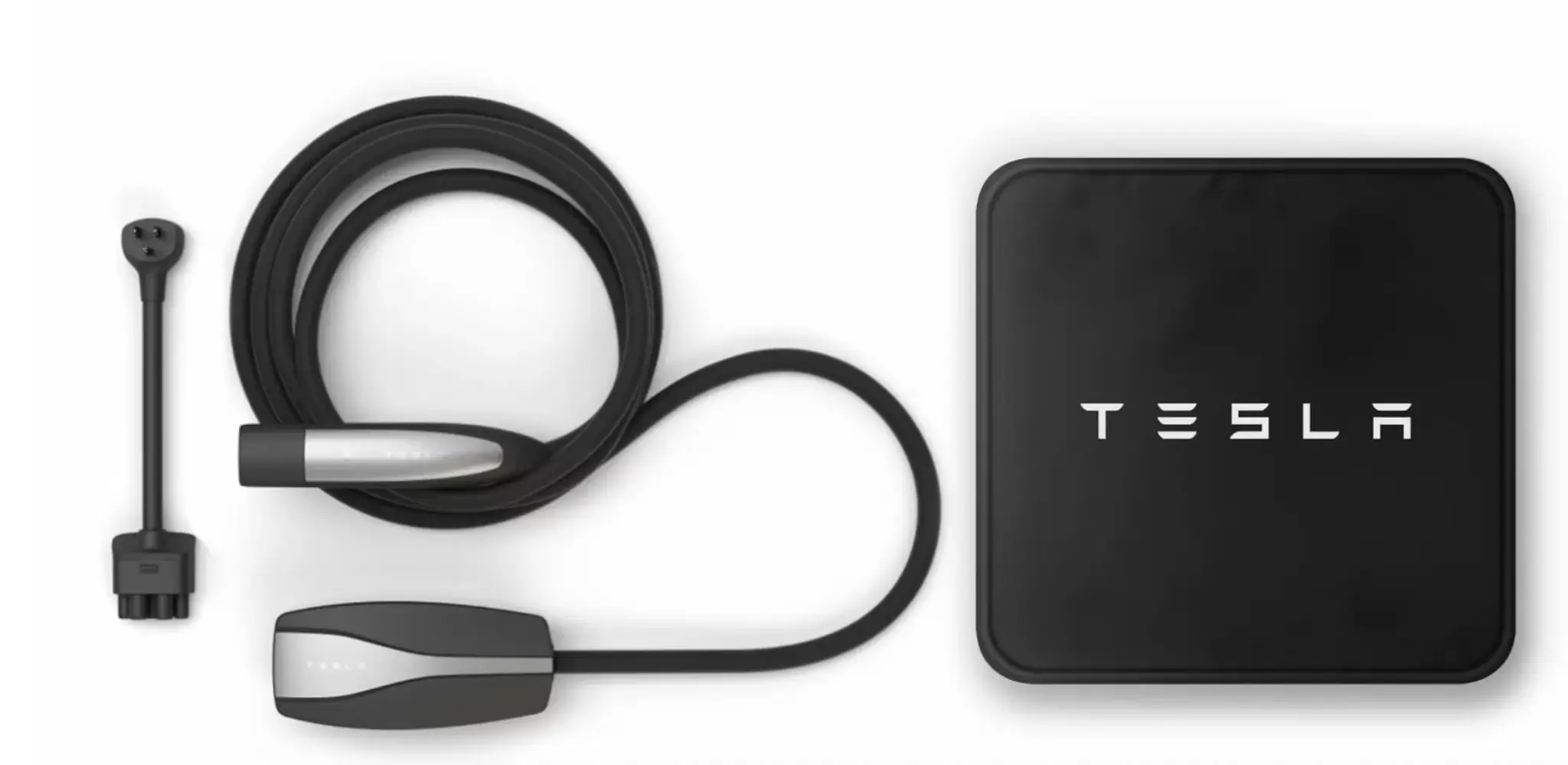
The Tesla Supercharger is a high-power charging station designed specifically for charging Tesla cars, capable of delivering up to 250 kW. Thanks to this charging speed, the Tesla Supercharger allows the car’s battery to be charged to 80% in a short time, making this type of charger ideal for long-distance journeys.
These charging stations are specially designed for Tesla vehicles and have their own connector standard, which means that only Tesla vehicles can use them without adapters. For other electric vehicles, special adapters are required.
Features:
- Maximum power (AC): not supported
- Maximum power output (direct current): 250 kW
- Maximum voltage: 400 V
- Current: 250 A
- Number of contacts: 7
Advantages:
- Very fast charging, allowing you to charge up to 80% in a short time.
- Ideal for Tesla owners, especially when travelling long distances.
- High charging power (up to 250 kW).
Disadvantages:
- It supports only Tesla cars without adapters.
- Limited compatibility with other electric vehicles.
- No support for AC charging.
Tesla Supercharger is the best option for Tesla owners, as these stations are designed specifically for their vehicles and offer the fastest charging speeds. However, for owners of other brands of electric cars, access to such stations may be limited due to the need for adapters.

ECOFACTOR: innovative solutions for charging electric vehicles
As a company, we are in ECOFACTOR We focus on developing advanced charging solutions for electric vehicles that combine efficiency and environmental friendliness. Reducing energy costs, speeding up the charging process and extending battery life are our main focus areas. We create charging stationsThe company’s equipment meets the most modern requirements, ensuring their reliability, safety and maximum efficiency.
In addition to the stations, we offer cables and adaptersThe company’s equipment meets European safety and efficiency standards.
We are constantly improving our products by integrating innovative technologies that make charging convenient and cost-effective. Our solutions allow you to:
- Optimise energy costs – ECOFACTOR technologies help to reduce energy consumption and thus reduce charging costs.
- Improve charging efficiency – special algorithms reduce energy losses, which allows for maximum power efficiency.
- Manage the charging process via the mobile app. – Our smart systems allow you to control the charging process via a mobile app, available for iOS and Android. Drivers can monitor the charge level, choose the best time to charge and receive detailed analytics on energy consumption.
- Promote sustainable development – ECOFACTOR charging stations help reduce CO₂ emissions and support the transition to clean energy.
Choosing solutions from ECOFACTOR is an investment in comfort, savings and environmental friendliness. Our technologies provide users with maximum convenience and help to reduce energy costs.
We are also actively developing our charging infrastructure, providing drivers with access to
How to choose the right connector for your electric vehicle?
Choosing the right charging connector for your electric vehicle is an important step, as it directly affects the convenience and efficiency of charging. To make the right choice, there are several key aspects to consider:
Compatible with your vehicle
First of all, you should check what type of connector your car supports. You can usually find information about this in your car’s manual, as well as on the manufacturer’s official website. If your car supports Type 1 or Type 2, this may affect the choice of the charging station you will use, or the type of adapter if you plan to use a different station.
Geographical location
The type of connector also depends on where you are or where you plan to travel. Type 2 is popular in Europe, Type 1 in the US, and GB/T in China. If you travel frequently or move to other regions, you should check for compatible charging stations along your route.
Charging type (AC or DC)
The choice between alternating current (AC) and direct current (DC) charging depends on the charging speed you want to achieve. If you want to charge your car quickly, DC charging (CHAdeMO or CCS Combo) is the right choice. For slower charging, suitable for home use, choose AC charging (Type 1 or Type 2).
Charging speed
If charging speed is important to you, you should look for connector types that support high power (DC). They significantly reduce the charging time, which is especially important for long-distance journeys. AC charging stations usually have a lower power output and charge the car much more slowly.
Frequency of use
If you mainly charge your car at home, a Type 2 with up to 22 kW is a great choice for home infrastructure. For long-distance journeys, you may need a more powerful connector for fast charging (e.g. CCS Combo or CHAdeMO).
In general, the right connector depends on your needs, where you use it and the type of vehicle you have. Remember that it’s also important to consider the availability of charging stations in your area or along your travel route.
Charging station and connector compatibility issues: how to avoid misunderstandings
With the variety of charging connector types and standards on the market, there is a certain amount of complexity in their compatibility, which can be a problem for electric vehicle drivers. One of the main problems faced by EV users is the incompatibility of charging stations with specific car models due to different types of connectors. Different countries and even regions may use different connector standards, which greatly complicates the charging process, especially for those who often travel long distances or have to charge their cars at public stations.
For example, in Europe, the Type 2 standard for AC charging is widely used, but if you are travelling to a country where Type 1 or other standards are more popular, you may need an adapter to connect to the charging station. Therefore, it is very important to check what types of connectors are used at charging stations in the region you plan to travel to before travelling or driving on unfamiliar routes.
Another important aspect is the compatibility of charging stations with direct current (DC) fast charging. In some countries, there may be widespread stations that only support certain types of fast charging connectors, such as CHAdeMO or CCS. This means that even if your vehicle supports fast charging, you will need to find a station with the appropriate connector, which can be a challenge, especially over long distances or in remote areas.
To avoid such problems, many charging station companies develop adapters and adapters for different types of connectors. However, this solution is not always convenient and can lead to additional costs. Therefore, it is worthwhile to carefully familiarise yourself with the charging infrastructure in the country or region where you plan to use your electric vehicle.
By choosing the right charging station and the right connector, you can ensure convenient and uninterrupted charging and avoid problems when travelling or on long journeys.
How do charging connectors affect charging speed?
Charging electric vehicles depends on several factors, among which the type of charging connector plays an important role. The main difference between the types of connectors is how quickly they transfer energy to the car’s battery. This depends on the power of the charging station, the type of current and the connector itself.
- Alternating current (AC)
AC charging connectors, such as Type 1 and Type 2, provide a slower charging rate than DC charging. Charging via AC can reach a power of up to 22 kW, which allows the battery to be charged for several hours (e.g. 6-8 hours for a full charge depending on the battery capacity).
- Direct current (DC)
Connectors that support direct current charging (CHAdeMO, CCS Combo) are significantly faster. This allows you to charge the battery up to 80% in just 30-40 minutes. The power output of such stations can reach up to 350 kW, which significantly reduces the time required for charging, which is especially important for long-distance travel.
- Type of charging station
The charging time also depends on the power of the charging station. For example, alternating current (AC) stations often have a lower power output (up to 22 kW), which makes charging slow. Direct current (DC) stations can provide up to 350 kW, which ensures a much faster charging process.
In general, DC connectors are preferred for fast charging, while AC charging is suitable for slow charging at home or at local stations.
Conclusion
The types of connectors used for charging electric vehicles have a significant impact on the charging speed and usability of the vehicle. The choice of connector depends on factors such as the type of current, the place of use and the charging speed required. Different types of connectors have their own advantages and disadvantages, so it is important to understand which type of connector is right for your electric vehicle and how it affects the charging process. With the development of new technologies such as wireless charging stations and fast DC charging, the future of electric vehicle charging looks promising and much more user-friendly.
Frequently asked questions
1. Are there universal connectors for all electric vehicles?
No, each type of connector has its own characteristics that correspond to different makes and models of electric cars. For example, Type 1 is used for cars in the US and Japan, while Type 2 is the standard for Europe. These types may not be compatible with each other, so you should check compatibility before use.
2. Why do some countries use different types of connectors?
Different countries have their own national charging standards, partly for historical and economic reasons. Different connector variants are common in Europe and China, e.g. GB/T in China, which makes charging internationally somewhat difficult without special adapters.
3. Can I charge at charging stations with a different type of connector?
You can charge it, but it depends on the availability of adapters. If you have a Type 1 and the station has a Type 2, you will need to use an adapter to connect. It is important to check compatibility in advance.
4. How fast can an electric car be charged at fast charging stations?
Fast direct current (DC) charging significantly reduces charging times. For example, at stations with CCS Combo, you can charge the 80% in 30 to 40 minutes. This is much faster than standard AC charging stations.
5. Do all charging stations support fast charging?
No, not all charging stations support fast charging. Most stations with a capacity of up to 22 kW (AC) are suitable for slow charging, which takes longer, while stations with direct current (DC) support fast charging, which can significantly reduce waiting times.
6. How often do I need to check the charging cable or connector?
We recommend that you check the cable and connector for damage before each use. If you notice any damage, you should replace the cable or contact a service centre for service.