


Table of contents:
The 2023 Tesla Model 3 is an electric car that is entirely dependent on access to a power supply. Its battery needs to be charged regularly, and without a reliable source of electricity, using such a car can be a problem. In towns and cities, you can usually find public charging stations or set up a home charging point, but when travelling, in rural areas or on holiday, the situation can be quite different.
The mobile charging station allows you to charge your car in places where there is no stationary charging infrastructure. It can be connected to a regular household outlet or to other types of outlets via adapters. The device can be easily transported in the trunk and can be a key element when travelling or in case of emergencies.
We remind you that you can purchase home and commercial charging stations in our online storeand also use the public charging stations ECOFACTORcharging points located throughout Ukraine. For convenient access to charging infrastructure, we recommend using our mobile applicationwhich is available on iOS and Android.
In this article, we’ll look at why a mobile charging station is a useful thing for a Tesla Model 3, what parameters matter, how to choose the right one, which models are considered the best, how to use it correctly, what adapters you’ll need, and what you should know about safety.
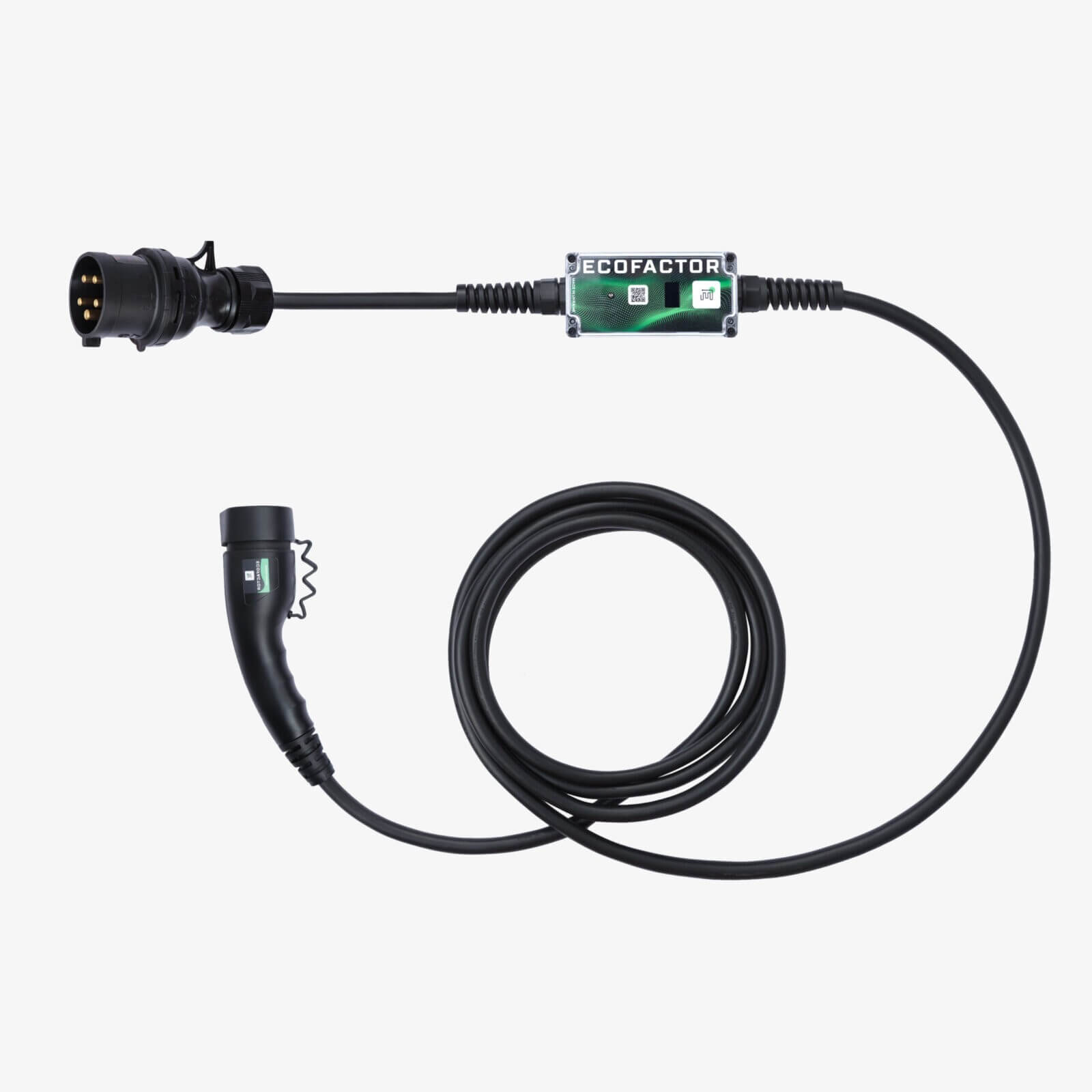
What is the Tesla Model 3 mobile charger for?
An electric car does not work without electricity. If the battery is low, the car will not drive. In the city, this is rarely a problem: there are public charging stations, sometimes even free of charge. But as soon as you move further away, the situation changes dramatically. On the highway, in villages, in summer cottages, or simply in places without charging infrastructure, it is difficult to find the right outlet. In such cases, a mobile charging station allows you to solve the problem without unnecessary stress.
It is a portable device that can be connected to a standard 220 V socket or, if necessary, to a three-phase 380 V socket. Through adapters, it can work with different types of sockets – ordinary household, industrial, power, etc. The power of such stations varies – there are simple single-phase stations with 3.5-7 kW and more powerful three-phase stations with up to 11 kW, even if the station is capable of 22 kW.
For the owner of a Tesla Model 3, mobile charging is a tool that expands the boundaries of car use. It allows you not to depend on other people’s charging stations and not to build a route exclusively around superchargers. You can come to any place with electricity and charge your car. This is convenient when travelling, on business trips, in the country, in hotels, at friends’ houses, or simply in case of an emergency.
You may also need it at home if you don’t have a separate wall charger. In this case, the mobile station is connected to a home outlet and acts as a permanent power source. Of course, charging will be slower than on a powerful station, but at night or while parked, this is quite enough.
Technical characteristics of mobile charging stations
Before buying a mobile charging station, it is important to understand which technical parameters really matter. They affect not only the ease of use, but also the charging speed, safety, and compatibility with the network and the vehicle itself. The Tesla Model 3 2023 supports AC charging via a Type 2 connector, so the mobile station must comply with this standard. But this is only one of the many details that you should pay attention to.
Charging power
This is the key indicator that determines how many kilowatts of energy the device can transfer to the car in an hour. The most common options are 3.6 kW, 7.4 kW, and 11 kW. Accordingly, the higher the power, the faster the car will charge. However, there are nuances: not all power grids can withstand powerful charging, and not every user has access to a three-phase outlet. Therefore, it is important that the station has the ability to adjust the power or at least automatically reduce it if necessary.
3. Type of connection to the power supply
There are single-phase and three-phase stations. Single-phase stations are connected to a regular 220 V household outlet and have a limited power output (up to 7.4 kW). In Europe, Model 3 supports three-phase charging up to 11 kW (16 A per phase). If you plan to use the charger only at home or in standard conditions, single-phase charging is suitable. If you plan to travel to businesses, facilities with industrial networks, or simply need more power, you should look towards three-phase solutions.
Connector to the vehicle
The European Tesla Model 3 2023 uses a Type 2 connector. This is a standard that is supported by almost all charging stations in Europe, but you still need to make sure that the kit comes with this connector. If you have an adapter for NACS (the new North American standard), you need to take this into account when choosing a station or buy an adapter separately.
Cable length
It may not seem like the most important feature, but it can affect the user experience. Some stations have a cable that is only 3 metres long, which may not be enough if the outlet is far away or the car cannot be driven close. The optimal length is 5-7 metres. This gives you more freedom when charging in different conditions.
Protection and certification
A good quality station should be protected against overheating, overvoltage, short circuits and overload. It is also important that it can withstand dust, rain, and snow, especially if you plan to use it outdoors. It is advisable to have an IP54 or better, and preferably IP65, enclosure rating. CE certification or other technical compliance also indicates the quality of the device.
Current control and indicators
A useful feature is the ability to adjust the current manually (for example, from 6A up to 32A). This allows you to adapt to a specific mains supply. Also, charging stations with a display or indicator lights let you see how charging is progressing, the power output, the temperature and whether there are any errors. This isn’t essential, but it adds to the convenience.
Form factor and weight
If you plan to carry a charger in the trunk, it is important that it is compact, easy to store and does not take up much space. Models that are too bulky will get in the way or simply stay at home rather than fulfil their function of helping you on the road.
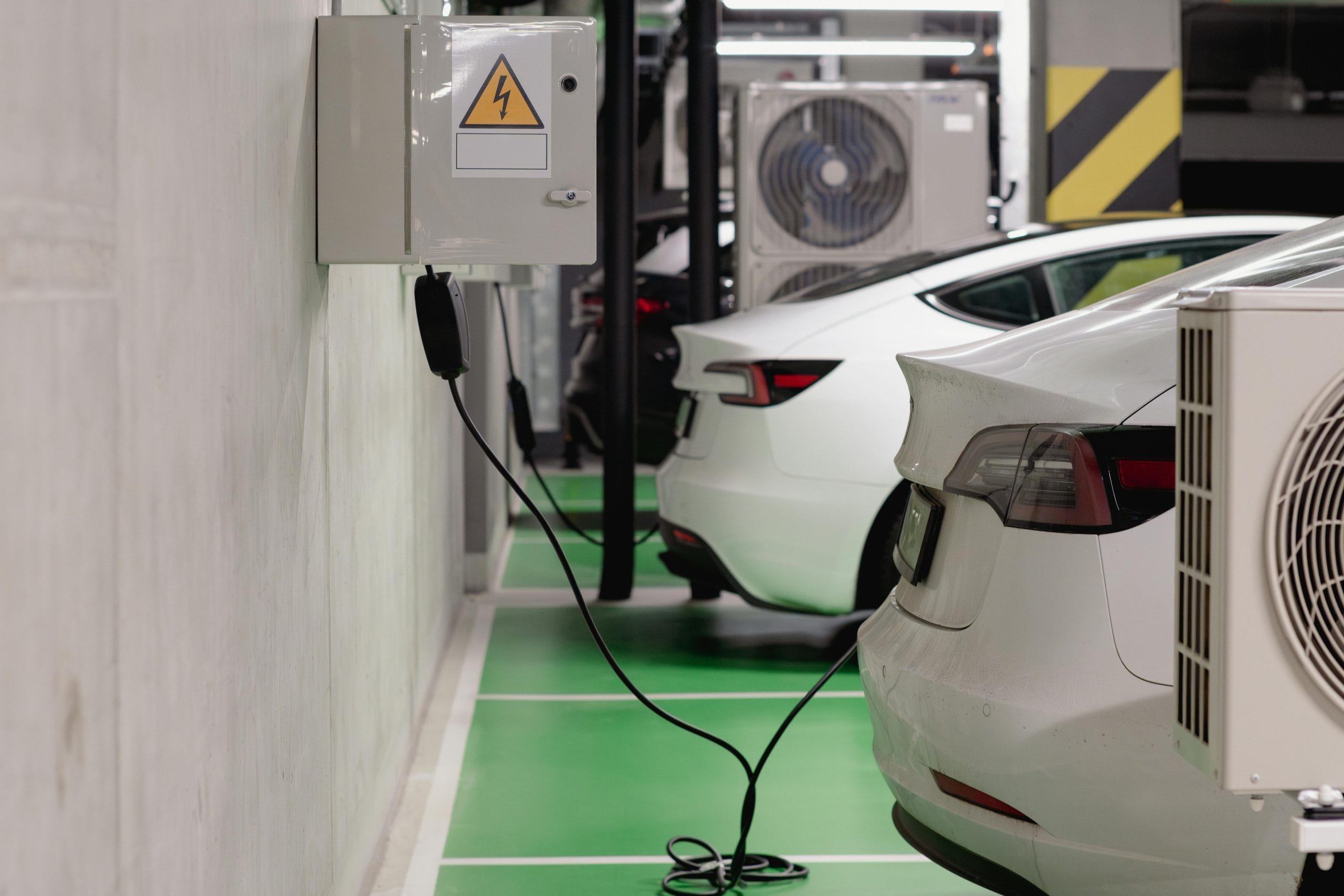
How to choose the best mobile charger for Tesla Model X?
When it comes to choosing a specific model of mobile charging station, many users get lost in the characteristics, names, designations and promises of manufacturers. In order to avoid overpaying and getting a device that is not suitable for your conditions, it is worthwhile to soberly assess where, how and how often you plan to charge your car.
1. Assess the conditions in which you will be charging your car
If you will be charging mainly at home or in places where there are only standard sockets, it is advisable to take a 3.5 or 7 kW single-phase station. It’s inexpensive, easy to use, and will be enough for daily recharging. If you often travel long distances, visit enterprises or facilities with industrial sockets, then you should pay attention to three-phase chargers of 11 or 22 kW.
2. Check if the station is suitable for your car
The European Tesla Model 3 requires a Type 2 connector. If you choose a charger on an American website or through an intermediary, make sure that it does not have only NACS or J1772. Otherwise, you will have to look for an adapter, which means extra costs and potential technical difficulties.
3. Pay attention to the length of the cable
The ideal length is 5 metres or more. There are times when the socket is in the garage and the car is parked nearby. A short cable may restrict your ability to connect the charger conveniently. Furthermore, a longer cable allows for more flexible positioning of the charging station, without having to run the cable through the bonnet or across the pavement.
4. Functionality and control
At the very least, it should be possible to adjust the current. This helps to prevent the mains from becoming overloaded when many household appliances are in use at the same time. A display, indicator lights and control buttons aren’t essential, but they do make things much more convenient. If it has an app or Bluetooth, that’s a bonus, but not a must.
5. Mobility and security
Weight, dimensions and a storage case – these are things that seem like minor details until you take your charger with you on a trip. A good portable power bank should be sturdy but not heavy. A robust casing and an IP54 rating or higher are desirable if you plan to use the device outdoors.
6. Honesty of the manufacturer
If a manufacturer promises 22 kW of power with a single-phase connection, it’s not true. If the charger weighs less than a kilogram and claims to “withstand 32A without heating”, it is better to check whether it has real protection. Don’t go for the cheapness or the brand – it’s better to evaluate the characteristics soberly.

ECOFACTOR: Smart solutions for easy charging of electric vehicles in different conditions
ECOFACTOR specialises in the creation of modern charging systems that combine efficiency with respect for the environment. The company develops innovative products for electric vehicles with a focus on practicality, safety and energy savings. The range includes charging stationsThe new products meet the requirements of the modern user, both at home and in commercial use.
In addition, ECOFACTOR offers Cables and adaptersThe company’s smart charging solutions provide a stable connection even in difficult conditions. Smart solutions are available for Tesla Model 3 owners to monitor the charging process in real time, with the ability to plan and analyse energy consumption.
ECOFACTOR technologies are designed to meet the needs of energy saving and operational stability:
- help reduce energy costs through efficient energy consumption;
- improve charging performance by reducing losses;
- allow you to control charging via mobile application for iOS and Android;
- contribute to the development of sustainable energy and reduce emissions of harmful substances.
Decision from ECOFACTOR is not just a charging tool, but a sensible investment in the reliability and convenience of everyday electric vehicle use. Thanks to the map of charging stations, every driver can quickly find the nearest charging point anywhere in Ukraine.
The most popular models of mobile charging stations for Tesla Model Y
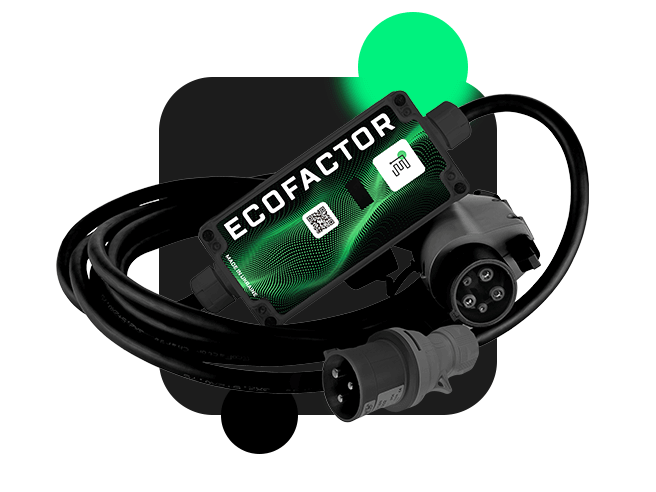
1. ECOFACTOR NACS 32A (7 kW)
This mobile charging station is designed for owners of American versions of Tesla with a NACS connector. It is suitable for home use, charging at work or in places where there is access to a power grid with industrial sockets. ECOFACTOR NACS 32A (7 kW) is suitable both for regular use and as a backup solution when travelling.
One of the main advantages of this charging station is its adaptability. It automatically adjusts to network conditions, supports alternating current from 6 to 32 A and ensures stable operation even during voltage fluctuations. This allows you to charge your car without load spikes, making it safer and more efficient.
The charger is dust and waterproof, so it can be used indoors and outdoors. The device is also equipped with a timer, so you can set it to start charging at night or during the lowest tariff periods.
Features:
- Power: 7 kW
- Current: 6-32 A (adjustable)
- Connector to the car: NACS
- Plug type: industrial 5PIN
- Protection: against overvoltage, dust and moisture
- Additionally: delayed start timer
Advantages:
- Full compatibility with American versions of Tesla
- Works with a single-phase network
- Adapts to voltage fluctuations
- There is a built-in timer for scheduling charging
- Suitable for outdoor and indoor use
Disadvantages:
- Requires an adapter for European Teslas with Type 2 connector
- It does not support three-phase charging, which limits the charging speed compared to more powerful mobile stations.
- Designed primarily for users with 5PIN sockets
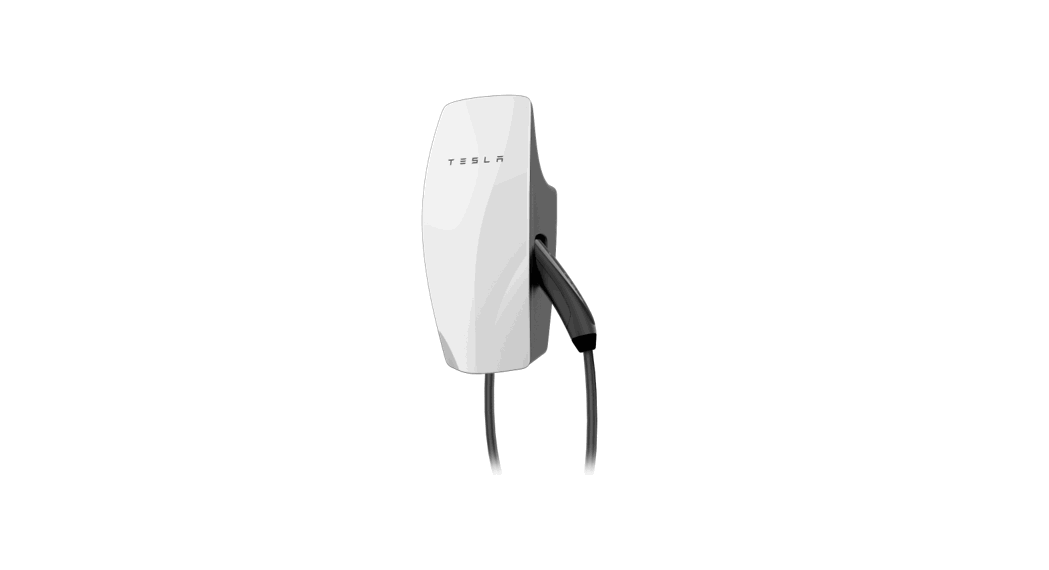
2. Tesla Wall Connector (Gen 3)
It is a stationary charger that can be adapted for portability; suitable for fast and stable charging of the Model 3 at home or at work. It is compatible with US Teslas, has a proprietary connector and supports Wi-Fi connectivity, which allows you to remotely control the charging via the app.
The device has a high charging power of up to 11.5 kW, which allows you to fully charge your Tesla Model 3 overnight. The simple wall mount and long cable make it easy to use. Charging automatically adapts to the network parameters.
Features:
- Power: up to 11.5 kW
- Current consumption: up to 48 A
- Connection type: single-phase
- Connector: Tesla (NACS)
- Cable length: 7.3 m
- Wi-Fi connection: yes
Advantages:
- High charging speed
- Compatible with all Tesla models
- Reliable branded design
- Supports control via mobile app
Disadvantages:
- Only suitable for Tesla
- Higher price than universal models
- Not portable without a separate adapter or modification
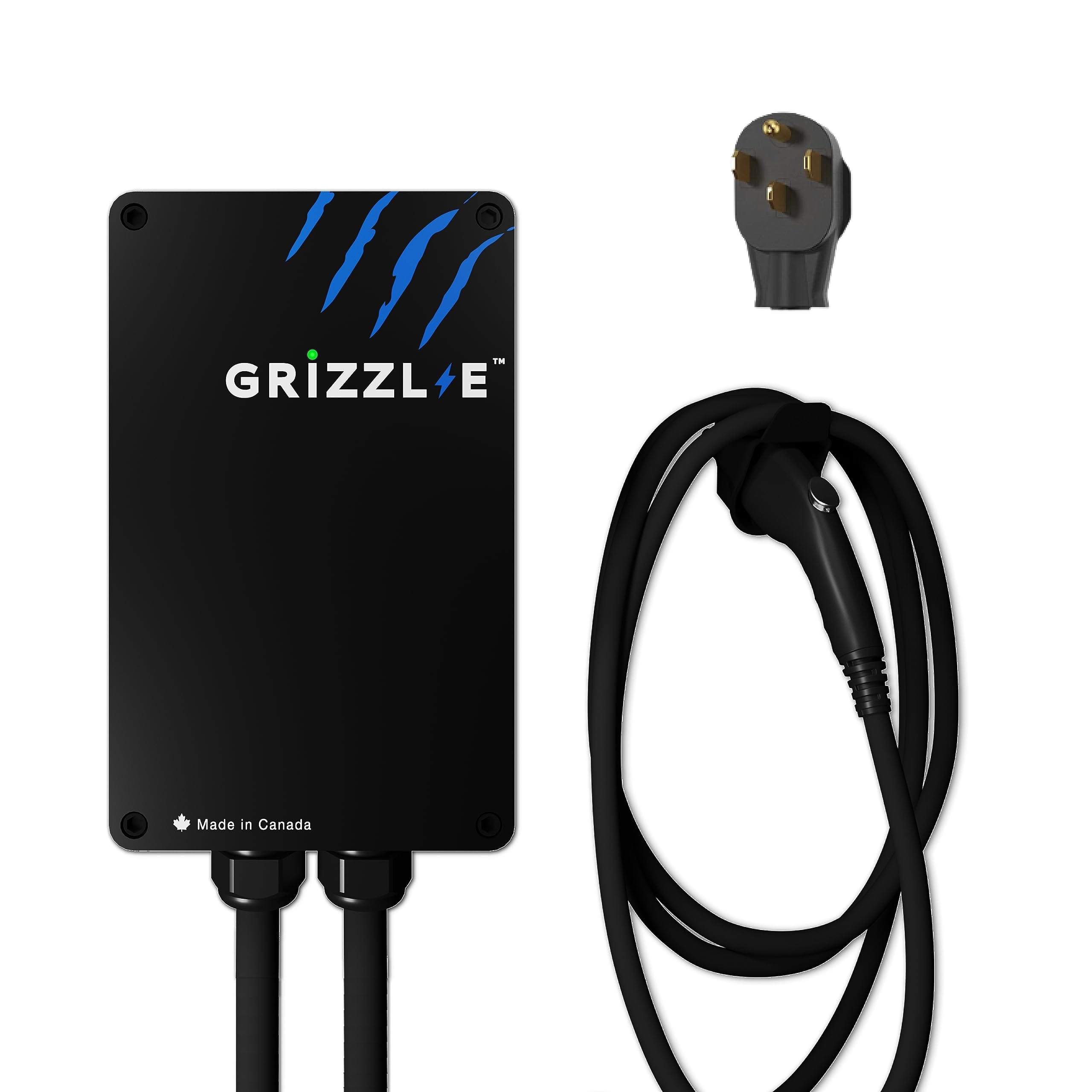
3. Grizzl-E Level 2 Portable EV Charger
This model is designed with a focus on durability and simplicity. The charging station has a weather-resistant aluminium casing, so it is suitable for both indoor and outdoor use. It can be easily taken with you on the road and can be fixed permanently if necessary.
The Grizzl-E supports up to 40A of current and up to 10 kW of power. The device allows you to switch charging modes (16A, 24A, 32A, 40A), which is convenient when there are network restrictions. This is a solution for those who want the most reliable charging without unnecessary features.
Features:
- Power: up to 10 kW
- Current consumption: up to 40 A (adjustable)
- Connector: Type 2
- Cable length: 7.6 m
- Housing: aluminium, dust and waterproof
- Installation: stationary or portable
Advantages:
- Robust and reliable design
- Suitable for outdoor use
- Charging modes to choose from
- Easy to use without unnecessary settings
Disadvantages:
- No display or app
- Large and heavy for frequent moves
- Requires high-quality power supply for maximum performance
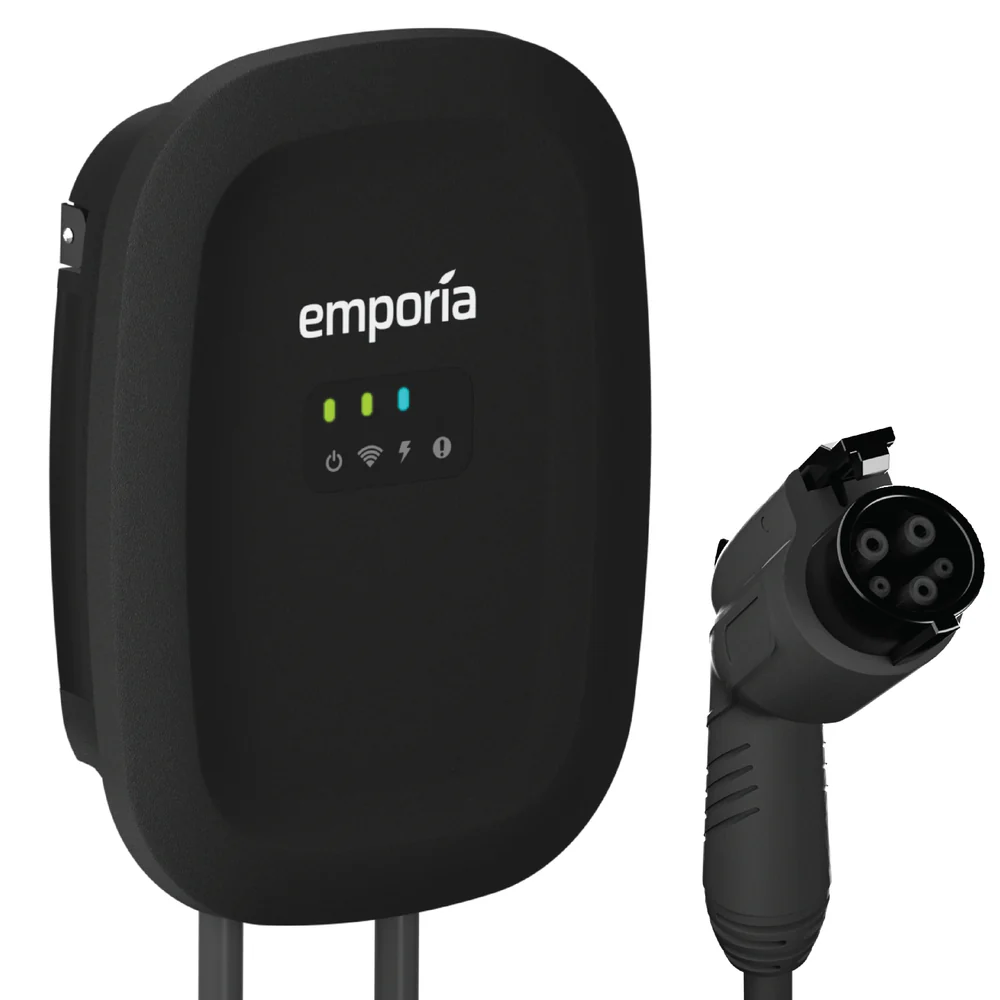
4. Emporia EV Charger Level 2
Emporia is a charging station that combines excellent functionality with a reasonable price. It supports up to 11.5 kW of power and operates on 240 V mains. The charging station has built-in Wi-Fi and is compatible with the manufacturer’s app, through which you can set timers, monitor energy consumption and receive notifications.
The body of the device is compact but sturdy. It can be used both at home and in the office or garage. Emporia allows you to accurately schedule charging during the most favourable tariff periods.
Features:
- Power: up to 11.5 kW
- Current: up to 48 A
- Voltage: 240 V
- Connector: Type 2
- Cable length: 7.3 m
- Wi-Fi and mobile app: available
Advantages:
- High power output
- Full control through the app
- Timer and usage statistics
- Suitable for home and office charging
Disadvantages:
- Not intended for frequent transport
- Dependent on stable Wi-Fi for full functionality
- Requires separate installation

5. Lectron V-Box 48A EV Charger
The Lectron V-Box is another popular solution for charging the Tesla Model 3, notable for its high power output and fast charging. This charger supports up to 11.5 kW, features charging status indicators, a robust housing and built-in overheating protection.
Thanks to its simple wall mounting and long cable, the station is easy to use on a daily basis. It can be installed in a garage or in an open area.
Features:
- Power: up to 11.5 kW
- Current: 48 A
- Voltage: 240 V
- Connector: Type 2
- Cable length: 7.3 m
- Light indicators: yes
Advantages:
- High power output
- Easy to install
- Robust housing with protection
- Works with Tesla without adapters
Disadvantages:
- No display or app
- Not mobile in the classical sense (fixed installation)
- Heavier weight than compact models
How to properly charge Tesla Model 3 2022 with a mobile charging station
Charging an electric vehicle seems like a simple process: plug in the cable and wait. But in reality, there are many nuances that affect charging efficiency, equipment safety, and the durability of the battery itself. If you organise the process incorrectly or ignore the basic rules, this can lead to a decrease in battery performance, overheating of the equipment or even damage to it.
The first thing to do is to assess the available mains supply. Not all sockets are suitable for high-current charging. Old or worn-out sockets can overheat and pose a risk. If you’re using a domestic socket, make sure it can handle at least 16 amps; ideally, use a dedicated circuit breaker. Ideally, use a heavy-duty socket (for example, a CEE-type socket), which is capable of consistently delivering a current of 32 amps.
Before connecting the mobile charging station, check that the cable is not damaged and that the connectors are dry and clean. It is not recommended to use extension leads, adaptors of unknown origin or sockets showing signs of melting. It is also important not to cover the charger with any objects whilst it is charging – it may become hot.
For everyday use, it is advisable to charge your Tesla within the 20–80 per cent range. This helps to reduce battery wear and tear in the long term. You should only charge to 100% before long journeys. In addition, the Tesla has a scheduled charging function – you can set this to run overnight when electricity is cheaper.
During the colder months, it’s worth bearing in mind that the battery takes longer to charge. If the battery is very cold, the car will warm it up first, and only then will it start charging. It’s therefore best to leave the car on charge at least a few hours before setting off. And when charging outdoors, make sure the unit isn’t exposed to rain or snow, even if it’s moisture-resistant – it’s just a precaution.
Another useful tip is not to charge your car immediately after driving at high speeds or in intense heat. It’s better to let the battery cool down, especially if you’re using high-power charging (11–22 kW). This reduces the load on the cooling system and lowers the risk of battery cell degradation.
What adapters may be needed
A mobile charging station does not, in itself, always allow you to plug it into any available socket. In many cases, you’ll need adaptors to connect your charger to different types of mains sockets. These are particularly useful when travelling, when you don’t know in advance what type of socket will be available at your destination.
Depending on the market, the Tesla Model 3 2023 may have a NACS connector (American version) or Type 2 (European version). And each of them has its own connection features. For example, charging at stations with J1772 connectors (common in the US) requires an adapter. In the US, the Model 3 2023 is equipped with NACS without adapters. Similarly, to connect a charging station with an industrial 5PIN plug to a household outlet, you will need an adapter with a corresponding adapter.
Adapters are divided into two main categories: electrical (to change the type of socket) and switching (to change the type of connector on the side of the car). Most often, they are included with the mobile station, but not always. Therefore, it is worth having a basic set of adapters in case you need to charge your car in non-standard conditions.
Here are the most common adapters that may come in handy:
- Adapter from Type 2 to Schuko (standard household socket)
- Adapter from CEE 32A (red three-phase socket) to household socket
- Adapter from J1772 to Tesla (relevant for the USA)
- Adapter from Tesla NACS to Type 2 (for using European charging on American Teslas)
- Adapter from industrial 5PIN plug to CEE or Schuko
It is advisable to store the adapters in a separate case or bag in the boot so that they are always at hand. They don’t take up much space, but they can be critical at the right time. Having several proven and high-quality adapters is better than being left without charging in an unfamiliar place.
Are mobile charging stations for the 2023 Tesla Model 3 safe?
The issue of safety when charging an electric vehicle is of great importance, especially when it comes to mobile charging stations that can be connected to different types of power grids and can be used in a variety of conditions. Tesla Model 3 owners are concerned about whether such charging will harm the battery, whether the power grid will withstand it, and whether the device will burn out in case of a power surge.
A mobile charging station is, in itself, a safe device, provided it is of high quality, certified and used correctly. Most models feature built-in protection systems against overheating, short circuits, overcurrent, overload, reverse polarity and voltage surges. The device automatically stops charging in the event of a dangerous situation, signals an error or simply fails to start if conditions are unstable.
The greatest risk lies not with the charging station itself, but with how and to what it is connected. Using old or poor-quality sockets, extension leads, makeshift adaptors or weak mains supplies can be risky. To avoid problems, make sure the socket shows no signs of melting, that the wiring is rated for the current drawn by the device, and that the station is located in a dry and well-ventilated place.
You should also not ignore the temperature limits. In hot weather, charging stations should not be covered, whilst in winter it is best to use devices with good dust and moisture protection. When used correctly, portable charging is just as good as fixed charging, and in many cases even safer thanks to built-in automatic safety limits.
Conclusion
A mobile charging station is not just an optional extra, but a practically essential tool for owners of the 2023 Tesla Model 3, especially if the car is used outside the city. It allows you to charge your car anywhere there is access to electricity, even if there is no dedicated charging infrastructure.
When chosen correctly, a mobile charging station provides stable, safe and fairly fast charging. It is important to pay attention to the technical specifications: power output, connector type, mains compatibility, protection rating, cable length and the ability to adjust the current. It is equally important to check which adaptors you will need and whether they are included in the pack.
For charging to be effective, you also need to be aware of the basic rules for use: do not overload the mains, avoid moisture, maintain the correct temperature and plan your charging sessions at a convenient time. That way, you won’t have any problems with your car’s power supply – even in remote locations.
Frequently asked questions (FAQ)
1. Can I charge my Tesla Model 3 from a generator?
Yes, but you need to make sure that the generator produces a stable voltage, has sufficient power and has overload protection. It is best to use inverter generators that are compatible with your electronics.
2. Which cable is better to have in the trunk for everyday use?
The most convenient is a mobile charging cable with a Type 2 or NACS connector (depending on the car version) and a length of 5-7 metres. It is also worth having a universal adapter for a household outlet.
3. Can I charge my Tesla in the rain?
Yes, modern charging stations are waterproof, but it is best to avoid direct water flow on the connector and the unit. If possible, charge under a canopy or in a garage.
4. What should I do if charging has started and suddenly stops?
Check the condition of the socket, cable connection, charging station or vehicle overheating. In most cases, the station will automatically stop charging if it detects a problem. Let it cool down and try again.
5. Does charging the battery continuously up to 100% damage the battery?
Yes, if you do it regularly. For daily use, it is better to set the limit to 80-90%. You should only charge up to 100% before long journeys.
6. How much electricity does Tesla charging from a mobile station consume?
Depending on the power of the station and charging time. For example, charging with a 7 kW capacity for 4 hours will consume about 28 kWh. This is approximately equal to a range of 150-180 km. Charging time is: from 230 V/16 A (~3.7 kW) – 20-24 hours to 100%; from 240 V/32 A (~7.4 kW) – 8-10 hours to 80%.